Why You Still Don’t Feel Like Yourself (Even When Your Tests Are “Normal”)
“My doctor says my thyroid is normal…so why do I still feel terrible?”
It’s one of the most common questions I hear from new patients.
They tell me they’re exhausted all the time. They’ve gained weight despite eating healthier. Their hair has become thinner, their memory isn’t as sharp, and they never seem to have the energy they once had. Others struggle with constipation, anxiety, depression, or simply feel cold when everyone else is comfortable.
Most have already seen one or more doctors. Most have already had thyroid blood work. And most have heard the same reassuring words.
“Your thyroid is normal.”
Yet they know something isn’t right.
Over the years, I’ve learned that patients are remarkably good at recognizing when something has changed in their bodies. They may not know the cause, but they know they don’t feel like the person they used to be.
That’s often what brings them to Total Health Center.
Could Your Thyroid Be the Missing Piece?
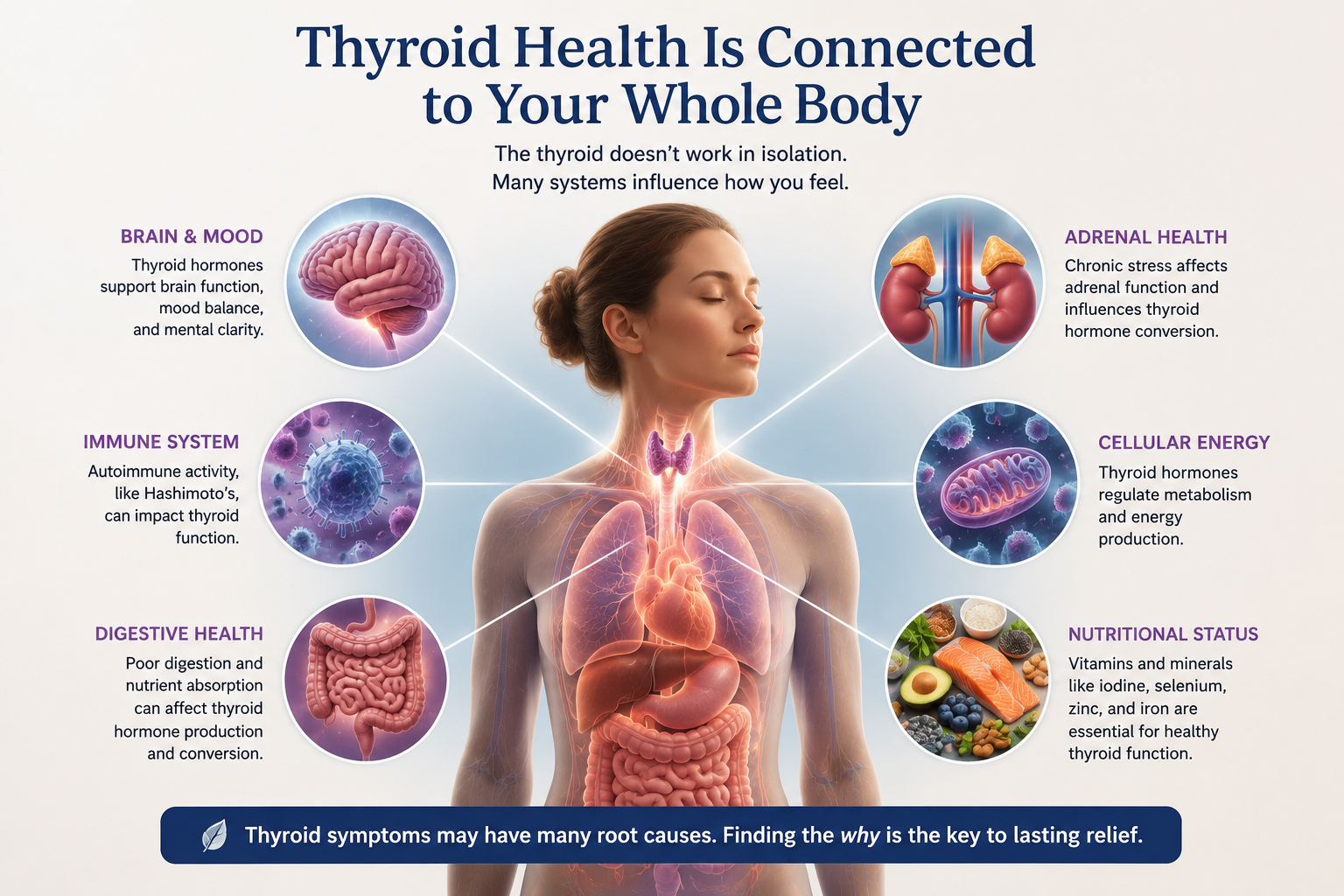
The thyroid doesn’t work in isolation. Brain function, digestion, immunity, stress, nutrition, and hormone conversion all influence thyroid health and how you feel.
The thyroid is one of the smallest organs in your body, yet it influences nearly every aspect of your health.
Most people know it affects metabolism.
What many don’t realize is that thyroid hormone helps every cell in your body produce energy. When that process begins to slow, the effects can be felt almost everywhere.
You may notice fatigue that won’t go away, weight gain despite your best efforts, brain fog, dry skin, constipation, depression, anxiety, or hair loss. At first, those symptoms don’t seem connected, so it’s easy to assume each one has a different cause.
One doctor treats your cholesterol.
Another focuses on depression.
Someone else recommends another diet because of your weight.
Before long, you’re managing individual symptoms instead of asking whether they might all be connected.
One of the things I enjoy most about practicing functional medicine is helping patients step back and see the bigger picture. Very often, symptoms that appear unrelated are actually telling the same story.
If many of these symptoms sound familiar, our Thyroid Problems & Symptoms guide explores them in much greater detail.
Hashimoto’s Disease: The Question Most Patients Were Never Asked
When someone is diagnosed with hypothyroidism, the conversation often ends with a prescription.
“Your thyroid isn’t making enough hormone. Take this medication and we’ll monitor your blood work.”
For many people, that’s reassuring.
For others, it leaves an important question unanswered.
Why did the thyroid stop working in the first place?
That’s the question that has guided much of my work over the years.
The Thyroid May Not Be the Real Problem
Many people believe the thyroid simply becomes weak with age.
Sometimes that’s true.
More often, however, the thyroid is simply caught in the middle of a much larger process.
In Hashimoto’s disease, the immune system mistakenly attacks healthy thyroid tissue. As that inflammation continues, the thyroid gradually loses its ability to produce enough hormone to meet the body’s needs.
The thyroid hasn’t suddenly ‘gone bad.’
It’s responding to an ongoing immune process that may have been developing for years.
That’s why it’s so important to understand whether hypothyroidism is simply a hormone deficiency or the result of an autoimmune disease.
If you’d like to learn more, read our article on Hashimoto’s Thyroiditis & Graves’ Disease.
Still have questions? Our Hashimoto’s Thyroiditis FAQs answer many of the most common patient questions about thyroid antibodies, symptoms, testing, diet, medication, and more.
Why That Difference Matters
Imagine your smoke detector starts going off. You could remove the batteries and stop the noise, but you still haven’t discovered why the alarm sounded in the first place.
Treating hypothyroidism without asking why it developed is much the same.
Replacing thyroid hormone is often necessary, and for many patients it can dramatically improve quality of life. But medication doesn’t explain why the thyroid became damaged. Understanding that answer is often the first step toward helping the rest of the body function better.
One of the biggest mistakes I see is patients believing their journey ends when they receive a prescription.
In many cases…
It’s only beginning.
Every Patient Has a Story
When someone comes into my office, I don’t begin by looking at their laboratory report. I begin by listening.
When did the symptoms start? What changed around that time? How has your health affected your work, your family, your sleep, and your daily life?
Those answers often reveal patterns that laboratory testing alone cannot. Only after understanding the story do I begin putting the clinical pieces together.
Looking for the Missing Pieces
Once we understand the patient’s history, the next question becomes,
“What’s preventing this person’s thyroid from functioning normally?”
Sometimes it’s poor conversion of T4 into active T3. Sometimes too much hormone is being converted into Reverse T3. Sometimes chronic inflammation drives the immune system. Sometimes digestive problems limit nutrient absorption. Sometimes several of those factors occur at the same time.
Every answer helps us understand the person—not just the diagnosis.
If you’ve been told your thyroid tests are normal but still have symptoms, our guide to Thyroid Testing explains why a more complete evaluation may uncover information that routine screening misses.
Why Cookie-Cutter Medicine Doesn’t Work
One lesson I’ve learned after caring for thyroid patients is that no two people are exactly alike.
Two patients may have nearly identical laboratory values. One feels healthy. The other struggles with fatigue, brain fog, constipation, weight gain, and hair loss. The numbers may look similar. Their physiology is not.
That’s why I don’t believe in cookie-cutter treatment plans.
The Functional Medicine Difference
Rather than focusing only on replacing what’s missing, we ask why it became missing in the first place.
If this whole-body perspective is new to you, read more about Functional Medicine.
In the next section, we’ll explore the everyday factors that influence thyroid health—including stress, digestion, nutrition, and inflammation.
The Everyday Factors That Influence Thyroid Health
By now, you’ve probably noticed a common theme throughout this guide.
The thyroid rarely tells the whole story.
Over the years, I’ve found that thyroid problems are often influenced by several different systems working together. Sometimes one system places extra stress on the thyroid. Other times, the thyroid simply reflects changes occurring elsewhere in the body.
That’s why looking beyond the thyroid is often where we find the answers.
Chronic Stress Changes More Than Your Mood
Most people think of stress as an emotional problem.
Your body sees it very differently.
Whether stress comes from work, lack of sleep, chronic illness, emotional trauma, or even poor nutrition, your body responds by shifting hormones and redirecting resources toward survival.
That response is helpful for short periods of time. It becomes a problem when the stress never ends.
Over the years, I’ve cared for many patients whose thyroid symptoms became noticeably worse during prolonged periods of stress. Stress wasn’t always the primary cause of their thyroid dysfunction, but it was often one of the reasons their body struggled to recover.
The question isn’t whether stress caused the problem. The question is whether it’s preventing your body from getting better.
One way the body responds to chronic stress is by changing how thyroid hormone is converted. In some people, this may contribute to increased production of Reverse T3, reducing the amount of active thyroid hormone available to your cells.
Your Digestive System May Be Affecting Your Thyroid
One of the questions I hear most often is, “What does my digestive system have to do with my thyroid?”
The answer is… More than most people realize.
Your digestive tract is responsible for breaking down food and absorbing the nutrients your thyroid depends on every day. If digestion isn’t working properly, your body may struggle to absorb those nutrients—even if you’re eating an excellent diet.
Many thyroid patients also experience bloating, constipation, reflux, food sensitivities, or IBS.
Are those problems always connected? Not always. But after seeing thousands of patients, I’ve learned they’re far too common to ignore.
If digestive symptoms have been part of your health history, learn more about our approach to Functional Medicine, where we discuss how digestive health influences many other systems throughout the body.
Nutrition Matters
Almost every thyroid patient eventually asks, “Is there a thyroid diet?”
It’s a good question.
Nutrition absolutely matters.
Your thyroid depends on adequate protein, healthy fats, vitamins, and minerals to function normally. Deficiencies in iodine, selenium, zinc, iron, and vitamin D may all influence thyroid physiology under the right circumstances.
At the same time, thyroid nutrition has become surrounded by myths.
One of the biggest examples is goitrogenic vegetables. Some people believe they should never eat them. Others insist they don’t matter at all. The truth is much more balanced.
That’s why we created our guide to Goitrogenic Foods and Thyroid Health, where we review the evidence and explain when these foods are—and aren’t—a concern.
Inflammation Changes Everything
If I had to choose one common thread running through many chronic illnesses, it would be inflammation.
Inflammation is part of the body’s normal healing process. The problem develops when it never completely turns off.
Persistent inflammation can affect hormone signaling, digestion, immune function, and autoimmune activity. In people with Hashimoto’s Thyroiditis, it also contributes to ongoing damage within the thyroid itself.
One of the biggest shifts in my clinical thinking has been learning to ask, “What’s driving the inflammation?” Because once you begin answering that question, many other pieces of the puzzle start falling into place.
Putting the Pieces Together
We’ve talked about thyroid hormones, Hashimoto’s disease, stress, digestion, nutrition, and inflammation. On the surface these seem like different topics, but they’re all parts of the same story.
That’s why I don’t spend my time looking for one magic supplement or one perfect laboratory value. I spend my time looking for patterns. Because patterns tell the story.
A Different Way to Think About Thyroid Health
Traditional medicine often asks, “What diagnosis explains these symptoms?” I also want to know, “Why did this happen?”
If you’re interested in learning more about this whole-body approach, our Functional Medicine page explains how we evaluate chronic health problems by looking beyond isolated symptoms and identifying the underlying factors affecting health.
In the final section, I’ll explain how we evaluate thyroid health at Total Health Center and why understanding your story is the most important step toward restoring your health.
A Different Approach to Thyroid Health
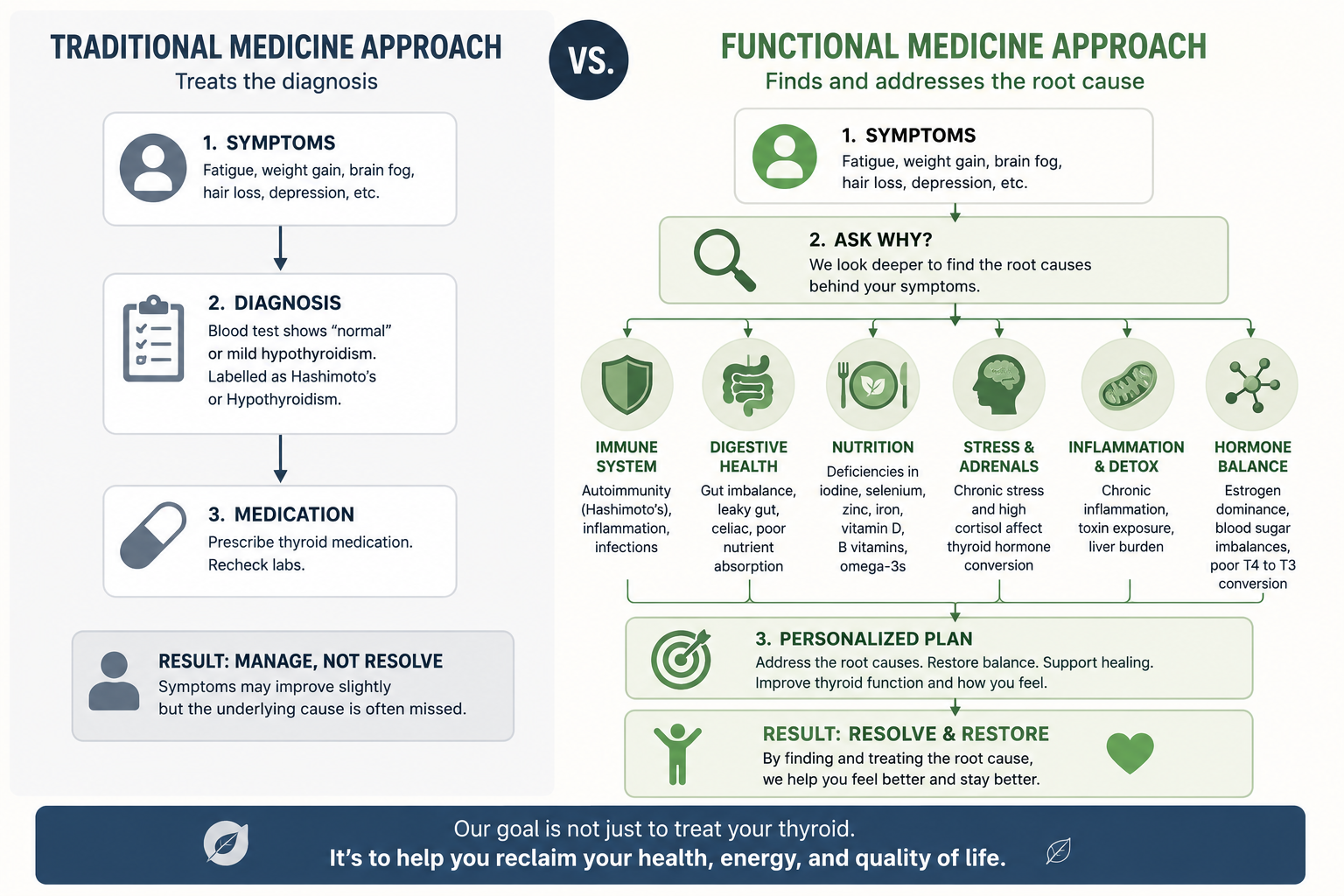
Traditional medicine often focuses on diagnosing and treating hypothyroidism. Functional medicine asks why thyroid dysfunction developed in the first place, evaluating factors such as immunity, digestion, nutrition, stress, inflammation, and hormone conversion to create a personalized plan.
If you’ve made it this far, you’ve probably realized something important.
Thyroid health is rarely as simple as taking a pill or correcting one laboratory value.
The thyroid is part of a much larger story. It’s influenced by your immune system, digestive health, nutrition, stress, sleep, inflammation, hormones, and many other factors that work together every day. When one of those systems begins to struggle, the thyroid often reflects those changes.
That’s why restoring thyroid health often requires looking beyond the thyroid itself.
Every Patient Has a Different Story
One of the reasons I’ve enjoyed practicing functional medicine for so many years is that no two patients are exactly alike.
Two people may arrive with the same diagnosis of hypothyroidism, yet their health histories can be completely different.
One patient may have Hashimoto’s disease.
Another may have poor conversion of thyroid hormone into its active form.
Someone else may be dealing with years of digestive problems that have affected nutrient absorption, while another has experienced prolonged stress that has gradually changed how their body functions.
On the surface, they all have the same diagnosis. Underneath, they’re telling very different stories.
That’s why I don’t believe in one-size-fits-all healthcare.
Our Goal Is to Understand Your Story
When someone comes to Total Health Center, my first objective isn’t recommending supplements or changing medications. It’s listening.
I want to know when your symptoms began. How they’ve changed over time. What you’ve already tried. What has helped. What hasn’t.
Most importantly, I want to understand how your health has affected your life.
I’ve found that patients often spend years trying to manage individual symptoms without anyone taking the time to connect the dots.
Sometimes simply understanding the entire story reveals patterns that were impossible to recognize when each symptom was viewed separately.
Only then do we begin deciding what additional evaluation, if any, is appropriate.
The Right Plan Starts With the Right Questions
Functional medicine isn’t about ordering more laboratory tests.
It’s about asking better questions.
Why did these symptoms begin? What systems are no longer working together? Is there an underlying process that connects seemingly unrelated problems? Those answers allow us to create a plan that’s based on your physiology rather than someone else’s protocol.
That’s one of the biggest differences between treating a diagnosis and caring for a person.
If you’re new to this philosophy, our Functional Medicine page explains how we use a systems-based approach to uncover the underlying causes of chronic health conditions.
Continue Learning
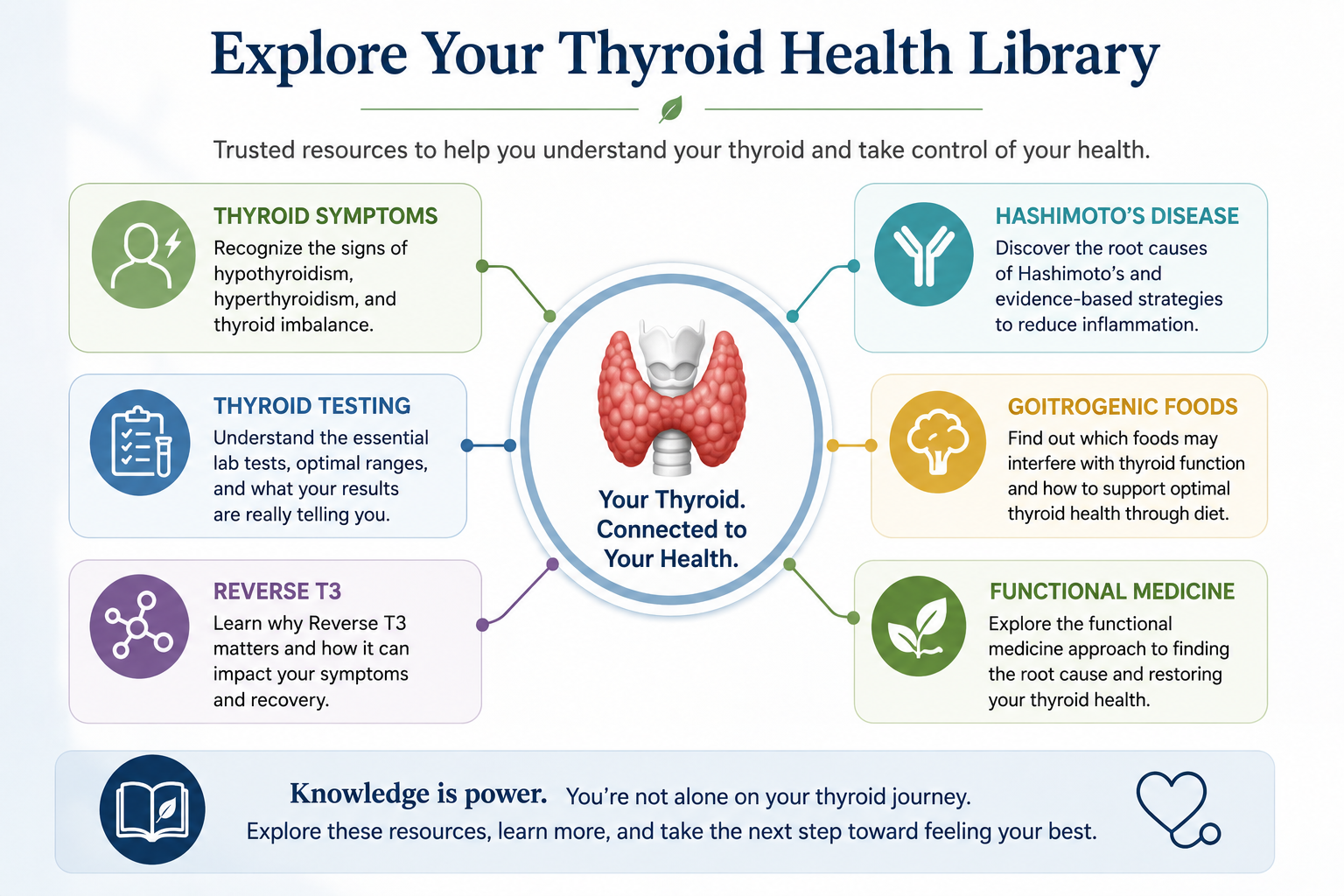
Continue your thyroid health journey by exploring our in-depth guides on thyroid symptoms, testing, Hashimoto’s disease, Reverse T3, goitrogenic foods, and the functional medicine approach to thyroid health.
One office visit can only cover so much. That’s one of the reasons we’ve built an entire thyroid education library.
Whether you’re trying to understand your symptoms, interpret your laboratory results, or learn more about autoimmune thyroid disease, these articles will help you continue learning long after you’ve finished this guide.
- Thyroid Problems & Symptoms
- Thyroid Testing
- Reverse T3
- Hashimoto’s Thyroiditis & Graves’ Disease
- Hashimoto’s Thyroiditis FAQs
- Goitrogenic Foods and Thyroid Health
- Functional Medicine
- Understanding Thyroid Function
Together, these resources provide a much deeper understanding of thyroid health than any single article ever could.
You Don’t Have to Figure This Out Alone
Many of the people who come to our office have spent years searching for answers.
They’ve seen multiple healthcare providers. They’ve tried different diets. Different supplements. Different medications.
Some have even started wondering if this is simply what getting older feels like.
I understand that frustration.
I’ve had countless conversations with patients who knew something was wrong but couldn’t explain why they felt the way they did. One of the most rewarding parts of my job is watching the relief that comes when those scattered pieces finally begin fitting together.
Not because we found a miracle cure. But because we finally understood the problem.
My Philosophy
Don’t let your thyroid become just another laboratory number.
Your symptoms matter. Your history matters. Your story matters.
Good healthcare isn’t simply about treating a diagnosis. It’s about understanding the person living with that diagnosis.
That’s the philosophy that has guided my practice for decades, and it’s the same philosophy that guides every patient evaluation at Total Health Center.
Ready to Take the Next Step?
If you’re experiencing fatigue, weight gain, brain fog, hair loss, constipation, or other symptoms that make you wonder whether your thyroid could be involved, we’d be honored to help.
Whether you’re looking for answers after years of frustration or you’re just beginning your health journey, our goal is the same: to understand your story, identify the factors affecting your health, and help you develop a personalized plan that supports long-term wellness.
If you’d like to learn whether a functional medicine approach is right for you, contact Total Health Center to schedule a consultation. Schedule Your Free Thyroid Consultation
Together, we’ll work to understand not only what is happening… but why. Because when you understand why, you can begin making decisions that move you toward lasting health.
Frequently Asked Questions
These questions must appear visibly on the page if the FAQPage schema below is used.
Can thyroid tests be normal even when I still have symptoms?
Yes. Routine thyroid screening often includes only TSH, which is an important marker but does not provide a complete picture of thyroid hormone production, conversion, transport, or autoimmune activity. A more comprehensive evaluation may include Free T4, Free T3, Reverse T3, and thyroid antibodies.
What thyroid tests may be considered beyond TSH?
Depending on the patient’s history and symptoms, a more complete thyroid evaluation may include TSH, Free T4, Free T3, Reverse T3, thyroid peroxidase antibodies, thyroglobulin antibodies, and other relevant metabolic or nutritional markers.
What is Hashimoto’s thyroiditis?
Hashimoto’s thyroiditis is an autoimmune condition in which the immune system mistakenly attacks thyroid tissue. Over time, this process can damage the thyroid and reduce its ability to produce enough thyroid hormone.
What is Reverse T3?
Reverse T3 is an inactive form of thyroid hormone. Under certain circumstances, the body may convert more T4 into Reverse T3 rather than active T3, potentially contributing to symptoms associated with reduced thyroid activity.
Can digestive problems affect thyroid health?
Digestive dysfunction may affect the absorption of nutrients needed for healthy thyroid function. Digestive inflammation and immune dysfunction may also be relevant in people with autoimmune thyroid conditions.
How is a functional medicine thyroid evaluation different?
A functional medicine evaluation considers symptoms, health history, laboratory findings, nutrition, digestion, stress, inflammation, immune function, sleep, and other factors that may influence thyroid physiology. The goal is to understand the individual rather than rely on one laboratory value.
Does functional medicine replace thyroid medication?
No. Thyroid medication may be necessary and beneficial for many patients. Functional medicine does not replace appropriate conventional care; it looks for additional factors that may be contributing to thyroid dysfunction or persistent symptoms.
Does Total Health Center offer thyroid consultations?
Yes. Total Health Center in Virginia Beach evaluates patients with thyroid symptoms and related chronic health concerns using a personalized functional medicine approach. The clinic also promotes functional medicine consultations through its current website
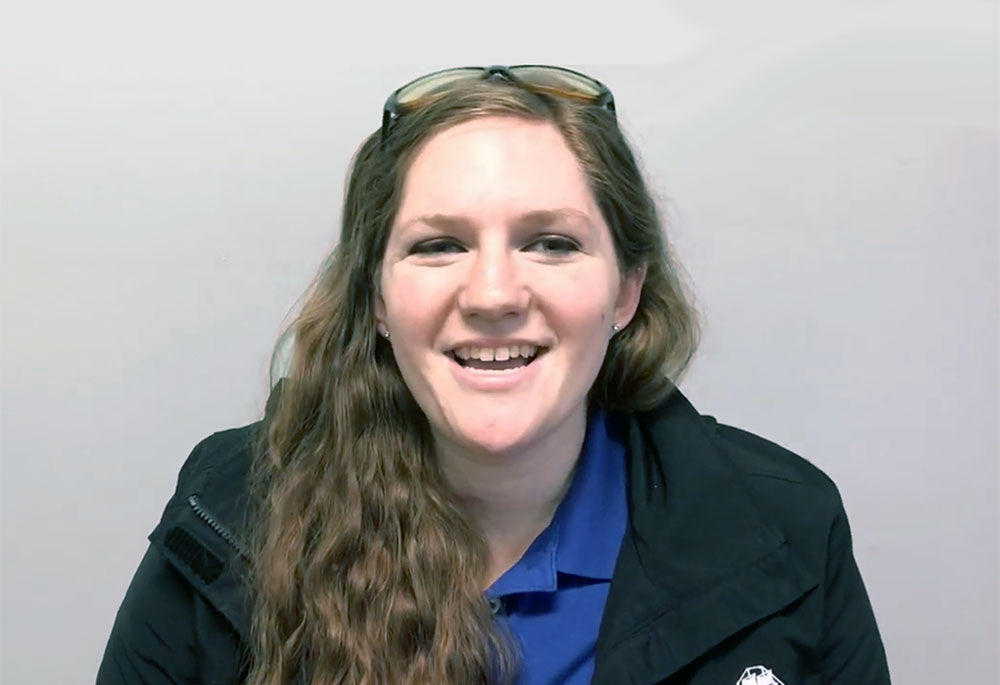
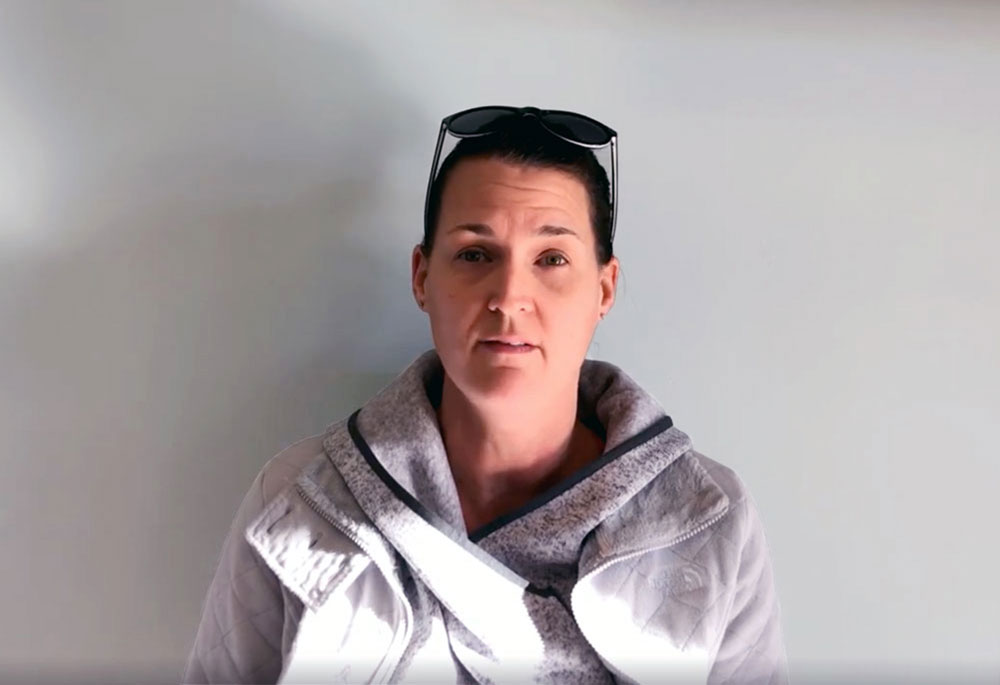
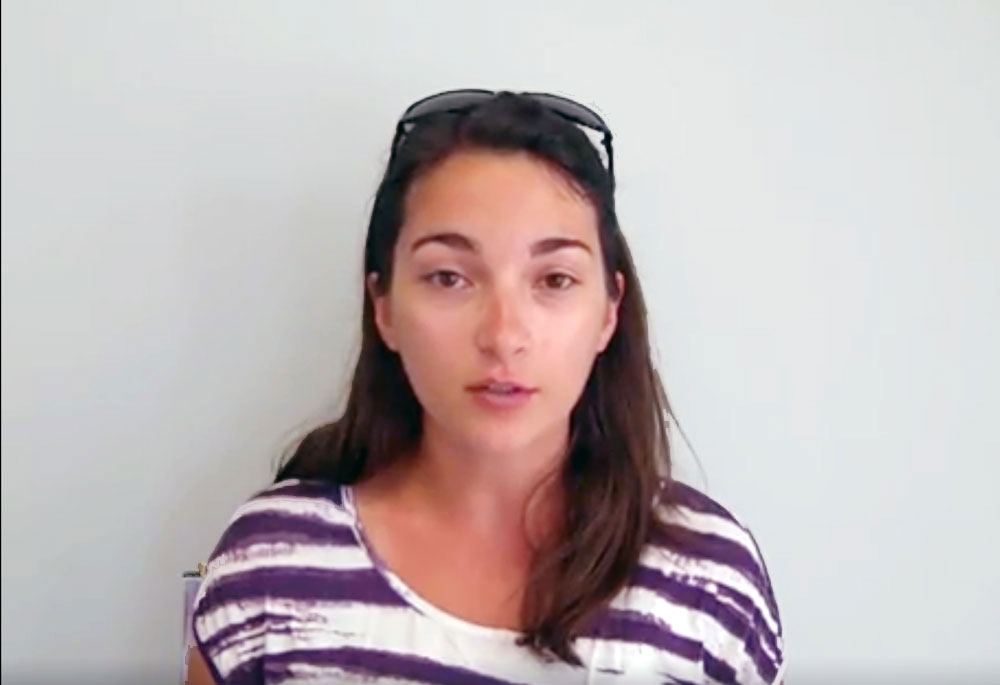
Natural Thyroid Treatment Testimonials
See what others are saying. Browse some of our thyroid patient testimonials below or visit our YouTube channel for more.



Awards

Congratulations to Mark Scott’s Practice on winning the 2015 Patients’ Choice Awards for Chiropractor in Virginia Beach, VA
Verified by
Opencare.com
Contact
Tel: (757) 363-8571
Awards

Congratulations to Mark Scott’s Practice on winning the 2015 Patients’ Choice Awards for Chiropractor in Virginia Beach, VA
Verified by
Opencare.com