Thyroid Testing:
Why “Normal” Thyroid Tests Don’t Always Tell the Whole Story
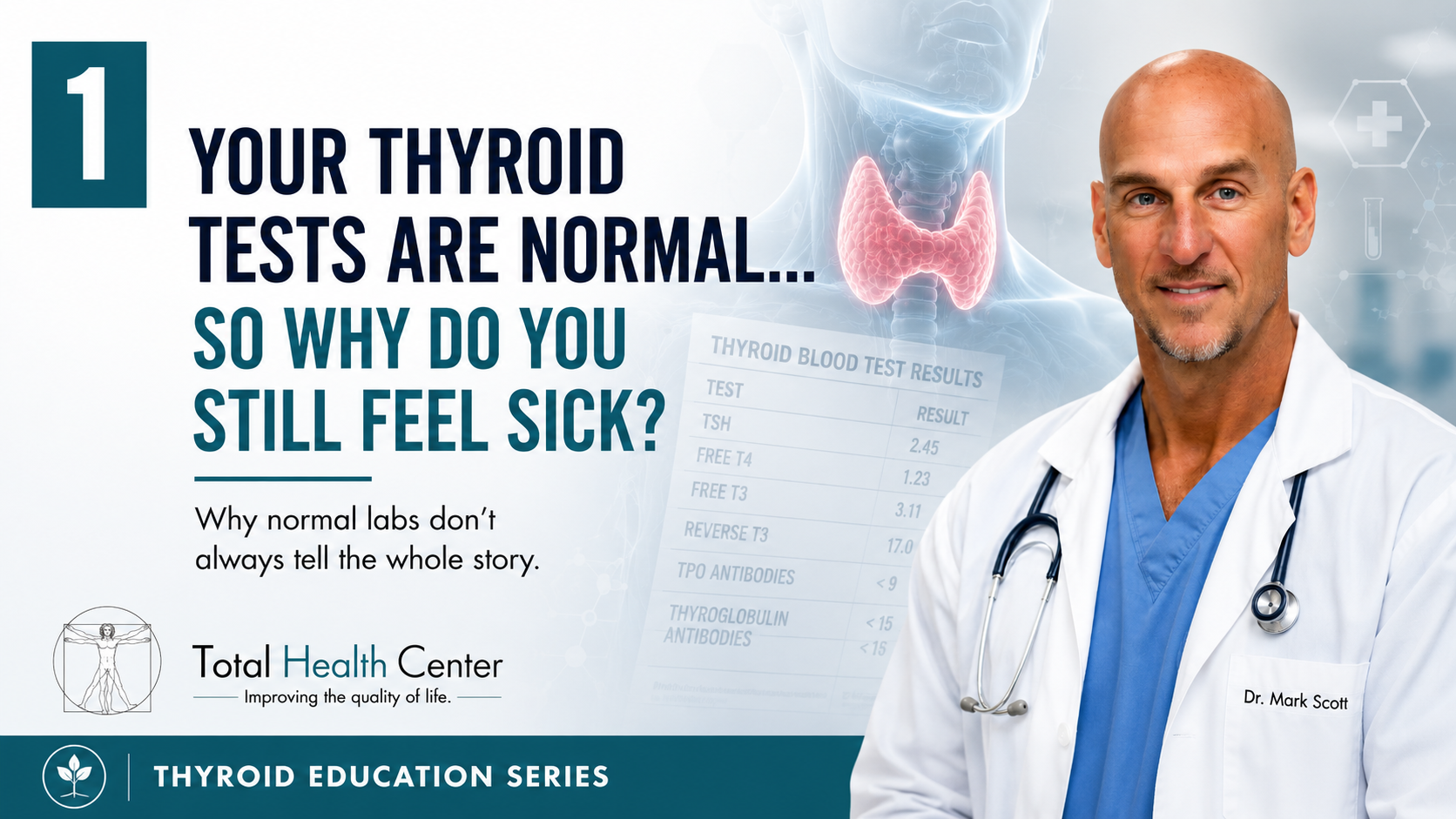
“My doctor tested my thyroid, and everything came back normal.”
It’s one of the most common statements I hear from new patients.
Many have already seen several healthcare providers. They’ve had blood work, followed the recommendations they were given, and yet they still don’t feel like themselves. They’re exhausted by mid-afternoon, struggling with brain fog, gaining weight despite eating well, or wondering why they feel cold when everyone else seems comfortable.
When they tell me their thyroid tests were normal, I always ask the same question.
“Which thyroid tests were performed?”
More often than not, the answer is,
“I’m not sure.”
That simple question often changes the entire conversation.
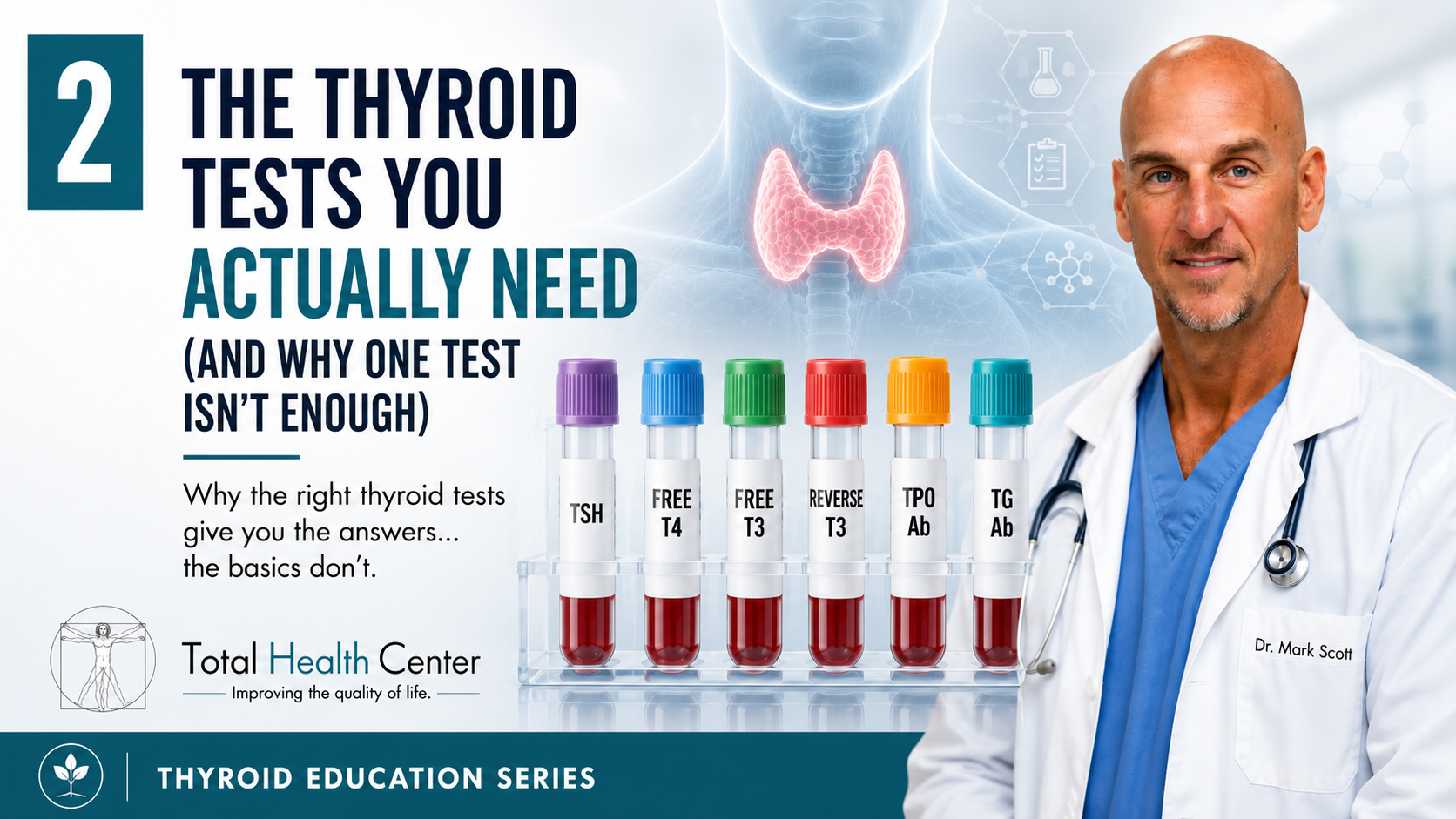
Most people are surprised to learn that there isn’t just one thyroid test. In fact, there are several laboratory markers, each providing different information about how the thyroid is functioning. Looking at only one marker can be a bit like trying to judge an entire movie after watching a single scene.
Understanding what each test measures—and just as importantly, what it doesn’t measure—can help explain why some people continue experiencing thyroid symptoms even after being told their laboratory work is “normal.”
What Is Thyroid Testing Really Trying to Measure?
Many people assume thyroid testing answers one simple question:
“Do I have thyroid disease?”
In reality, a comprehensive thyroid evaluation can answer much more than that.
It can help us determine whether your brain is communicating properly with your thyroid, whether the thyroid is producing enough hormone, whether that hormone is being converted into its active form, and whether your immune system may be attacking the thyroid itself.
Those are very different questions.
Unfortunately, many routine evaluations only answer one of them.
That’s one reason people sometimes leave the doctor’s office feeling frustrated. Their laboratory report may look reassuring, yet they continue experiencing fatigue, weight gain, brain fog, constipation, hair loss, or other symptoms that suggest something still isn’t functioning the way it should.
If you’re still wondering whether your symptoms could be related to your thyroid, our Thyroid Problems & Symptoms guide provides an excellent place to begin.
Why TSH Isn’t the Whole Story
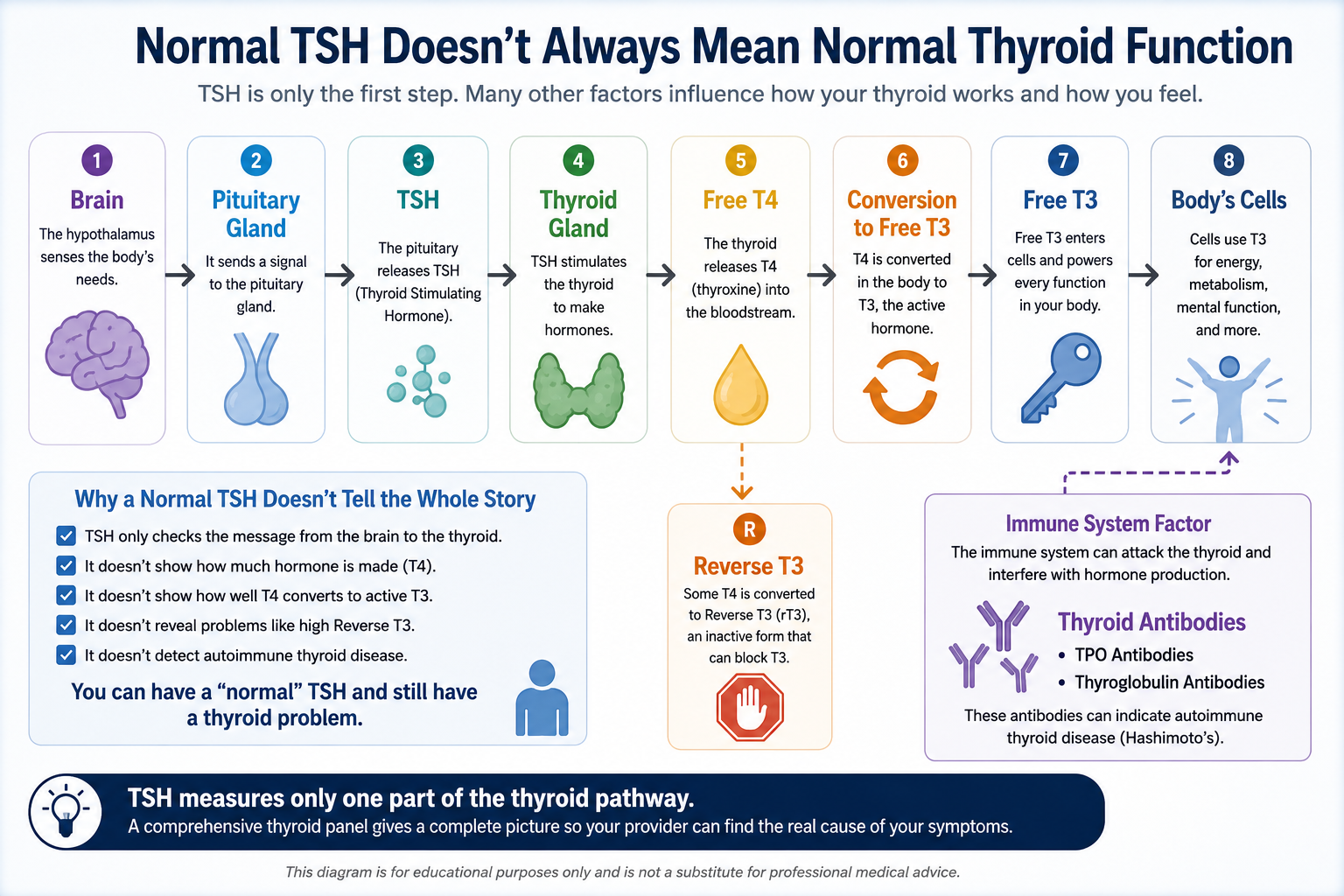
A normal TSH doesn’t evaluate every part of thyroid hormone production, conversion, or autoimmune activity.
One of the biggest misconceptions in thyroid medicine is that TSH is the thyroid hormone.
It isn’t.
TSH stands for Thyroid Stimulating Hormone, and it’s produced by the pituitary gland in the brain. Its job is to act as a messenger, telling the thyroid gland how hard it should work.
A simple analogy is your home’s thermostat.
The thermostat measures the temperature inside your house and sends a signal to the furnace when more heat is needed. The thermostat isn’t producing the heat—it’s simply giving instructions.
TSH works much the same way. It signals the thyroid gland to produce more or less thyroid hormone depending on what the brain believes the body needs.
That’s what makes TSH such a valuable laboratory marker. It tells us how the communication between the brain and the thyroid is functioning.
What it doesn’t tell us is whether enough active thyroid hormone is actually reaching your cells.
For example, your thyroid may produce an adequate amount of hormone, but if that hormone isn’t being converted efficiently into its active form—or if another process is interfering with how that hormone is used—you may continue experiencing symptoms even though your TSH falls within the laboratory reference range.
That’s why TSH is an important piece of the puzzle.
It just isn’t the entire puzzle.
Understanding the Thyroid Hormone Pathway
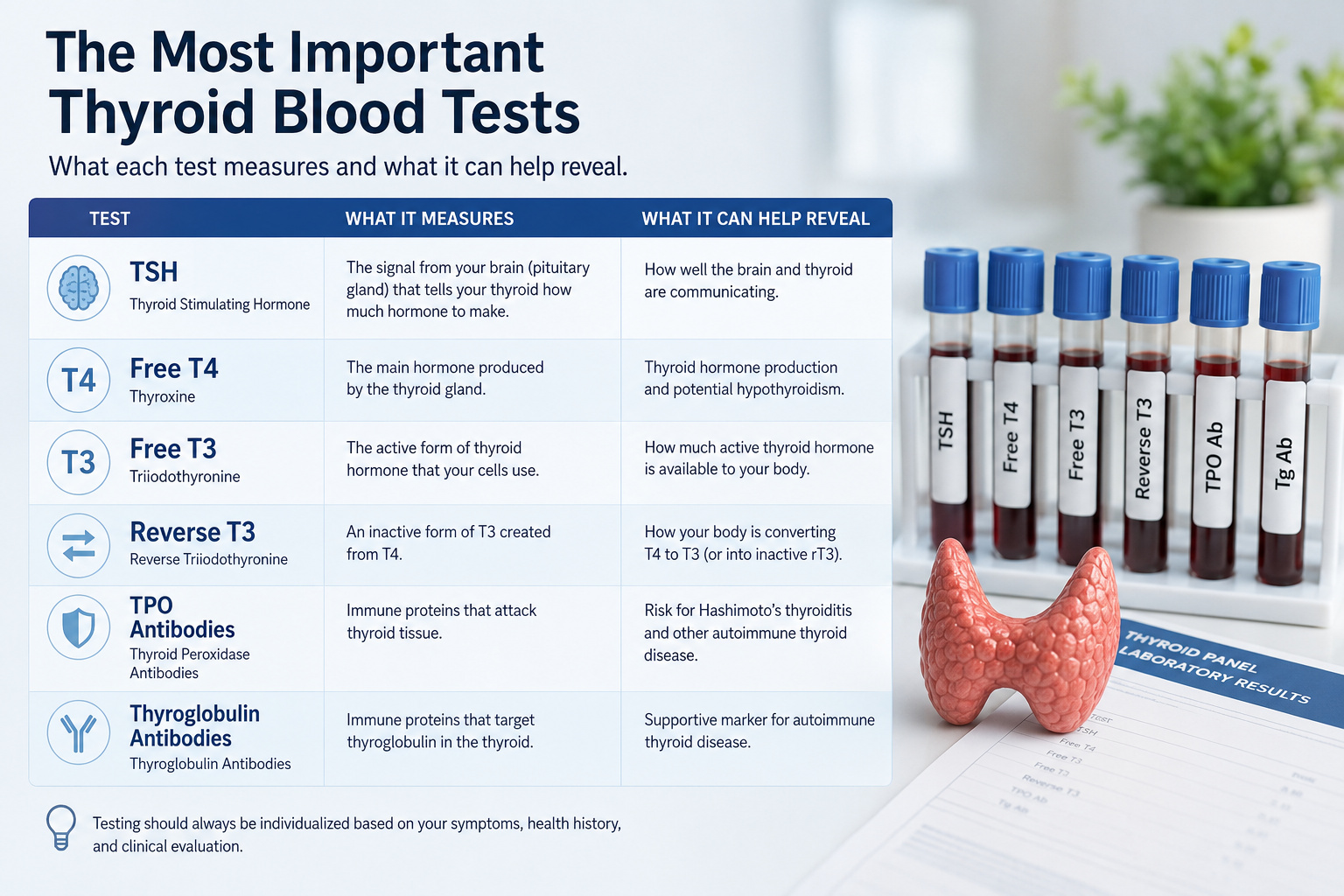
The most commonly ordered thyroid blood tests each answer a different question about how your thyroid is functioning.
Your thyroid system works like a chain. Each step depends on the one before it, and a problem anywhere along that pathway can influence how you feel.
Brain → Pituitary → TSH → Thyroid Gland → T4 → T3 Conversion → Active T3 → Every Cell in Your Body
The goal of comprehensive thyroid testing is to determine where along that pathway the problem may be occurring.
Looking at only one laboratory marker is a little like trying to understand an entire football game after watching a single play. You may learn something useful, but you won’t see the whole picture.
That’s why a comprehensive thyroid evaluation often includes several different laboratory markers. Each one contributes another piece of information, allowing us to better understand not only whether something is wrong, but why it may be happening.
Free T4: Is Your Thyroid Producing Enough Hormone?
The thyroid gland primarily produces T4, also known as thyroxine.
Think of T4 as the body’s storage form of thyroid hormone. It circulates through the bloodstream waiting to be converted into T3, the active hormone your cells actually use.
Measuring Free T4 helps answer an important question:
“Is the thyroid gland producing an appropriate amount of hormone?”
That’s valuable information.
But it still doesn’t tell us whether that hormone is being activated and used efficiently throughout the body.
To answer that question, we need to look a little further.
Free T3: The Hormone That Powers Your Cells
If T4 is the storage hormone, T3 is the active hormone.
It’s the form that enters your cells and helps regulate energy production, metabolism, body temperature, digestion, brain function, and countless other processes throughout the body.
Some people produce adequate amounts of T4 but don’t efficiently convert enough of it into T3. Others convert normally but have different factors that affect how thyroid hormone functions once it reaches the tissues.
This helps explain why two people with nearly identical TSH values can feel completely different.
Measuring Free T3 provides another important piece of the story and gives us a better understanding of how much active thyroid hormone may actually be available to support normal cellular function.
The next step is understanding what happens when the body converts T4 into something other than active T3.
We’ll explore that in our Reverse T3 guide.
Reverse T3: When the Body Takes a Different Path
By now, you’ve probably noticed something important.
Not every molecule of T4 becomes active T3.
In fact, your body has another option. It can convert T4 into Reverse T3, an inactive form of thyroid hormone. That surprises many people because they assume thyroid hormone has only one destination. Once the thyroid produces T4, they imagine it simply becomes T3 and goes to work.
The reality is much more interesting.
Your body is constantly deciding how thyroid hormone should be used based on what’s happening internally. Under healthy conditions, much of the T4 produced by the thyroid is converted into active T3, allowing your cells to produce energy, regulate metabolism, support brain function, and maintain countless other normal processes.
Sometimes, however, the body shifts priorities. Instead of converting as much T4 into active T3, it begins converting a greater percentage into Reverse T3.
Reverse T3 doesn’t activate thyroid receptors the way T3 does. It’s essentially an inactive hormone. When more T4 is diverted down this pathway, less may be available for conversion into active T3.
That doesn’t automatically mean Reverse T3 is causing your symptoms.
It simply provides another piece of information that may help explain what the body is doing.
If you’d like to learn more about how this process works, we’ve written an in-depth guide on Reverse T3.
Why Would the Body Do That?
This is one of the questions I hear most often.
“Why would my body make an inactive hormone?”
The answer actually makes a great deal of biological sense.
Your body is constantly adapting to its environment. When everything is functioning normally, it prioritizes growth, repair, reproduction, and maintaining a healthy metabolism. When the body is under significant stress, however, those priorities can change.
Periods of serious illness, surgery, prolonged emotional stress, chronic inflammation, severe calorie restriction, or other physiologic challenges may trigger protective adaptations designed to conserve energy. One of those adaptations may involve producing more Reverse T3.
Think of it as the body saying,
“Right now, survival is more important than maximum performance.”
From an evolutionary perspective, that response may have helped our ancestors survive periods of famine or severe illness.
The challenge is determining whether that same adaptive response is still appropriate today—or whether it has become part of a larger pattern contributing to ongoing symptoms.
Should Everyone Be Tested for Reverse T3?
No.
This is an area where I think it’s important to avoid oversimplification.
On the internet, you’ll often find claims that everyone with fatigue, hypothyroidism, or brain fog should have Reverse T3 measured. I don’t believe medicine works that way.
Every laboratory test should answer a meaningful clinical question. If the result isn’t likely to change how we interpret the patient’s condition or influence the next step in the evaluation, the test may not add much value.
On the other hand, when someone continues experiencing significant thyroid symptoms despite apparently normal routine testing, Reverse T3 may provide another clue that helps us better understand the overall picture.
Like every laboratory marker, it should always be interpreted alongside the patient’s symptoms, medical history, physical examination, and the rest of their thyroid panel. No single laboratory value should ever be used in isolation.
Thyroid Antibodies: Is the Immune System Involved?
Another important question thyroid testing can answer is whether the immune system has become involved.
For many patients, that’s a turning point in understanding their diagnosis. Instead of asking,
“Is my thyroid weak?”
the question becomes,
“Is my immune system attacking my thyroid?”
This is where thyroid antibody testing becomes especially valuable.
The two antibodies most commonly measured are Thyroid Peroxidase (TPO) antibodies and Thyroglobulin antibodies. Elevated levels may indicate Hashimoto’s thyroiditis, the most common cause of hypothyroidism in developed countries.
One of the most important things to understand is that antibodies often become elevated years before thyroid hormone levels change enough to produce an abnormal TSH. In other words, the autoimmune process may already be underway while routine thyroid screening still appears completely normal.
That’s why antibody testing can provide valuable information in the appropriate clinical setting.
If you’d like to better understand autoimmune thyroid disease, I encourage you to read our complete guide to Hashimoto’s Thyroiditis.
Have questions about thyroid antibodies, Hashimoto’s symptoms, medication, or diet?
Read:
Looking at the Whole Picture
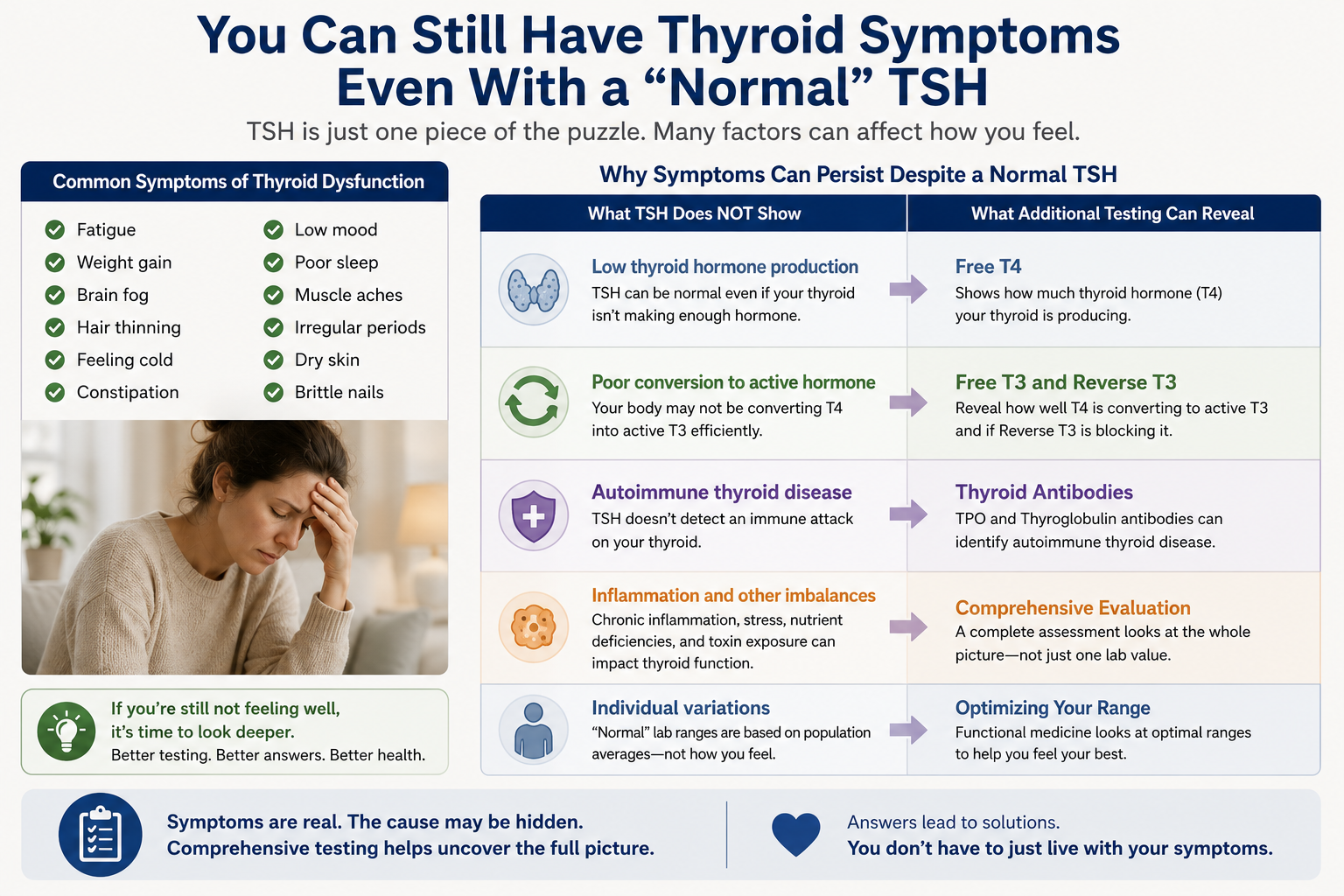
Persistent thyroid symptoms don’t always mean your thyroid is normal. Comprehensive evaluation considers hormone production, hormone conversion, autoimmune disease, and the whole clinical picture.
By now, you can probably see why comprehensive thyroid testing isn’t about finding one “magic” laboratory marker. It’s about understanding how each piece fits into a much larger story.
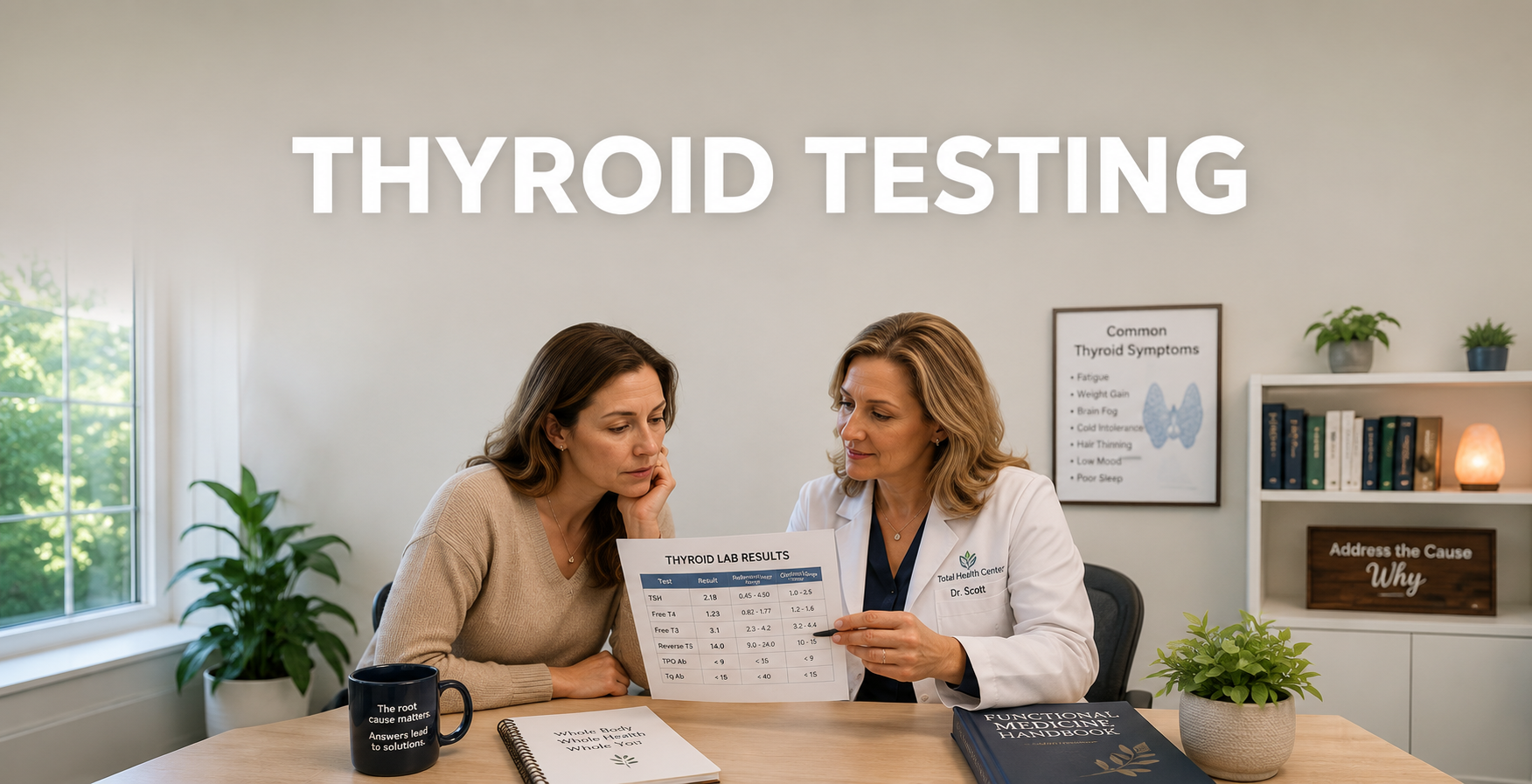
TSH tells us how the brain is communicating with the thyroid. Free T4 helps us evaluate hormone production. Free T3 shows us how much active thyroid hormone may be available to the body’s tissues. Reverse T3 can provide additional insight into hormone conversion under specific circumstances, while thyroid antibodies help determine whether the immune system is involved.
Each marker answers a different question.
Individually, every test has value. Together, they allow us to understand the thyroid much more completely than any single laboratory value ever could.
That’s why I rarely focus on just one number.
I focus on understanding the entire story.
Comprehensive Testing Is Only One Piece of the Puzzle
Even the most comprehensive thyroid panel has limitations.
Laboratory testing is incredibly valuable, but it doesn’t replace listening to the patient.
Your symptoms. Your medical history. Your lifestyle. Your nutrition. Your stress levels. Your digestive health.
Each provides information that no blood test can measure.
That’s one of the reasons functional medicine takes a broader view of thyroid health. Rather than asking only, “What do the laboratory tests show?”, we also ask, “Why might these changes be occurring?”
The goal isn’t simply to diagnose thyroid disease. The goal is to understand why your body is functioning the way it is and to use that information to guide a personalized plan for better health.
If you’d like to learn more about that whole-body approach, visit our Functional Medicine page.
When Does More Comprehensive Thyroid Testing Make Sense?
Not everyone needs every thyroid test.
If you’re healthy, have no symptoms, and your routine laboratory work is normal, additional testing may not provide meaningful information.
The situation changes when someone continues struggling with symptoms that suggest thyroid dysfunction despite being told everything looks normal.
Persistent fatigue, difficulty losing weight, brain fog, constipation, hair loss, feeling unusually cold, dry skin, or a strong family history of thyroid disease may all warrant a more comprehensive evaluation.
The goal isn’t to order more tests simply for the sake of testing.
The goal is to answer questions that haven’t yet been answered.
Laboratory Testing Should Support Clinical Judgment
One of the most important lessons I’ve learned over the years is that laboratory results should never replace listening to the patient.
I’ve met people with laboratory values that looked almost perfect on paper, yet they clearly weren’t functioning at their best. I’ve also seen patients with abnormal laboratory values who felt remarkably well.
Neither situation tells the whole story.
Laboratory testing provides valuable information, but it’s only one part of a comprehensive evaluation. Symptoms, medical history, lifestyle, nutrition, sleep, stress, digestive health, medications, and previous illnesses all contribute to understanding why someone feels the way they do.
Good healthcare requires putting those pieces together rather than focusing on a single laboratory value.
A Functional Medicine Approach to Thyroid Testing
This is one of the biggest differences between conventional and functional medicine.
Conventional medicine often asks,
“Is there thyroid disease?”
Functional medicine asks,
“Why is this person experiencing thyroid symptoms?”
Those aren’t the same question.
Sometimes the answer is straightforward.
Sometimes it’s much more complex.
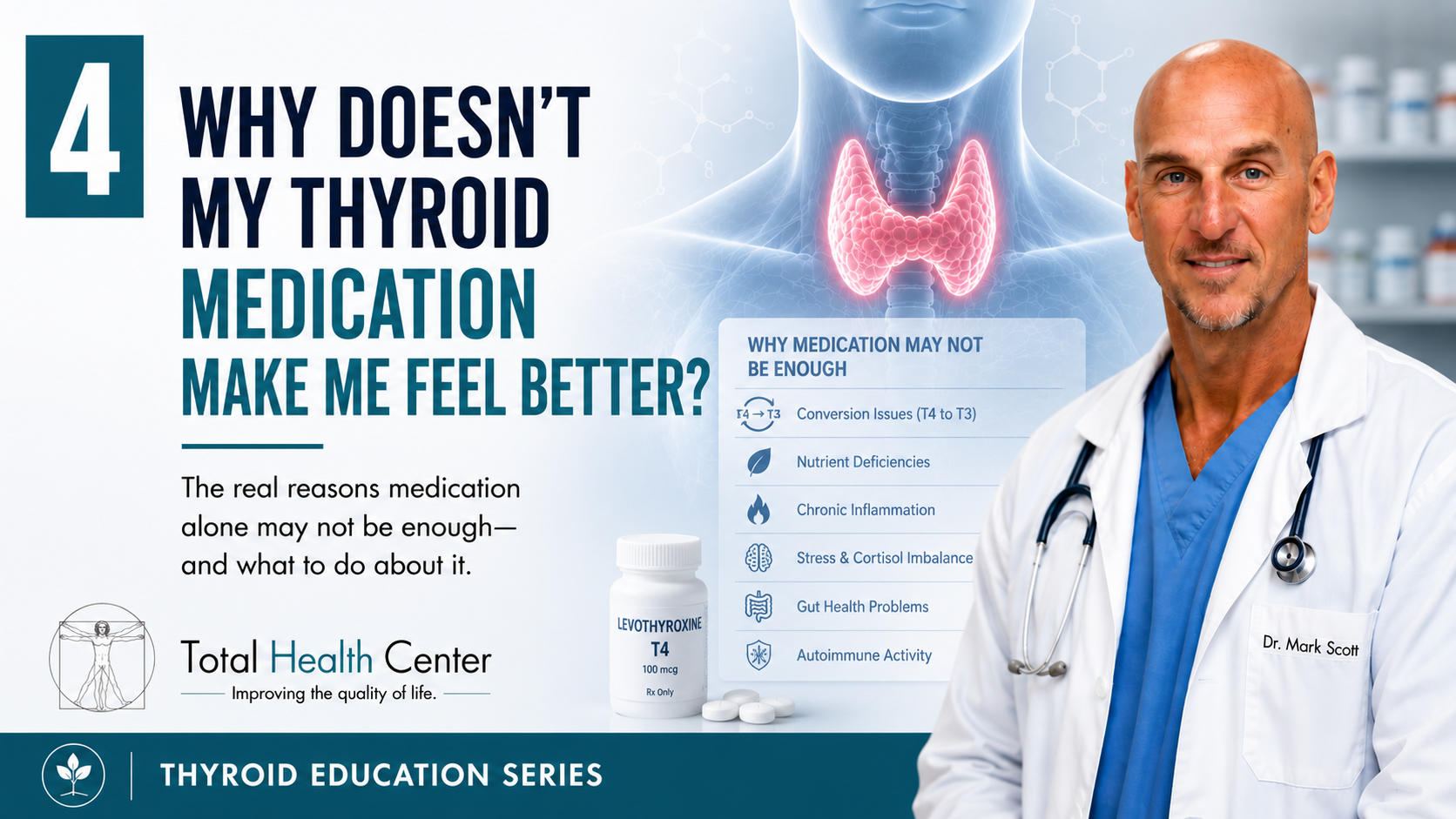
That’s why a functional medicine evaluation doesn’t stop with the thyroid. Depending on the individual, we may also consider factors such as nutrient deficiencies, digestive health, chronic inflammation, blood sugar regulation, stress physiology, hormone balance, and autoimmune activity. These systems constantly influence one another, and understanding how they interact often provides a clearer picture than looking at the thyroid alone.
If you’re interested in learning more about this whole-body approach, visit our Functional Medicine page.
Continue Learning About Thyroid Health
Understanding thyroid testing is only one step toward understanding your health.
We’ve created a comprehensive thyroid education library to help you explore the topics that matter most, whether you’re trying to understand persistent symptoms, interpret laboratory results, or learn more about autoimmune thyroid disease.
You may also find these articles helpful:
- Thyroid Problems & Symptoms
- Reverse T3: Understanding Thyroid Hormone Conversion
- Hashimoto’s Thyroiditis
- Goitrogenic Foods and Thyroid Health
These articles build on one another, providing a deeper understanding of thyroid health than any single page can offer.
Ready to Take the Next Step?
If you’ve been told your thyroid tests are normal but you still don’t feel like yourself, don’t ignore what your body is trying to tell you.
Sometimes the answer is straightforward.
Sometimes it requires looking a little deeper.
At Total Health Center, our goal is to understand your symptoms, your history, and the factors that may be influencing your thyroid health. By combining thoughtful clinical evaluation with appropriate laboratory testing, we work to identify patterns that can help guide a personalized plan for better health.
Whether you’re just beginning to search for answers or you’ve been struggling with thyroid symptoms for years, we’re here to help you better understand what’s happening—and what your next step should be.
About Dr. Scott
Dr. Mark Scott is the founder and clinic director of Total Health Center in Virginia Beach. He has been helping patients with chronic and complex health conditions for nearly three decades through an integrative approach that combines functional medicine, advanced laboratory interpretation, chiropractic care, nutrition, and lifestyle medicine.
His clinical focus includes thyroid disorders, autoimmune disease, digestive health, hormone balance, metabolic health, and chronic fatigue. Dr. Scott believes the goal isn’t simply to manage symptoms—it’s to understand why they developed and help patients restore healthier function whenever possible.
Learn more about Dr. Scott:
https://totalhealthcentervb.com/about-thc/meet-dr-scott/
Frequently Asked Questions
1. Why can I have thyroid symptoms if my TSH is normal?
TSH is an important screening test, but it doesn’t measure every aspect of thyroid function. Some people continue experiencing symptoms because other factors—such as thyroid hormone conversion, autoimmune thyroid disease, or other health conditions—may be contributing to how they feel. A more comprehensive thyroid evaluation may provide additional insight in the appropriate clinical setting.
2. What thyroid tests are most important?
The most appropriate thyroid tests depend on your symptoms and medical history. Common laboratory markers include TSH, Free T4, Free T3, thyroid antibodies, and in selected cases, Reverse T3. Each test provides different information about how the thyroid is functioning.
3. Is TSH the only thyroid test I need?
Not always. TSH is an excellent screening tool, but it primarily reflects communication between the brain and the thyroid gland. Depending on your symptoms, additional tests may help evaluate thyroid hormone production, hormone conversion, or autoimmune thyroid disease.
4. What is the difference between T4 and T3?
T4 is the primary hormone produced by the thyroid gland and is often considered the body’s storage form of thyroid hormone. T3 is the active hormone that enters cells and helps regulate metabolism, energy production, brain function, and many other physiologic processes.
5. What is Reverse T3?
Reverse T3 is an inactive form of thyroid hormone produced from T4. Under certain physiologic conditions, the body may convert more T4 into Reverse T3 instead of active T3. In selected patients, measuring Reverse T3 may provide additional information about thyroid hormone metabolism.
6. What are thyroid antibodies?
Thyroid antibodies are proteins produced by the immune system that may attack thyroid tissue. Elevated thyroid peroxidase (TPO) antibodies or thyroglobulin antibodies can indicate autoimmune thyroid disease, including Hashimoto’s thyroiditis.
7. Should everyone have a complete thyroid panel?
No. Laboratory testing should be individualized based on a person’s symptoms, medical history, physical examination, and clinical findings. Not every patient requires every thyroid test.
8. Can Hashimoto’s disease be present before thyroid tests become abnormal?
Yes. Thyroid antibodies may become elevated years before routine thyroid hormone levels or TSH become abnormal. That’s one reason antibody testing may be appropriate for some patients with persistent symptoms or a strong family history of autoimmune thyroid disease.
9. What happens during a functional medicine thyroid evaluation?
A functional medicine evaluation considers more than laboratory values alone. In addition to thyroid testing, factors such as nutrition, digestive health, stress, inflammation, immune function, medications, lifestyle, and medical history may all be evaluated to better understand why thyroid symptoms are occurring.
10. When should I consider a more comprehensive thyroid evaluation?
If you’re experiencing persistent fatigue, brain fog, weight gain, hair loss, constipation, cold intolerance, or other symptoms despite being told your thyroid tests are normal, it may be appropriate to discuss a more comprehensive evaluation with your healthcare provider.