
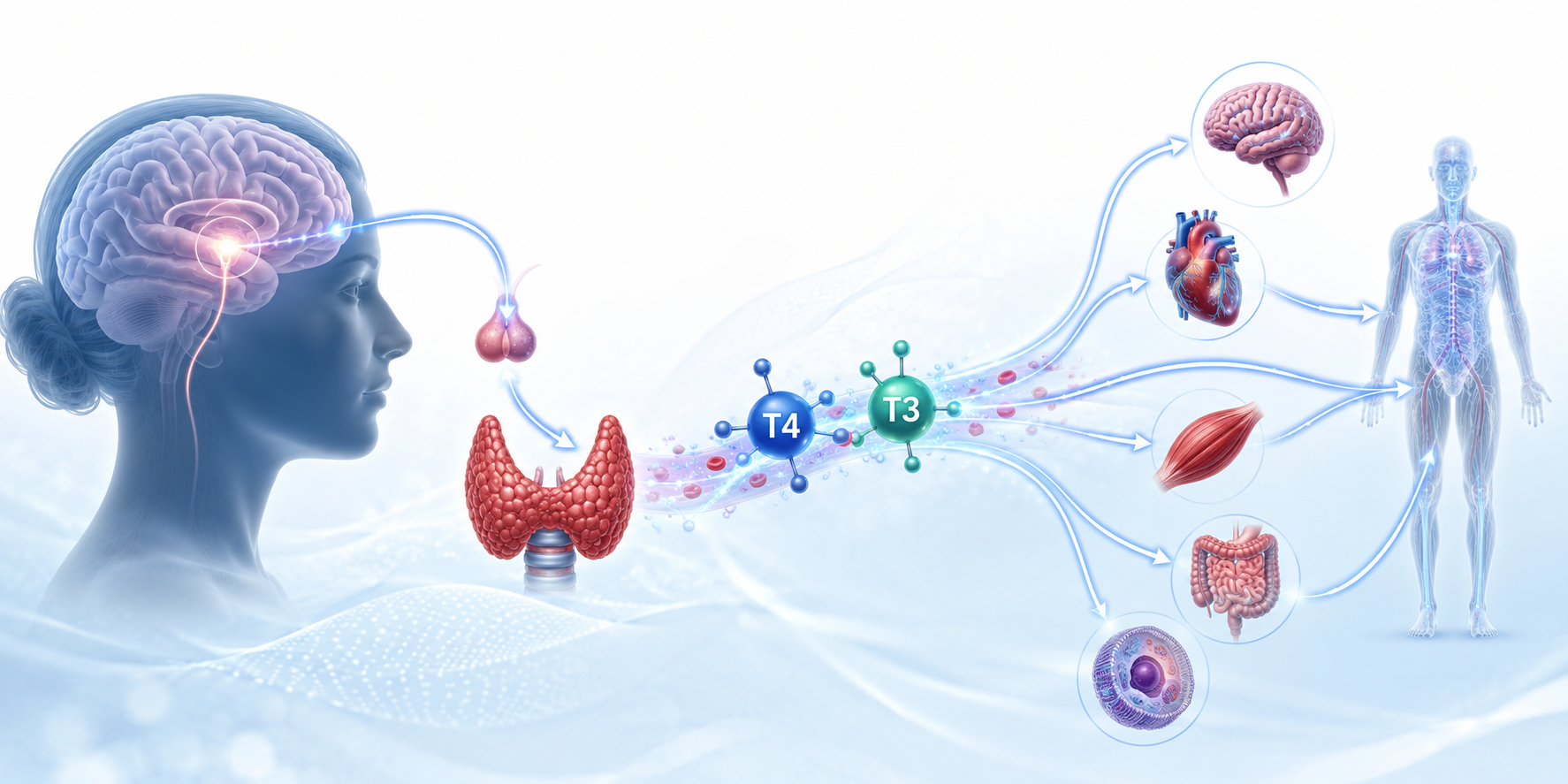
Why Understanding Thyroid Function Matters
If you’ve ever been told you have a thyroid problem, you’ve probably heard terms like TSH, T4, T3, hypothyroidism, or hyperthyroidism. For many people, those words quickly become a confusing collection of laboratory values and medical terminology that never quite explains what the thyroid actually does.
The truth is that your thyroid isn’t simply a gland in your neck. It’s part of an incredibly sophisticated communication network that influences nearly every cell in your body. From the moment your brain sends a signal to the thyroid until thyroid hormone reaches the cells that produce energy, dozens of steps must work together properly.
Think of it like an orchestra.
A beautiful performance depends on far more than one talented musician. Every instrument has a role, the conductor keeps everyone synchronized, and the music only sounds right when every section performs together. If one section falls behind, the audience hears the difference.
Your thyroid functions much the same way.
The brain, pituitary gland, thyroid gland, liver, digestive system, bloodstream, and individual cells all play important roles in regulating thyroid hormone activity. When one part of that system isn’t working properly, the effects can be felt throughout the entire body.
That’s why understanding thyroid function is so important.
Many people assume the thyroid gland alone determines thyroid health. In reality, problems can occur anywhere along the pathway. Sometimes the thyroid itself is the problem. Other times the gland produces adequate hormone, but the hormone isn’t converted efficiently, transported properly, or utilized effectively by the body’s tissues.
This broader understanding also helps explain why two people with similar laboratory values may experience very different symptoms.
If you’ve already read our guide to Thyroid Problems & Symptoms, you know that thyroid dysfunction can affect energy, metabolism, mood, digestion, cardiovascular health, body temperature, and many other systems. Understanding how thyroid hormone normally works provides the foundation for understanding why these symptoms occur.
Meet Your Thyroid Gland
The thyroid is a small butterfly-shaped gland located in the front of your neck, just below your Adam’s apple. Although it weighs less than an ounce, its influence extends throughout nearly every organ system in the body.
The thyroid’s primary responsibility is producing hormones that regulate metabolism.
Metabolism isn’t simply how quickly you burn calories. It’s the collection of chemical processes that allow every cell in your body to produce energy, repair tissues, regulate temperature, manufacture proteins, support brain function, and maintain countless other essential activities.
Because every cell depends on energy, nearly every cell depends on thyroid hormone.
When thyroid hormone activity is too low, many of these processes begin to slow. People may experience fatigue, weight gain, constipation, dry skin, depression, cold intolerance, slower heart rate, or difficulty concentrating.
When thyroid hormone activity is too high, the opposite often occurs. Metabolism accelerates, leading to symptoms such as rapid heartbeat, anxiety, tremors, heat intolerance, weight loss, excessive sweating, and difficulty sleeping.
These opposite symptom patterns help explain why thyroid disorders can affect nearly every aspect of how you feel.
The Brain Is Really in Charge
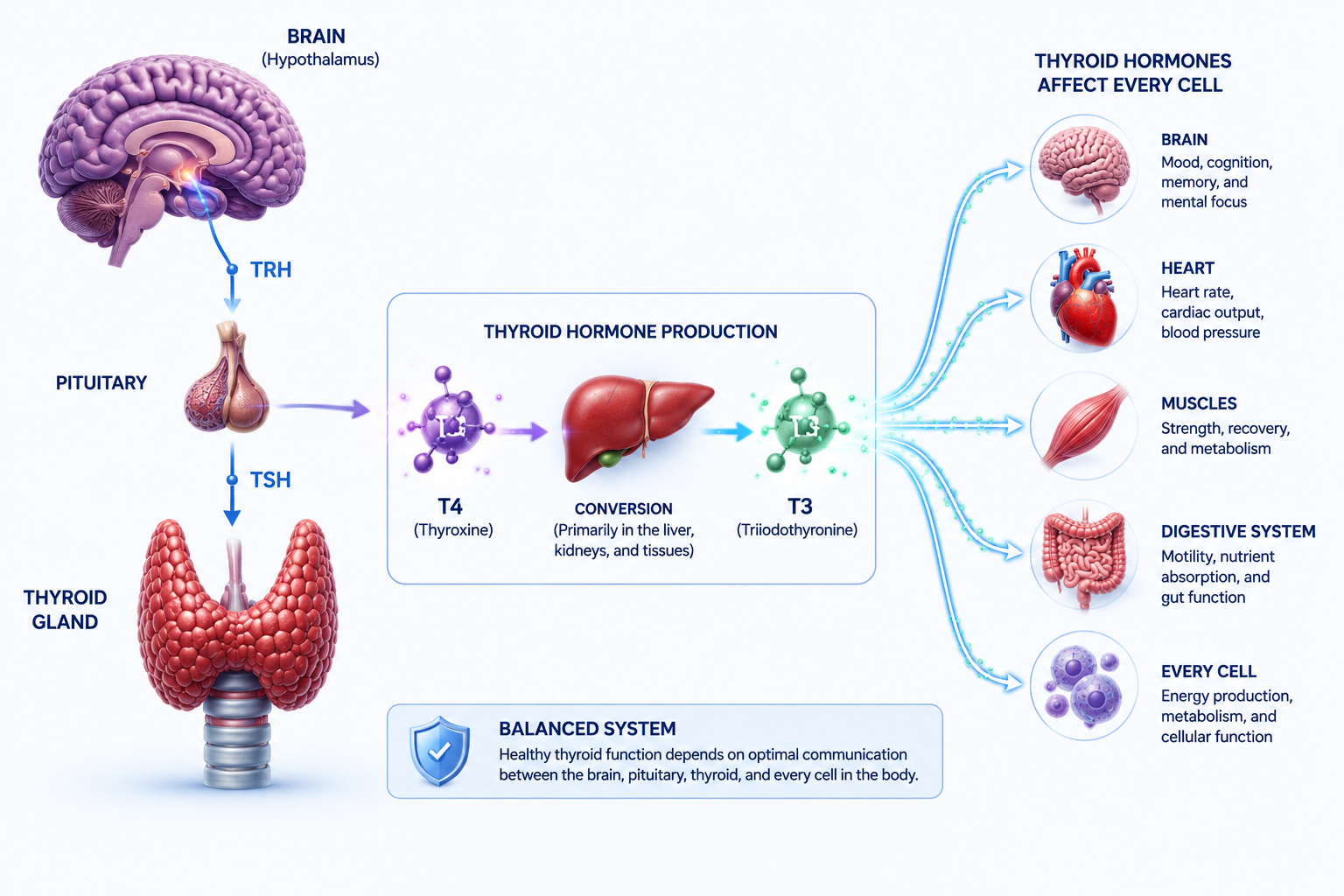
Normal thyroid function depends on communication between the brain, pituitary gland, thyroid gland, thyroid hormone conversion, and the body’s cells. A problem anywhere along this pathway can influence how thyroid hormones affect metabolism and overall health.
Many people think the thyroid decides how much hormone to produce.
It doesn’t.
The thyroid spends most of its time responding to instructions coming from the brain.
The process begins in a small area deep within the brain called the hypothalamus.
The hypothalamus continuously monitors the body’s needs and communicates with another small gland located just beneath it called the pituitary gland.
The pituitary is often called the “master gland” because it regulates many hormonal systems throughout the body, including the thyroid.
When the pituitary determines that more thyroid hormone is needed, it releases thyroid-stimulating hormone, commonly known as TSH.
Despite its name, TSH is not thyroid hormone.
Instead, think of TSH as a messenger.
Its job is to travel through the bloodstream and tell the thyroid gland how hard to work.
If more thyroid hormone is needed, TSH levels generally increase. If adequate thyroid hormone is already circulating, TSH production usually decreases through a sophisticated feedback system.
This is why TSH is commonly used as the first screening test for thyroid disease. It provides useful information about how the brain is communicating with the thyroid.
However, TSH only measures one step in a much larger pathway.
As we explain in our Thyroid Testing guide, relying on TSH alone doesn’t always provide a complete picture of thyroid function.
The Thyroid Produces Mostly T4
Once the thyroid receives the signal from TSH, it begins producing thyroid hormones.
Surprisingly, about 80 to 90 percent of the hormone released by the thyroid is thyroxine, commonly called T4.
Most people assume this is the hormone that powers the body’s cells.
It isn’t.
T4 functions primarily as a storage or transport hormone. You can think of it as a reserve supply that circulates through the bloodstream waiting to be converted into a more active form.
Only a relatively small amount of the hormone released directly from the thyroid is triiodothyronine, or T3.
This design is actually remarkably efficient.
Rather than flooding the body with active hormone all at once, the body produces a stable supply of T4 that can later be converted into T3 where and when it’s needed. This allows different tissues to regulate their thyroid activity according to their own metabolic demands.
Understanding this distinction is one of the keys to understanding thyroid physiology.
Many people hear they have “normal thyroid hormone levels” without realizing that the body still has several important steps remaining before thyroid hormone can actually influence cellular metabolism.
T3: The Hormone Your Cells Actually Use
If T4 is the body’s storage hormone, then T3 is the hormone that actually gets the work done.
This is one of the most important concepts in understanding thyroid physiology.
Imagine purchasing gasoline for your car. The fuel sitting in the tank has potential, but until it reaches the engine and is burned, it doesn’t move the vehicle forward.
Thyroid hormone works in a similar way.
T4 provides a stable reserve of hormone that circulates throughout the body, but T3 is the biologically active form that enters cells and helps regulate metabolism. Once inside the cell, T3 binds to receptors in the nucleus, influencing the activity of hundreds of genes involved in energy production, growth, tissue repair, body temperature regulation, and countless other metabolic processes.
This is why T3 is often referred to as the active thyroid hormone.
Every organ in your body depends on this process.
Your heart uses T3 to regulate heart rate and the strength of each heartbeat. Your brain depends on T3 to support concentration, memory, and mood. Your muscles rely on T3 to produce energy and maintain strength. Even your digestive system depends on thyroid hormone to help regulate normal movement through the intestines.
When too little active thyroid hormone reaches these tissues, the body begins to slow down. When too much reaches them, the body’s systems accelerate.
This helps explain why thyroid disorders can produce such a wide variety of symptoms throughout the body.
The Most Important Step Happens Outside the Thyroid
Here’s something that surprises many patients.
Your thyroid gland doesn’t produce very much T3.
Instead, most of the T3 your body uses is produced after T4 leaves the thyroid gland.
This process is called thyroid hormone conversion, and it takes place throughout the body.
Specialized enzymes remove one iodine atom from T4, transforming it into active T3.
Think of T4 as a rough-cut key.
Before it can unlock the door, it must be cut into its final shape. Conversion is that final step.
Without effective conversion, you may have an adequate supply of T4 circulating in your bloodstream, yet still have less active thyroid hormone available to your cells.
This is one reason thyroid physiology is much more complex than simply asking whether the thyroid gland is making enough hormone.
Where Does T4 Become T3?
Conversion occurs in several different tissues, but some play a much larger role than others.
The liver is responsible for converting a significant portion of circulating T4 into T3. Because the liver performs hundreds of metabolic functions, anything that affects liver health may also influence thyroid hormone metabolism.
The digestive tract also contributes to thyroid hormone regulation. Healthy intestinal bacteria participate in thyroid hormone metabolism, and digestive disorders may interfere with this process. This growing area of research helps explain why many functional medicine practitioners pay close attention to gut health when evaluating thyroid concerns.
Other tissues—including the kidneys, skeletal muscles, and even the brain—can convert T4 into T3 for their own local needs. Rather than relying entirely on one organ, the body distributes this responsibility across multiple systems, allowing different tissues to regulate their own thyroid activity.
This coordinated approach gives the body tremendous flexibility.
It also means that thyroid function depends on much more than the thyroid gland alone.
Why Conversion Doesn’t Always Work Efficiently
Most of the time, conversion occurs quietly in the background without us ever thinking about it.
However, certain situations can make this process less efficient.
Physical illness, chronic inflammation, nutritional deficiencies, prolonged stress, severe calorie restriction, and some medications may all influence how thyroid hormone is metabolized. In these situations, the body may alter how it processes T4, sometimes producing less active T3 and directing more hormone toward other metabolic pathways.
This response isn’t necessarily a malfunction.
In many cases, it’s thought to be part of the body’s natural adaptation to illness or stress. By temporarily slowing metabolism, the body may conserve energy while it focuses on healing or surviving a challenging situation.
That doesn’t mean every person with fatigue or thyroid symptoms has a conversion problem. It does mean that thyroid physiology is more dynamic than simply measuring how much hormone the thyroid gland produces.
This is one reason a comprehensive evaluation often looks beyond a single laboratory value.
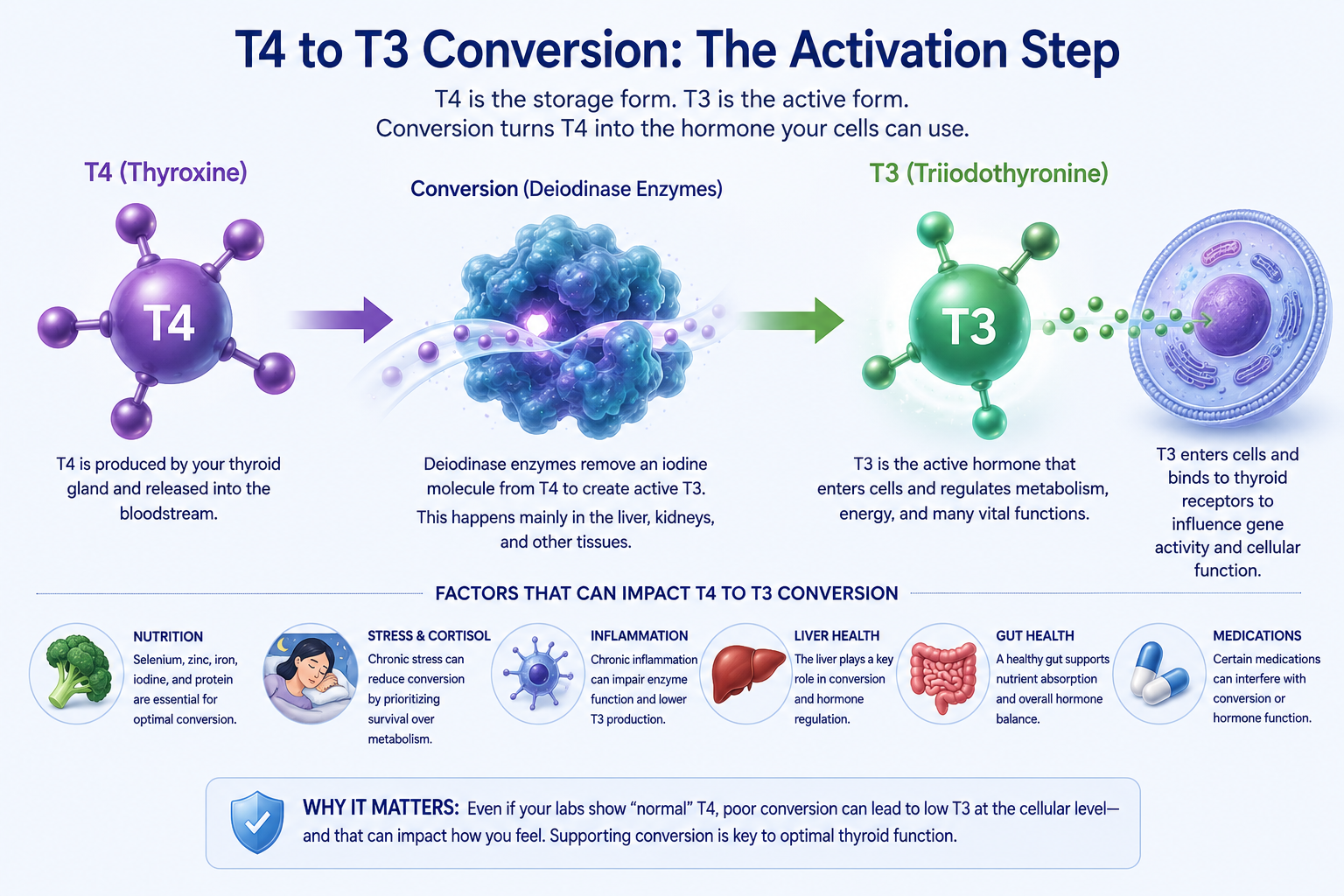
Most thyroid hormone is released as T4, but it must be converted into active T3 before it can regulate metabolism. Healthy conversion depends on multiple body systems, including the liver, gut, and overall metabolic health.
Understanding Reverse T3
Not every molecule of T4 becomes active T3.
Some of it is converted into Reverse T3 (rT3) instead.
Reverse T3 is a naturally occurring thyroid hormone that is structurally similar to T3 but has very little biological activity. Rather than activating thyroid receptors, Reverse T3 is generally considered part of the body’s normal regulatory system for balancing metabolism.
Under certain circumstances—such as significant illness, major surgery, prolonged fasting, or other forms of physical stress—the body may temporarily produce more Reverse T3. Researchers believe this may help reduce energy expenditure during periods when conserving resources is beneficial.
The role of Reverse T3 in chronic thyroid symptoms remains an area of ongoing research and debate. Some clinicians consider it an important piece of the clinical picture in selected patients, while others place less emphasis on its routine measurement.
At Total Health Center, we believe laboratory testing should always be interpreted within the context of a patient’s symptoms, medical history, physical examination, and the complete thyroid hormone pathway rather than relying on any single laboratory marker in isolation.
If you’d like to learn more about Reverse T3, we’ve dedicated an entire article to explaining what it is, when it may be useful to measure, and how it fits into a comprehensive thyroid evaluation.
The Journey Doesn’t End in Your Bloodstream
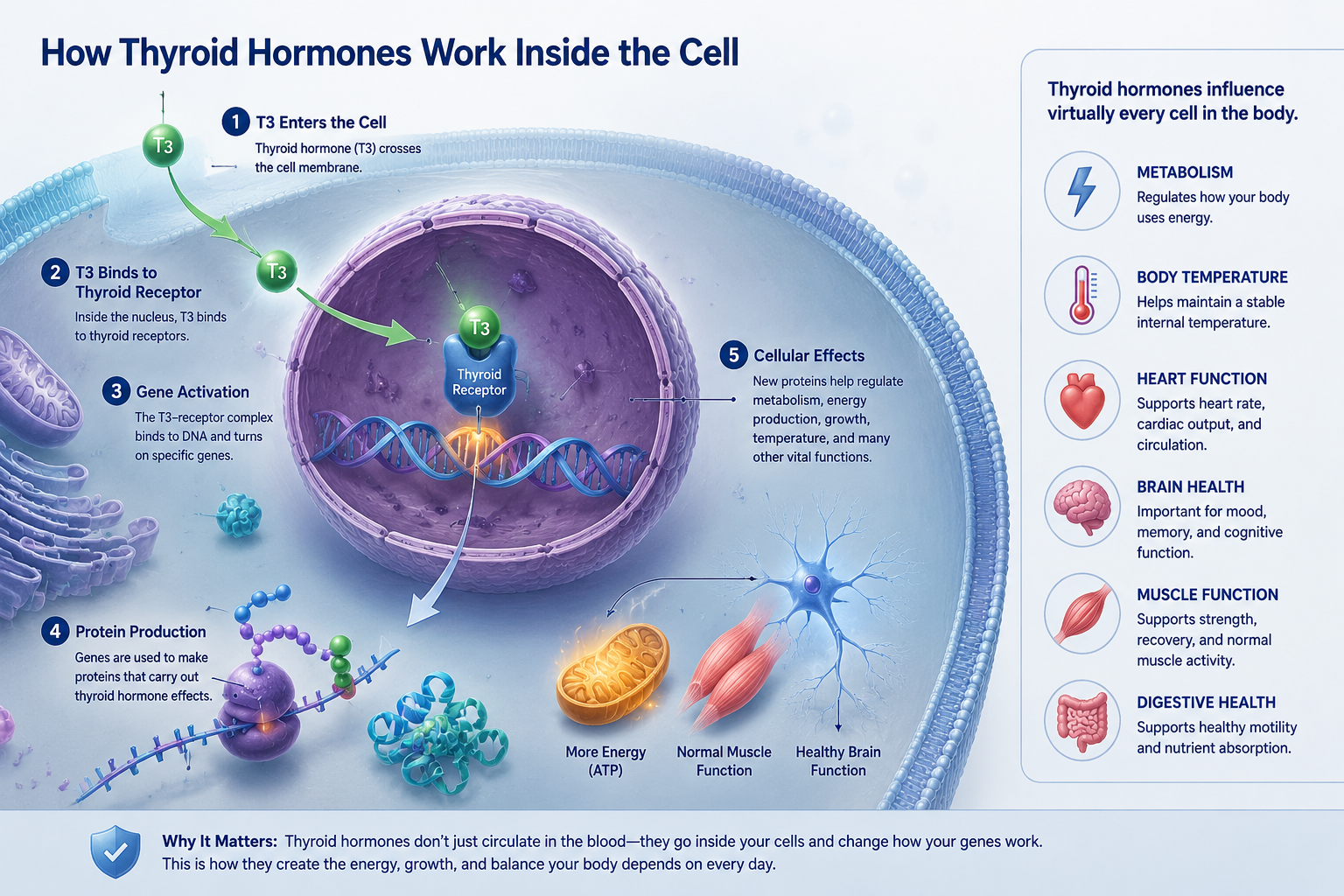
Thyroid hormones don’t stop in the bloodstream. Active T3 must enter cells, bind to thyroid receptors, and influence gene activity before it can regulate metabolism, energy production, and the many functions that depend on healthy thyroid activity.
When doctors measure thyroid hormones, they’re measuring what’s circulating in your blood.
That’s useful information—but it isn’t the final destination.
The real goal of thyroid hormone isn’t simply to exist in the bloodstream. Its purpose is to reach your cells and help them produce energy.
Think of your bloodstream as a highway.
TSH, T4, and T3 are the vehicles traveling down that highway, but the trip isn’t complete until they leave the road, enter the correct destination, and begin doing their job inside each cell.
This is a concept that’s often overlooked when people first begin learning about thyroid health.
Normal blood levels don’t automatically guarantee that every tissue in your body is receiving or utilizing thyroid hormone efficiently. While blood testing provides valuable information, it represents only one part of a much larger physiological process.
Every Cell Depends on Thyroid Hormone
Nearly every cell in your body contains receptors for thyroid hormone.
Once T3 enters a cell, it binds to these receptors and acts almost like a master switch, turning hundreds of genes on or off depending on the body’s needs.
This influences countless processes throughout the body, including:
- Energy production
- Body temperature regulation
- Heart function
- Brain development and cognitive performance
- Muscle strength
- Digestion
- Cholesterol metabolism
- Skin and hair growth
- Bone remodeling
- Reproductive health
It’s difficult to think of another hormone that affects as many different systems as thyroid hormone.
This is why thyroid disorders can produce such a wide range of symptoms that often seem unrelated at first glance.
Someone may come to our office complaining of fatigue, constipation, weight gain, brain fog, dry skin, elevated cholesterol, and depression. Although these symptoms involve different organs, they can all be connected by one common pathway: reduced thyroid hormone activity at the cellular level.
Thyroid Function Is More Than One Laboratory Number
One of the biggest misconceptions about thyroid disease is that a single laboratory value tells the entire story.
In reality, thyroid function depends on an entire communication network working together.
Consider everything that has to happen successfully:
- The hypothalamus must detect the body’s needs.
- The pituitary must release the appropriate amount of TSH.
- The thyroid gland must produce adequate hormone.
- T4 must be converted into active T3.
- Thyroid hormones must travel through the bloodstream.
- Cells must receive and utilize those hormones appropriately.
A problem at any point along this pathway can influence how thyroid hormone functions throughout the body.
That’s one reason why evaluating thyroid health often requires looking beyond a single test result.
Rather than asking only, “Is your thyroid making hormone?” it’s often helpful to ask a much broader question:
“Where along the thyroid hormone pathway might something not be working as efficiently as it should?”
That perspective forms the foundation of functional thyroid evaluation.
Why People With Similar Lab Results Can Feel Completely Different
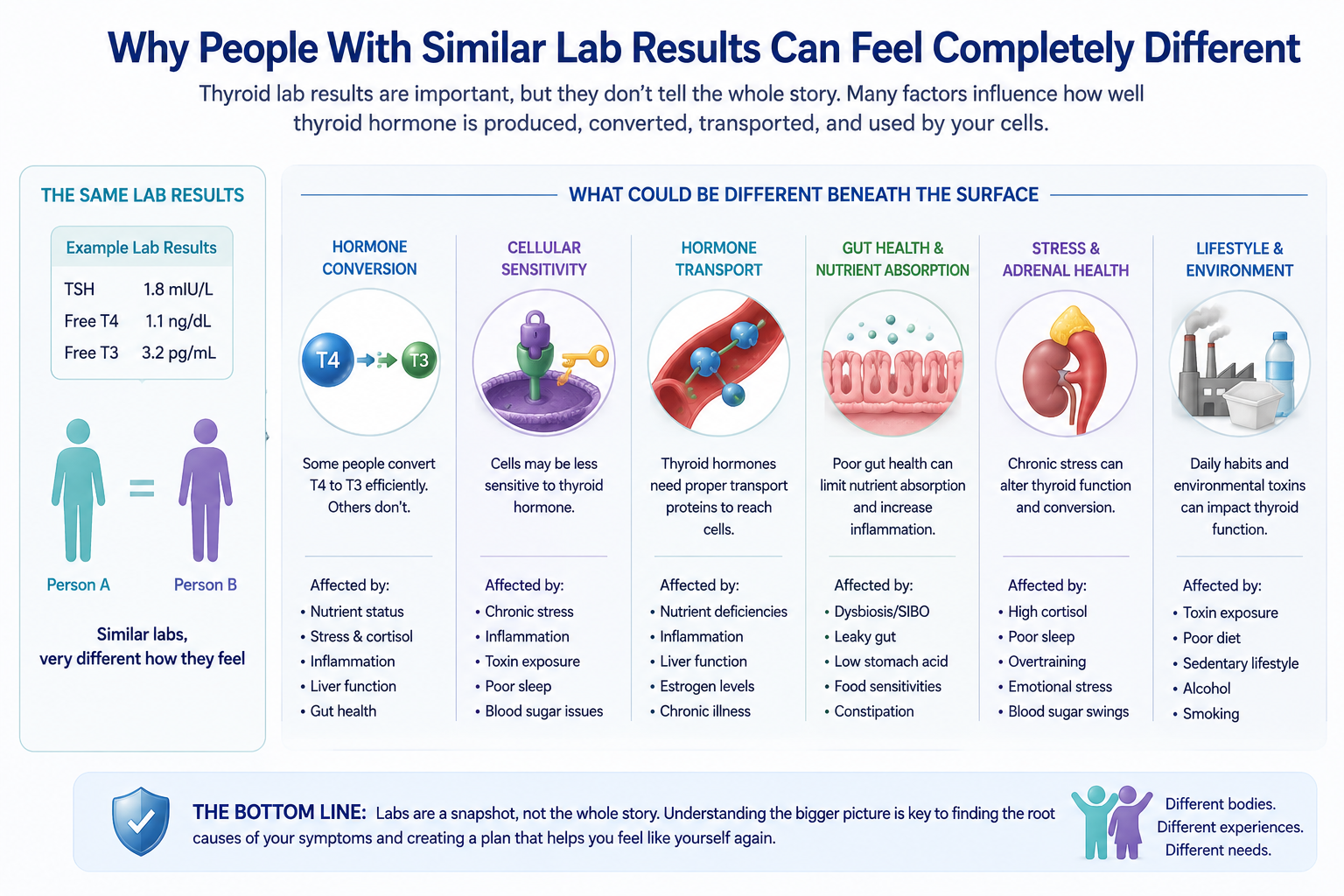
Thyroid laboratory values provide valuable information, but they are only one part of the clinical picture. Factors such as hormone conversion, cellular response, nutrition, inflammation, gut health, and stress can all influence how thyroid hormones function and why two people with similar lab results may feel very different.
One of the most common questions we hear is:
“If my thyroid tests look normal, why do I still feel terrible?”
There isn’t one simple answer.
Sometimes thyroid hormone truly isn’t the cause of a person’s symptoms. Fatigue, weight gain, brain fog, and many other complaints can result from nutritional deficiencies, sleep disorders, chronic stress, insulin resistance, anemia, depression, autoimmune disease, or dozens of other conditions.
Other times, however, a standard thyroid screening may not tell the entire story.
Different people convert thyroid hormone differently. They may have different underlying medical conditions, varying levels of inflammation, differences in nutrient status, or autoimmune processes that influence thyroid physiology.
This doesn’t mean everyone needs extensive laboratory testing.
It does mean that interpreting thyroid function requires clinical judgment rather than relying exclusively on one laboratory value.
At Total Health Center, our goal is to understand the complete clinical picture. Laboratory tests are valuable tools, but they are only one piece of the puzzle. Your symptoms, medical history, physical examination, and overall health all help guide a comprehensive evaluation.
Dr. Scott’s Insight
One of the biggest shifts I hope patients make is moving away from thinking about the thyroid as a single gland.
I think of thyroid function as a communication network.
Your brain communicates with your pituitary. Your pituitary communicates with your thyroid. Your thyroid supplies hormone to the bloodstream. Your liver, digestive system, and other tissues help activate that hormone. Finally, every cell in your body decides how to use it.
When patients understand that entire pathway, many of the confusing conversations surrounding thyroid testing suddenly begin to make sense.
Instead of asking, “Is my thyroid broken?” we begin asking a much better question:
“Where along this pathway is the communication breaking down?”
That question often leads to a more thoughtful evaluation and, in many cases, a more individualized treatment plan.
Understanding the Pathway Helps You Understand the Tests
Now that you’ve seen how thyroid hormone is produced, converted, and used throughout the body, it’s easier to understand why comprehensive thyroid testing often involves more than measuring TSH alone.
Different laboratory tests provide information about different parts of the thyroid hormone pathway. Looking at those results together can provide a more complete understanding of what’s happening than relying on a single number in isolation.
In our next guide, we explain how each thyroid laboratory test fits into this pathway, what the results can—and cannot—tell us, and why interpreting them in the context of your symptoms is so important.
Continue Learning:
- Thyroid Testing – Learn what TSH, Free T4, Free T3, Reverse T3, and thyroid antibodies measure and why a comprehensive evaluation often requires more than one test.
- Hashimoto’s Disease & Graves’ Disease – Discover how autoimmune thyroid disorders affect thyroid function and why identifying the underlying cause matters.
- Thyroid Patterns – Explore why two people with thyroid symptoms can have very different laboratory findings and what those patterns may reveal about thyroid physiology.
About Dr. Mark Scott
Dr. Mark Scott has been helping patients with chronic health conditions for more than 25 years. As the founder and clinic director of Total Health Center in Virginia Beach, he combines chiropractic care, functional medicine, advanced laboratory testing, nutritional therapy, and lifestyle medicine to identify and address the underlying causes of disease rather than simply managing symptoms.
One of Dr. Scott’s clinical interests is thyroid health. He recognizes that thyroid symptoms are not always caused by the thyroid gland itself and that optimal thyroid function depends on a complex interaction between the brain, thyroid gland, immune system, liver, digestive system, nutrition, and overall metabolic health. His comprehensive approach evaluates the entire thyroid hormone pathway to help patients better understand why they may not be feeling well.
Whether you’re struggling with fatigue, weight gain, brain fog, Hashimoto’s disease, persistent symptoms despite thyroid medication, or unexplained health concerns, Dr. Scott believes that careful evaluation, patient education, and individualized care are essential for developing an effective treatment plan.
If you’re looking for a more comprehensive approach to thyroid health, schedule a consultation with Total Health Center to learn how functional medicine may help you better understand your symptoms and your options.
Frequently Asked Questions
1. What is thyroid function?
Thyroid function refers to the process by which your body produces, converts, transports, and uses thyroid hormones to regulate metabolism. It involves much more than the thyroid gland itself, including the brain, pituitary gland, liver, digestive system, and nearly every cell in the body.
2. What does the thyroid gland do?
The thyroid gland produces the hormones T4 (thyroxine) and T3 (triiodothyronine), which help regulate metabolism, energy production, body temperature, heart function, digestion, and many other essential processes throughout the body.
3. What’s the difference between T4 and T3?
T4 is the primary hormone produced by the thyroid gland and serves largely as a storage hormone. T3 is the active hormone that enters cells and regulates metabolism. Most of the T3 your body uses is produced by converting T4 into T3 in tissues such as the liver and other organs.
4. Why is TSH important?
TSH (thyroid-stimulating hormone) is produced by the pituitary gland and tells the thyroid how much hormone to produce. It is commonly used as a screening test for thyroid disease, but it evaluates only one part of the thyroid hormone pathway.
5. Can thyroid hormone levels be normal even if I have symptoms?
Yes. While thyroid hormone levels are an important part of evaluation, symptoms can have many different causes. In some cases, additional thyroid testing or evaluation of other health conditions may help explain persistent symptoms. Laboratory results should always be interpreted alongside your medical history, symptoms, and physical examination.
6. Where is T4 converted into T3?
Most T4 is converted into active T3 outside the thyroid gland. Important sites of conversion include the liver, kidneys, muscles, and other tissues throughout the body. This conversion process allows different organs to regulate their own metabolic needs.
7. What is Reverse T3?
Reverse T3 (rT3) is an inactive form of thyroid hormone that is naturally produced from T4. It plays a role in normal thyroid hormone regulation and may increase during illness, prolonged stress, fasting, or other physiological conditions. Its role in chronic thyroid symptoms remains an area of ongoing research.
8. Why do doctors usually test TSH first?
TSH is a sensitive indicator of how the brain and pituitary gland are communicating with the thyroid. However, because it measures only one part of thyroid physiology, additional tests such as Free T4, Free T3, thyroid antibodies, or Reverse T3 may sometimes provide additional clinical information when appropriate.
9. Does thyroid function affect the entire body?
Yes. Thyroid hormones influence nearly every organ system, including the brain, heart, muscles, digestive system, skin, cholesterol metabolism, body temperature regulation, and energy production. This is why thyroid disorders can produce such a wide variety of symptoms.
10. When should I see a healthcare provider about possible thyroid problems?
If you’re experiencing persistent fatigue, unexplained weight changes, hair loss, brain fog, cold intolerance, constipation, changes in heart rate, or other symptoms that may suggest thyroid dysfunction, it’s important to consult a qualified healthcare provider. A comprehensive evaluation can help determine whether your thyroid or another underlying condition may be contributing to your symptoms.
Schedule your free thyroid consultation with Dr. Mark Scott at Total Health Center Virginia Beach today! We look forward to helping you feel better.
Thyroid Treatment Success Secrets
Check out some of our most popular Thyroid Treatment Success Secret videos below or visit our YouTube channel for the entire 25-video series.





Awards

Congratulations to Mark Scott’s Practice on winning the 2015 Patients’ Choice Awards for Chiropractor in Virginia Beach, VA
Verified by
Opencare.com
Contact
Tel: (757) 363-8571
Awards

Congratulations to Mark Scott’s Practice on winning the 2015 Patients’ Choice Awards for Chiropractor in Virginia Beach, VA
Verified by
Opencare.com