

If you’ve spent any time researching thyroid disease, you’ve probably noticed something confusing. Two people can both say they have a “thyroid problem,” yet their symptoms are completely different. One struggles with fatigue and weight gain. Another battles anxiety, heart palpitations, and unexplained weight loss. A third is told their thyroid blood work is “normal,” yet they still don’t feel like themselves.
How can all of these experiences involve the same small butterfly-shaped gland in the neck?
The answer is that there isn’t just one thyroid disorder. There are several distinct thyroid patterns, each with its own causes, laboratory findings, symptoms, and treatment considerations. Understanding these patterns helps explain why thyroid disease isn’t always straightforward and why two people with similar laboratory results can have very different experiences.
If you’re just beginning your thyroid journey, I recommend reading Thyroid Problems & Symptoms first. It provides an overview of the most common signs that your thyroid may not be functioning properly and serves as an excellent introduction to the articles in our thyroid education series.
What Is a Thyroid Pattern?
Not every thyroid disorder looks the same. Understanding which thyroid pattern best matches your symptoms and laboratory findings is the first step toward a more complete evaluation.
I like this placement because readers first learn what a thyroid pattern is, then immediately see the six patterns before diving into each one individually. It improves orientation without interrupting the flow of the article.
Many people think of thyroid disease as either “hypothyroidism” or “hyperthyroidism.” While those are certainly common conditions, they don’t tell the whole story.
The thyroid is part of an intricate communication network involving the brain, pituitary gland, thyroid gland, liver, digestive system, immune system, and every cell in your body. A problem anywhere along that pathway can create a different thyroid pattern with its own unique combination of symptoms and laboratory findings.
Think of it like an orchestra.
The thyroid gland may be one of the musicians, but it isn’t the conductor. The brain directs the performance, the thyroid produces the hormones, the liver and other tissues activate those hormones, the immune system can interfere with the process, and ultimately every cell in your body has to receive and respond to the signal.
If one section of the orchestra falls out of rhythm, the music changes.
Likewise, thyroid symptoms can develop from problems occurring at different points within the thyroid hormone pathway.
Instead of asking only, “Do I have a thyroid problem?” a better question is often:
“What thyroid pattern best explains what is happening in my body?”
Understanding that pattern frequently provides far more insight than looking at a single laboratory value.
The Six Common Thyroid Patterns
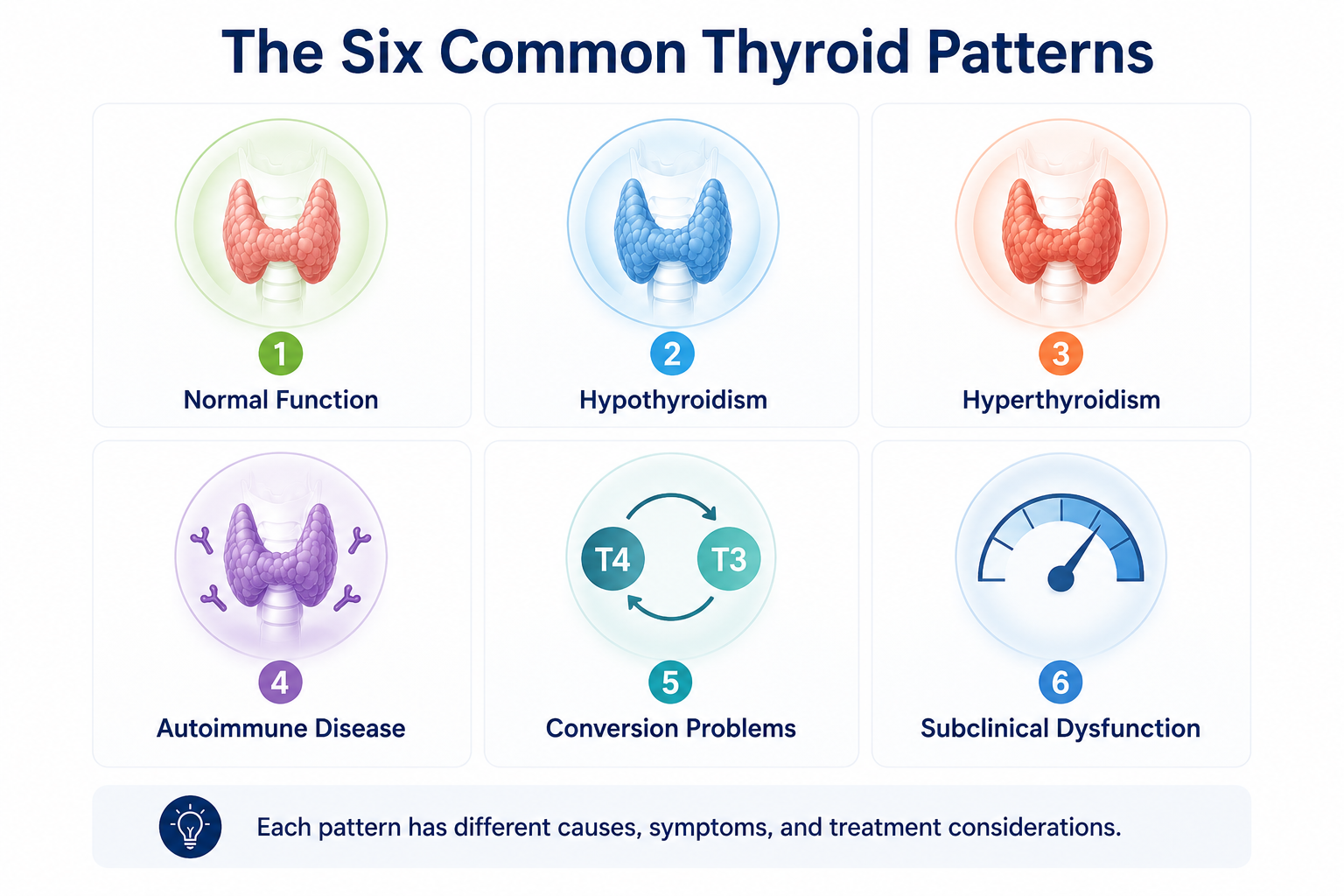
Although every patient is unique, most thyroid disorders fall into one of six common patterns.
- Normal Thyroid Function (Euthyroid)
- Primary Hypothyroidism
- Primary Hyperthyroidism
- Autoimmune Thyroid Disease
- Thyroid Hormone Conversion Problems
- Subclinical Thyroid Dysfunction
Each pattern affects the body differently and produces its own characteristic combination of laboratory findings and symptoms.
Understanding these patterns also explains why thyroid evaluation often requires more than checking a TSH level alone.
Pattern 1: Normal Thyroid Function (Euthyroid)
Before discussing thyroid disorders, it helps to understand what healthy thyroid function looks like.
Your brain continuously monitors how much thyroid hormone your body needs. When additional hormone is required, the pituitary gland releases thyroid stimulating hormone (TSH), signaling the thyroid gland to produce thyroid hormone.
The thyroid responds by producing mostly thyroxine (T4) along with a smaller amount of triiodothyronine (T3).
Although T4 is the primary hormone released into the bloodstream, it functions largely as a storage hormone. Much of it must later be converted into T3, the active hormone that enters your cells and regulates metabolism, energy production, body temperature, heart function, digestion, brain function, muscle activity, and hundreds of other processes.
As discussed in How Thyroid Function Works healthy thyroid function depends on much more than the thyroid gland itself. The brain, thyroid, liver, digestive system, and individual cells must all work together for thyroid hormones to function properly.
When this communication system is working as intended, laboratory values typically show:
- Normal TSH
- Normal Free T4
- Normal Free T3
This pattern is known as euthyroid, meaning normal thyroid function.
Unfortunately, not every thyroid problem follows this ideal pattern.
Pattern 2: Primary Hypothyroidism
Primary hypothyroidism is the thyroid pattern most people think of when they hear the words underactive thyroid.
In this pattern, the thyroid gland itself cannot produce enough thyroid hormone to meet the body’s needs.
As hormone production begins to decline, the pituitary gland attempts to compensate by releasing more TSH. Think of it like turning up the thermostat because the house isn’t getting warm enough. The brain keeps sending a stronger signal, but the thyroid can no longer respond effectively.
Typical laboratory findings include:
- Elevated TSH
- Low Free T4
- Often Low Free T3
Common symptoms may include:
- Fatigue
- Weight gain
- Feeling cold
- Constipation
- Dry skin
- Hair thinning
- Depression
- Brain fog
- Slower heart rate
- Low energy
The most common cause of primary hypothyroidism in the United States is Hashimoto’s Thyroiditis & Graves’ Disease Hashimoto’s is an autoimmune disease in which the immune system gradually attacks and damages the thyroid gland, reducing its ability to produce thyroid hormone over time.
Other possible causes include thyroid surgery, radioactive iodine treatment, certain medications, congenital thyroid disorders, and, in some parts of the world, iodine deficiency.
This is one reason comprehensive Thyroid Testing is so valuable. While TSH is an important screening test, understanding why the thyroid has become underactive often requires looking beyond a single laboratory value.
One of the most important lessons I’ve learned over the years is that primary hypothyroidism is not the only thyroid pattern. Many patients have symptoms that don’t fit neatly into this category, which is why understanding the remaining thyroid patterns is equally important.
Pattern 3: Primary Hyperthyroidism
Primary hyperthyroidism is essentially the opposite of primary hypothyroidism.
Instead of producing too little thyroid hormone, the thyroid gland becomes overactive and releases excessive amounts of hormone into the bloodstream. As thyroid hormone levels rise, the pituitary gland senses there is more than enough hormone available and reduces its production of thyroid stimulating hormone (TSH).
Think of it as a thermostat again.
If the house becomes too warm, the thermostat stops calling for heat. In the same way, the pituitary lowers TSH because the thyroid is already producing more hormone than the body needs.
Typical laboratory findings include:
- Low TSH
- Elevated Free T4
- Elevated Free T3
Common symptoms may include:
- Unexplained weight loss
- Anxiety or nervousness
- Rapid heartbeat or palpitations
- Tremors
- Feeling hot
- Excessive sweating
- Difficulty sleeping
- Frequent bowel movements
- Muscle weakness
The most common cause of primary hyperthyroidism is Hashimoto’s Thyroiditis & Graves’ Disease Graves’ disease is an autoimmune condition in which antibodies stimulate the thyroid gland to produce excessive amounts of hormone. Other possible causes include toxic thyroid nodules, thyroid inflammation, and, less commonly, excessive thyroid hormone medication.
Although hyperthyroidism and hypothyroidism produce opposite laboratory findings, they share one important principle: the thyroid gland itself is the primary problem.
Not every thyroid disorder begins there.
Pattern 4: Autoimmune Thyroid Disease
One of the biggest misconceptions about thyroid disease is that Hashimoto’s disease and Graves’ disease are simply thyroid disorders.
They aren’t.
They are autoimmune diseases that happen to affect the thyroid.
This distinction is important because the underlying problem isn’t the thyroid gland itself. Instead, the immune system mistakenly targets thyroid tissue.
In Hashimoto’s disease, immune cells gradually damage the thyroid gland. Over time, the thyroid loses its ability to produce adequate amounts of thyroid hormone, eventually leading to hypothyroidism in many patients.
In Graves’ disease, the immune system produces antibodies that stimulate the thyroid rather than destroy it. The result is excessive thyroid hormone production and hyperthyroidism.
To learn more about these conditions, see Hashimoto’s Thyroiditis & Graves’ Disease (https://totalhealthcentervb.com/hashimotos-thyroiditis-hypothyroidism-graves-disease/).
One characteristic of autoimmune thyroid disease is that it can fluctuate.
Patients sometimes experience periods where symptoms improve, followed by times when they worsen. Laboratory values may also change as immune activity changes.
This helps explain why some patients feel inconsistent from month to month and why repeating laboratory testing at appropriate intervals may provide valuable information.
Because autoimmune thyroid disease involves much more than the thyroid gland alone, I also encourage patients to understand the broader relationship between the immune system and overall health through our article on Functional Medicine and Autoimmune Disease
Pattern 5: Thyroid Hormone Conversion Problems
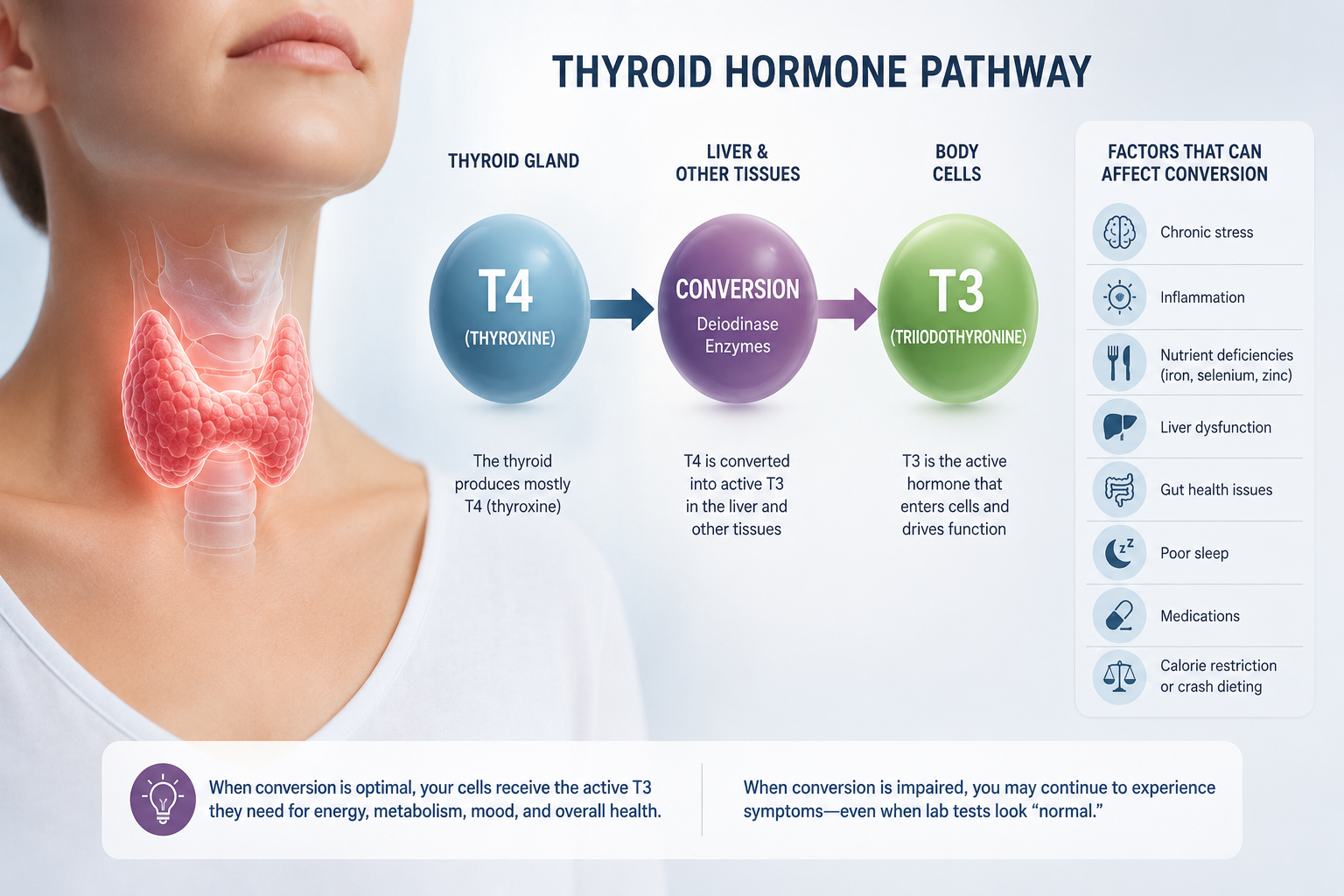
Although the thyroid gland produces mostly T4, your body must convert it into the active hormone T3 before it can be used by your cells. Problems with this conversion may contribute to ongoing symptoms even when standard thyroid blood tests appear normal.
Producing thyroid hormone is only part of the story.
The thyroid gland releases mostly T4, which serves largely as a storage hormone.
Before your cells can use it, much of that T4 must be converted into T3, the active hormone responsible for regulating metabolism and cellular activity.
This conversion occurs throughout the body and depends on many factors, including healthy liver function, nutritional status, digestive health, and normal enzyme activity.
As discussed in How Thyroid Function Works healthy thyroid function depends on much more than hormone production alone.
When conversion becomes less efficient, some people may continue experiencing symptoms despite laboratory results that appear relatively normal.
In some situations, the body may also produce more Reverse T3 an inactive form of thyroid hormone that does not stimulate metabolism the way active T3 does.
This doesn’t necessarily mean Reverse T3 is “bad.” It is a normal part of thyroid physiology. However, understanding thyroid hormone conversion can sometimes provide additional insight into why patients with similar thyroid hormone levels may have very different clinical presentations.
The important lesson is that healthy thyroid function depends on producing thyroid hormone, converting it appropriately, and allowing it to reach and function within the body’s cells.
Pattern 6: Subclinical Thyroid Dysfunction
Not every thyroid disorder develops suddenly.
Sometimes thyroid function begins changing gradually, producing subtle laboratory abnormalities before obvious symptoms appear.
This stage is known as subclinical thyroid dysfunction.
For example, subclinical hypothyroidism often shows:
- Mildly elevated TSH
- Normal Free T4
- Usually normal Free T3
Subclinical hyperthyroidism often shows:
- Low TSH
- Normal Free T4
- Normal Free T3
Some individuals remain symptom-free for years.
Others begin noticing subtle changes in energy, mood, weight, concentration, or sleep before laboratory values become dramatically abnormal.
This is one reason I often recommend comprehensive Thyroid Testing rather than relying on TSH alone. Looking at the complete thyroid picture often provides more useful clinical information than focusing on a single number.
Subclinical thyroid disease also reminds us that thyroid disorders exist on a spectrum. Changes often occur gradually rather than overnight, making ongoing evaluation important when symptoms persist.
One of the most common questions I hear after explaining these six thyroid patterns is:
“If two people have nearly the same laboratory results, why can they feel completely different?”
The answer may be one of the most important concepts in understanding thyroid health, and we’ll explore that next.
Why Can Two People With Similar Thyroid Lab Results Feel Completely Different?
Perhaps the most frustrating aspect of thyroid disorders is that laboratory numbers don’t always predict how someone feels.
Two patients can have nearly identical thyroid blood tests, yet one feels energetic while the other struggles with fatigue, brain fog, weight gain, depression, or difficulty concentrating.
How is that possible?
Because thyroid hormone is only one piece of a much larger picture.
Laboratory testing tells us how much thyroid hormone is circulating in the bloodstream, but it doesn’t tell the entire story of how that hormone is being used throughout the body.
Imagine two identical delivery trucks arriving at different warehouses.
Both trucks carry the same number of packages. From the outside, they appear identical.
But one warehouse has enough workers to unload the truck quickly, organize the inventory, and deliver everything where it needs to go.
The other warehouse is understaffed, disorganized, and dealing with equipment problems. Even though the same number of packages arrived, far less work actually gets done.
The same principle applies to thyroid hormone.
Two people may have similar hormone levels, but differences in overall health, nutrition, inflammation, immune function, sleep, stress, medications, age, body composition, digestive health, and cellular responsiveness can all influence how effectively those hormones work inside the body.
This is why I don’t treat laboratory numbers in isolation.
I treat people.
Laboratory tests are incredibly valuable, but they represent only one piece of the clinical puzzle. Symptoms, medical history, physical examination, lifestyle, nutrition, and other health conditions often provide equally important information when trying to understand why someone doesn’t feel well.
This broader perspective is one of the reasons I practice Functional Medicine (https://totalhealthcentervb.com/functional-medicine/). Rather than asking only whether a laboratory value falls within a reference range, functional medicine asks a deeper question:
“Why is this person experiencing these symptoms?”
That question often leads to a much more complete understanding of thyroid health.
Looking at the Whole Picture
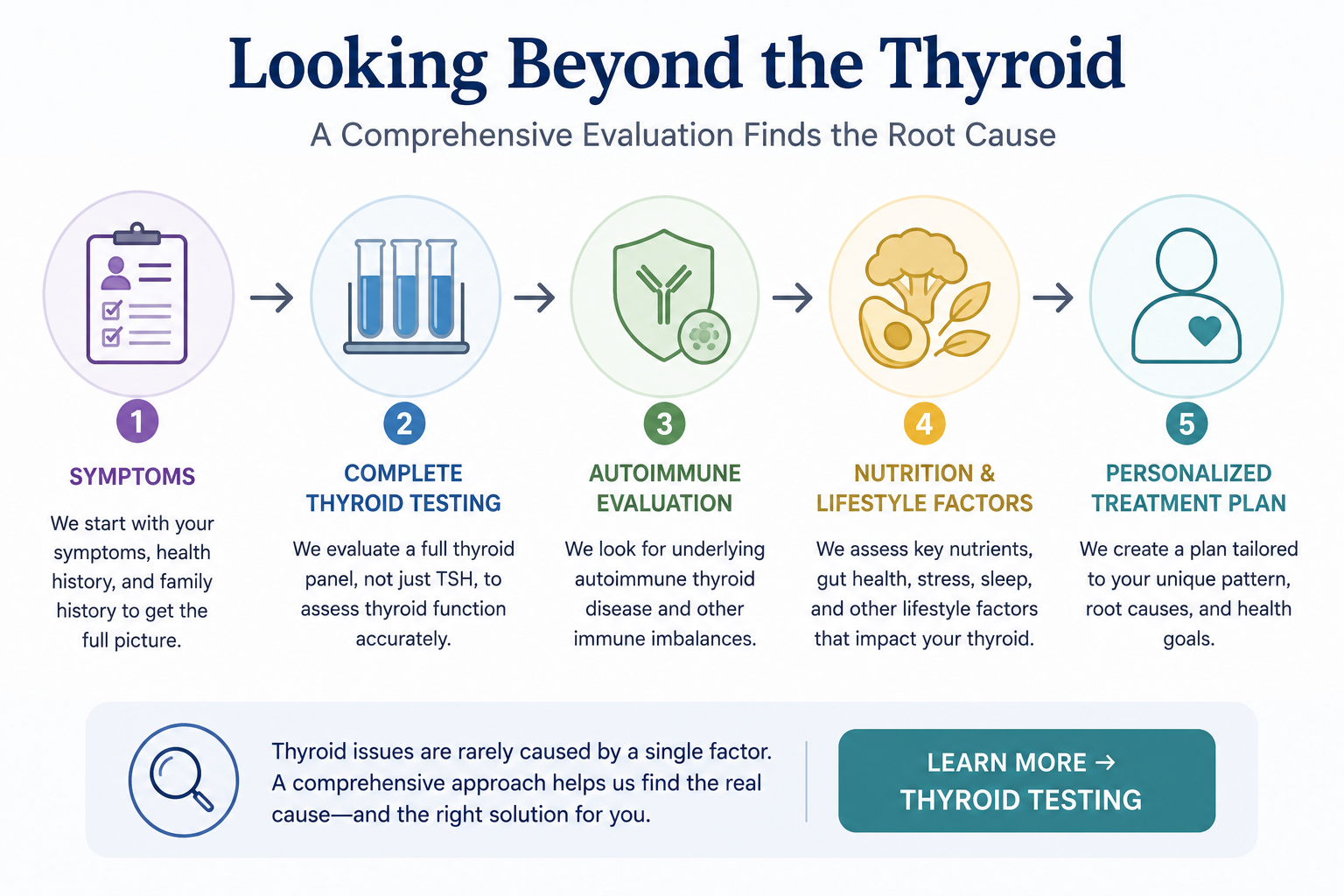
A comprehensive thyroid evaluation goes beyond a single blood test. Understanding your symptoms, laboratory findings, immune function, nutrition, and lifestyle helps identify the thyroid pattern that best explains how you feel.
One of the biggest lessons I’ve learned after caring for thyroid patients for decades is that thyroid health rarely comes down to a single laboratory value.
The thyroid doesn’t function in isolation.
It communicates continuously with the brain, immune system, liver, digestive tract, adrenal system, reproductive hormones, and every cell throughout the body.
When one part of that communication network changes, the effects can be felt throughout the entire body.
That’s why I believe thyroid evaluation should begin with understanding the pattern, not just the number.
The goal isn’t simply to determine whether someone has hypothyroidism or hyperthyroidism.
The goal is to understand why the thyroid is functioning the way it is.
Is the thyroid gland itself struggling?
Is an autoimmune process involved?
Is hormone conversion less efficient?
Are laboratory values beginning to change before symptoms fully develop?
Or is another health condition contributing to symptoms that resemble thyroid disease?
These are the questions that help guide a more individualized evaluation.
As we’ve discussed throughout this thyroid education series, no single laboratory test tells the entire story. That’s why comprehensive Thyroid Testing combined with a thorough understanding of How Thyroid Function Works often provides a much clearer picture than relying on TSH alone.
Understanding thyroid patterns doesn’t replace proper medical evaluation—but it can help you ask better questions, better understand your results, and have more informed conversations with your healthcare provider.
Dr. Scott’s Insight
One of the first things I explain to new thyroid patients is that thyroid health is rarely as simple as “normal” or “abnormal.”
Over the years, I’ve seen patients with nearly identical laboratory values experience completely different symptoms. I’ve also seen people with significant symptoms whose laboratory results appeared relatively unremarkable.
That’s why I believe it’s important to understand the pattern behind the laboratory findings rather than focusing on a single number.
Laboratory testing is one of our most valuable tools, but it’s only one chapter in the story. When we combine laboratory results with symptoms, medical history, physical examination, and a broader understanding of how the body’s systems work together, we often gain a much clearer picture of what’s happening.
For many patients, that shift in perspective is the beginning of finally understanding their thyroid health.
Continue Your Thyroid Education
If you found this article helpful, these related resources will help you continue building your understanding of thyroid health:
- Thyroid Problems & Symptoms — Learn to recognize the most common signs and symptoms of thyroid dysfunction.
- How Thyroid Function Works — Follow the complete journey of thyroid hormones from the brain to every cell in the body.
- Thyroid Testing — Discover why a comprehensive thyroid evaluation often provides more information than TSH alone.
- Hashimoto’s Thyroiditis & Graves’ Disease — Understand the most common autoimmune thyroid disorders and how they affect thyroid health.
- Reverse T3 — Learn how thyroid hormone conversion influences the body’s ability to use thyroid hormones effectively.
About Dr. Scott
For more than 25 years, Dr. Mark Scott has helped patients uncover the underlying causes of complex and chronic health conditions through a comprehensive, functional approach to care. Rather than focusing on a single laboratory value or diagnosis, he evaluates how the body’s systems work together to identify factors that may be contributing to a patient’s symptoms.
Thyroid disorders are a common focus of Dr. Scott’s practice. He understands that thyroid health involves much more than the thyroid gland itself. Hormone production, hormone conversion, immune function, nutrition, digestive health, inflammation, and overall metabolic health can all influence how the thyroid functions and how a person feels.
At Total Health Center in Virginia Beach, Dr. Scott combines a detailed health history, comprehensive thyroid testing, and personalized treatment recommendations to help patients better understand their thyroid health. His goal is not only to interpret laboratory results but also to identify the thyroid pattern that best explains each patient’s symptoms and overall clinical picture.
If you’ve been told your thyroid tests are “normal” but you still don’t feel well, or if you’re looking for a more comprehensive evaluation of your thyroid health, we’re here to help.
External References
- American Thyroid Association. Thyroid Function Tests.
https://www.thyroid.org/thyroid-function-tests/ - American Thyroid Association. Hypothyroidism (Underactive Thyroid).
https://www.thyroid.org/hypothyroidism/ - American Thyroid Association. Hyperthyroidism (Overactive Thyroid).
https://www.thyroid.org/hyperthyroidism/ - American Thyroid Association. Hashimoto’s Thyroiditis.
https://www.thyroid.org/hashimotos-thyroiditis/ - American Thyroid Association. Graves’ Disease.
https://www.thyroid.org/graves-disease/ - National Institute of Diabetes and Digestive and Kidney Diseases (NIDDK). Hypothyroidism.
https://www.niddk.nih.gov/health-information/endocrine-diseases/hypothyroidism - National Institute of Diabetes and Digestive and Kidney Diseases (NIDDK). Hyperthyroidism (Overactive Thyroid).
https://www.niddk.nih.gov/health-information/endocrine-diseases/hyperthyroidism - Garber JR, Cobin RH, Gharib H, et al. Clinical Practice Guidelines for Hypothyroidism in Adults. Endocrine Practice. 2012;18(6):988-1028.
https://www.endocrinepractice.org/article/S1530-891X(20)43403-8/fulltext - Ross DS, Burch HB, Cooper DS, et al. 2016 American Thyroid Association Guidelines for Diagnosis and Management of Hyperthyroidism and Other Causes of Thyrotoxicosis. Thyroid. 2016.
https://www.liebertpub.com/doi/10.1089/thy.2016.0229 - Jonklaas J, Bianco AC, Bauer AJ, et al. Guidelines for the Treatment of Hypothyroidism. Thyroid. 2014.
https://www.liebertpub.com/doi/10.1089/thy.2014.0028 - National Institutes of Health – MedlinePlus. Thyroid Diseases.
https://medlineplus.gov/thyroiddiseases.html - National Institutes of Health – MedlinePlus. TSH Test.
https://medlineplus.gov/lab-tests/tsh-thyroid-stimulating-hormone-test/
Frequently Asked Questions
1. What is a thyroid pattern?
A thyroid pattern describes the specific way thyroid function is affected based on symptoms, laboratory findings, and the underlying cause. Examples include primary hypothyroidism, hyperthyroidism, autoimmune thyroid disease, thyroid hormone conversion problems, and subclinical thyroid dysfunction.
2. Why can two people with similar thyroid lab results feel completely different?
Thyroid hormone levels are only one part of the picture. Factors such as hormone conversion, immune function, inflammation, nutrition, digestive health, medications, sleep, stress, and overall health can all influence how thyroid hormones work throughout the body.
3. What is the difference between hypothyroidism and hyperthyroidism?
Hypothyroidism occurs when the thyroid gland does not produce enough thyroid hormone, often leading to fatigue, weight gain, and feeling cold. Hyperthyroidism occurs when the thyroid produces too much hormone, commonly causing weight loss, anxiety, rapid heartbeat, and heat intolerance.
4. What is Hashimoto’s disease?
Hashimoto’s disease is an autoimmune disorder in which the immune system attacks the thyroid gland. Over time, this damage may reduce thyroid hormone production and eventually lead to hypothyroidism.
5. What is Graves’ disease?
Graves’ disease is an autoimmune condition that stimulates the thyroid gland to produce excessive thyroid hormone, making it the most common cause of hyperthyroidism.
6. What are thyroid hormone conversion problems?
The thyroid produces mostly T4, which must be converted into the active hormone T3 before it can be used by the body’s cells. When this conversion is less efficient, some people may continue experiencing symptoms even when standard thyroid tests appear relatively normal.
7. What is subclinical thyroid disease?
Subclinical thyroid disease is an early stage of thyroid dysfunction in which TSH begins to change while Free T4 and Free T3 often remain within the normal range. Some people have no symptoms, while others experience subtle changes that may warrant further evaluation.
8. Is TSH the only thyroid test I need?
TSH is an important screening test, but it does not always provide a complete picture of thyroid health. Depending on your symptoms and medical history, additional tests such as Free T4, Free T3, thyroid antibodies, Reverse T3, and other laboratory studies may provide valuable information.
9. Why is it important to identify my thyroid pattern?
Understanding your thyroid pattern helps explain why symptoms occur and provides context for interpreting laboratory results. It also helps guide a more individualized evaluation rather than relying on a single laboratory value.
10. When should I seek a comprehensive thyroid evaluation?
Consider a comprehensive evaluation if you continue experiencing symptoms such as fatigue, weight changes, brain fog, hair loss, constipation, anxiety, heart palpitations, or temperature intolerance, especially if previous thyroid testing has not provided clear answers.
Schedule your free thyroid consultation with Dr. Mark Scott at Total Health Center Virginia Beach today! We look forward to helping you feel better.
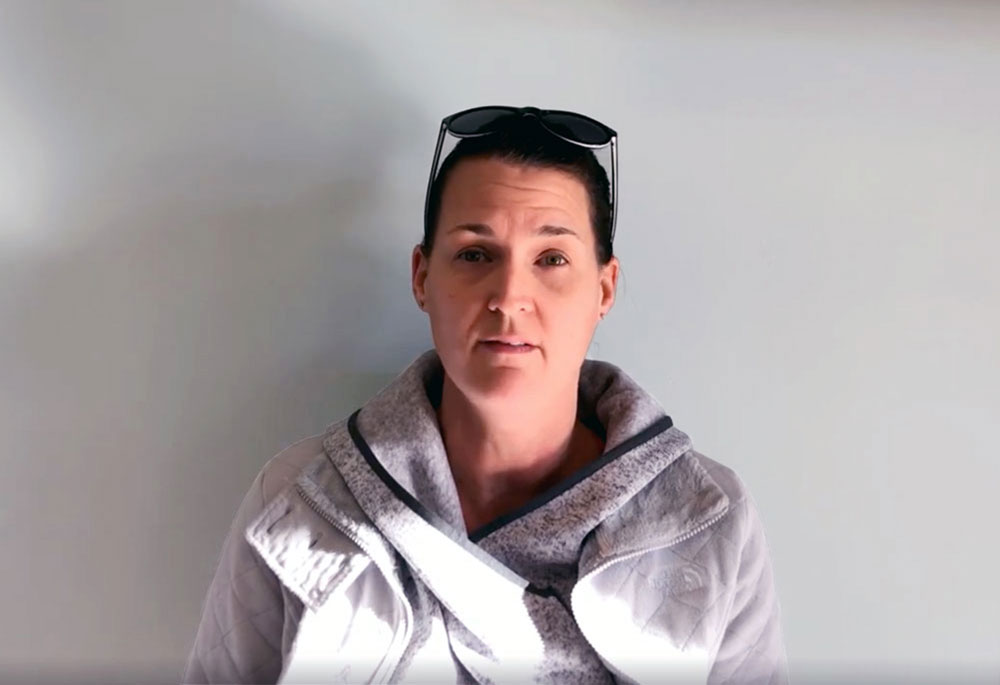
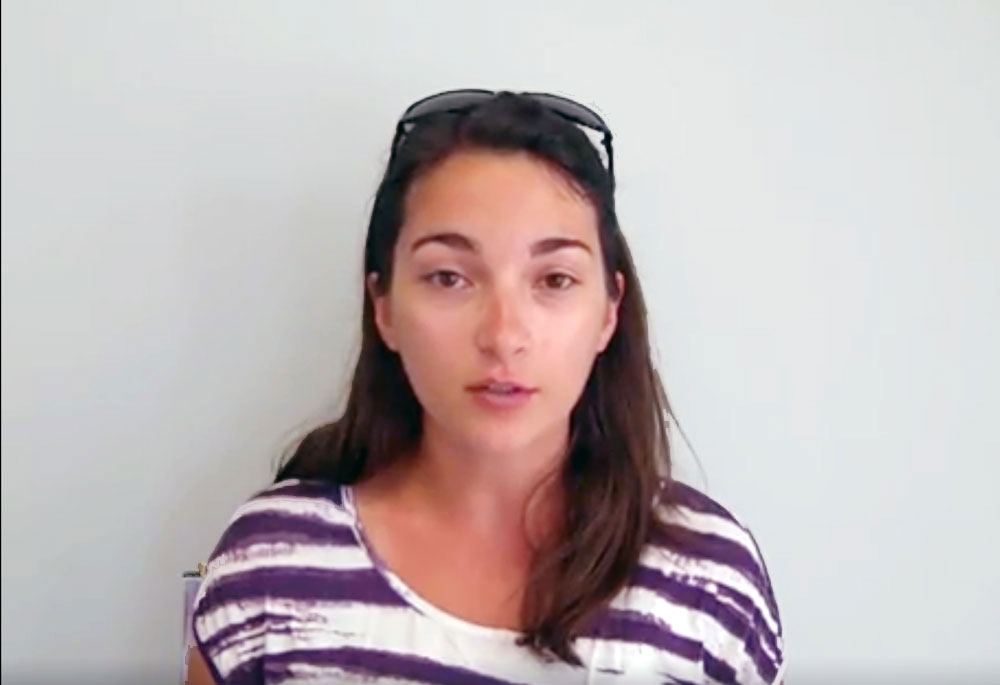
Natural Thyroid Treatment Testimonials
See what others are saying. Browse some of our thyroid patient testimonials below or visit our YouTube channel for more.



Awards

Congratulations to Mark Scott’s Practice on winning the 2015 Patients’ Choice Awards for Chiropractor in Virginia Beach, VA
Verified by
Opencare.com
Contact
Tel: (757) 363-8571
Awards

Congratulations to Mark Scott’s Practice on winning the 2015 Patients’ Choice Awards for Chiropractor in Virginia Beach, VA
Verified by
Opencare.com