

Living with an Autoimmune Disease Can Be Frustrating
If you’ve been diagnosed with an autoimmune disease, you’ve probably learned that managing the condition isn’t always straightforward.
Some days you feel almost normal. Other days fatigue, joint pain, digestive problems, brain fog, skin changes, or unexplained flare-ups can make even simple tasks difficult. You may be taking medication, following your doctor’s recommendations, and still wonder why your symptoms continue or why they seem to change over time.
Those are reasonable questions.
While conventional medicine plays a critical role in diagnosing autoimmune diseases, controlling inflammation, and preventing complications, many people are left wondering whether there’s more they can do to support their health.
Functional medicine approaches autoimmune disease from a different perspective.
Rather than focusing only on the diagnosis, we look at the many factors that may influence how your immune system functions—including gut health, nutrition, chronic inflammation, stress, sleep, hormone balance, environmental exposures, and other aspects of your overall physiology.
Our goal isn’t to promise a cure.
Our goal is to better understand why your immune system may have become dysregulated and develop a personalized strategy that supports your health alongside appropriate medical care.
If you’re new to this approach, we recommend reading What Makes Functional Medicine Different before continuing.
What Makes Functional Medicine Different
What Is an Autoimmune Disease?
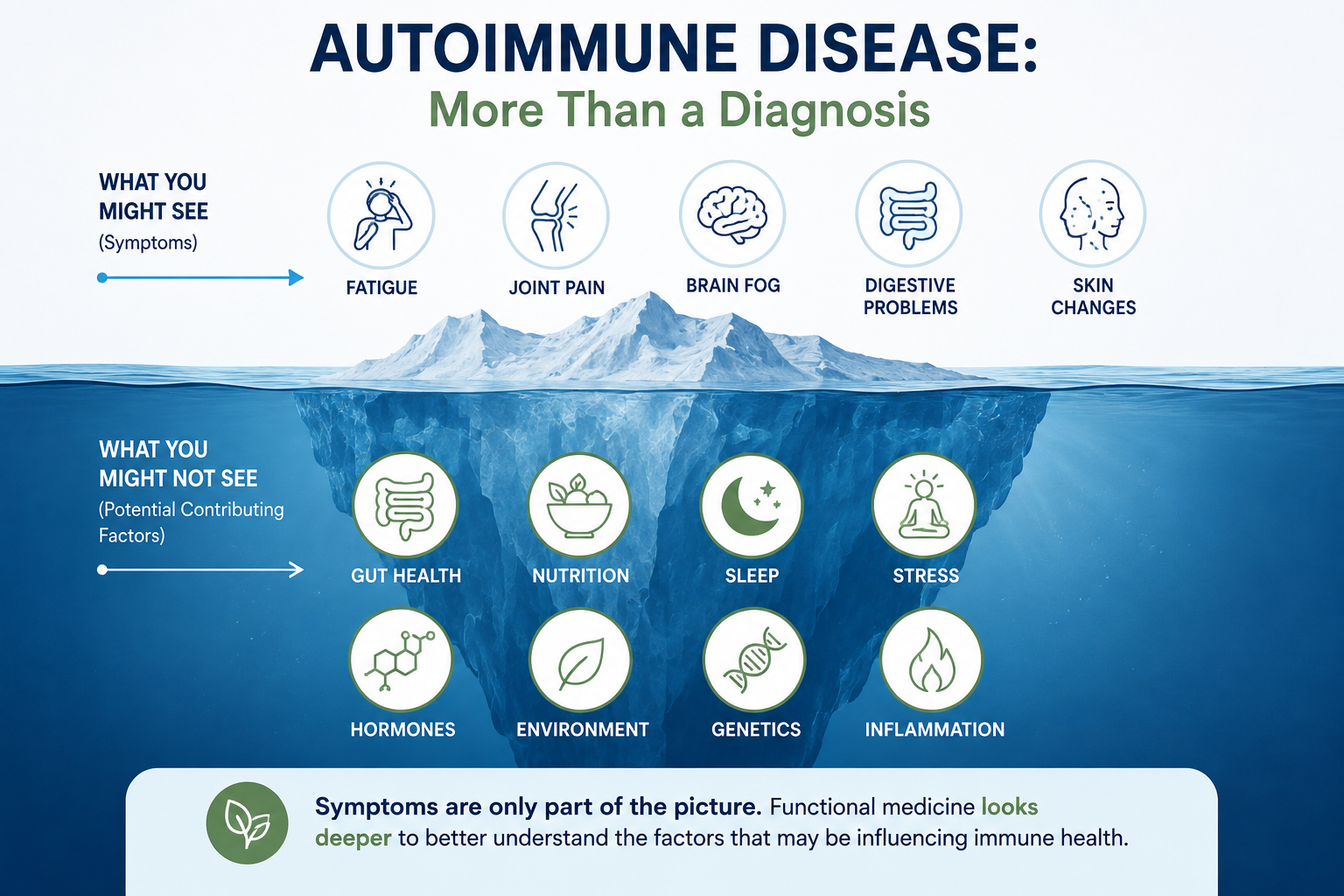
Autoimmune symptoms are only part of the picture. Functional medicine looks deeper to understand the factors that may be influencing immune health.
Your immune system is designed to protect you. Every day, it identifies viruses, bacteria, and other harmful invaders, then works to eliminate them while leaving your healthy tissues alone.
In an autoimmune disease, that normal protective process becomes dysregulated. Instead of recognizing the difference between “self” and “foreign,” the immune system mistakenly attacks parts of your own body.
Depending on which tissues are affected, the result may be conditions such as rheumatoid arthritis, Hashimoto’s thyroiditis, lupus, psoriasis, multiple sclerosis, inflammatory bowel disease, and many others.
Although these diseases affect different organs, they all share one important characteristic:
The immune system has lost part of its normal ability to regulate itself.
Researchers believe autoimmune diseases develop from a combination of factors rather than a single cause. Genetics may increase susceptibility, but genetics alone rarely tell the whole story. Environmental exposures, infections, gut health, chronic stress, nutritional status, hormone balance, sleep quality, and other lifestyle factors may also influence how the immune system functions.
This helps explain why two people with the same autoimmune diagnosis can experience very different symptoms, respond differently to treatment, and have unique challenges throughout their health journey.
That individuality is one of the reasons functional medicine emphasizes understanding the whole person—not just the diagnosis.
If you have been diagnosed with Hashimoto’s thyroiditis, you may also find these resources helpful:
Why Functional Medicine Looks Beyond the Diagnosis
Receiving an autoimmune diagnosis is an important first step because it provides a name for what you’re experiencing and helps guide appropriate medical treatment. But a diagnosis doesn’t always explain why the immune system became dysregulated or why symptoms vary so much from one person to another.
Functional medicine asks additional questions.
What factors may be contributing to ongoing inflammation?
Could digestive health be influencing immune function?
Are nutrient deficiencies limiting the body’s ability to regulate itself?
How are stress, sleep, blood sugar, hormone balance, and lifestyle affecting overall health?
These questions don’t replace conventional medical care—they expand the investigation.
Rather than assuming every person with the same diagnosis requires the same approach, functional medicine recognizes that each patient’s health history, physiology, genetics, environment, and lifestyle are unique. Two people with rheumatoid arthritis or Hashimoto’s thyroiditis may share the same diagnosis but have very different contributing factors and different opportunities for improving their overall health.
That’s why our goal isn’t simply to manage symptoms.
It’s to better understand the patterns influencing your health and develop a personalized plan that works alongside appropriate medical treatment.
Many patients find this approach reassuring because it helps them understand that they are more than a diagnosis. Their symptoms are viewed within the context of the whole person rather than as isolated problems.
To learn more about this philosophy, visit our Functional Medicine page:
What Factors May Influence Autoimmune Disease?

Many factors can influence immune health. Functional medicine evaluates the whole person to better understand the unique combination of factors affecting each individual.
There is no single cause of autoimmune disease, and there is no one-size-fits-all treatment plan. Every person’s health history is unique, which is why functional medicine focuses on identifying the factors that may be influencing immune function rather than assuming every patient follows the same pattern.
During your evaluation, we look for areas that may deserve further attention, including:
Gut Health
Approximately 70% of the immune system is associated with the gastrointestinal tract. Digestive health, the intestinal barrier, and the balance of the gut microbiome all play important roles in normal immune regulation. When appropriate, we evaluate digestive symptoms and consider whether additional testing may be helpful.
Nutrition and Nutrient Status
Your immune system depends on vitamins, minerals, healthy fats, protein, and other nutrients to function properly. Deficiencies don’t necessarily cause autoimmune disease, but they may influence how well the body regulates inflammation, repairs tissue, and maintains normal immune function.
Chronic Inflammation
Inflammation is a normal part of healing, but when it becomes persistent it can contribute to ongoing symptoms. Our goal is to identify factors that may be driving unnecessary inflammation and develop practical strategies to help support healthier immune regulation.
Stress and Sleep
The immune, nervous, and endocrine systems constantly communicate with one another. Poor sleep and chronic stress may influence immune function, hormone balance, recovery, and overall resilience. Addressing these areas is often an important part of a comprehensive care plan.
Hormone and Metabolic Health
Hormones influence nearly every system in the body, including the immune system. Thyroid function, blood sugar regulation, adrenal health, and other metabolic factors may all play a role in how a person feels and functions.
Environmental and Lifestyle Factors
Exercise, nutrition, smoking, alcohol, environmental exposures, and daily habits all influence overall health. While these factors don’t explain every autoimmune disease, improving them often creates a stronger foundation for long-term wellness.
Rather than assuming one factor explains every case, we combine your medical history, symptoms, laboratory findings, and lifestyle into a more complete picture. That allows us to prioritize the areas most relevant to your individual situation.
To learn more about our comprehensive approach, visit our First Functional Medicine Visit guide:
First Functional Medicine Visit: What to Expect
Developing Your Personalized Care Plan
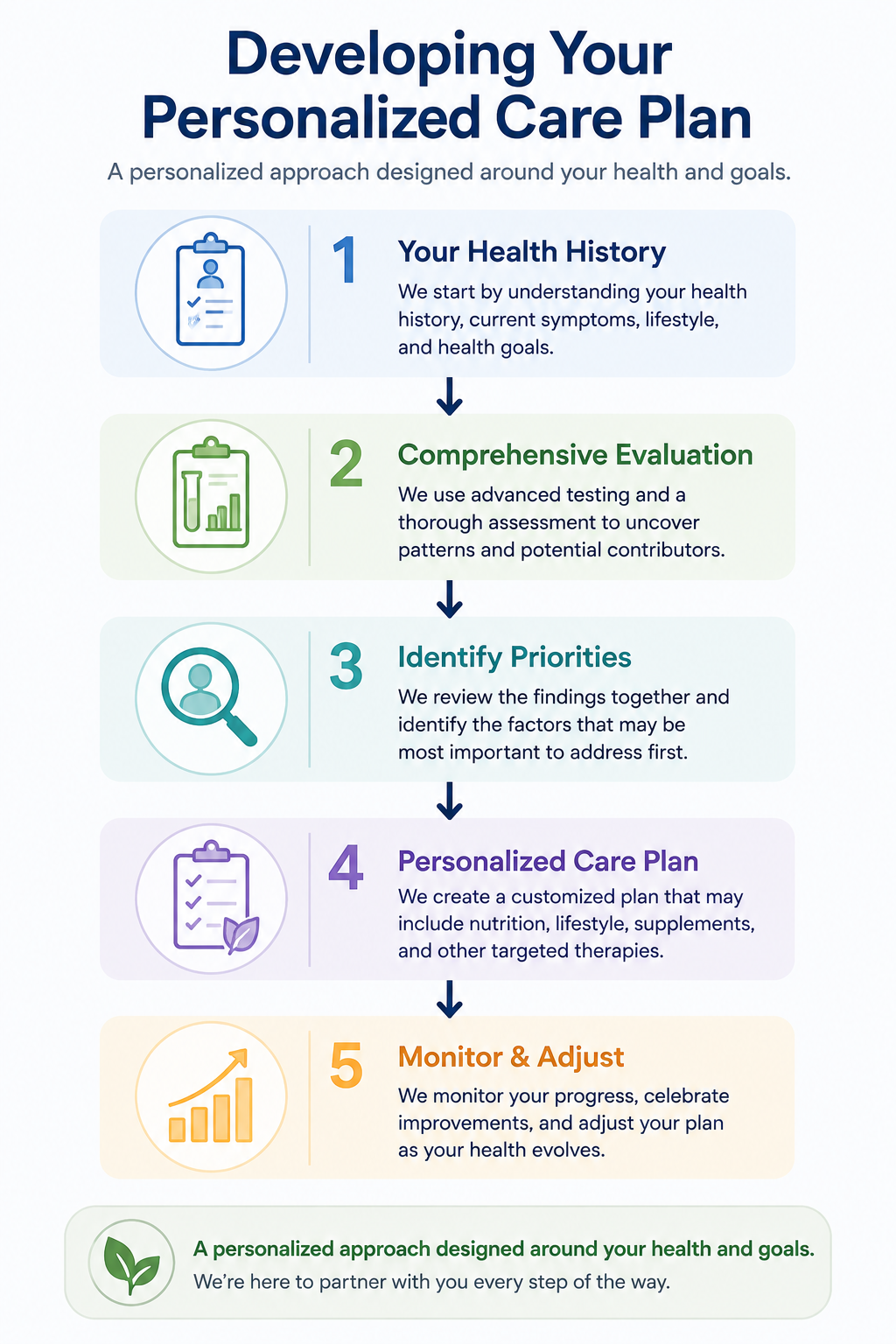
Functional medicine begins with understanding your complete health story, identifying the factors that may be influencing your health, and developing a personalized plan that evolves over time.
No two people with autoimmune disease have the same health history, symptoms, or goals. That’s why we don’t believe in one-size-fits-all treatment plans.
After reviewing your medical history, symptoms, previous testing, and any additional evaluation that may be appropriate, we develop a personalized strategy designed around your individual needs.
Depending on your situation, your care plan may include recommendations in areas such as:
Nutrition
Food provides the building blocks your body uses to repair tissue, regulate inflammation, and support normal immune function. Dietary recommendations are individualized based on your health history, symptoms, and goals rather than following a single diet for every patient.
Lifestyle
Daily habits have a profound impact on long-term health. Sleep, physical activity, stress management, and recovery all influence how the body functions and how well it adapts to ongoing challenges.
Nutritional Supplements
When appropriate, targeted nutritional supplements may be recommended to address specific deficiencies or support overall health. Recommendations are based on your individual evaluation rather than a standard supplement protocol.
Functional Laboratory Testing
Additional testing is recommended only when it provides information that may improve clinical decision-making. The goal is to answer meaningful questions—not simply order more tests.
Collaboration With Your Healthcare Team
Functional medicine is designed to complement your existing medical care. We encourage patients to continue working with their primary care physician and specialists while we focus on identifying opportunities to support overall health and improve quality of life.
Our objective is to create a practical, personalized plan that helps you understand your health and gives you realistic, achievable steps toward improving how you feel.
Progress Takes Time
Autoimmune diseases are complex and often develop over many years. Meaningful improvement rarely happens overnight.
Our focus is on helping you make steady, sustainable progress by identifying priorities, monitoring your response, and adjusting your plan as your health changes.
Many patients appreciate having a healthcare partner who takes the time to explain recommendations, answer questions, and adapt the plan as new information becomes available.
Rather than chasing quick fixes, we focus on building a stronger foundation for long-term health.
Autoimmune Conditions We Commonly Support
More than 100 autoimmune diseases have been identified, and each affects the body differently. While the symptoms and organs involved may vary, many autoimmune conditions share common themes, including chronic inflammation, immune dysregulation, fatigue, and periods of symptom flare-ups.
At Total Health Center, we commonly work with people managing conditions such as:
- Hashimoto’s Thyroiditis
- Rheumatoid Arthritis
- Psoriasis and Psoriatic Arthritis
- Lupus
- Multiple Sclerosis
- Ulcerative Colitis
- Crohn’s Disease
- Celiac Disease
- Sjögren’s Syndrome
- Ankylosing Spondylitis
Our focus is not simply on the diagnosis itself. We work to better understand the factors influencing your overall health and develop a personalized plan that complements your ongoing medical care.
Because every autoimmune condition—and every patient—is different, recommendations are always individualized.
Continue Learning
If you’d like to learn more about functional medicine and chronic health conditions, these resources may be helpful.
What Makes Functional Medicine Different
First Functional Medicine Visit: What to Expect
About Dr. Mark Scott
Dr. Mark Scott has been helping patients with chronic and complex health conditions for more than 30 years. As the founder and Clinic Director of Total Health Center in Virginia Beach, he combines functional medicine, nutrition, lifestyle medicine, and advanced laboratory evaluation to help patients better understand the factors influencing their health.
His approach emphasizes working alongside conventional medical care to identify opportunities for improving overall health, reducing unnecessary inflammation, and helping patients take an active role in their long-term wellness.
Ready to Take the Next Step?
Living with an autoimmune disease can be challenging, but understanding your health is an important first step.
If you’re looking for a more personalized approach that works alongside your existing medical care, we’re here to help.
During your consultation, we’ll take time to understand your health history, review your previous testing, discuss your concerns, and determine whether additional evaluation or a functional medicine approach may be appropriate for your situation.
Schedule your Functional Medicine Consultation today and begin exploring a more personalized path toward better health. Click the Button or call (757)363-8571

References
- National Institute of Allergy and Infectious Diseases (NIAID). Autoimmune Diseases.
- National Institutes of Health (NIH). Autoimmune Diseases.
- American College of Rheumatology. Autoimmune Diseases.
https://rheumatology.org/patients - Institute for Functional Medicine (IFM). Immune Health and Functional Medicine.
https://www.ifm.org - Fasano A. Leaky Gut and Autoimmune Diseases. Clinical Reviews in Allergy & Immunology. 2012;42(1):71–78.
- Belkaid Y, Hand TW. Role of the Microbiota in Immunity and Inflammation. Cell. 2014;157(1):121–141.
- Chovatiya R, Medzhitov R. Stress, Inflammation, and Defense of Homeostasis. Molecular Cell. 2014;54(2):281–288.
- World Health Organization (WHO). Chronic Diseases and Healthy Lifestyle Resources.
Frequently Asked Questions
1. Can functional medicine cure autoimmune disease?
Functional medicine does not claim to cure autoimmune disease. Our goal is to identify and address factors that may influence immune function, inflammation, and overall health while working alongside appropriate conventional medical care.
2. Should I stop taking my autoimmune medications?
No. Continue taking all prescribed medications unless instructed otherwise by the physician who prescribed them. Functional medicine is designed to complement—not replace—appropriate medical treatment.
3. What autoimmune diseases do you commonly work with?
We commonly work with patients managing conditions such as Hashimoto’s thyroiditis, rheumatoid arthritis, lupus, psoriasis, inflammatory bowel disease, celiac disease, multiple sclerosis, and other autoimmune disorders. Every patient’s evaluation and recommendations are individualized.
4. Will I need additional laboratory testing?
Not necessarily. We first review any previous laboratory work and medical records. If additional testing is recommended, it is selected because it may provide useful information that helps guide your personalized care plan.
5. Does diet affect autoimmune disease?
Nutrition can influence inflammation, digestive health, and overall immune function. While no single diet is appropriate for everyone, individualized nutritional recommendations may be an important part of a comprehensive functional medicine approach.
6. Why is gut health important in autoimmune disease?
Much of the immune system is closely associated with the gastrointestinal tract. Digestive health, the gut microbiome, and intestinal barrier function may all influence normal immune regulation, which is why gut health is often included in a comprehensive evaluation.
7. Can stress make autoimmune symptoms worse?
Chronic stress may influence immune function, inflammation, sleep, hormone balance, and overall resilience. Stress management is often an important component of a personalized care plan.
8. How is functional medicine different from conventional medical care?
Conventional medicine focuses on diagnosing autoimmune diseases, managing inflammation, and preventing complications. Functional medicine works alongside that care by evaluating additional factors that may influence overall health and immune function.
9. What should I bring to my first appointment?
Bring previous laboratory results, imaging studies, medication and supplement lists, relevant medical records, and any questions you would like to discuss. These records help us better understand your health history and make the most of your consultation.
10. Is functional medicine appropriate if I’ve already seen several specialists?
Many of our patients have already worked with primary care physicians, rheumatologists, endocrinologists, gastroenterologists, or other specialists. Functional medicine is designed to complement that care by looking more broadly at the factors that may be influencing your health and quality of life.