

Understanding Hashimoto’s
1. What is Hashimoto’s thyroiditis?
Hashimoto’s thyroiditis is an autoimmune disease in which the immune system mistakenly attacks the thyroid gland. Over time, this immune attack can gradually damage thyroid tissue, reducing the gland’s ability to produce thyroid hormone.
It is the most common cause of hypothyroidism in developed countries and affects women much more frequently than men, although anyone can develop the condition.
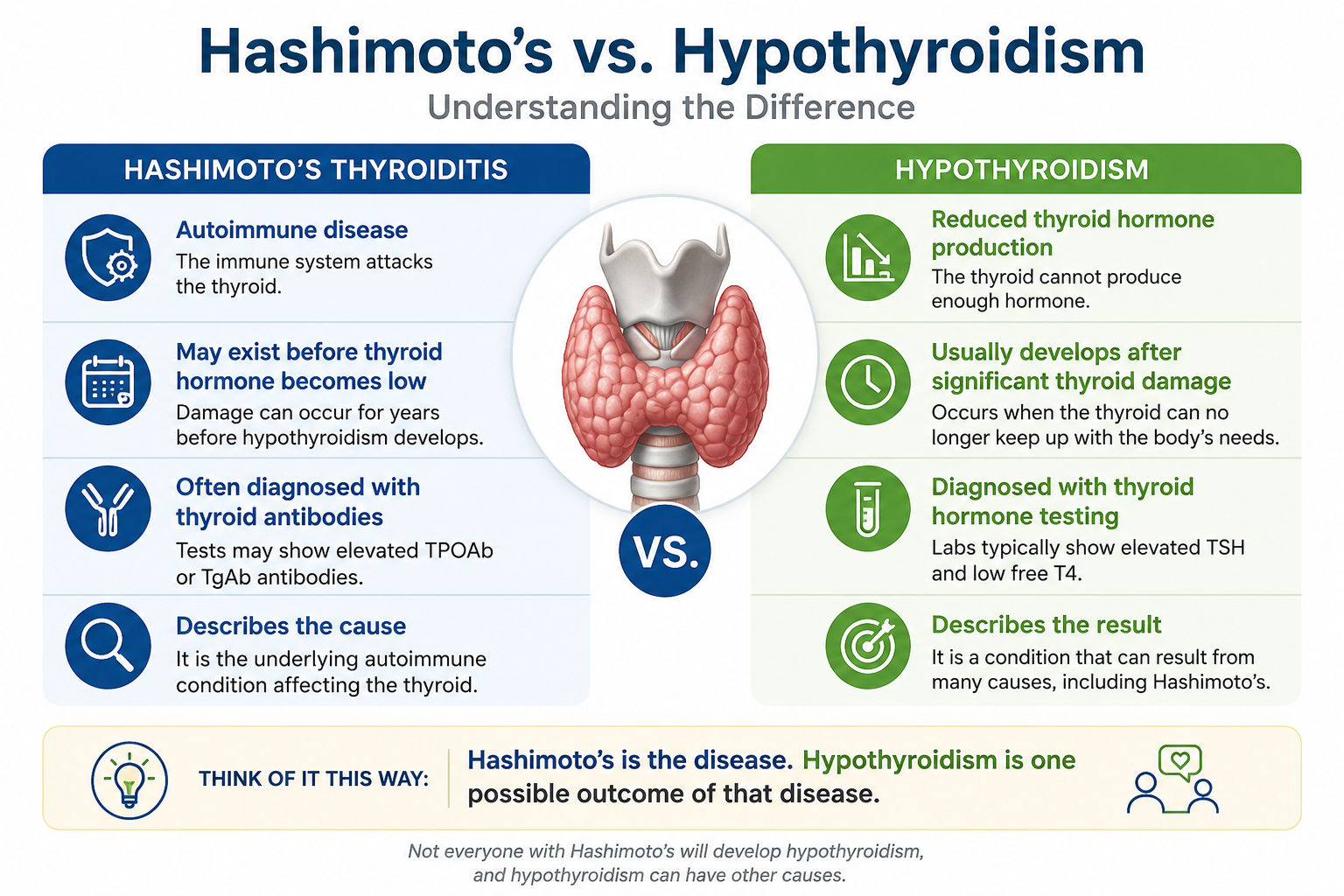
Many people use the terms Hashimoto’s and hypothyroidism interchangeably, but they are not the same. Hashimoto’s describes the autoimmune disease, while hypothyroidism refers to the reduced production of thyroid hormone that often develops as the disease progresses.
If you’d like a more detailed explanation of how Hashimoto’s differs from other thyroid disorders, read Hashimoto’s & Graves’ Disease:
You may also find our overview of Thyroid Problems & Symptoms helpful:
2. Is Hashimoto’s the same as hypothyroidism?
 No.
No.
Hashimoto’s is an autoimmune disease. Hypothyroidism is a condition in which the thyroid gland is no longer producing enough thyroid hormone.
Many people with Hashimoto’s eventually become hypothyroid because years of autoimmune damage reduce the thyroid’s ability to function. However, some individuals have Hashimoto’s for years before thyroid hormone levels begin to decline.
Understanding this difference also explains why antibody testing can sometimes detect Hashimoto’s long before routine thyroid hormone tests become abnormal.
To better understand how thyroid hormones are produced and used throughout the body, read Understanding Thyroid Function:
You can also learn more about the laboratory tests used to evaluate thyroid health in our guide to Thyroid Testing:
3. What causes Hashimoto’s?
There is no single cause of Hashimoto’s thyroiditis.
Current research suggests the disease develops through a combination of genetic susceptibility, immune-system dysfunction, hormonal influences, environmental exposures, and lifestyle factors. Why one person develops Hashimoto’s while another does not is often the result of several factors working together rather than one isolated cause.
From a functional medicine perspective, we also evaluate factors that may influence immune health, including nutritional status, digestive health, chronic stress, sleep quality, infections, and other medical conditions. Some of these relationships are supported by stronger evidence than others, so they should always be interpreted within the context of your overall health rather than viewed as universal causes.
To learn more about autoimmune thyroid disease, read Hashimoto’s & Graves’ Disease:
For a broader explanation of the functional medicine approach, visit Functional Medicine:
4. Is Hashimoto’s hereditary?
Genetics play an important role, but inheriting a genetic tendency does not mean you will automatically develop Hashimoto’s.
People with a family history of thyroid disease or other autoimmune conditions—including type 1 diabetes, celiac disease, rheumatoid arthritis, or lupus—have a higher risk. Even so, genes are only part of the picture. Environmental exposures, nutrition, stress, hormones, and other health factors may also influence whether those genetic tendencies are expressed.
A family history should encourage awareness—not fear.
If you’d like to learn more about how autoimmune thyroid disease develops, read Hashimoto’s & Graves’ Disease:
Diagnosis & Testing
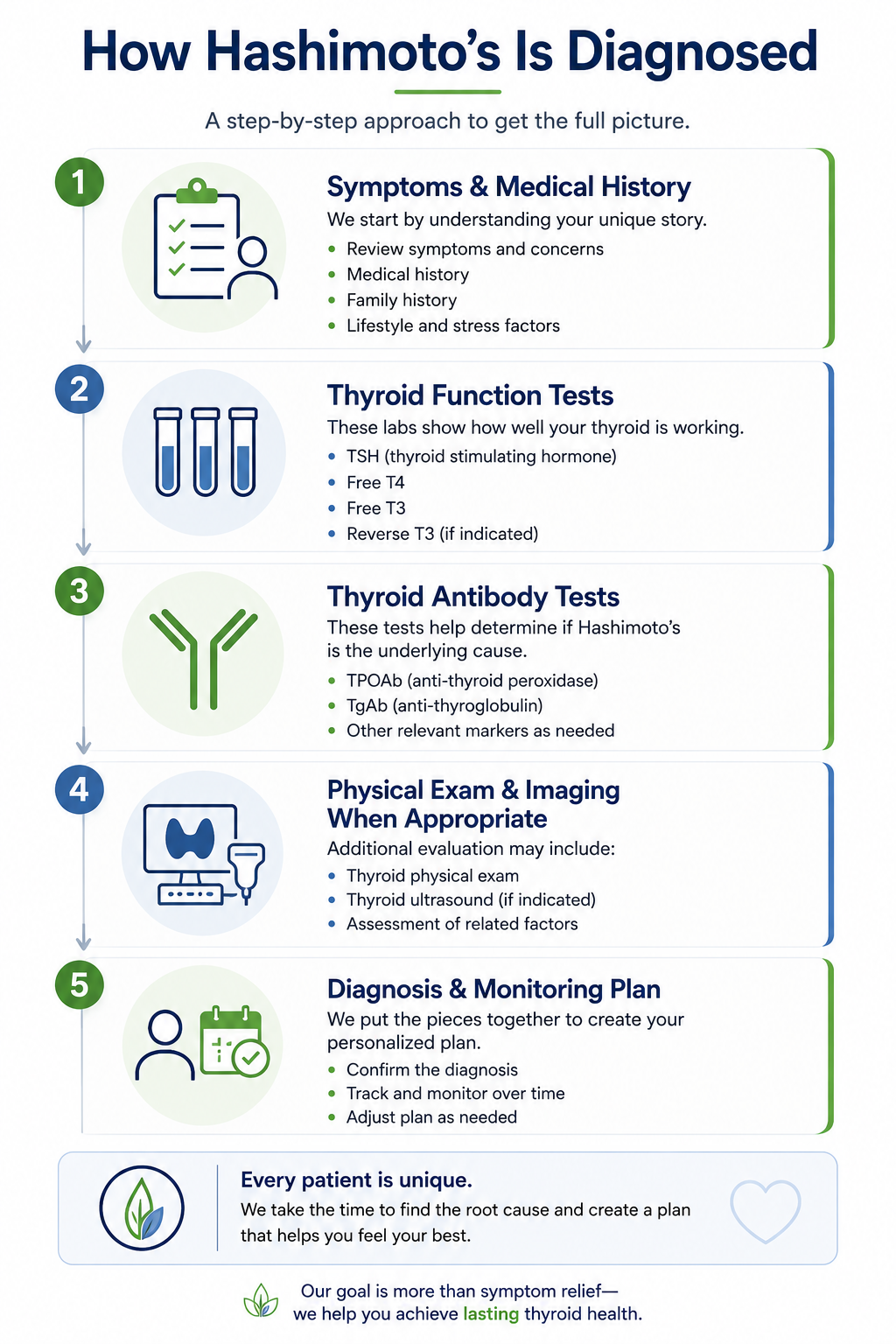
Diagnosing Hashimoto’s thyroiditis involves more than a single blood test. A complete evaluation considers symptoms, thyroid hormone levels, antibody testing, and your overall clinical picture.
5. How is Hashimoto’s diagnosed?
Hashimoto’s is diagnosed by combining your symptoms, medical history, physical examination, and laboratory testing.
A complete thyroid evaluation may include:
- TSH
- Free T4
- Free T3
- Thyroid peroxidase (TPO) antibodies
- Thyroglobulin antibodies (TgAb)
In some situations, a thyroid ultrasound may also provide helpful information.
No single laboratory value tells the entire story. The most accurate diagnosis comes from looking at the complete clinical picture.
To better understand these laboratory markers, read our comprehensive guide to Thyroid Testing:
You may also find Understanding Thyroid Function helpful for learning how these laboratory values fit together:
6. Which thyroid antibodies are tested?
The two antibodies most commonly measured are:
- Thyroid peroxidase antibodies (TPOAb)
- Thyroglobulin antibodies (TgAb)
These antibodies help identify autoimmune activity directed against the thyroid gland.
Some people have elevated antibodies years before thyroid hormone levels become abnormal, while others have symptoms suggestive of Hashimoto’s with low or even negative antibody levels. Laboratory results should always be interpreted alongside symptoms and other clinical findings.
To learn more about comprehensive thyroid testing, visit Thyroid Testing:
7. Can I have Hashimoto’s with a normal TSH?
Yes.
TSH measures how strongly the pituitary gland is signaling the thyroid to produce hormone, but it does not directly measure autoimmune activity.
Some people have positive thyroid antibodies and persistent symptoms while their TSH remains within the laboratory reference range. Others experience fluctuating thyroid function over time as the autoimmune process progresses.
This is one reason why a comprehensive thyroid evaluation often includes more than a single blood test.
To better understand the complete thyroid hormone pathway, read Understanding Thyroid Function:
If you’ve heard about Reverse T3 and wonder how it fits into thyroid physiology, our article on Reverse T3 explains its role in greater detail:
https://totalhealthcentervb.com/reverse-t3/
8. Can thyroid antibodies become elevated before thyroid hormone levels change?
Yes.
For some people, thyroid antibodies become detectable months—or even years—before hypothyroidism develops. This early autoimmune activity may occur while routine thyroid hormone tests remain within the normal laboratory range.
This does not necessarily mean treatment is immediately required, but it may indicate the need for periodic monitoring, especially if symptoms begin to develop or there is a strong family history of autoimmune disease.
For a more detailed discussion of thyroid antibody testing, read Thyroid Testing:
You can also learn more about autoimmune thyroid disease in Hashimoto’s & Graves’ Disease:
Treatment and Long-Term Management
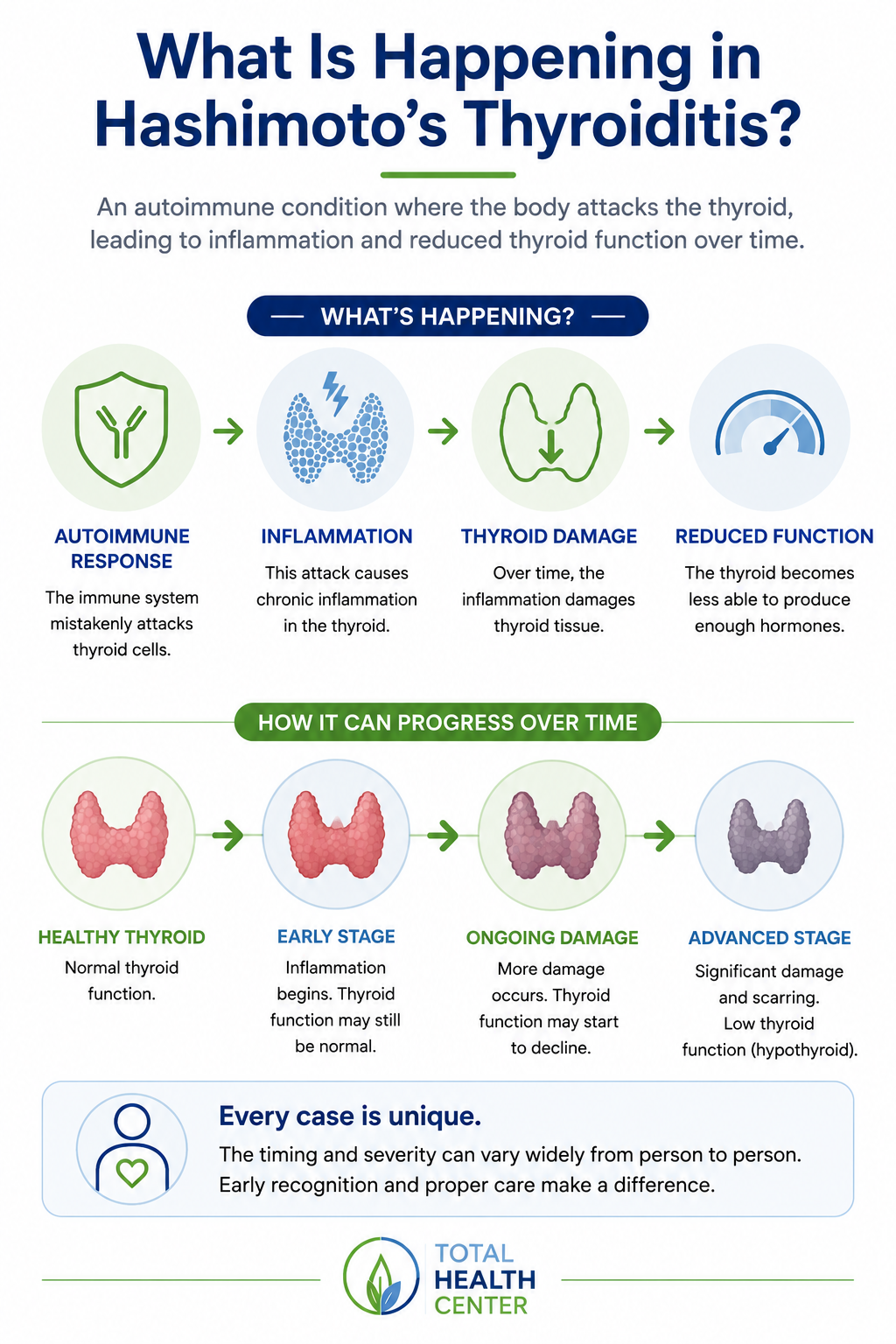
Hashimoto’s thyroiditis is an autoimmune disease that can gradually damage the thyroid over time. The speed and severity of progression vary from person to person, which is why ongoing monitoring is important.
9. Will I need thyroid medication for the rest of my life?
It depends.
If Hashimoto’s has permanently damaged enough thyroid tissue that your body can no longer produce adequate thyroid hormone, long-term thyroid hormone replacement may be necessary. For many people, this treatment is both safe and effective.
However, Hashimoto’s affects each person differently. Some patients experience changes in their thyroid function over time, while others may require adjustments to their medication as their health, weight, hormone levels, or underlying conditions change.
If you’re taking thyroid medication, never stop or adjust your dose without working with the healthcare provider who prescribed it.
To better understand why medication sometimes needs to be adjusted, read Thyroid Testing:
If you still have symptoms despite taking thyroid medication, our article on Understanding Thyroid Function explains why laboratory values are only one part of the picture:
10. Can Hashimoto’s go into remission?
Some people experience significant improvement in their symptoms, antibody levels, or overall thyroid health over time, but remission does not necessarily mean the disease has been cured.
Hashimoto’s is a chronic autoimmune condition. Once the immune system has developed this autoimmune response, the tendency generally remains. However, the level of immune activity can vary considerably from person to person.
Our goal is to support overall health, identify factors that may be contributing to immune dysfunction, and help patients function at their highest possible level while working alongside appropriate medical care.
If you’d like to learn more about autoimmune thyroid disease, read Hashimoto’s & Graves’ Disease:
You may also find our Functional Medicine page helpful:
11. Why do I still have symptoms if my thyroid labs are normal?
This is one of the most common questions we hear.
Normal laboratory values do not always explain how a person feels. Fatigue, brain fog, weight changes, constipation, hair loss, poor sleep, and other symptoms can have many possible causes, including thyroid disease, nutritional deficiencies, hormone imbalances, chronic inflammation, digestive disorders, stress, medication side effects, or unrelated medical conditions.
A normal TSH also does not necessarily mean every part of the thyroid hormone pathway is functioning optimally.
Rather than focusing on one laboratory value, we believe it’s important to evaluate the complete clinical picture—including your symptoms, medical history, lifestyle, and appropriate laboratory findings.
Learn more about the complete thyroid hormone pathway in Understanding Thyroid Function:
You can also learn how comprehensive laboratory testing provides a more complete assessment in Thyroid Testing:
12. Can diet help people with Hashimoto’s?
A nutritious, balanced diet supports overall health and may play an important role in managing autoimmune conditions, but there is no single “Hashimoto’s diet” that works for everyone.
Individual needs vary depending on medical history, nutritional status, digestive health, food sensitivities, and other health conditions.
Some people benefit from improving overall diet quality, correcting nutrient deficiencies, or identifying foods that consistently worsen their symptoms. However, dietary recommendations should be individualized rather than based on internet trends or one-size-fits-all plans.
Diet should be viewed as one part of a comprehensive approach that may also include medication, lifestyle changes, stress management, exercise, and appropriate medical care.
To learn more about foods that commonly raise questions among thyroid patients, read Goitrogenic Foods & Thyroid Health:
You can also learn more about our comprehensive approach on our Functional Medicine page:
13. Does everyone with Hashimoto’s need to avoid gluten?
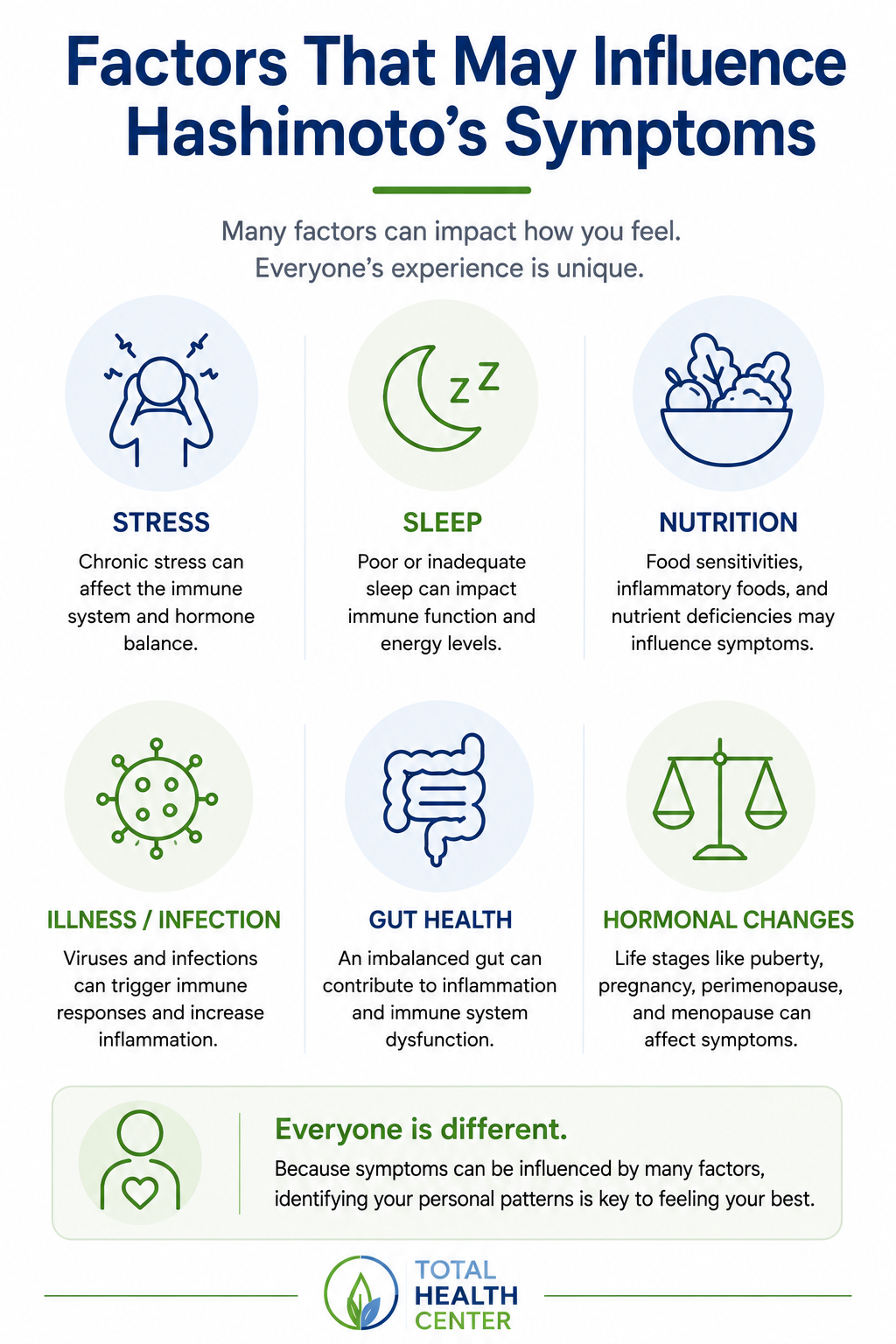
Many factors—including stress, sleep, nutrition, illness, digestive health, and hormonal changes—may influence how people with Hashimoto’s feel. Because every person is different, identifying individual patterns is an important part of a comprehensive evaluation.
No.
Gluten avoidance is not necessary for everyone with Hashimoto’s thyroiditis.
However, some people may benefit from reducing or eliminating gluten, particularly if they have celiac disease, non-celiac gluten sensitivity, or notice that gluten-containing foods consistently worsen their symptoms.
Hashimoto’s and celiac disease are both autoimmune conditions and occur together more frequently than would be expected by chance. Because of this association, some individuals may benefit from discussing appropriate testing with their healthcare provider before making major dietary changes.
Rather than automatically eliminating gluten, we recommend an individualized approach based on your symptoms, medical history, laboratory findings, and nutritional needs.
If you’re interested in learning more about the relationship between nutrition and thyroid health, read Goitrogenic Foods & Thyroid Health:
For a broader overview of our individualized care philosophy, visit Functional Medicine:
Dr. Scott Insight (Callout Box)
Every patient with Hashimoto’s has a different story.
Two people may have the same diagnosis but very different symptoms, laboratory findings, and underlying health challenges. That’s why we believe treatment decisions should be based on the entire clinical picture—not simply a diagnosis or a single laboratory result.
Our goal is to understand why you’re not feeling well, identify factors that may be influencing your health, and develop a personalized plan that supports your body’s ability to function at its best.
Symptoms and Whole-Body Effects
14. Why does Hashimoto’s cause fatigue and brain fog?
Fatigue and brain fog are among the most common symptoms reported by people with Hashimoto’s thyroiditis. Thyroid hormones help regulate energy production, metabolism, and normal brain function, so changes in thyroid hormone levels can contribute to feeling tired, mentally sluggish, or having difficulty concentrating.
However, thyroid function is only one possible piece of the puzzle. Nutrient deficiencies, poor sleep, chronic stress, blood sugar imbalance, medication side effects, anemia, and other health conditions can produce similar symptoms.
If fatigue or brain fog persist despite treatment, it’s important to look beyond a single laboratory value and evaluate your overall health.
To better understand how thyroid hormones affect the body, read Understanding Thyroid Function:
If you’d like to learn more about comprehensive thyroid evaluation, visit Thyroid Testing:
15. Why can Hashimoto’s cause weight gain, constipation, or hair loss?
When thyroid hormone production slows, many body systems slow down as well. This can contribute to symptoms such as unexplained weight gain, constipation, dry skin, brittle nails, hair thinning, and feeling unusually cold.
Not everyone experiences the same symptoms, and these changes can also have other causes unrelated to the thyroid. For example, nutritional deficiencies, hormonal changes, aging, digestive disorders, and certain medications may produce similar symptoms.
That’s why these symptoms should always be evaluated in the context of your complete medical history and laboratory findings.
For a deeper understanding of how thyroid hormones influence metabolism, read Understanding Thyroid Function:
You may also find our overview of Thyroid Problems & Symptoms helpful:
16. Can Hashimoto’s affect menstrual cycles, fertility, or libido?
Yes, it can.
Thyroid hormones interact with many other hormone systems in the body, including those involved in menstrual health, ovulation, fertility, pregnancy, and sexual function. When thyroid hormone levels are abnormal, some people may experience irregular menstrual cycles, difficulty becoming pregnant, changes in libido, or other hormone-related symptoms.
These concerns can also have many other causes, so it’s important not to assume the thyroid is solely responsible. A thorough evaluation helps determine whether thyroid dysfunction, another hormone imbalance, or an unrelated condition may be contributing.
If you’re experiencing these symptoms, discussing them with your healthcare provider is an important part of your overall evaluation.
To learn more about thyroid hormone regulation, read Understanding Thyroid Function:
17. Does gut health matter in Hashimoto’s?
Research continues to explore the complex relationship between the digestive system, the immune system, and autoimmune diseases such as Hashimoto’s thyroiditis.
The gut plays an important role in nutrient absorption, immune regulation, and maintaining the intestinal barrier. Because of this, digestive health has become an active area of research in autoimmune disease. While some proposed mechanisms have stronger scientific support than others, maintaining good digestive health is an important part of overall wellness.
From a functional medicine perspective, we often evaluate digestive symptoms, dietary patterns, nutritional status, and other factors that may influence a patient’s overall health. This approach is individualized and should complement—not replace—appropriate medical evaluation and treatment.
To learn more about our approach, visit Functional Medicine:
18. What does a functional medicine evaluation look for beyond the thyroid?
A functional medicine evaluation looks beyond the diagnosis alone and asks a broader question:
Why is this person experiencing these symptoms?
In addition to evaluating thyroid function, a comprehensive assessment may include a review of nutrition, digestive health, sleep quality, stress, exercise, medications, environmental exposures, hormone balance, inflammation, and other health conditions that could be influencing your overall well-being.
Every evaluation is individualized. The goal is not simply to identify abnormal laboratory values but to better understand how the different systems of the body interact and where additional evaluation or treatment may be appropriate.
If you’re interested in learning more about our approach to patient care, visit our Functional Medicine page:
Continue Learning
If you’d like to explore thyroid health in greater depth, these articles provide a more detailed look at the topics discussed throughout this FAQ.
Start Here
Learn About Thyroid Testing
Autoimmune Thyroid Disease
Nutrition and Thyroid Health
About Dr. Scott
Dr. Mark Scott is the founder and clinic director of Total Health Center in Virginia Beach, Virginia. He has been helping patients improve their health through chiropractic care and functional medicine since 1997.
Throughout his career, Dr. Scott has worked with thousands of patients experiencing thyroid disorders, digestive problems, autoimmune conditions, chronic fatigue, hormone imbalances, and other complex health concerns. His approach combines conventional laboratory testing with a comprehensive evaluation of nutrition, lifestyle, digestive health, metabolism, and other factors that may influence overall health.
Rather than focusing on a diagnosis alone, Dr. Scott believes the goal is to understand why symptoms developed in the first place and to create an individualized plan that supports each patient’s unique health needs.
Through the Total Health Center website, he is committed to providing practical, evidence-informed education that helps patients better understand their health and make informed decisions in partnership with their healthcare providers.
Ready to Take the Next Step?
Reading about Hashimoto’s thyroiditis is an excellent place to begin—but your symptoms, medical history, and laboratory results are unique to you.
If you’ve been diagnosed with Hashimoto’s thyroiditis, continue to struggle with fatigue or other thyroid-related symptoms, or simply want a more comprehensive evaluation of your thyroid health, we’re here to help.
At Total Health Center, we take the time to understand the complete picture—not just your thyroid numbers. Our goal is to identify factors that may be contributing to your symptoms and develop a personalized plan that supports your long-term health.
Whether you’re looking for answers after years of frustration or want a second opinion about your thyroid health, we’d be honored to help you explore your options.
Schedule Your Consultation
In-person appointments are available at our Virginia Beach office, and virtual functional medicine consultations are available for patients throughout the United States.
Call Total Health Center today at (757) 685-4325 to schedule your consultation, or request an appointment through our website.