

Most people who are diagnosed with Hashimoto’s disease or Graves’ disease believe they have developed a thyroid disorder. That’s understandable because those are the words they hear in the doctor’s office, and the treatments they receive are directed at the thyroid gland. But in reality, the thyroid is often the victim rather than the cause of the problem.
Hashimoto’s disease and Graves’ disease are autoimmune conditions. That means the immune system, which is designed to protect your body from bacteria, viruses, and other harmful invaders, mistakenly targets your own thyroid tissue instead. The thyroid becomes the battleground, but the immune system is what started the fight.
Understanding that difference changes everything.
If you’ve been told you have Hashimoto’s or Graves’ disease, you may have wondered why your symptoms began years before anyone found a problem with your thyroid tests. You may have been told your laboratory results were “normal” even though you were exhausted, struggling with weight changes, dealing with brain fog, or simply didn’t feel like yourself anymore. Many people spend years searching for answers before the diagnosis finally becomes obvious.
That’s because autoimmune thyroid disease often develops slowly. Long before thyroid hormone levels become abnormal, the immune system may already be attacking the thyroid. The damage can continue silently for months or even years before standard blood tests begin to show obvious changes.
This is one reason we believe it is important to look beyond a single thyroid test. As we discuss on our Thyroid Testing page, comprehensive thyroid evaluation often provides a much clearer picture than relying on TSH alone.
The good news is that understanding why autoimmune thyroid disease develops can help guide a more complete evaluation. While thyroid hormone replacement or medications that control thyroid activity are often necessary, they address the consequences of the disease rather than explaining why the immune system became dysregulated in the first place.
That doesn’t mean every answer is known or that every autoimmune disease can be reversed. Autoimmune conditions are complex and involve a combination of genetics, environmental exposures, immune regulation, and other factors that researchers continue to study. But recognizing that the immune system is involved opens the door to asking better questions and taking a broader look at your health.
What Is an Autoimmune Disease?
Your immune system performs one of the most remarkable jobs in the human body. Every day it identifies viruses, bacteria, parasites, abnormal cells, and countless other threats while leaving healthy tissues alone. It accomplishes this by recognizing the difference between what belongs in your body and what does not.
In autoimmune disease, that recognition system begins to fail.
Instead of protecting healthy tissue, the immune system mistakenly identifies part of your own body as something that needs to be attacked. Depending on which tissue becomes the target, different autoimmune diseases develop. In rheumatoid arthritis the immune system attacks the joints. In multiple sclerosis it attacks the protective covering around nerves. In type 1 diabetes it destroys the insulin-producing cells of the pancreas.
In Hashimoto’s disease and Graves’ disease, the thyroid becomes the target.
Although these two conditions affect the same gland, they behave very differently because the immune response is different. Hashimoto’s disease gradually damages thyroid tissue, often leading to reduced thyroid hormone production over time. Graves’ disease, on the other hand, produces antibodies that stimulate the thyroid, causing it to become overactive and produce excessive amounts of thyroid hormone.
Understanding this distinction is important because the symptoms, laboratory findings, and treatment approaches are different, even though both conditions are autoimmune.
Many people are surprised to learn that antibodies can often be detected years before thyroid hormone levels become abnormal. During this early phase, someone may experience symptoms while routine screening tests still appear within the normal range. This is one reason antibody testing can be an important part of a comprehensive thyroid evaluation for the right patient.
We discuss the role of antibody testing in greater detail on our Thyroid Testing page because understanding these laboratory markers often helps explain why symptoms and routine thyroid tests do not always match.
Just as importantly, autoimmune thyroid disease doesn’t exist in isolation. People with one autoimmune condition have a higher likelihood of developing another autoimmune disease during their lifetime. That broader pattern is one reason functional medicine often considers overall immune health rather than focusing exclusively on the thyroid gland.
Why Does the Immune System Attack the Thyroid?
This is one of the most common questions patients ask, and the honest answer is that no one fully understands why autoimmune diseases develop.
Researchers believe that autoimmune thyroid disease results from a combination of inherited genetic susceptibility and environmental influences. In other words, some people may have genes that increase their risk, but genetics alone usually do not determine whether the disease develops. Instead, a variety of factors may interact over time to influence immune function.
Scientists continue to investigate potential contributors such as viral infections, chronic inflammation, nutrient deficiencies, stress, smoking, iodine intake, hormonal changes, and other environmental exposures. Different people may have different combinations of factors, which is one reason autoimmune thyroid disease rarely follows the exact same course in every individual.
Rather than searching for a single cause, it is often more helpful to think of autoimmune thyroid disease as the result of many influences coming together over time. That perspective encourages a more comprehensive evaluation instead of assuming every patient fits the same pattern.
From a functional medicine perspective, this broader view helps explain why looking at nutrition, digestive health, inflammation, stress, sleep, and metabolic health may all play a role in understanding the whole person—not simply the thyroid gland.
Hashimoto’s Disease & Graves’ Disease: Understanding Autoimmune Thyroid Disorders
Hashimoto’s Disease and Graves’ Disease: Similar Names, Very Different Conditions
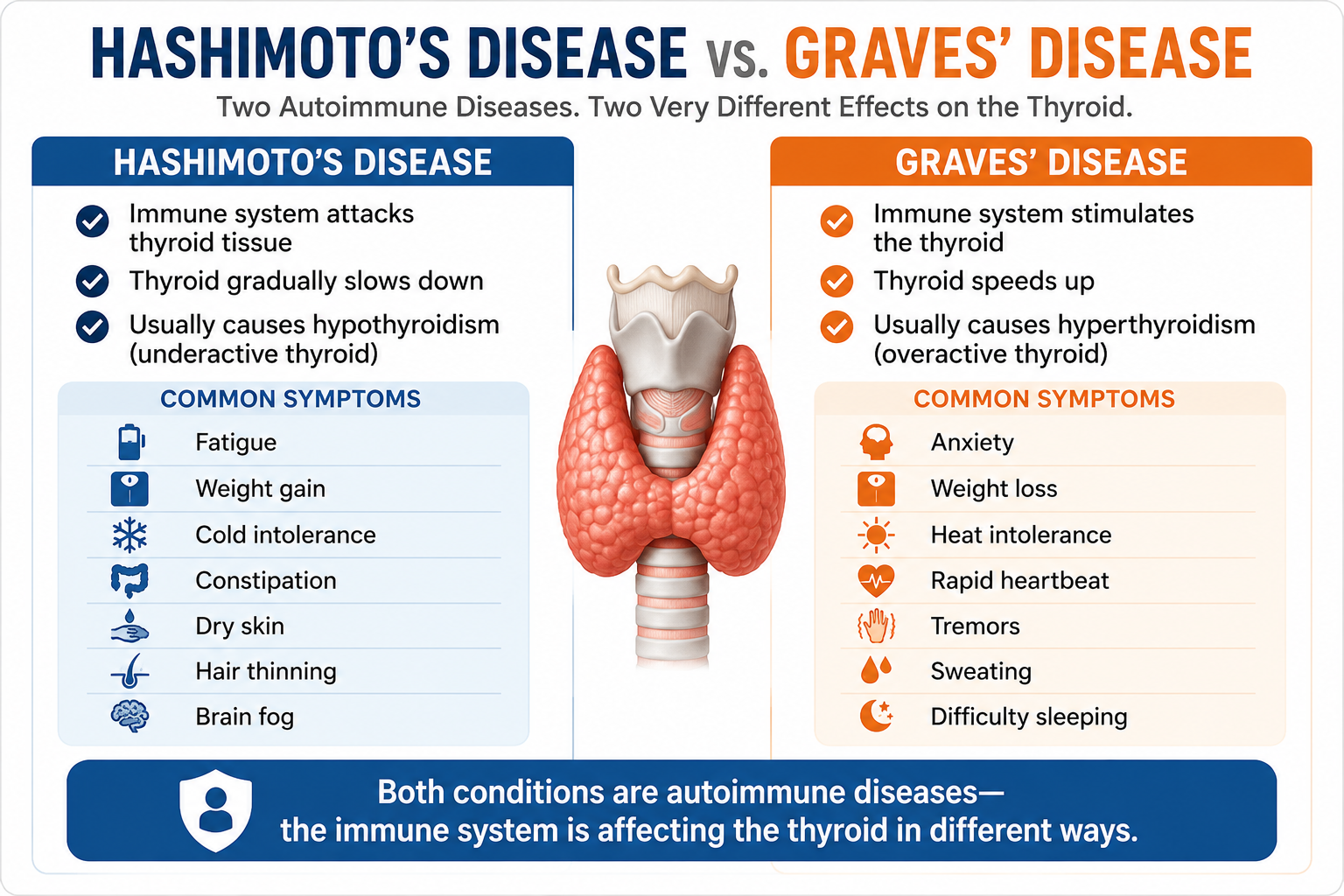
Hashimoto’s disease and Graves’ disease are both autoimmune thyroid disorders, but they affect the thyroid in very different ways. Hashimoto’s gradually slows thyroid function, while Graves’ disease overstimulates the thyroid, often leading to opposite symptoms.
Because Hashimoto’s disease and Graves’ disease both affect the thyroid, they’re often discussed together. Patients sometimes assume they’re simply different stages of the same illness or that one eventually turns into the other. While both are autoimmune diseases, they behave very differently because the immune system is attacking the thyroid in different ways.
Think of your thyroid as the engine that helps regulate your body’s metabolism. In Hashimoto’s disease, the immune system gradually damages the engine itself. As healthy thyroid tissue is destroyed over time, the gland loses its ability to produce enough thyroid hormone. Eventually, this may lead to hypothyroidism—a condition where the body’s metabolism begins to slow.
Graves’ disease works almost the opposite way.
Instead of damaging the thyroid, the immune system produces antibodies that continuously stimulate the gland. It’s almost as if someone has wedged the accelerator pedal to the floor. Rather than slowing down, the thyroid begins producing excessive amounts of thyroid hormone, creating the symptoms of hyperthyroidism.
Although the immune system is responsible for both conditions, the effects on the thyroid are completely different.
Hashimoto’s Disease
Hashimoto’s disease is the most common cause of hypothyroidism in the United States and throughout much of the developed world. It affects women far more often than men, although men and even children can develop the condition as well.
One of the most frustrating aspects of Hashimoto’s disease is how gradually it develops. Many patients don’t wake up one morning feeling dramatically ill. Instead, symptoms slowly accumulate over months or years. Energy begins to decline. Weight becomes more difficult to manage. Mental clarity isn’t what it used to be. Hair may become thinner, skin drier, and tolerance to cold temperatures decreases. Because these changes happen gradually, many people simply assume they’re getting older or dealing with stress.
By the time laboratory testing finally reveals hypothyroidism, the autoimmune process may have been present for years.
This is one reason we encourage patients to understand the difference between thyroid function and thyroid disease. Thyroid hormone levels tell us how well the gland is working today, but thyroid antibodies can provide additional information about whether the immune system is actively attacking the gland.
If you’re unfamiliar with the relationship between TSH, Free T4, Free T3, Reverse T3, and thyroid antibodies, our comprehensive guide to Thyroid Testing explains how these laboratory markers fit together and why they each provide different pieces of information.
Graves’ Disease
Graves’ disease represents the opposite end of the spectrum.
Instead of gradually reducing thyroid hormone production, Graves’ disease causes the thyroid to become overactive. Patients often notice symptoms that seem completely different from Hashimoto’s disease. Rather than fatigue and slowed metabolism, they may experience anxiety, rapid heart rate, unexplained weight loss, heat intolerance, excessive sweating, tremors, or difficulty sleeping.
Some people also develop changes involving the eyes, known as Graves’ ophthalmopathy, where inflammation affects the tissues surrounding the eyes. While not everyone with Graves’ disease experiences eye involvement, recognizing these symptoms early is important because they require appropriate medical evaluation.
Although Hashimoto’s disease and Graves’ disease produce opposite thyroid hormone patterns, they share an important characteristic: neither condition originates in the thyroid itself. In both diseases, the thyroid is responding to signals generated by the immune system.
Understanding that concept helps explain why treatment often involves more than simply measuring thyroid hormone levels.
Why Symptoms Often Begin Before the Diagnosis
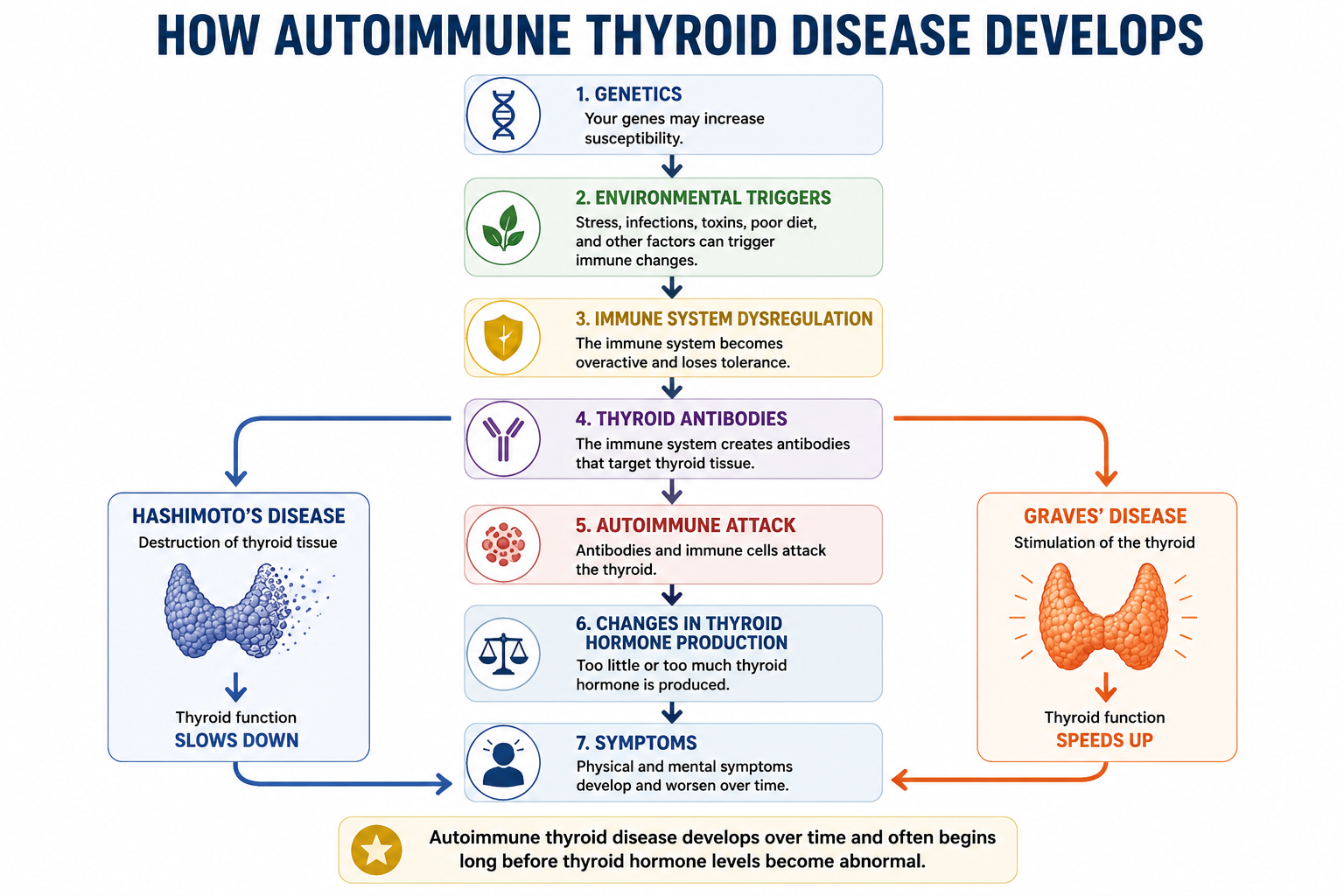
Autoimmune thyroid disease usually develops gradually. The immune system may begin producing thyroid antibodies long before thyroid hormone levels become abnormal or noticeable symptoms appear.
One of the most confusing experiences for many patients is being told that everything looks “normal” despite feeling anything but normal.
This doesn’t necessarily mean the symptoms are unrelated to the thyroid. Instead, it highlights an important reality about autoimmune thyroid disease: the immune system can begin attacking the thyroid long before enough damage has occurred to significantly change routine thyroid hormone levels.
Imagine termites quietly damaging the wooden framework of a house. From the outside, everything appears perfectly normal. The walls are still standing, the doors still open, and the roof hasn’t collapsed. But inside, the damage is already underway.
Autoimmune thyroid disease can behave in much the same way.
The immune system may be producing thyroid antibodies months or even years before thyroid hormone production begins to decline. During that period, routine screening with TSH alone may still fall within the laboratory reference range, even though the underlying autoimmune process has already started.
That doesn’t mean everyone with fatigue or brain fog has Hashimoto’s disease, nor does it mean antibody testing is appropriate for every person. It does mean that understanding the entire clinical picture—including symptoms, medical history, physical examination, and appropriate laboratory testing—provides far more useful information than relying on a single laboratory value.
This is one reason we encourage patients to look beyond the idea that thyroid health can be summarized by one number. As we explain in our article on Thyroid Problems & Symptoms, thyroid function is only one piece of a much larger story.
Why Antibody Testing Matters
When people hear the words “thyroid test,” they usually think about hormone levels. While hormone testing is extremely important, autoimmune thyroid disease introduces another category of laboratory markers that many patients have never heard of: thyroid antibodies.
Antibodies are proteins produced by the immune system. Normally they recognize viruses, bacteria, and other foreign invaders. In Hashimoto’s disease and Graves’ disease, however, certain antibodies mistakenly recognize parts of the thyroid as targets.
In Hashimoto’s disease, the two antibodies most commonly measured are thyroid peroxidase (TPO) antibodies and thyroglobulin antibodies (TgAb). Elevated levels suggest that the immune system is reacting against thyroid tissue. In Graves’ disease, thyroid-stimulating immunoglobulins (TSI) and TSH receptor antibodies (TRAb) are often responsible for overstimulating the thyroid gland.
It’s important to understand what these tests can—and cannot—tell us. Positive antibodies do not automatically predict how quickly thyroid function will change, nor do antibody levels always correlate with symptom severity. They are simply one additional piece of information that helps us better understand what’s happening beneath the surface.
Looking at thyroid hormones, thyroid antibodies, symptoms, and medical history together often provides a much clearer picture than considering any one laboratory marker in isolation.
Looking Beyond the Thyroid
One of the biggest misconceptions about Hashimoto’s disease and Graves’ disease is that they are simply disorders of thyroid hormone production. While thyroid hormone abnormalities are certainly part of the picture, they don’t explain why the immune system became involved in the first place.
Imagine discovering a leak in your ceiling.
You could repaint the stain every few months, and for a while the ceiling might look better. But until someone climbs into the attic to find the leaking roof, the water damage continues.
Treating thyroid hormone levels without considering the broader picture can sometimes feel similar.
For many people with Hashimoto’s disease, thyroid hormone replacement is absolutely necessary. If the thyroid has been damaged to the point that it can no longer produce enough hormone, replacing that hormone is often essential for good health. Likewise, patients with Graves’ disease frequently require medications or other treatments to safely control excessive thyroid hormone production.
Those treatments are important, and in many cases they are lifesaving.
But they don’t answer a question many patients continue to ask:
Why did this happen in the first place?
That question doesn’t always have a simple answer.
Autoimmune diseases are among the most complex conditions studied in medicine. Researchers believe they develop through an interaction of genetic susceptibility, immune regulation, and environmental influences. Different people may arrive at the same diagnosis through very different pathways.
Rather than searching for one universal cause, a functional medicine evaluation looks for patterns that may be contributing to overall health. The goal isn’t to promise a cure for autoimmune disease. The goal is to better understand the individual sitting in front of us.
Looking at the Whole Person
When someone comes to our office with Hashimoto’s disease or Graves’ disease, we rarely look at the thyroid in isolation.
Instead, we ask a much broader series of questions.
How well is the digestive system functioning?
Is chronic inflammation present elsewhere in the body?
Are there nutritional deficiencies that could be affecting overall health?
How well is blood sugar regulated?
What does sleep look like?
Has chronic stress been affecting the nervous system for years?
Are there other autoimmune conditions that should be considered?
None of these questions replace conventional medical treatment. Instead, they help us understand the bigger picture of a person’s health.
This whole-person approach is one of the defining principles of functional medicine. Rather than focusing exclusively on a diagnosis, functional medicine attempts to identify patterns that may be influencing multiple body systems at the same time.
If you’re unfamiliar with this approach, our Functional Medicine guide explains how looking beyond a single diagnosis often provides a more complete understanding of chronic health conditions.
The Gut-Immune Connection
One area receiving considerable research attention is the relationship between the digestive system and the immune system.
Approximately 70% of the body’s immune cells are associated with the gastrointestinal tract. This doesn’t mean that every thyroid problem begins in the gut or that digestive disorders cause autoimmune disease. However, it does help explain why researchers continue to investigate how gut health may influence immune regulation.
Patients with autoimmune thyroid disease frequently report digestive symptoms such as bloating, constipation, diarrhea, food sensitivities, or irritable bowel syndrome. While these symptoms don’t prove that one condition caused the other, they may suggest that looking at digestive health is worthwhile as part of a comprehensive evaluation.
In functional medicine, digestive health is often evaluated because proper digestion influences nutrient absorption, immune communication, inflammation, and many other aspects of overall health.
If digestive symptoms are part of your health history, you may also find our information on Functional Medicine helpful.
Nutrition Is Part of the Conversation
Patients often ask whether there is a specific diet that cures Hashimoto’s disease.
Unfortunately, there isn’t.
Nutrition is rarely that simple.
Research continues to explore how dietary patterns, nutrient status, and food sensitivities may influence autoimmune diseases, but the answers vary from person to person. What works well for one patient may not produce the same results for another.
Rather than recommending one universal diet, we typically encourage patients to think about nutrition as one piece of a much larger strategy.
Adequate protein supports tissue repair and overall health. Fruits and vegetables provide vitamins, minerals, and phytonutrients that support normal immune function. Healthy fats contribute to hormone production and cell membrane integrity. Appropriate blood sugar regulation helps reduce metabolic stress throughout the body.
Certain nutrients—including selenium, zinc, iron, iodine, and vitamin D—also play important roles in thyroid physiology. However, more is not always better. Taking supplements without understanding your individual needs can sometimes be ineffective or even counterproductive.
Nutrition should be personalized rather than reduced to a list of foods that everyone should eat or avoid.
What About Gluten?
Few topics generate more discussion than gluten and Hashimoto’s disease.
Some people experience significant improvement after eliminating gluten from their diet, while others notice little or no difference. Current research suggests that individuals with autoimmune thyroid disease have a higher prevalence of celiac disease than the general population, making appropriate testing important when symptoms or risk factors are present.
Outside of confirmed celiac disease, however, the decision to remove gluten should be individualized.
Rather than assuming gluten is either the cause of every autoimmune disease or completely irrelevant, we prefer to evaluate each patient’s history, symptoms, laboratory findings, and nutritional status before making recommendations.
Medicine is rarely as simple as declaring one food “good” or “bad.”
Stress, Sleep, and the Immune System
Most people recognize that stress affects how they feel.
Fewer people realize that chronic stress also influences immune function, hormone regulation, sleep quality, blood sugar, and inflammation.
Stress itself does not directly cause Hashimoto’s disease or Graves’ disease. If it did, nearly everyone would develop autoimmune disease at some point in life.
However, chronic physical or emotional stress may influence the way the immune system functions in genetically susceptible individuals. Combined with other environmental and biological factors, it may become one piece of a much larger puzzle.
The same is true for sleep.
Sleep is one of the primary times the body repairs tissues, regulates hormones, and supports healthy immune function. Poor sleep doesn’t explain every autoimmune disease, but consistently inadequate sleep makes it much more difficult for the body to function optimally.
When we evaluate chronic health conditions, lifestyle factors such as stress management, sleep quality, nutrition, movement, and recovery are all considered alongside laboratory testing—not because they replace medical treatment, but because they influence overall health.
What Should You Do If You Think You Have Hashimoto’s Disease or Graves’ Disease?
Learning that you have an autoimmune thyroid disease can feel overwhelming.
Many people begin searching the internet looking for one answer that explains everything. Instead, they find conflicting advice. One website recommends a special diet. Another promises to reverse autoimmune disease. Someone else insists thyroid medication is all that’s necessary, while another claims medication should be avoided altogether.
It’s no wonder patients become confused.
The truth is that autoimmune thyroid disease is rarely that simple.
Every person brings a unique combination of genetics, medical history, lifestyle, nutrition, stress, environmental exposures, and immune function. Two people may both have Hashimoto’s disease yet have very different symptoms, laboratory findings, and treatment needs.
That’s why we believe the first step isn’t searching for a miracle treatment.
The first step is developing a clear understanding of what’s happening in your body.
Start With a Comprehensive Evaluation
A thoughtful evaluation begins with listening.
Your symptoms matter.
Your medical history matters.
Your family history matters.
Your physical examination matters.
And appropriate laboratory testing matters.
Rather than relying on a single thyroid marker, a comprehensive evaluation often considers how multiple pieces of information fit together. Depending on your individual situation, this may include thyroid hormone levels, thyroid antibody testing, nutritional status, metabolic health, and other factors that help create a more complete clinical picture.
If you’re unsure what laboratory tests are commonly used to evaluate thyroid function, our Thyroid Testing guide explains each marker in detail and how they contribute to understanding thyroid health.
Treat the Whole Person, Not Just the Laboratory Results
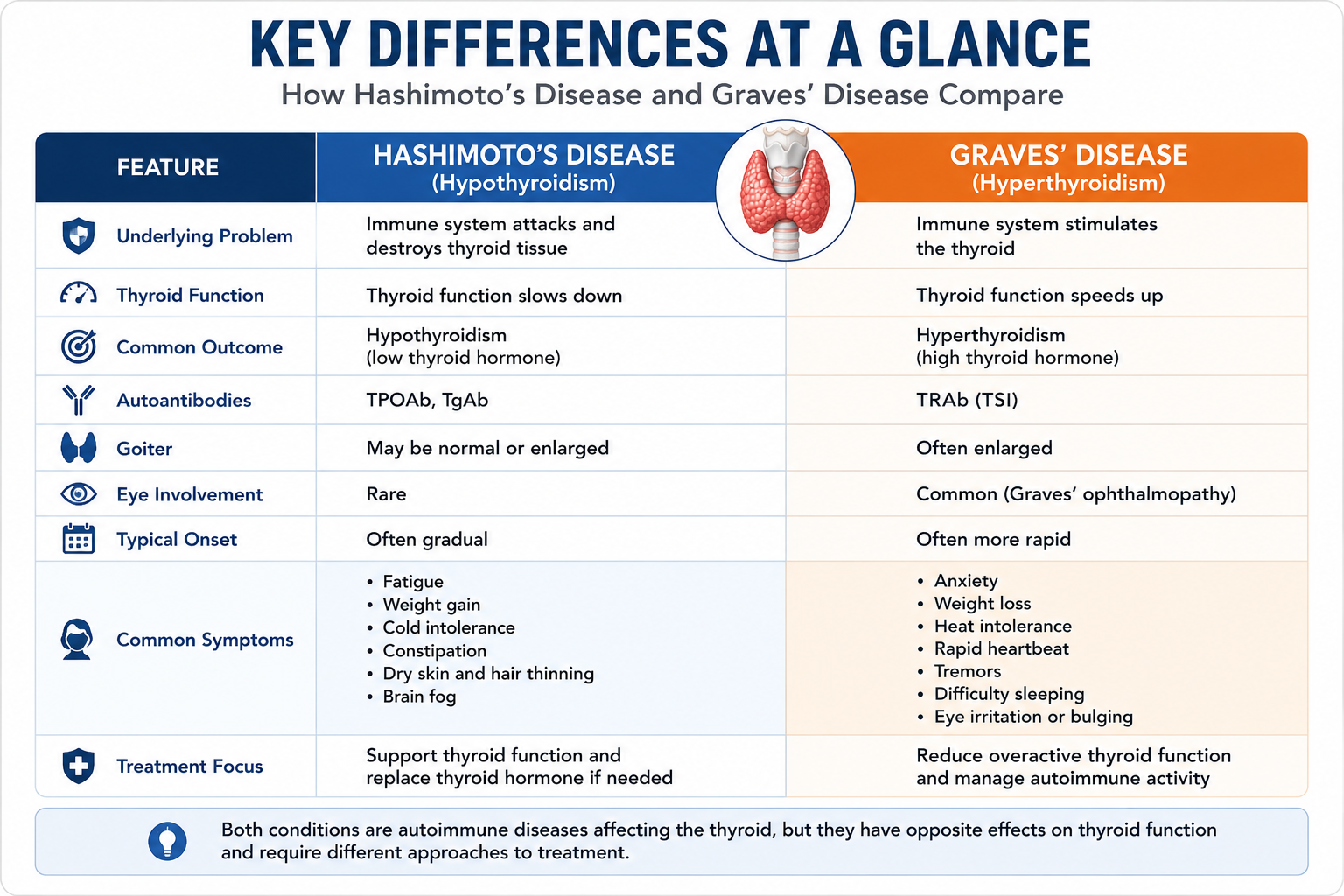
Although Hashimoto’s disease and Graves’ disease are both autoimmune thyroid disorders, they affect thyroid function in opposite ways. Understanding these differences helps explain why diagnosis, testing, and treatment approaches are often different.
One lesson I’ve learned after caring for patients for many years is that people don’t come into the office because their laboratory numbers are abnormal.
They come because they don’t feel well.
Laboratory testing is incredibly valuable, but laboratory values are only one part of the conversation. The numbers help us understand what’s happening biologically, while your symptoms help us understand how those changes are affecting your life.
Good healthcare requires both.
That’s why our goal isn’t simply to review laboratory results. It’s to understand how your thyroid health fits into your overall health.
Sometimes the thyroid is the primary problem.
Sometimes it is only one piece of a much larger picture.
Understanding that difference often leads to better questions, more personalized recommendations, and a clearer path forward.
Dr. Scott’s Insight
One of the biggest mistakes I see is assuming that every symptom a person experiences must be caused by the thyroid simply because they have Hashimoto’s disease or Graves’ disease.
Sometimes that’s true.
Sometimes it isn’t.
I’ve met patients whose thyroid hormone levels were well controlled, yet they continued struggling with fatigue, digestive problems, chronic pain, poor sleep, or blood sugar issues. In those situations, continuing to increase thyroid medication wasn’t necessarily the answer because something else was contributing to how they felt.
I’ve also seen the opposite—patients convinced their thyroid was the entire problem when careful testing revealed another condition that needed attention.
This is why I believe it’s important to understand the whole person rather than focusing on one laboratory value or one diagnosis.
Continue Learning About Thyroid Health
Hashimoto’s disease and Graves’ disease are only one part of understanding thyroid health.
If you’d like to learn more, these articles build on the concepts we’ve discussed here:
Understanding Thyroid Problems & Symptoms
Learn why thyroid disorders can affect nearly every system in the body and why symptoms often overlap with other health conditions.
Comprehensive Thyroid Testing
Understand what TSH, Free T4, Free T3, Reverse T3, and thyroid antibodies can—and cannot—tell us about thyroid function.
Understanding Thyroid Function
Explore how the brain, thyroid gland, liver, gut, and individual cells work together to regulate thyroid hormone activity throughout the body.
Understanding Thyroid Patterns
Discover why two people with similar laboratory values may experience very different symptoms and how looking at thyroid patterns can provide additional clinical insight.
Final Thoughts
Hashimoto’s disease and Graves’ disease remind us that the thyroid doesn’t function in isolation.
These conditions begin with the immune system, affect the thyroid gland, and can influence nearly every part of the body. While medications are often an essential part of treatment, understanding the broader picture of your health can help you ask better questions and become a more informed participant in your care.
Whether you’ve recently been diagnosed, have been living with autoimmune thyroid disease for years, or simply suspect something isn’t quite right, remember that your health story is about more than one laboratory value or one diagnosis.
The goal isn’t simply to manage a thyroid condition.
The goal is to better understand the person living with it.
About Dr. Mark Scott
Dr. Mark Scott has been helping patients with chronic and complex health conditions for more than 30 years. Since 1997, he has incorporated functional medicine into his practice, combining comprehensive laboratory testing with chiropractic care, nutrition, lifestyle medicine, and evidence-based natural therapies to help patients uncover the underlying factors contributing to their health concerns.
At Total Health Center in Virginia Beach, Dr. Scott works with patients experiencing thyroid disorders, Hashimoto’s disease, Graves’ disease, digestive disorders, autoimmune conditions, fatigue, hormone imbalances, metabolic health concerns, and many other chronic conditions. His approach emphasizes understanding the whole person rather than focusing on a single diagnosis or symptom.
Whether you’re struggling with a newly diagnosed thyroid condition or have been searching for answers for years, Dr. Scott believes that education is one of the most important steps toward better health. His goal is to help patients understand their condition, ask better questions, and make informed decisions about their care.
If you’d like to learn whether a functional medicine evaluation may be appropriate for your situation, schedule a consultation with Total Health Center.
References
American Association of Clinical Endocrinology. Clinical Practice Guidelines for Hypothyroidism in Adults. Available at: https://pro.aace.com/
American Thyroid Association. Hashimoto’s Thyroiditis. Available at: https://www.thyroid.org/hashimotos-thyroiditis/
American Thyroid Association. Graves’ Disease. Available at: https://www.thyroid.org/graves-disease/
Antonelli A, Ferrari SM, Corrado A, Di Domenicantonio A, Fallahi P. Autoimmune Thyroid Disorders. Autoimmunity Reviews. 2015;14(2):174-180.
Caturegli P, De Remigis A, Rose NR. Hashimoto Thyroiditis: Clinical and Diagnostic Criteria. Autoimmunity Reviews. 2014;13(4-5):391-397.
Jonklaas J, Bianco AC, Bauer AJ, et al. Guidelines for the Treatment of Hypothyroidism: Prepared by the American Thyroid Association Task Force on Thyroid Hormone Replacement. Thyroid. 2014;24(12):1670-1751.
McLeod DSA, Cooper DS. The Incidence and Prevalence of Thyroid Autoimmunity. Endocrine. 2012;42(2):252-265.
National Institute of Diabetes and Digestive and Kidney Diseases (NIDDK). Hashimoto’s Disease. Available at: https://www.niddk.nih.gov/health-information/endocrine-diseases/hashimotos-disease
National Institute of Diabetes and Digestive and Kidney Diseases (NIDDK). Graves’ Disease. Available at: https://www.niddk.nih.gov/health-information/endocrine-diseases/graves-disease
Ross DS, Burch HB, Cooper DS, et al. 2016 American Thyroid Association Guidelines for Diagnosis and Management of Hyperthyroidism and Other Causes of Thyrotoxicosis. Thyroid. 2016;26(10):1343-1421.
Wiersinga WM. Paradigm Shifts in Thyroid Hormone Replacement Therapies for Hypothyroidism. Nature Reviews Endocrinology. 2014;10(3):164-174.
Frequently Asked Questions
What is the difference between Hashimoto’s disease and Graves’ disease?
Hashimoto’s disease and Graves’ disease are both autoimmune thyroid disorders, but they affect the thyroid differently. Hashimoto’s gradually damages thyroid tissue and commonly leads to an underactive thyroid. Graves’ disease produces antibodies that stimulate the thyroid, often causing excessive thyroid hormone production.
Is Hashimoto’s disease the same as hypothyroidism?
No. Hashimoto’s disease is an autoimmune condition that can damage the thyroid over time. Hypothyroidism describes the result—the thyroid is not producing enough hormone. Hashimoto’s is the most common cause of hypothyroidism, but other conditions can also cause low thyroid function.
Can I have Hashimoto’s disease with a normal TSH?
Yes. Thyroid antibodies may be present before enough thyroid damage has occurred to push TSH outside the laboratory reference range. A complete evaluation considers symptoms, medical history, thyroid hormones, antibody testing, and other relevant findings rather than relying on TSH alone.
What antibodies are associated with Hashimoto’s disease?
The antibodies most commonly associated with Hashimoto’s disease are thyroid peroxidase antibodies, usually called TPO antibodies, and thyroglobulin antibodies, commonly abbreviated as TgAb.
What antibodies are associated with Graves’ disease?
Graves’ disease is commonly associated with thyroid-stimulating immunoglobulins, called TSI, and TSH receptor antibodies, called TRAb. These antibodies can stimulate the thyroid and cause excessive thyroid hormone production.
What are common symptoms of Hashimoto’s disease?
Common symptoms may include fatigue, weight gain, cold intolerance, constipation, dry skin, hair thinning, brain fog, muscle aches, and depression. Symptoms vary and may overlap with many other health conditions.
What are common symptoms of Graves’ disease?
Graves’ disease may cause anxiety, rapid heartbeat, tremors, heat intolerance, excessive sweating, difficulty sleeping, muscle weakness, and unexplained weight loss. Some people also develop inflammation involving the tissues around the eyes.
Can someone have both Hashimoto’s disease and Graves’ disease?
Autoimmune thyroid activity can change over time, and some people may show antibodies or clinical features associated with both conditions. However, determining what is happening requires appropriate medical evaluation and laboratory testing.
Can diet cure Hashimoto’s disease or Graves’ disease?
No single diet has been proven to cure autoimmune thyroid disease. Nutrition may support overall health, correct deficiencies, improve metabolic health, or help manage digestive symptoms, but dietary recommendations should be individualized and should not replace appropriate medical treatment.
Why might thyroid symptoms continue after laboratory results improve?
Not every symptom in someone with thyroid disease is necessarily caused by the thyroid. Fatigue, brain fog, digestive symptoms, poor sleep, blood sugar problems, nutritional deficiencies, chronic pain, and other conditions may continue even when thyroid hormone levels are adequately managed.
Schedule your free thyroid consultation with Dr. Mark Scott at Total Health Center Virginia Beach today! We look forward to helping you feel better.
Schedule your free thyroid consultation with Dr. Mark Scott at Total Health Center Virginia Beach today! We look forward to helping you feel better.
Natural Thyroid Treatment Testimonials
See what others are saying. Browse some of our thyroid patient testimonials below or visit our YouTube channel for more.





Awards

Congratulations to Mark Scott’s Practice on winning the 2015 Patients’ Choice Awards for Chiropractor in Virginia Beach, VA
Verified by
Opencare.com
Contact
Tel: (757) 363-8571
Awards

Congratulations to Mark Scott’s Practice on winning the 2015 Patients’ Choice Awards for Chiropractor in Virginia Beach, VA
Verified by
Opencare.com