
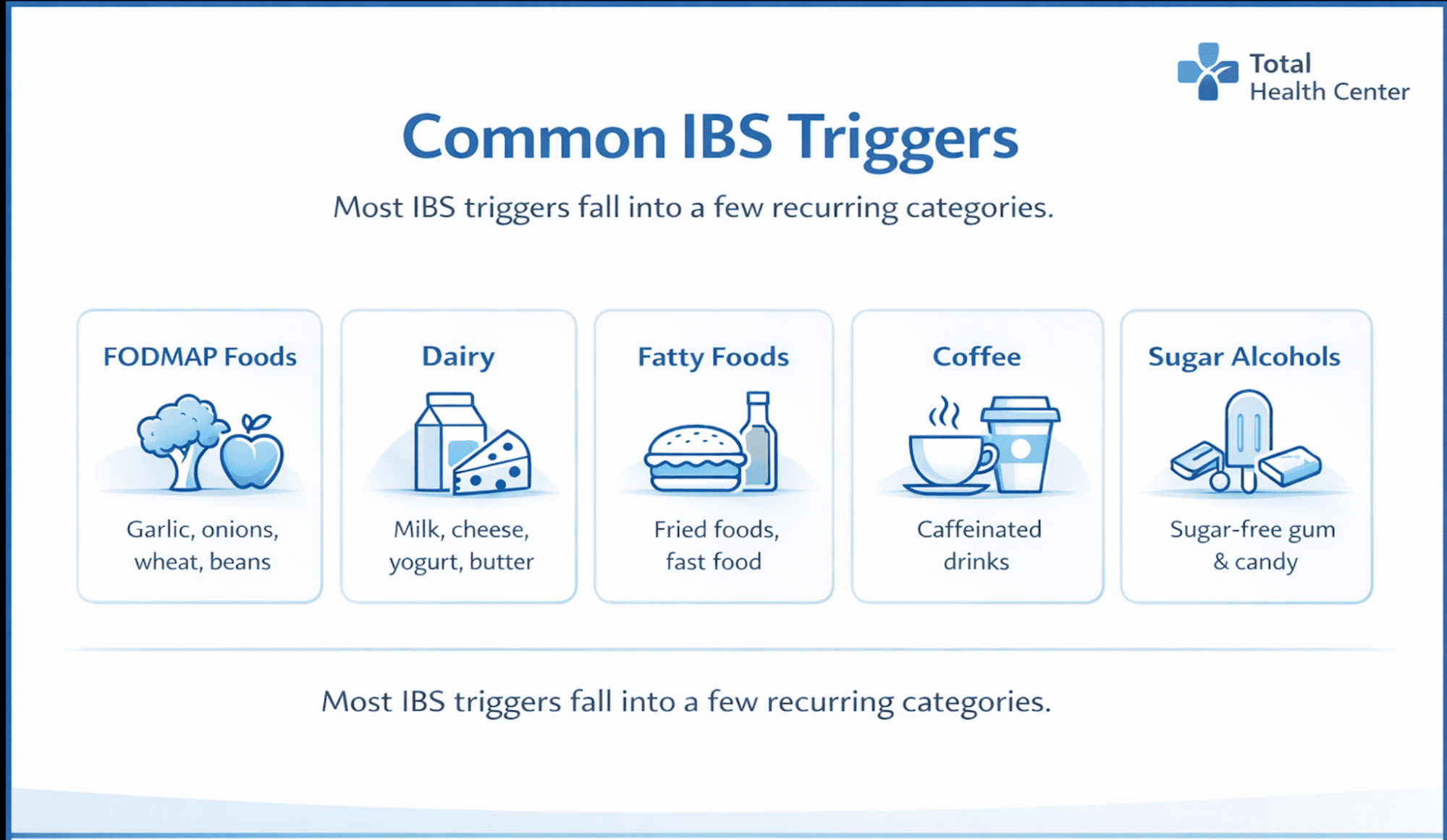
Fermentable carbohydrates, dairy, fatty foods and coffee are the most consistently reported IBS food triggers. The catch is that the same food can cause a reaction one day and nothing the next, depending on portion size, stress and how the gut is already responding that day.
At Total Health Center in Virginia Beach, Dr. Mark Scott has worked with digestive cases for over 28 years. One pattern comes up consistently: patients already sense food is involved, but struggle to identify where exactly. Reading that pattern correctly is what changes the outcome.
Foods That Make You Bloated and Gassy
Bloating in IBS usually points to fermentable carbohydrates (FODMAPs). These foods ferment in the gut before they are fully absorbed, producing gas that builds pressure and pain in an already sensitive digestive system.
| Food group | Common examples |
| Alliums | Onion, garlic, leeks, shallots |
| Legumes | Beans, lentils, chickpeas |
| Wheat | Bread, pasta, crackers |
| Fruits | Apples, pears, mangoes, watermelon |
| Dairy | Milk, soft cheeses, ice cream |
Carbonated drinks add gas directly. Even sparkling water can tip a reactive gut into a flare. Most people never connect their Tuesday afternoon bloating to the garlic bread from lunch, and that delayed reaction is one of the first things Dr. Scott looks for when a patient comes in with an unclear pattern.
Foods That Send You Rushing to the Bathroom
The need comes fast, sometimes with almost no warning. These are the foods most likely behind it:
Coffee triggers colon contractions within minutes. For someone with IBS that response is amplified, and decaf helps some people but does not fully eliminate the effect.
Fatty and fried foods slow digestion in the stomach, then trigger a strong reflex further down. A heavy lunch is often the setup for a difficult afternoon.
Sugar alcohols (sorbitol, xylitol, mannitol) show up in sugar-free gum, protein bars, flavored yogurts and low-calorie snacks. They pull water into the intestine and speed up transit significantly.
Urgency that starts 20 to 45 minutes after a specific meal, loose stools that follow a consistent pattern, reactions that are reliably worse on stressful days. Timing is everything here, and it is also how functional medicine at Total Health Center starts to separate food triggers from nervous system triggers.
Foods That Cause Cramping or Keep You Constipated
Not every IBS pattern involves urgency. Many people deal with the opposite: cramping in waves, bloating that never fully clears, days between bowel movements.
- Dairy. Milk, soft cheeses and ice cream are frequent triggers for people with any degree of lactose sensitivity. Hard cheeses and plain yogurt tend to be better tolerated.
- Refined carbohydrates. White bread, packaged snacks, pastries and fast food are low in fiber and slow gut motility considerably over time.
- Spicy food. Capsaicin can irritate the gut lining directly. Cramping that appears hours after a meal rather than immediately is the signal worth tracking, and worth mentioning at a first visit with Dr. Scott.
Why the Same Food Hits Differently on Different Days
You ate garlic bread Saturday with no problem. Tuesday it wrecked your afternoon. Three things explain that inconsistency:
- Portion size. A small amount may clear without issue. A larger portion crosses a threshold. Many patients at Total Health Center discover the issue was never the food itself but how much landed in one sitting.
- Cumulative load. Two or three moderate-trigger foods in the same meal adds up to a reaction that none would have caused alone.
- Your baseline that day. Poor sleep, high stress and dehydration all lower the gut’s tolerance. A meal that is fine on a calm Sunday creates real problems on a tense Monday. This is why digestive and metabolic health cases at Total Health Center always look beyond the food itself.
A Simple Way to Start Tracking Your Triggers
Two to three weeks of consistent notes is usually enough to surface a pattern. Keep it simple:
[ ] What you ate and roughly how much
[ ] Time of the meal and when symptoms appeared
[ ] Type of symptom: bloating, cramping, urgency or constipation
[ ] Sleep quality and stress level that day
Patients who arrive at Total Health Center with even a rough log give Dr. Scott a much clearer starting point. The pattern is already on paper rather than reconstructed from memory.
When Food Changes Do Not Solve It
Some patients track carefully, remove the obvious triggers, adjust portions and still have symptoms that persist. It usually means food is part of the picture, not all of it.
Understanding why the gut is reacting in the first place is where a root-cause approach matters. Stress, sleep, gut motility and nervous system sensitivity all interact with what you eat. Total Health Center has worked with difficult IBS cases for over two decades, including patients who spent years self-managing before a more complete evaluation gave them a clearer answer.
Get Personalized IBS Support in Virginia Beach
When symptoms keep returning despite real effort, a more complete picture helps. Total Health Center offers a focused evaluation built around your specific history and symptom pattern. Call (757) 363-8571 to schedule.
Frequently asked questions
Can I have IBS without any food triggers?
Yes. For some people stress, sleep or routine changes drive symptoms more than diet. Food is one variable, not always the main one.
How long does tracking take to show a pattern?
Two to three weeks of consistent notes is usually enough. One isolated reaction tells you little. Repeated reactions to the same food across different days do.
Are there foods that actually help?
Low-FODMAP options, soluble fiber sources like oats and bananas, and smaller, more frequent meals help many people. What works is specific to the person.
Should I try the low-FODMAP diet on my own?
The low-FODMAP diet has specific phases and is easy to misread without guidance. Working with a clinician produces more reliable results.