
Functional Medicine & Hormone Health
First Draft
Hormones Influence Nearly Every Aspect of Your Health
Have you ever wondered why symptoms like fatigue, weight gain, poor sleep, brain fog, anxiety, low libido, hot flashes, or irregular menstrual cycles often seem to occur together?
For many people, the answer involves hormones.
Hormones are the body’s chemical messengers. They help regulate energy, metabolism, mood, sleep, appetite, reproduction, body temperature, stress response, and countless other functions. When hormones are working together, these systems stay in balance. When they become disrupted, symptoms can appear throughout the body—not just in one organ or one gland.
One of the biggest misconceptions about hormone health is that it only affects women during menopause or men with low testosterone. In reality, hormone balance is important throughout life and influences the health of both men and women at every age.
At Total Health Center, we take a functional medicine approach to hormone health. Rather than focusing on a single hormone or simply treating symptoms, we look at how your body’s systems interact. Hormones don’t work in isolation. They are closely connected with thyroid function, digestion, blood sugar regulation, inflammation, nutrition, sleep, stress, and lifestyle.
By understanding these relationships, we can often identify the underlying factors contributing to hormone imbalance and develop a personalized strategy to support your long-term health.
Key Takeaways
- Hormones regulate nearly every major function in the body, including energy, metabolism, mood, sleep, and reproduction.
- Hormone imbalances can affect both men and women and may contribute to a wide variety of symptoms.
- Functional medicine looks beyond individual hormone levels to understand why imbalances may be occurring.
- Thyroid function, digestive health, blood sugar regulation, inflammation, nutrition, and stress all influence hormone health.
- A personalized evaluation can help determine which factors may be contributing to your symptoms and whether additional testing is appropriate.
What Are Hormones?

Hormones function as a communication network, coordinating signals between organs and body systems to help maintain balance throughout the body.
Hormones are chemical messengers that allow different parts of your body to communicate with one another. Although they are produced in tiny amounts, they have a profound influence on how your body functions every day.
Different glands produce different hormones, each with a specific role. The thyroid helps regulate metabolism and energy production. The pancreas helps control blood sugar. The adrenal glands coordinate your response to stress. The ovaries and testes produce reproductive hormones that influence fertility, sexual health, muscle mass, bone strength, and many other functions. The brain, through the hypothalamus and pituitary gland, acts as the body’s command center, helping coordinate communication throughout the endocrine system.
The important thing to understand is that these glands do not work independently.
They constantly communicate with one another.
When one hormone changes, other hormones often respond. A problem affecting blood sugar may influence cortisol. Chronic stress may affect thyroid function. Poor sleep can alter reproductive hormones and appetite-regulating hormones. Digestive health may influence how hormones are metabolized and eliminated from the body.
This is one reason hormone-related symptoms can be so confusing. A person may feel tired, gain weight, experience mood changes, struggle with poor sleep, or notice changes in menstrual cycles or libido, yet the underlying cause may involve several interconnected systems rather than a single hormone.
Functional medicine recognizes these relationships. Instead of looking at one hormone in isolation, we evaluate how the body’s communication network is functioning as a whole. Understanding these connections often provides a more complete picture of why symptoms develop and where meaningful improvements can be made.
Dr. Scott Insight
One of the biggest misconceptions about hormone health is the idea that there is a single “hormone problem” causing every symptom. In clinical practice, I often find that hormones are responding to other underlying issues such as chronic stress, poor nutrition, blood sugar imbalance, inflammation, thyroid dysfunction, or digestive problems. Looking at the whole system often provides answers that isolated hormone testing alone cannot.
Common Signs of Hormone Imbalance
Because hormones influence nearly every organ system, hormone imbalances can produce a surprisingly wide range of symptoms. Two people with very different complaints may actually share similar underlying hormonal patterns.
While these symptoms do not necessarily mean you have a hormone imbalance, they can provide important clues when considered alongside your health history, lifestyle, and other factors. Understanding the bigger picture is one reason a Functional Medicine evaluation can be so valuable.
Energy & Vitality
Many people notice changes in their energy long before they suspect a hormone problem.
Common symptoms include:
- Persistent fatigue
- Afternoon energy crashes
- Low motivation
- Reduced exercise tolerance
- Feeling exhausted despite adequate sleep
Hormones that regulate stress, thyroid function, and blood sugar regulation all play an important role in maintaining healthy energy production.
Functional Medicine & Metabolic Health
Weight & Metabolism
Difficulty maintaining a healthy weight is often more complex than calories alone.
Possible signs include:
- Unexplained weight gain
- Difficulty losing weight
- Increased abdominal fat
- Sugar cravings
- Feeling hungry soon after eating
Hormones help regulate metabolism, appetite, insulin sensitivity, and how the body stores and burns energy. If you’ve struggled with weight despite eating well and exercising, it may be helpful to learn more about the relationship between hormones and metabolic health.
Functional Medicine & Metabolic Health
Mood & Brain Function
Hormones influence how the brain functions every day.
Some people experience:
- Brain fog
- Difficulty concentrating
- Memory changes
- Anxiety
- Irritability
- Mood swings
- Low motivation
Sleep quality, stress hormones, thyroid function, and blood sugar regulation all interact with brain chemistry. When these systems are out of balance, cognitive and emotional symptoms often overlap.
Functional Medicine & Metabolic Health
Sleep
Hormonal imbalances frequently affect normal sleep patterns.
Symptoms may include:
- Difficulty falling asleep
- Waking during the night
- Feeling unrefreshed in the morning
- Changes in sleep during menopause
- Restless sleep associated with chronic stress
Sleep and hormone health have a two-way relationship. Poor sleep can contribute to hormone imbalance, while hormone imbalance can make quality sleep more difficult to achieve.
Women’s Hormone Health
Women may experience symptoms related to changing hormone patterns throughout life.
These may include:
- Irregular menstrual cycles
- PMS
- Hot flashes
- Night sweats
- Perimenopause
- Menopause
- Fertility concerns
- Changes in libido
We’ll explore these topics in greater detail throughout this guide, along with the role that Functional Medicine Testing may play when additional evaluation is appropriate.
Understanding Functional Medicine Testing
Men’s Hormone Health
Hormonal changes also affect men, particularly with aging or prolonged stress.
Possible symptoms include:
- Low libido
- Reduced muscle mass
- Decreased strength
- Fatigue
- Lower motivation
- Mood changes
Although testosterone is often the focus, other factors—including sleep, nutrition, chronic stress, inflammation, thyroid function, and metabolic health—can all influence how men feel and function.
Functional Medicine & Metabolic Health
The important point is that hormone symptoms rarely exist in isolation. They often overlap with thyroid disorders, digestive health, metabolic health, inflammation, nutrition, and chronic stress. Looking at the entire pattern of symptoms provides a much more complete picture than focusing on any single complaint.
Functional Medicine & Digestive Health
Functional Medicine & Autoimmune Disease
Dr. Scott Insight
One of the most common things I hear from patients is, “I just don’t feel like myself anymore.” That feeling is often difficult to describe because hormone imbalances rarely produce just one symptom. Instead, people notice a gradual combination of fatigue, weight changes, poor sleep, mood changes, digestive concerns, or declining energy. Rather than chasing each symptom individually, I believe it’s more helpful to step back and understand how the body’s systems are communicating with one another. That’s one of the fundamental principles of functional medicine—understanding the whole person before trying to solve any single problem.
Why Hormones Become Imbalanced

Hormone balance is influenced by many interconnected factors, including stress, sleep, blood sugar regulation, nutrition, exercise, body composition, environmental exposures, and digestive health.
One of the biggest misconceptions about hormone health is that hormone imbalances occur in isolation. In reality, hormones are constantly responding to signals from the rest of the body.
When one system becomes stressed, many others are affected.
This is why two people with similar hormone symptoms may have very different underlying causes.
For one person, chronic stress may be disrupting cortisol production and affecting sleep. For another, poor blood sugar regulation may contribute to weight gain and insulin resistance. Someone else may be experiencing changes related to thyroid function, chronic inflammation, digestive problems, or nutritional deficiencies.
Rather than assuming every symptom is caused by a single hormone, functional medicine looks for the factors that may be influencing the body’s entire communication network.
Stress
Stress is more than an emotional experience.
Physical illness, poor sleep, chronic pain, overtraining, nutritional deficiencies, and emotional stress all place demands on the body.
Over time, these stressors can influence cortisol, sleep quality, metabolism, immune function, and many other hormone systems.
Learn more about Functional Medicine & Metabolic Health.
Blood Sugar Balance
One of the most overlooked influences on hormone health is blood sugar regulation.
Frequent blood sugar spikes and crashes can affect insulin levels, energy, appetite, weight management, inflammation, and even reproductive hormones.
For many patients, improving metabolic health becomes an important step toward improving overall hormone balance.
Learn more about Functional Medicine & Metabolic Health.
Thyroid Function
The thyroid plays a central role in regulating metabolism and energy production.
When thyroid function changes, symptoms such as fatigue, weight gain, brain fog, hair changes, constipation, or sensitivity to cold may overlap with other hormone-related concerns.
Because thyroid health and hormone health are so closely connected, evaluating one without considering the other may leave important questions unanswered.
Learn more about Thyroid Problems & Symptoms.
Learn more about Thyroid Testing.
Digestive Health
Many people are surprised to learn that digestive health can influence hormone balance.
The digestive system affects nutrient absorption, inflammation, immune function, and even how certain hormones are metabolized and eliminated from the body.
Addressing digestive health is often an important part of a comprehensive functional medicine evaluation.
Learn more about Functional Medicine & Digestive Health.
Inflammation
Chronic inflammation places ongoing stress on the body’s regulatory systems.
Inflammation may influence insulin sensitivity, thyroid function, immune activity, metabolism, and hormone signaling.
Rather than focusing only on symptoms, functional medicine looks for factors that may be contributing to persistent inflammation throughout the body.
Learn more about Functional Medicine & Autoimmune Disease.
Nutrition & Lifestyle
Hormones depend on the body having the right building blocks to function properly.
Nutrition, movement, sleep, stress management, and other daily habits all influence hormone production and regulation.
Small, sustainable improvements in these areas often support overall health far beyond hormone balance alone.
Dr. Scott Insight
One of the most rewarding moments in practice is when a patient realizes that their symptoms aren’t random or unrelated. Fatigue, weight gain, poor sleep, digestive issues, and changes in mood often have common underlying connections. By looking at the whole person instead of isolated symptoms, we can frequently identify opportunities to improve health that might otherwise be overlooked.
How Functional Medicine Evaluates Hormone Health
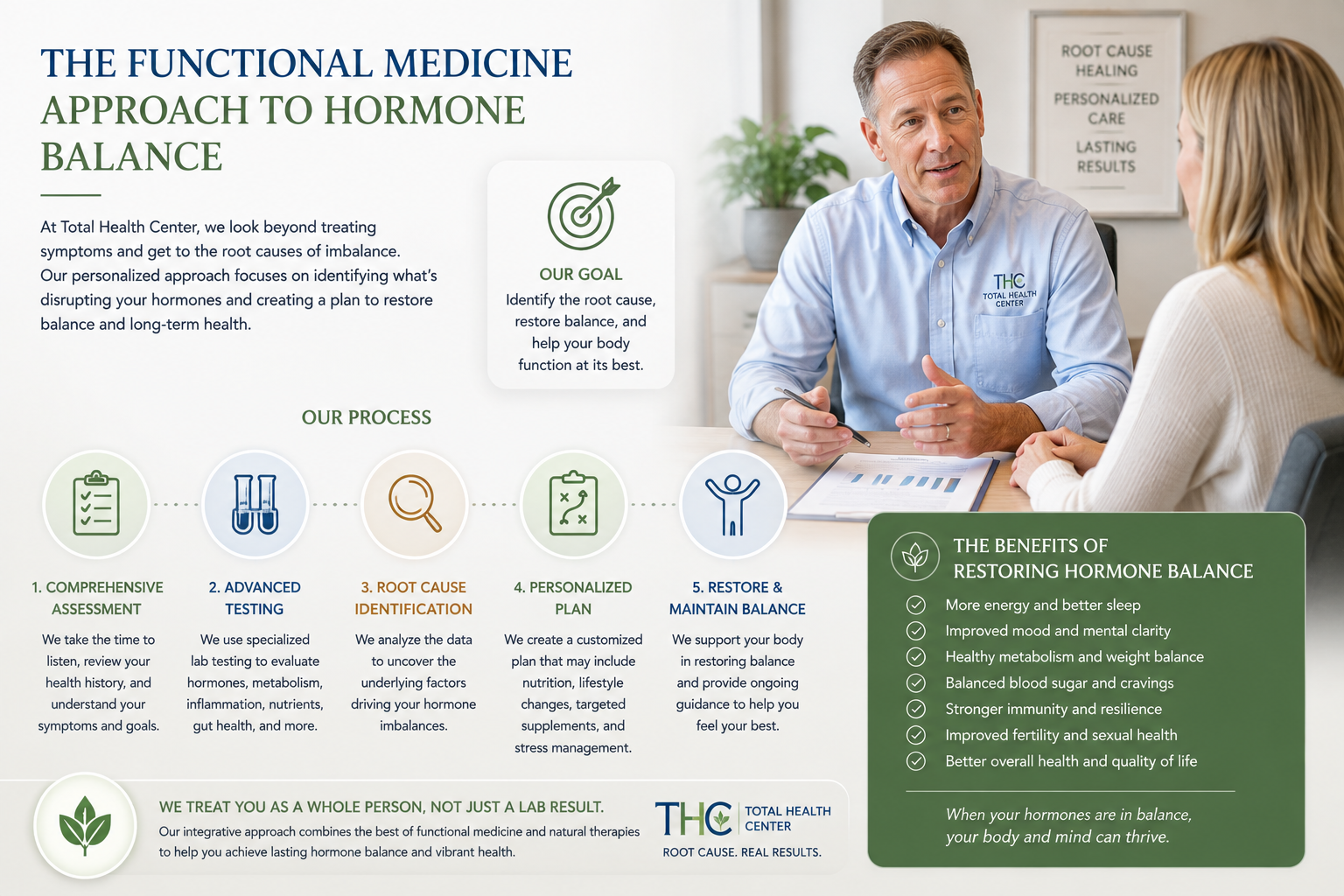
Functional medicine evaluates hormone health by understanding the whole person, identifying contributing factors, and developing a personalized plan to support long-term health.
One of the biggest differences between functional medicine and a conventional approach is that we begin by asking why symptoms developed rather than simply asking which hormone is low or high.
Hormone levels are only one part of the picture.
A comprehensive evaluation considers how your hormones interact with the rest of your body, your health history, and your daily lifestyle. Two people with similar symptoms may have very different underlying causes, which is why a personalized approach is so important.
Rather than relying on a single laboratory value, we start by understanding you.
Your Health Story Matters
Every evaluation begins with listening.
Your symptoms provide important clues, but so do your medical history, family history, medications, nutrition, stress levels, sleep habits, exercise, digestive health, and previous laboratory testing.
Understanding how these pieces fit together often reveals patterns that may not be obvious when looking at one symptom in isolation.
Looking for Patterns Instead of Isolated Symptoms
Instead of asking:
“Which hormone is abnormal?”
Functional medicine asks:
- Why are you experiencing these symptoms?
- Are several body systems involved?
- Is blood sugar affecting hormone balance?
- Could thyroid function be contributing?
- Is chronic stress playing a role?
- Could digestive health or inflammation be influencing how your body functions?
Looking for these connections often provides a much clearer understanding of your health than focusing on a single diagnosis alone.
Existing Laboratory Results Often Provide Valuable Information
Many patients already have blood work performed by their primary care physician or another specialist.
Reviewing these existing results is often the first step.
In many cases, valuable information can be gathered before considering additional testing.
If further evaluation appears appropriate, specialized laboratory testing may help answer specific clinical questions.
Learn more about Understanding Functional Medicine Testing.
Personalized Recommendations
Once the underlying patterns become clearer, recommendations are tailored to your individual needs.
Depending on your situation, this may include addressing:
- Nutrition
- Blood sugar regulation
- Sleep
- Stress management
- Physical activity
- Digestive health
- Thyroid function
- Inflammation
- Hormone balance
The goal isn’t simply to improve laboratory values—it’s to help restore healthy function and improve how you feel.
Dr. Scott Insight
One of the reasons I enjoy practicing functional medicine is that every patient has a unique story. Two people may both complain of fatigue or weight gain, but the reasons behind those symptoms can be completely different. Taking the time to understand the whole person—not just a laboratory report—often leads to more meaningful conversations and more personalized recommendations.
When Is Hormone Testing Helpful?
Many people assume that the first step in evaluating hormone health is ordering an extensive panel of laboratory tests. In reality, testing is only one part of a comprehensive functional medicine evaluation.
The most valuable information often comes from understanding your symptoms, health history, lifestyle, previous laboratory work, and the overall pattern of how your body is functioning.
Laboratory testing becomes most useful when it helps answer a specific clinical question.
Not Everyone Needs Extensive Hormone Testing
One of the most common misconceptions about functional medicine is that every patient requires a large number of specialized laboratory tests.
That simply isn’t true.
Many patients already have valuable laboratory information available from their primary care physician or specialist. Reviewing these results often provides important insight before considering any additional testing.
When further testing is appropriate, it should be chosen because it has the potential to influence clinical decisions—not simply because it’s available.
Testing Should Answer Questions
The purpose of hormone testing is not to generate more numbers.
The purpose is to answer important questions such as:
- Are your symptoms consistent with the laboratory findings?
- Are multiple hormone systems involved?
- Could thyroid function be contributing?
- Is blood sugar regulation affecting hormone balance?
- Are nutritional deficiencies influencing hormone production?
- Would additional testing help clarify the next steps?
Testing is most valuable when interpreted within the context of your complete health picture rather than as an isolated laboratory report.
Hormones Are Only Part of the Story
Even when hormone testing identifies an imbalance, it’s important to understand why that imbalance developed.
For example, hormone changes may be influenced by:
- Chronic stress
- Poor sleep
- Thyroid dysfunction
- Blood sugar imbalance
- Chronic inflammation
- Digestive health
- Nutrient deficiencies
- Lifestyle factors
This is one reason functional medicine evaluates multiple body systems rather than focusing on hormone levels alone.
Learn more about Understanding Functional Medicine Testing.
Learn more about Functional Medicine & Metabolic Health.
Learn more about Thyroid Testing.
A Personalized Approach
Every patient is different.
Some people benefit from additional hormone testing.
Others may benefit more from improving nutrition, addressing blood sugar balance, optimizing sleep, supporting digestive health, managing stress, or evaluating thyroid function before extensive hormone testing is considered.
The goal is not to perform the most testing.
The goal is to recommend the right evaluation for the right patient at the right time.
Dr. Scott Insight
One question I often hear is, “Which hormone test do I need?” My answer is usually another question: “What are we trying to learn?” The best testing strategy begins with a thoughtful evaluation, not a laboratory order form. When testing is guided by the right clinical questions, it becomes much more meaningful and helps us make better-informed decisions together.
Common Hormone Conditions
Hormone health is a broad topic that includes many different conditions and life stages. Although each condition has its own characteristics, many share common symptoms such as fatigue, weight changes, mood changes, sleep disturbances, and changes in energy or metabolism.
Functional medicine recognizes that these conditions rarely exist in isolation. Understanding how hormones interact with the rest of the body often provides a more complete picture than focusing on one diagnosis alone.
Below are some of the most common hormone-related concerns we evaluate.
Menopause & Perimenopause
Menopause is a natural stage of life, but the transition can affect every woman differently.
Some women experience only mild changes, while others struggle with:
- Hot flashes
- Night sweats
- Sleep disturbances
- Mood changes
- Brain fog
- Weight gain
- Fatigue
- Changes in libido
Rather than viewing menopause as simply declining estrogen, functional medicine considers how sleep, nutrition, stress, thyroid function, metabolic health, and lifestyle influence how women experience this transition.
Premenstrual Syndrome (PMS) & Menstrual Health
Hormonal fluctuations throughout the menstrual cycle can influence mood, energy, sleep, headaches, and many other symptoms.
When evaluating menstrual concerns, it’s important to consider the entire health picture rather than focusing only on reproductive hormones.
Polycystic Ovary Syndrome (PCOS)
PCOS is one of the most common hormone-related conditions affecting women.
While it is often associated with irregular menstrual cycles, PCOS may also involve:
- Insulin resistance
- Weight gain
- Acne
- Fertility concerns
- Increased facial hair
- Metabolic changes
Because blood sugar regulation and metabolism often play important roles, many women benefit from understanding how these systems work together.
Functional Medicine & Metabolic Health
Low Testosterone
Testosterone influences much more than sexual health.
Low testosterone may contribute to:
- Fatigue
- Reduced muscle mass
- Lower exercise performance
- Decreased motivation
- Changes in libido
- Mood changes
Functional medicine also considers sleep quality, stress, nutrition, thyroid function, body composition, and overall metabolic health when evaluating these symptoms.
Learn more about Low Testosterone.
(Existing article)
Cortisol & Stress
Cortisol helps the body respond to both physical and emotional stress.
Short-term increases are normal and important.
However, chronic stress, poor sleep, illness, pain, and lifestyle factors may influence how the body responds over time.
Rather than viewing cortisol in isolation, functional medicine considers the broader relationship between stress, metabolism, sleep, digestion, and recovery.
Thyroid Disorders
Many symptoms of thyroid dysfunction overlap with other hormone-related concerns.
For example:
- Fatigue
- Weight gain
- Brain fog
- Hair changes
- Cold intolerance
- Mood changes
Because thyroid hormones influence metabolism throughout the body, thyroid health is an important consideration when evaluating many hormone-related symptoms.
Blood Sugar & Metabolic Health
One of the biggest insights functional medicine has brought to hormone care is the recognition that blood sugar regulation influences many hormone systems.
Insulin resistance, metabolic syndrome, and changes in body composition can affect:
- Reproductive hormones
- Testosterone
- Cortisol
- Energy production
- Weight management
Supporting metabolic health often benefits overall hormone health as well.
Functional Medicine & Metabolic Health
https://totalhealthcentervb.com/functional-medicine-metabolic-health/
The Bigger Picture
Although these conditions have different names, they often overlap.
A woman experiencing menopause may also have thyroid dysfunction.
Someone with PCOS may also struggle with insulin resistance.
A man with low testosterone may also have poor sleep or metabolic health challenges.
Rather than viewing these as separate problems, functional medicine looks at how the body’s systems interact to identify opportunities for improving overall health.
Dr. Scott Insight
One of the most common misconceptions I encounter is the belief that every hormone condition has a single cause and a single solution. In practice, it’s usually much more complex. That’s why I encourage patients to think beyond one diagnosis and consider how stress, sleep, metabolism, thyroid function, nutrition, digestive health, and lifestyle may all be influencing the way they feel.
When Should You Consider a Functional Medicine Evaluation?
You don’t need to have a diagnosed hormone disorder to benefit from a comprehensive evaluation.
Many people seek care because they simply don’t feel as healthy as they once did. They may have tried improving their diet, exercising more, or getting additional sleep, yet continue to struggle with symptoms that don’t seem to have a clear explanation.
A functional medicine evaluation may be appropriate if you are experiencing:
- Persistent fatigue
- Difficulty losing weight
- Brain fog or poor concentration
- Mood changes
- Poor sleep
- Hot flashes or menopausal symptoms
- Irregular menstrual cycles
- Low libido
- Concerns about low testosterone
- Ongoing symptoms despite “normal” laboratory results
Rather than focusing on a single symptom or hormone, functional medicine looks at how your body’s systems work together to identify factors that may be contributing to the way you feel.
If additional testing appears appropriate, recommendations are individualized based on your symptoms, health history, and clinical findings.
Take the First Step Toward Hormonal Balance
Don’t let imbalanced hormones dictate how you feel. Schedule a FREE consultation with Dr. Scott today to start your journey to lasting wellness.
Dr. Scott Insight
Many of my patients don’t schedule an appointment because they know they have a hormone problem. They come because they no longer feel like themselves. My job is to listen carefully, identify patterns, and help determine which factors deserve closer attention. Sometimes hormones are an important part of the answer, and sometimes they are only one piece of a much larger picture.
Continue Learning
Hormone health is closely connected with many other areas of functional medicine. You may find these resources helpful as you continue learning.
What Makes Functional Medicine Different
Understanding Functional Medicine Testing
Functional Medicine & Metabolic Health
Functional Medicine & Digestive Health
Functional Medicine & Autoimmune Disease
https://totalhealthcentervb.com/functional-medicine-and-autoimmune-disease/
About Dr. Scott
Dr. Mark Scott is the founder and clinic director of Total Health Center in Virginia Beach. Since 1997, he has helped patients address complex and chronic health concerns by combining functional medicine with a personalized, root-cause approach to care.
His clinical focus includes thyroid disorders, hormone health, digestive conditions, autoimmune disease, metabolic health, chronic fatigue, and other chronic health challenges. Rather than treating symptoms in isolation, Dr. Scott works with patients to understand how nutrition, lifestyle, physiology, and advanced laboratory evaluation may contribute to overall health and well-being.
If you’re looking for a more comprehensive approach to understanding your health, we invite you to schedule a consultation to discuss your concerns and determine whether functional medicine may be right for you.
References
- Institute for Functional Medicine. The Functional Medicine Model.
- Endocrine Society. Clinical Practice Guidelines.
- North American Menopause Society (The Menopause Society). Position Statements.
- American College of Obstetricians and Gynecologists (ACOG). Hormone Health Resources.
- National Institute of Diabetes and Digestive and Kidney Diseases (NIDDK). Hormonal Disorders.
- National Institutes of Health (NIH). Hormones and Endocrine System.
Frequently Asked Questions
What are the most common symptoms of hormone imbalance?
Hormone imbalances may contribute to fatigue, weight changes, poor sleep, mood changes, brain fog, hot flashes, irregular menstrual cycles, low libido, and many other symptoms. Because these symptoms overlap with other conditions, a comprehensive evaluation is often important.
Do hormones affect both men and women?
Yes. Hormones regulate important functions throughout life in both men and women, including metabolism, energy production, reproduction, stress response, sleep, and mood.
Does everyone with hormone symptoms need laboratory testing?
No. Many patients benefit from a careful review of their health history and existing laboratory results before additional testing is considered. Testing should answer specific clinical questions rather than be ordered routinely.
Can thyroid problems cause hormone symptoms?
Yes. Thyroid hormones interact with many other hormone systems, which is why fatigue, weight gain, brain fog, and other symptoms may overlap.
What conditions are commonly associated with hormone imbalance?
Hormone-related symptoms may be associated with menopause, perimenopause, PCOS, low testosterone, thyroid disorders, metabolic health concerns, chronic stress, and other conditions.
How does functional medicine evaluate hormone health differently?
Functional medicine considers hormone health within the context of the whole person. Rather than focusing only on individual hormone levels, it evaluates how nutrition, sleep, stress, metabolism, thyroid function, digestive health, and lifestyle may influence overall health.
Can improving lifestyle affect hormone health?
Healthy nutrition, regular physical activity, quality sleep, stress management, and maintaining metabolic health all play important roles in supporting healthy hormone function.
When should I consider a functional medicine consultation?
If you’re experiencing persistent symptoms such as fatigue, weight changes, poor sleep, mood changes, or other concerns that haven’t been fully explained, a functional medicine consultation may help identify contributing factors and determine whether further evaluation is appropriate.
Take the First Step Toward Hormonal Balance
Don’t let imbalanced hormones dictate how you feel. Schedule a FREE consultation with Dr. Scott today to start your journey to lasting wellness.
Awards

Congratulations to Mark Scott’s Practice on winning the 2015 Patients’ Choice Awards for Chiropractor in Virginia Beach, VA
Verified by
Opencare.com
Awards
Congratulations to Mark Scott’s Practice on winning the 2015 Patients’ Choice Awards for Chiropractor in Virginia Beach, VA
Verified by
Opencare.com