Contact Us
Tel: (757) 363-8571
Yes, when done correctly—but not as a quick fix or magic pill. Functional medicine can support weight loss by looking for underlying factors that make progress harder—like hormones, insulin resistance, chronic stress, inflammation, or gut health—rather than focusing only on calorie restriction.
If you’ve tried traditional diets without lasting success, you’re not alone. Many people struggle with weight loss resistance despite counting calories, restricting food groups, or exercising more. The problem often isn’t willpower—it’s that conventional approaches treat weight as the problem rather than the symptom.
How Functional Medicine Addresses Weight Loss Differently
This approach takes a fundamentally different path than conventional weight loss methods. Instead of focusing solely on calories in versus calories out, practitioners investigate why your body is holding onto excess weight.
Traditional programs prescribe the same formula for everyone: eat less, move more. But functional medicine differs by recognizing that your body is a complex system where multiple factors interact to influence metabolism and weight regulation.
The process starts with comprehensive assessment rather than generic meal plans.
Addressing the Root Causes of Weight Gain
Weight loss resistance typically stems from underlying health issues that standard diets don’t address.
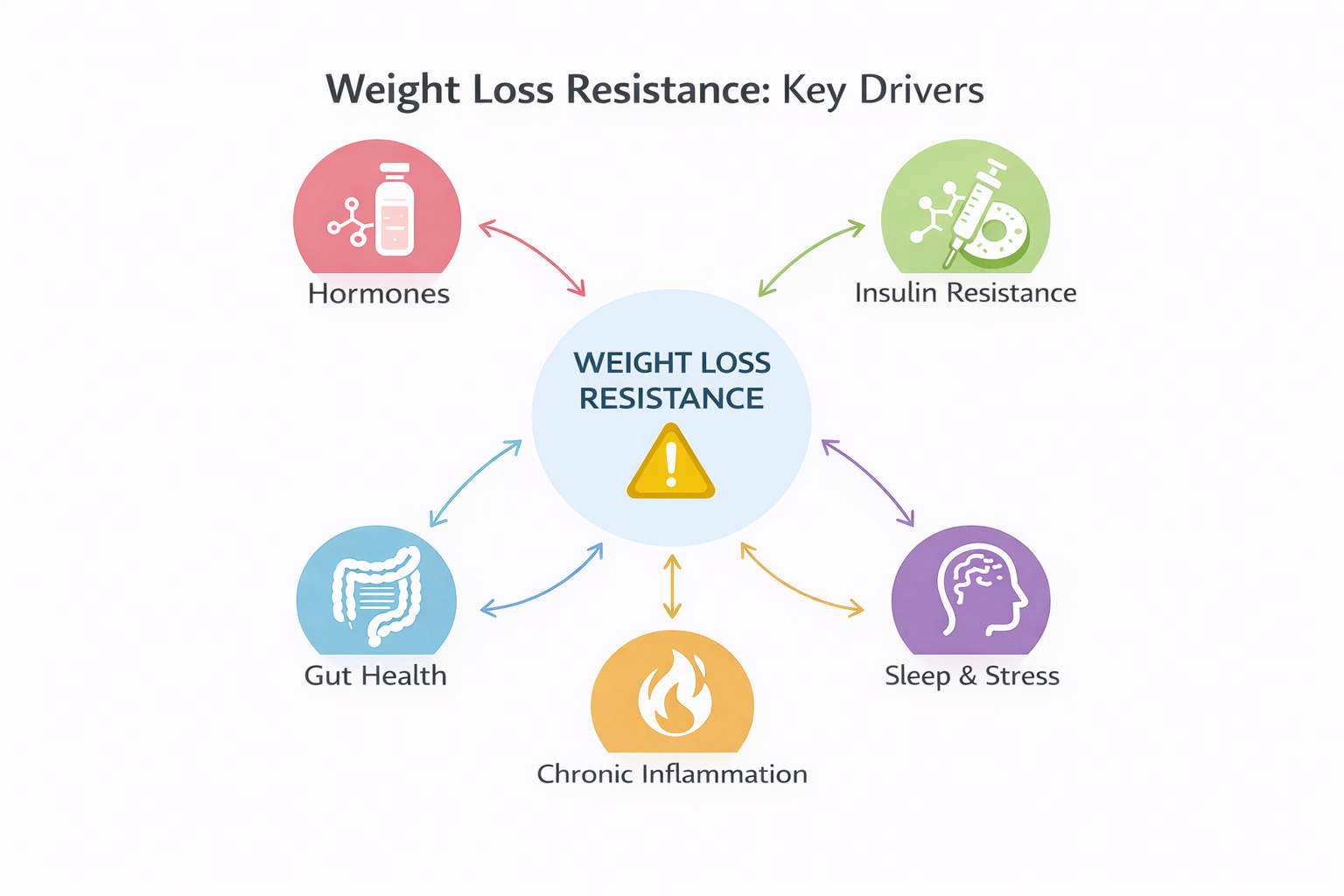
Common drivers of weight loss resistance include:
- Hormones: thyroid function, cortisol (stress), and sex hormones can affect appetite, energy, and fat storage.
- Insulin resistance: can increase hunger, energy crashes, and belly fat storage.
- Gut health: microbiome imbalance may affect appetite signals and inflammation.
- Chronic inflammation: can impact insulin sensitivity and metabolic regulation.
These factors often overlap, which is why a multi-system plan can be more effective than treating weight as an isolated issue.
Functional Medicine vs. Traditional Weight Loss: Key Differences
This comparison highlights why this approach often succeeds where traditional dieting fails. By correcting the underlying issues preventing weight loss, it creates conditions where your body can naturally achieve and maintain a healthy weight.
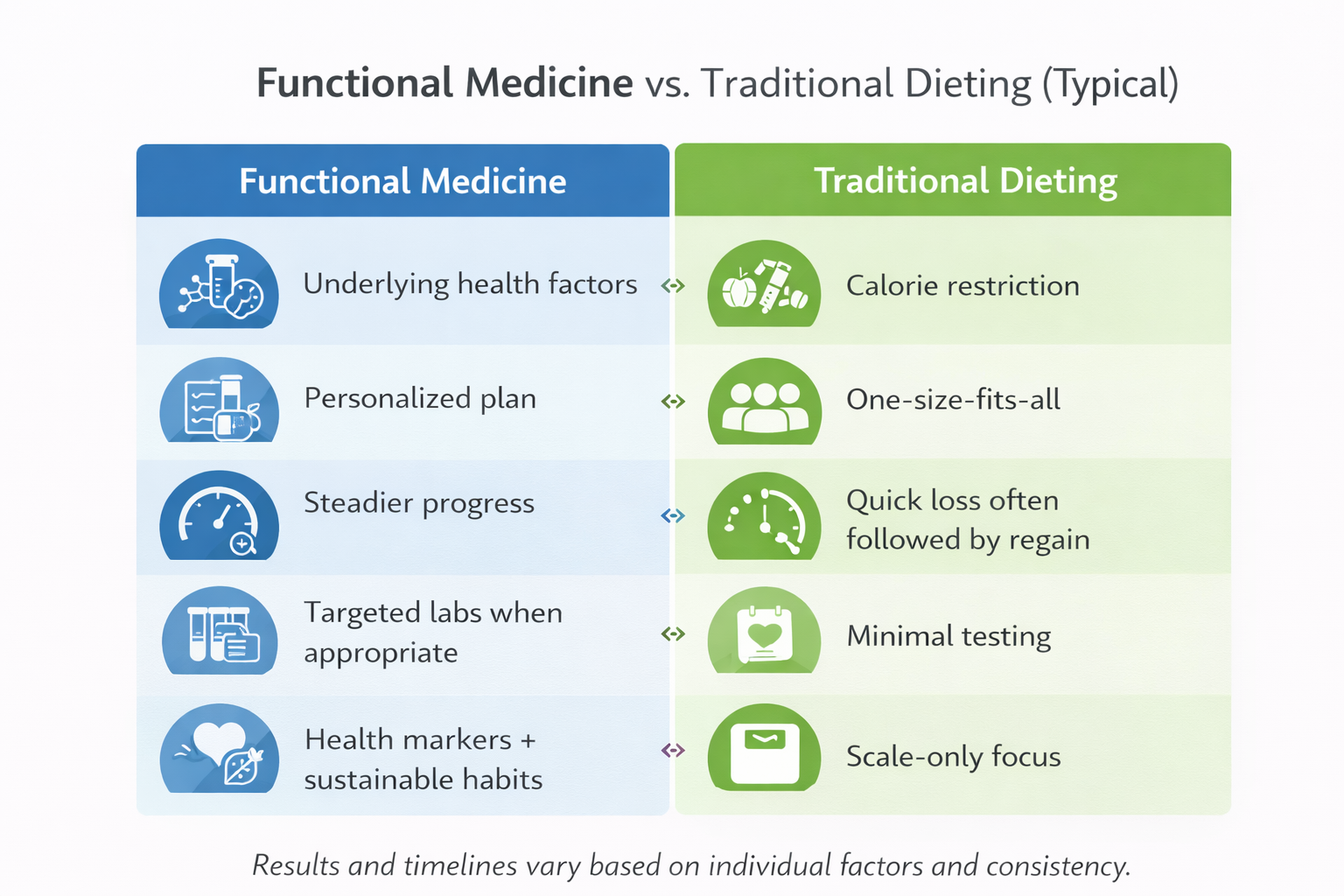
The slower initial progress can be frustrating. However, the time invested in identifying and addressing root causes typically leads to outcomes that last.
What Makes This Approach Effective for Weight Loss
The effectiveness comes from its comprehensive and personalized nature.
Comprehensive assessment uncovers hidden issues that conventional approaches miss. Practitioners investigate through detailed health history, symptom analysis, and often advanced lab testing. This might reveal thyroid dysfunction, insulin resistance, or gut dysbiosis that need correction first.
Personalized protocols address your specific imbalances. Someone with insulin resistance needs different interventions than someone with hypothyroidism. This customization extends to nutrition, supplements, and lifestyle modifications.
Multi-system approach addresses several factors simultaneously. Functional weight loss programs might include:
- Nutritional changes to reduce inflammation
- Targeted supplementation for thyroid support
- Stress management to balance cortisol
- Gut health interventions
Ongoing support ensures your protocol evolves as your body changes. Practitioners monitor progress and adjust interventions based on how you respond.
What to Expect: Realistic Results
Understanding realistic expectations is crucial. This doesn’t produce overnight results—rapid weight loss often indicates water loss or muscle loss rather than healthy fat reduction.
The process unfolds in phases:
Initial assessment phase: Comprehensive health history, symptom evaluation, and lab testing when appropriate. Practitioners develop a personalized protocol based on your specific imbalances.
Early improvements: May not show on the scale initially. Many people notice improved energy, better sleep, reduced digestive issues, and more stable mood before significant weight loss occurs. These improvements indicate underlying imbalances are beginning to correct.
Weight loss phase: Begins as root causes resolve and metabolism improves. The rate varies significantly based on how long imbalances have existed, how many systems are affected, and how consistently you implement recommendations.
Long-term sustainability: New habits become ingrained and underlying health issues stabilize. The goal: correct the conditions that caused weight gain, not just lose weight temporarily.
Individual variation is significant because everyone’s root causes differ. It takes time to correct what took years to develop.
Who Benefits Most from This Approach
This method delivers the strongest results for people who’ve struggled with conventional dieting despite genuine effort. If you’ve been told to “just eat less and exercise more” but that advice hasn’t worked, there’s likely an underlying reason.
You’re an excellent candidate if you:
- Have tried multiple diets without lasting success
- Experience stubborn weight despite eating well and staying active
- Have health conditions like thyroid disorders, PCOS, or metabolic syndrome
- Want to improve overall health while addressing weight
- Value understanding what’s actually causing your body to hold onto weight
- Are ready to work with a practitioner who investigates root causes
This approach works because it uncovers and addresses the specific imbalances preventing your body from losing weight naturally. Many people discover issues they didn’t know existed—insulin resistance, chronic inflammation, hormonal imbalances, or gut health problems.
The investment: This requires more than following a meal plan. You’ll implement dietary changes based on your specific needs, take targeted supplements, and work closely with your practitioner to adjust protocols as your body responds.
For people frustrated by temporary results and weight regain, this comprehensive approach offers a path to lasting change. The process takes patience, but it addresses why conventional dieting failed rather than repeating the same unsuccessful strategies.
The Functional Medicine Approach in Virginia Beach
Total Health Center in Virginia Beach applies functional medicine principles to help patients explore common drivers of weight loss resistance. Dr. Mark A. Scott, DC, CNS, CFMP, has been in practice since 1996 and focuses on personalized, root-cause care that considers lifestyle, lab markers, and long-term sustainability.
The practice combines this approach with other integrative therapies, serving patients throughout Virginia Beach and surrounding communities.
Total Health Center provides a free consultation for individuals considering whether this method is right for their weight loss goals. This allows you to discuss your specific situation before committing to treatment.
Is This Approach Right for Your Weight Loss Goals?
This method works by addressing the underlying causes that prevent your body from losing weight naturally. It requires patience and commitment but delivers results that last.
If traditional dieting hasn’t worked despite genuine effort, or if you have underlying health issues affecting your weight, this approach may offer the solution you’ve been seeking.
Total Health Center in Virginia Beach offers a free consultation to discuss whether this is right for you.
Call (757) 363-8571 to schedule your consultation and learn whether a root-cause approach is a good fit for your goals and what a realistic plan could look like.