What Causes Hashimoto’s Thyroiditis?
Being diagnosed with Hashimoto’s thyroiditis can feel overwhelming.
Many patients leave their endocrinology appointment with thyroid medication—but still have unanswered questions:
- Why did this happen?
- What triggered it?
- Can I do anything to support my immune system naturally?
These are reasonable questions.
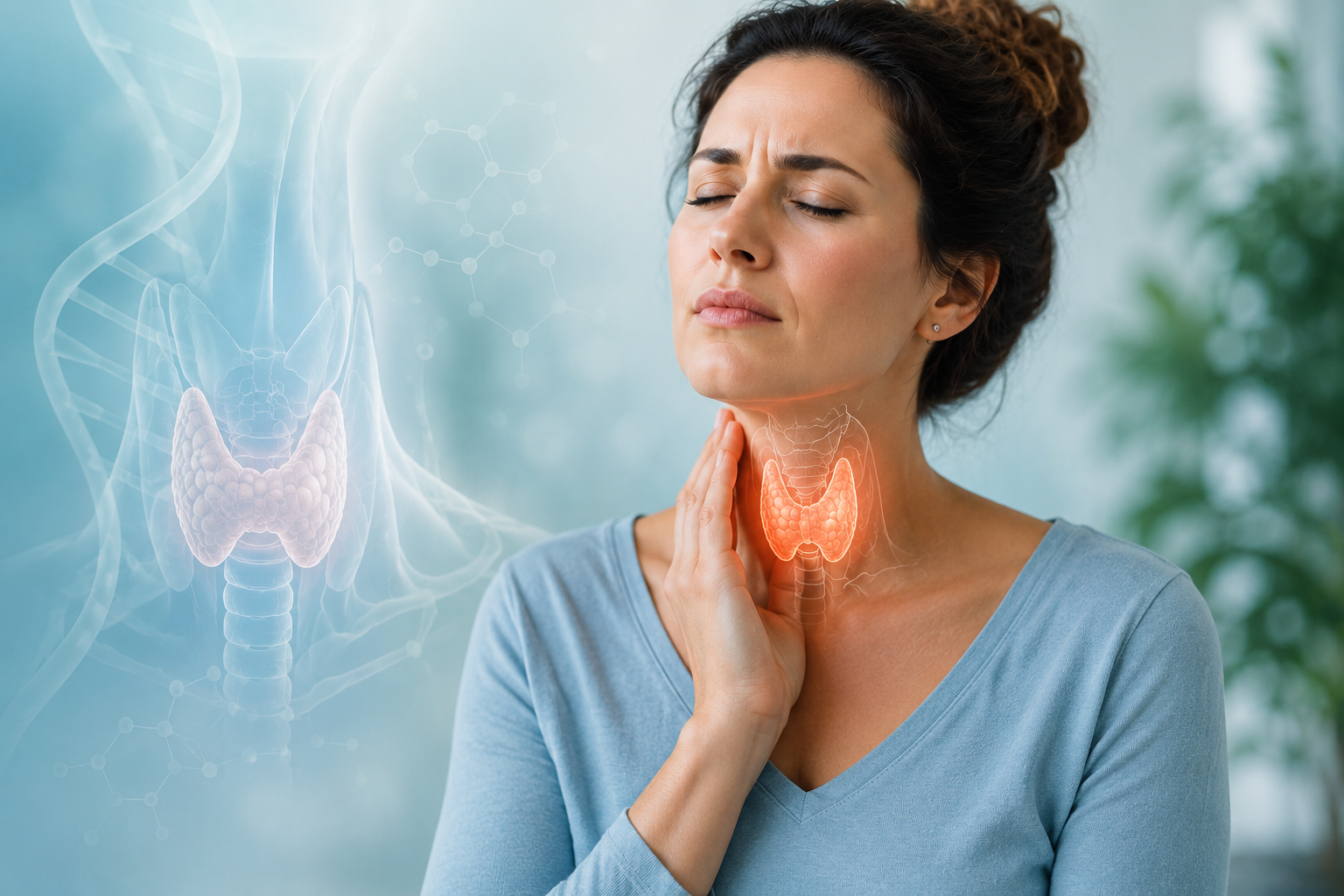
Hashimoto’s thyroiditis is the most common cause of hypothyroidism in the United States. It is an autoimmune condition in which the immune system mistakenly targets thyroid tissue, gradually impairing thyroid function.
While conventional care appropriately focuses on managing thyroid hormone levels, many patients also want to understand potential contributing factors that may influence immune balance.
A functional medicine perspective asks a broader question:
Why did the immune system become dysregulated in the first place?
What Is Hashimoto’s Thyroiditis?
Hashimoto’s thyroiditis is an autoimmune thyroid condition.
In autoimmune disease, the immune system loses tolerance to normal body tissue and creates antibodies that attack it.
In Hashimoto’s, this often includes:
- Thyroid peroxidase antibodies (TPOAb)
- Thyroglobulin antibodies (TgAb)
Over time, this immune activity may contribute to:
- Fatigue
- Weight gain
- Brain fog
- Depression
- Dry skin
- Hair thinning
- Constipation
- Cold intolerance
- Hormonal imbalance
The thyroid may be the target—but the immune system is the mechanism.
What Causes Hashimoto’s?
There is no single cause.
Hashimoto’s is generally understood to develop through an interaction between:
- Genetic predisposition
- Environmental triggers
- Immune dysregulation
- Lifestyle factors
This is why two people with Hashimoto’s may have very different contributing factors.
1. Genetics Load the Gun—Environment Pulls the Trigger
A family history of autoimmune disease may increase risk.
But genetics are not destiny.
The growing field of epigenetics shows that lifestyle and environmental exposures can influence gene expression.
Potential influencing factors include:
- chronic stress
- poor sleep
- inflammatory diet
- toxin exposure
- nutrient deficiencies
- infections
- gut dysfunction
A genetic tendency may increase susceptibility, but lifestyle and environmental context often influence whether that susceptibility becomes clinically significant.
2. Gut Health and the Immune System
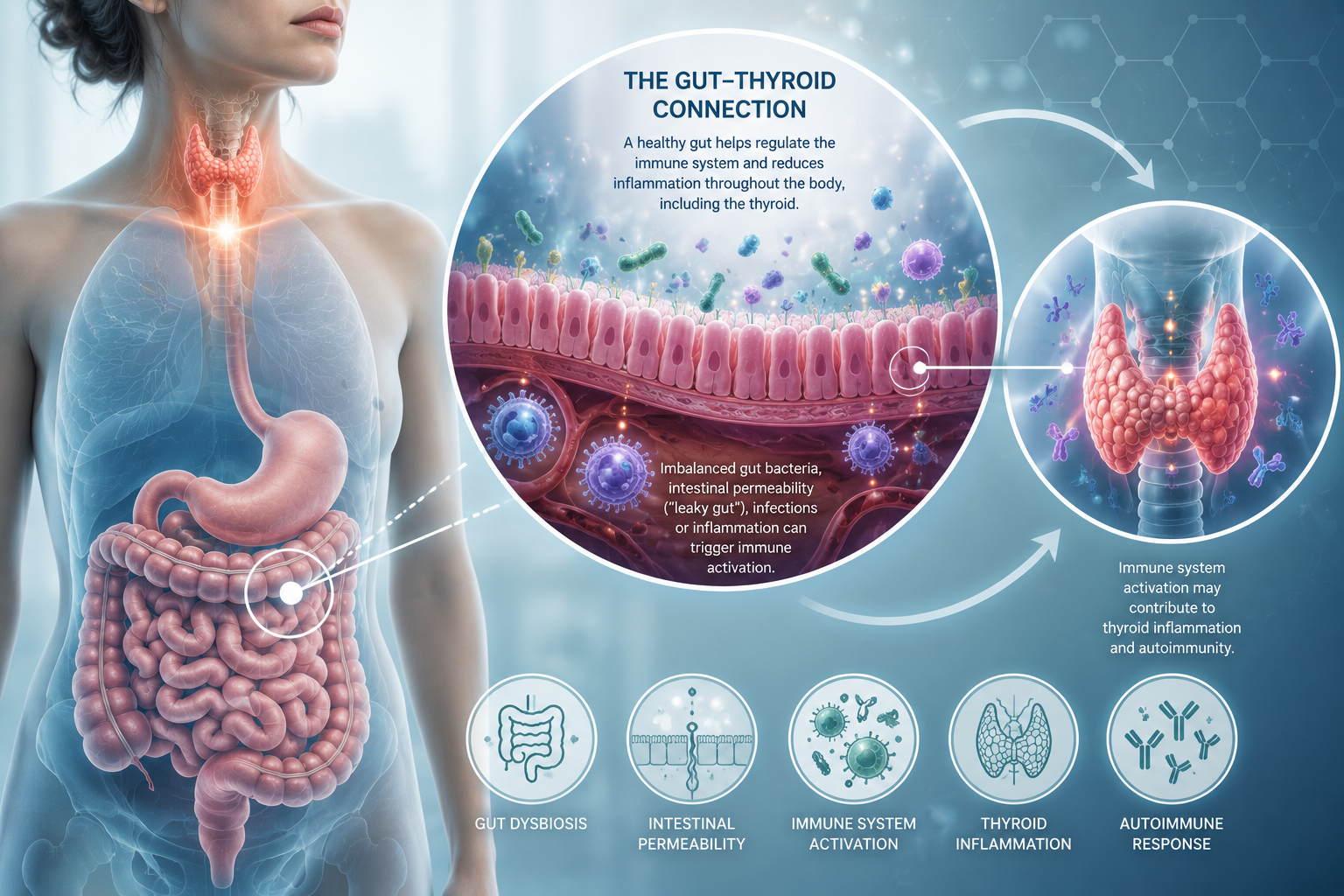
The gut-thyroid connection highlights how digestive health, immune balance, and inflammation may influence autoimmune thyroid conditions like Hashimoto’s.
A large portion of immune activity is closely linked with the gastrointestinal system.
Functional medicine often evaluates gut-related contributors such as:
- dysbiosis
- intestinal permeability (“leaky gut”)
- chronic digestive inflammation
- bacterial imbalance
- yeast overgrowth
- parasitic infection (when clinically indicated)
When the gut barrier becomes compromised, immune activation may increase.
This is one reason gut health is frequently discussed in autoimmune medicine.
3. Food Sensitivities
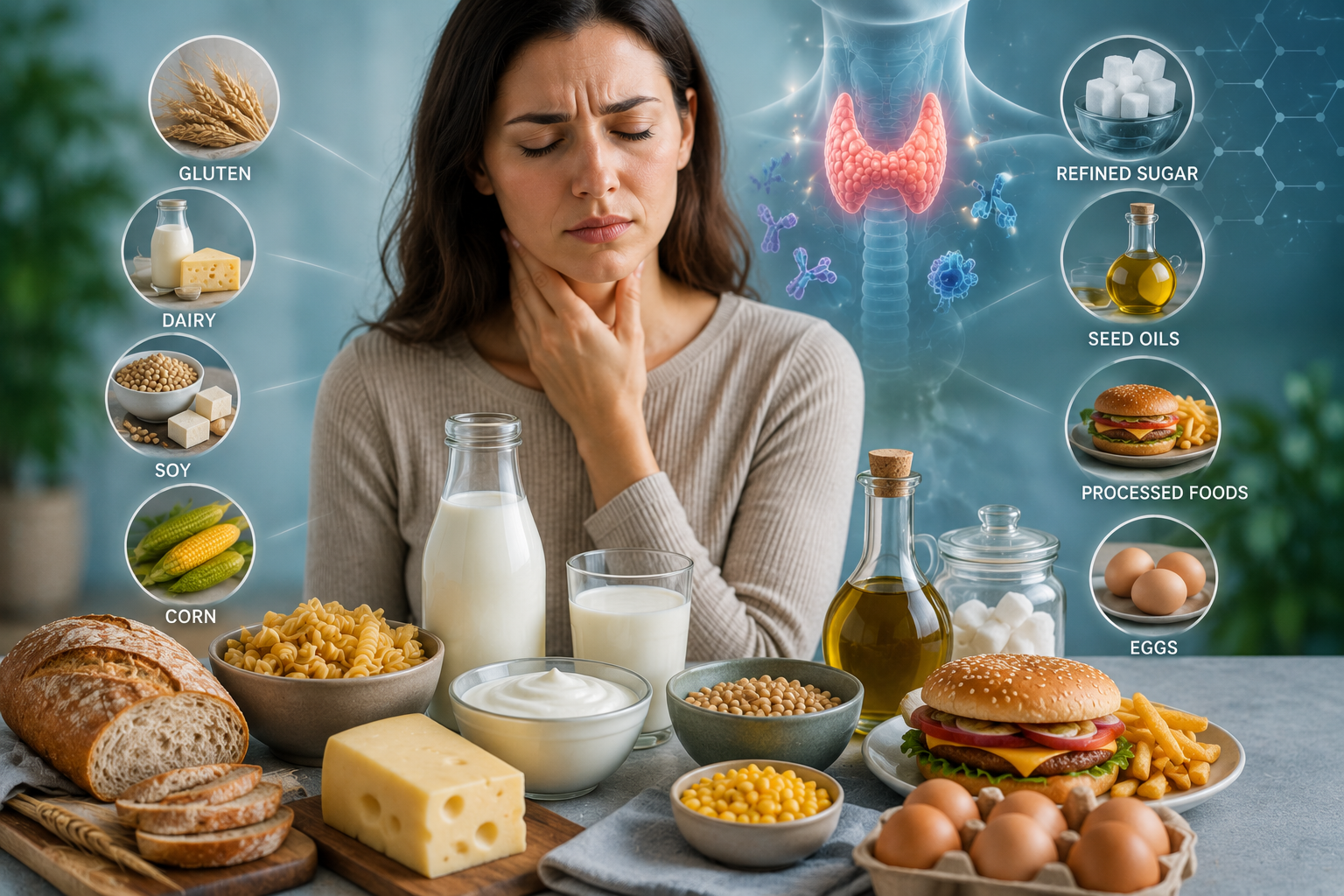
Certain foods may trigger immune activation or inflammation in susceptible individuals, making personalized food sensitivity evaluation an important part of autoimmune thyroid care.
Certain foods may provoke immune activation in susceptible individuals.
Common triggers sometimes evaluated include:
- gluten
- dairy
- soy
- processed food additives
Not every Hashimoto’s patient reacts to the same foods.
This is why individualized assessment matters rather than assuming one universal diet.
4. Blood Sugar Dysregulation
Blood sugar instability can contribute to systemic inflammation and stress hormone disruption.
Repeated glucose spikes may affect:
- cortisol balance
- inflammatory signaling
- immune regulation
- energy production
Functional medicine often considers metabolic health as part of autoimmune support.
5. Chronic Stress and Cortisol Imbalance

Chronic stress and elevated cortisol may disrupt immune balance, inflammation, blood sugar regulation, and thyroid function in susceptible individuals.
Chronic stress can alter immune signaling.
Long-term stress may:
- disrupt sleep
- impair gut function
- affect blood sugar
- increase inflammatory burden
This creates an environment where immune regulation becomes less resilient.
6. Environmental Toxins

Environmental exposures such as plastics, pesticides, chemicals, mold, and pollutants may contribute to immune stress and thyroid dysfunction in susceptible individuals.
Some patients may have meaningful environmental exposures.
Examples include:
- pesticides
- mold exposure
- heavy metals
- plastics/endocrine disruptors
- industrial chemicals
Functional medicine practitioners may investigate these when history suggests relevance.
7. Nutrient Deficiencies
The immune system depends on adequate nutrition.
Common nutrients often evaluated in thyroid and autoimmune cases include:
- selenium
- zinc
- vitamin D
- magnesium
- iron (carefully interpreted)
- vitamin A
- omega-3 fats
Deficiencies do not necessarily cause Hashimoto’s directly, but they may influence immune resilience and thyroid physiology.
8. Infections as Potential Triggers
Some infections may act as immune triggers in susceptible individuals.
Examples sometimes discussed in the literature:
- Epstein-Barr virus (EBV)
- H. pylori
- chronic sinus/oral infections
- certain gastrointestinal pathogens
Not every infection is clinically relevant, but persistent immune activation deserves consideration.
Conventional vs Functional Medicine: Different Questions
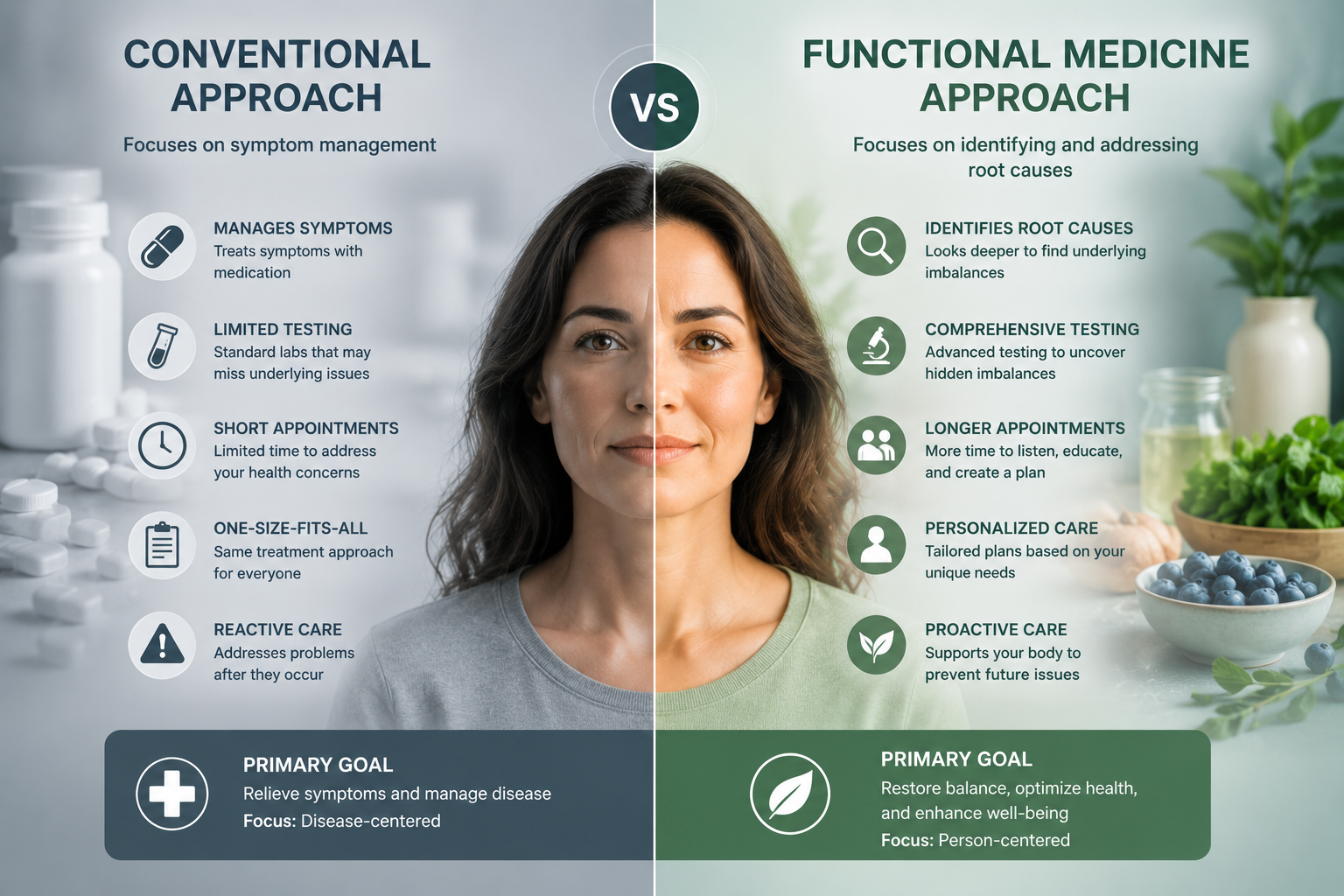
Conventional care often focuses on diagnosis and symptom management, while functional medicine emphasizes identifying potential root contributors and personalized whole-body support.
Conventional endocrinology excels at:
✅ diagnosis
✅ lab monitoring
✅ thyroid hormone replacement
✅ ruling out structural thyroid disease
Functional medicine often asks additional questions:
- What may be driving immune activation?
- Are there gut or inflammatory triggers?
- Is blood sugar stable?
- Are nutrient deficiencies present?
- Is toxic burden relevant?
- Are stress physiology patterns contributing?
These approaches can be complementary.
A Functional Medicine Perspective on Hashimoto’s in Virginia Beach
At Total Health Center Virginia Beach, we take an individualized approach.
Two patients with the same diagnosis may have very different contributing factors.
That is why our evaluation may include:
- advanced thyroid testing
- antibody assessment
- nutrient analysis
- digestive health evaluation
- inflammatory markers
- lifestyle review
- metabolic assessment
The goal is not simply to label disease—but to better understand the terrain in which disease developed.
Final Thoughts
Hashimoto’s thyroiditis is not simply a thyroid issue.
It is an immune-mediated condition with multiple possible contributing factors.
Medication can be an important part of care.
But for many patients, understanding the bigger picture—including lifestyle, immune balance, gut health, and environmental influences—can provide a more complete path forward.
If you are searching for a functional medicine approach to Hashimoto’s in Virginia Beach, our team at Total Health Center may be able to help.
Frequently Asked Questions
Can Hashimoto’s be caused by stress?
Chronic stress may contribute to immune dysregulation, inflammation, and hormonal imbalance that can influence autoimmune conditions.
Is Hashimoto’s genetic?
Genetics can increase susceptibility, but genes alone do not guarantee disease development.
Can gut health affect Hashimoto’s?
Gut health and immune regulation are closely connected, and digestive dysfunction may contribute in some patients.
What foods trigger Hashimoto’s?
Triggers vary by person, but some patients react to gluten, dairy, soy, or processed foods.
Can functional medicine help Hashimoto’s?
Functional medicine focuses on identifying potential contributing factors and supporting overall immune and metabolic health.