
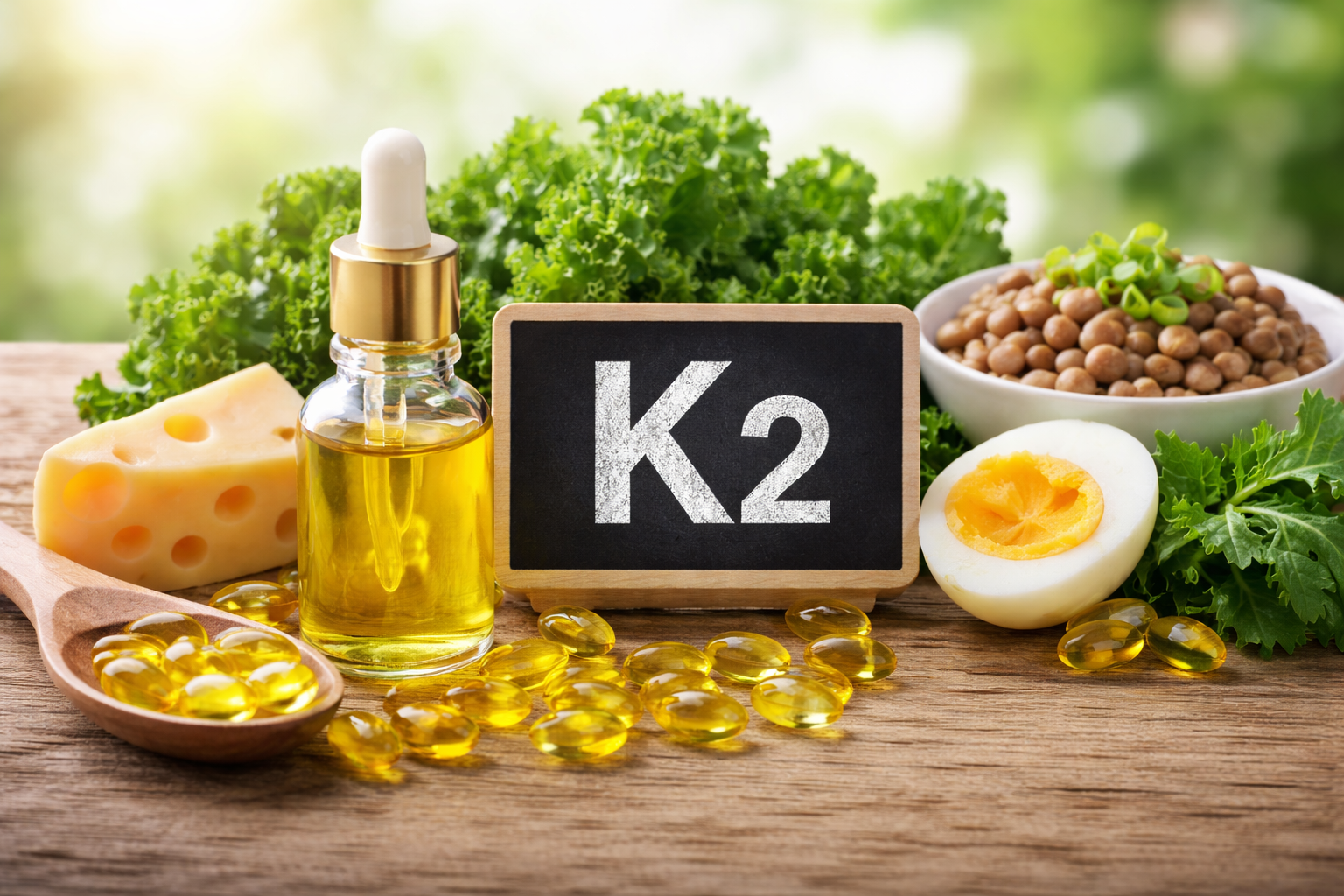
Vitamin K2: The Most Overlooked Nutrient in Bone, Heart, and Hormone Health
Vitamin D has had its moment — and for good reason. Once we finally had a reliable blood test in the 1990s, research exploded and clinicians gained real insight into its role in bone health, immunity, and beyond.
But there’s another nutrient that quietly works behind the scenes…
One that may be just as important — and far more misunderstood.
That nutrient is vitamin K2.
Why You Can’t Rely on Standard Blood Tests for Vitamin K2
Yes, there is a blood test for vitamin K.
But here’s the problem: it primarily measures clotting function, not what vitamin K is doing in your bones, arteries, or soft tissues.
In other words, your labs may look “normal” while your bones are quietly losing density — or calcium is ending up in places it doesn’t belong.
Vitamin K2 is a tissue-level nutrient, and modern medicine simply hasn’t caught up yet with a practical, widely available test that reflects that reality.
This is why I often refer to K2 as the forgotten vitamin.
And yet, the research is crystal clear.
What Vitamin K2 Actually Does in the Body
Think of vitamin K2 as traffic control for calcium.
Without it, calcium can:
-
Miss your bones
-
Accumulate in arteries
-
Contribute to joint stiffness, kidney stones, and vascular calcification
With adequate K2, calcium is directed exactly where it belongs.
Bone Health: The Missing Link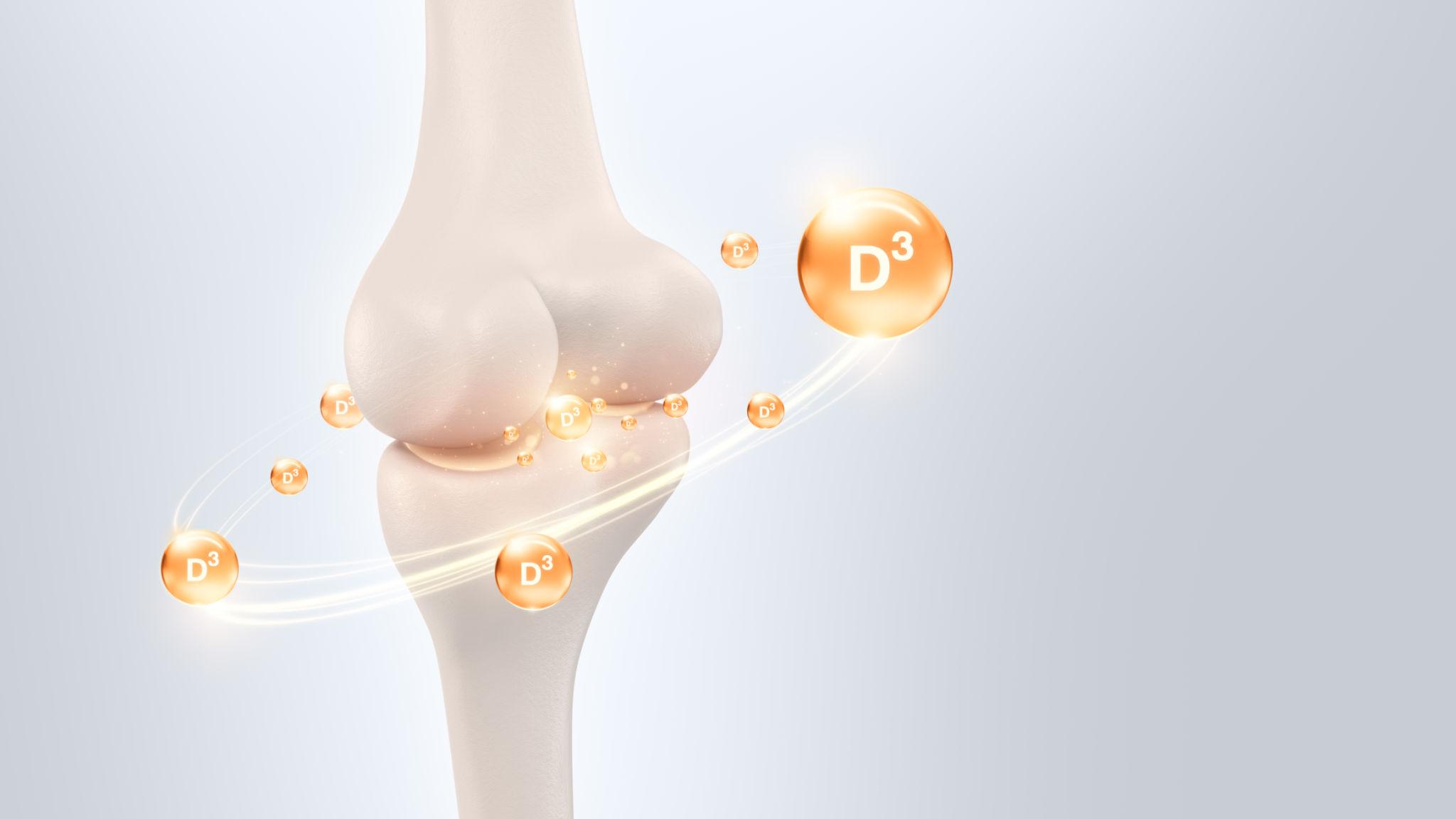
Vitamin K2 activates a protein called osteocalcin, produced by osteoblasts (your bone-building cells).
Osteocalcin acts like the structural framework that locks calcium into bone.
But here’s the key point:
👉 Osteocalcin is useless until vitamin K2 activates it.
No K2 = no functional osteocalcin = weaker bones.
Vitamin K2 also helps:
-
Stimulate osteoblast activity
-
Inhibit osteoclasts (the cells that break bone down)
-
Maintain long-term bone density
This is why vitamin K2 works synergistically with:
-
Vitamin D3
-
Magnesium
-
Calcium
D3 increases calcium absorption.
K2 ensures it actually strengthens bone.
Heart and Artery Protection
One of vitamin K2’s most powerful — and underappreciated — roles is preventing arterial calcification.
Large population studies show that people with the highest K2 intake had:
-
Significantly less arterial calcification
-
Lower rates of cardiovascular disease
-
Lower cardiovascular mortality
Importantly, vitamin K1 did not provide these benefits.
That’s because:
-
K1 is used mainly by the liver for clotting
-
K2 is used by tissues — arteries, bones, skin, brain, and reproductive organs
Different vitamins. Different jobs.
Skin, Immune, Metabolic, and Cellular Health
Beyond bones and arteries, vitamin K2 has been shown to support:
-
Healthy skin aging
-
Immune system balance
-
Protection against oxidative stress
-
Normal blood sugar regulation
-
Proper calcification control in soft tissues
Emerging research even links higher K2 intake with reduced risk of advanced prostate cancer, again with no benefit from K1.
Why Vitamin K2 Is Not Optional in the Modern Diet
A long-standing myth is that humans can convert enough K1 into K2.
In reality:
-
That conversion is extremely limited
-
Gut bacteria contribute very little usable K2
-
Human studies consistently show K2 outperforming K1
This strongly suggests that preformed vitamin K2 is required in the human diet.
Foods naturally high in vitamin K2 include:
-

-
Natto (very high, but not everyone’s favorite)
-
Hard and soft cheeses
-
Egg yolks
-
Butter from grass-fed cows
-
Organ meats (especially liver)
Unfortunately, most conventional diets provide very little K2, especially when animal foods come from grain-fed, confined systems.

MK-4 vs MK-7: Why the Form Matters
Vitamin K2 is not one single compound.
It exists as several forms, primarily MK-4 and MK-7.
Both have benefits — but they behave very differently in the body.
Why I Recommend MK-4
MK-4 stands out because it:
-
Is rapidly taken up by tissues
-
Directly regulates gene expression
-
Supports sex hormone production
-
Plays a unique role in cancer protection
-
Helps prevent inappropriate calcium deposition in soft tissues
In fact, all animals convert other forms of vitamin K into MK-4.
No animal synthesizes other forms — which tells us something important.
MK-4 appears to be the biologically preferred form.
While MK-7 may circulate longer in the blood, MK-4 is the form that actually gets into tissues and does the work — especially in reproductive organs, brain, and cellular regulation.
This gene-regulating role of MK-4 is something no other form of vitamin K can replicate.
Is Vitamin K2 Safe?
Even very high doses of MK-4 have shown an excellent safety profile in long-term studies.
That said:
-
People on prescription anticoagulants must work closely with their clinician
-
More is not always better
-
Physiological dosing provides benefits without unnecessary risk
Used appropriately, vitamin K2 has a wide margin of safety.
The Bottom Line
Vitamin K2 is:
-
Essential for strong bones
-
Critical for cardiovascular health
-
A key regulator of calcium balance
-
Important for hormone, skin, immune, and cellular health
And MK-4 is the form I trust most for comprehensive, whole-body support.
As research continues to evolve, one thing is already clear:
Vitamin K2 is not optional — and it’s long overdue for the attention it deserves.