
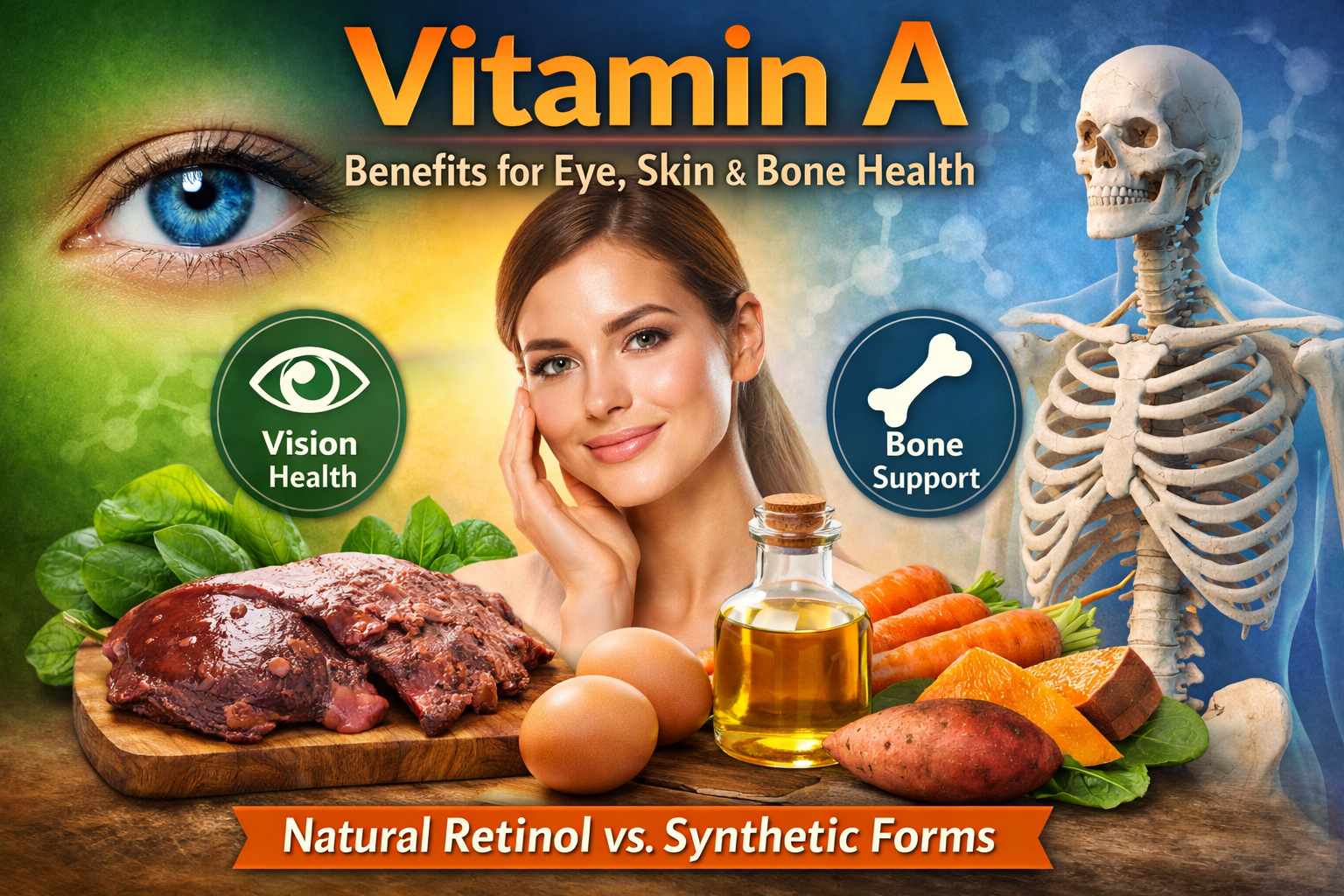
Why the Form You Choose Matters
Vitamin A is one of those foundational nutrients that doesn’t get much attention—until there’s a problem. Yet it plays a central role in vision, immune defense, skin integrity, bone health, and cellular repair. It also functions as a powerful antioxidant, helping reduce inflammation by neutralizing free radical damage.
In practice, vitamin A deficiency and excess both show up more often than people realize. That’s why I don’t just focus on how much vitamin A someone is getting—but what form they’re getting it in.
What Is Vitamin A?
Vitamin A is a fat-soluble vitamin, meaning it’s absorbed with fat and stored in the liver for future use. Because of this storage capacity, vitamin A is incredibly valuable—but also one that needs to be handled thoughtfully.
Vitamin A exists in two primary forms:
1. Active Vitamin A (Retinol)
Retinol is the pre-formed, active form of vitamin A. It comes exclusively from animal-derived foods and can be used directly by the body without conversion.
This is the form I typically recommend when supplementation is appropriate, especially when it comes from traditional food-based sources.
Natural sources include:
-
Fish liver oil
-
Egg yolks
-
Butter and full-fat dairy
-
Liver (in small, intentional amounts)
2. Provitamin A (Beta-Carotene)
Beta-carotene is found in colorful fruits and vegetables and must be converted by the body into retinol before it can be used. This conversion depends on genetics, gut health, thyroid function, and overall nutrient status.
For some people, this conversion works well. For others, it doesn’t—which is why plant-based vitamin A alone isn’t always sufficient.
Another form you’ll often see listed on supplement labels is retinyl palmitate, which we’ll come back to shortly.
What Is Vitamin A Good For?
 1. Protects Eye Health
Vitamin A is essential for vision, particularly night vision. It’s a key component of rhodopsin, a protein in the retina that allows the eye to respond to light.
Beta-carotene and vitamin A have also been shown to help protect against age-related macular degeneration, one of the leading causes of blindness as we age.
2. Supports Immune Function
Vitamin A plays a critical role in immune regulation. Deficiency has been shown to weaken immune defenses and impair the integrity of mucosal barriers in the gut and respiratory tract—our first line of defense against infection.
This is one reason vitamin A status is so important in children, older adults, and anyone with recurrent infections or gut dysfunction.
3. Reduces Inflammation
As an antioxidant, vitamin A helps reduce oxidative stress and chronic inflammation—two drivers behind many degenerative diseases, including cardiovascular disease, diabetes, and neurodegenerative conditions.
Lower inflammation is consistently associated with improved long-term health outcomes.
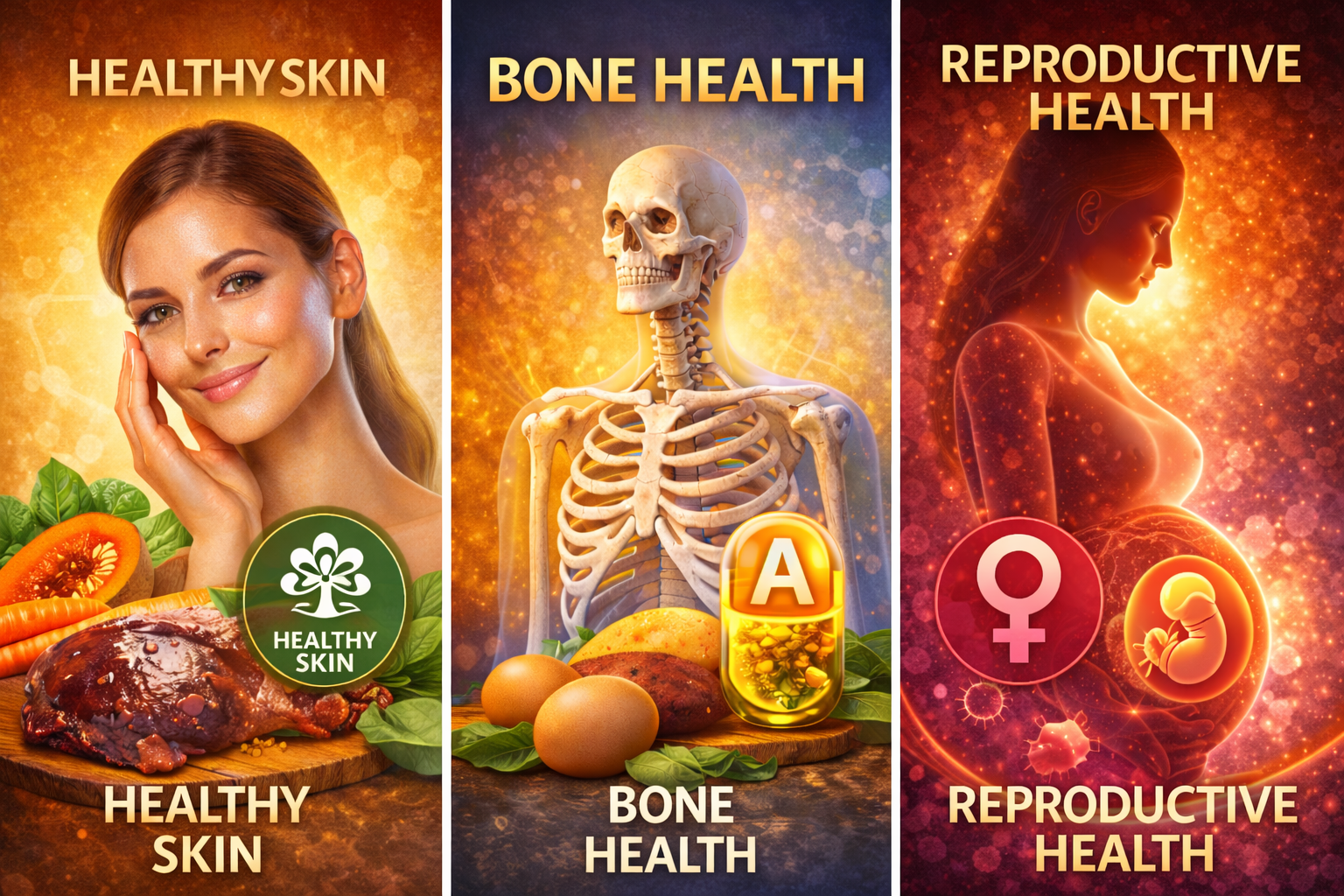 4. Supports Healthy Skin
Vitamin A is well known for its role in skin health. It regulates cell turnover, supports collagen production, and improves skin resilience.
Both topical and internal forms of vitamin A derivatives have been shown to:
-
Improve fine lines and wrinkles
-
Support wound healing
-
Help manage acne, eczema, and psoriasis
5. Supports Bone Health
While calcium and vitamin D get most of the attention, vitamin A is also essential for bone remodeling and growth. Both deficiency and excess vitamin A have been linked to compromised bone density—highlighting again why balance and form matter.
6. Supports Reproduction and Development
Vitamin A is essential throughout life but especially important during pregnancy and early development. Adequate levels support immune function, lung development, and tissue formation.
This is also why high-dose synthetic vitamin A during pregnancy is discouraged, while beta-carotene or food-based retinol is generally safer when appropriately dosed.
7. Aids Tissue Repair
Vitamin A plays a role in cell regeneration and wound healing. Research shows it can improve tissue strength following injury or surgery and support proper skin repair.
Retinol vs. Retinyl Palmitate: Natural vs. Synthetic Forms
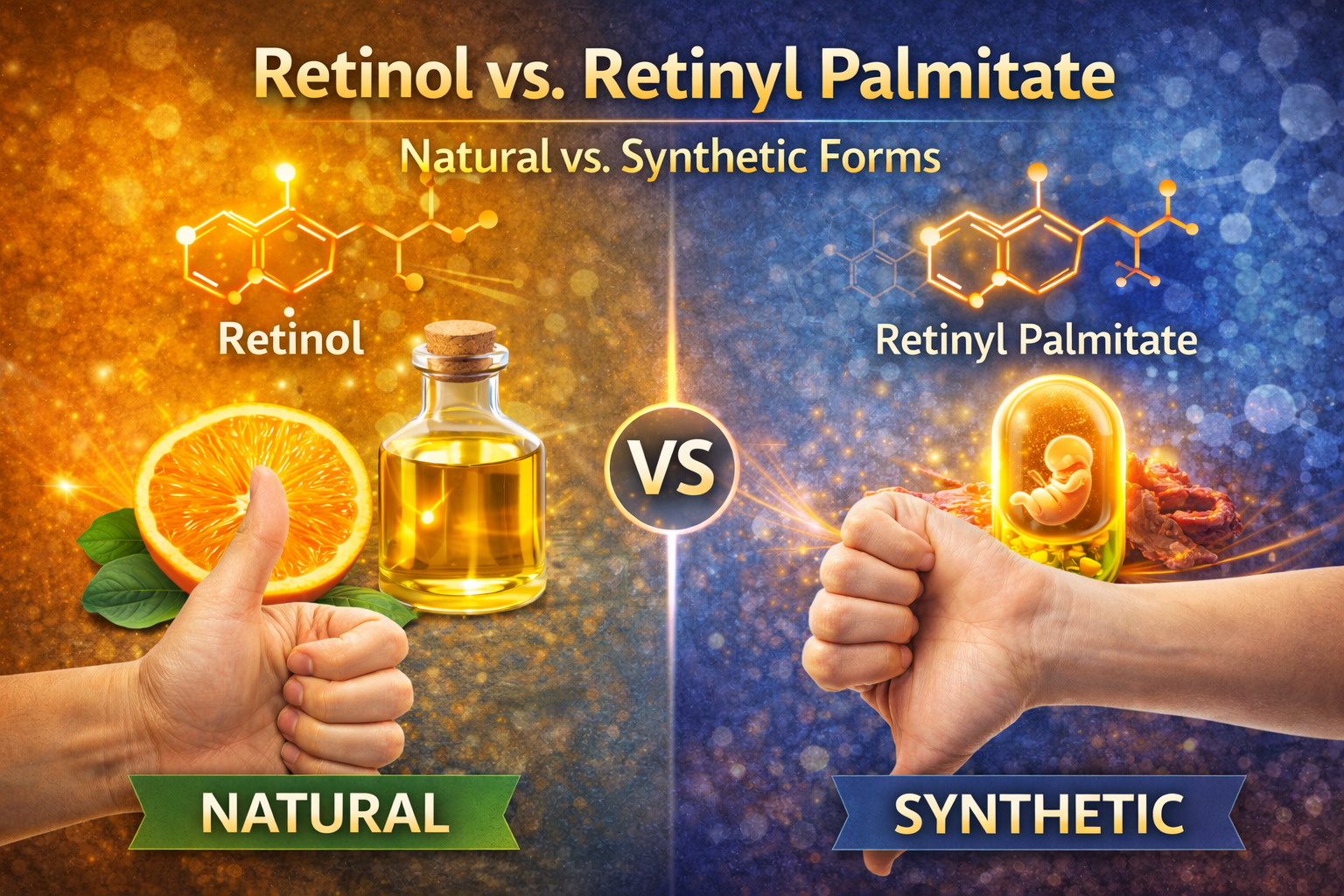 This is where things often get confusing—and where I encourage patients to slow down and read labels carefully.
Retinol (Natural Form)
-
Source: Naturally occurring in animal-based foods, especially fish liver oil
-
Function: Directly active and readily converted into retinal and retinoic acid
-
Clinical note: Free retinol is fragile and difficult to stabilize, which is why it’s less common in supplements unless sourced from whole foods
Retinyl Palmitate (Esterified Form)
-
What it is: A storage form of vitamin A
-
Naturally occurs in: Fish liver oils and animal tissues
-
Synthetic version: Commonly used in fortified foods and supplements because it’s more stable and inexpensive to produce
-
Important distinction:
Retinyl palmitate itself is not inherently synthetic—but most retinyl palmitate in supplements today is lab-created, not food-derived
The body must convert retinyl palmitate back into retinol before it becomes biologically active.
Why This Matters
Synthetic forms are easier to overconsume, bypass natural regulatory mechanisms, and accumulate in the liver more readily—especially when taken long-term without assessment.
That’s why, when supplementation is necessary, I prefer retinol or retinyl palmitate sourced from fish liver oil, not synthetic isolates.
Key Takeaways
-
Vitamin A is essential for vision, immune health, skin, bones, and tissue repair
-
The form of vitamin A matters just as much as the dose
-
Retinol from food-based sources is biologically familiar and better regulated by the body
-
Most vitamin A toxicity issues arise from synthetic supplementation, not whole foods
-
When supplementing beyond a multivitamin, choose retinol or retinyl palmitate sourced from fish liver oil
As with all nutrients, vitamin A is best used intentionally, not casually. Context, diet, genetics, and health status all matter.
If you’re unsure whether you need vitamin A—or what form is right for you—this is where individualized care makes all the difference.