

Insulin Resistance, Metabolic Syndrome & Type 2 Diabetes
Understanding How Metabolic Dysfunction Develops—and What You Can Do About It
Type 2 diabetes usually doesn’t begin on the day your blood sugar finally becomes high enough for a diagnosis.
The metabolic changes leading up to it can be developing for years.
For many people, one of the earliest changes is insulin resistance—a condition in which tissues such as skeletal muscle, the liver, and body fat become less responsive to the effects of insulin.
The body initially tries to compensate.
The pancreas may produce more insulin to help maintain normal blood glucose. For a period of time, that compensation can work remarkably well. Your fasting glucose may still appear normal, and your A1c may not yet fall into the prediabetes or diabetes range.
But maintaining normal blood sugar by requiring progressively more insulin is not the same thing as having healthy insulin sensitivity.
As metabolic dysfunction progresses, other changes may begin appearing: rising triglycerides, increasing waist circumference, higher blood pressure, fatty liver, changes in appetite and energy, difficulty maintaining a healthy body composition, and eventually rising blood glucose.
When several of these changes occur together, they may meet the criteria for metabolic syndrome. If glucose regulation continues to deteriorate, a person may progress to prediabetes or type 2 diabetes.
This progression is not inevitable, and it does not happen exactly the same way in every person.
That’s important.
At Total Health Center, we look at insulin resistance, metabolic syndrome, prediabetes, and type 2 diabetes as interconnected expressions of metabolic dysfunction rather than completely unrelated problems. This fits within our broader approach to functional medicine and metabolic health, where the goal is to understand the physiology contributing to the problem rather than looking only at the eventual diagnosis.
The earlier we recognize what is changing—and why—the greater the opportunity may be to improve insulin sensitivity and support healthier metabolic function.
What Does Insulin Actually Do?
Insulin is sometimes portrayed as the enemy, particularly in discussions about weight loss and low-carbohydrate diets.
That’s misleading.
Insulin is an essential hormone.
It is produced by the beta cells of the pancreas and helps coordinate how your body handles nutrients and energy.
After a meal, rising blood glucose stimulates insulin release. Insulin helps skeletal muscle and other tissues take up glucose, influences glucose production by the liver, and helps coordinate the storage and use of carbohydrate, fat, and protein.
This is normal physiology.
The problem isn’t that insulin rises after you eat.
The problem develops when tissues become less responsive to insulin, requiring the body to produce increasingly larger amounts to accomplish the same metabolic work.
That is insulin resistance.
Your Blood Sugar Can Look Normal While Insulin Is Rising
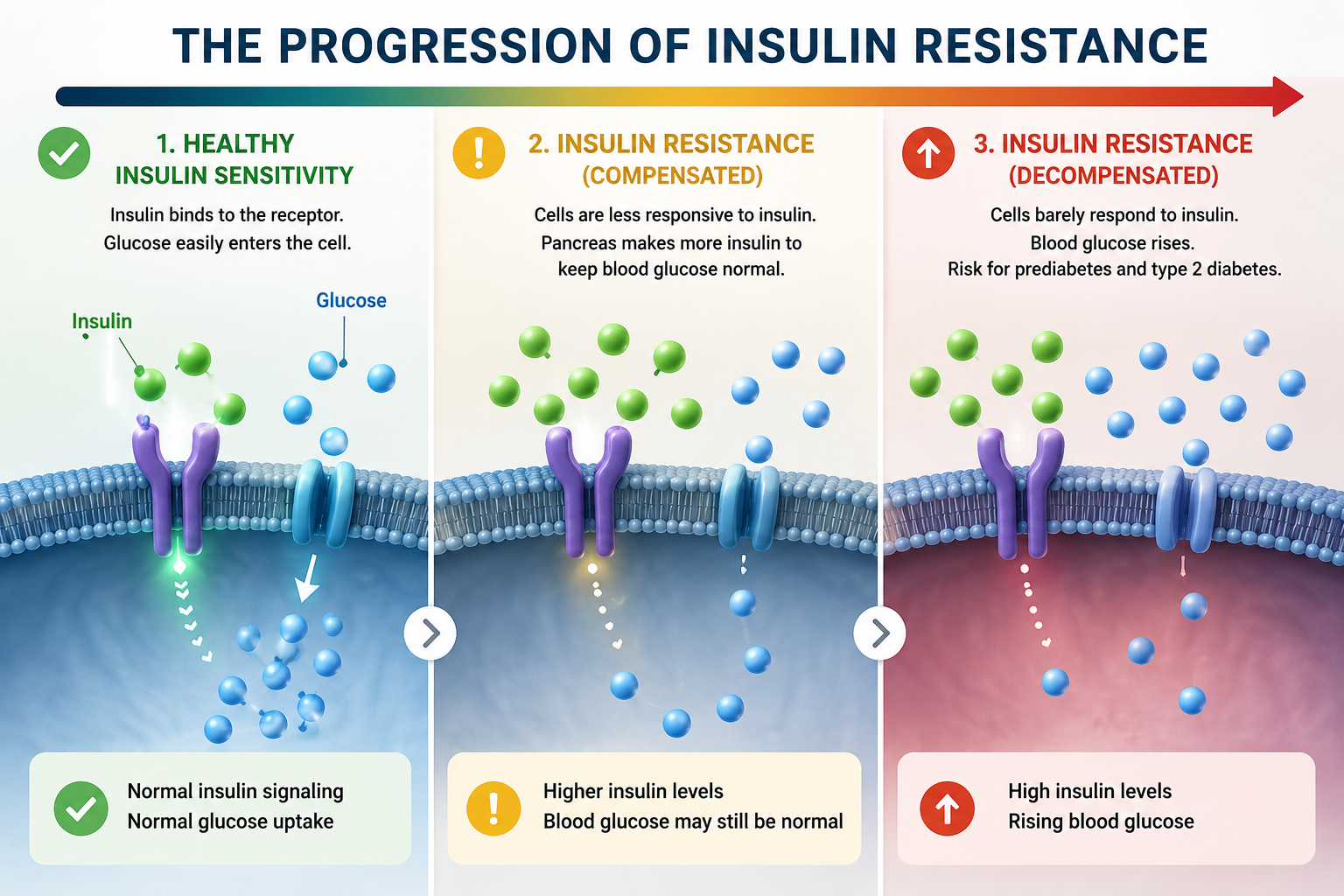
Insulin resistance can develop while blood glucose still appears normal because the pancreas compensates by producing more insulin. As compensation becomes insufficient, blood glucose may begin to rise.
This is one of the most important concepts for patients to understand.
Imagine that your body previously required a relatively small amount of insulin to maintain healthy glucose levels.
As insulin sensitivity declines, the pancreas compensates by producing more.
Blood glucose may therefore remain within the laboratory reference range—not because metabolic regulation is necessarily optimal, but because the pancreas is working harder to keep glucose there.
This state of increased insulin production is often referred to as compensatory hyperinsulinemia.
Eventually, compensation may become insufficient. Blood glucose begins remaining elevated for longer periods, fasting glucose may increase, and A1c may begin climbing.
That’s why metabolic health should not always be reduced to the question:
“Is my blood sugar high?”
A better question can be:
“How effectively is my body regulating blood sugar, and how much insulin is required to accomplish it?”
This is also why functional medicine testing should be selected to answer a clinical question rather than simply ordering a large collection of laboratory tests. Depending on the individual, glucose, A1c, fasting insulin, triglycerides and other metabolic markers may help provide a more complete picture.
From Insulin Resistance to Metabolic Syndrome, Prediabetes and Type 2 Diabetes
These terms are often discussed as though they describe completely separate conditions.
Physiologically, there can be considerable overlap.
Insulin Resistance
Insulin resistance describes the reduced responsiveness of insulin-sensitive tissues.
The pancreas may initially compensate by producing more insulin, allowing glucose to remain reasonably controlled.
Metabolic Syndrome
As metabolic dysfunction becomes more apparent, several abnormalities may begin occurring together.
Metabolic syndrome is generally identified by a cluster of findings involving:
-
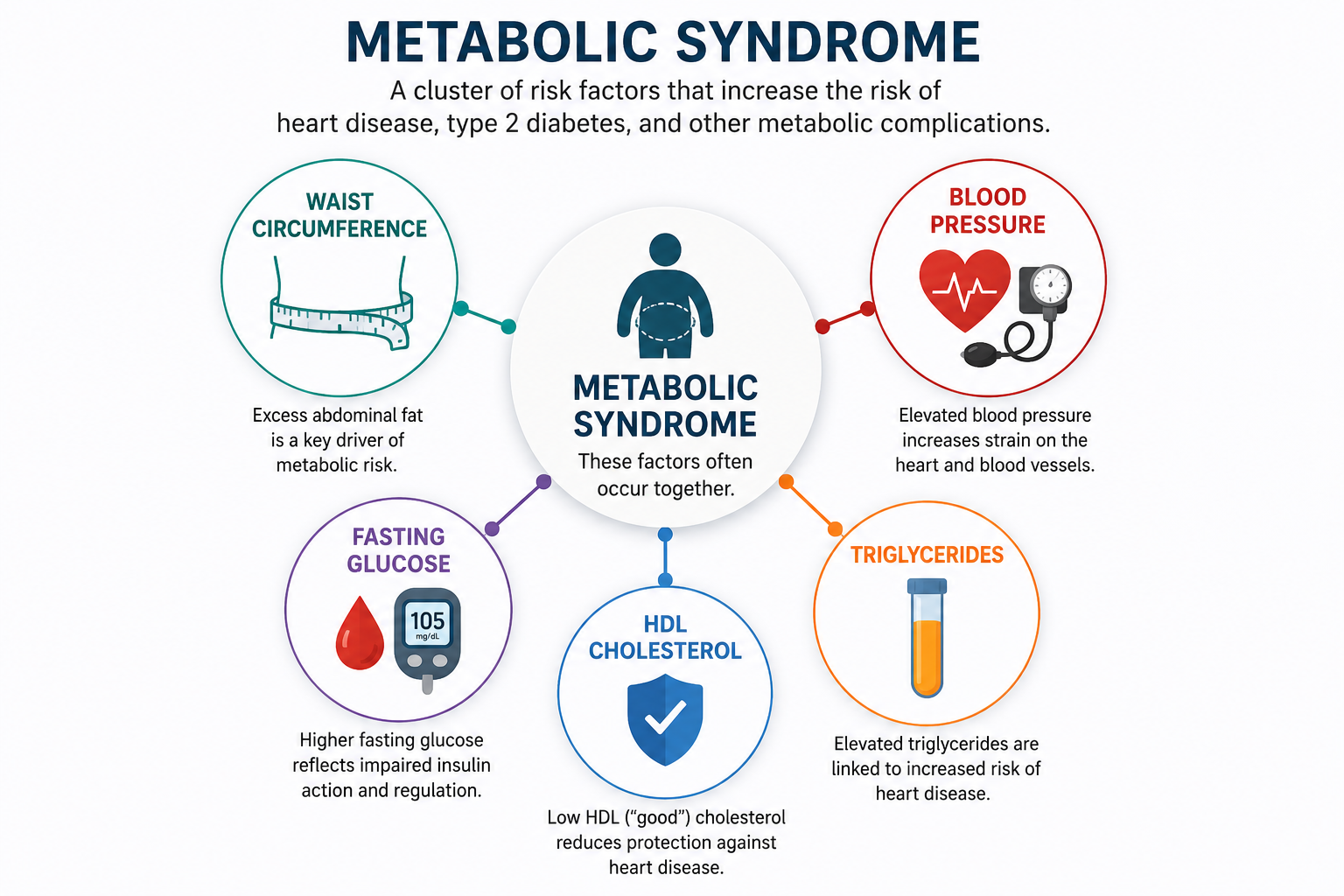
Metabolic syndrome describes a cluster of metabolic abnormalities that tend to occur together and are associated with increased risk for type 2 diabetes and cardiovascular disease.
increased waist circumference
- elevated triglycerides
- reduced HDL cholesterol
- elevated blood pressure
- elevated fasting glucose
The presence of several of these findings together is important because they can indicate a broader pattern of metabolic dysfunction and increased cardiometabolic risk.
Prediabetes
Prediabetes means blood glucose regulation has deteriorated enough to fall above the normal range but has not yet reached the diagnostic threshold for diabetes.
This is not simply a slightly abnormal laboratory number.
It is an important metabolic warning sign—and potentially an opportunity to intervene before glucose regulation deteriorates further.
Type 2 Diabetes
Type 2 diabetes develops when the body can no longer maintain glucose within the established diagnostic range.
Insulin resistance is commonly an important part of the process, but type 2 diabetes also involves the ability of pancreatic beta cells to continue producing sufficient insulin.
This distinction matters because diabetes is not simply a disease of “too much sugar.”
It reflects a breakdown in the body’s ability to regulate and manage energy appropriately.
And importantly:
Insulin resistance does not guarantee that someone will develop type 2 diabetes.
Genetics, body composition, physical activity, nutrition, sleep, medications, age, pancreatic function and many other factors influence how the process develops.
Muscle Is One of Your Most Important Metabolic Organs

Skeletal muscle plays an important role in glucose disposal and insulin sensitivity, making resistance training a valuable part of long-term metabolic health.
Muscle is usually discussed in terms of strength, appearance, or exercise.
Metabolically, it is much more important than that.
Skeletal muscle is a major site for glucose disposal and plays an important role in insulin sensitivity.
When muscle contracts during physical activity, it increases its demand for energy. Regular activity and resistance training can therefore influence glucose regulation through mechanisms that extend well beyond simply “burning calories.”
Muscle also becomes increasingly important as we age.
Without adequate stimulus, adults tend to lose muscle over time. That can affect strength and physical function, but it can also reduce one of the body’s important metabolic tissues.
This is one reason our approach to functional medicine for weight loss doesn’t focus exclusively on making the number on the scale smaller.
Losing excess body fat may be beneficial for many patients, but preserving—or when appropriate increasing—muscle can be just as important to long-term metabolic health.
Dr. Scott Insight
I don’t want patients thinking about metabolism only in terms of how many calories they burn. Muscle is metabolically important tissue. Maintaining strength and muscle as we age can be an important part of improving insulin sensitivity, body composition, physical function, and long-term health.
The Liver’s Role in Insulin Resistance
The liver is another major player in metabolic health.
One of its many jobs is helping maintain adequate glucose between meals. When you aren’t eating, the liver can release glucose so that the body continues to have access to energy.
Insulin normally helps regulate this process.
With hepatic insulin resistance, the liver may become less responsive to insulin’s signal to reduce glucose production. As a result, the liver may continue releasing more glucose than is needed.
The liver is also deeply involved in fat metabolism.
When metabolic dysfunction progresses, excess fat can accumulate within liver cells, contributing to what is now commonly called metabolic dysfunction-associated steatotic liver disease (MASLD).
This helps explain why insulin resistance, elevated triglycerides, abdominal obesity, fatty liver, and abnormal glucose regulation frequently occur together.
They are not necessarily isolated problems.
They may be different manifestations of a larger metabolic pattern.
Visceral Fat Is Different From Simply “Being Overweight”
Body fat is not metabolically identical everywhere it is stored.
Visceral fat is fat stored deeper within the abdomen around internal organs. Higher amounts of visceral fat are strongly associated with insulin resistance and cardiometabolic risk.
That doesn’t mean body weight alone tells us someone’s metabolic health.
Two people at the same weight can have very different amounts of muscle, visceral fat, liver fat, physical fitness, insulin sensitivity, and metabolic risk.
Likewise, someone does not necessarily need to have obesity to develop insulin resistance or type 2 diabetes.
This is why we should evaluate metabolic health and body composition, not simply body weight.
Why Insulin Resistance Develops
Insulin resistance usually does not have a single cause.
It develops through an interaction between genetics, body composition, nutrition, physical activity, sleep, age, medications, hormones, and other aspects of health and lifestyle.
For one person, increasing visceral fat and loss of muscle may be major contributors. For another, years of poor sleep, physical inactivity, dietary patterns, or medications may play a larger role.
Often, several factors are occurring at the same time.
This is one reason I don’t think telling every patient with insulin resistance to simply “eat fewer carbohydrates” adequately addresses the problem.
Carbohydrate intake can certainly influence glucose and insulin demand, and carbohydrate quality and quantity may need to change. But insulin sensitivity reflects much more than the amount of carbohydrate someone eats.
Physical Inactivity and Loss of Muscle
Because skeletal muscle is such an important site for glucose disposal, inactivity can contribute to declining insulin sensitivity.
This can become increasingly important with age.
Someone may weigh approximately the same at 55 as they did at 35 but have less muscle and more visceral fat. The scale may not reveal that change, but metabolically it can be significant.
Regular movement and resistance exercise can help improve insulin sensitivity while also preserving the muscle needed for healthy aging.
Visceral Fat and Ectopic Fat
As we discussed earlier, where fat is stored matters.
Increasing visceral fat is associated with metabolic dysfunction, but fat can also accumulate in tissues such as the liver and skeletal muscle where excessive accumulation may interfere with normal metabolic signaling.
This helps explain why improving body composition can sometimes produce meaningful metabolic improvements even when someone hasn’t reached an arbitrary “ideal” body weight.
Nutrition and Chronic Energy Surplus
Consistently consuming more energy than the body requires can contribute to increasing body fat and metabolic dysfunction.
But food quality also matters because different foods can affect satiety, appetite, glucose response, nutrient intake, and how easy or difficult it is to regulate overall food consumption.
Highly processed foods can make it remarkably easy to consume large amounts of energy while providing relatively poor satiety.
A metabolically supportive diet therefore isn’t simply about counting calories or eliminating a single macronutrient.
It should help someone regulate appetite, maintain adequate protein and nutrient intake, support healthy body composition, and remain sustainable.
Sleep
Poor sleep can affect insulin sensitivity even before major changes in body weight occur.
Insufficient or disrupted sleep can influence glucose regulation, hunger, appetite, food choices, energy, recovery, and the likelihood that someone will exercise.
We explore this relationship more specifically in our article on sleep and insulin, because sleep is one of the metabolic variables patients frequently underestimate.
Stress
Stress is another area where explanations can become overly simplistic.
It isn’t accurate to say that every case of insulin resistance is caused by “high cortisol.”
But chronic stress can affect sleep, eating behavior, physical activity, glucose regulation, recovery, alcohol consumption, and other behaviors that influence metabolic health.
The useful question isn’t simply whether someone is stressed.
It is:
How is that person’s stress load affecting the physiology and behaviors involved in their metabolic health?
Genetics and Family History
Genetics matter.
Some people can tolerate substantial metabolic stress for years before glucose regulation deteriorates, while others develop insulin resistance or type 2 diabetes at a lower body weight or younger age.
A strong family history of type 2 diabetes therefore deserves attention.
But genetic susceptibility is not the same thing as inevitability.
Genes influence the metabolic hand you’re dealt. Nutrition, activity, muscle, sleep, body composition, medications, and other environmental factors help influence how that hand is played.
Medications and Medical Conditions
Certain medications can contribute to changes in glucose regulation, appetite, body weight, or insulin sensitivity.
Examples can include some corticosteroids, antipsychotic medications, and other drugs depending on the individual.
That does not mean a patient should discontinue a prescribed medication because of its possible metabolic effects.
Instead, medication history should be part of the overall evaluation, and any changes should be discussed with the prescribing clinician.
Other health conditions can also influence metabolic regulation, which is why insulin resistance should not automatically be treated as an isolated nutrition problem.
Hormones, Thyroid Function and Metabolic Health
Hormones interact with metabolism in numerous ways.
Thyroid hormones influence energy expenditure and many aspects of normal metabolic function. Reproductive hormones can influence body composition, muscle, fat distribution, and insulin sensitivity. Conditions such as PCOS are also strongly associated with insulin resistance in many women.
Life stage matters as well.
During perimenopause and menopause, changes in estrogen occur alongside aging-related changes in muscle mass, sleep, activity, and fat distribution. These factors can interact rather than having one simple hormonal cause.
This is why we maintain separate authority resources for hormonal health and thyroid problems and symptoms rather than trying to turn every metabolic problem into a hormone or thyroid problem.
When those systems are relevant, however, they should be considered as part of the metabolic picture.
How Do We Evaluate Insulin Resistance?
There is no single laboratory test that tells us everything about someone’s metabolic health.
Instead, the goal is to look at the pattern.
That begins with the patient’s history.
We want to know things such as:
- Has waist circumference been increasing?
- Has weight or body composition changed?
- Is there a family history of type 2 diabetes?
- Has the patient had gestational diabetes or PCOS?
- What does their typical diet look like?
- How physically active are they?
- Do they perform resistance exercise?
- How well are they sleeping?
- Have triglycerides or glucose been rising over time?
- Are there signs of fatty liver?
- What medications are they taking?
- Are thyroid or hormonal factors potentially relevant?
Then laboratory testing can be selected based on what we’re trying to understand.
Fasting Glucose
Fasting glucose tells us how much glucose is circulating in the blood at that particular time.
It’s useful.
But as we’ve already seen, fasting glucose can remain relatively normal during earlier insulin resistance because the pancreas may be compensating with additional insulin.
So a normal fasting glucose doesn’t necessarily tell the entire story.
Hemoglobin A1c
A1c estimates average glucose exposure over approximately the previous two to three months.
It can help identify prediabetes and diabetes and is useful for following glucose regulation over time.
But A1c and fasting glucose primarily tell us about glucose.
They don’t directly tell us how much insulin the body required to maintain that glucose.
Fasting Insulin
In appropriate patients, fasting insulin can add another piece of information.
If glucose remains reasonably controlled while fasting insulin is elevated, that may suggest the pancreas is requiring greater insulin output to maintain glucose regulation.
Fasting insulin should not be interpreted in isolation, and there is not one universally agreed-upon “optimal” value that diagnoses insulin resistance in every person.
But in the appropriate clinical context, it can help us understand the relationship between glucose and insulin rather than looking at glucose alone.
Triglycerides and HDL
A standard lipid panel can also provide useful metabolic information.
Elevated triglycerides and reduced HDL frequently accompany insulin resistance and are included among the criteria used to identify metabolic syndrome.
The relationship between triglycerides and HDL can sometimes provide additional context, but it should not be treated as a standalone diagnostic test.
Additional Testing
Depending on the patient’s history and findings, evaluation might also include:
- liver enzymes
- kidney function
- thyroid testing
- additional lipid or cardiovascular markers
- selected nutritional markers
- other testing when clinically appropriate
The principle is the same one we use throughout our approach to functional medicine testing:
Testing should answer a question.
Ordering more tests does not automatically produce better medicine.
Can Insulin Resistance Improve?
Yes. Insulin sensitivity is not fixed.
For many people, meaningful improvements in insulin sensitivity and glucose regulation are possible when the factors contributing to metabolic dysfunction are identified and addressed.
How much improvement is possible varies from person to person and depends on factors such as the severity and duration of insulin resistance, pancreatic function, genetics, medications, body composition, physical activity, sleep, nutrition, and other health conditions.
This is also why early recognition matters.
Someone with early insulin resistance and compensatory hyperinsulinemia may have a very different metabolic situation than someone who has had type 2 diabetes for many years.
The objective is not simply to make a laboratory number look better.
It is to improve the physiology responsible for that number.
Nutrition and Insulin Sensitivity
There is no single diet that every person with insulin resistance must follow.
However, nutrition can have a powerful influence on glucose regulation, insulin demand, appetite, body composition, and overall metabolic health.
For many patients, useful strategies include:
- reducing highly processed foods and refined carbohydrates
- emphasizing adequate protein
- eating nutrient-dense whole foods
- including vegetables and other fiber-rich foods as tolerated
- choosing fats appropriate to the individual’s overall diet
- reducing frequent consumption of sugar-sweetened beverages
- adjusting carbohydrate quantity and quality when appropriate
- eating in a way that supports healthy body composition
- developing an eating pattern that can actually be maintained
Carbohydrate tolerance can also vary substantially between individuals.
A physically active person with significant muscle mass and good insulin sensitivity may handle carbohydrate very differently from someone who is sedentary and severely insulin resistant.
So I don’t think the most useful question is:
“Are carbohydrates good or bad?”
A better question is:
“What amount and type of carbohydrate can this person metabolically handle within the context of their overall diet, activity level, goals, and health?”
Resistance Training Can Be Metabolic Therapy
Exercise is frequently recommended for insulin resistance, but the reason goes far beyond burning calories.
When skeletal muscle contracts, glucose uptake can increase through mechanisms that do not depend entirely on insulin.
Over time, regular exercise can improve insulin sensitivity, while resistance training helps preserve and build the muscle tissue that plays such an important role in glucose disposal.
This makes resistance exercise particularly valuable as we age.
A well-designed program does not have to mean spending hours in a gym.
Depending on someone’s health and physical ability, it might include weights, resistance bands, machines, body-weight exercises, or other forms of progressive resistance.
The important principle is to give muscle a reason to remain metabolically active and strong.
Walking and other forms of movement remain valuable as well. Even breaking up long periods of sitting and moving after meals can contribute to healthier glucose regulation.
Improving Body Composition—Not Just Losing Weight
Weight loss can substantially improve insulin sensitivity for many people who carry excess body fat, particularly visceral or liver fat.
But the scale doesn’t tell us everything we need to know.
If someone loses twenty pounds while also losing a significant amount of muscle, that is a very different metabolic outcome from losing excess body fat while maintaining strength and lean tissue.
This is why our goal is not simply:
“Make the scale go down.”
We want to improve body composition and metabolic health.
For patients whose primary concern is difficulty losing weight, our functional medicine approach to weight loss explores these factors in greater detail.
Sleep Is Part of Metabolic Treatment
Sleep should not be treated as an optional wellness recommendation.
Inadequate or disrupted sleep can adversely affect insulin sensitivity, glucose regulation, appetite, food choices, energy, physical activity, and recovery.
It can also create a difficult cycle:
Poor sleep → greater hunger and fatigue → poorer food choices and less activity → worsening metabolic health → potentially poorer sleep.
Improving sleep will not automatically resolve insulin resistance.
But ignoring chronically inadequate sleep while trying to improve metabolism makes little physiological sense.
What About Intermittent Fasting?
Periods without food are a normal part of human physiology.
During the fed state, insulin rises and nutrients are available from the most recent meal. As time passes without eating, insulin generally declines and the body increasingly accesses stored energy.
This ability to move between using incoming nutrients and stored energy is sometimes described as metabolic flexibility.
Intermittent fasting can be useful for some people because it may reduce eating frequency, improve energy balance, lower insulin exposure during fasting periods, and make it easier for the body to access stored energy.
But fasting is a tool—not a requirement.
A person can improve insulin sensitivity without practicing intermittent fasting, and fasting is not appropriate for everyone.
The value of fasting depends on the individual, the fasting strategy, nutritional adequacy, medications, medical conditions, and whether the approach can be used safely and sustainably.
Prediabetes Is a Warning Sign—Not an Inevitable Destination
A diagnosis of prediabetes should be taken seriously.
But it should not be interpreted to mean that progression to type 2 diabetes is unavoidable.
Prediabetes identifies a point at which glucose regulation has already become abnormal. For many people, improvements in nutrition, activity, body composition, sleep, and other contributing factors can substantially improve glucose regulation and reduce the likelihood of progressing to type 2 diabetes.
Some people may even return their glucose and A1c below the diagnostic thresholds for prediabetes.
That doesn’t mean the underlying susceptibility should be forgotten.
It means the physiology responded.
This is precisely why identifying metabolic dysfunction earlier can be so valuable.
Can Type 2 Diabetes Improve?
Type 2 diabetes can also improve substantially.
Some people can achieve remission, meaning glucose levels remain below the diabetes diagnostic range for a defined period without glucose-lowering medication.
Remission is different from saying diabetes has been permanently “cured.”
The underlying susceptibility can remain, and metabolic dysfunction can return if the conditions that produced it recur.
For other patients, the realistic objective may be better glucose control, improved insulin sensitivity, healthier body composition, reduced medication requirements when medically appropriate, and reduced risk of complications.
Medication decisions should always be coordinated with the clinician prescribing them.
This is especially important when someone makes substantial dietary or lifestyle changes while using insulin or medications that can lower blood glucose, because medication requirements can change as glucose regulation improves.
Dr. Scott’s Perspective
I don’t see insulin resistance as simply a blood sugar problem. By the time blood glucose becomes abnormal, the body may have been compensating for metabolic dysfunction for years. I want to understand that process as early as possible—what is driving it, how much of it can reasonably be changed, and what we can do to help the body regulate energy more effectively.
That is the fundamental difference between waiting for metabolic dysfunction to become more obvious and recognizing the opportunity to act earlier.
A Functional Medicine Approach to Insulin Resistance and Type 2 Diabetes
At Total Health Center, the goal is not to treat insulin resistance as though every patient has the same metabolic problem.
Two people can have similar fasting glucose or A1c values while arriving there through different combinations of genetics, body composition, nutrition, muscle mass, physical activity, sleep, medications, hormonal changes, liver function, and other health factors.
That is why the first step is understanding the individual.
We look at the patient’s history, symptoms, lifestyle, body composition, previous laboratory results, family history, medications, and other health concerns. When additional testing is appropriate, it should be selected because it helps answer a specific question.
From there, the strategy may include:
- improving food quality and nutritional balance
- adjusting carbohydrate intake when appropriate
- ensuring adequate protein
- increasing daily movement
- incorporating resistance exercise
- improving muscle and body composition
- addressing sleep problems
- reducing prolonged sedentary time
- identifying relevant thyroid or hormonal factors
- addressing digestive or nutritional issues when they are genuinely contributing
- reviewing medications that may affect metabolic health with the appropriate prescribing clinician
- monitoring metabolic markers to determine whether the strategy is actually working
The objective is not to chase one laboratory number.
It is to create an environment in which the body can regulate glucose, insulin, stored energy, and metabolic function more effectively.
Metabolic Health Is Bigger Than Diabetes
Preventing or managing type 2 diabetes is important, but metabolic health reaches much further.
Insulin resistance and metabolic dysfunction can occur alongside fatty liver, abnormal triglycerides, elevated blood pressure, visceral fat accumulation, cardiovascular risk, loss of metabolic flexibility, and difficulty maintaining healthy body composition.
That is why this page is part of our broader Functional Medicine and Metabolic Health approach.
Rather than waiting until individual problems become separate diagnoses, we want to recognize the physiological connections between them.
The earlier those patterns are recognized, the more opportunity we may have to change their direction.
Continue Learning
If you would like to explore the related physiology in greater detail:
Functional Medicine & Metabolic Health
Learn how insulin sensitivity, blood sugar regulation, muscle, liver function, body composition, nutrition, sleep, and other factors interact to influence metabolic health.
Functional Medicine for Weight Loss
Learn why difficulty losing weight can involve much more than willpower or calorie counting and how metabolic, hormonal, lifestyle, and body-composition factors may contribute.
Understanding Functional Medicine Testing
Learn why laboratory testing should be selected to answer meaningful clinical questions rather than simply ordering the largest possible panel.
Thyroid Problems & Symptoms
Explore how thyroid physiology can influence energy, metabolism, body composition, and other aspects of health.
Functional Medicine & Hormonal Health
Learn how hormonal changes can interact with metabolism, insulin sensitivity, body composition, and overall health.
About Dr. Scott
Dr. Mark Scott is the founder and clinic director of Total Health Center in Virginia Beach, Virginia. He has worked with patients using a functional medicine approach since 1997.
His approach emphasizes understanding physiology, identifying factors that may be interfering with normal function, and helping patients understand why their health may be changing rather than simply giving them another list of things to avoid.
His clinical interests include metabolic health and weight regulation, thyroid disorders, hormonal health, digestive problems, autoimmune conditions, and chronic health concerns.
Frequently Asked Questions
What is insulin resistance?
Insulin resistance occurs when insulin-sensitive tissues such as skeletal muscle, liver, and adipose tissue become less responsive to insulin. The pancreas may initially compensate by producing additional insulin, allowing blood glucose to remain relatively well controlled even though insulin sensitivity has declined.
Can you have insulin resistance with normal blood sugar?
Yes. During earlier insulin resistance, the pancreas may produce additional insulin to maintain blood glucose within the normal range. This is one reason glucose alone may not always reveal the entire metabolic picture.
What is the difference between insulin resistance and prediabetes?
Insulin resistance describes reduced responsiveness to insulin. Prediabetes means blood glucose regulation has deteriorated enough to exceed the normal range but has not yet reached the diagnostic threshold for diabetes. Insulin resistance frequently contributes to prediabetes, but the terms are not interchangeable.
What is metabolic syndrome?
Metabolic syndrome is a cluster of metabolic risk factors that occur together. These include increased waist circumference, elevated triglycerides, reduced HDL cholesterol, elevated blood pressure, and elevated fasting glucose. Having several of these findings is associated with increased risk for type 2 diabetes and cardiovascular disease.
Does insulin resistance always become type 2 diabetes?
No. Progression is not inevitable. Genetics, pancreatic function, nutrition, physical activity, muscle mass, body composition, sleep, medications, age, and other factors can influence whether insulin resistance progresses.
Can insulin resistance be reversed?
Insulin sensitivity can often improve substantially, particularly when contributing factors are identified and addressed. The degree of improvement varies between individuals, so it is more accurate to focus on improving insulin sensitivity and metabolic health than to promise that every case can be permanently “reversed.”
Can prediabetes return to normal?
Yes. Some people with prediabetes can improve glucose regulation enough that fasting glucose and A1c return below prediabetes diagnostic thresholds. Continued attention to metabolic health remains important because the underlying susceptibility may persist.
Can type 2 diabetes go into remission?
Yes. Some people with type 2 diabetes can achieve remission, meaning glucose levels remain below the diabetes diagnostic threshold for a defined period without glucose-lowering medication. Remission is different from claiming that diabetes has been permanently cured.
Is fasting insulin useful?
Fasting insulin can provide additional information in appropriate patients because it helps show how much insulin the body may be producing to maintain glucose regulation. It should be interpreted alongside glucose, A1c, lipids, history, and other clinical information rather than used as a standalone diagnosis.
What is the best diet for insulin resistance?
There is no single diet appropriate for everyone. A useful nutritional strategy generally emphasizes nutrient-dense foods, adequate protein, appropriate energy intake, reduced highly processed foods and refined carbohydrates, and an amount and type of carbohydrate appropriate for the individual’s metabolic health, activity level, goals, and medical needs.
Is resistance training helpful for insulin resistance?
Yes. Skeletal muscle is an important site of glucose disposal, and regular resistance exercise can help improve insulin sensitivity while preserving or increasing muscle mass. Walking and other regular physical activity can also contribute to healthier glucose regulation.
Do I need medication if I have insulin resistance or type 2 diabetes?
That depends on the individual. Lifestyle interventions can be extremely important, but medications may also be appropriate or necessary. Medication decisions should be made with the clinician responsible for prescribing and monitoring them. Patients should not discontinue diabetes medication based solely on improvements in diet or lifestyle.
Ready to Better Understand Your Metabolic Health?
If you have been told that your blood sugar is increasing, you have prediabetes or type 2 diabetes, or you are concerned about insulin resistance, the next step doesn’t have to be another generic diet.
It may be more useful to understand why your metabolic health is changing and which factors are most relevant to you.
At Total Health Center, we use a functional medicine approach to evaluate the broader metabolic picture and develop an individualized strategy based on your history, health, lifestyle, and appropriate testing.
We work with patients in Virginia Beach and the surrounding Hampton Roads area, as well as appropriate patients through virtual functional medicine consultations.