
Contact Us
Tel: (757) 363-8571
Why Do Some People Continue to Struggle Despite Seeing Multiple Doctors?
You’ve been to multiple doctors. You’ve tried different medications. Your lab work comes back “normal,” yet you still don’t feel like yourself. You’re exhausted, dealing with brain fog, digestive problems, stubborn weight gain, chronic pain, or hormone symptoms, but no one has been able to explain why.
If that sounds familiar, you’re not alone.
Many people receive appropriate medical care yet continue to struggle because the diagnosis doesn’t always explain what caused the problem to develop in the first place. Functional medicine asks a different question:
Why is this happening?
That single question changes everything.
Rather than focusing only on managing symptoms, functional medicine looks for the underlying physiological imbalances that may be contributing to chronic illness. Nutrition, inflammation, hormones, gut health, stress, sleep, immune function, genetics, and lifestyle all influence how the body functions—and often interact in ways that traditional medical specialties evaluate separately.
If you’re new to this approach, start with our cornerstone guide on Functional Medicine , where we explain the principles behind whole-person, root-cause care.
The Real Difference Isn’t the Diagnosis—It’s the Questions We Ask
Conventional medicine has transformed healthcare. Emergency medicine, trauma care, surgery, infectious disease treatment, and lifesaving interventions are among its greatest strengths.
Functional medicine isn’t designed to replace conventional medicine.
It complements it by asking questions that are especially important when symptoms become chronic, complex, or difficult to explain.
Instead of stopping once a diagnosis has been made, functional medicine continues asking:
- Why did this problem develop?
- What body systems are involved?
- What factors are preventing recovery?
- What can be changed to improve function?
Two people can receive exactly the same diagnosis while having completely different underlying causes.
One person may have chronic inflammation.
Another may have digestive dysfunction.
Another may have hormone imbalance.
Another may have nutritional deficiencies.
The diagnosis may be the same.
The path back to health often isn’t.
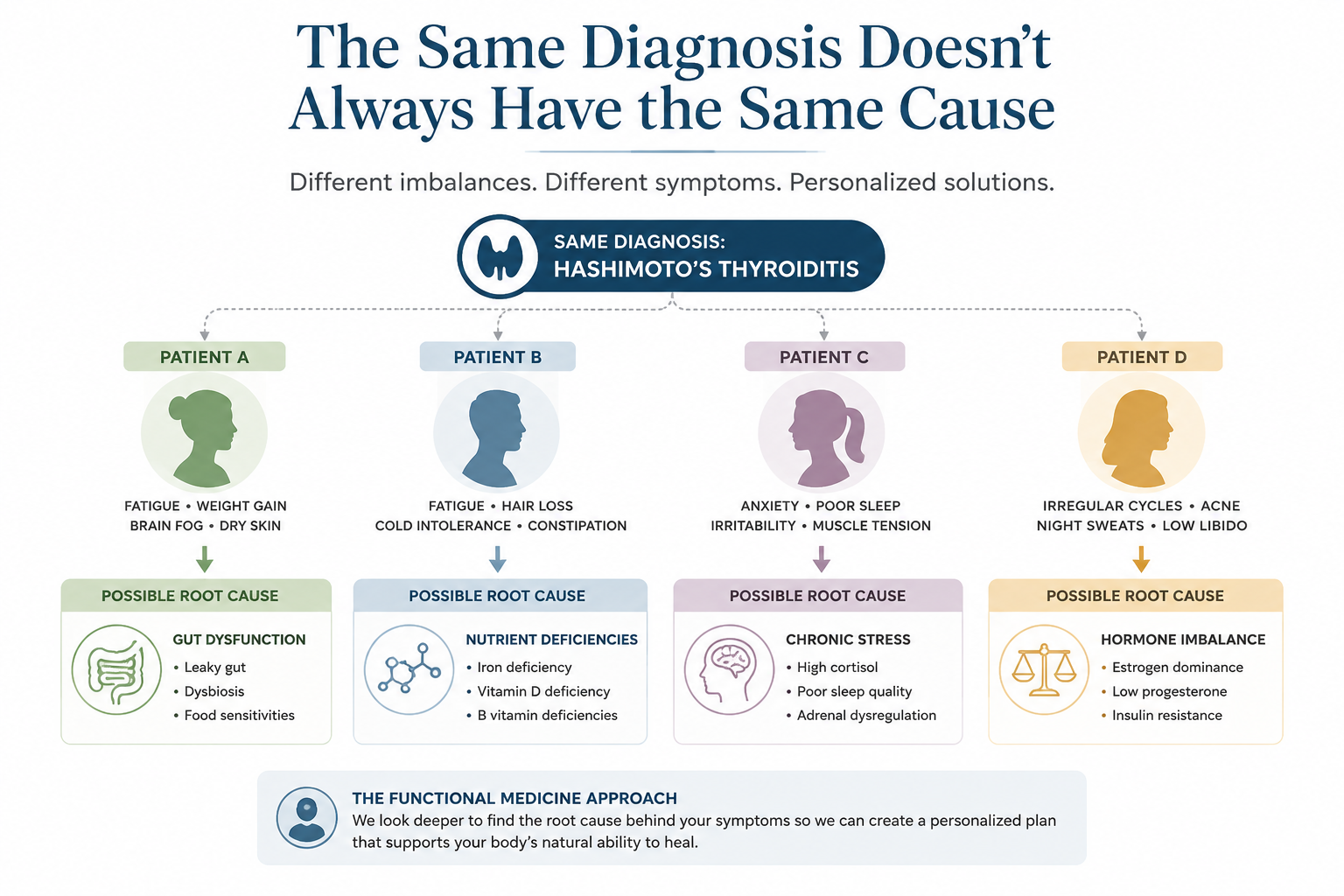
The same diagnosis doesn’t always have the same cause. Functional medicine looks beyond the diagnosis to identify the unique underlying factors contributing to each person’s health concerns.
Understanding those differences is why functional medicine emphasizes personalized evaluation rather than assuming everyone with the same diagnosis needs the same solution.
For example, someone struggling with thyroid symptoms may benefit from a more comprehensive evaluation than standard screening alone. Learn more on our Thyroid Testing page
Likewise, persistent digestive symptoms may require looking beyond an IBS diagnosis to identify underlying contributors. Explore our article on Why Gastroenterologists Miss the Root Cause of IBS .
If you’re wondering what the evaluation process actually looks like, our guide to Your First Functional Medicine Visit explains what you can expect during your initial consultation.
Why Asking Better Questions Changes Everything
One of the biggest differences between conventional medicine and functional medicine isn’t the treatments—it begins with the questions being asked.
Traditional medicine often starts with questions like:
- What diagnosis explains these symptoms?
- Which medication or procedure is most appropriate?
Those questions are essential and have transformed modern healthcare. Functional medicine doesn’t replace that approach—it builds upon it by asking additional questions that are especially valuable for people with chronic, complex, or recurring health problems.
Instead of stopping once a diagnosis has been made, functional medicine continues asking:
- Why did this problem develop?
- What body systems are no longer functioning optimally?
- What factors are preventing healing?
- What can be changed to restore better function?
That shift in perspective often uncovers contributing factors that may otherwise go unnoticed.
The Same Diagnosis Doesn’t Always Have the Same Story
Two people can receive exactly the same diagnosis while arriving there by very different paths.
One person’s symptoms may be influenced by chronic inflammation.
Another’s may be related to digestive dysfunction.
Someone else may have nutrient deficiencies, chronic stress, poor sleep, hormone imbalance, environmental exposures, or a combination of several factors.
The diagnosis may be the same.
The underlying causes—and the best strategy for improving health—may be completely different.
That’s why functional medicine emphasizes understanding your individual health story rather than assuming everyone with the same diagnosis should receive the same treatment.
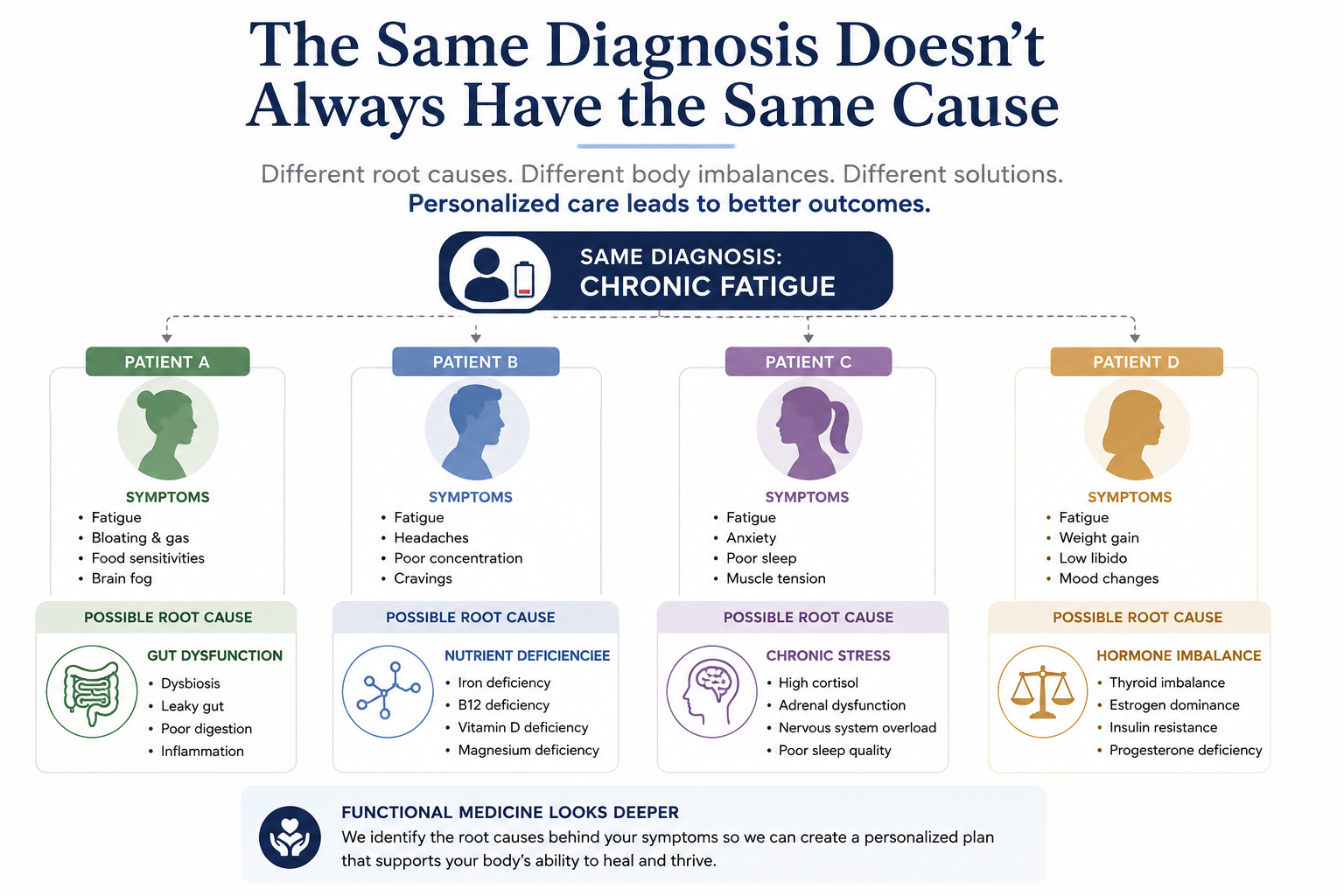
The same diagnosis doesn’t always have the same cause. Functional medicine looks beyond the diagnosis to identify the underlying imbalances contributing to each person’s health concerns.
Looking Beyond Individual Symptoms
Rather than viewing symptoms as isolated problems, functional medicine looks for patterns that connect different body systems.
For example:
- Digestive problems may contribute to inflammation and immune dysfunction.
- Chronic stress can affect hormone balance, sleep quality, and blood sugar regulation.
- Nutrient deficiencies may contribute to fatigue, brain fog, and poor recovery.
- Thyroid symptoms may be influenced by gut health, inflammation, or nutrient status.
These relationships don’t mean every symptom has the same cause. They illustrate why understanding the whole picture often leads to a more personalized plan.
If you’re new to this approach, our Functional Medicine page
explains the principles of root-cause, whole-person healthcare in greater detail.
If you’re struggling with thyroid symptoms, our Thyroid Testing guide
explains why looking beyond a single TSH test often provides a more complete picture.
If digestive symptoms are part of your health story, you may also find our article Gastroenterologist vs. Functional Medicine for IBS helpful:
Looking Beyond the Diagnosis
A diagnosis is an important part of healthcare—it gives a name to a condition and helps guide treatment. But a diagnosis doesn’t always explain why the condition developed in the first place.
Functional medicine recognizes that many chronic health conditions are influenced by multiple interacting factors rather than a single cause. Genetics may create susceptibility, but nutrition, gut health, hormones, chronic stress, sleep, inflammation, environmental exposures, infections, and lifestyle choices all influence how those genes are expressed.
That’s why two people with the same diagnosis can have very different health histories—and often respond differently to the same treatment.
Rather than assuming one solution fits everyone, functional medicine looks for the unique combination of factors affecting each individual.
The goal isn’t simply to manage symptoms.
The goal is to improve how the body functions.
Function Before Disease
Traditional medicine often focuses on identifying disease after measurable changes have occurred.
Functional medicine also pays attention to changes in function that may occur long before advanced disease develops.
For example, subtle changes in digestion, energy, sleep, hormone balance, blood sugar regulation, inflammation, or nutrient status may all contribute to symptoms—even when routine laboratory testing falls within the normal reference range.
Recognizing these patterns early creates opportunities to support better health before problems become more advanced.
Personalized Medicine Begins With Understanding Your Story
No laboratory test can tell your entire story.
Your health is shaped by your medical history, nutrition, sleep, stress, environmental exposures, relationships, activity level, and many other factors.
That’s why functional medicine spends time understanding you, not just your diagnosis.
The objective isn’t simply to collect more information.
It’s to understand which factors are most likely contributing to your current health concerns so a personalized plan can be developed.
Continue Learning
If you’d like to explore how these principles are applied in clinical practice, these resources provide a deeper understanding:
First Functional Medicine Visit
Frequently Asked Questions
1. What makes functional medicine different from conventional medicine?
Functional medicine looks beyond a diagnosis to identify the underlying factors contributing to illness. Rather than focusing only on symptom management, it evaluates nutrition, gut health, hormones, inflammation, lifestyle, genetics, and environmental influences to develop a personalized treatment strategy.
2. Does functional medicine replace my primary care doctor?
No. Functional medicine complements conventional medical care rather than replacing it. We encourage patients to continue working with their primary care physician and specialists when appropriate. Emergency care, surgery, and acute medical conditions remain important parts of modern healthcare.
3. Why do two people with the same diagnosis often receive different treatment recommendations?
The same diagnosis can develop for different reasons. One person’s symptoms may be driven by inflammation, another’s by hormone imbalance, digestive dysfunction, nutrient deficiencies, chronic stress, or other contributing factors. Functional medicine individualizes care based on the person’s unique health history and physiology.
4. Can functional medicine help if my lab tests are normal?
Yes. Many people continue to experience fatigue, digestive symptoms, brain fog, or other chronic health concerns despite routine laboratory tests falling within normal ranges. Functional medicine evaluates your overall health history, symptoms, lifestyle, and additional testing when appropriate to better understand potential contributing factors.
5. Why does functional medicine spend more time with patients?
Understanding chronic health problems often requires more than reviewing symptoms alone. A comprehensive evaluation allows us to explore your medical history, nutrition, stress, sleep, environmental exposures, medications, and lifestyle factors that may influence your health.
6. Does functional medicine use laboratory testing?
Yes. Functional medicine may use standard medical laboratory testing along with additional specialty testing when clinically appropriate. Testing is selected based on your health concerns rather than using the same approach for every patient.
7. Is functional medicine evidence-based?
Yes. Functional medicine incorporates current scientific research together with clinical experience and individualized patient care. Recommendations are based on the best available evidence while recognizing that every patient is unique and may require a personalized approach.
8. What types of health conditions can benefit from functional medicine?
Functional medicine is commonly used to evaluate chronic health concerns such as thyroid disorders, digestive problems, autoimmune conditions, hormone imbalances, chronic fatigue, inflammation, metabolic health, and other complex conditions where multiple body systems may be involved.
9. How is a functional medicine evaluation different from a typical office visit?
Rather than focusing on a single symptom or diagnosis, a functional medicine evaluation explores your complete health history, lifestyle, nutrition, stress, sleep, environmental exposures, and laboratory findings to better understand the factors influencing your health.
10. How do I know if functional medicine is right for me?
Functional medicine may be appropriate if you have ongoing symptoms, multiple chronic conditions, or simply want a more personalized approach to understanding your health. The goal is to identify opportunities to improve function, support long-term wellness, and help you take a more active role in your