
Contact Us
Tel: (757) 363-8571
Functional Medicine & Digestive Health
Digestive Problems Often Begin Long Before a Diagnosis
Digestive symptoms are among the most common reasons people seek functional medicine care. Whether you’re struggling with bloating, abdominal discomfort, constipation, diarrhea, acid reflux, food sensitivities, or simply never feel like your digestion is “quite right,” these symptoms may be your body’s way of signaling that something deeper deserves attention.
While conventional medicine often focuses on managing individual digestive conditions, functional medicine takes a broader view. Rather than asking, “What medication matches this diagnosis?” we begin by asking, “Why is your digestive system struggling in the first place?”
Your digestive tract is far more than a tube that processes food. It plays a central role in nutrient absorption, immune function, hormone balance, inflammation, and even brain health. When digestive function becomes disrupted, the effects can extend well beyond the gastrointestinal tract.
Our goal is to better understand why your digestive system may be out of balance and develop a personalized strategy that supports your health alongside appropriate medical care.
If you’re new to this approach, we recommend reading What Makes Functional Medicine Different before continuing.
What Makes Functional Medicine Different
Why Digestive Health Is So Important
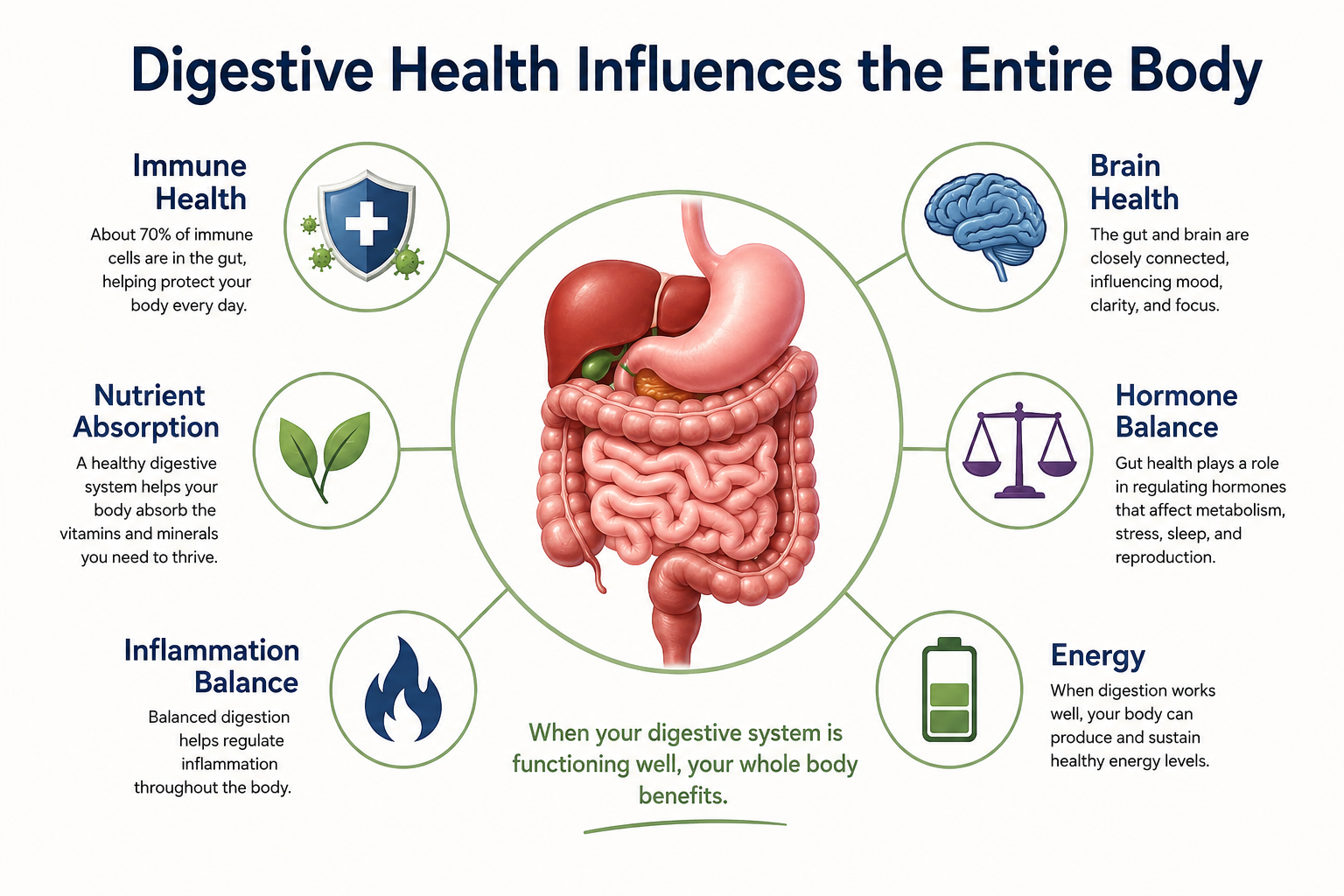
A healthy digestive system supports far more than digestion—it plays an important role in immune health, nutrient absorption, hormone balance, inflammation regulation, energy production, and overall wellness.
Your digestive system does much more than break down food. It is responsible for absorbing nutrients, supporting your immune system, helping regulate inflammation, producing important hormones and neurotransmitters, and serving as one of the body’s primary barriers against the outside world.
In fact, approximately 70% of the body’s immune cells are associated with the digestive tract, making gut health an important part of overall wellness. When digestion is functioning properly, your body is better able to extract nutrients, maintain a healthy balance of microorganisms, and support normal immune function.
When digestive function becomes impaired, however, the effects may extend far beyond the stomach or intestines. Some people experience bloating, abdominal discomfort, constipation, diarrhea, or acid reflux. Others notice fatigue, brain fog, skin problems, food sensitivities, or difficulty maintaining their overall health.
Rather than viewing these symptoms as isolated problems, functional medicine considers whether they may be connected through underlying digestive dysfunction. By understanding how the digestive system interacts with the rest of the body, we can begin asking more meaningful questions about what may be contributing to a person’s symptoms.
Digestive health is often one important piece of a much larger health picture, which is why improving digestive function can positively influence many other aspects of overall wellness.
Functional Medicine & Autoimmune Disease
Signs Your Digestive System May Be Out of Balance
Digestive problems don’t always begin with severe symptoms. Many people experience subtle changes for months or even years before seeking help. Some simply assume that occasional bloating, irregular bowel habits, or discomfort after eating are a normal part of getting older or living a busy life.
While these symptoms can have many different causes, persistent digestive complaints deserve attention, especially when they begin affecting your quality of life.
Some of the most common digestive symptoms include:
- Frequent bloating or excessive gas
- Acid reflux or heartburn
- Constipation or diarrhea
- Abdominal pain or cramping
- Food sensitivities or difficulty tolerating certain foods
- Feeling overly full after eating only a small meal
- Irregular bowel habits
- Nausea or indigestion
Digestive dysfunction may also contribute to symptoms that don’t initially seem related to the gastrointestinal tract. Fatigue, headaches, brain fog, skin problems, joint discomfort, and difficulty maintaining energy levels can sometimes accompany chronic digestive issues.
Experiencing one or more of these symptoms does not necessarily indicate a serious medical condition. However, recurring digestive problems are a signal that your body deserves a more comprehensive evaluation rather than simply masking symptoms.
One of the goals of functional medicine is to identify patterns that may help explain why symptoms are occurring so that care can be tailored to each individual’s unique situation.
Internal Links
Functional Medicine Autoimmune Support
Functional Medicine & Autoimmune Disease
How Functional Medicine Looks Beyond Symptoms
Traditional medical care often begins by identifying a diagnosis and selecting the most appropriate treatment for that condition. Functional medicine also values an accurate diagnosis, but it asks an additional question:
Why did this problem develop in the first place?
Rather than focusing on a single symptom, functional medicine looks at the digestive system as part of a much larger, interconnected network. Digestion influences nutrition, immune function, inflammation, hormone balance, metabolism, and even brain health. When one area becomes disrupted, it can affect many others.
Every patient has a unique health history. Previous antibiotic use, dietary habits, chronic stress, poor sleep, infections, medications, environmental exposures, and nutritional deficiencies may all influence digestive function. Instead of assuming every patient has the same underlying cause, we look for patterns that help explain why symptoms developed and what factors may be preventing the body from functioning at its best.
This personalized approach allows us to develop recommendations based on your history, symptoms, physical findings, and, when appropriate, laboratory testing. The goal is not simply to help you feel better temporarily, but to better understand the factors contributing to your digestive health concerns.
Functional medicine does not replace conventional medical care. Instead, it complements it by providing a broader evaluation that can help guide individualized lifestyle, nutritional, and wellness strategies alongside your medical treatment.
Internal Links
What Makes Functional Medicine Different
What to Expect During Your First Functional Medicine Visit
Dr. Scott Insight
In over two decades of practicing functional medicine, I’ve learned that two people can have very similar digestive symptoms for completely different reasons. One patient may benefit most from addressing dietary habits, while another may have an underlying imbalance involving stress, gut function, or nutritional status. That’s why taking the time to understand the whole person—not just the diagnosis—is such an important part of functional medicine.
Common Factors That Can Influence Digestive Health
Every person’s digestive health story is different. Two people may experience similar symptoms but have very different underlying factors contributing to those symptoms. Rather than assuming every patient has the same cause, functional medicine evaluates several key areas that commonly influence digestive health.
Digestive Function
Healthy digestion begins long before food reaches the intestines. Stomach acid, digestive enzymes, bile production, and normal intestinal movement all work together to break down food and absorb nutrients. When one or more of these processes is not functioning efficiently, digestive symptoms may develop.
The Gut Microbiome
Your digestive tract is home to trillions of microorganisms that help digest food, produce important nutrients, support immune function, and protect against harmful organisms. A healthy microbiome is an important part of overall digestive health. When that balance changes, digestive symptoms may occur.
Food Sensitivities
Some individuals notice that certain foods consistently seem to aggravate their digestive symptoms. While food allergies and food sensitivities are different conditions, identifying foods that may be contributing to symptoms can sometimes become an important part of a personalized care plan.
Intestinal Barrier Function
The lining of the digestive tract serves as an important barrier between the contents of the intestine and the rest of the body. Functional medicine considers intestinal barrier function as one of many factors that may influence digestive and immune health when evaluating the whole person.
Chronic Inflammation
Inflammation is a normal part of the body’s healing response, but when it becomes persistent it may influence many body systems, including the digestive tract. Understanding what may be contributing to chronic inflammation is often an important part of a comprehensive functional medicine evaluation.
Stress and Lifestyle
The digestive system and nervous system are closely connected. Chronic stress, poor sleep, lack of physical activity, and other lifestyle factors can influence normal digestive function. Supporting these areas is often an important part of improving overall digestive wellness.
Nutrition
Good nutrition is about much more than simply avoiding unhealthy foods. Functional medicine focuses on providing the body with the nutrients it needs to support healthy digestion while identifying dietary patterns that may be contributing to symptoms.
Rather than assuming one factor is responsible, we look at how these different areas interact to better understand your overall health picture and develop recommendations tailored to your individual needs.
Internal Links
Functional Medicine Autoimmune Support
Functional Medicine & Autoimmune Disease
How We Evaluate Digestive Health
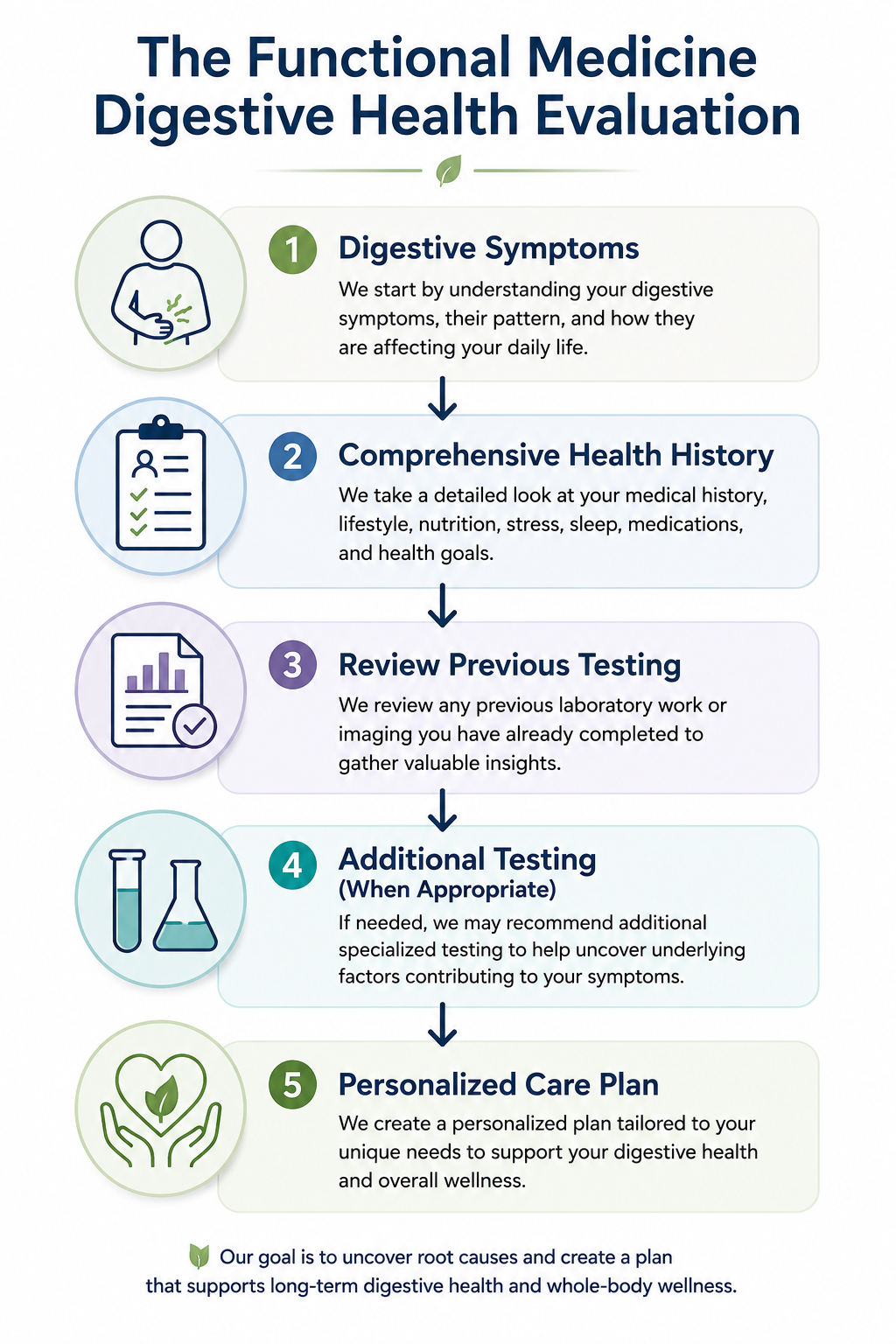
A functional medicine evaluation looks beyond digestive symptoms to understand your health history, review previous testing, identify contributing factors, and develop a personalized care plan.
No two patients have the same health history, which is why every functional medicine evaluation begins with listening.
During your consultation, we take time to understand not only your digestive symptoms but also your overall health history, previous medical evaluations, lifestyle, nutrition, stress, sleep, medications, and personal health goals. Looking at the whole picture often provides important clues that may not be apparent when focusing on digestive symptoms alone.
We also review any previous laboratory work you may already have. In many cases, valuable information has already been collected and can help guide the next steps. When additional testing is appropriate, recommendations are based on your individual history and clinical presentation rather than following a one-size-fits-all approach.
Depending on your situation, your evaluation may include discussion of:
- Your digestive symptom history and timeline
- Previous diagnoses and treatments
- Nutrition and dietary patterns
- Lifestyle factors such as sleep and stress
- Current medications and supplements
- Previous laboratory testing
- Whether additional testing may be appropriate
The purpose of this evaluation is not simply to collect information—it’s to better understand the factors that may be contributing to your digestive concerns so we can develop a personalized plan that supports your health goals.
Every recommendation is individualized. Some patients require only simple lifestyle and nutritional changes, while others may benefit from a more comprehensive evaluation. Our goal is to create a practical plan that is realistic, personalized, and based on your unique circumstances.
Internal Links
What to Expect During Your First Functional Medicine Visit
Taking the Next Step Toward Better Digestive Health
Digestive symptoms can have a significant impact on your daily life, but they don’t always tell the whole story. Whether you’ve been living with bloating, abdominal discomfort, food sensitivities, reflux, constipation, diarrhea, or simply don’t feel your digestive system is functioning the way it should, understanding the factors that may be contributing to those symptoms is an important first step.
Functional medicine recognizes that every patient is unique. Rather than applying the same approach to everyone, we take time to understand your health history, evaluate your individual circumstances, and develop recommendations tailored to your specific needs and goals.
If you’re looking for a more comprehensive approach to digestive health, we invite you to schedule a consultation. Together, we’ll review your health history, discuss your concerns, and determine the next steps that best support your overall health and wellness.
Ready to Learn More?
If you’re interested in discovering whether functional medicine may be the right approach for your digestive health concerns, we’d be happy to help.
Schedule your Functional Medicine Consultation
Call: 757-363-8571
or request an appointment through our website.
Continue Learning
What Makes Functional Medicine Different
What to Expect During Your First Functional Medicine Visit
Functional Medicine & Autoimmune Disease
Functional Medicine Autoimmune Support
About Dr. Scott
Dr. Scott has been helping patients improve their health through functional medicine and chiropractic care since 1997. His approach focuses on understanding the underlying factors that may be contributing to chronic health concerns rather than simply addressing symptoms.
By combining detailed health history, advanced laboratory evaluation when appropriate, nutrition, lifestyle strategies, and personalized care plans, Dr. Scott works with patients to support digestive health and overall wellness. His goal is to provide practical, individualized recommendations that help patients better understand their health and make informed decisions alongside their medical care.
Whether you’re experiencing digestive symptoms, autoimmune concerns, thyroid problems, fatigue, or other chronic health challenges, Dr. Scott believes every patient deserves a comprehensive evaluation and a personalized approach.
2. References
References
- Cleveland Clinic. Digestive Diseases. https://my.clevelandclinic.org
- National Institute of Diabetes and Digestive and Kidney Diseases (NIDDK). Digestive Diseases. https://www.niddk.nih.gov
- Harvard Health Publishing. The Gut Microbiome. https://www.health.harvard.edu
- National Center for Complementary and Integrative Health (NCCIH). Digestive Health. https://www.nccih.nih.gov
- Institute for Functional Medicine (IFM). Functional Medicine Clinical Resources. https://www.ifm.org
Frequently Asked Questions
What is functional medicine for digestive health?
Functional medicine for digestive health looks beyond symptoms to evaluate factors that may be contributing to digestive problems. This may include nutrition, digestive function, the gut microbiome, stress, sleep, medications, previous infections, lifestyle, and other aspects of your health history.
What digestive symptoms may benefit from a functional medicine evaluation?
Patients often seek a functional medicine evaluation for recurring bloating, gas, abdominal discomfort, constipation, diarrhea, acid reflux, indigestion, irregular bowel habits, food sensitivities, or difficulty tolerating certain foods.
Persistent, severe, or unexplained symptoms should also be evaluated by an appropriate medical professional.
How is functional medicine different from conventional digestive care?
Conventional care commonly focuses on diagnosing and treating a specific digestive condition. Functional medicine also values an accurate diagnosis, but it examines the broader health picture, including nutrition, lifestyle, stress, sleep, medications, previous infections, and other factors that may influence digestive function.
What happens during a functional medicine digestive health evaluation?
The evaluation includes a detailed discussion of your digestive symptoms, medical history, nutrition, lifestyle, stress, sleep, medications, supplements, previous diagnoses, and health goals.
We also review any relevant laboratory work or imaging you have already completed. Additional testing may be considered when appropriate.
Will I need additional laboratory testing?
Not every patient needs additional testing. Recommendations depend on your symptoms, health history, previous test results, and overall clinical picture.
Existing laboratory work is reviewed before deciding whether further testing may be useful.
Can stress affect digestive health?
Yes. The digestive system and nervous system are closely connected. Ongoing stress can influence intestinal movement, digestive secretions, appetite, food choices, sleep, and the way digestive symptoms are experienced.
Can digestive problems affect other parts of the body?
Digestive health is connected with nutrient absorption, immune function, inflammation, metabolism, hormone regulation, and brain health.
Some people with digestive concerns also report fatigue, brain fog, skin changes, headaches, or other symptoms, although these symptoms can have many possible causes.
Does functional medicine replace care from my gastroenterologist or primary-care doctor?
No. Functional medicine is intended to complement appropriate conventional medical care, not replace it.
Patients should continue working with their gastroenterologist, primary-care doctor, or other medical professionals as needed.
Can I bring previous test results to my appointment?
Yes. Patients are encouraged to bring relevant laboratory results, imaging reports, medication and supplement lists, and records from previous digestive evaluations.
Reviewing existing information may help guide the evaluation and avoid unnecessary duplication.
How do I schedule a functional medicine digestive health consultation?
You can contact Total Health Center at 757-363-8571 or submit a consultation request through the website.
During the initial consultation, we can review your concerns, health history, previous testing, and possible next steps.