
Oil Pulling: An Ancient Ayurvedic Practice for Oral and Whole-Body Health
For thousands of years, traditional Ayurvedic medicine has emphasized the importance of oral health as a foundation for overall wellness. One of the most well-known practices is oil pulling, a simple technique that involves swishing oil in the mouth for several minutes before spitting it out.
Long before scientists began studying the oral microbiome, Ayurvedic practitioners believed that maintaining a healthy mouth could support the health of the entire body. Today, modern research is increasingly revealing connections between oral health and cardiovascular health, metabolic health, brain function, immune balance, and digestive wellness.
While oil pulling should not be considered a replacement for brushing, flossing, or professional dental care, it may be a valuable addition to a comprehensive wellness routine.
What Is Oil Pulling?
Oil pulling is an ancient Ayurvedic practice known as Kavala or Gandusha. Traditionally, sesame oil was used, although many people now use coconut oil or sunflower oil.
The process is simple:
- Place one tablespoon of oil in your mouth.
- Swish gently for 10-20 minutes.
- Spit the oil into the trash (not the sink).
- Rinse your mouth with water or salt water.
- Brush and floss as usual.
Many people report cleaner-feeling teeth, fresher breath, and healthier gums after incorporating oil pulling into their daily routine.
The Mouth: The Forgotten Microbiome
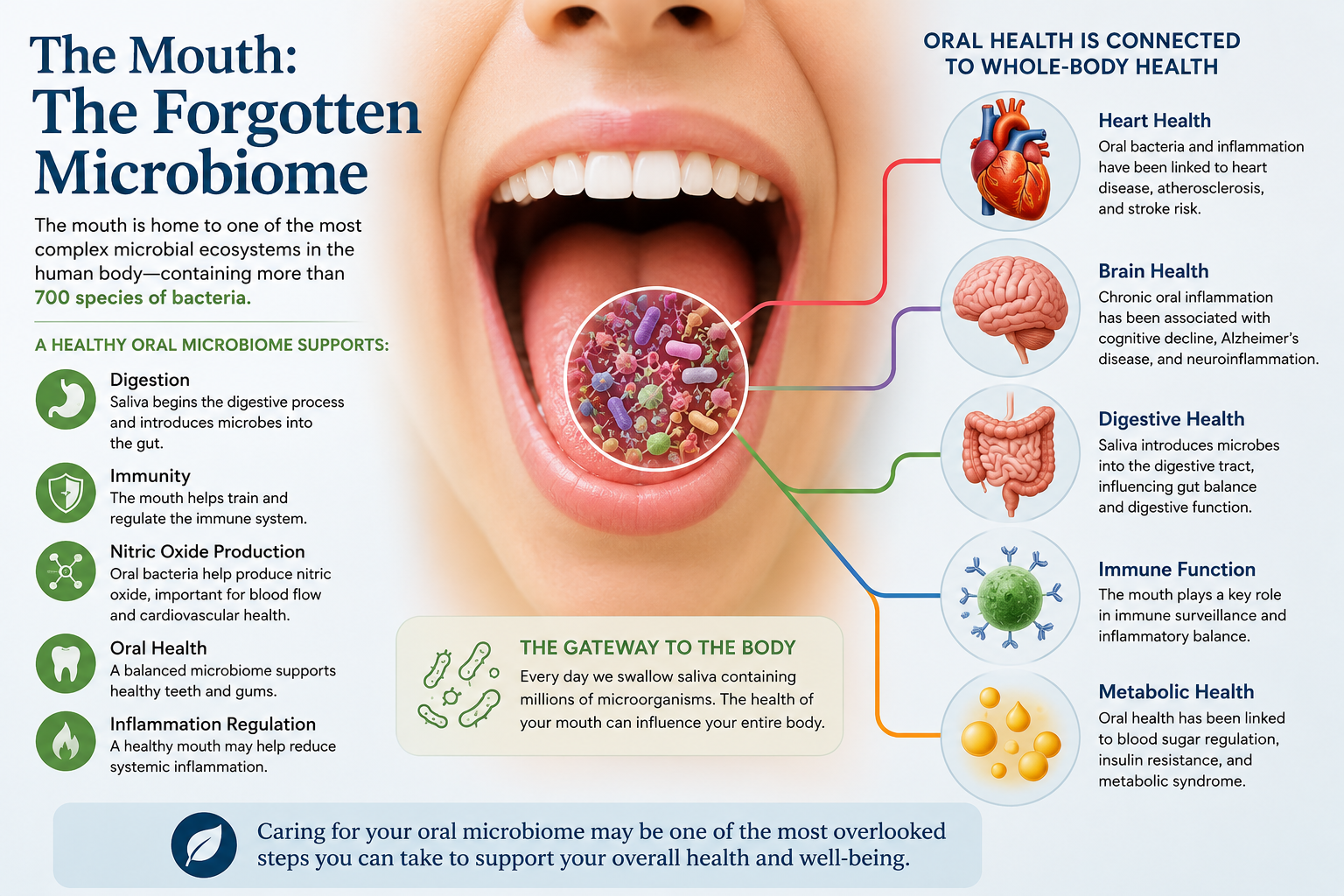
The oral microbiome contains hundreds of species of bacteria and may influence cardiovascular health, brain function, digestion, immunity, and inflammation throughout the body.
Most people have heard of the gut microbiome, but few realize that the mouth contains one of the most complex microbial ecosystems in the human body.
Scientists have identified more than 700 species of bacteria living in the oral cavity. These microorganisms play an important role in:
- Digestion
- Immune function
- Nitric oxide production
- Oral health
- Inflammation regulation
Just as we discuss in our article on Leaky Gut Syndrome (https://totalhealthcentervb.com/leaky-gut-syndrome/), the health of our microbial ecosystems can influence many aspects of overall wellness.
The mouth serves as the gateway to the digestive system. Every day we swallow saliva containing millions of microorganisms. Maintaining a healthy oral environment may be one of the most overlooked aspects of supporting whole-body health.
Ancient Wisdom and Modern Science: Why Both Matter
One of the limitations of modern medicine is that if something has not been extensively studied, it is often dismissed. Yet many traditional practices survived for hundreds or even thousands of years because people consistently observed benefits.
While observation is not the same as scientific proof, it can provide valuable clues about where research should look next.
Oil pulling is a perfect example. Ancient Ayurvedic practitioners believed oral health was connected to overall health long before scientists began studying the oral microbiome. Today, research increasingly shows that the health of the mouth may influence the heart, brain, metabolism, immune system, and digestive tract.
Modern science may not yet fully explain all of the benefits attributed to oil pulling, but it is beginning to validate the importance of oral health as a pillar of overall wellness.
Oral Health and Cardiovascular Health
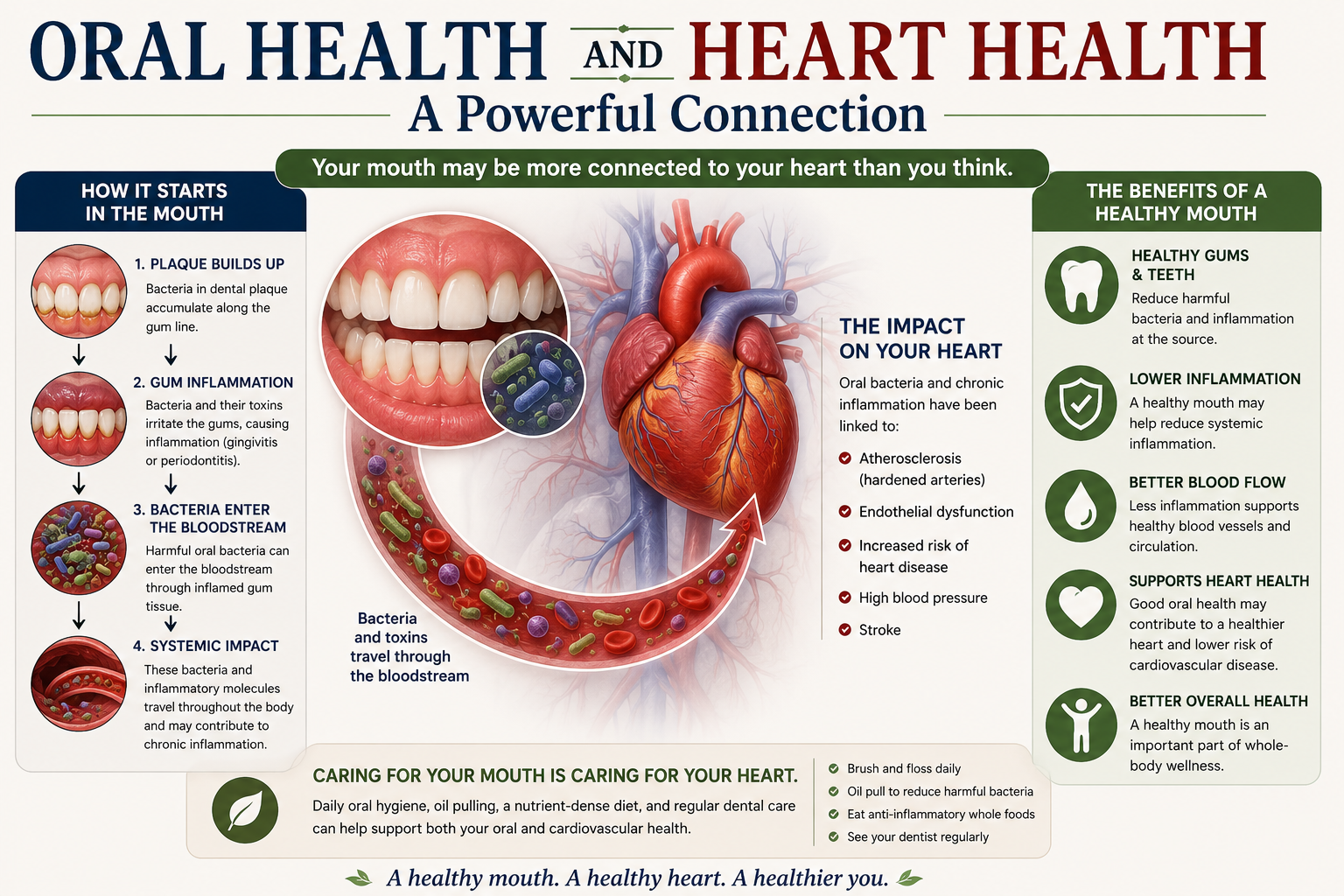
Research increasingly suggests that oral health and cardiovascular health are closely connected. Supporting healthy gums and a balanced oral microbiome may benefit overall wellness.
Research has found strong associations between periodontal disease and cardiovascular disease.
Scientists have identified links between poor oral health and:
- Coronary artery disease
- Atherosclerosis
- Stroke risk
- Elevated inflammatory markers
Some studies have even detected oral bacteria within arterial plaque.
This does not prove that oil pulling prevents heart disease. However, it does support the concept that maintaining a healthy oral environment may contribute to overall cardiovascular wellness.
Oral Health and Brain Health
Emerging research suggests a connection between chronic periodontal disease and cognitive decline.
Researchers have explored associations between oral inflammation and:
- Alzheimer’s disease
- Neuroinflammation
- Memory decline
- Cognitive impairment
While more research is needed, these findings reinforce the idea that oral health extends far beyond the mouth.
Oral Health and Digestive Wellness
As a functional medicine practitioner, I often focus on the gut microbiome when working with patients. However, the digestive tract begins in the mouth.
An unhealthy oral microbiome may influence:
- Digestive function
- Immune activity
- Microbial balance throughout the digestive tract
If you struggle with bloating or digestive symptoms, you may enjoy our article on SIBO and Bloating: The Hidden Cause Most People Miss:
https://totalhealthcentervb.com/sibo-and-bloating-the-hidden-cause-most-people-miss/
Maintaining oral health may be one piece of a comprehensive digestive wellness strategy.
Potential Benefits of Oil Pulling
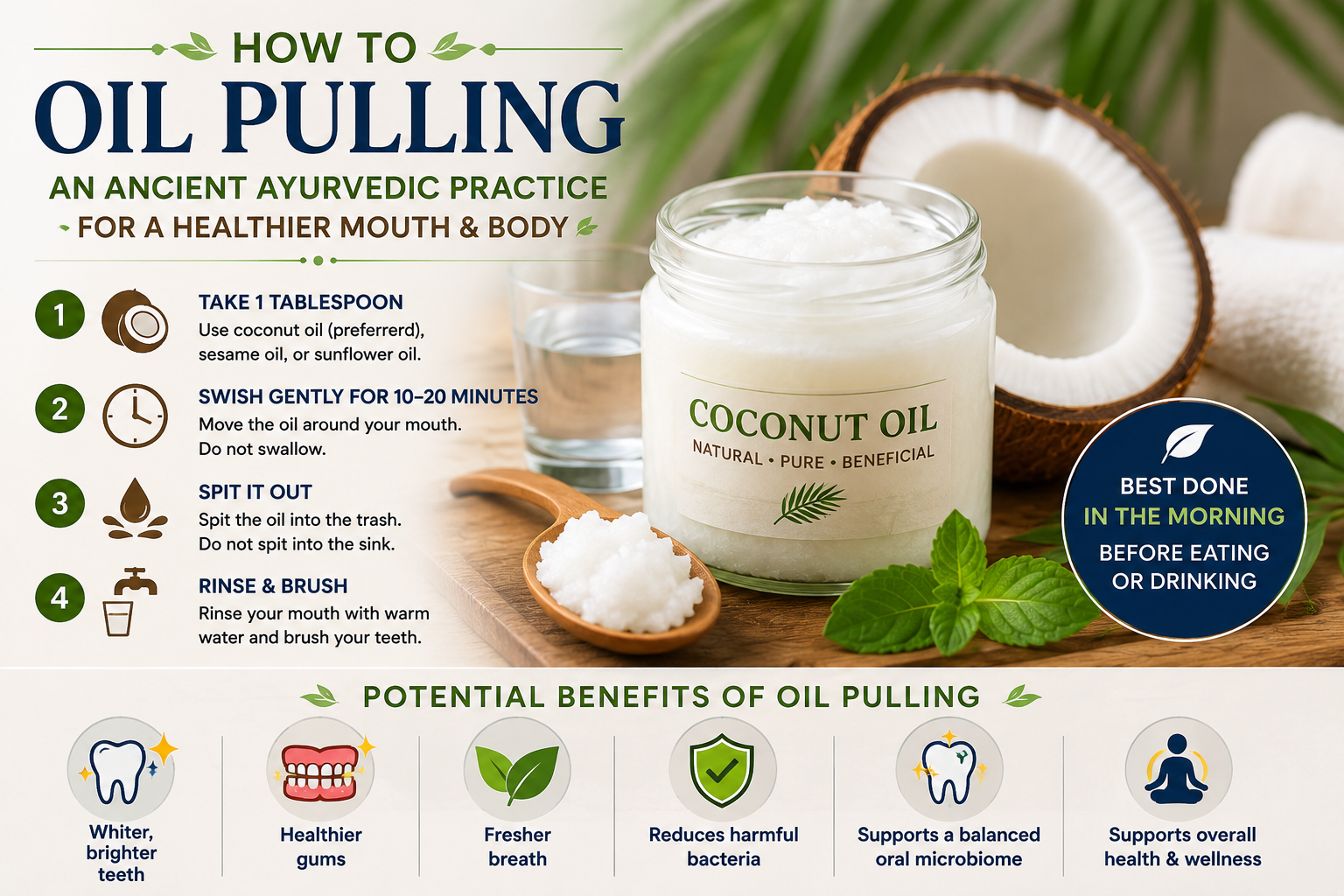
Oil pulling is an ancient Ayurvedic practice that may support oral health, fresher breath, healthier gums, and a balanced oral microbiome. Emerging research continues to explore its broader health benefits.
Traditional Ayurvedic Benefits
Ayurvedic practitioners have historically used oil pulling to support:
- Fresh breath
- Healthy gums
- Cleaner teeth
- Oral detoxification
- Digestive health
- Overall vitality
Benefits Supported by Modern Research
Research on oil pulling remains limited but promising. Studies suggest it may help:
- Reduce plaque accumulation
- Support gum health
- Reduce oral bacterial counts
- Improve bad breath
- Improve oral hygiene scores
While larger studies are needed, the existing research is encouraging.
Dr. Scott’s Personal Preference: Coconut Oil
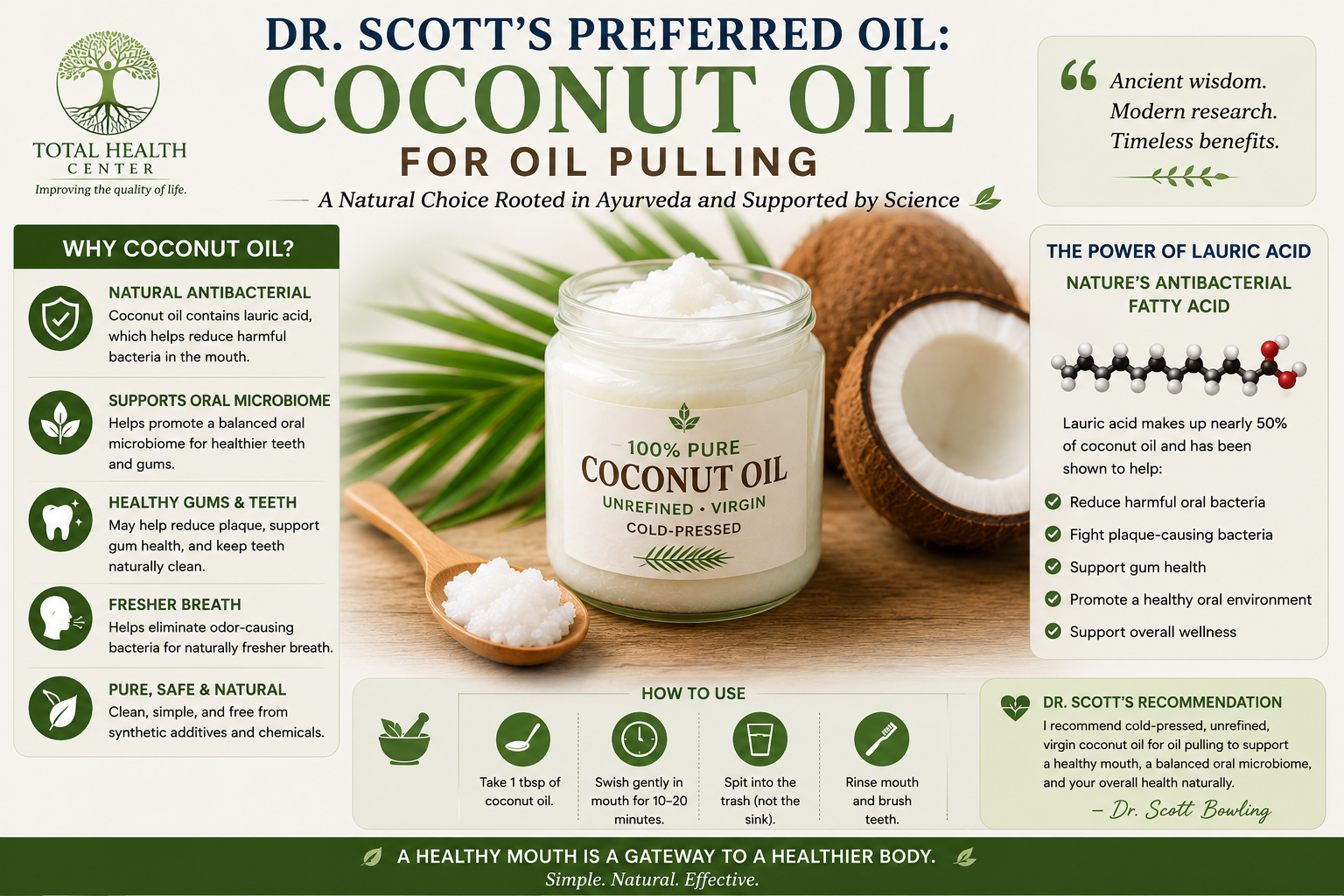
Dr. Scott prefers coconut oil for oil pulling because it contains lauric acid, a naturally occurring fatty acid that has demonstrated antimicrobial properties and may support a healthy oral microbiome.
Traditional Ayurvedic practitioners often used sesame oil. However, my personal preference is coconut oil.
Coconut oil contains lauric acid, a medium-chain fatty acid that has demonstrated antimicrobial properties in laboratory studies. Lauric acid can be converted into monolaurin, a compound that has been studied for its effects on certain bacteria, yeast, and viruses.
Although research directly comparing oils for oil pulling is limited, coconut oil offers several practical advantages:
- Pleasant taste
- Easy availability
- Rich source of lauric acid
- Popular among health-conscious individuals
In my experience, consistency is more important than choosing the “perfect” oil. The best oil for oil pulling is often the one you will use regularly.
Best Oils for Oil Pulling
Coconut Oil
My preferred choice because of its taste, convenience, and lauric acid content.
Sesame Oil
The traditional Ayurvedic choice used for centuries.
Sunflower Oil
Used in some of the original oil-pulling studies and often recommended in traditional protocols.
How to Perform Oil Pulling
- Perform oil pulling first thing in the morning on an empty stomach.
- Place one tablespoon of oil in your mouth.
- Swish gently for 10-20 minutes.
- Do not swallow the oil.
- Spit into the trash.
- Rinse with water or salt water.
- Brush and floss normally.
Oil pulling should complement—not replace—good oral hygiene habits.
Nutrition Matters Too
Healthy gums and teeth require more than brushing alone.
Nutrition plays a major role in supporting healthy tissues and controlling inflammation throughout the body.
Important nutrients include:
- Magnesium
- Vitamin D
- Vitamin K2
- Trace minerals
- Healthy fats
You may also enjoy these related articles:
The Importance of Magnesium
https://totalhealthcentervb.com/magnesium-benefits-energy-sleep-stress-heart-health/
Extra Virgin Olive Oil Benefits
https://totalhealthcentervb.com/extra-virgin-olive-oil-benefits/
These nutrients support not only oral health but also cardiovascular, metabolic, and overall wellness.
Final Thoughts
Oil pulling has been practiced for thousands of years as part of traditional Ayurvedic medicine. While modern research is still catching up, growing evidence linking oral health to cardiovascular health, brain health, metabolism, and digestive function suggests that ancient practitioners may have recognized an important connection long before modern science.
Oil pulling is inexpensive, easy to perform, and generally safe when used appropriately. While it should never replace brushing, flossing, or professional dental care, it may serve as a valuable addition to a comprehensive health and wellness routine.
At Total Health Center, we believe that both traditional wisdom and modern science have something valuable to teach us. When used thoughtfully, practices like oil pulling may offer a simple way to support oral health and overall well-being.
____________________________________________________________________________________________________________________________________
Frequently Asked Questions About Oil Pulling
What is oil pulling?
Oil pulling is a traditional Ayurvedic practice that involves swishing oil in the mouth for 10 to 20 minutes before spitting it out. It has been used for thousands of years to support oral hygiene and overall wellness.
What oil is best for oil pulling?
Traditional Ayurvedic medicine typically uses sesame oil. However, many people prefer coconut oil because of its pleasant taste and natural lauric acid content. Sunflower oil is another commonly used option.
Does oil pulling whiten teeth?
Many people report brighter-looking teeth after consistent oil pulling. This may occur because oil pulling helps reduce plaque buildup and surface staining. However, it does not bleach teeth like conventional whitening products.
Can oil pulling replace brushing and flossing?
No. Oil pulling should be viewed as a complement to brushing, flossing, and regular dental care—not a replacement. Maintaining good oral hygiene remains essential for healthy teeth and gums.
How long should I oil pull?
Most traditional protocols recommend swishing for 10 to 20 minutes. The oil should be moved gently around the mouth without vigorous swishing.
Should I use oil pulling every day?
Many people perform oil pulling daily, especially first thing in the morning before eating or drinking. Consistency tends to produce the best results.
Does oil pulling help bad breath?
Research suggests oil pulling may reduce bacteria associated with bad breath and improve overall oral hygiene. Many users report fresher breath after incorporating it into their routine.
Can oil pulling improve gum health?
Several studies have shown that oil pulling may help reduce plaque and support healthier gums when used alongside proper dental care.
What does modern research say about oil pulling?
Research suggests oil pulling may help reduce plaque, gingivitis, oral bacteria, and bad breath. While more large-scale studies are needed, existing research supports several oral health benefits.
Why does Dr. Scott prefer coconut oil for oil pulling?
Dr. Scott prefers coconut oil because it contains lauric acid, a medium-chain fatty acid that has demonstrated antimicrobial properties in laboratory studies. Many people also find coconut oil more pleasant tasting and easier to use consistently.
Is there a connection between oral health and overall health?
Yes. Research increasingly shows that oral health is connected to cardiovascular health, metabolic health, brain health, immune function, and digestive wellness. Maintaining a healthy oral microbiome may be an important part of supporting whole-body health.
Can children do oil pulling?
Older children who can safely swish and spit without swallowing may be able to practice oil pulling under adult supervision. Smaller amounts of oil should be used, and parents should consult their healthcare provider or dentist if they have concerns.
____________________________________________________________________________________________________________________________________
References
- Peedikayil FC, et al. Effect of coconut oil in plaque-related gingivitis. Niger Med J. 2015.
- Jauhari D, et al. Oil pulling for maintaining oral hygiene. J Tradit Complement Med.
- Sanz M, et al. Periodontitis and cardiovascular diseases. Consensus Report.
- Kamer AR, et al. Inflammation and Alzheimer’s disease. J Alzheimers Dis.
- National Institute of Dental and Craniofacial Research. Oral Health and Systemic Health.
- World Health Organization. Oral Health Fact Sheets.