
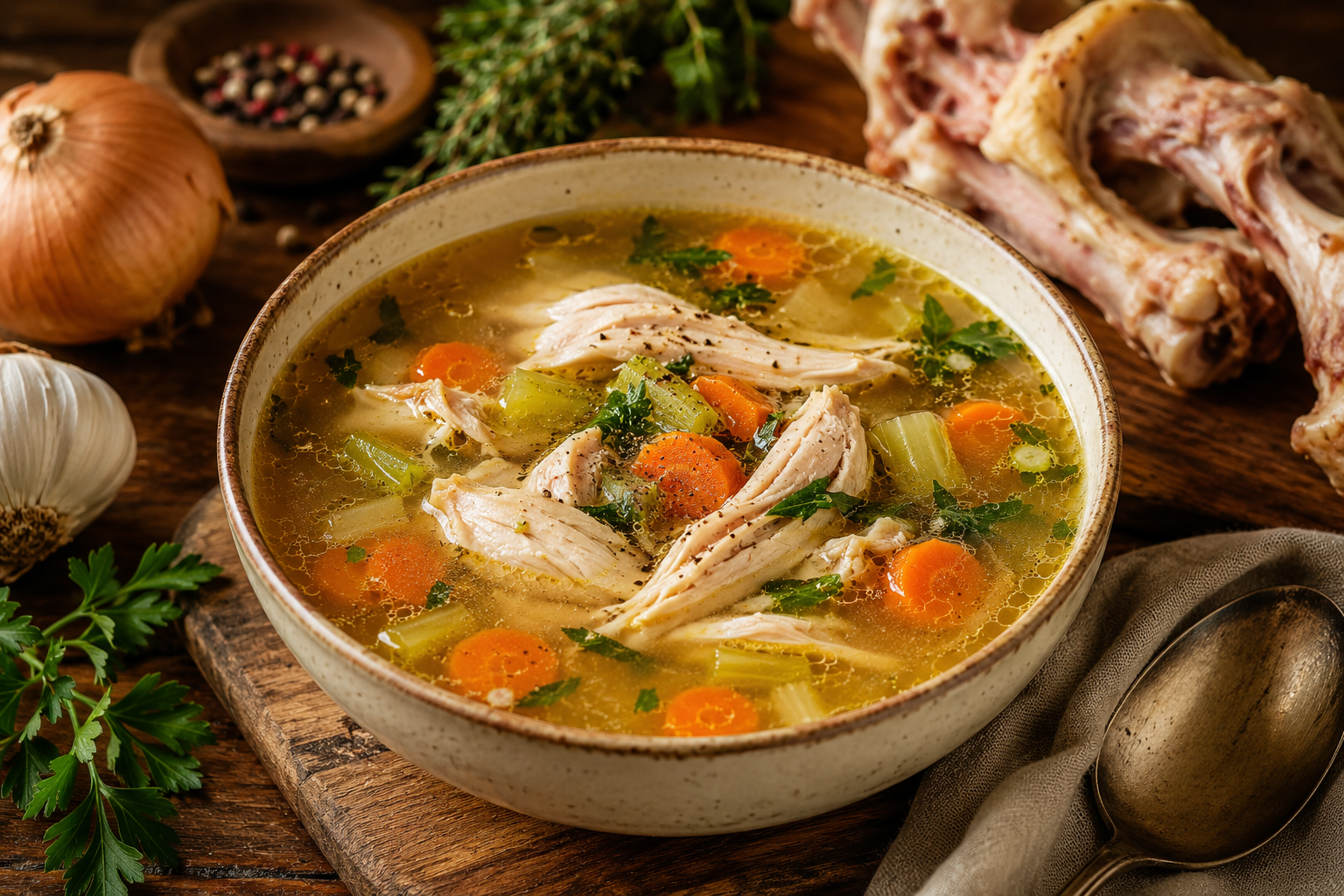
Bone Broth Chicken Soup: Nature’s Multivitamin in a Bowl
By Dr. Mark Scott, Functional Medicine Practitioner
Many people think of chicken soup as comfort food. While it certainly is comforting, traditional bone broth chicken soup may also be one of the most nutrient-dense foods you can eat.
For generations, cultures around the world simmered whole chickens, bones, cartilage, skin, and connective tissue for long periods of time to extract valuable nutrients that support gut health, joints, skin, immune function, and overall wellness.
Modern research is beginning to confirm what traditional cultures understood intuitively: slow-cooked bone broth contains unique compounds that may support health in ways that ordinary foods cannot.
Traditional Bone Broth Chicken Soup Recipe
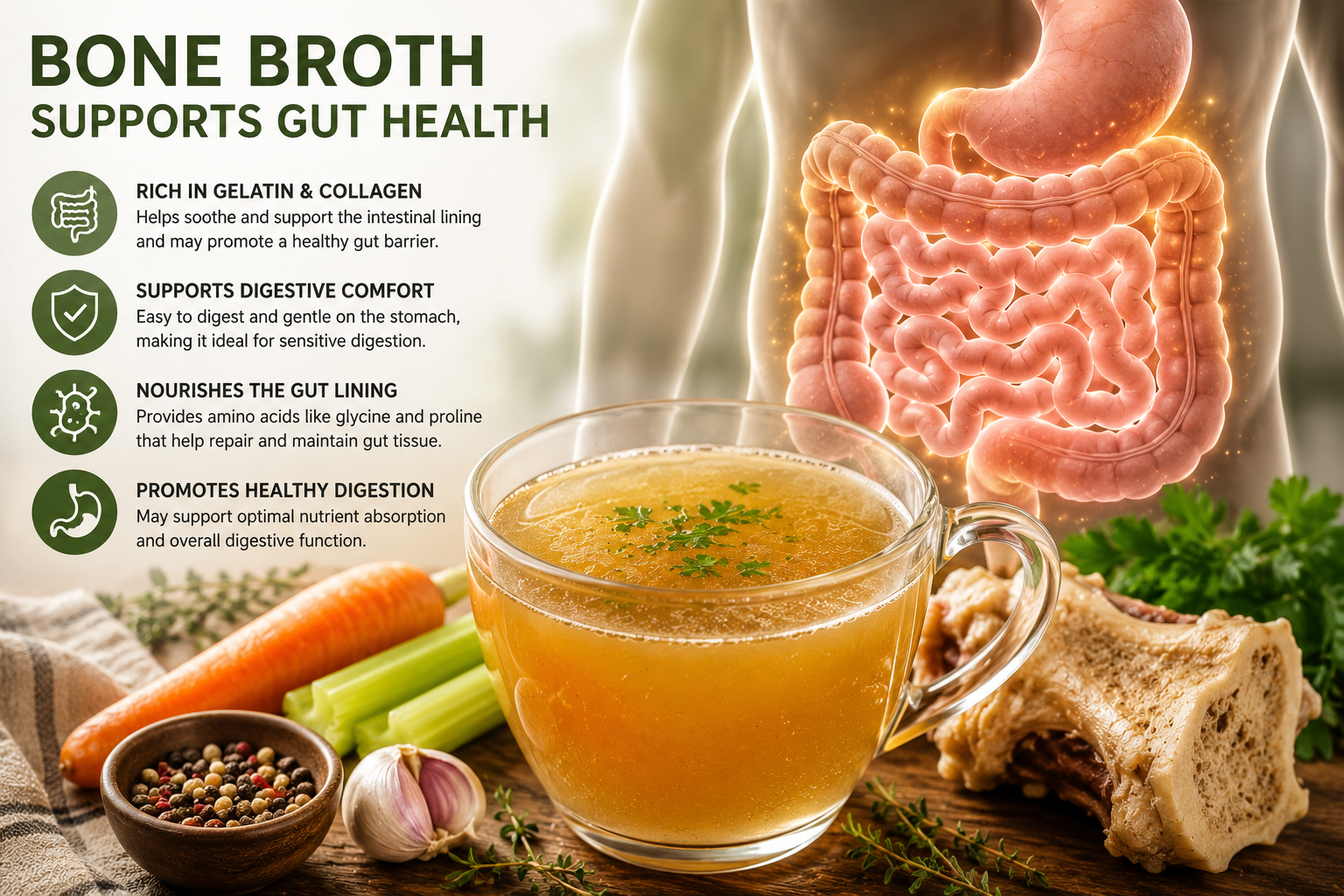
Bone broth contains collagen, gelatin, glycine, and other amino acids that may help support digestive health, gut lining integrity, and overall gastrointestinal wellness.
Ingredients
- 1 whole chicken
- ¼ cup apple cider vinegar
- Celtic Sea Salt or Himalayan Pink Salt (to taste)
- Italian seasoning (to taste)
- Water to cover
Optional Vegetables
- Carrots
- Celery
- Kale
- Collard greens
- Onions
- Garlic
- Parsley
Instructions
- Place the whole chicken into a large stock pot.
- Add vinegar and enough water to completely cover the chicken.
- Add salt and Italian seasoning.
- Bring to a gentle boil.
- Reduce heat and simmer for 24–48 hours.
- Turn heat off when sleeping or leaving home and resume simmering later.
- During the long cooking process, minerals, collagen, gelatin, amino acids, and nutrients are released from the bones and connective tissues.
- Remove large bones if desired.
- Add vegetables during the final few hours of cooking.
- Allow to cool before serving.
Don’t Remove the Fat
When refrigerated, a layer of fat will solidify on top.
Many people scrape this off, but traditional cultures prized this portion because it contains valuable fatty acids and fat-soluble nutrients that help support nutrient absorption.
Why Bone Broth Chicken Soup Is So Nutritious
Unlike standard chicken soup, bone broth soup extracts nutrients from:
- Bones
- Cartilage
- Skin
- Connective tissue
- Bone marrow
This creates a food rich in amino acids, collagen compounds, minerals, and other nutrients that are often missing from modern diets.
1. Bone Broth Provides Collagen Building Blocks
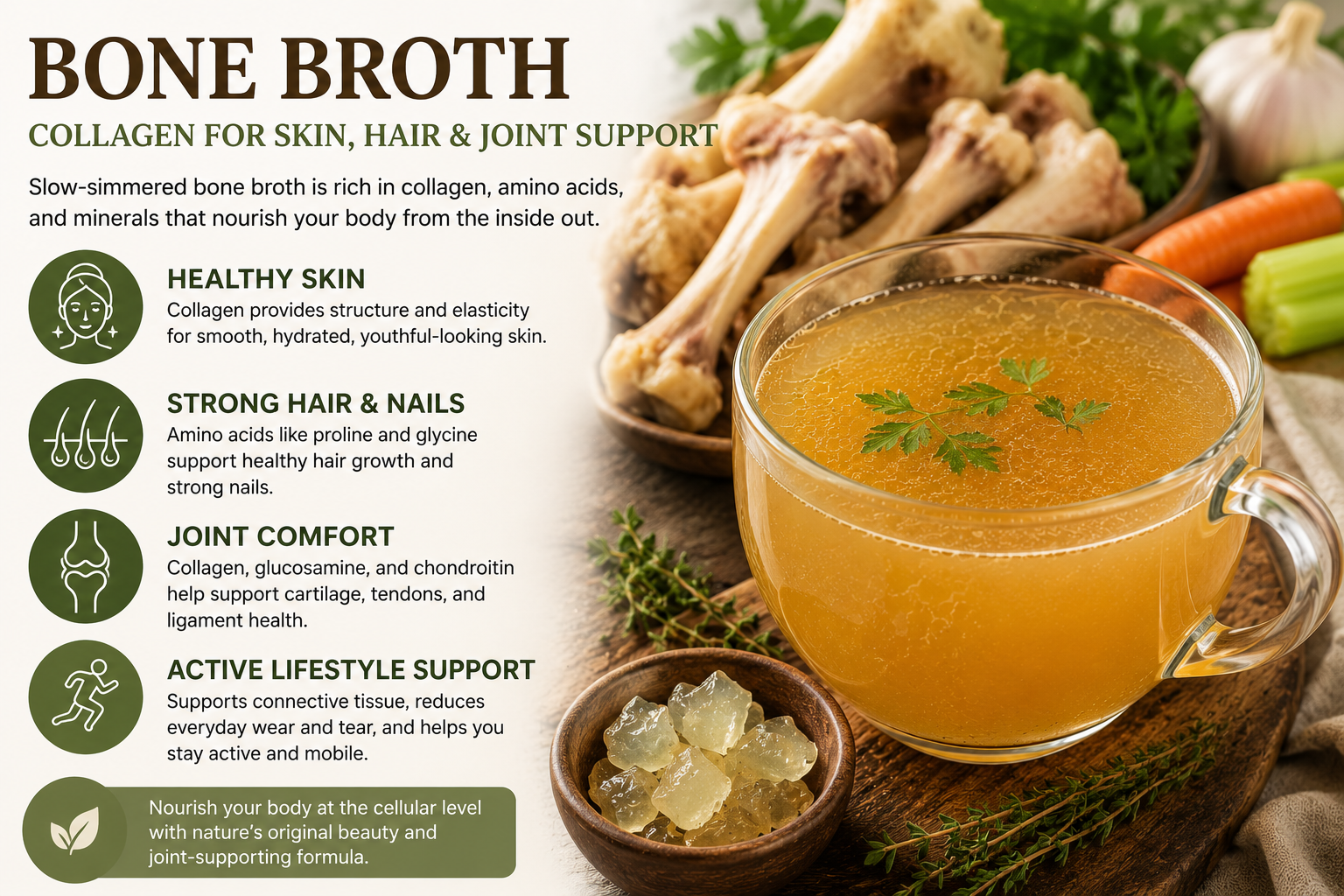
Bone broth provides collagen, glycine, proline, and connective tissue nutrients that help support healthy skin, hair, nails, joints, tendons, and ligaments.
Collagen is the most abundant protein in the human body.
It helps support:
- Skin elasticity
- Joint cartilage
- Tendons
- Ligaments
- Blood vessels
- Gut lining
As we age, collagen production naturally declines.
Bone broth contains collagen-derived compounds including:
- Glycine
- Proline
- Hydroxyproline
These amino acids help provide raw materials used throughout the body for tissue repair and maintenance.
Research suggests collagen supplementation may support skin hydration, elasticity, and joint comfort.
For more information on Collagen
2. Bone Broth Supports Gut Health
One of the most discussed benefits of bone broth is its potential role in supporting digestive health.
When collagen is cooked, it forms gelatin.
Gelatin may help:
- Support the intestinal lining
- Improve digestive comfort
- Support normal gut barrier function
- Promote healthy digestion
Many functional medicine practitioners use bone broth as part of comprehensive gut-healing programs because it is easy to digest and rich in supportive nutrients.
For those struggling with digestive symptoms, you may also enjoy our article:
Gut Health and Overall Wellness
3. Bone Broth Contains Glycine
Glycine is an amino acid found in high concentrations within collagen-rich foods.
Research has linked glycine to:
- Sleep support
- Healthy detoxification pathways
- Liver function
- Recovery and repair
- Healthy inflammation balance
Glycine is often one of the most under-consumed amino acids in the modern diet because most people eat muscle meats but rarely consume connective tissue or bones.
Bone broth helps restore this nutritional balance.
4. Bone Broth Supports Joint Health
Bone broth naturally contains compounds found in connective tissues including:
- Glucosamine
- Chondroitin sulfate
- Hyaluronic acid
These compounds are commonly sold as joint supplements.
Bone broth provides them in a whole-food form along with collagen and amino acids that support connective tissue throughout the body.
Many people notice improvements in joint comfort and mobility when consuming bone broth regularly.
5. Bone Broth Provides Highly Bioavailable Minerals
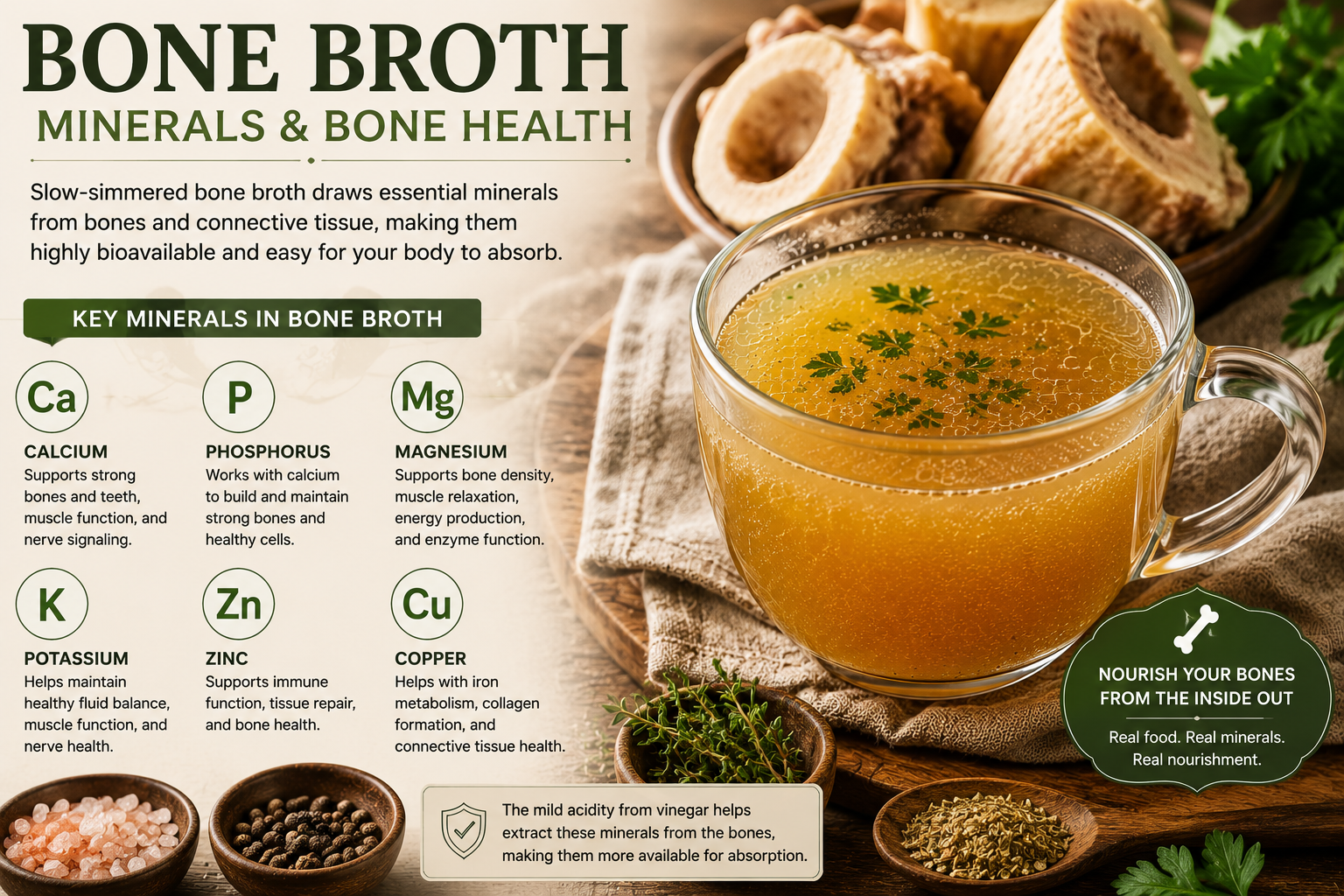
Slow-cooked bone broth provides minerals, collagen, and amino acids that help support strong bones, healthy teeth, connective tissue, and overall wellness.
Slow cooking bones in an acidic environment helps release minerals into the broth.
Bone broth may provide:
- Calcium
- Phosphorus
- Magnesium
- Potassium
- Trace minerals
These nutrients play important roles in:
- Bone health
- Muscle function
- Nerve function
- Energy production
The softened bones themselves can also become a rich source of minerals.
6. Chicken Soup May Support Immune Function
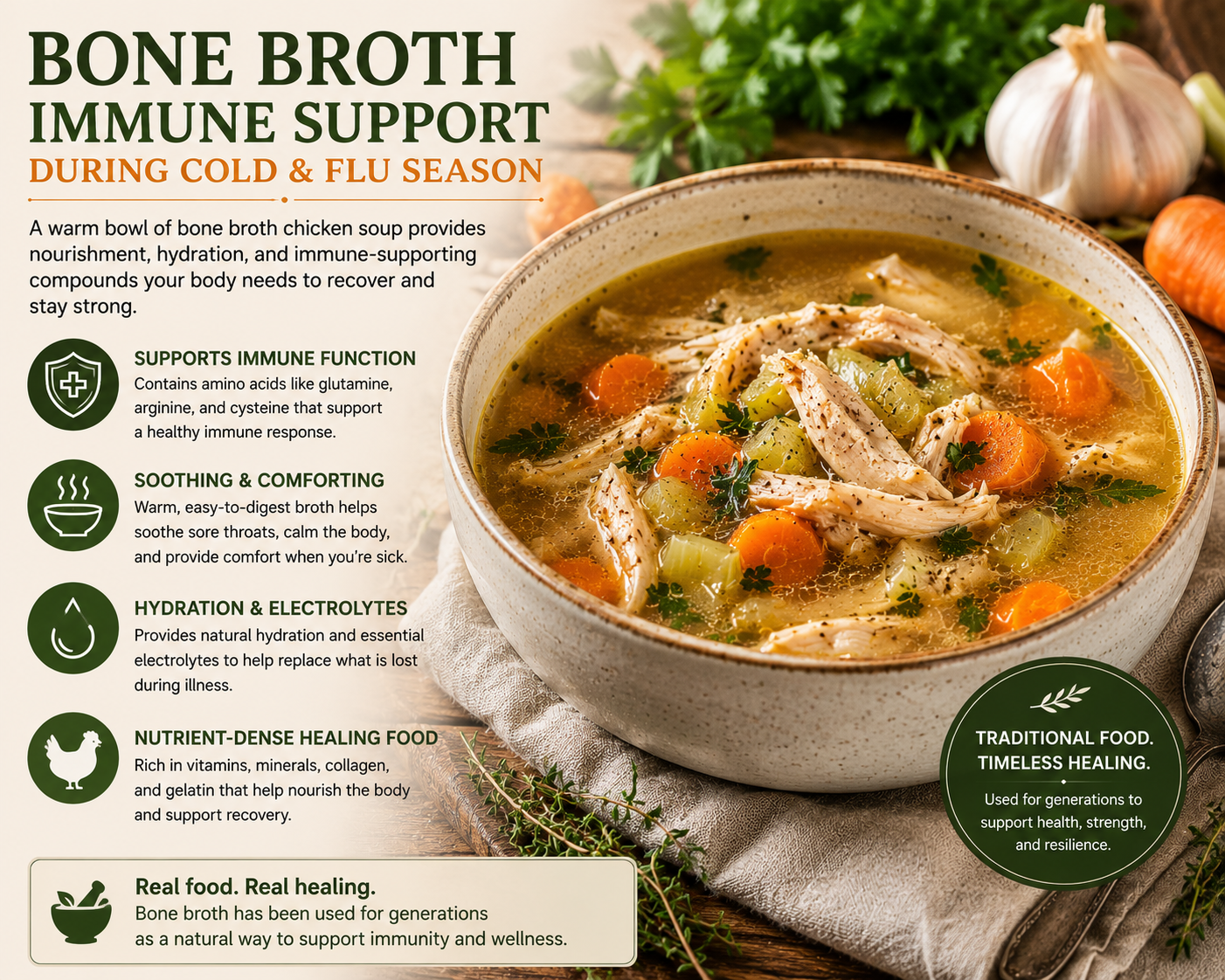
Traditional bone broth chicken soup provides hydration, amino acids, minerals, and nourishing nutrients that help support immune function and recovery during times of illness.
Chicken soup has been used during illness for centuries.
Interestingly, research has shown chicken soup may have mild anti-inflammatory effects and may help support respiratory health during upper respiratory infections.
In addition, the warm fluid helps:
- Maintain hydration
- Loosen mucus
- Provide easily digestible nutrition
- Support recovery
No wonder chicken soup earned its reputation as “grandma’s medicine.”
7. Bone Broth Is a Protein-Rich Functional Food
Many people focus on protein powders and supplements while overlooking traditional foods.
Bone broth provides:
- Protein
- Amino acids
- Minerals
- Healthy fats
all in a highly absorbable whole-food form.
This makes it an excellent addition to a nutrient-dense diet focused on long-term health.
Practical Tips
To maximize nutritional value:
✓ Use pasture-raised chicken when possible
✓ Include skin, bones, cartilage, and joints
✓ Add vinegar to help extract minerals
✓ Cook for 24–48 hours
✓ Keep the natural fat
✓ Add nutrient-dense vegetables
✓ Freeze extra portions for future meals
The Functional Medicine Perspective
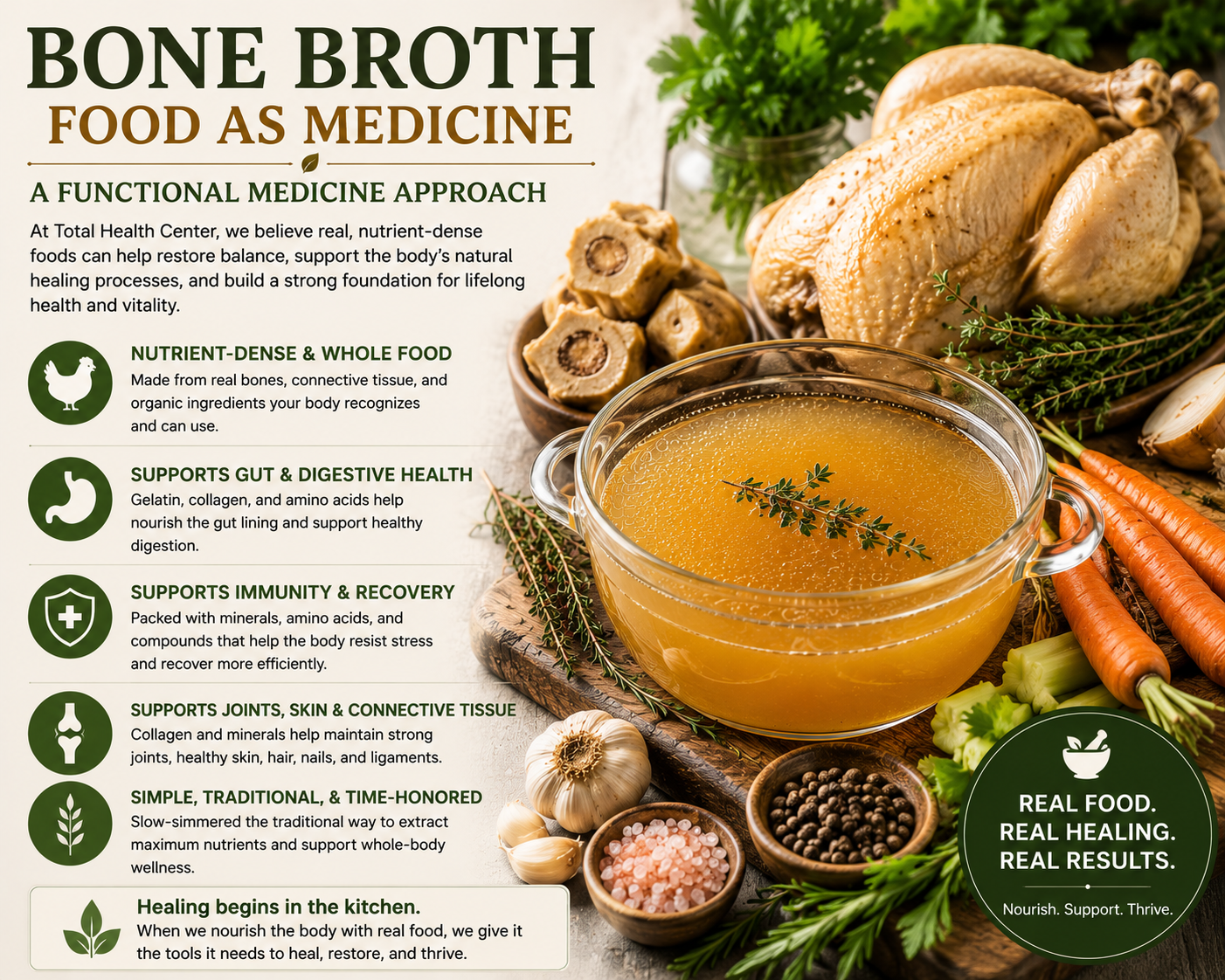
Functional medicine emphasizes nutrient-dense whole foods as a foundation for health. Bone broth provides collagen, amino acids, minerals, healthy fats, and traditional nourishment that supports the body’s natural healing processes.
One of the biggest problems in modern nutrition is that we often eat only isolated parts of the animal.
Traditional cultures consumed the entire animal—including bones, skin, connective tissue, and organ meats.
Bone broth helps restore many of these missing nutrients while providing a simple, inexpensive, and delicious meal.
At Total Health Center, we encourage patients to focus on nutrient density rather than calories alone. Bone broth chicken soup is one of the easiest ways to accomplish that goal.
Frequently Asked Questions
Is bone broth chicken soup good for gut health?
Bone broth contains gelatin, collagen-derived amino acids, and minerals that may help support digestive health and gut lining integrity.
How long should I cook bone broth?
For maximum nutrient extraction, most traditional recipes simmer bone broth for 24–48 hours.
Why add vinegar?
The mild acidity helps release minerals and collagen compounds from the bones and connective tissues.
Should I remove the fat?
Not necessarily. The fat contains valuable fatty acids and helps absorb fat-soluble nutrients.
Can I freeze bone broth?
Yes. Bone broth freezes extremely well and can be stored for several months.
Is bone broth a good source of protein?
Yes. Bone broth provides collagen protein and amino acids that support connective tissues, skin, joints, and overall health.
References
- Clark KL, et al. 24-Week study on collagen hydrolysate as a dietary supplement in athletes with activity-related joint pain. Current Medical Research and Opinion. 2008.
- Bello AE, Oesser S. Collagen hydrolysate for treatment of osteoarthritis and other joint disorders. Current Medical Research and Opinion. 2006.
- Zdzieblik D, et al. Collagen peptide supplementation improves body composition and muscle strength. British Journal of Nutrition. 2015.
- Yamadera W, et al. Glycine ingestion improves subjective sleep quality. Sleep and Biological Rhythms. 2007.
- Rennard BO, et al. Chicken soup inhibits neutrophil chemotaxis in vitro. Chest. 2000.
- Wu G. Functional amino acids in nutrition and health. Amino Acids. 2013.
- Oesser S, et al. Oral administration of collagen peptides and accumulation in cartilage. Journal of Nutrition. 1999.