

The Sunscreen Myth: Are You Really Protected From Sun Damage?
For decades, we’ve been told that sunscreen is one of the most important things we can do to protect our skin.
And while sunscreen certainly has a role, there’s a bigger conversation that many people never hear.
The truth is this:
Preventing a sunburn is not the same thing as preventing all sun damage.
Many people apply sunscreen, feel protected, and stay outside for hours longer than they otherwise would. The problem? That sense of security may be incomplete.
Because while some sunscreens help reduce UVB-related burning, prolonged sun exposure can still contribute to oxidative stress, premature skin aging, and deeper cellular damage—especially from UVA radiation.
At Total Health Center, we believe in looking beyond simple conventional narratives and asking better questions.
Is sunscreen enough?
Are all sunscreens equally safe?
And is there a smarter, more natural way to protect your skin?
Let’s take a closer look.
Understanding the Different Types of UV Radiation
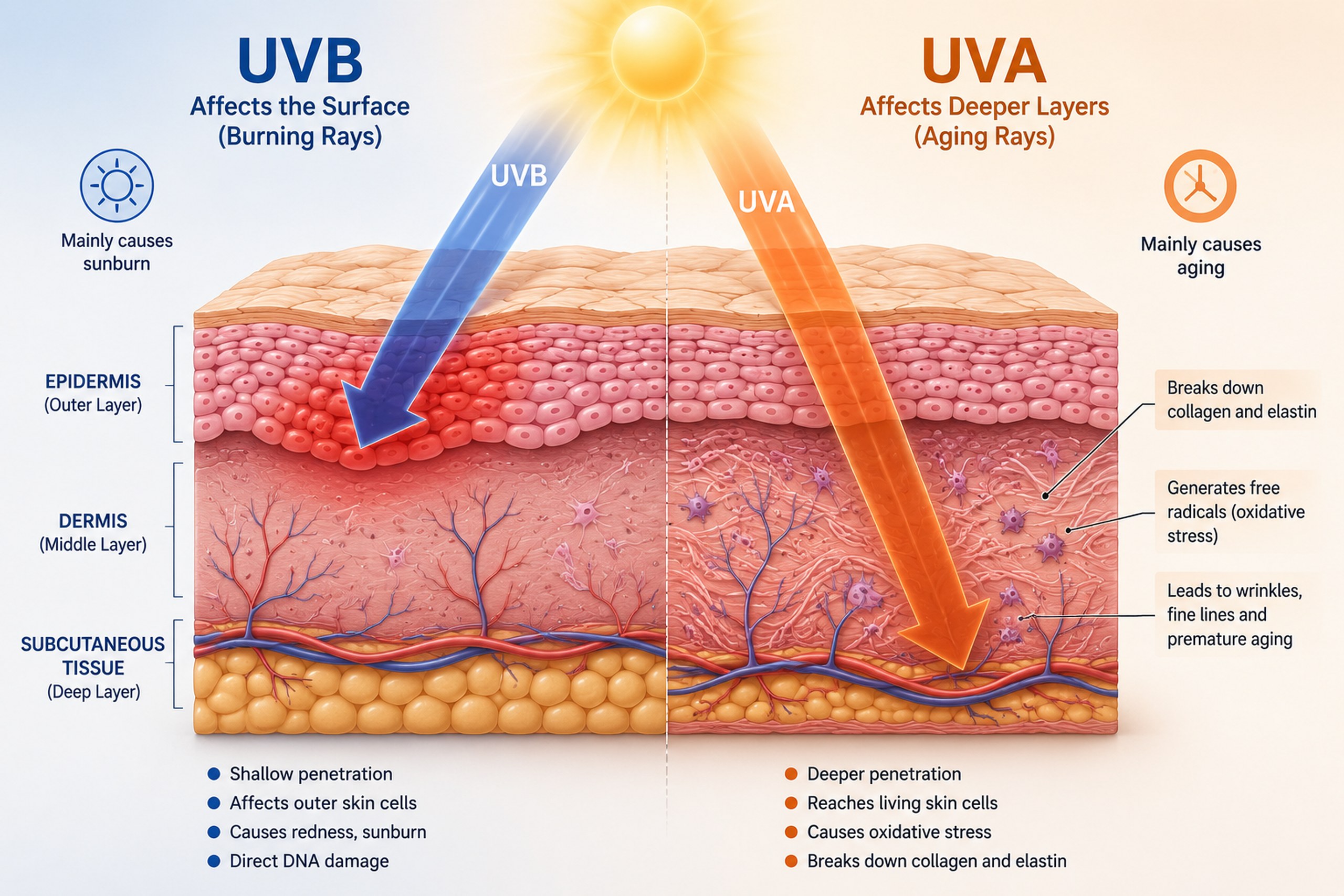 Not all ultraviolet radiation is the same.
UVB
UVB rays primarily affect the outer layers of the skin.
These are the rays most associated with:
- sunburn
- redness
- blistering
- direct DNA injury
This is what most people notice immediately after too much sun.
UVA
UVA rays penetrate deeper into the skin.
These are linked to:
- collagen breakdown
- wrinkles
- photoaging
- oxidative stress
- deeper cellular damage
- increased skin cancer risk
Unlike UVB, UVA damage often happens silently.
You may not burn.
But your skin may still be accumulating stress and damage.
UVC
UVC radiation is generally absorbed by the atmosphere and is not the typical concern with everyday outdoor sun exposure.
The Sunscreen False Security Problem
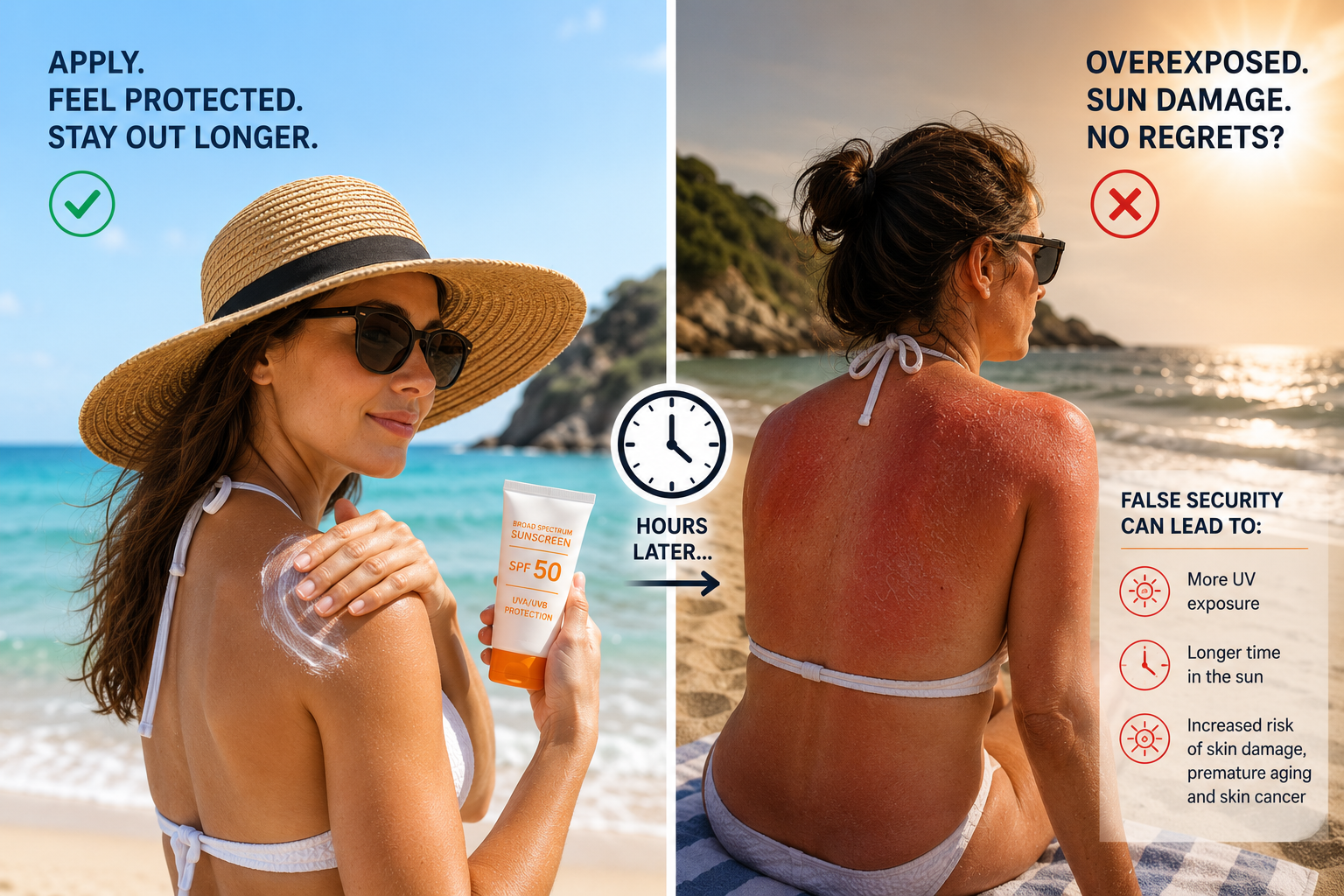
Feeling protected can sometimes lead to longer sun exposure—and greater cumulative UV damage.
One of the biggest issues with sunscreen may not be the sunscreen itself.
It may be human behavior.
When people apply sunscreen, many assume they are “safe.”
That belief often leads to:
- longer sun exposure
- skipped shade breaks
- less protective clothing
- more time outdoors during peak UV hours
This creates a dangerous mindset:
“I’m protected, so I can stay out longer.”
But sunscreen does not create invincibility.
Even broad-spectrum products are only as effective as:
- correct application
- proper quantity
- reapplication frequency
- water/sweat resistance
- actual ingredient quality
Most people dramatically under-apply sunscreen.
Studies suggest people often apply only 25–50% of the amount used in SPF testing.
That means your SPF 50 may function much closer to SPF 10–20 in real life.
And if you stay in the sun much longer because you feel protected?
Your total UV burden may actually increase.
The SPF Marketing Myth
SPF numbers can be misleading.
Many consumers assume:
Higher SPF = dramatically better protection.
But that’s not how SPF works.
Approximate UVB blocking:
- SPF 15 = 93%
- SPF 30 = 97%
- SPF 50 = 98%
Notice the difference?
Going from SPF 30 to SPF 50 gives only a small incremental increase in UVB filtering.
Yet the marketing makes it feel like massive protection.
This can reinforce the false security problem.
What About Chemical Sunscreens?
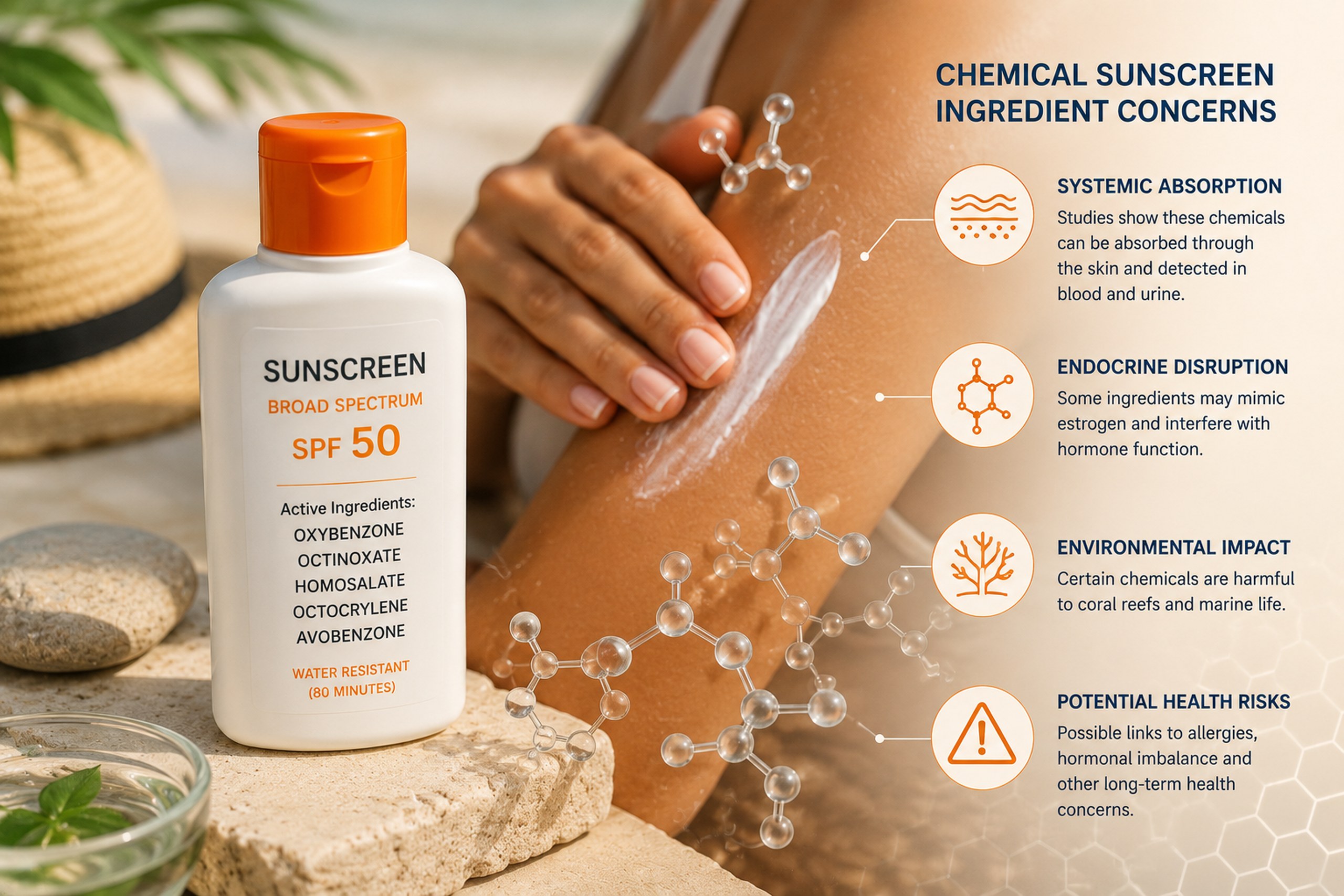 This is where the discussion becomes more controversial.
Many conventional sunscreens contain synthetic UV-filtering chemicals such as:
- oxybenzone
- octinoxate
- homosalate
- octocrylene
Concerns raised in research include:
Systemic absorption
Several FDA studies have shown measurable bloodstream absorption of sunscreen ingredients after routine application.
This doesn’t automatically mean harm.
But it does raise legitimate questions.
Functional medicine asks:
If compounds enter circulation repeatedly, what are the long-term biological implications?
Endocrine disruption concerns
Some sunscreen ingredients have shown hormone-disrupting potential in experimental settings.
This is especially relevant for:
- hormone-sensitive individuals
- children
- frequent users
Oxidative stress concerns
Some compounds may generate reactive oxygen species under UV exposure.
Oxidative stress contributes to:
- accelerated aging
- inflammation
- cellular damage
Environmental impact
Some chemical sunscreen ingredients have also been associated with marine ecosystem damage, particularly coral reef concerns.
Are Mineral Sunscreens Better?
Mineral sunscreens are generally considered a cleaner option.
Common active ingredients:
- zinc oxide
- titanium dioxide
Benefits:
- broad-spectrum coverage
- less systemic absorption concern
- often better tolerated by sensitive skin
Potential considerations:
- spray inhalation concerns
- nanoparticle formulation debates
- cosmetic residue / white cast
For many health-conscious patients, non-nano zinc-based sunscreen may be a more practical option when topical protection is needed.
A Functional Medicine Perspective on Smarter Sun Protection
At Total Health Center, we believe the answer is not simply:
“More sunscreen.”
A smarter strategy is layered protection.
1. Gradual Sun Adaptation
Sudden intense exposure is far different from gradual adaptation.
Skin can often tolerate sun exposure better when exposure increases gradually over time.
This doesn’t mean reckless tanning.
It means respecting biological adaptation.
2. Avoid Peak UV Hours
Midday exposure creates the highest UV burden.
Consider limiting prolonged exposure during peak hours when possible.
3. Physical Barriers Work
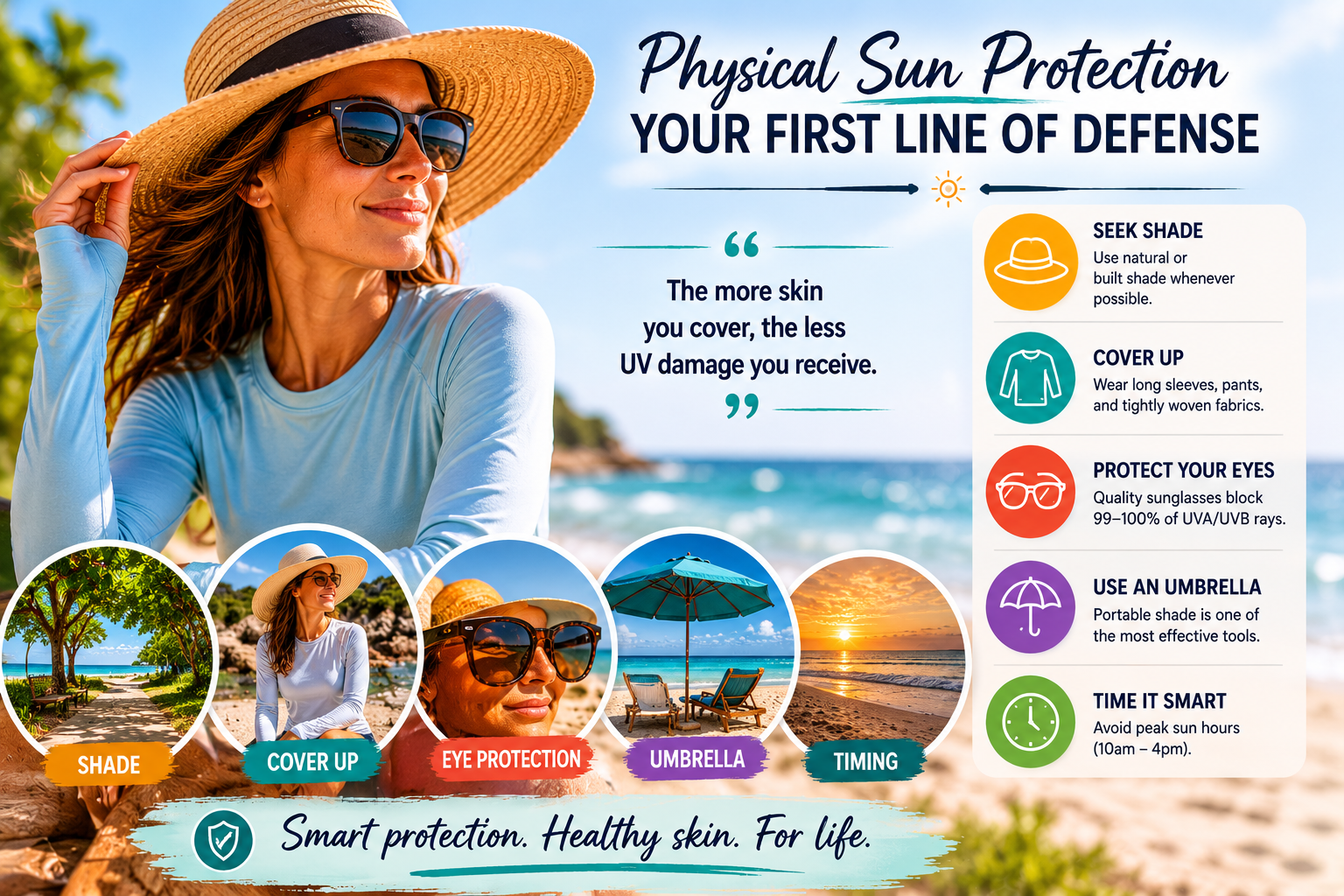
Physical barriers like shade, protective clothing, hats, and umbrellas remain some of the most effective forms of sun protection.
Sometimes the simplest solutions are the best.
Effective protection includes:
- wide-brim hats
- UPF clothing
- umbrellas
- shade structures
- lightweight protective layers
These reduce exposure without adding chemicals to the skin.
4. Support Skin From the Inside Out
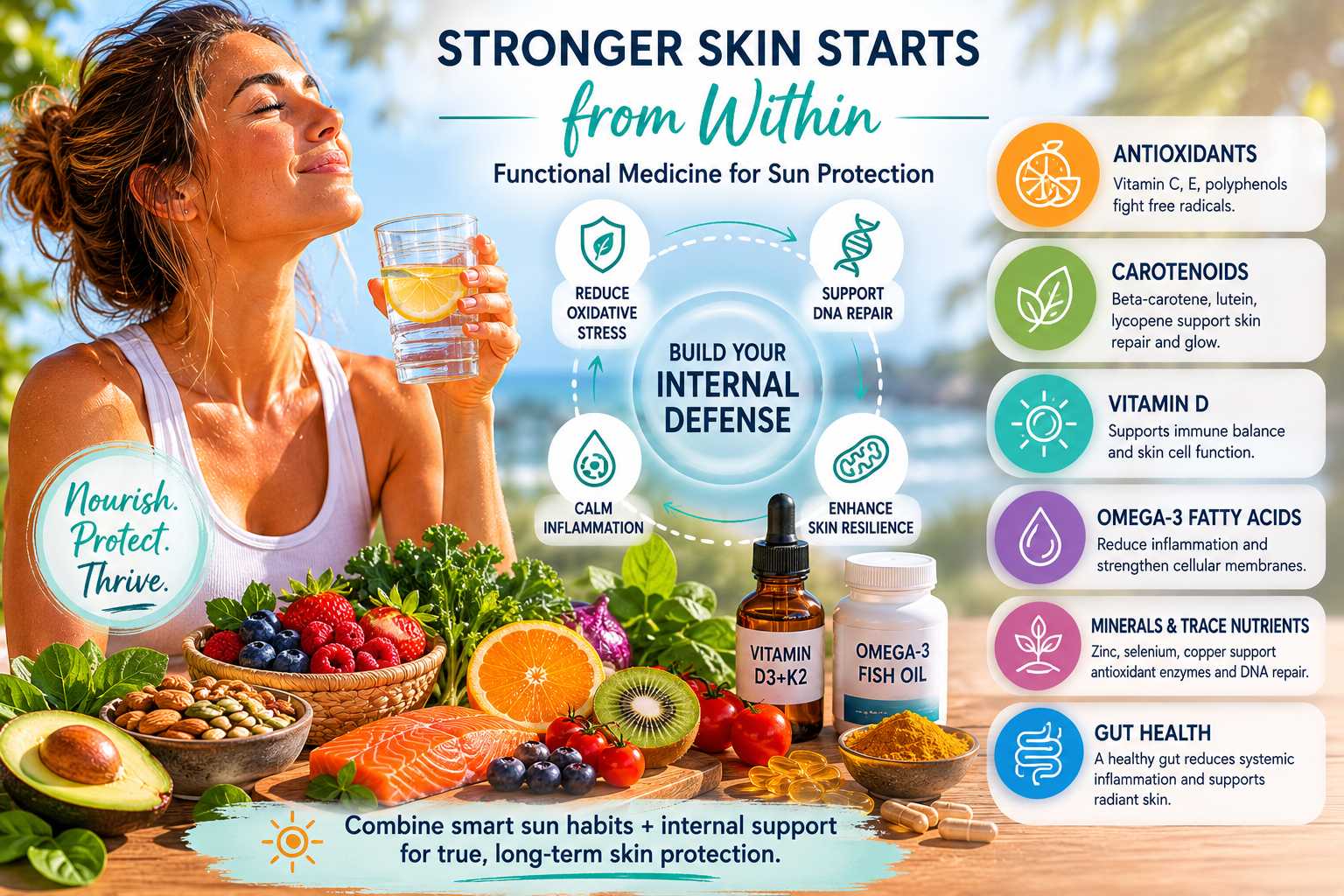
Healthy skin resilience starts from the inside out with smart nutrition, antioxidant support, and reduced oxidative stress.
Functional medicine focuses on resilience.
Emerging evidence suggests internal antioxidant support may help reduce oxidative skin stress.
Potential supportive nutrients:
Astaxanthin
A potent carotenoid studied for photoprotective effects.
Vitamin C
Supports collagen health and antioxidant defenses.
Polyphenols
Found in:
- berries
- green tea
- colorful produce
May help combat oxidative stress.
Omega Balance
A healthier inflammatory balance may support skin resilience.
Carotenoid-rich foods
Examples:
- carrots
- sweet potatoes
- leafy greens
What About Natural Oils?
Some natural medicine articles suggest oils such as:
- coconut oil
- olive oil
- sesame oil
- almond oil
may provide modest UV filtering effects in laboratory testing
But an important reality check:
Laboratory UV measurements do not equal reliable real-world sunscreen protection.
Variables include:
- application thickness
- sweating
- water exposure
- uneven coverage
- sunlight intensity
Natural oils may support:
- skin barrier health
- moisture retention
- antioxidant support
But they should not be viewed as a direct substitute for tested sun protection in high-risk exposure settings.
Sunlight Isn’t the Enemy
This conversation should not become “fear the sun.”
Sunlight has real biological benefits.
Healthy sun exposure can support:
- vitamin D production
- circadian rhythm regulation
- mood balance
- nitric oxide signaling
- metabolic health
The key is intelligent exposure—not overexposure.
The Bottom Line
The sunscreen conversation is more nuanced than most people realize.
Yes, sunscreen can help reduce sunburn risk.
But:
- sunscreen is not a free pass for unlimited exposure
- not all products are equally clean
- UVA damage still matters
- physical protection remains incredibly effective
- internal antioxidant support may help build resilience
The goal isn’t fear.
The goal is smarter choices.
Ready for a More Personalized Functional Medicine Approach?
At Total Health Center, we help patients address health from the inside out—including inflammation, oxidative stress, hormone balance, skin health, and healthy aging.
If you’re looking for a more natural, personalized approach to better health, we’d love to help.
Schedule your consultation today. (757)363-8571
FAQ
Is sunscreen bad for you?
Not necessarily. Some sunscreens can reduce sunburn risk, but ingredient quality matters and sunscreen should not create a false sense of unlimited protection.
Is mineral sunscreen safer than chemical sunscreen?
Many experts consider mineral sunscreens, especially non-nano zinc formulations, a cleaner option for sensitive individuals.
Do natural oils work like sunscreen?
Some oils show limited UV filtering in lab testing, but they are not equivalent to properly tested commercial sun protection.
Does sunscreen block vitamin D?
It may reduce vitamin D production under ideal application conditions, though real-world use often involves incomplete coverage.
REFERENCES
(We’ll use stronger evidence than the source inspiration article )
Suggested references:
- FDA sunscreen absorption studies
- JAMA sunscreen systemic absorption papers
- American Academy of Dermatology UVA/UVB resources
- Photodermatology antioxidant studies
- coral reef sunscreen environmental research