

For decades, we’ve been told a simple nutrition story:
Butter is bad.
Animal fat clogs arteries.
Vegetable oils are heart healthy.
But what if that story is incomplete?
What if one of the most dramatic changes in the modern human diet isn’t just how much fat we eat—but the type of fat now dominating our food supply?
Today, many people consume far more omega-6 polyunsaturated fats—particularly linoleic acid—than humans historically ever did. These fats are found not just in obvious sources like soybean or corn oil, but hidden in restaurant meals, packaged foods, salad dressings, processed snacks, conventional chicken, pork, and even some foods marketed as “healthy.”
And while linoleic acid is technically considered an essential fatty acid—meaning the body needs small amounts—the real question is whether chronic excess exposure may be contributing to inflammation, insulin resistance, oxidative stress, and metabolic dysfunction.
From a functional medicine perspective, this deserves a much closer look.
What Is Linoleic Acid?
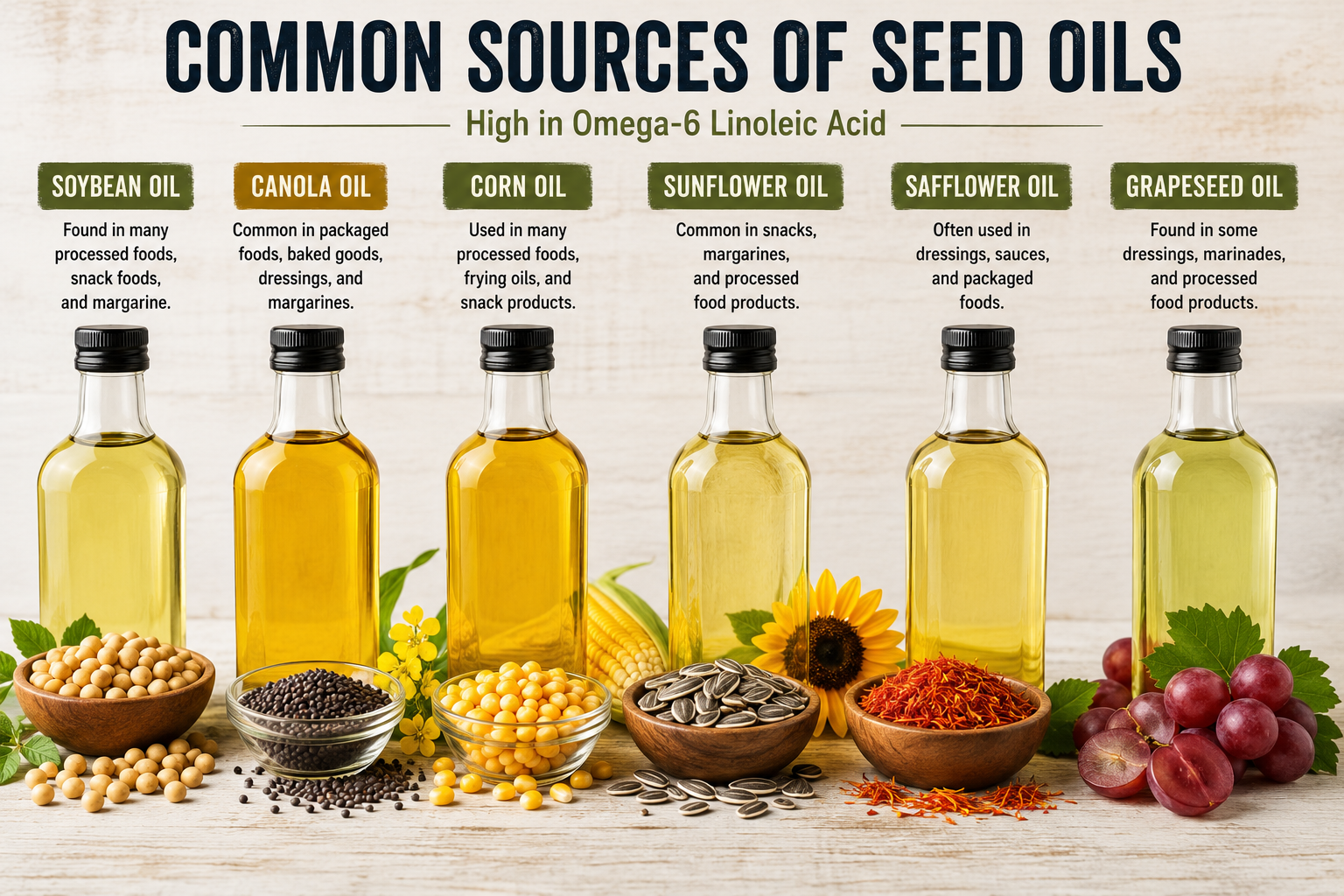
Many industrial seed oils are concentrated sources of omega-6 linoleic acid commonly found in processed foods.
Linoleic acid is an omega-6 polyunsaturated fatty acid (PUFA).
“Polyunsaturated” simply means the fat molecule contains multiple double bonds.
That matters because those double bonds make the fat more chemically unstable.
Compared with saturated fats—which have no double bonds—PUFAs are far more vulnerable to oxidation when exposed to:
- heat
- oxygen
- light
- industrial processing
Oxidation matters because oxidized fats can create reactive compounds that contribute to cellular stress and inflammation.
To be clear:
Linoleic acid itself is not inherently “bad.”
Humans need small amounts.
The issue is dosage, context, and modern exposure.
The Great Fat Shift: How Modern Diets Changed
For most of human history, dietary fat came from:
- ruminant animals
- wild game
- dairy
- fish
- occasional nuts and seeds
- seasonal plant foods
What humans did not consume regularly:
- soybean oil
- canola oil
- corn oil
- sunflower oil
- safflower oil
- cottonseed oil
- industrial deep fryer oils
Why?
Because these oils require modern industrial extraction and processing.
They were not meaningful staples in ancestral diets.
That’s a massive dietary shift.
Today, seed oils are everywhere:
- fast food
- frozen meals
- salad dressings
- mayonnaise
- chips
- crackers
- protein bars
- baked goods
- restaurant cooking oils
Even people who never cook with vegetable oils often consume them daily without realizing it.
Why Fat Stability Matters
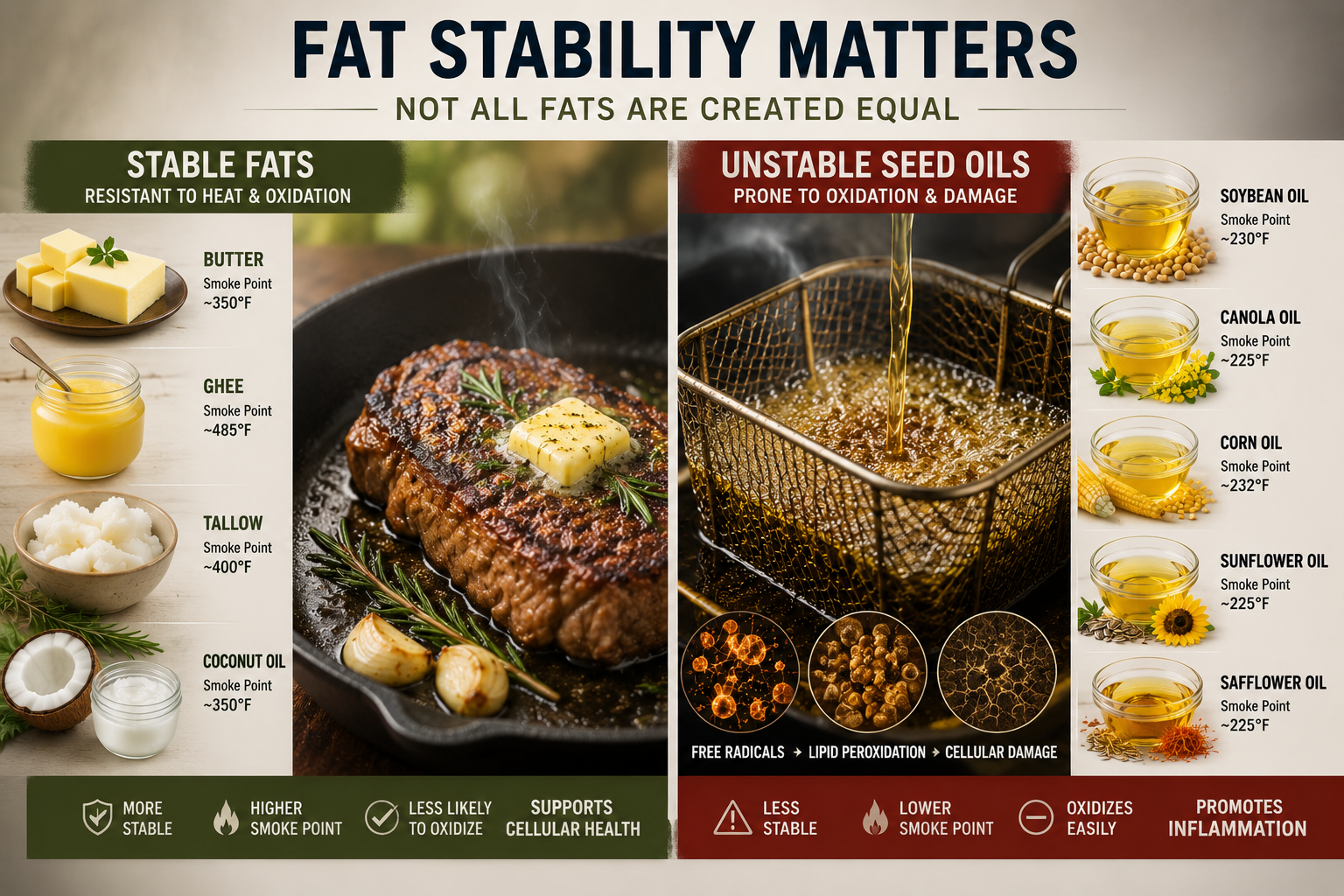
Different fats behave very differently under heat, oxidation, and food processing conditions.
This is where chemistry becomes clinically relevant.
Saturated fats like:
- butter
- ghee
- beef tallow
- coconut oil
are structurally stable.
Polyunsaturated fats are much less stable.
More double bonds = more oxidation potential.
That matters especially during:
- frying
- repeated restaurant oil heating
- industrial food manufacturing
- prolonged storage
Repeated heating of unstable oils can generate lipid oxidation products, including aldehydes and other compounds linked to oxidative stress.
This may be one of the most overlooked aspects of modern nutrition.
The question may not simply be:
“How much fat are you eating?”
But:
“What kind of fat is repeatedly becoming part of your tissues?”
Are Seed Oils Driving Chronic Inflammation?
Inflammation is now increasingly recognized as a major driver of chronic disease.
This includes:
- cardiovascular disease
- insulin resistance
- metabolic syndrome
- obesity
- neurodegenerative conditions
- autoimmune disorders
Linoleic acid can be metabolized into signaling molecules that influence inflammation.
In appropriate amounts, this is normal physiology.
But modern excess may create imbalance.
Researchers have raised concerns that high omega-6 intake relative to omega-3 intake may contribute to:
- pro-inflammatory signaling
- oxidative stress
- endothelial dysfunction
- altered membrane fluidity
- impaired metabolic flexibility
Functional medicine often asks:
Not merely whether something is technically “allowed” by physiology—
but whether chronic modern exposure creates biological mismatch.
That’s a very different question.
The Hidden Problem: Processed Foods
Processed foods are a major source of omega-6 overload.
Common stealth sources include:
- salad dressing
- commercial sauces
- mayonnaise
- crackers
- granola bars
- chips
- frozen convenience foods
- bakery items
- restaurant meals
This means someone trying to “eat healthy” can still consume large amounts of unstable omega-6 fats.
This is especially true when “low fat” processed foods replace whole-food nutrition.
But It’s Not Just Processed Food
This is where the conversation gets more nuanced.
The issue isn’t only obvious junk food.
Some foods marketed as healthy can contribute to omega-6 excess when consumed in large amounts.
Examples:
- almond butter
- walnuts
- sunflower seeds
- pumpkin seeds
- seed crackers
- nut flours
- trail mix
- frequent concentrated nut-based snacks
This does not mean nuts are unhealthy.
Whole foods exist in a different biological context than industrial oils.
But quantity matters.
A handful of nuts occasionally is very different from chronic concentrated intake.
Olive Oil: Healthy—but Not Unlimited
Olive oil deserves nuance.
High-quality extra virgin olive oil has evidence supporting cardiovascular benefits.
It is largely monounsaturated—not comparable to soybean oil.
However:
more unsaturated fat is still more unsaturated fat.
Quality matters.
Storage matters.
Oxidation matters.
Quantity matters.
Adulteration also exists in lower-quality products.
Functional medicine perspective:
olive oil can absolutely fit into a healthy diet—but “healthy halo” overuse is still worth considering.
You Are What You Eat… and What Your Food Eats
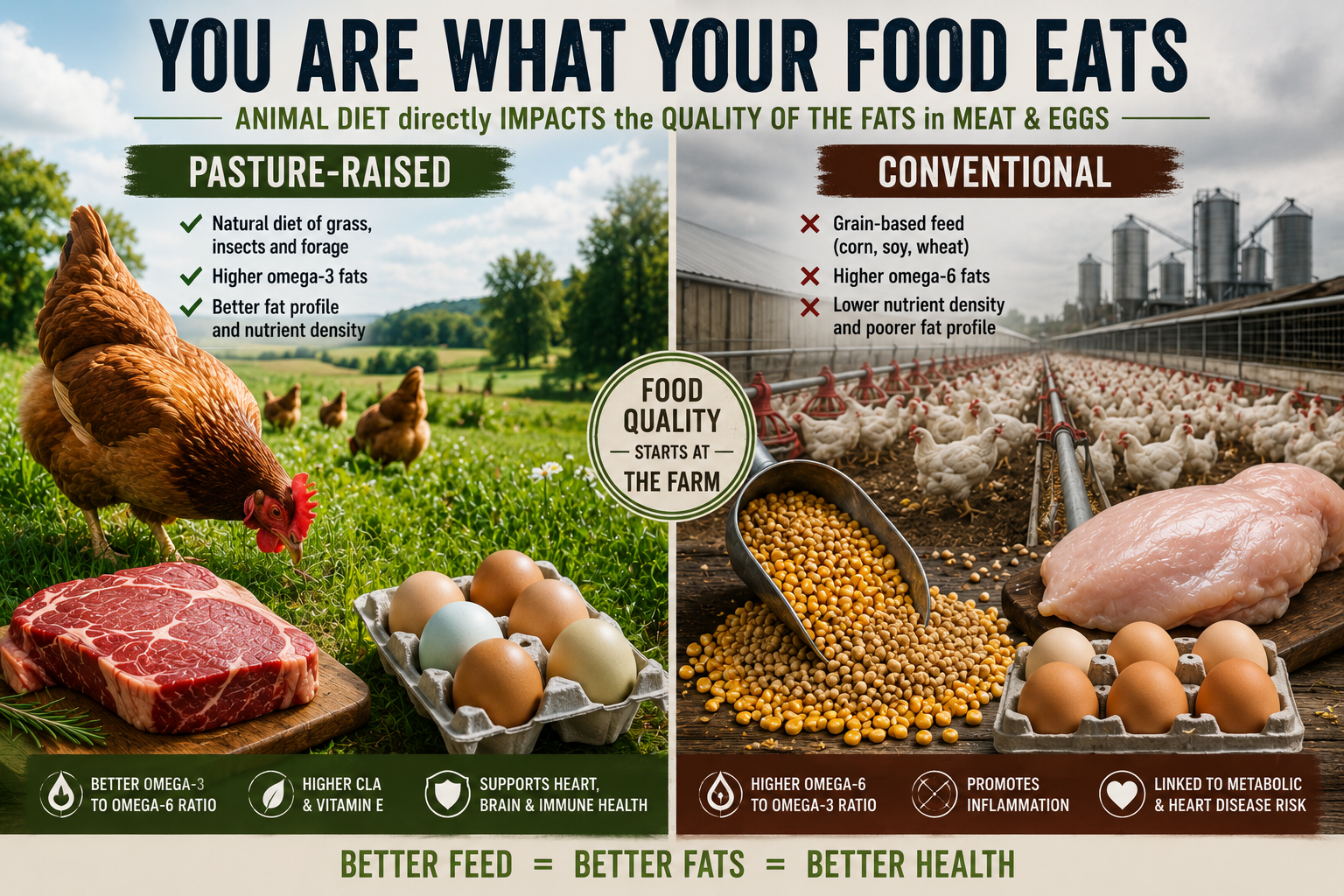
Animal feed influences the fatty acid composition of meat and eggs, which may affect human metabolic health.
This is one of the most overlooked issues in modern nutrition.
Monogastric animals like:
- chickens
- pigs
store dietary fats directly in their tissues.
Meaning:
if they eat high omega-6 industrial feed…
their meat becomes higher in omega-6 fats.
This is very different from ruminant animals like:
- cows
- lamb
- bison
whose digestive systems process fats differently.
So yes—
food sourcing matters.
This helps explain why:
- pasture-raised eggs
- pasture-raised poultry
- properly raised pork
- grass-fed ruminants
may offer a different fatty acid profile than conventional industrial animal products.
This is one reason functional medicine emphasizes food quality—not just macros.
Saturated Fat: Did We Oversimplify the Story?
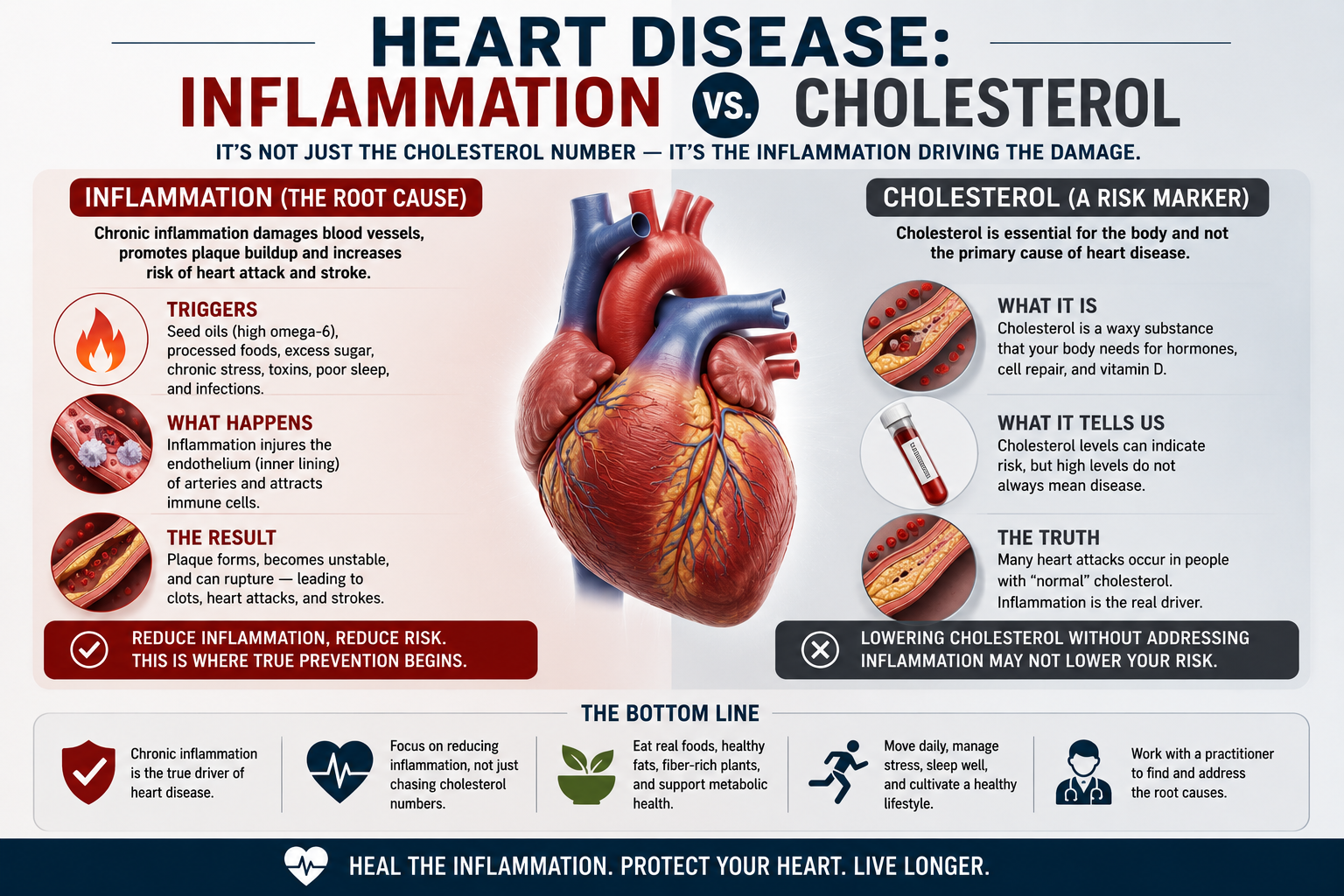
Modern cardiovascular research increasingly recognizes inflammation, oxidative stress, and metabolic dysfunction as important contributors to heart disease risk.
For years, saturated fat was portrayed as the villain.
But cardiovascular science has evolved.
The old simplistic model:
saturated fat → cholesterol → heart disease
is no longer the whole story.
Today, researchers increasingly recognize the importance of:
- chronic inflammation
- insulin resistance
- endothelial dysfunction
- oxidative stress
- oxidized LDL
- triglyceride metabolism
- metabolic syndrome
- blood sugar dysregulation
That doesn’t mean unlimited saturated fat is automatically healthy.
But it does mean the conversation is more nuanced.
Chemically speaking, saturated fats are more stable.
They are less prone to oxidation.
That matters.
The bigger cardiovascular question may be:
What damages arteries in the first place?
Because cholesterol alone doesn’t explain everything.
Inflammation appears to play a major role.
Mitochondria and Metabolic Health
Your mitochondria are your cellular energy factories.
When oxidative stress rises, mitochondrial efficiency can suffer.
This may contribute to:
- fatigue
- reduced metabolic flexibility
- poorer glucose handling
- impaired recovery
Functional medicine often views chronic dietary oxidative burden as one contributor among many.
This doesn’t mean seed oils alone “cause” metabolic disease.
But in susceptible individuals, excess exposure may be one meaningful factor.
Practical Ways to Lower Omega-6 Burden
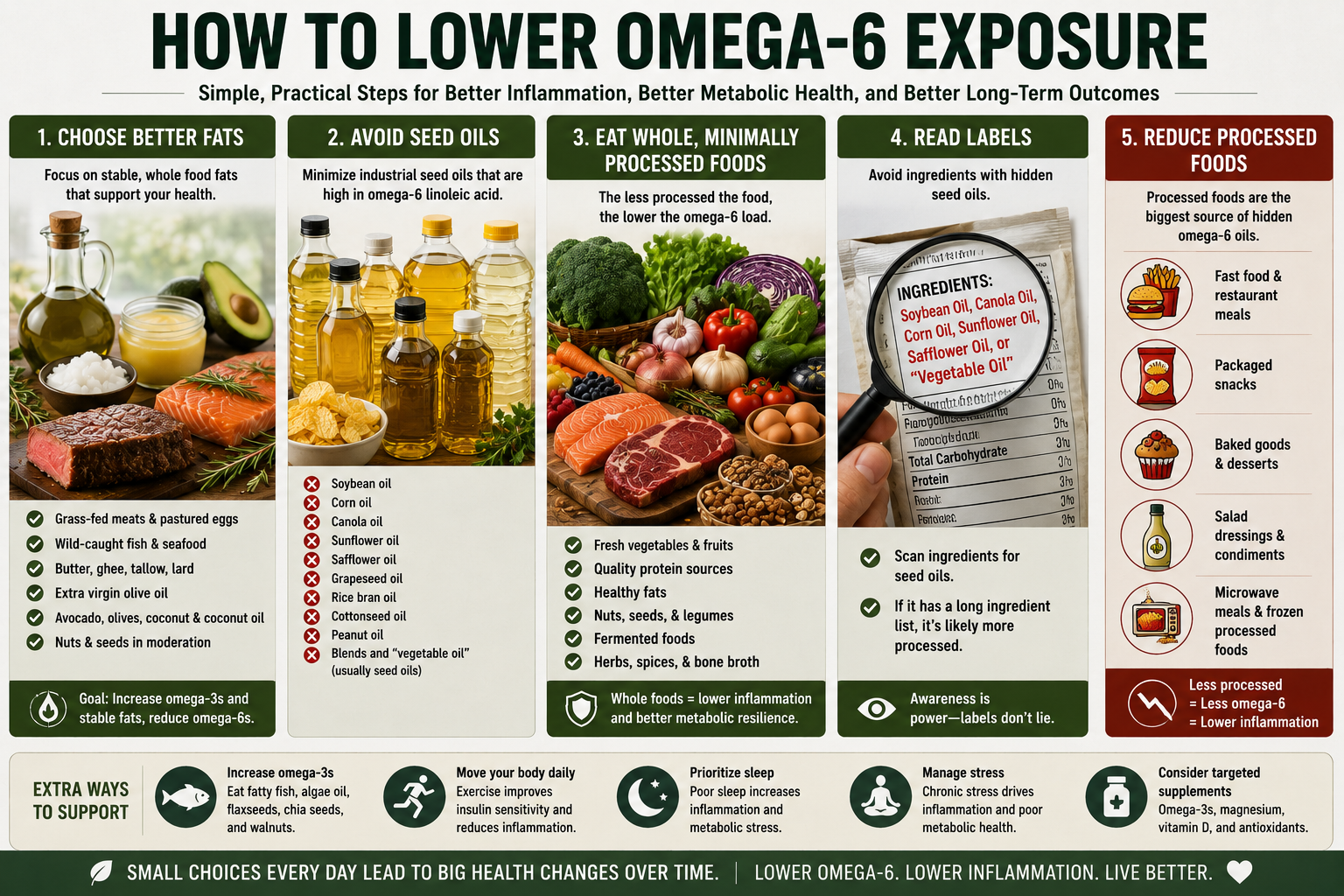
Reducing hidden omega-6 exposure starts with smarter food choices, label awareness, and better cooking fats.
If this resonates with you, don’t panic.
This is about steady improvement—not perfection.
1. Replace industrial cooking oils
Reduce:
- soybean oil
- canola oil
- corn oil
- safflower oil
- sunflower oil
- grapeseed oil
- cottonseed oil
Better options:
- grass-fed butter
- ghee
- coconut oil
- beef tallow
- quality olive oil (appropriate use)
2. Read ingredient labels
Watch for hidden oils in:
- sauces
- condiments
- dressings
- chips
- crackers
- baked goods
- frozen meals
- protein bars
3. Be strategic eating out
Restaurant food is often a major exposure source.
Ask:
- what oil is used?
- can butter be substituted?
- can food be grilled without oil?
Avoid frequent deep-fried foods.
4. Upgrade protein sources
Consider prioritizing:
- grass-fed beef
- lamb
- bison
- pasture-raised eggs
- thoughtfully sourced poultry
5. Rebalance omega-3 intake
Include:
- sardines
- salmon
- mackerel
Balance matters.
6. Be mindful with concentrated nuts and seeds
Whole foods can fit.
But excessive concentrated intake may push ratios upward.
How Long Does It Take?
One important reality:
Your tissues do not change overnight.
Fatty acid composition in cell membranes and body fat adapts over time.
That means consistency matters.
Think in:
weeks → months → longer
not overnight transformations.
This is about long-term metabolic direction.
Final Thoughts
Nutrition is rarely black and white.
Seed oils are not instant poison.
Saturated fat is not automatically dangerous.
But the modern fat landscape is dramatically different from anything humans historically consumed.
And that deserves serious attention.
From a functional medicine perspective, one of the most important questions is:
Are modern industrial fats helping your biology—or quietly working against it?
If you struggle with:
- chronic inflammation
- fatigue
- insulin resistance
- stubborn weight loss
- metabolic dysfunction
- autoimmune concerns
food quality—including fat quality—may be part of the puzzle.

Functional medicine focuses on identifying root causes behind chronic inflammation, metabolic dysfunction, and long-term health concerns.
At Total Health Center, we look beyond symptom management to uncover the underlying drivers affecting your health.
Schedule your functional medicine consultation with Dr. Scott at Total Health Center Virginia Beach to uncover hidden metabolic stressors and create a personalized healing strategy.
_____________________________________________________________________________________________________________________________________
Frequently Asked Questions About Seed Oils, Linoleic Acid, and Inflammation
Are seed oils actually bad for your health?
Seed oils are not inherently toxic, and small amounts of omega-6 fats like linoleic acid are essential for human health.
The concern is chronic excess exposure in modern diets.
Today, many people consume omega-6 fats not just from obvious vegetable oils, but also from processed foods, restaurant meals, salad dressings, sauces, and industrial animal products.
From a functional medicine perspective, the concern is that excessive intake—especially of oxidized or repeatedly heated oils—may contribute to inflammation, oxidative stress, insulin resistance, and metabolic dysfunction in susceptible individuals.
Is linoleic acid inflammatory?
Linoleic acid itself is not automatically inflammatory.
It is an essential fatty acid the body requires in small amounts.
However, excessive omega-6 intake relative to omega-3 intake may shift inflammatory signaling pathways in an unfavorable direction.
The issue is less about linoleic acid existing in the diet—and more about chronic imbalance, modern excess, and poor food quality.
Are saturated fats healthier than vegetable oils?
This is more nuanced than many people realize.
Saturated fats are chemically more stable than polyunsaturated fats, making them less prone to oxidation during cooking.
That does not mean unlimited saturated fat intake is automatically healthy.
However, modern cardiovascular research increasingly recognizes that inflammation, oxidative stress, insulin resistance, endothelial dysfunction, and metabolic health all influence cardiovascular risk—not just cholesterol alone.
Food quality and overall metabolic context matter.
Is olive oil a seed oil?
No.
Olive oil is primarily a monounsaturated fat, not a seed oil like soybean or corn oil.
High-quality extra virgin olive oil has evidence supporting cardiovascular benefits.
That said, quality matters.
Lower-quality olive oils may be adulterated, oxidized, or overused.
Moderation and sourcing are important.
Are nuts and seeds unhealthy?
Not inherently.
Whole nuts and seeds contain fiber, minerals, antioxidants, and beneficial compounds.
The concern is excessive concentrated intake in modern diets.
Large amounts of nut butters, seed-based snacks, nut flours, and processed “health foods” may significantly increase omega-6 intake.
Context and quantity matter.
Does the way animals are raised affect the fat quality of meat?
Yes.
Monogastric animals like chickens and pigs tend to store dietary fats directly in their tissues.
If they consume omega-6-heavy feed such as corn and soy, their fat profile becomes higher in omega-6 fats.
Ruminant animals like cows and lamb process fats differently.
This is one reason pasture-raised and thoughtfully sourced animal products may offer a different nutritional profile.
Can seed oils contribute to insulin resistance?
Seed oils alone are unlikely to be the sole cause of insulin resistance.
However, excess omega-6 intake, oxidative stress, inflammation, processed food consumption, and mitochondrial dysfunction may collectively contribute to poorer metabolic health.
Functional medicine evaluates these factors as part of a larger metabolic picture.
How long does it take to lower omega-6 levels in the body?
Body fat and cell membranes change gradually.
Meaningful improvements in fatty acid composition happen over time with consistent dietary changes.
This is not an overnight process.
Think in terms of long-term metabolic improvement rather than quick fixes.
What fats are better for cooking?
More stable cooking fats generally include:
- grass-fed butter
- ghee
- beef tallow
- coconut oil
High-quality olive oil can be appropriate in certain applications, especially lower-heat or cold use.
Avoid repeatedly heating unstable polyunsaturated oils.
_____________________________________________________________________________________________________________________________________
References
Calder PC. Omega-3 fatty acids and inflammatory processes. Nutrients.
Simopoulos AP. The importance of the omega-6/omega-3 fatty acid ratio in cardiovascular disease and chronic disease. Experimental Biology and Medicine.
DiNicolantonio JJ, O’Keefe JH. Importance of maintaining a low omega-6/omega-3 ratio. Open Heart.
Mozaffarian D et al. Effects on coronary heart disease of increasing polyunsaturated fat in place of saturated fat. PLoS Medicine.
Ramsden CE et al. Re-evaluation of traditional dietary fat recommendations. BMJ.
Lawrence GD. Dietary fats and health: dietary recommendations in the context of scientific evidence. Advances in Nutrition.
de Souza RJ et al. Saturated and trans unsaturated fatty acids and mortality. BMJ.
Siri-Tarino PW et al. Meta-analysis of saturated fat and cardiovascular disease. American Journal of Clinical Nutrition.
Grootveld M et al. Oxidative degradation products in heated cooking oils. Food Chemistry.
Wallace TC et al. Fatty acid recommendations and metabolic health. Nutrients.