The Calcium Myth: Why Strong Bones Need More Than Calcium
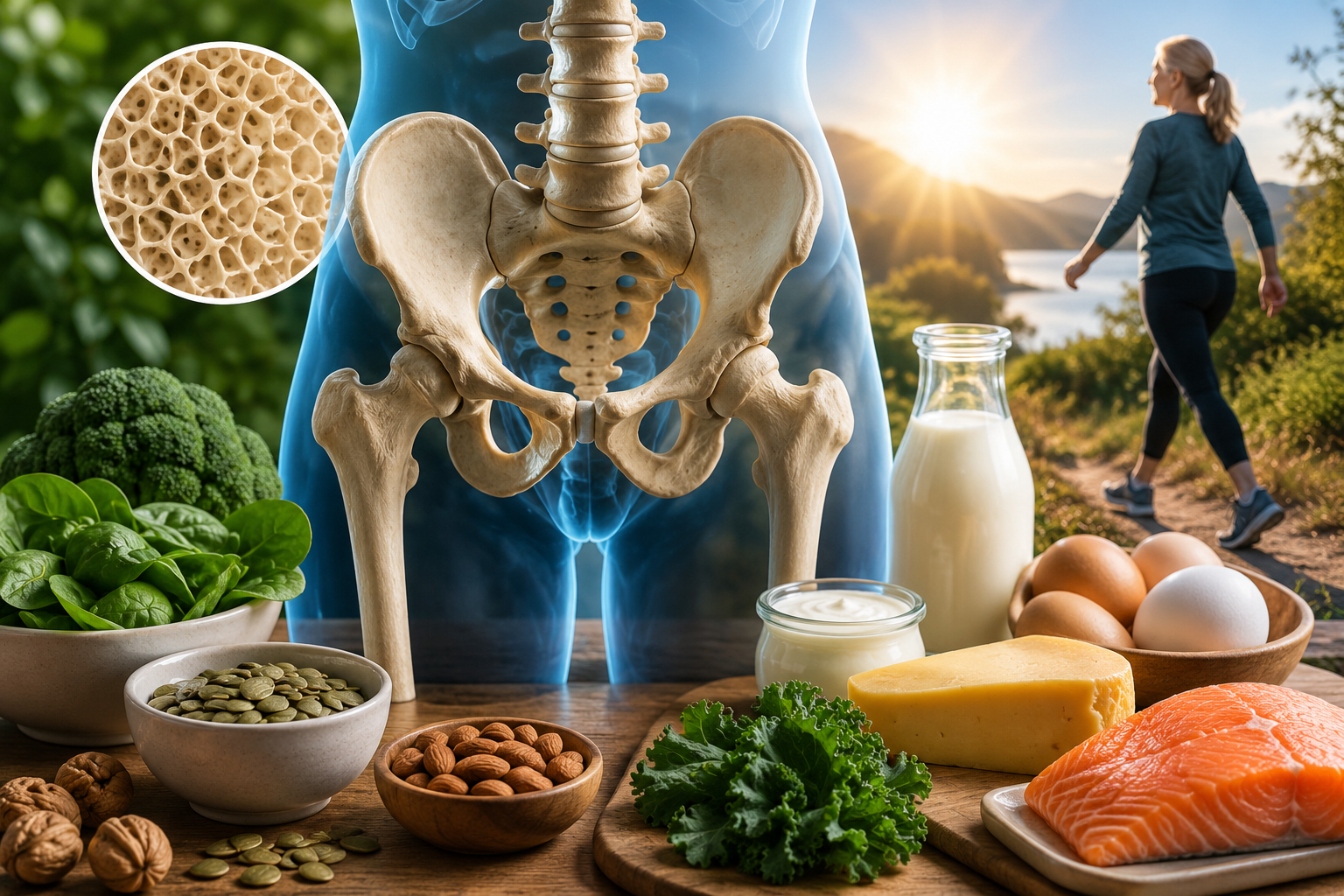
For decades, we’ve been told that calcium is the key to strong bones and osteoporosis prevention. Walk through any pharmacy and you’ll find shelves lined with calcium supplements promising stronger bones and reduced fracture risk.
But what if calcium is only one piece of a much larger puzzle?
The truth is that healthy bones depend on much more than simply consuming large amounts of calcium. While calcium is certainly important, research and clinical experience show that bone health involves a complex interaction between minerals, vitamins, hormones, digestive health, protein intake, and physical activity.
At Total Health Center, we frequently see patients who have been taking calcium supplements for years yet continue to experience bone loss, osteopenia, or osteoporosis. The reason is simple: bone health is about building and maintaining the entire bone structure—not just increasing calcium intake.
What Is Osteoporosis Really?
Many people assume osteoporosis is simply a calcium deficiency.
In reality, osteoporosis is a condition characterized by a loss of bone density and deterioration of bone structure.
Think of bone like reinforced concrete.
The concrete represents minerals such as calcium and phosphorus. The steel reinforcement represents the collagen protein matrix that gives bone its strength and flexibility.
If the framework weakens, simply adding more concrete won’t solve the problem.
Similarly, if the bone matrix is deteriorating, additional calcium alone may not be enough to restore healthy bone structure.
Why Calcium Alone Often Falls Short
Many patients are surprised to learn that calcium absorption and utilization are highly regulated processes.
Your body must:
- Absorb calcium from the digestive tract
- Transport calcium into bone tissue
- Maintain proper blood calcium levels
- Prevent calcium from depositing in arteries and soft tissues
This process requires numerous nutrients working together.
Without the proper cofactors, much of the calcium consumed may never reach the bones where it is needed most.
The Missing Nutrients for Bone Health
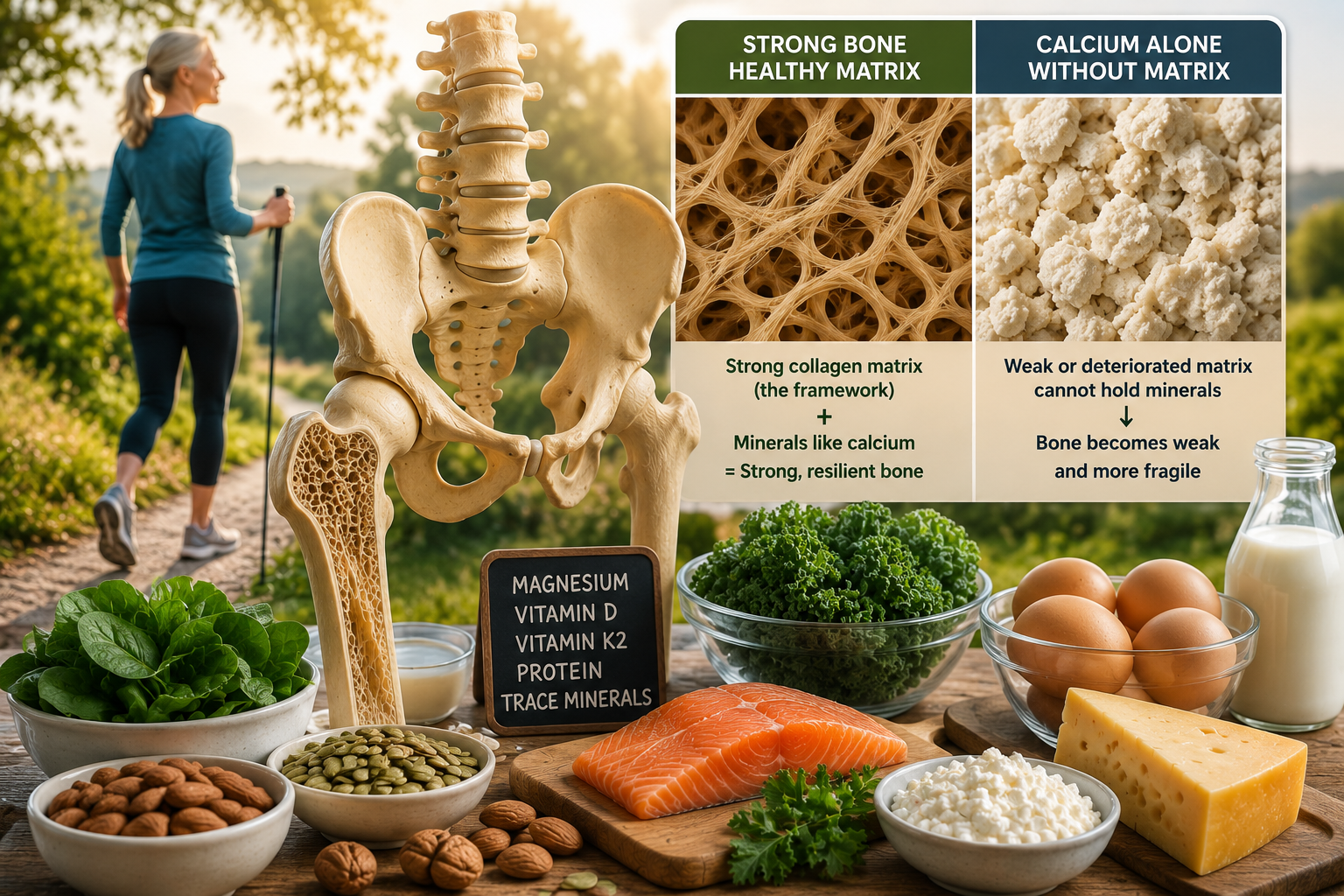
Strong bones require more than calcium. A healthy collagen matrix, adequate protein, magnesium, vitamin D, vitamin K2, and trace minerals work together to build resilient bone tissue.
Magnesium
Magnesium is involved in hundreds of biochemical reactions and plays a critical role in bone formation.
In fact, approximately 60% of the body’s magnesium is stored in the skeleton.
Magnesium helps:
- Activate vitamin D
- Regulate calcium transport
- Support bone-building cells
- Maintain proper bone density
Learn more about magnesium in our article:
The Importance of Magnesium
https://totalhealthcentervb.com/the-importance-of-magnesium/
Vitamin D
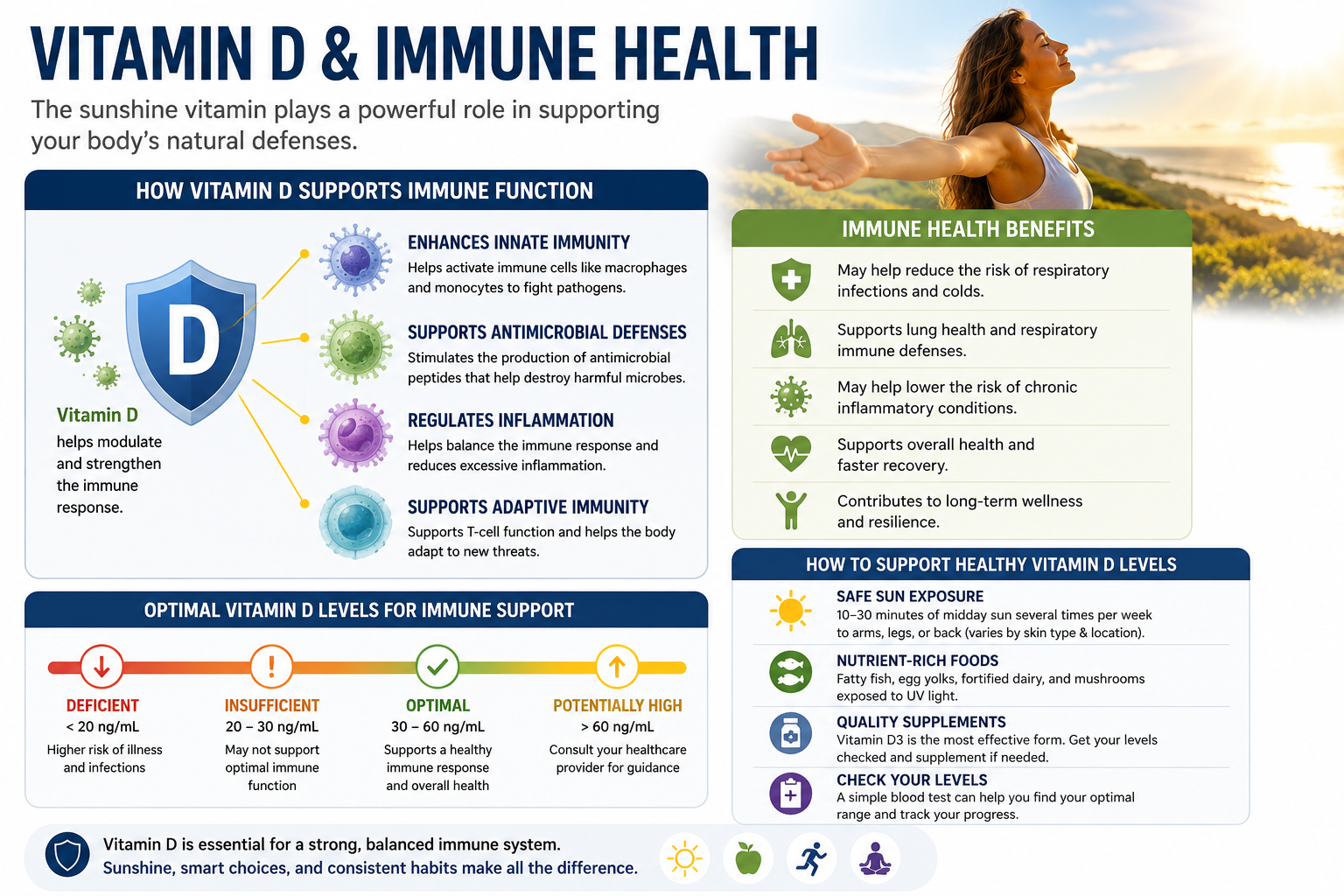
Vitamin D helps the body absorb calcium efficiently and supports healthy bones, muscle strength, balance, and overall skeletal health.
Vitamin D helps your body absorb calcium efficiently.
Without adequate vitamin D, even large amounts of calcium may be poorly utilized.
Low vitamin D levels have been associated with:
- Increased fracture risk
- Muscle weakness
- Poor balance
- Reduced bone mineral density
Related article:
Vitamin D Deficiency: The Hidden Epidemic
https://totalhealthcentervb.com/vitamin-d-deficiency-the-hidden-epidemic/
Vitamin K2
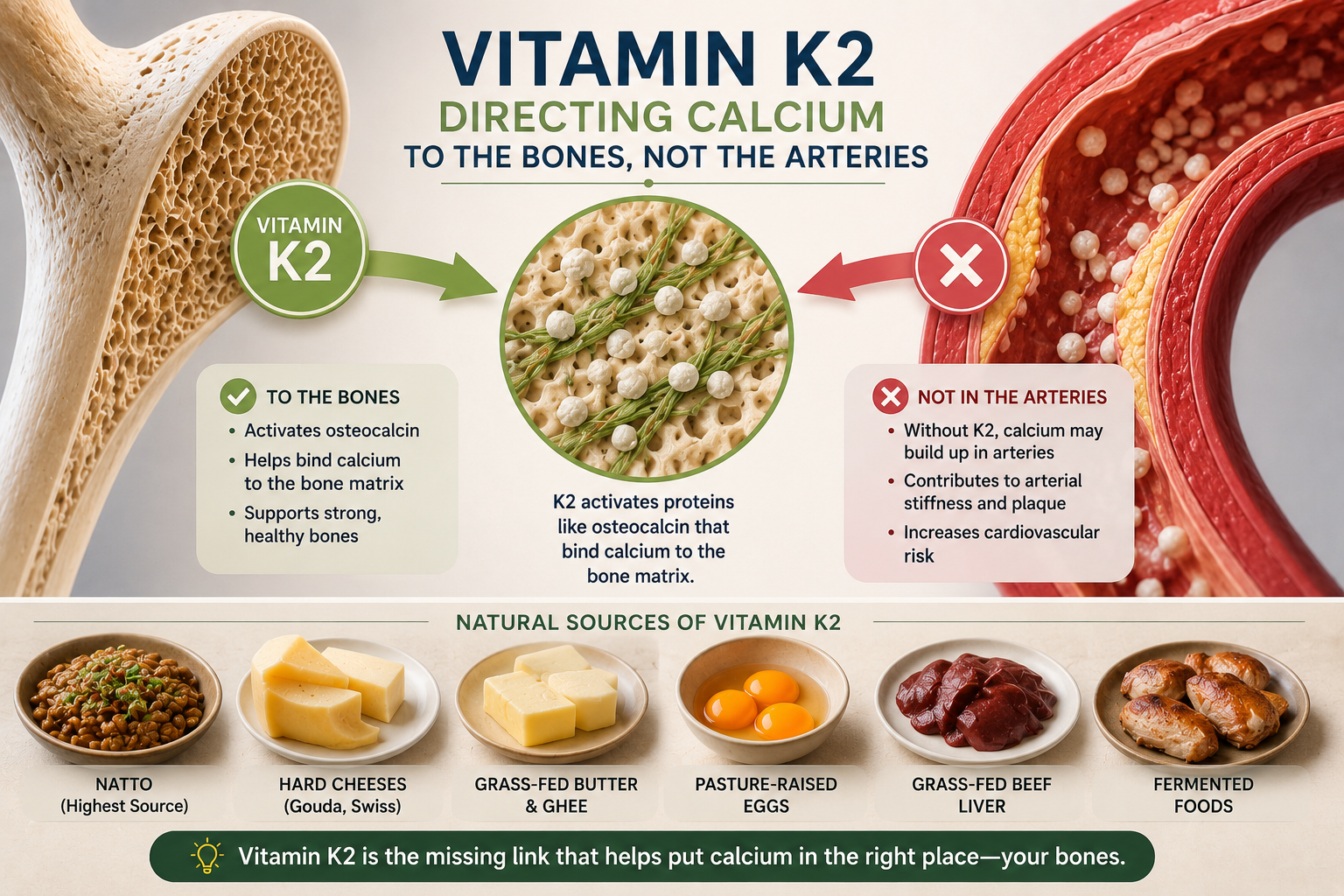
Vitamin K2 activates proteins that help direct calcium into bones and teeth where it belongs while helping prevent calcium accumulation in soft tissues and arteries.
Vitamin K2 may be one of the most overlooked nutrients for bone health.
Vitamin K2 activates proteins that direct calcium into bones and teeth while helping prevent calcium accumulation in arteries.
Without sufficient K2, calcium may not end up where you want it.
Related article:
Vitamin K2: The Missing Link in Bone and Heart Health
https://totalhealthcentervb.com/vitamin-k2-the-missing-link-in-bone-and-heart-health/
Trace Minerals
Bone tissue contains far more than calcium.
Other important minerals include:
- Manganese
- Copper
- Zinc
- Boron
- Silica
- Selenium
- Phosphorus
These nutrients support collagen formation, bone remodeling, and mineralization.
Deficiencies in these trace minerals may contribute to poor bone quality even when calcium intake is adequate.
Protein: The Forgotten Building Block
Many people focus entirely on minerals while overlooking protein.
Bone is approximately 50% protein by volume.
The collagen matrix acts as the structural framework that holds minerals in place.
Without adequate protein intake, bone formation may suffer regardless of calcium consumption.
This is one reason why many elderly individuals with osteoporosis benefit from increasing protein intake alongside other nutritional interventions.
Hormones Matter More Than Most People Realize
Bone is living tissue that constantly remodels itself.
Hormones play a major role in this process, including:
- Estrogen
- Progesterone
- Testosterone
- Thyroid hormones
- Cortisol
- Insulin
Hormonal imbalances can accelerate bone loss even when calcium intake is adequate.
This is one reason functional medicine often looks beyond bone density scans to identify underlying causes of bone loss.
Digestion and Absorption: The Missing Link
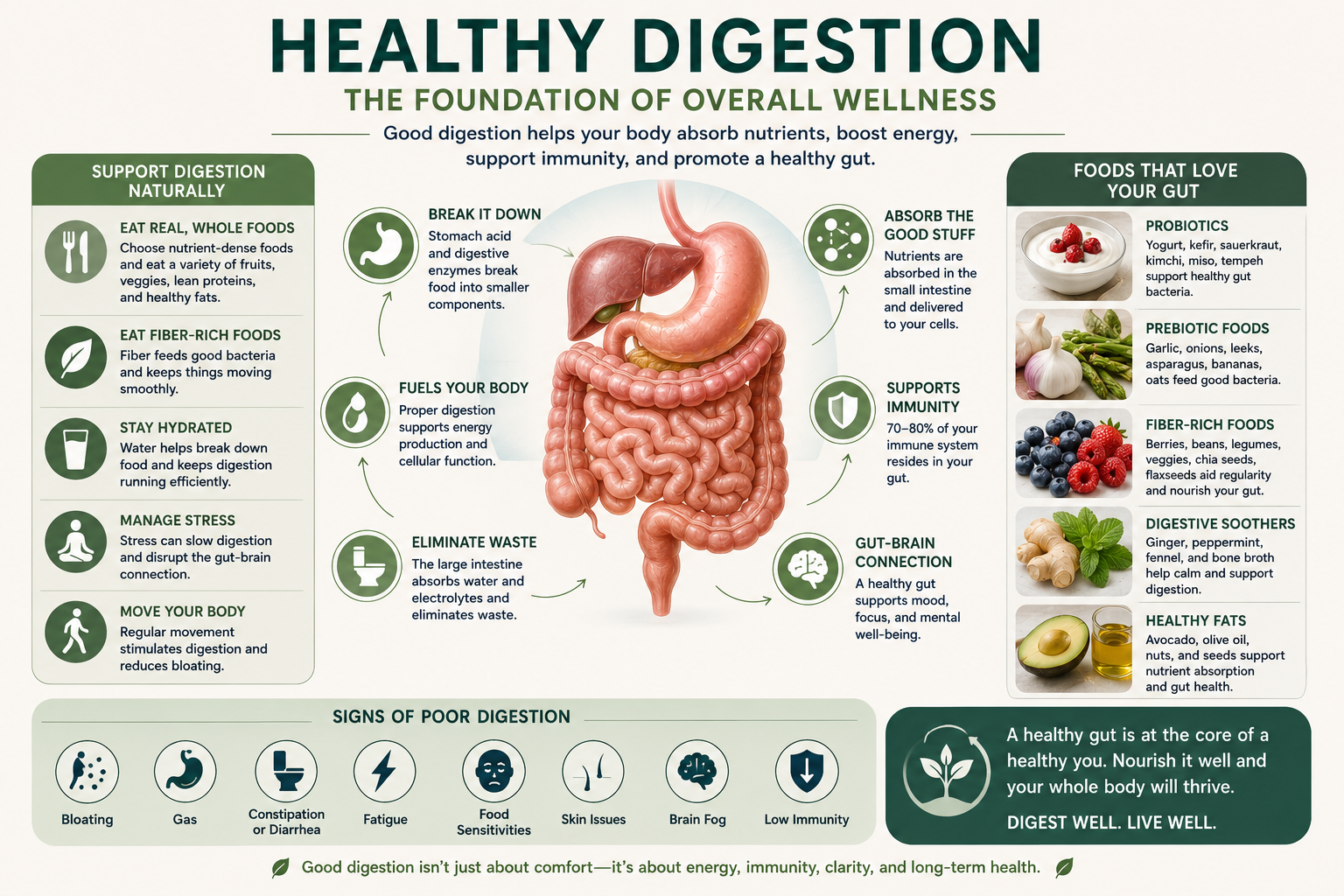
Healthy bones depend on healthy digestion. Proper stomach acid, digestive enzymes, and gut function help the body absorb calcium, magnesium, vitamin D, protein, and other nutrients required for strong bones.
You can eat all the right nutrients, but if you aren’t absorbing them, bone health may still suffer.
Common issues that impair mineral absorption include:
- Low stomach acid
- Gut inflammation
- Celiac disease
- IBS
- SIBO
- Long-term acid-blocking medications
At Total Health Center, evaluating digestive function is often an important part of addressing osteoporosis and osteopenia.
Related article:
Gut Health: The Foundation of Wellness
https://totalhealthcentervb.com/
Exercise Builds Strong Bones
Bones respond to stress.
Weight-bearing exercise stimulates bone-building cells and helps maintain bone density.
Examples include:
- Walking
- Resistance training
- Strength training
- Hiking
- Stair climbing
Exercise provides a signal that tells your body to maintain and strengthen bone tissue.
No supplement can replace this signal.
A Functional Medicine Approach to Bone Health
Rather than focusing solely on calcium intake, functional medicine seeks to identify the root causes of bone loss.
This may include evaluating:
- Vitamin D status
- Magnesium levels
- Trace mineral status
- Digestive health
- Hormonal balance
- Inflammation
- Lifestyle factors
- Dietary quality
The goal is to create an environment where the body can build and maintain healthy bone naturally.
The Bottom Line
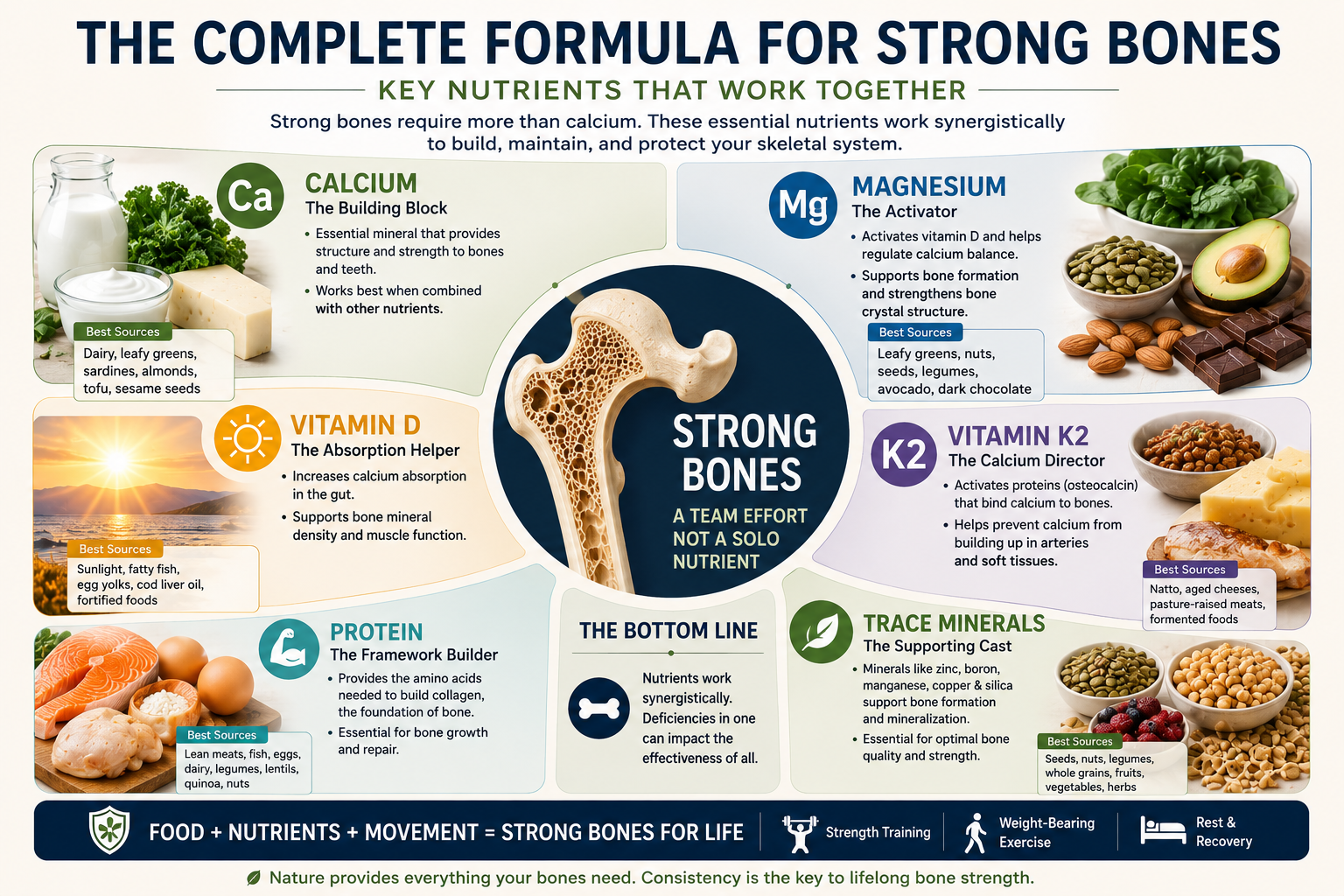
Strong bones require a team of nutrients working together. Calcium, magnesium, vitamin D, vitamin K2, protein, and trace minerals all play essential roles in bone formation, maintenance, and long-term skeletal health.
Calcium is important.
However, the idea that osteoporosis is simply caused by a lack of calcium is an oversimplification.
Strong bones require:
- Calcium
- Magnesium
- Vitamin D
- Vitamin K2
- Trace minerals
- Adequate protein
- Healthy hormones
- Good digestion
- Regular exercise
When all of these factors work together, bone health improves naturally.
If you have osteopenia, osteoporosis, or concerns about your bone health, a functional medicine evaluation may help uncover the underlying factors contributing to bone loss.
Call Total Health Center today to schedule a Functional Medicine consultation and discover a comprehensive approach to building stronger bones naturally.
Frequently Asked Questions
Is calcium supplementation necessary for everyone?
No. Calcium needs vary based on diet, age, health status, and individual risk factors. Many people can meet their calcium needs through food.
Can you have osteoporosis even if you take calcium supplements?
Yes. Bone health depends on multiple factors including vitamin D, magnesium, protein intake, hormones, and physical activity.
What is the best vitamin to take with calcium?
Vitamin D and vitamin K2 are often considered important partners because they help regulate calcium absorption and utilization.
Does magnesium help bone health?
Yes. Magnesium is essential for bone formation and helps regulate calcium metabolism.
Can gut health affect bone density?
Absolutely. Poor digestion and nutrient absorption may contribute to deficiencies that affect bone strength and density.
References
- National Institutes of Health Office of Dietary Supplements. Calcium Fact Sheet for Health Professionals.
- National Institutes of Health Office of Dietary Supplements. Vitamin D Fact Sheet for Health Professionals.
- National Institutes of Health Office of Dietary Supplements. Magnesium Fact Sheet for Health Professionals.
- Weaver CM, Gordon CM, Janz KF, et al. The National Osteoporosis Foundation’s position statement on peak bone mass development and lifestyle factors. Osteoporosis International. 2016.
- Rizzoli R, Biver E. Effects of dietary protein on bone health. Current Opinion in Clinical Nutrition and Metabolic Care. 2015.
- Schwalfenberg GK. Vitamins K1 and K2: The emerging group of vitamins required for human health. Journal of Nutrition and Metabolism. 2017.
- Bonjour JP. Protein intake and bone health. International Journal for Vitamin and Nutrition Research. 2011.