

Walk through any supplement store and you’ll find shelves filled with collagen powders promising younger-looking skin, healthier joints, and stronger bones.
But here’s the question almost nobody asks:
Why does your body stop making enough collagen in the first place?
The answer may surprise you.
Scientists are beginning to understand that collagen production isn’t limited by age alone. Instead, your body may be facing a natural biochemical bottleneck—one that has existed throughout human evolution.
The good news? There are several practical ways to help support your body’s own collagen-building machinery.
Key Takeaways
- Collagen production naturally declines with age, but aging isn’t the whole story.
- Researchers believe a natural glycine bottleneck may limit collagen production.
- Collagen peptides may provide both building blocks and biological signals that support collagen synthesis.
- Traditional foods like bone broth, slow-cooked roasts, chicken thighs, wings, and ground beef are naturally rich in collagen.
- Supporting collagen production starts with good nutrition, adequate protein, vitamin C, and healthy lifestyle habits.
Collagen Is More Than a Beauty Protein
When most people hear the word collagen, they think of wrinkles.
In reality, collagen is the most abundant protein in the human body, making up nearly one-third of your total protein. It’s the structural framework that gives strength and flexibility to your skin, bones, tendons, ligaments, cartilage, blood vessels, and even the lining of your digestive tract.
Every day your body removes damaged collagen and replaces it with new collagen. This rebuilding process continues throughout your life—but it gradually becomes less efficient as you age.
At Total Health Center, we believe healthy aging isn’t simply about replacing what the body loses. It’s about understanding why the body is losing it in the first place and supporting its natural ability to repair itself.
The Hidden Glycine Bottleneck
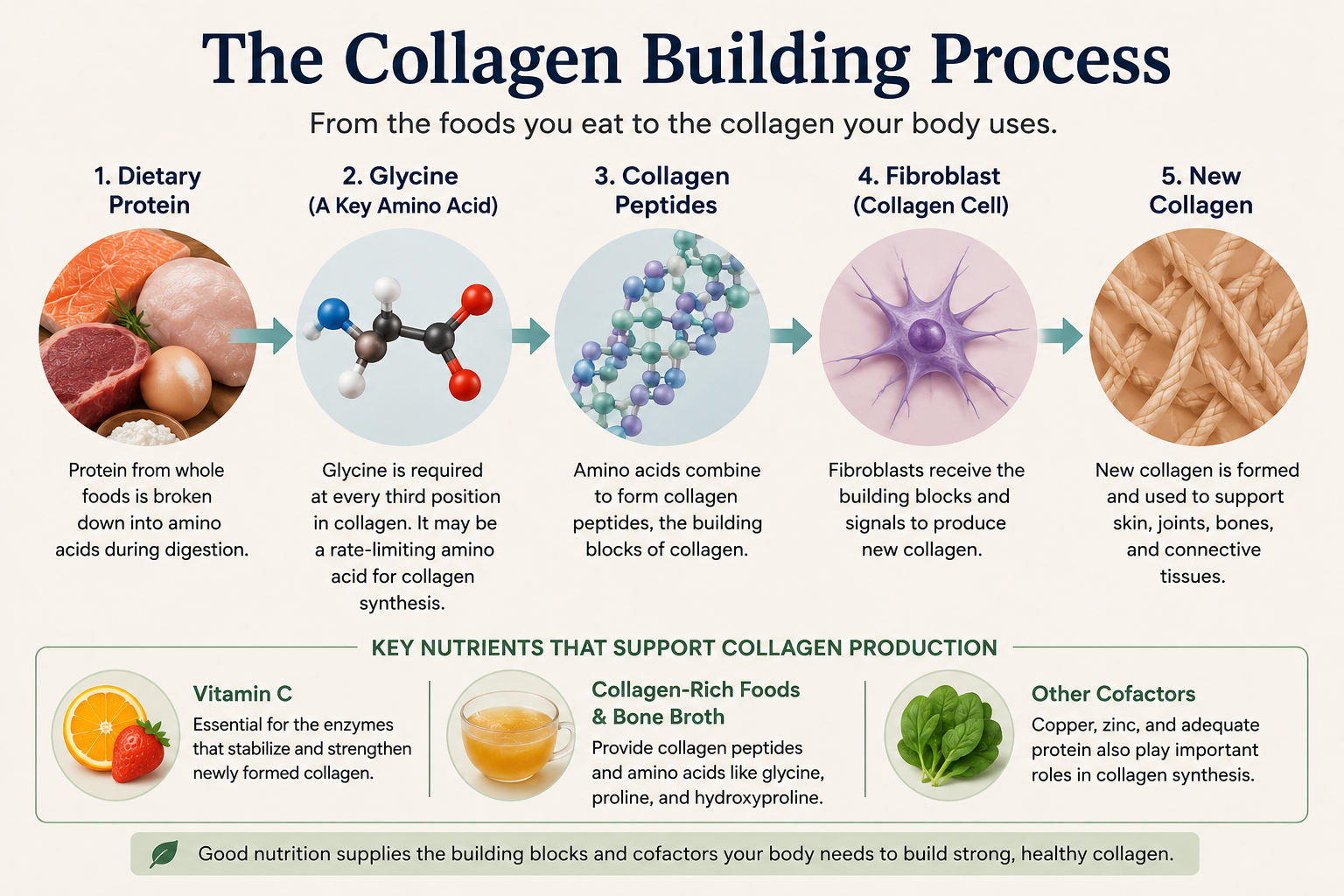
Collagen production depends on adequate protein, glycine, collagen peptides, vitamin C, and healthy fibroblasts working together to build new connective tissue.
Imagine trying to build a house when you’re constantly running out of nails.
You have lumber. You have workers. You have blueprints. But construction keeps slowing because one small building material is in short supply.
Researchers believe your body may face a similar challenge with collagen production.
Every third amino acid in collagen is glycine, making it the single most important building block required to form collagen’s unique triple-helix structure. Research suggests that while your body can manufacture glycine, it may not be able to produce enough to fully satisfy the demands of collagen synthesis throughout life.
In other words, your collagen factory may not be broken—it may simply be running short on one of its most important raw materials.
From a functional medicine perspective, this is exactly the type of question we ask. Instead of asking, “What collagen supplement should I take?” we ask, “Why has my body’s collagen production slowed in the first place?” Finding and correcting those bottlenecks is often more powerful than simply replacing what has been lost.
Eat Like Your Grandparents
One reason this bottleneck may be even more important today is that we’ve changed the way we eat.
Our grandparents rarely wasted parts of the animal. They made soups from bones. They slow-cooked chuck roasts and brisket. They enjoyed chicken thighs, wings, drumsticks, and homemade bone broth.
Today, we’ve replaced many of those traditional foods with lean chicken breasts, filet mignon, and other premium cuts that contain relatively little connective tissue. Ironically, the less expensive cuts of meat are often the richest natural sources of collagen.
Good choices include:
- Slow-cooked chuck roast
- Beef shank and short ribs
- Brisket
- Chicken thighs, drumsticks, and wings (with the skin)
- Whole roasted chicken
- Oxtail soup
- Bone broth
- Homemade soups and stews simmered with bones
- Fish with the skin on
- Even ground beef often contains more connective tissue than premium steaks because connective tissue is ground along with the muscle.
Sometimes the healthiest foods aren’t the most expensive—they’re the traditional foods we’ve gradually stopped eating.
Dr. Scott’s Practical Tip
One of the healthiest changes you can make may also save you money.
Instead of always buying expensive steaks and boneless, skinless chicken breasts, add more slow-cooked roasts, homemade soups, bone broth, chicken thighs, wings, and ground beef to your weekly meals. These traditional foods naturally provide more collagen and collagen-building nutrients than many premium cuts of meat.
Why Collagen Peptides May Work Better Than You Think
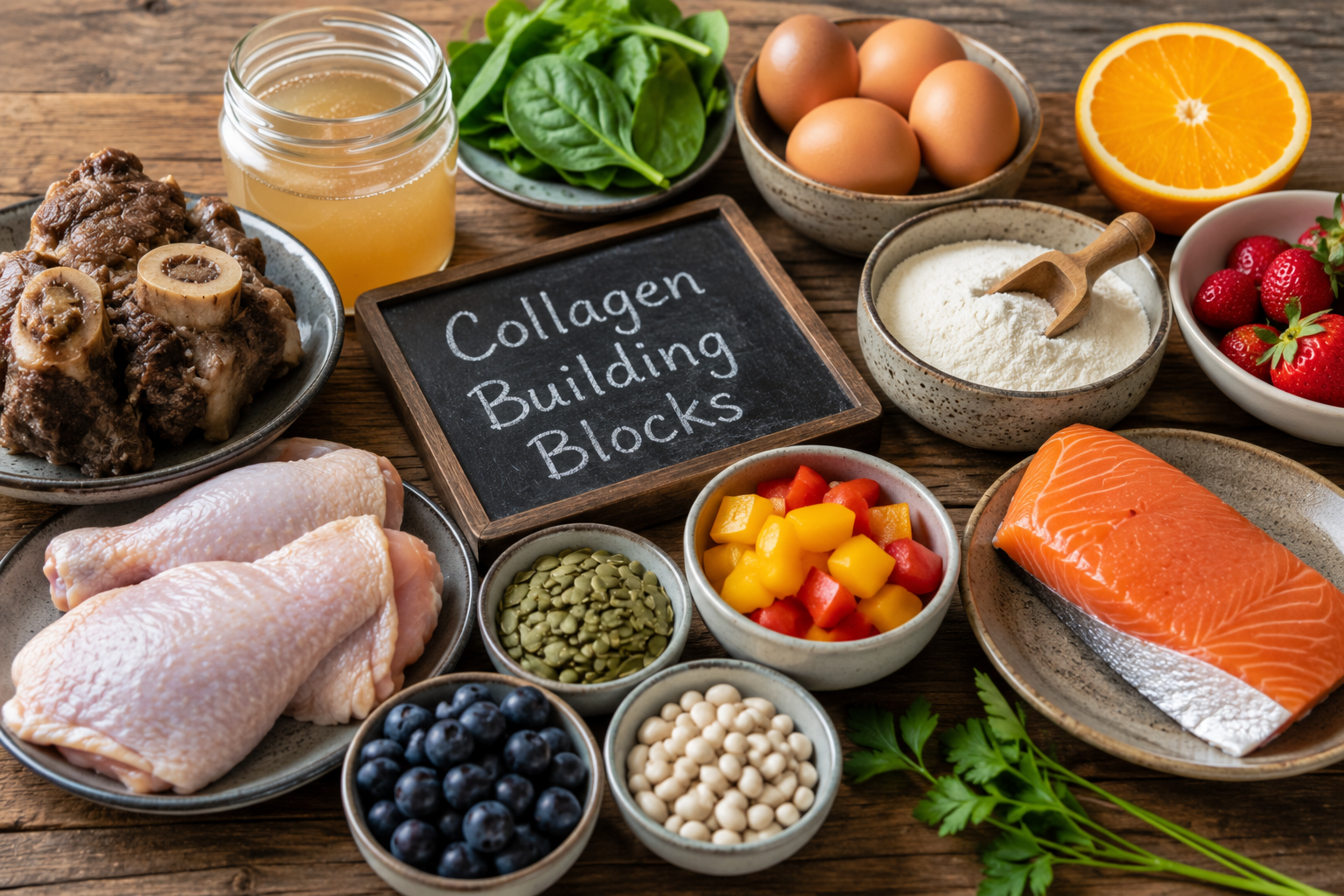
Foods and nutrients that naturally support collagen production include collagen-rich meats, bone broth, vitamin C-rich fruits, and collagen peptides.
Many people assume collagen supplements simply provide extra protein.
The science is actually much more interesting.
When hydrolyzed collagen peptides are digested, some of the small peptide fragments survive digestion and enter the bloodstream. Research suggests these peptides can interact with fibroblasts—the specialized cells responsible for producing collagen—and may actually stimulate them to produce more collagen.
Think of collagen peptides as doing two jobs.
First, they provide the amino acid building blocks needed to make collagen. Second, they may send a biological signal telling your body’s collagen-producing cells to get back to work. This may help explain why clinical studies have shown improvements in skin elasticity, hydration, joint comfort, and certain measures of bone health with collagen peptide supplementation.
Don’t Forget Vitamin C
Even with plenty of glycine and collagen peptides, your body still needs the right tools to assemble healthy collagen.
Vitamin C activates the enzymes that stabilize collagen fibers, allowing them to become strong and resilient. Without enough vitamin C, your body can produce collagen—but it won’t produce good collagen. That’s why vitamin C-rich foods such as citrus fruits, berries, kiwi, bell peppers, and broccoli remain essential partners in healthy collagen production.
Healthy connective tissue also depends on overall nutritional status. Nutrients such as magnesium play important roles in hundreds of enzymatic reactions involved in tissue repair and overall health.
GlyNAC: Supporting Repair from the Inside Out
Glycine isn’t only important for collagen.
It’s also one of the three amino acids needed to produce glutathione, often called the body’s master antioxidant.
Recent clinical studies have shown that combining glycine with N-acetylcysteine (NAC)—a combination known as GlyNAC—can improve glutathione levels and support healthier aging in older adults.
While GlyNAC research hasn’t been designed specifically to increase collagen production, providing additional glycine may help address the same bottleneck that limits collagen synthesis while simultaneously supporting your body’s antioxidant defenses.
It’s one of the reasons GlyNAC has become one of the most exciting areas of research in longevity and healthy aging.
Five Simple Ways to Support Your Body’s Collagen Factory
You don’t need a cabinet full of supplements to support collagen production.
Start with the fundamentals.
1. Eat enough high-quality protein.
Protein provides the amino acids your body needs to build collagen and repair tissues.
2. Eat more traditional collagen-rich foods.
Bone broth, slow-cooked roasts, chicken thighs, wings, homemade soups, and ground beef naturally provide many of the nutrients your body uses to maintain connective tissue.
3. Consider hydrolyzed collagen peptides.
Collagen peptides provide collagen-specific amino acids and may help stimulate your body’s own collagen-producing cells.
4. Get enough Vitamin C.
Vitamin C is essential for healthy collagen formation.
5. Talk with your healthcare provider about GlyNAC.
For some individuals, GlyNAC supplementation may help support both glutathione production and the glycine needed for healthy collagen synthesis.
The Bottom Line
Collagen loss isn’t simply an unavoidable consequence of getting older.
Emerging research suggests your body may naturally struggle to produce enough glycine to maximize collagen production. Rather than relying on one supplement, think about supporting your body’s entire collagen-building system.
That means eating adequate protein, including more traditional collagen-rich foods, ensuring sufficient vitamin C, considering collagen peptides, and—when appropriate—discussing GlyNAC supplementation with your healthcare provider.
Sometimes the answer isn’t finding a miracle product.
It’s giving your body the raw materials, nutrients, and biological signals it needs to do what it was designed to do all along.
If you’re experiencing dry skin, thinning hair, brittle nails, joint discomfort, fatigue, or other symptoms associated with poor tissue repair, it’s also worth considering whether an underlying health condition may be contributing. For example, thyroid disorders commonly affect skin, hair, connective tissue, and the body’s ability to repair itself.
Dr. Scott’s Insight
One of the biggest lessons I’ve learned through functional medicine is that the body usually isn’t broken—it simply lacks something it needs to function at its best.
With collagen, that missing piece may be a natural glycine bottleneck combined with a modern diet that has largely abandoned collagen-rich traditional foods.
Instead of asking,
“What’s the best collagen supplement?”
Ask a better question:
“Am I giving my body everything it needs to build collagen naturally?”
That shift in thinking often leads to better long-term results than chasing the latest anti-aging supplement.
Resources
- Meléndez-Hevia E, de Paz-Lugo P, Cornish-Bowden A, Cárdenas ML. A weak link in metabolism: The metabolic capacity for glycine biosynthesis does not satisfy the need for collagen synthesis. Journal of Biosciences. 2009.
- Kumar P, et al. Glycine metabolism in health and disease. Metabolism: Clinical and Experimental. 2025.
- Sekhar RV, et al. Clinical studies evaluating GlyNAC supplementation and healthy aging.
- Systematic reviews and meta-analyses on oral collagen peptide supplementation for skin, joint, and bone health.
- Harvard T.H. Chan School of Public Health. The Nutrition Source: Protein.
About Dr. Scott
Dr. Mark Scott is a chiropractor and functional medicine practitioner with more than 30 years of clinical experience helping patients identify and address the underlying causes of chronic health conditions. Rather than simply treating symptoms, he focuses on restoring health by combining nutrition, lifestyle medicine, advanced laboratory testing, and evidence-informed functional medicine.
Dr. Scott sees patients at Total Health Center in Virginia Beach, Virginia, and also provides virtual functional medicine consultations for patients throughout the United States.
Learn more about Functional Medicine or explore our growing library of articles on thyroid health, nutrition, healthy aging, and natural approaches to restoring health.
Medical Disclaimer: This article is for educational purposes only and is not intended to diagnose, treat, cure, or prevent any disease. Always consult your healthcare provider before beginning any new supplement or treatment program.
Frequently Asked Questions
Why does collagen production decline as we age?
Collagen production becomes less efficient with age because collagen-producing cells become less active, oxidative stress increases, and the body may not have enough of the amino acids required for collagen synthesis. Researchers have also proposed that limited glycine availability creates a natural bottleneck that restricts how much collagen the body can produce.
What is the glycine bottleneck?
Glycine is required at every third position in the collagen molecule. Although the body can manufacture glycine, some researchers believe it cannot produce enough to fully meet the demands of collagen synthesis. This may limit the body’s ability to replace collagen as quickly as it is lost.
Do collagen peptides survive digestion?
Collagen peptides are already broken into smaller fragments through hydrolysis. Most are further digested into amino acids, but research indicates that certain collagen-derived peptides can enter the bloodstream intact. These peptides may provide building materials and may also signal fibroblasts to support collagen production.
What foods naturally contain the most collagen?
Collagen is concentrated in animal skin, bones, cartilage, and connective tissue. Good sources include slow-cooked chuck roast, brisket, beef shank, short ribs, chicken wings, thighs and drumsticks with the skin, bone broth, oxtail soup, fish skin, gelatin, and soups or stews made with bones and connective tissue.
Are less expensive cuts of meat higher in collagen?
They often are. Tougher cuts such as chuck roast, brisket, shank, short ribs, and chicken wings contain more connective tissue than lean premium cuts. Slow cooking breaks this connective tissue down into gelatin, making these foods tender and providing collagen-derived amino acids.
Why is vitamin C important for collagen production?
Vitamin C is required by enzymes that help stabilize and strengthen newly formed collagen. Without adequate vitamin C, the body cannot form healthy collagen fibers efficiently, even when enough amino acids are available.
Can GlyNAC increase collagen production?
GlyNAC combines glycine with N-acetylcysteine, which supplies cysteine. Human studies have primarily examined GlyNAC for glutathione production, oxidative stress, and healthy aging—not collagen production specifically. However, the additional glycine may help provide one of the amino acids required for collagen synthesis.
How much collagen peptide should I take?
Research studies commonly use approximately 5 to 15 grams of collagen peptides per day, depending on the health outcome being studied. The appropriate amount can vary with diet, health goals, medical history, and the specific product. Discuss supplementation with a qualified healthcare provider.
Is bone broth enough to support collagen production?
Bone broth can provide gelatin, glycine, proline, and other collagen-derived amino acids, but the amount varies greatly depending on how it is prepared. It can be part of a collagen-supportive diet, but adequate overall protein, vitamin C, and other nutritional factors still matter.
What is the best way to support collagen naturally?
Begin with adequate dietary protein, collagen-rich traditional foods, vitamin C-rich fruits and vegetables, regular physical activity, and good metabolic health. Hydrolyzed collagen peptides and GlyNAC may also be considered when appropriate, but supplements should support—not replace—a healthy nutritional foundation.