
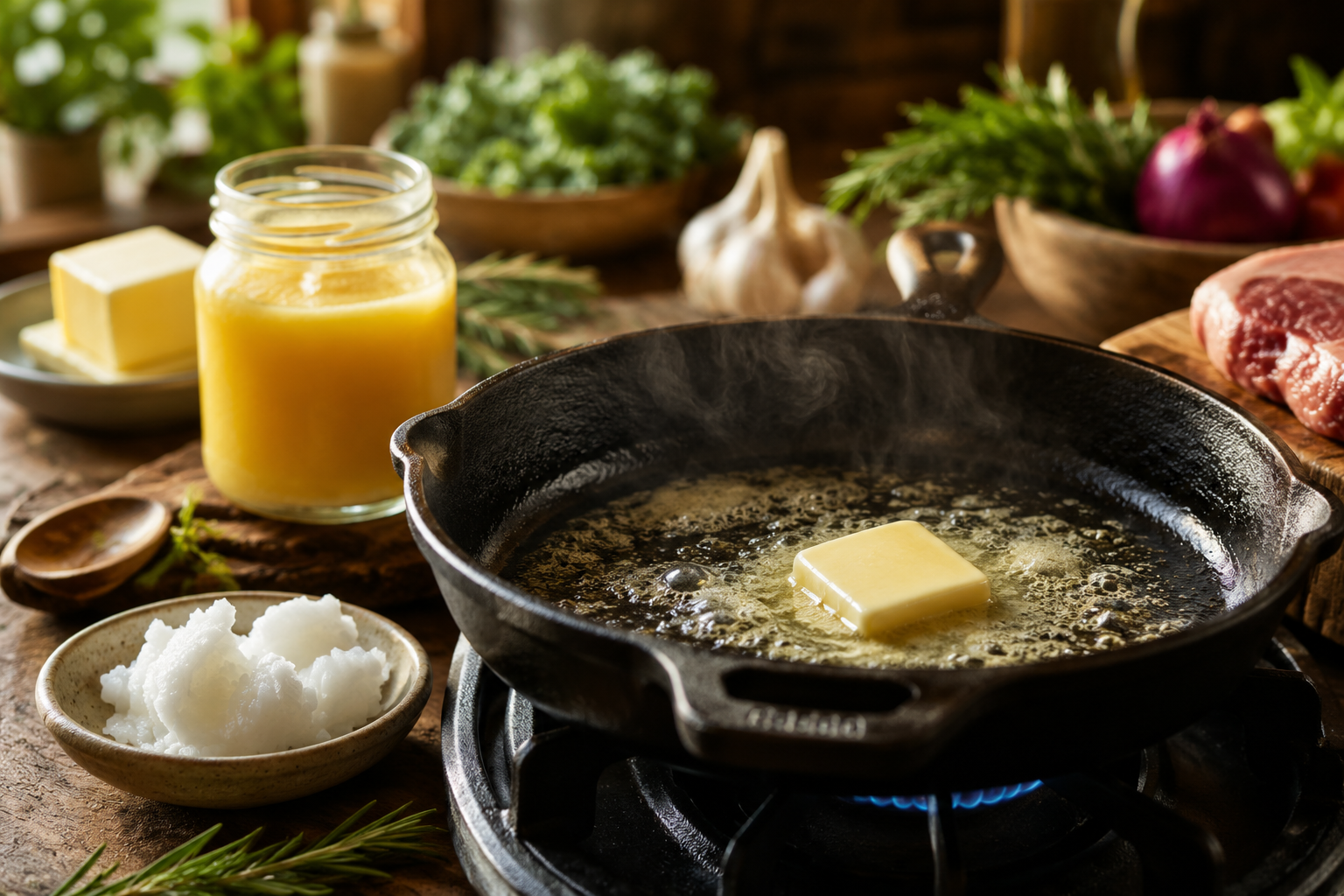
The Best Cooking Oils: Why Heat Stability Matters More Than You’ve Been Told
For decades, people were told to throw away their butter, avoid saturated fats, and replace traditional cooking fats with vegetable oils.
The reasoning seemed simple. Saturated fat raises cholesterol. Vegetable oils lower cholesterol. Therefore, vegetable oils must be healthier.
Unfortunately, nutrition is rarely that simple.
What many people don’t realize is that cooking oils are not just sources of fat. They are collections of delicate molecules that change when exposed to heat. Some fats remain relatively stable when heated. Others become damaged, oxidized, and chemically altered.
When it comes to cooking oils, the most important question may not be which oil lowers cholesterol.
The more important question might be:
What happens to that oil when you heat it?
Not All Fats Are Created Equal
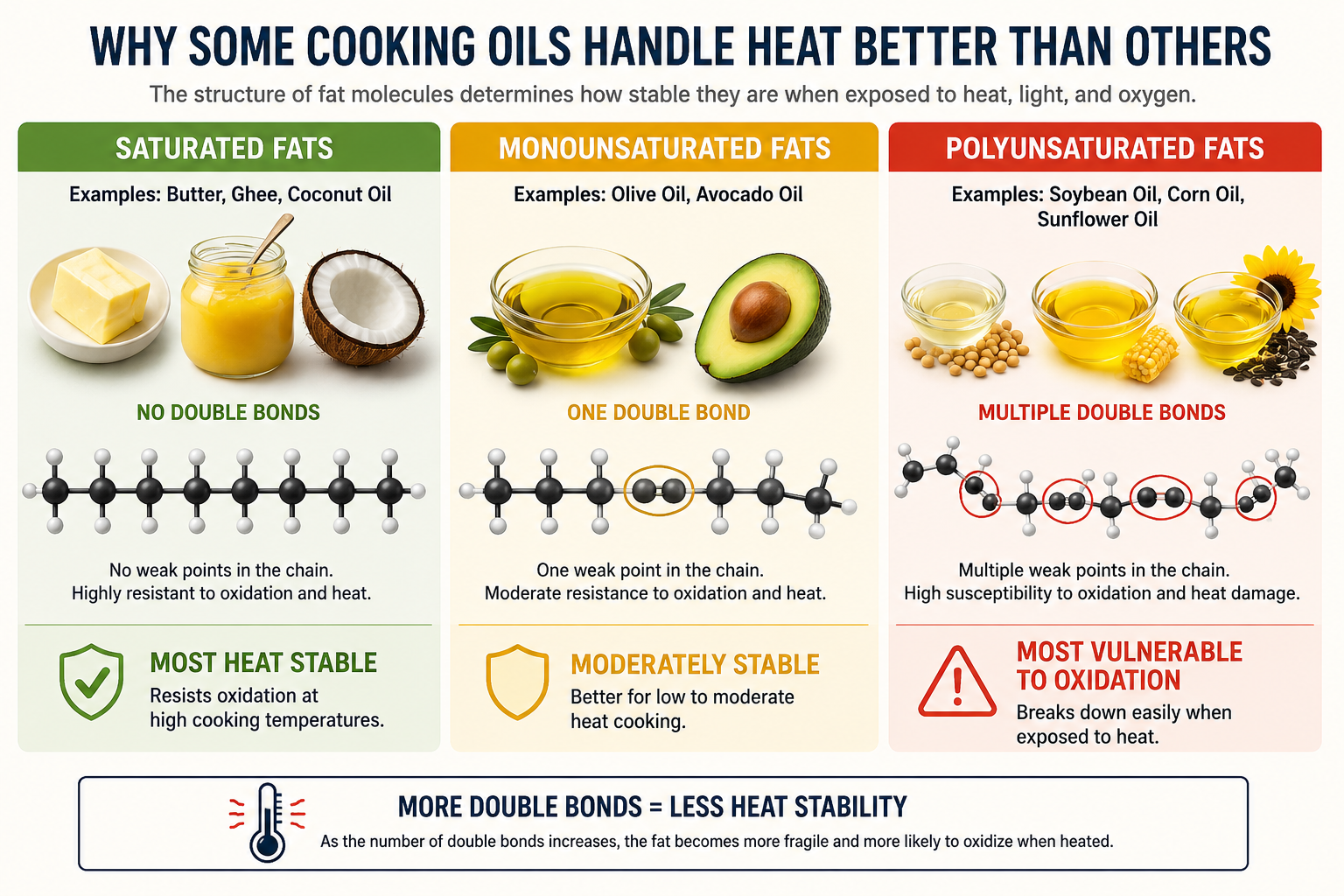
The structure of a fat helps determine how stable it remains during cooking. Saturated fats are generally more resistant to oxidation than polyunsaturated fats.
Fats can be divided into three primary categories:
- Saturated fats
- Monounsaturated fats
- Polyunsaturated fats
The difference between them comes down to chemistry.
Saturated fats have no double bonds in their structure. This makes them highly stable and resistant to damage from heat.
Monounsaturated fats contain one double bond, making them moderately stable.
Polyunsaturated fats contain multiple double bonds, which makes them much more fragile and vulnerable to oxidation.
Think of these double bonds like weak points in a chain. The more weak points present, the easier it is for heat, oxygen, and light to damage the fat.
Why Oxidation Matters
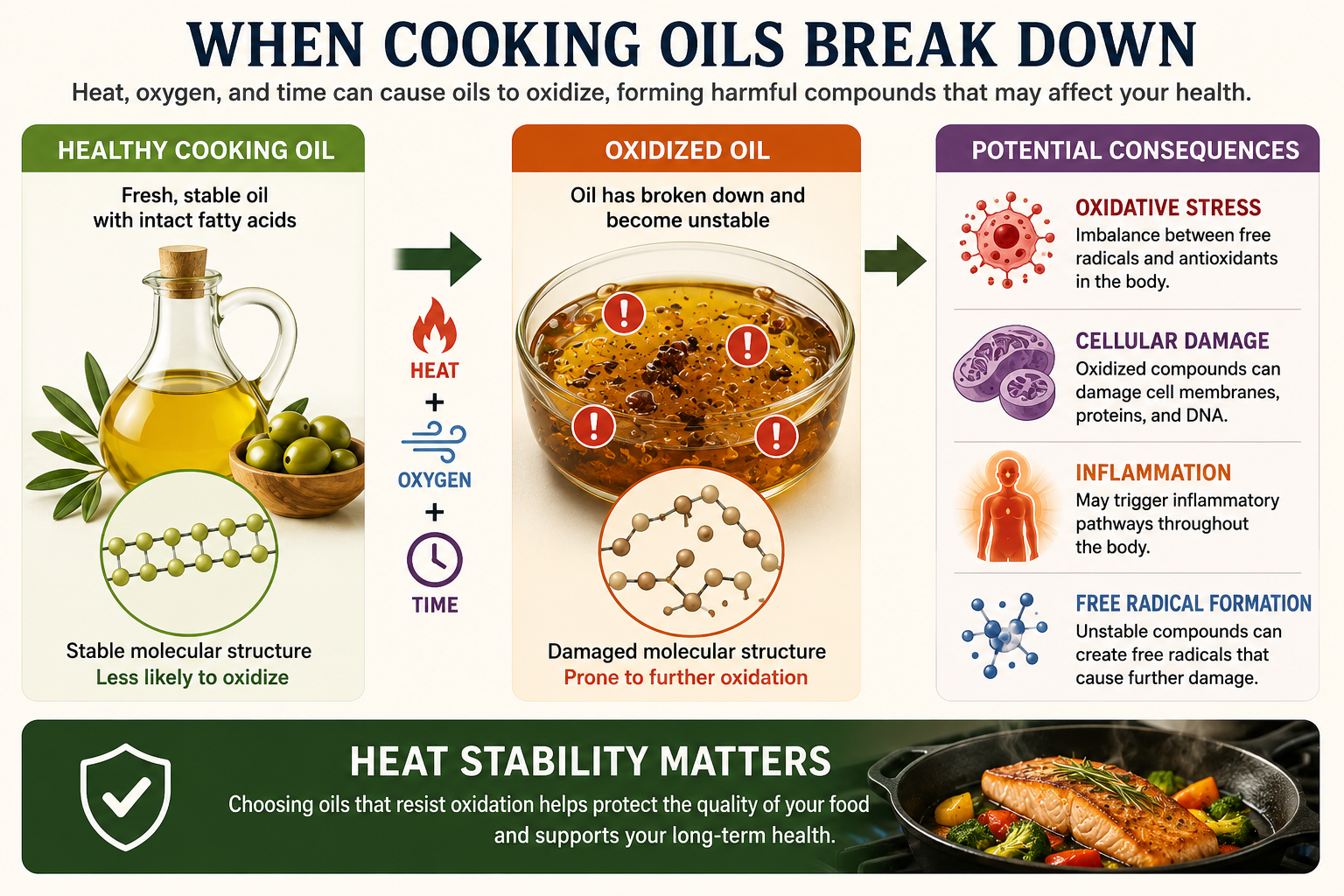
Some cooking oils are more vulnerable to oxidation than others. Heat stability is an important factor when choosing oils for cooking.
When oils are heated, exposed to air, or stored improperly, oxidation can occur.
Oxidized fats can produce compounds such as aldehydes and lipid peroxides that may contribute to inflammation and cellular stress within the body.
This is where the conversation about cooking oils becomes much more important than simply looking at cholesterol numbers.
A bottle of oil may look healthy sitting on the grocery store shelf. But what happens when that oil is heated to 400 degrees and used repeatedly for cooking?
The answer depends on the type of fat.
Oxidation is not just a problem for cooking oils. Oxidative stress has been linked to aging and many chronic diseases. This is one reason why diets rich in antioxidant-containing foods are so important. If you’d like to learn more about antioxidants, read our article:
https://totalhealthcentervb.com/chocolate-antioxidant-benefits/
The Problem With Many Vegetable Oils
Many commonly used vegetable oils are rich in polyunsaturated omega-6 fats.
These include:
- Soybean oil
- Corn oil
- Sunflower oil
- Safflower oil
- Cottonseed oil
- Grapeseed oil
Because these oils contain large amounts of polyunsaturated fats, they are more susceptible to oxidation when exposed to heat.
Adding to the concern, many of these oils undergo extensive industrial processing before reaching store shelves. They are frequently refined, deodorized, bleached, and processed in ways that traditional fats never were.
From a functional medicine perspective, the concern is not simply that these oils contain omega-6 fats.
The concern is that modern diets often provide massive amounts of omega-6 fats while simultaneously exposing these oils to repeated heating and processing.
If you’d like a deeper dive into the seed oil discussion, read our complete guide:
https://totalhealthcentervb.com/seed-oils-inflammation-linoleic-acid-metabolic-health/
Why Saturated Fats Perform Better at High Heat
This is where saturated fats deserve a second look.
Because saturated fats are chemically stable, they tolerate cooking temperatures much better than highly polyunsaturated oils.
Examples include:
- Coconut oil
- Ghee
- Butter
- Tallow
- Lard
For generations, these fats were used in kitchens around the world long before vegetable oils became common.
One reason is simple:
They hold up well under heat.
This does not mean people should consume unlimited amounts of saturated fat. It means that when choosing a cooking fat, stability matters.
A stable fat exposed to heat may be preferable to an unstable fat that becomes oxidized during cooking.
What About Olive Oil?
Olive oil creates confusion because it is primarily monounsaturated rather than saturated.
The good news is that extra virgin olive oil is relatively stable compared to highly polyunsaturated vegetable oils because of its high monounsaturated fat content and natural antioxidant compounds.
For low to moderate heat cooking, olive oil remains an excellent choice.
It is also one of the best oils for salad dressings and other uncooked applications.
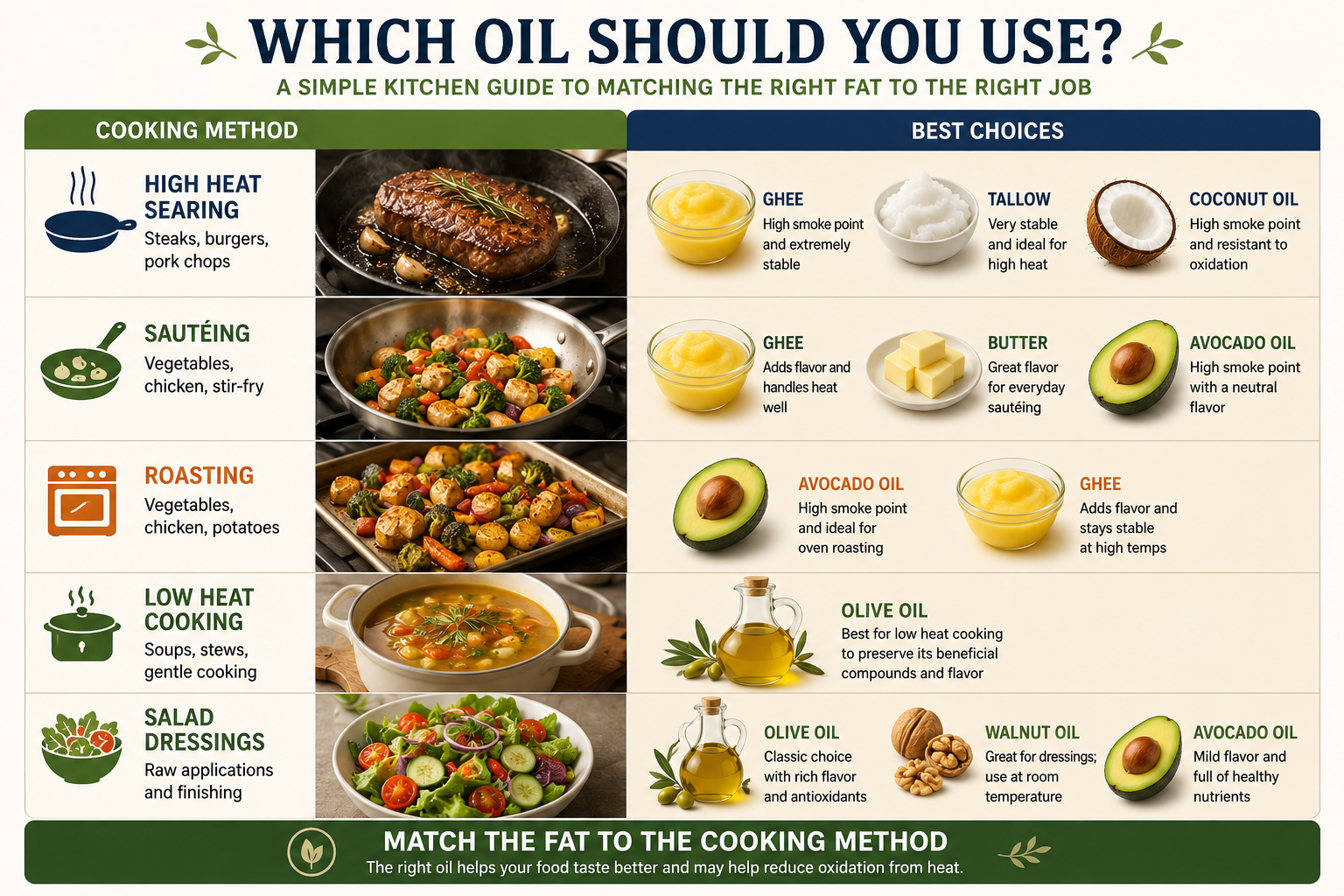
Different cooking methods require different fats. Choosing an oil based on heat stability may help reduce oxidation during cooking.
Choosing the Right Fat for the Job
Instead of asking which oil is universally healthy, ask which oil is appropriate for the cooking method.
For High-Heat Cooking
- Ghee
- Coconut oil
- Tallow
- Lard
- Butter (moderate-high heat)
For Low to Moderate Heat Cooking
- Extra virgin olive oil
- Avocado oil
For Cold Uses
- Extra virgin olive oil
- Avocado oil
- Macadamia oil
- Walnut oil
The goal is not to fear fats.
The goal is to use the right fat for the right purpose.
Why This Matters for Long-Term Health
For years, the discussion about fats focused almost entirely on cholesterol levels.
Meanwhile, questions about inflammation, oxidation, food processing, nutrient density, and metabolic health received far less attention.
Today, researchers are increasingly recognizing that chronic inflammation and oxidative stress play important roles in many health conditions.
These same processes are frequently discussed in relation to cardiovascular disease and arterial plaque formation. If you’d like to learn more, read:
https://totalhealthcentervb.com/arterial-plaque-calcification-reversal/
A Functional Medicine Perspective
One of the biggest mistakes in nutrition is focusing on a single marker while ignoring the bigger picture.
Food is more than calories.
And fats are more than cholesterol.
When evaluating cooking oils, it is important to consider how they are produced, how they are stored, how they are cooked, and what happens to them after they are exposed to heat.
This is one reason I often recommend returning to traditional fats that humans have used for generations while minimizing highly processed industrial seed oils.
Sometimes newer is not better.
Sometimes the old ways were right all along.
Key Takeaways
- Heat stability is one of the most important factors when choosing a cooking oil.
- Saturated fats are generally more resistant to oxidation than polyunsaturated fats.
- Many vegetable oils contain large amounts of omega-6 polyunsaturated fats that are vulnerable to heat damage.
- Extra virgin olive oil remains an excellent choice for low to moderate heat cooking and salad dressings.
- Matching the cooking fat to the cooking method may be more important than focusing on cholesterol alone.
- Highly processed industrial seed oils may contribute to increased oxidation when exposed to high cooking temperatures.
About Dr. Scott
Dr. Mark Scott has been helping patients improve their health through chiropractic care and functional medicine since 1997. As the founder of Total Health Center in Virginia Beach, he focuses on identifying and addressing the underlying causes of chronic health problems rather than simply managing symptoms.
Dr. Scott works with patients experiencing thyroid disorders, digestive conditions, autoimmune disease, fatigue, metabolic dysfunction, chronic pain, cardiovascular concerns, and other complex health challenges. His approach combines advanced laboratory testing, nutrition, lifestyle medicine, and natural therapies to help patients achieve lasting improvements in health and quality of life.
Learn more about Dr. Scott:
https://totalhealthcentervb.com/about-thc/meet-dr-scott/
References
Harcombe Z, et al. Evidence from randomized controlled trials does not support current dietary fat guidelines. Open Heart.
Ramsden CE, et al. Re-evaluation of the traditional diet-heart hypothesis. BMJ.
DiNicolantonio JJ, O’Keefe JH. Omega-6 vegetable oils as a driver of coronary heart disease. Open Heart.
Grootveld M, et al. The role of oxidized cooking oils and aldehyde formation during high-temperature cooking. Scientific Reports.
Schwingshackl L, Hoffmann G. Monounsaturated fatty acids and cardiovascular health. PLoS One.
National Institutes of Health. Omega-3 and Omega-6 Fatty Acids Fact Sheet.
International Journal of Molecular Sciences. Lipid Oxidation Products and Human Health.
FAQ
What is the best oil for high-heat cooking?
For high-heat cooking, more stable fats such as ghee, coconut oil, tallow, and lard generally hold up better than highly polyunsaturated vegetable oils.
Why are polyunsaturated oils less stable when heated?
Polyunsaturated fats contain multiple double bonds, which makes them more fragile and more vulnerable to oxidation from heat, oxygen, and light.
Are saturated fats better for cooking?
Saturated fats are generally more heat-stable than polyunsaturated fats, which can make them better suited for higher-temperature cooking.
Is olive oil good for cooking?
Extra virgin olive oil is a good choice for low to moderate heat cooking and is excellent for salad dressings and cold uses.
What cooking oils should I avoid?
It is best to limit highly processed industrial seed oils such as soybean oil, corn oil, cottonseed oil, safflower oil, sunflower oil, and grapeseed oil, especially for high-heat cooking.
Why does oxidation matter with cooking oils?
When oils oxidize, they can produce compounds such as aldehydes and lipid peroxides that may contribute to inflammation and cellular stress.
For a Free Conultation call (757)363-8571 or click the button.