
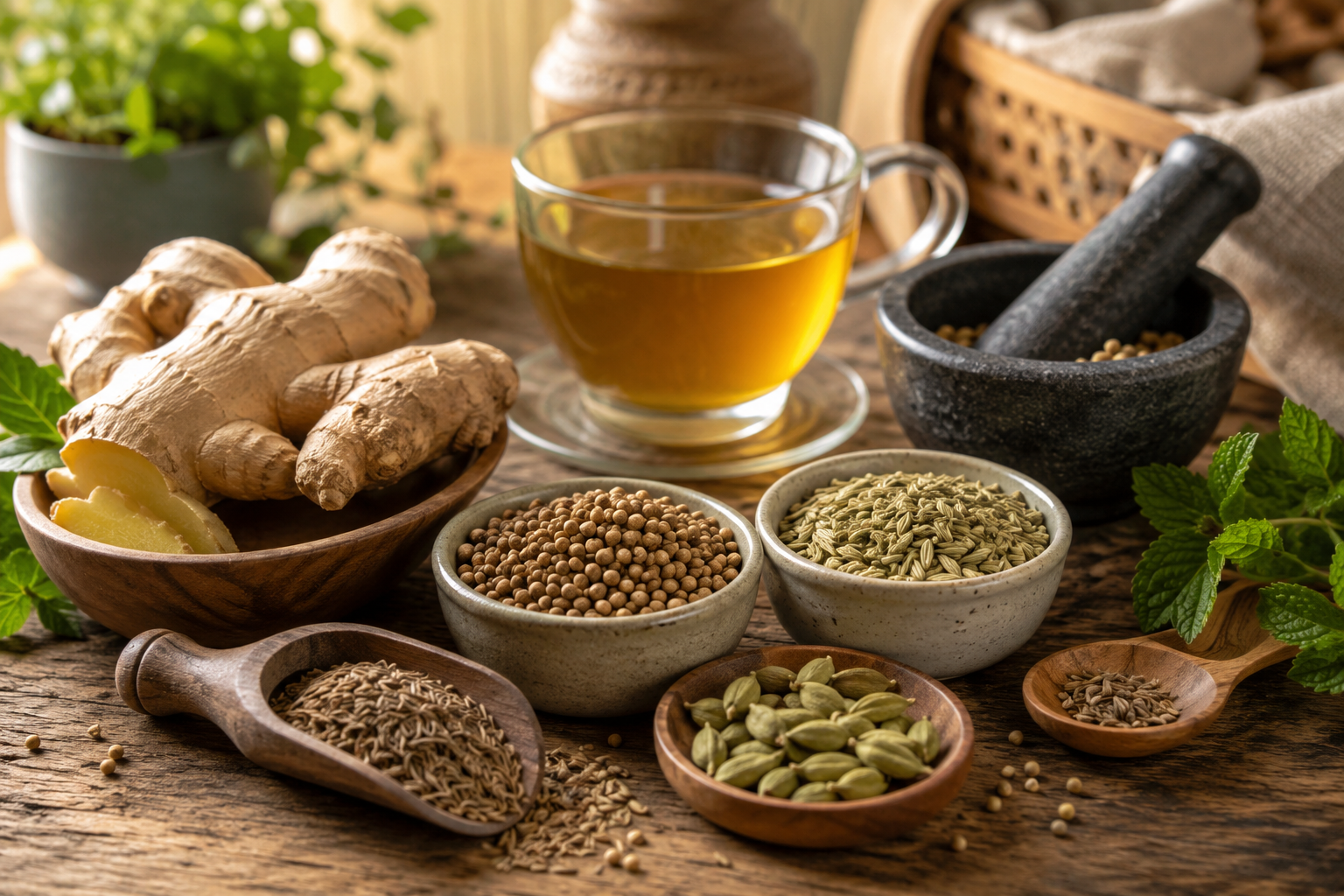
The Ancient Digestive Herb Formula That Still Makes Sense Today
If you travel through traditional cultures around the world, you’ll notice something interesting. Long before digestive enzymes, probiotics, and gut health supplements existed, people routinely used herbs and spices to support digestion.
Many of these traditions developed over thousands of years through simple observation. People noticed that certain herbs seemed to help after a heavy meal. Others reduced bloating or improved comfort after eating. Over time, combinations of herbs emerged that were valued not only for flavor but also for their ability to support digestive function.
One of the most respected traditional combinations includes ginger, cumin, coriander, fennel, and cardamom. While modern science is still uncovering all of the mechanisms involved, many of the traditional claims surrounding these herbs are surprisingly consistent with what we now understand about digestion.
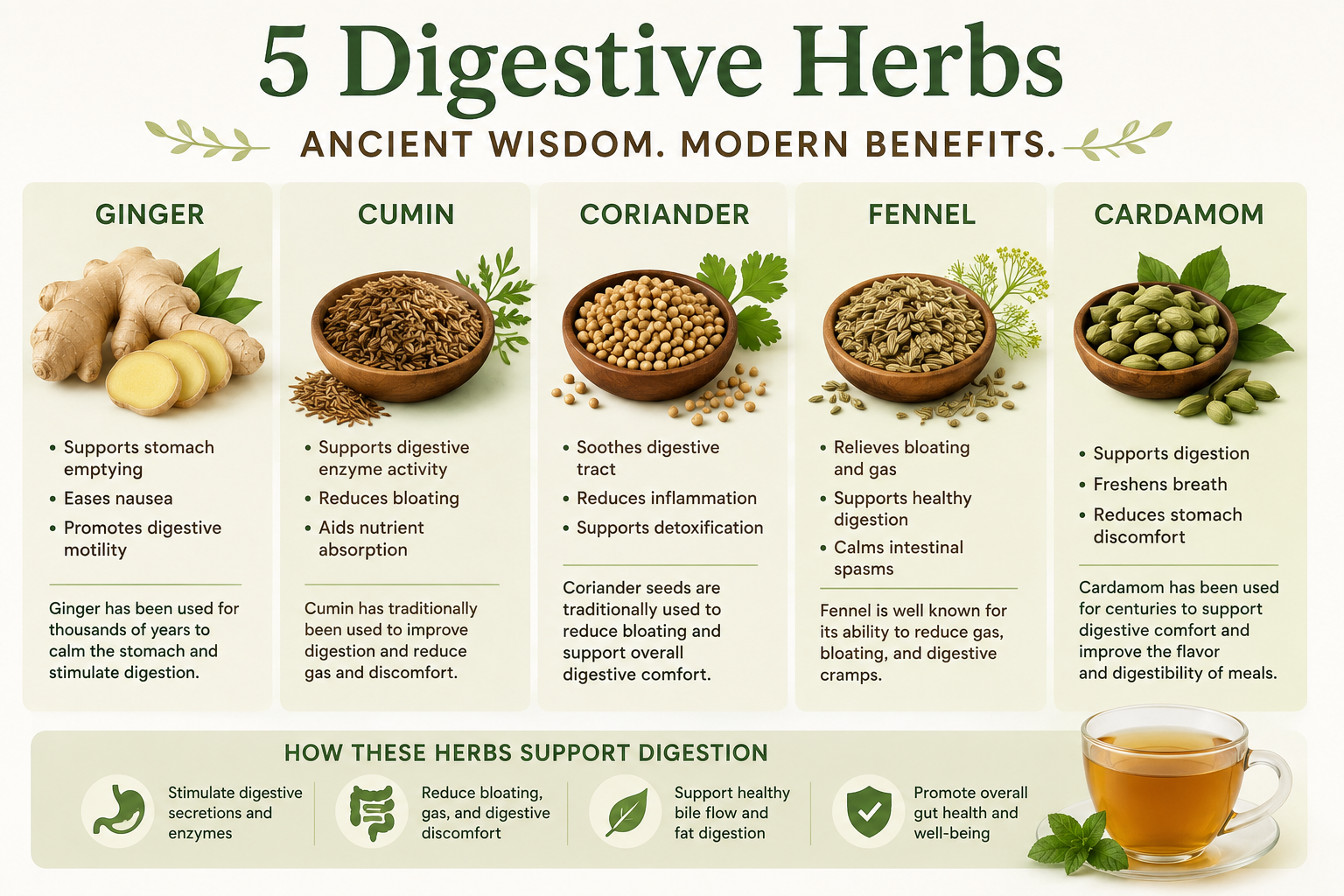
For thousands of years, traditional cultures have used ginger, cumin, coriander, fennel, and cardamom to support digestive comfort, healthy digestion, and overall gut health.
Why Digestion Matters More Than Most People Realize
Most people think digestion simply means breaking food into smaller pieces. In reality, digestion is one of the most complex processes in the human body.
The digestive system must produce adequate stomach acid, release digestive enzymes from the pancreas, deliver bile from the liver and gallbladder, absorb nutrients through the intestinal lining, and eliminate waste efficiently. If any of these steps become impaired, symptoms such as bloating, gas, reflux, constipation, abdominal discomfort, and nutrient deficiencies can develop.
Many people are surprised to learn that symptoms such as bloating and reflux are not always caused by too much stomach acid. In fact, low stomach acid is often an overlooked contributor to digestive dysfunction. If you would like to learn more about this concept, read our article on digestion and stomach acid:
https://totalhealthcentervb.com/digestion/
One of the most common mistakes I see in practice is focusing only on symptoms while overlooking the underlying digestive processes that may not be functioning optimally.
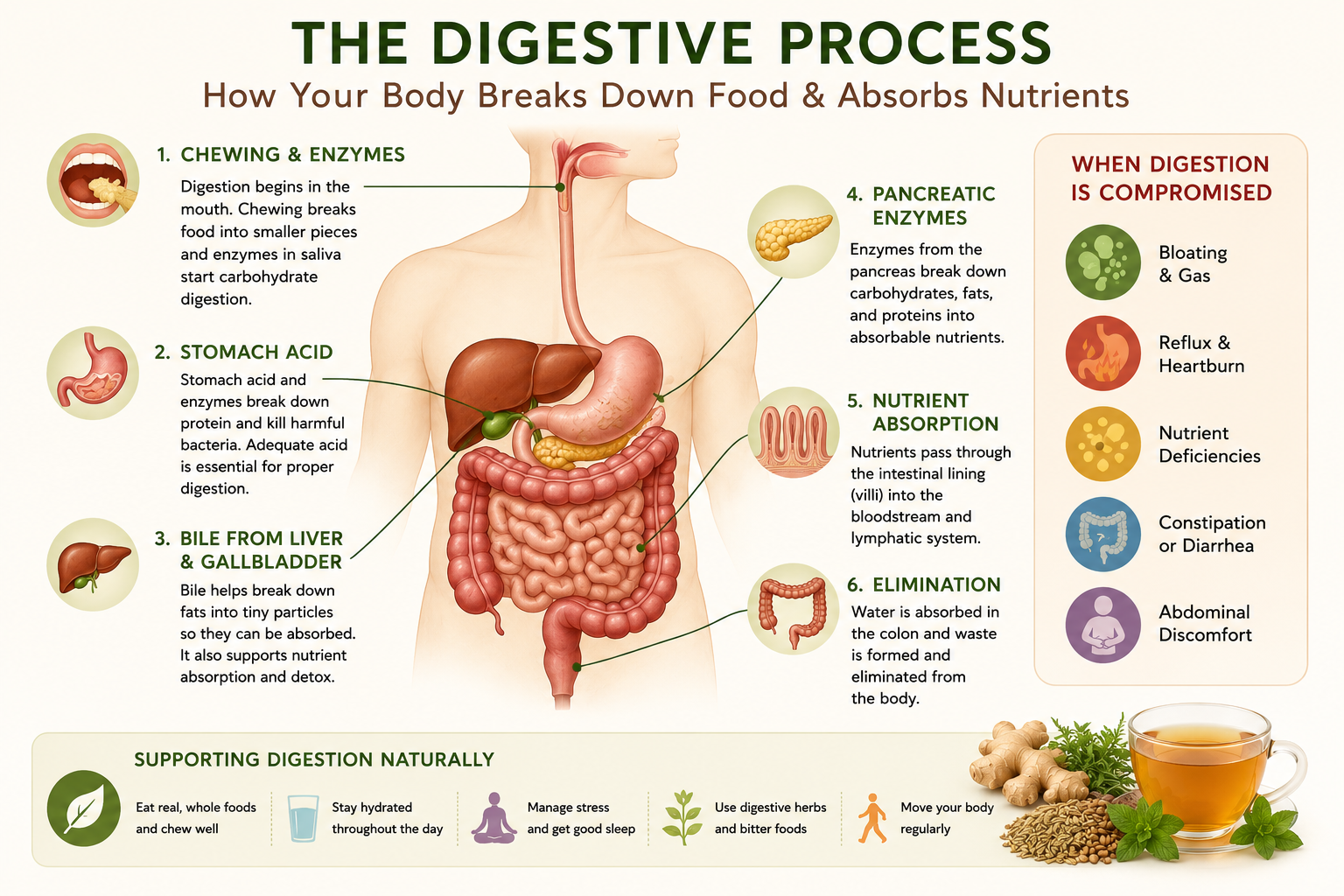
Healthy digestion depends on much more than the stomach. Stomach acid, bile flow, digestive enzymes, nutrient absorption, and elimination must all work together for optimal digestive function.
Ginger: The Digestive Powerhouse
Ginger has been used for digestive support for thousands of years. Research suggests ginger may help support healthy stomach emptying and digestive motility, which is one reason it is commonly used for nausea and digestive discomfort.
Many people also find that ginger provides a warming effect that seems to stimulate digestive activity. Whether consumed fresh, powdered, or as a tea, ginger remains one of the most versatile digestive herbs available.
In traditional medicine systems, ginger is often considered one of the foundational herbs for awakening digestion and preparing the digestive tract to process food more effectively.
Cumin, Coriander, and Fennel: The Traditional Trio
Cumin, coriander, and fennel are frequently used together in traditional digestive formulas.
These herbs have historically been used to reduce bloating, support digestive comfort, and promote healthy digestive secretions. Modern research suggests they may help support normal digestive enzyme activity and healthy gastrointestinal function.
Fennel is particularly well known for helping reduce gas and bloating after meals. Many cultures serve fennel seeds after eating for this very reason.
Coriander provides a mild, cooling balance, while cumin contributes a deeper digestive-supportive effect. Together they create a combination that has stood the test of time.
If bloating is one of your primary digestive complaints, you may also enjoy our article:
https://totalhealthcentervb.com/bloating-after-eating-what-it-means-and-how-to-fix-it/
Cardamom: The Forgotten Digestive Herb
Cardamom often receives less attention than the other herbs, yet it has a long history of use in traditional medicine systems.
Traditionally, cardamom has been used to support healthy digestion, reduce digestive discomfort, and improve the flavor and digestibility of meals. Its aromatic compounds may help support digestive function while adding a unique flavor profile that pairs well with both savory dishes and herbal teas.
While cardamom may not receive the same attention as ginger or turmeric, many traditional practitioners consider it an important component of a balanced digestive formula.
The Often Overlooked Role of Bile
One of the most important digestive fluids in the body is bile.
Bile is produced by the liver and stored in the gallbladder until needed. When you eat fats, bile is released into the digestive tract where it helps emulsify fats into smaller particles that can be absorbed and utilized by the body.
Without adequate bile flow, fat digestion becomes less efficient. This can affect the absorption of important nutrients including vitamins A, D, E, and K, as well as many beneficial fatty acids.
Many digestive symptoms that seem unrelated to the gallbladder can actually be connected to poor bile flow. To learn more, read:
https://totalhealthcentervb.com/gallbladder-dysfunction-gut-health/
In functional medicine, supporting healthy bile flow is often an important part of restoring digestive health.
Foods That Naturally Support Healthy Bile Flow
Several traditional foods have long been associated with supporting healthy bile production and bile flow.
These include artichokes, beets, celery, apples, fennel, and fenugreek.
Many people find that incorporating these foods regularly helps support digestive comfort, particularly when consuming meals that contain healthy fats.
One traditional strategy is to consume a small amount of freshly juiced beet, apple, and celery before or with a meal. Others enjoy fennel tea or fenugreek tea as part of their daily routine.
Why Bile Is So Important
Most people think of bile simply as something that helps digest fats, but its role extends much further.
Healthy bile flow helps support nutrient absorption, assists with the elimination of waste products, contributes to regular bowel movements, and helps neutralize stomach acid as food leaves the stomach and enters the small intestine.
Bile also serves as one of the body’s important pathways for eliminating toxins and waste products. When bile flow becomes sluggish, digestive function can suffer. This is one reason many people notice improvements in digestion when they begin supporting liver and gallbladder function through diet and lifestyle changes.
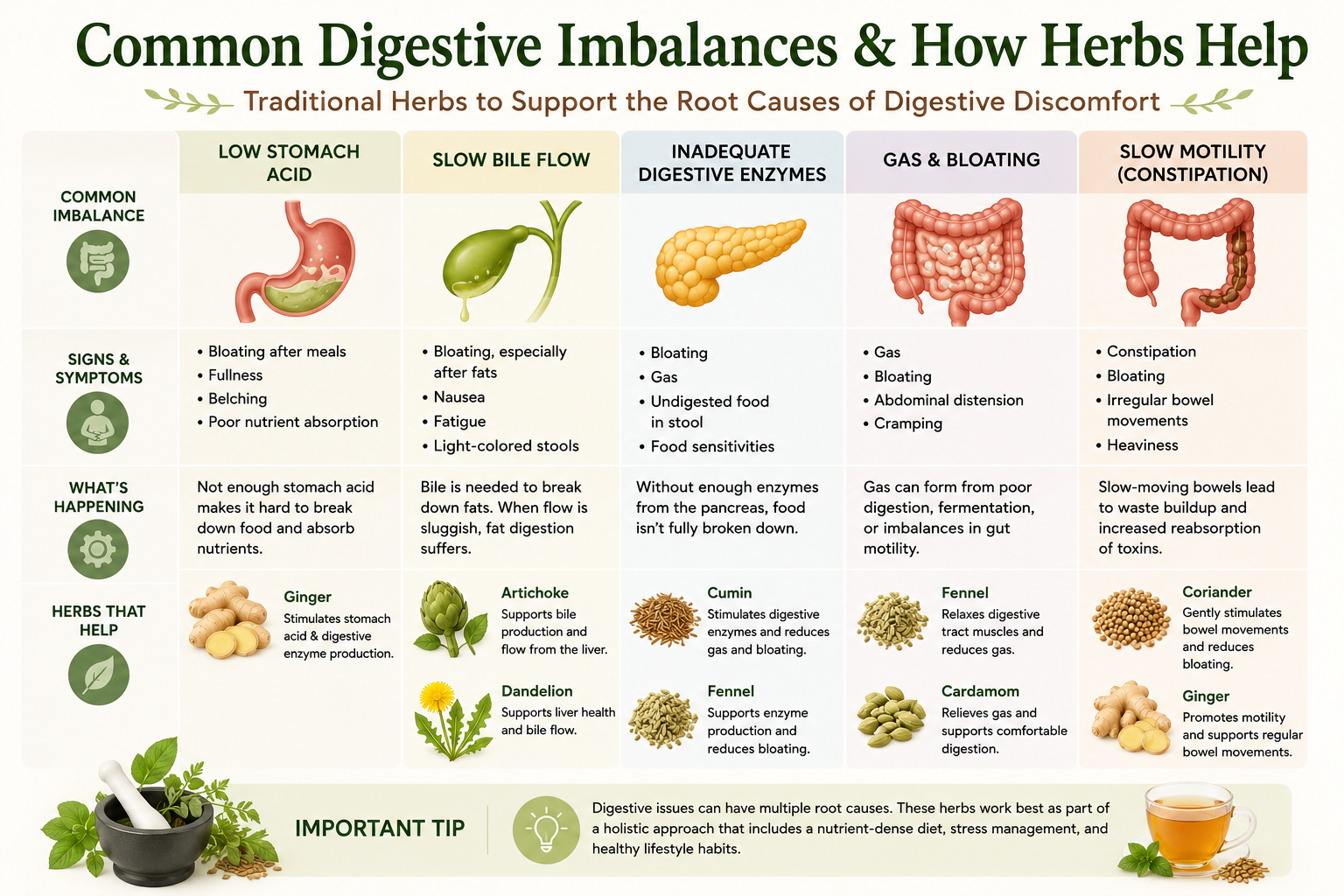
Digestive symptoms often have underlying causes. Traditional herbs may help support stomach acid production, bile flow, digestive enzymes, motility, and digestive comfort.
A Functional Medicine Perspective
One of the principles of functional medicine is that symptoms often represent a downstream consequence of dysfunction elsewhere in the body.
When someone experiences bloating, gas, reflux, constipation, or food sensitivities, the solution is not always found in another supplement. Sometimes the answer lies in restoring the foundational digestive processes that humans have relied upon for thousands of years.
This same principle is why many people struggling with IBS and SIBO often fail to improve when only symptoms are addressed. You can learn more in these related articles:
https://totalhealthcentervb.com/ibs-treatment-virginia-beach/
https://totalhealthcentervb.com/why-sibo-treatments-fail/
Simple herbs such as ginger, cumin, coriander, fennel, and cardamom may seem ordinary, but they represent a traditional approach to digestive support that continues to make sense today.
Sometimes the most powerful solutions are not new discoveries at all.
They are ancient practices that modern science is only beginning to understand.
Key Takeaways
• Ginger, cumin, coriander, fennel, and cardamom have been used traditionally to support digestion for centuries.
• These herbs may help support digestive comfort, healthy digestive secretions, and normal digestive function.
• Bile plays a critical role in fat digestion, nutrient absorption, detoxification, and bowel regularity.
• Foods such as beets, apples, celery, fennel, fenugreek, and artichokes may help support healthy bile flow.
• Supporting foundational digestive function may help improve symptoms such as bloating, gas, and digestive discomfort.
For a free consultation call the office (757)363-8571 or click the button.

About Dr. Scott
Dr. Mark Scott has been helping patients improve their health through chiropractic care and functional medicine since 1997. As the founder of Total Health Center in Virginia Beach, he focuses on identifying and addressing the underlying causes of chronic health problems rather than simply managing symptoms.
Dr. Scott works with patients experiencing digestive disorders, thyroid conditions, autoimmune diseases, fatigue, metabolic dysfunction, chronic pain, and other complex health challenges. His approach combines advanced laboratory testing, nutrition, lifestyle medicine, and natural therapies to help patients achieve lasting improvements in health and quality of life.
Learn more about Dr. Scott and Total Health Center:
https://totalhealthcentervb.com/about-thc/meet-dr-scott/
References
Liu Q, Meng X, Li Y, et al. Ginger and its active constituents in digestive health and disease. International Journal of Molecular Sciences. 2020.
Platel K, Srinivasan K. Digestive stimulant action of spices. Food Reviews International. 2004.
National Institute of Diabetes and Digestive and Kidney Diseases. Your Digestive System and How It Works.
National Center for Complementary and Integrative Health. Ginger: Herbs at a Glance.
World Journal of Gastroenterology. Bile acids and their role in digestion and metabolism.
Shah DS, et al. Traditional digestive herbs and gastrointestinal function: A review of current evidence.
Frequently Asked Questions FAQ
What are the best herbs for digestion?
Ginger, cumin, coriander, fennel, and cardamom are traditional digestive herbs that may help support digestive comfort, healthy digestive secretions, and normal gastrointestinal function.
Does ginger help digestion?
Ginger has been traditionally used to support digestion, nausea, stomach comfort, and healthy digestive motility. Many people use ginger tea or fresh ginger before or after meals.
Is fennel good for bloating?
Fennel has a long history of use for gas, bloating, and digestive discomfort. Many cultures traditionally chew fennel seeds after meals to support digestion.
What foods support bile flow?
Foods traditionally associated with healthy bile flow include artichokes, beets, apples, celery, fennel, and fenugreek. These foods may help support fat digestion and digestive comfort.
Why is bile important for digestion?
Bile helps emulsify fats so they can be digested and absorbed. It also supports absorption of fat-soluble vitamins, bowel regularity, and elimination of waste products.
Can digestive herbs replace medical care?
No. Digestive herbs may support normal digestive function, but persistent bloating, reflux, abdominal pain, diarrhea, constipation, or unexplained weight loss should be evaluated by a qualified healthcare provider.