

Gluten University Lesson #11
Why Thyroid Patients Should Consider a Gluten Trial
Part of the Gluten University Educational Series
Gluten University Home
https://totalhealthcentervb.com/gluten-university/
Previous Lesson
https://totalhealthcentervb.com/gluten-autoimmune-connection/
Introduction
If there is one autoimmune condition most frequently discussed in relation to gluten, it is:
Hashimoto’s Thyroiditis
Hashimoto’s is the most common cause of hypothyroidism in developed countries and affects millions of people worldwide.
Many thyroid patients are surprised to learn that functional medicine practitioners often discuss gluten when evaluating thyroid health.
Why?
The answer involves immune function, autoimmunity, intestinal health, and individual responses to food.
This does not mean gluten is the cause of every thyroid problem.
However, it does explain why many practitioners consider a structured gluten trial when working with autoimmune thyroid conditions.
What Is Hashimoto’s Thyroiditis?
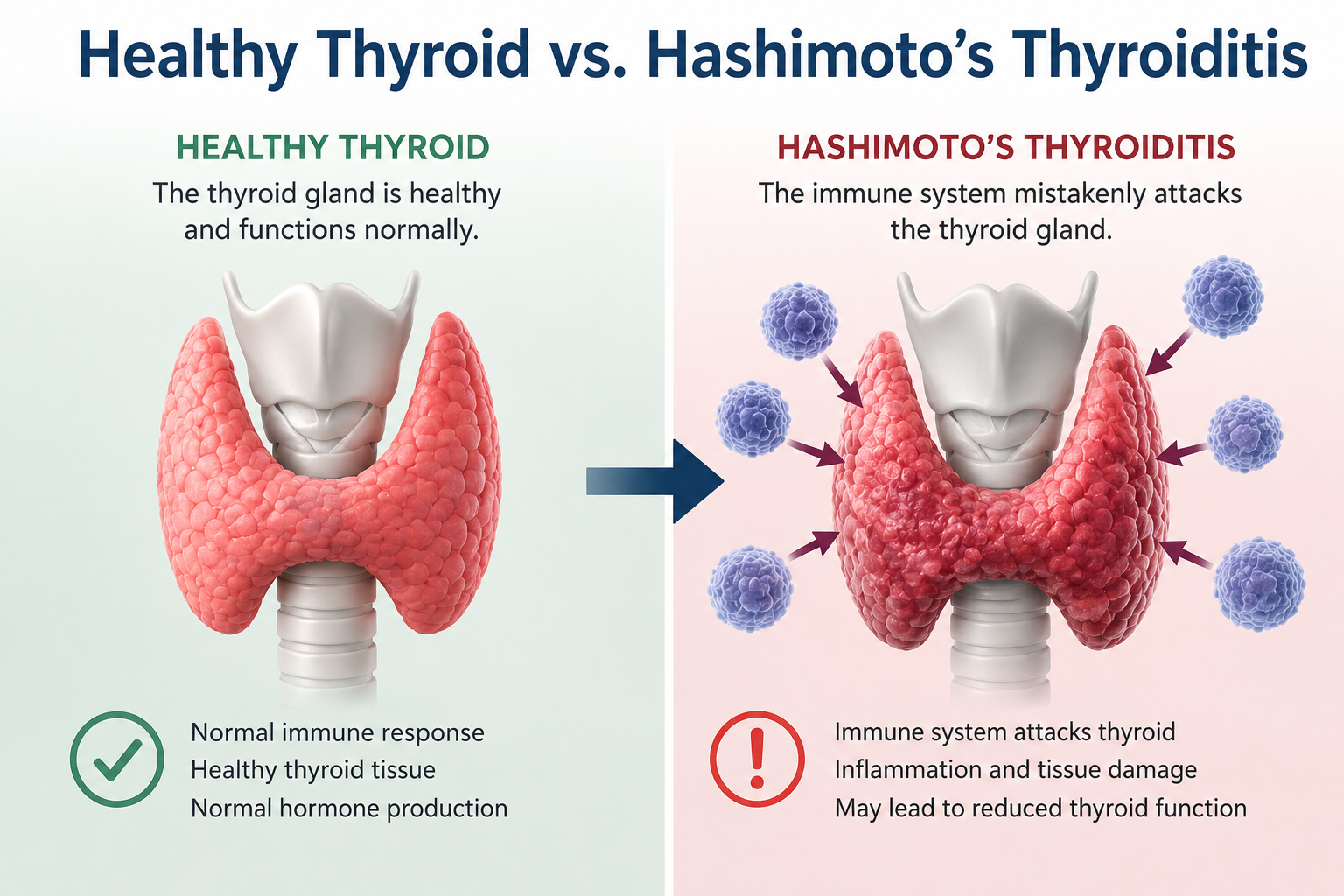
Hashimoto’s thyroiditis occurs when the immune system mistakenly attacks the thyroid gland. Over time, this autoimmune process may contribute to inflammation, tissue damage, and reduced thyroid hormone production.
Hashimoto’s thyroiditis is an autoimmune disease.
Instead of attacking bacteria or viruses, the immune system mistakenly attacks the thyroid gland.
Over time this may contribute to:
- Fatigue
- Weight gain
- Brain fog
- Hair loss
- Constipation
- Depression
- Cold intolerance
- Dry skin
- Hormonal imbalances
Many people are diagnosed only after significant thyroid damage has already occurred.
Why Is Gluten Often Discussed With Hashimoto’s?
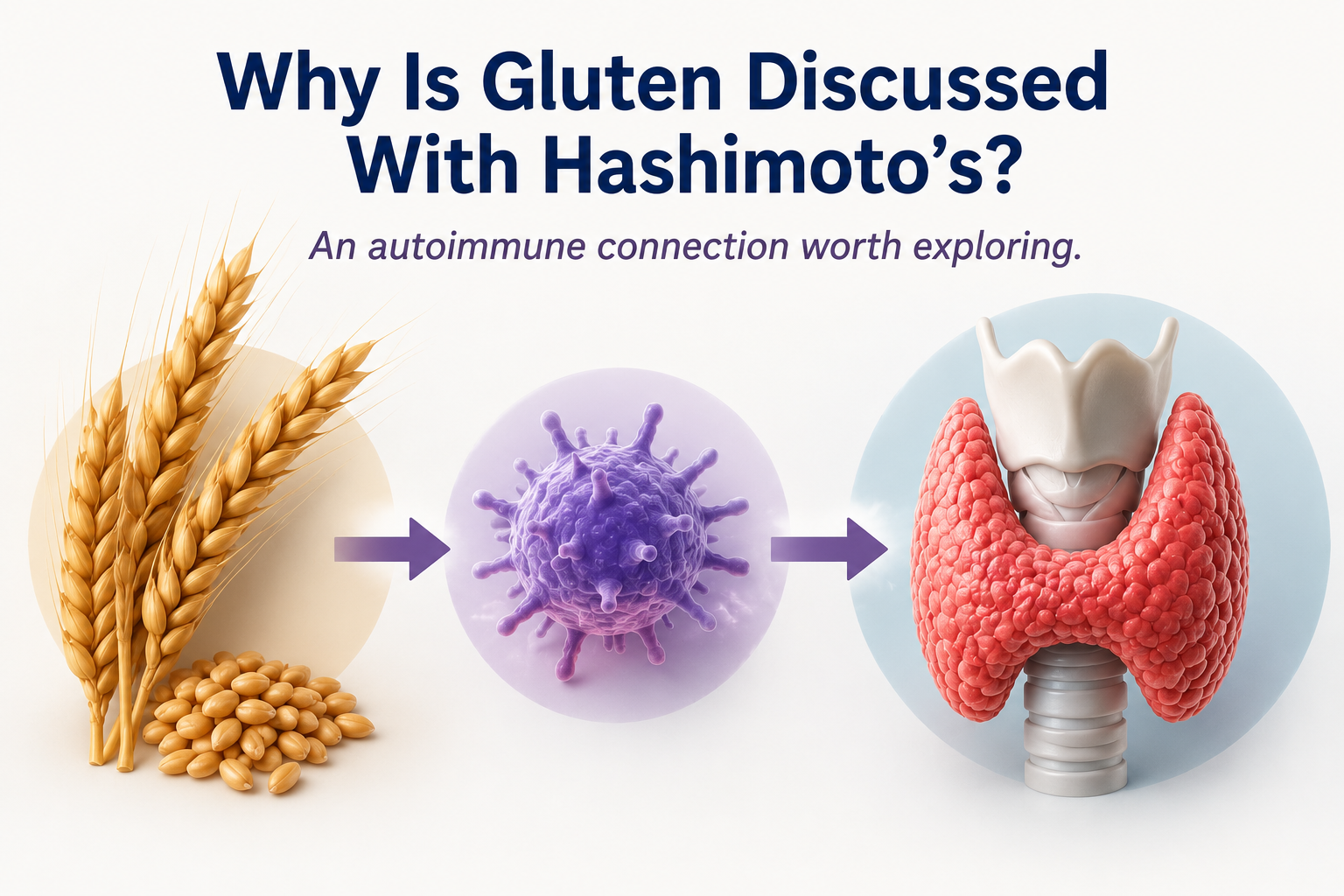
Researchers have observed associations between gluten-related disorders and Hashimoto’s thyroiditis. While this does not prove causation, it is one reason healthcare practitioners may explore gluten intake in some individuals with autoimmune thyroid disease.
Several observations have led researchers and clinicians to investigate this connection.
For example:
- Higher rates of celiac disease have been reported in patients with Hashimoto’s.
- Higher rates of Hashimoto’s have been reported in patients with celiac disease.
- Both conditions involve immune system dysfunction.
- Both may involve intestinal permeability.
These observations do not prove gluten causes Hashimoto’s.
However, they do suggest that gluten may be worth evaluating in certain individuals.
Learn more about Hashimoto’s thyroiditis here:
https://totalhealthcentervb.com/hashimotos-thyroiditis/
The Role of Intestinal Permeability
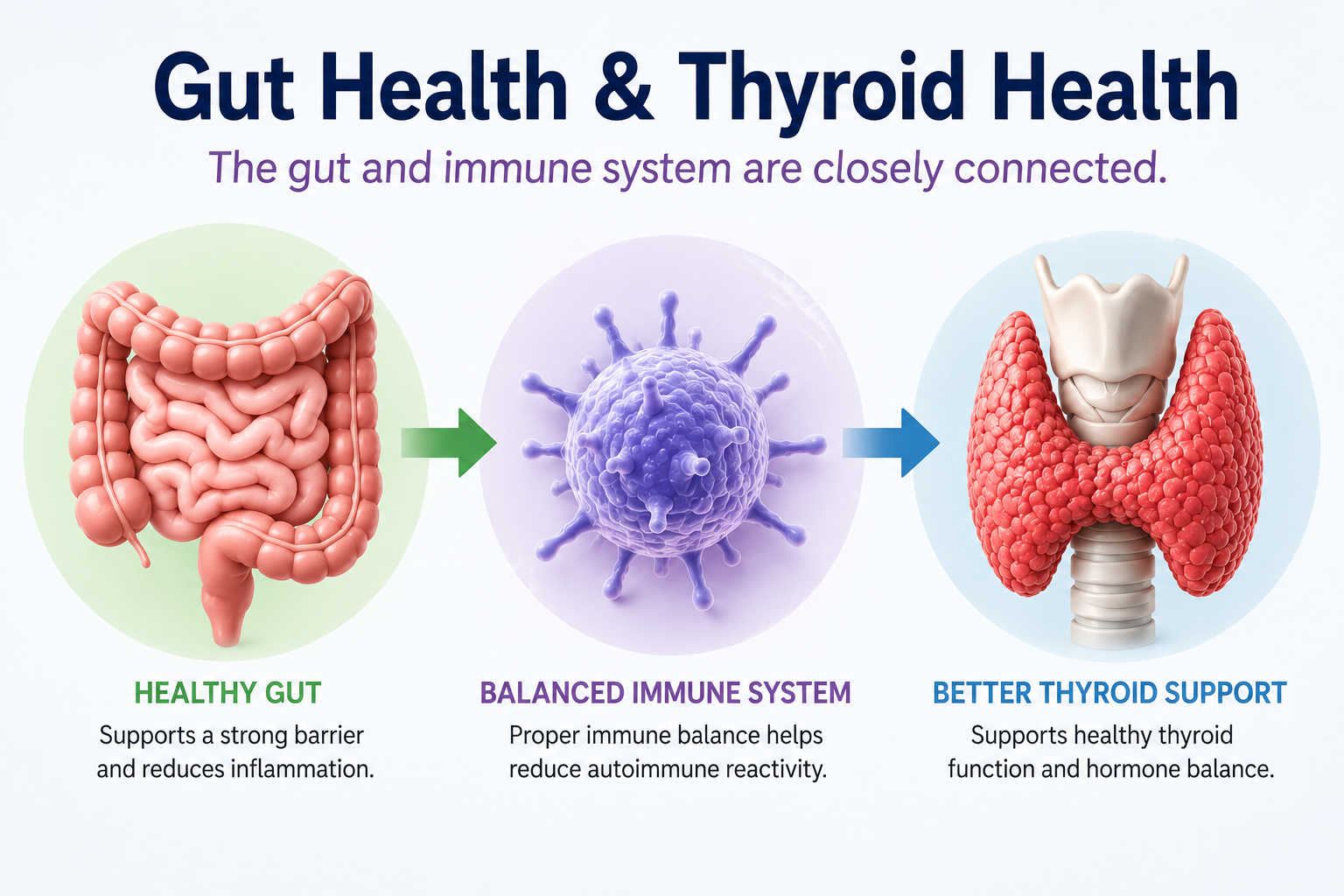
The digestive system and immune system are closely connected. Many functional medicine practitioners view gut health as an important factor in supporting balanced immune function and overall thyroid health.
Many functional medicine practitioners view gut health as an important part of thyroid health.
Why?
Because a large portion of the immune system surrounds the digestive tract.
Researchers continue investigating whether intestinal permeability may contribute to immune activation in susceptible individuals.
This is one reason discussions about Hashimoto’s frequently include conversations about:
- Gut health
- Inflammation
- Food sensitivities
- Digestive function
Learn more about intestinal permeability here:
https://totalhealthcentervb.com/leaky-gut-syndrome/
The Gluten Trial Concept
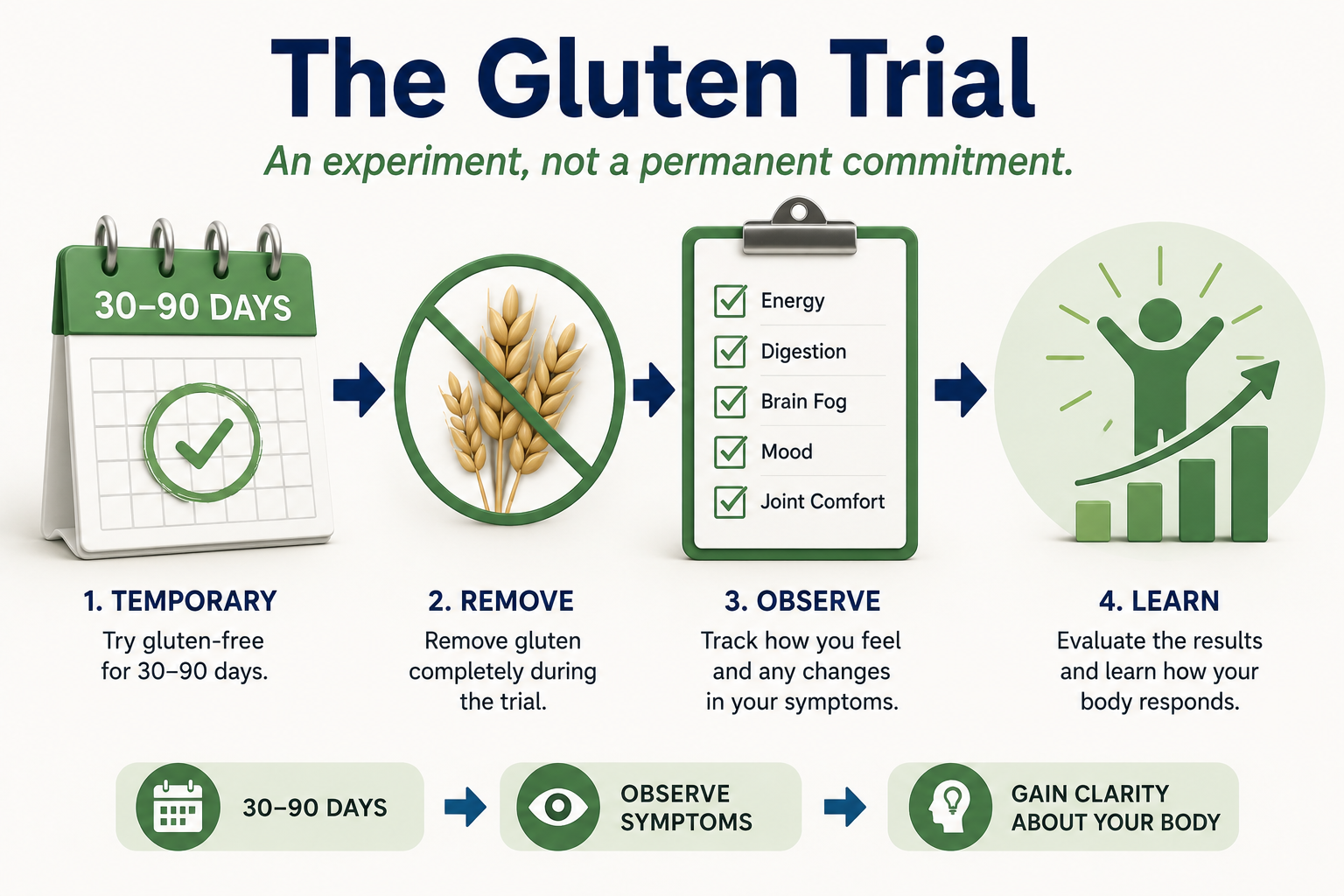
A gluten trial is a temporary experiment designed to help individuals evaluate whether gluten may be contributing to symptoms. The goal is to gather information, observe changes, and make informed decisions based on personal results.
One of the simplest ways to evaluate a potential gluten connection is through a structured elimination trial.
A gluten trial is not a permanent commitment.
It is an experiment.
The goal is to determine whether removing gluten influences:
- Energy
- Digestion
- Brain fog
- Joint discomfort
- Skin issues
- Thyroid symptoms
- Overall well-being
Some individuals notice significant changes.
Others notice little difference.
The purpose is to gather information rather than make assumptions.
Why Symptoms Alone May Not Tell the Whole Story
One common misconception is:
“I don’t have digestive symptoms, so gluten can’t be affecting me.”
However, gluten-related issues are not always digestive.
Some people report:
- Fatigue
- Brain fog
- Headaches
- Joint discomfort
- Mood changes
- Skin issues
without experiencing significant gastrointestinal symptoms.
This is one reason many practitioners take a broader view when evaluating food sensitivities.
Functional Medicine and Personalization
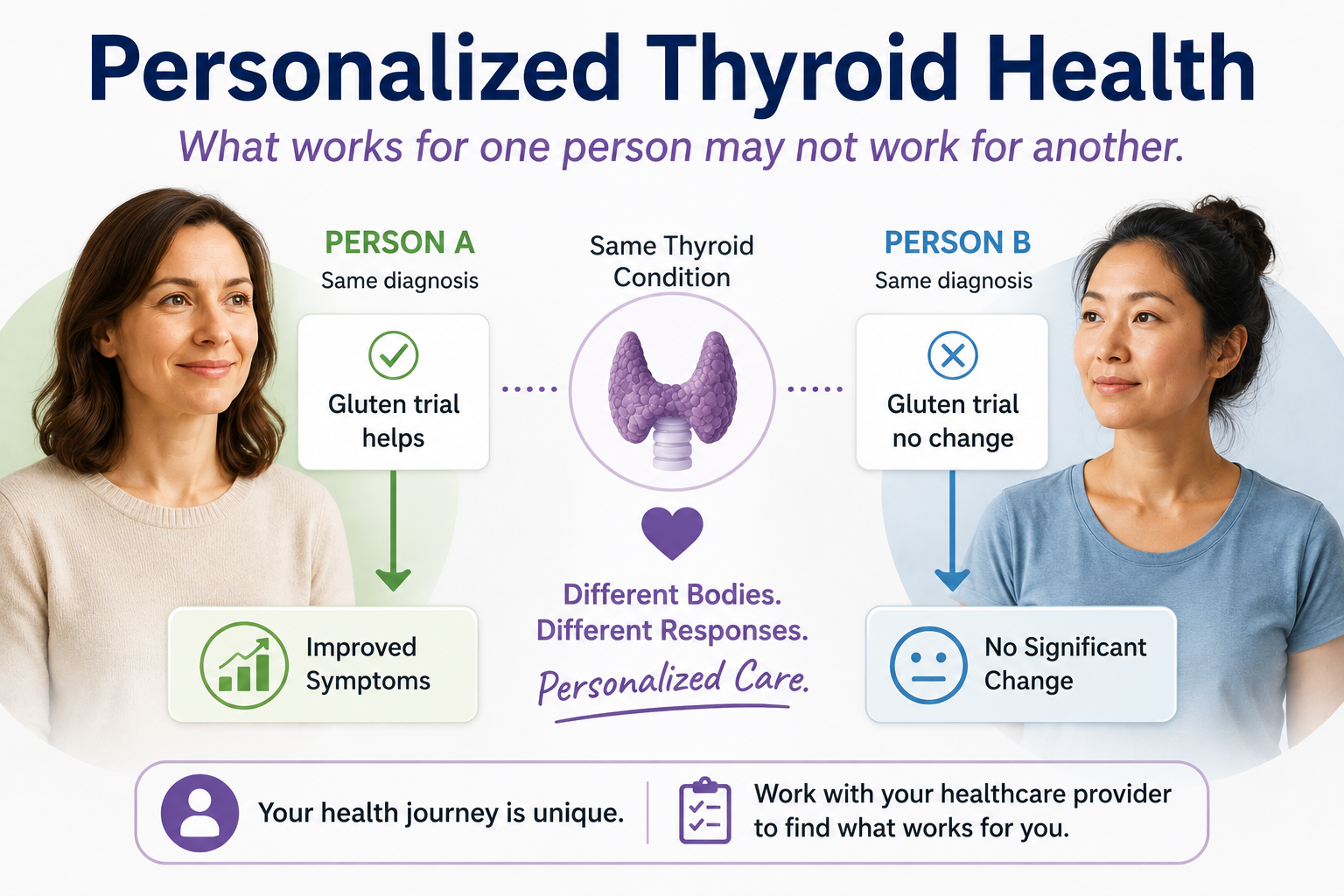
People with the same diagnosis may respond differently to dietary changes. A gluten trial may be helpful for some individuals, while others notice little change. Personalized care focuses on identifying what works best for each person.
The goal of functional medicine is not to place everyone on the same diet.
The goal is personalization.
Some thyroid patients thrive after eliminating gluten.
Others experience little benefit.
Rather than guessing, functional medicine focuses on observation, testing, symptom tracking, and individualized care.
Learn more about our Functional Medicine approach:
https://totalhealthcentervb.com/functional-medicine/
A Gluten Trial Is Not Forever
One of the biggest fears people have is:
“What if I can never eat gluten again?”
The purpose of a gluten trial is not to create fear.
It is to gather information.
Think of it as a health experiment.
If symptoms improve significantly, that information may be valuable.
If nothing changes, that information is valuable too.
Either way, you learn more about how your body responds.
The Bigger Picture
Hashimoto’s thyroiditis is a complex autoimmune condition.
No single food causes every case.
However, because gluten is frequently discussed in autoimmune and thyroid research, many practitioners believe it deserves consideration.
The goal is not dietary perfection.
The goal is understanding which factors may be contributing to your unique health challenges.
Key Takeaways
✔ Hashimoto’s thyroiditis is an autoimmune disease affecting the thyroid gland
✔ Researchers continue investigating connections between gluten and autoimmune thyroid conditions
✔ Gut health and immune health are closely connected
✔ Gluten-related symptoms are not always digestive
✔ A structured gluten trial can provide valuable information
✔ Personalized nutrition is often more effective than one-size-fits-all recommendations
✔ Functional medicine focuses on identifying individual triggers and contributing factors
Could Gluten Be Affecting Your Thyroid Health?
If you have Hashimoto’s thyroiditis, hypothyroidism, fatigue, brain fog, digestive symptoms, or chronic inflammation, a personalized functional medicine evaluation may help identify factors contributing to your symptoms.
Learn more about our Functional Medicine services:
https://totalhealthcentervb.com/functional-medicine/
References
- Fasano A. Celiac Disease and Autoimmune Disorders. PubMed.
- Vojdani A. Food Proteins and Autoimmune Reactivity. PubMed.
- Lerner A. Intestinal Permeability and Autoimmune Disease. PubMed.
- National Center for Biotechnology Information (NCBI)
https://www.ncbi.nlm.nih.gov/
About Dr. Scott
Dr. Scott of Total Health Center in Virginia Beach has been helping patients improve digestive health, thyroid disorders, autoimmune conditions, chronic fatigue, inflammation, and gastrointestinal dysfunction through functional medicine since 1997. His approach focuses on identifying and addressing underlying causes through advanced testing, nutrition, lifestyle modification, and personalized care.
Need Help Determining Whether Food Sensitivities Are Affecting Your Health?
Schedule a consultation with Total Health Center and discover a personalized approach to digestive health, immune function, thyroid health, and long-term wellness.
Next Lesson
Lesson #12
Gluten and Leaky Gut
In the next lesson we’ll explore intestinal permeability, gut barrier function, and why leaky gut has become one of the most discussed topics in functional medicine and autoimmune health.
Frequently Asked Questions
Why are Hashimoto’s thyroiditis and gluten often discussed together?
Researchers have observed higher rates of gluten-related disorders in individuals with Hashimoto’s thyroiditis compared to the general population. While this does not prove that gluten causes Hashimoto’s, it is one reason healthcare practitioners may consider evaluating gluten intake in some thyroid patients.
Does gluten cause Hashimoto’s thyroiditis?
No. Hashimoto’s thyroiditis is a complex autoimmune condition influenced by genetics, immune function, environmental factors, gut health, nutrient status, and lifestyle factors. Gluten may be one contributing factor for some individuals, but it is rarely the sole cause.
Should everyone with Hashimoto’s avoid gluten?
Not necessarily. Some individuals with Hashimoto’s report improvements in symptoms when eliminating gluten, while others notice little change. The decision should be individualized and based on a person’s health history, symptoms, and response to dietary changes.
What is a gluten trial?
A gluten trial is a structured elimination of gluten-containing foods for a specific period of time, followed by an evaluation of symptoms and overall health. The goal is to determine whether gluten may be contributing to health concerns.
How long should a gluten trial last?
Many healthcare practitioners recommend a trial lasting at least 30 to 90 days. This allows sufficient time to observe changes in symptoms such as fatigue, digestion, brain fog, inflammation, skin issues, and overall well-being.
Can gluten affect the thyroid even if I don’t have celiac disease?
Researchers continue investigating this question. Some individuals without celiac disease report improvements in symptoms after removing gluten, but responses vary considerably from person to person.
Why do functional medicine practitioners recommend gluten trials?
Functional medicine practitioners often recommend gluten trials because gluten is a modifiable dietary factor. A temporary elimination trial may provide valuable information about how an individual’s body responds to gluten.
What symptoms might improve during a gluten trial?
Some individuals report improvements in:
- Fatigue
- Brain fog
- Digestive symptoms
- Bloating
- Joint discomfort
- Skin issues
- Energy levels
- Overall sense of well-being
Results vary between individuals.
What if I remove gluten and notice no improvement?
That information is still valuable. A gluten trial is an experiment designed to gather information. If symptoms do not improve, it may indicate that other factors deserve greater attention.
Is a gluten trial meant to be permanent?
Not necessarily. The purpose of a gluten trial is to learn how your body responds. Decisions about long-term dietary changes should be based on your individual results, health goals, and discussions with your healthcare practitioner.