How to Make Fermented Vegetables: A Simple Recipe with Powerful Gut Health Benefits
By Dr. Mark Scott | Total Health Center | Virginia Beach Functional Medicine
For thousands of years, people around the world have used fermented foods to preserve vegetables and improve health. Long before refrigeration existed, traditional cultures understood that fermentation could transform ordinary vegetables into powerful health-promoting foods.
Today, research continues to support many of these traditional observations. Fermented vegetables contain beneficial bacteria, enzymes, organic acids, vitamins, and other compounds that may support digestion, immunity, detoxification, and overall wellness.
If you’ve never made fermented vegetables before, don’t worry. The process is simple, inexpensive, and one of the best things you can do to support your gut microbiome naturally.
Why Fermented Vegetables Are So Healthy
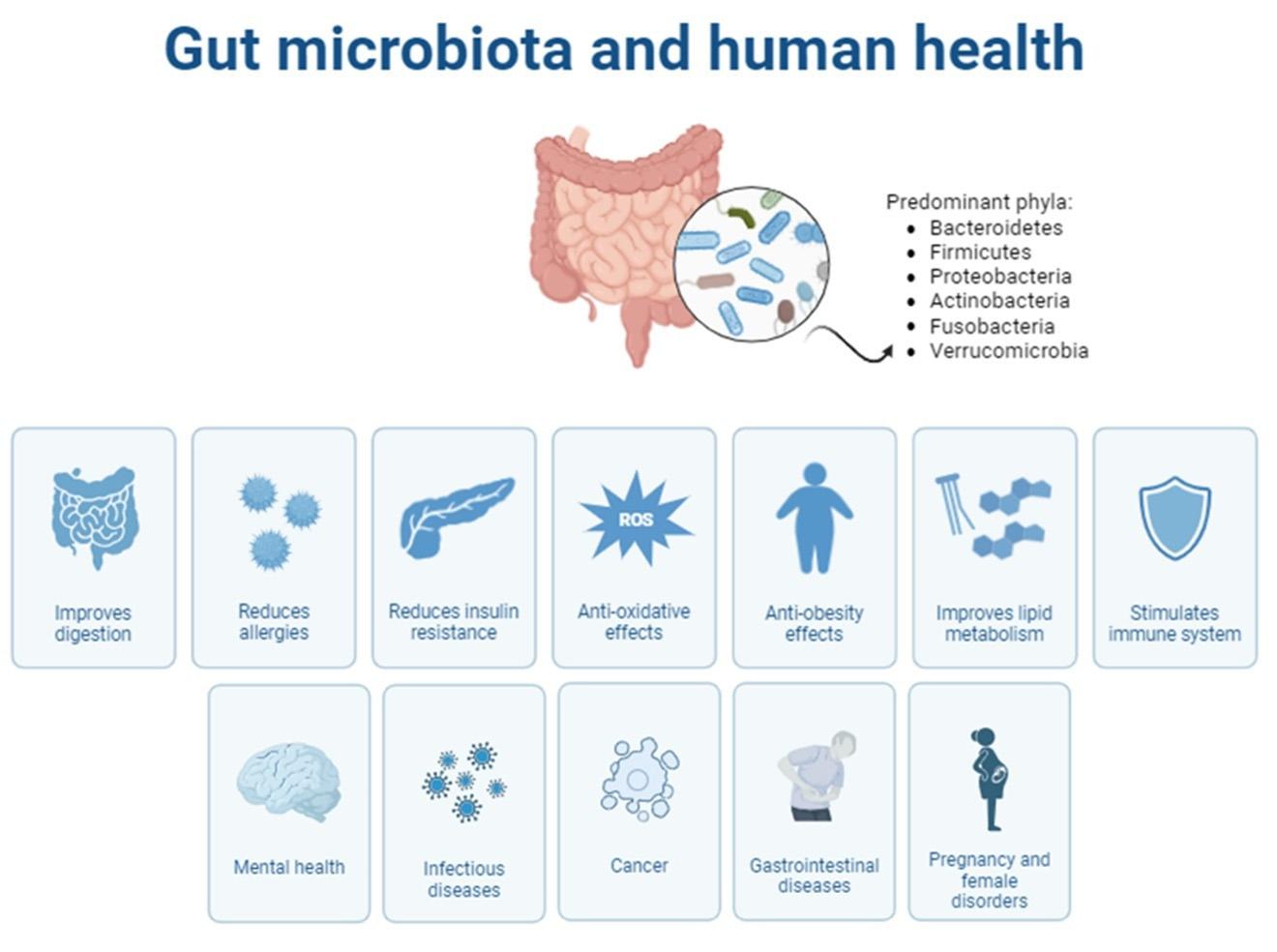
Beneficial bacteria found in fermented vegetables help support a diverse and healthy gut microbiome.
Fermentation occurs when beneficial bacteria convert natural sugars found in vegetables into lactic acid. This natural process preserves the vegetables while creating a rich source of probiotics and beneficial compounds.
1. Improved Digestive Health
Your digestive tract contains trillions of microorganisms that influence digestion, nutrient absorption, immune function, and overall health.
Fermented vegetables may help:
- Support healthy digestion
- Improve nutrient absorption
- Promote bowel regularity
- Encourage microbial diversity
- Reduce occasional bloating
Many digestive complaints can be traced back to imbalances in the gut microbiome. If you struggle with digestive symptoms, you may also find these articles helpful:
👉 https://totalhealthcentervb.com/digestion/
👉 https://totalhealthcentervb.com/sibo-and-bloating-the-hidden-cause-most-people-miss/
2. Stronger Immune Function

A large portion of the immune system resides in the digestive tract, making gut health essential for immune resilience.
Approximately 70-80% of your immune system resides within your digestive tract.
A healthy microbiome helps regulate immune responses and supports the body’s natural defense systems. This is one reason why gut health is often a foundational component of functional medicine programs.
When gut function becomes compromised, intestinal permeability (“leaky gut”) may contribute to inflammation and immune dysfunction. Learn more here:
👉 https://totalhealthcentervb.com/leaky-gut-syndrome/
3. Enhanced Nutrient Availability
Fermentation helps break down certain compounds that may interfere with nutrient absorption.
Fermented vegetables naturally contain:
- Vitamin C
- B Vitamins
- Vitamin K
- Minerals
- Antioxidants
- Beneficial enzymes
The fermentation process can make many nutrients easier for the body to absorb and utilize.
4. Natural Detoxification Support
Healthy gut bacteria play an important role in detoxification.
Research suggests certain probiotic organisms may help bind toxins and support the body’s natural elimination pathways.
While the liver remains the primary detoxification organ, a healthy digestive system provides critical support for overall detoxification.
5. Better Mood and Brain Function
The gut and brain communicate continuously through what scientists call the gut-brain axis.
Beneficial bacteria influence:
- Neurotransmitter production
- Mood regulation
- Stress responses
- Cognitive function
Many patients are surprised to learn that much of the body’s serotonin production occurs in the digestive tract rather than the brain.
Easy Homemade Fermented Vegetables Recipe
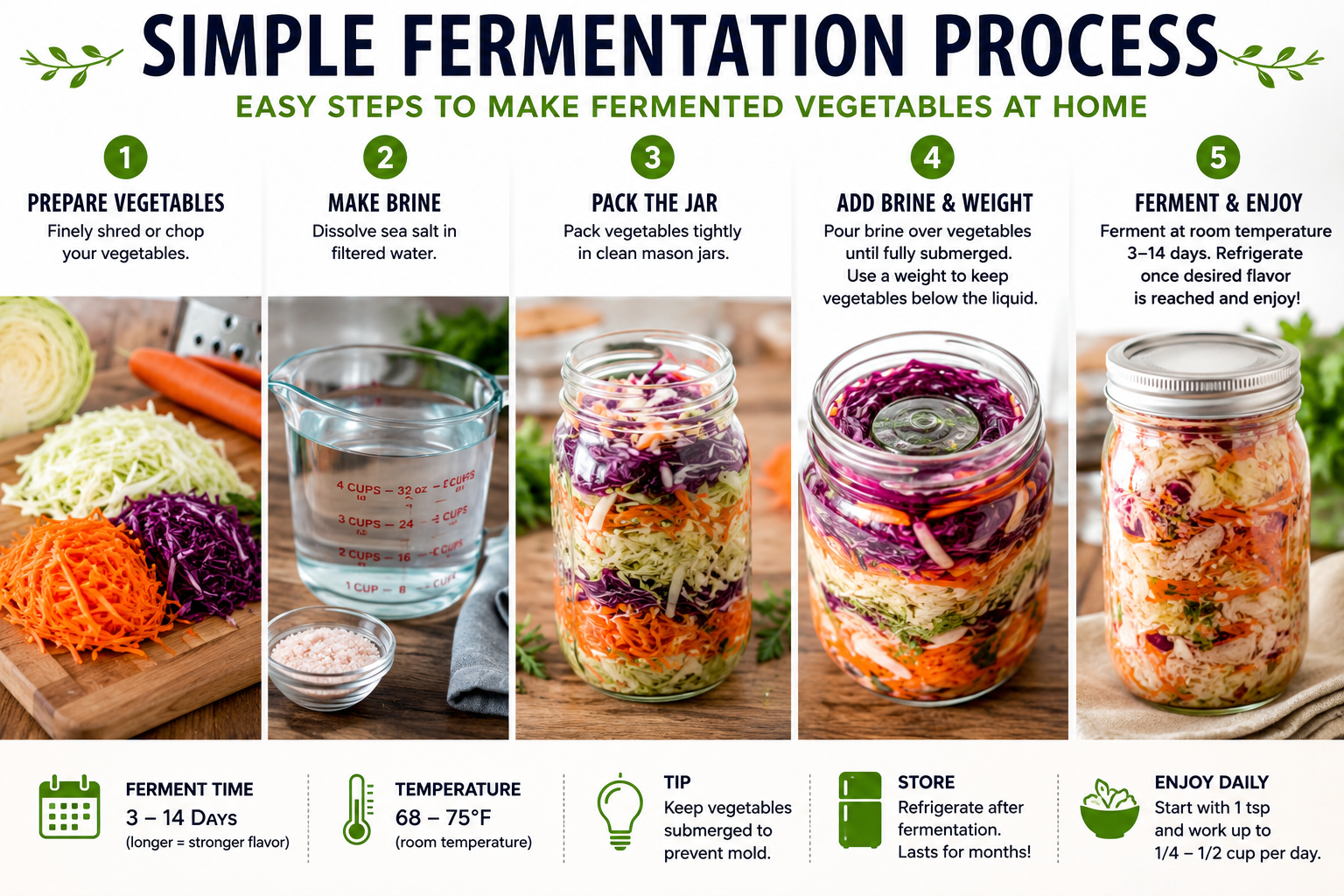
Making fermented vegetables is simple, inexpensive, and can be done in almost any kitchen.
Ingredients
Base Vegetables
- 2 medium heads organic green cabbage
- 2-3 organic carrots
- 1 organic beet (optional)
- 1 garlic clove (optional)
- Fresh dill or parsley (optional)
Brine
- 1 tablespoon sea salt
- 4 cups filtered water
Equipment Needed
- Large mixing bowl
- Cutting board
- Sharp knife or food processor
- Wide-mouth Mason jars
- Fermentation weights (optional)
Step 1: Prepare the Vegetables
Finely shred the cabbage.
Grate or shred carrots and other vegetables.
Place everything into a large mixing bowl.
Step 2: Prepare the Brine
Mix:
- 1 tablespoon sea salt
- 4 cups filtered water
Stir until completely dissolved.
Step 3: Pack the Jars
Fill Mason jars tightly with vegetables.
Press firmly to eliminate air pockets.
Pour brine over the vegetables until fully submerged.
Leave approximately one inch of headspace at the top.
Step 4: Keep Vegetables Below the Brine
This is one of the most important steps.
All vegetables must remain submerged below the liquid.
You can use:
- Glass fermentation weights
- A folded cabbage leaf
- Fermentation lids
Step 5: Ferment
Store jars at room temperature:
Ideal Temperature: 68-75°F
Allow fermentation for:
- 3-5 days for a mild flavor
- 7-14 days for a stronger flavor
Taste periodically until desired flavor develops.
Step 6: Refrigerate
Once fermentation reaches your preferred taste:
- Tighten the lid
- Refrigerate
Cold temperatures dramatically slow the fermentation process.
Properly fermented vegetables can remain fresh for several months.
Tips for Success
Use Organic Vegetables
Whenever possible, choose organic vegetables to minimize pesticide exposure and support healthy fermentation.
Start Simple
Cabbage and carrots are easy for beginners and consistently produce excellent results.
Don’t Overdo Garlic
Fermentation intensifies flavors. A small amount of garlic goes a long way.
Keep Equipment Clean
While sterilization isn’t necessary, clean jars and utensils help prevent contamination.
How Much Should You Eat?
If you’re new to fermented foods, start slowly.
Begin with:
1 teaspoon daily
Gradually work toward:
¼ to ½ cup daily
Introducing large amounts too quickly may temporarily increase digestive symptoms as your microbiome adjusts.
Who May Benefit Most?
Fermented vegetables may be particularly beneficial for individuals dealing with:
- Digestive issues
- Bloating
- Food sensitivities
- Immune challenges
- Chronic inflammation
- Fatigue
If chronic fatigue is a concern, improving digestive health is often an overlooked piece of the puzzle. You may also enjoy:
👉 https://totalhealthcentervb.com/chronic-fatigue-solutions/
👉 https://totalhealthcentervb.com/fatigue-treatment-virginia-beach/fatigue/
Individuals with food sensitivities may also benefit from improving gut function:
👉 https://totalhealthcentervb.com/food-sensitivity-testing/
The Functional Medicine Perspective
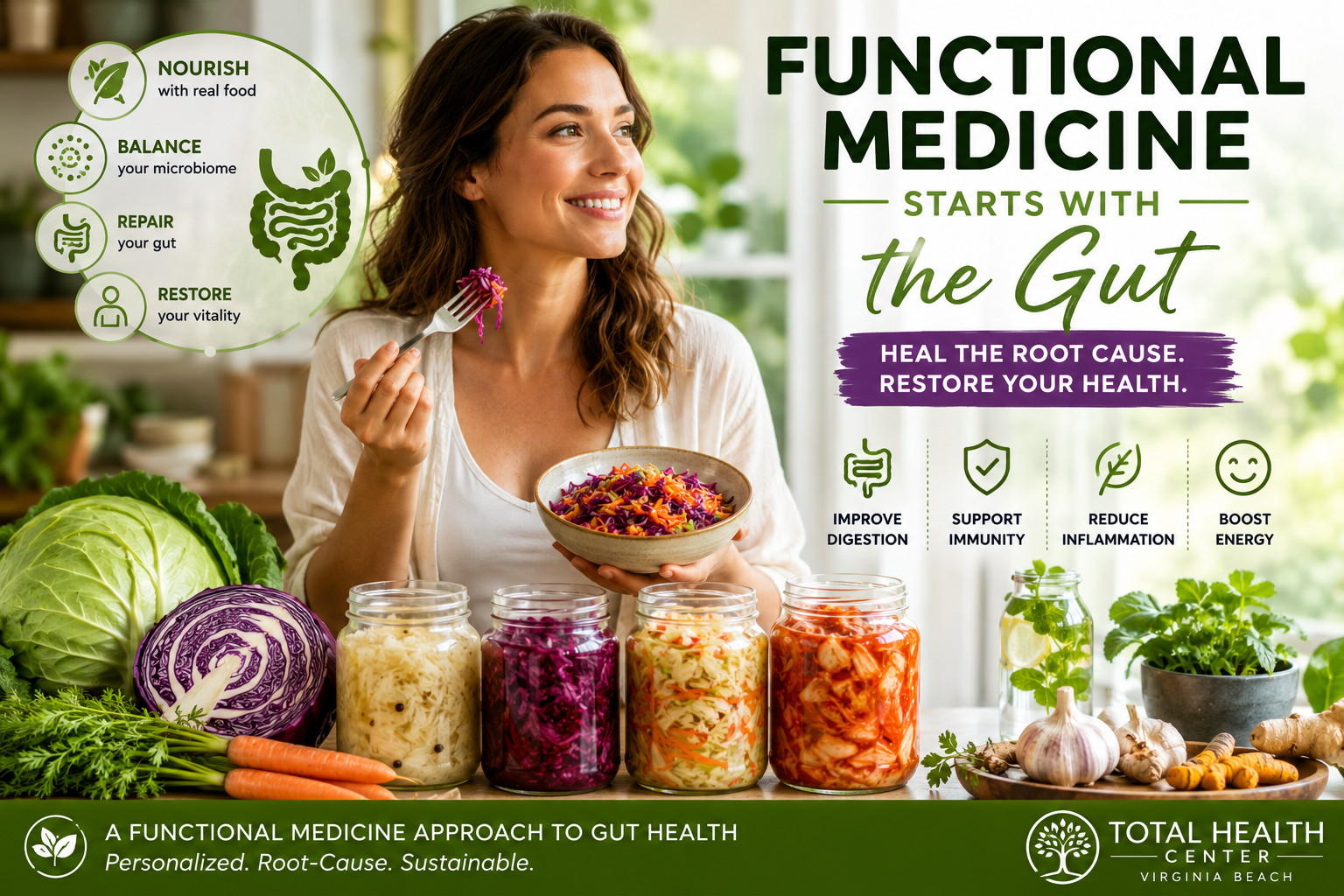
At Total Health Center, digestive health is often a foundational component of restoring overall wellness.
At Total Health Center, we often remind patients that health begins in the gut.
A healthy digestive system influences:
- Nutrient absorption
- Immune function
- Energy production
- Hormone balance
- Inflammation levels
- Overall wellness
Fermented vegetables are one of the simplest and most affordable ways to support the microbiome and improve digestive health naturally.
If you’re struggling with digestive symptoms, autoimmune conditions, fatigue, or chronic health concerns, our functional medicine approach focuses on identifying and addressing the root causes rather than simply masking symptoms.
Learn more about Functional Medicine at Total Health Center:
👉 https://totalhealthcentervb.com/functional-medicine/
For A Free Consultation call (757)363-8571 or click the button

Frequently Asked Questions
Are fermented vegetables the same as pickles?
Not necessarily. Traditional fermented pickles contain live beneficial bacteria, while many commercial pickles are preserved using vinegar and contain no probiotics.
How long do fermented vegetables last?
When refrigerated, properly fermented vegetables can often last several months.
Can children eat fermented vegetables?
Yes. Most children can safely consume fermented vegetables. Start with very small amounts.
What vegetables ferment best?
Cabbage, carrots, beets, radishes, cauliflower, and turnips are among the easiest vegetables to ferment.
Can fermented vegetables replace a probiotic supplement?
They can be an excellent source of beneficial bacteria, but some individuals may benefit from both fermented foods and targeted probiotic supplementation.
References
- Mercola J. Fermented Vegetables and Gut Health. Adapted from educational materials provided by the user.
- Campbell-McBride N. Gut and Psychology Syndrome (GAPS).
- Marco ML, et al. Health benefits of fermented foods: microbiota and beyond. Current Opinion in Biotechnology. 2017.
- Hill C, et al. Expert consensus document on probiotics and gut health. Nature Reviews Gastroenterology & Hepatology. 2014.
- Rinninella E, et al. What is the healthy gut microbiota composition? Microorganisms. 2019.