
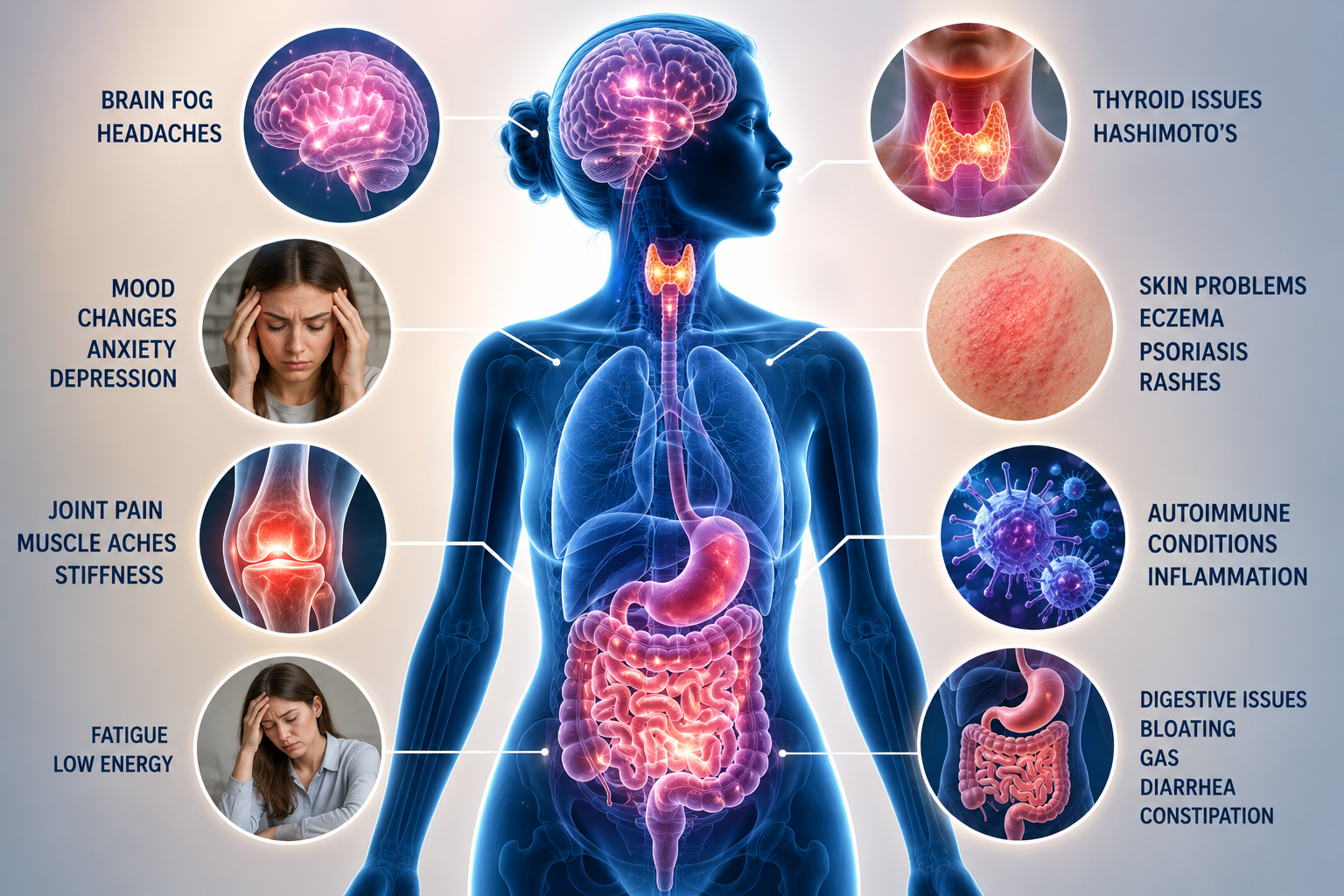
The Many Faces of Gluten Sensitivity: It’s Not Just a Digestive Problem
Part of the Gluten University Educational Series
Missed the earlier lessons?
Start here:
Gluten University Home Page:
https://totalhealthcentervb.com/gluten-university/
Lesson #1:
https://totalhealthcentervb.com/why-going-gluten-free-isnt-always-enough/
Lesson #2:
https://totalhealthcentervb.com/what-is-gluten-really/
Most people associate gluten sensitivity with digestive symptoms.
When they think of gluten-related problems, they imagine:
- Bloating
- Gas
- Diarrhea
- Constipation
- Stomach pain
While these symptoms are certainly common, they represent only part of the story.
One of the biggest misconceptions about gluten sensitivity is the belief that it must cause digestive symptoms in order to be relevant.
In reality, gluten-related disorders may affect multiple systems throughout the body.
For some individuals, the first signs of a gluten-related problem may show up in the brain, skin, joints, thyroid gland, or immune system long before digestive symptoms appear.
This is one reason why gluten sensitivity often goes unrecognized for years.
Why Gluten Symptoms Can Be Difficult to Recognize
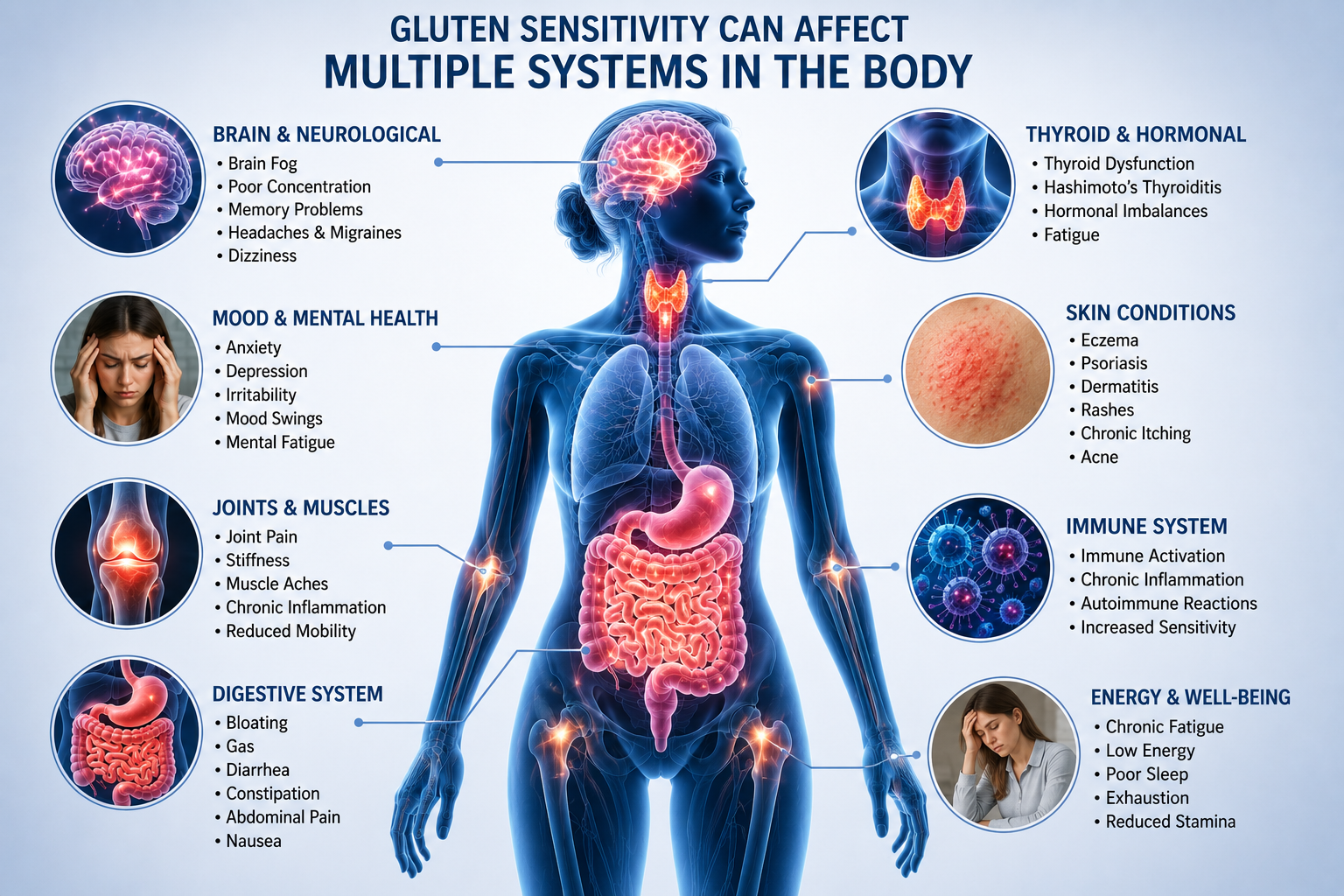
Gluten sensitivity may affect multiple systems throughout the body. Symptoms can involve the brain, thyroid, skin, joints, immune system, energy production, and digestive tract—not just digestion alone.
The digestive tract is not an isolated system.
The gut communicates with:
- The brain
- The immune system
- Hormones
- The skin
- The nervous system
As a result, inflammation and immune activation originating in the digestive tract may contribute to symptoms far outside the intestines.
This helps explain why two people eating the same foods may experience completely different symptoms.
One person may experience digestive distress.
Another may struggle primarily with fatigue, migraines, or brain fog.
Digestive Symptoms
Digestive symptoms remain the most recognized signs of gluten-related disorders.
Common symptoms include:
- Bloating
- Gas
- Abdominal pain
- Diarrhea
- Constipation
- Acid reflux
- IBS-like symptoms
- Nausea
Many people seek help because of these symptoms.
However, they are only one piece of a much larger picture.
Brain Fog and Cognitive Symptoms
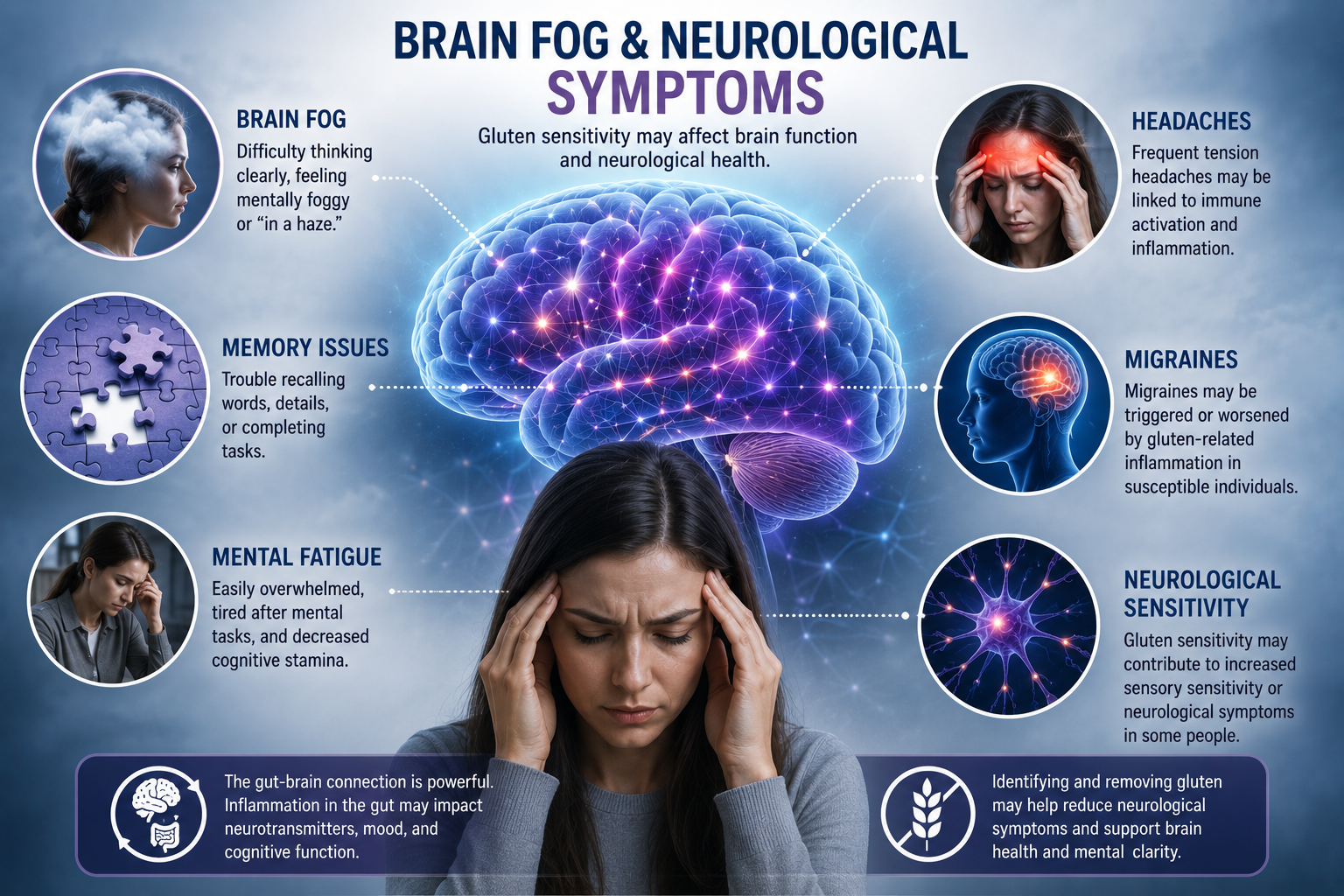
For some individuals, gluten sensitivity may present as brain fog, headaches, migraines, memory problems, difficulty concentrating, or mental fatigue rather than digestive symptoms.
One of the most common complaints I hear from patients is:
“I just don’t feel mentally sharp anymore.”
Many individuals describe:
- Brain fog
- Difficulty concentrating
- Poor memory
- Mental fatigue
- Difficulty finding words
These symptoms are often blamed on aging, stress, or lack of sleep.
Yet some people notice significant improvement when dietary triggers are identified and removed.
The connection between gut health and brain function is often referred to as the gut-brain axis.
As research into this area continues to grow, many practitioners are paying closer attention to the relationship between digestion and cognitive health.
Headaches and Migraines
Migraines can have many causes.
However, food-related triggers are frequently overlooked.
Some individuals report:
- Chronic headaches
- Frequent migraines
- Pressure sensations
- Light sensitivity
that improve after dietary changes.
While gluten is not the only potential trigger, it is one factor worth considering in people with chronic symptoms.
Anxiety, Depression, and Mood Changes

The gut and brain communicate constantly through nerves, hormones, immune signals, and the microbiome. Disruptions in gut health may influence mood, stress resilience, mental clarity, and emotional well-being.
The gut and brain communicate constantly.
Neurotransmitters, immune signals, and inflammatory compounds all influence brain function.
Some individuals report improvements in:
- Anxiety
- Irritability
- Mood swings
- Depression
- Emotional resilience
when underlying digestive and inflammatory issues are addressed.
This does not mean gluten causes every mental health condition.
However, it does highlight the importance of considering the whole person rather than viewing symptoms in isolation.
Joint Pain and Muscle Aches
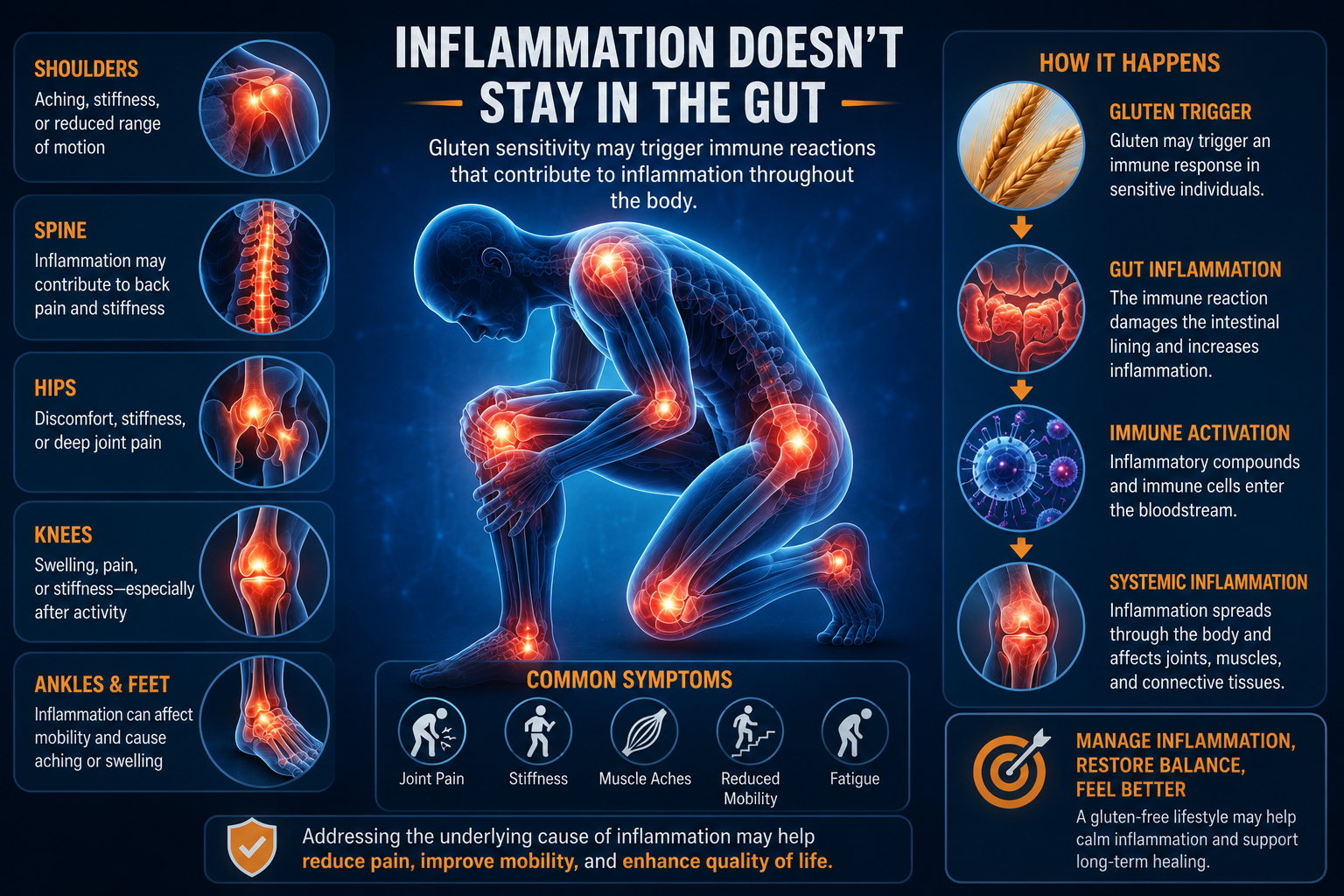
Inflammation does not always remain in the digestive tract. Some individuals experience joint pain, stiffness, muscle aches, and reduced mobility as part of a broader inflammatory response.
When people think about food reactions, they rarely think about joint pain.
Yet inflammation can affect virtually any tissue in the body.
Some individuals experience:
- Joint stiffness
- Muscle aches
- Chronic pain
- Reduced exercise recovery
- General inflammation
without realizing that food-related triggers may be contributing.
Skin Problems
The skin often reflects what’s happening internally.
Potential symptoms associated with gluten-related disorders may include:
- Eczema
- Psoriasis
- Dermatitis
- Chronic rashes
- Itching
- Acne
One of the best-known examples is dermatitis herpetiformis, a skin condition strongly associated with celiac disease.
For some people, skin symptoms improve only after dietary changes are implemented.
Fatigue and Low Energy
Chronic fatigue is one of the most common complaints in functional medicine.
Many factors can contribute to fatigue, including:
- Poor sleep
- Nutrient deficiencies
- Chronic inflammation
- Hormonal imbalances
- Digestive dysfunction
When nutrient absorption becomes compromised, energy production throughout the body may suffer.
This is one reason why some people report dramatic improvements in energy after addressing digestive health.
Autoimmune Disease and Gluten
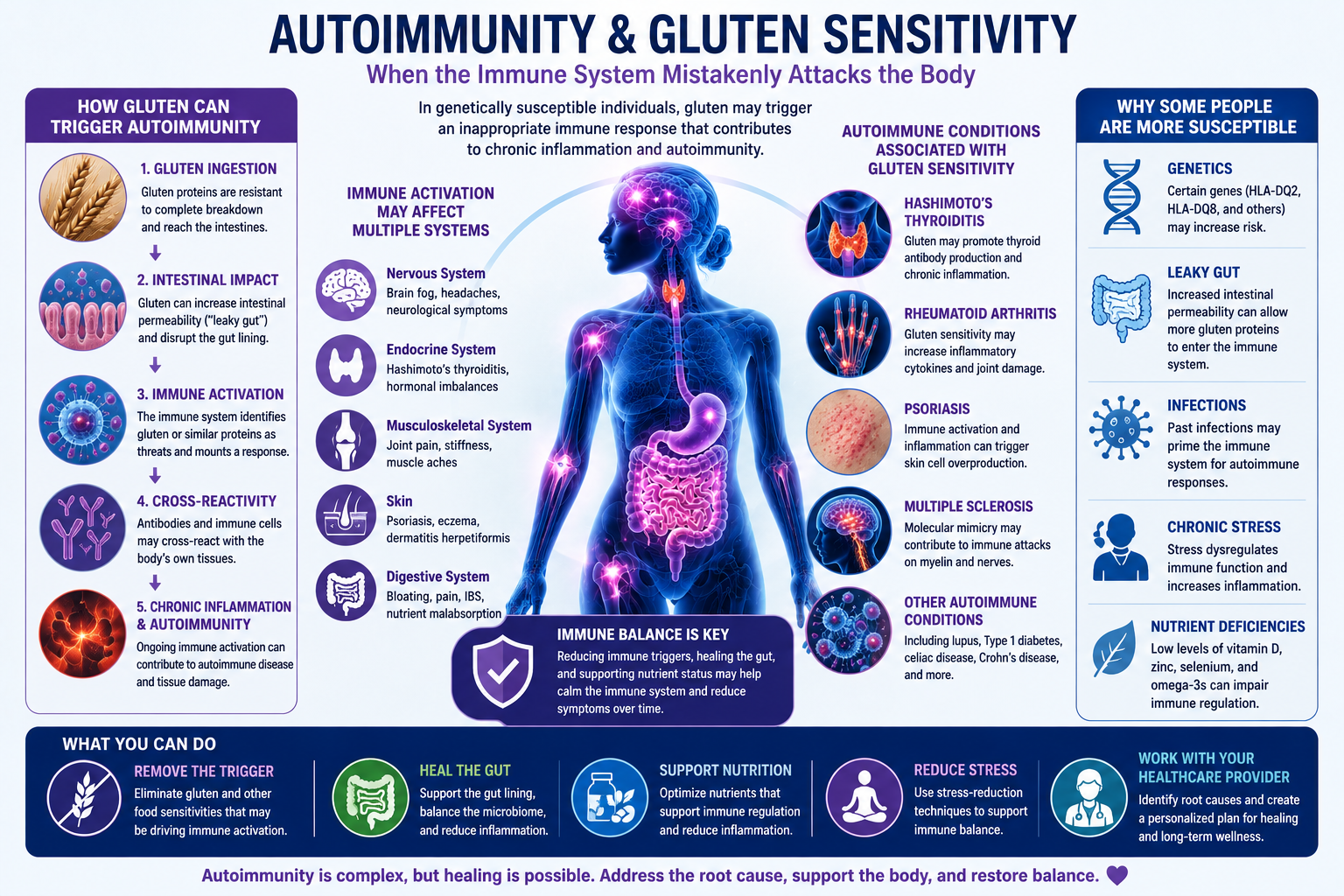
Researchers continue investigating the relationship between gluten-related disorders, immune activation, intestinal permeability, chronic inflammation, and autoimmune disease in susceptible individuals.
One of the most researched areas involving gluten is its relationship to autoimmune disease.
Conditions commonly discussed in the scientific literature include:
- Hashimoto’s thyroiditis
- Rheumatoid arthritis
- Psoriasis
- Lupus
- Multiple sclerosis
While gluten is not the sole cause of these conditions, many practitioners consider it an important factor to investigate when working with autoimmune patients.
Future lessons in Gluten University will explore this topic in greater detail.
Why Symptoms Vary So Much
One person develops digestive symptoms.
Another develops migraines.
Another develops fatigue.
Why?
The answer likely involves a combination of factors including:
- Genetics
- Immune function
- Gut microbiome health
- Nutritional status
- Environmental exposures
- Stress
Each person’s biology is unique.
This helps explain why symptom patterns can vary so dramatically.
Dr. Scott’s Clinical Perspective
One of the biggest mistakes I see is assuming that the absence of digestive symptoms rules out a food-related problem.
Some of the most dramatic improvements I’ve witnessed have occurred in patients whose primary complaints involved:
- Brain fog
- Fatigue
- Thyroid dysfunction
- Joint pain
- Autoimmune conditions
rather than digestive symptoms.
This is why a broader understanding of gluten sensitivity is so important.
The body functions as an interconnected system.
Sometimes the symptom is not where the problem begins.
The Bottom Line
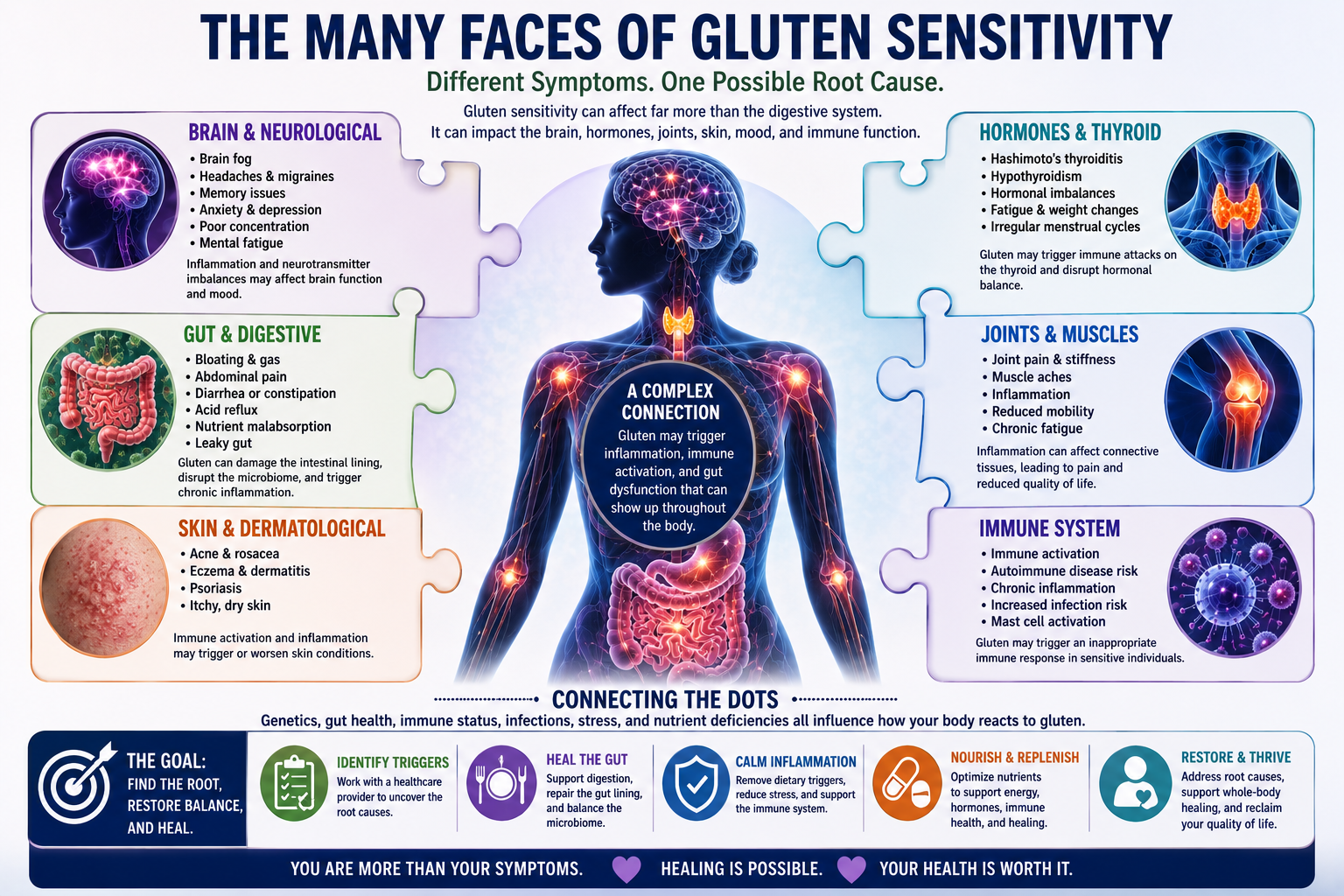
Gluten sensitivity may present differently from person to person. Symptoms can involve the brain, digestive tract, thyroid, skin, joints, immune system, and energy levels, making it important to look at the whole picture rather than a single symptom.
Gluten-related disorders do not always look like digestive disorders.
For some people, symptoms may appear in the brain, skin, joints, immune system, or energy levels long before digestive complaints develop.
Understanding the many faces of gluten sensitivity may help uncover connections that otherwise go unnoticed.
Next Lesson
Are You Really Gluten-Free? Hidden Sources of Gluten Exposure
Continue your Gluten University journey:
https://totalhealthcentervb.com/gluten-university/
About Dr. Scott
Dr. Scott of Total Health Center in Virginia Beach has been helping patients improve digestive health, thyroid function, autoimmune conditions, fatigue, and chronic inflammation through functional medicine since 1997. His approach focuses on identifying and addressing the underlying causes of illness through advanced testing, nutrition, lifestyle modification, and personalized care.
Frequently Asked Questions
Can gluten sensitivity cause symptoms outside the digestive system?
Yes. While bloating, gas, diarrhea, and constipation are common symptoms, some individuals experience brain fog, fatigue, headaches, joint pain, skin problems, mood changes, or autoimmune issues without significant digestive complaints.
Can gluten contribute to brain fog?
Some people report difficulty concentrating, poor memory, mental fatigue, and brain fog that improve after identifying and removing foods that trigger inflammation or immune activation. The gut-brain connection is an active area of research.
Can gluten sensitivity cause fatigue?
Fatigue is one of the most common complaints reported by individuals with gluten-related disorders. Possible contributing factors include inflammation, nutrient deficiencies, immune activation, and impaired digestive function.
Can gluten affect mood and mental health?
The digestive system and brain communicate through the gut-brain axis. Some individuals report improvements in anxiety, mood, irritability, and mental clarity after addressing underlying digestive and inflammatory issues.
Can gluten cause joint pain?
Some individuals experience joint pain, muscle aches, stiffness, and chronic inflammation that may improve when dietary triggers are identified and removed. Food-related inflammation can affect tissues throughout the body.
Can gluten affect the skin?
Yes. Gluten-related disorders have been associated with skin conditions such as dermatitis herpetiformis, eczema, psoriasis, chronic rashes, itching, and other inflammatory skin problems in susceptible individuals.
Can gluten sensitivity affect thyroid health?
Research has identified associations between gluten sensitivity, celiac disease, and autoimmune thyroid conditions such as Hashimoto’s thyroiditis. Many functional medicine practitioners evaluate gluten exposure when working with thyroid patients.
Why do people experience different gluten sensitivity symptoms?
Every person is unique. Genetics, immune function, gut microbiome health, nutritional status, environmental exposures, and stress levels may all influence how symptoms appear. This helps explain why one person develops digestive symptoms while another experiences fatigue, migraines, or skin problems.
References
- Fasano A. Intestinal permeability and immune activation.
- Sapone A, et al. Spectrum of gluten-related disorders.
- Hadjivassiliou M. Neurological manifestations of gluten sensitivity.
- Catassi C, Fasano A. Celiac disease and gluten sensitivity.
- Vojdani A. Food proteins and immune reactivity.