
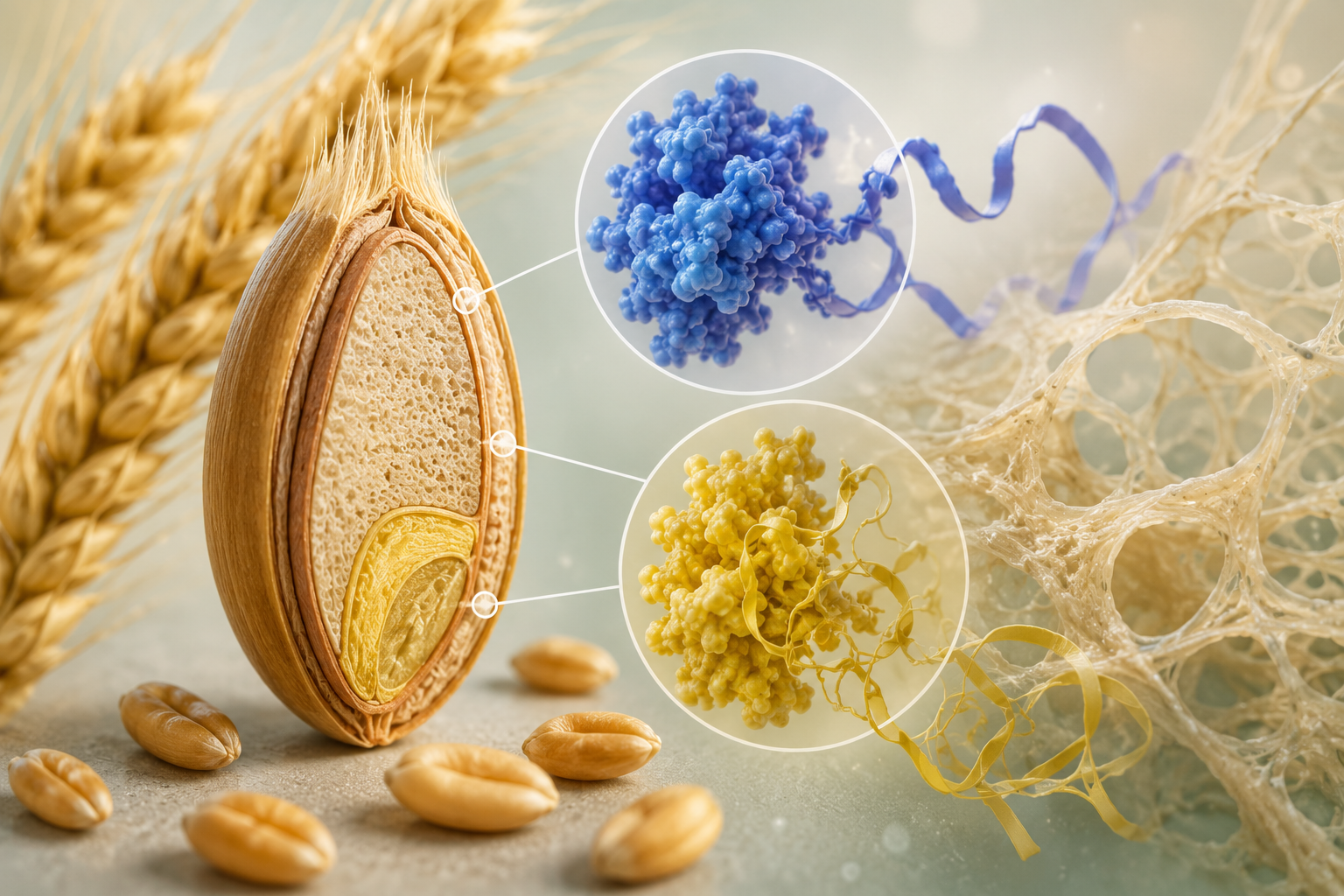
What Is Gluten Really?
Part of the Gluten University Educational Series by Dr. Scott
Lesson #1 Why Going Gluten-Free Isn’t Always Enough
Most people think gluten is a single protein found in wheat.
In reality, gluten is much more complicated than that.
This misunderstanding may be one reason why so many people continue struggling despite following a traditional gluten-free diet.
To understand why, we first need to answer an important question:
What exactly is gluten?
Gluten Is Not One Protein
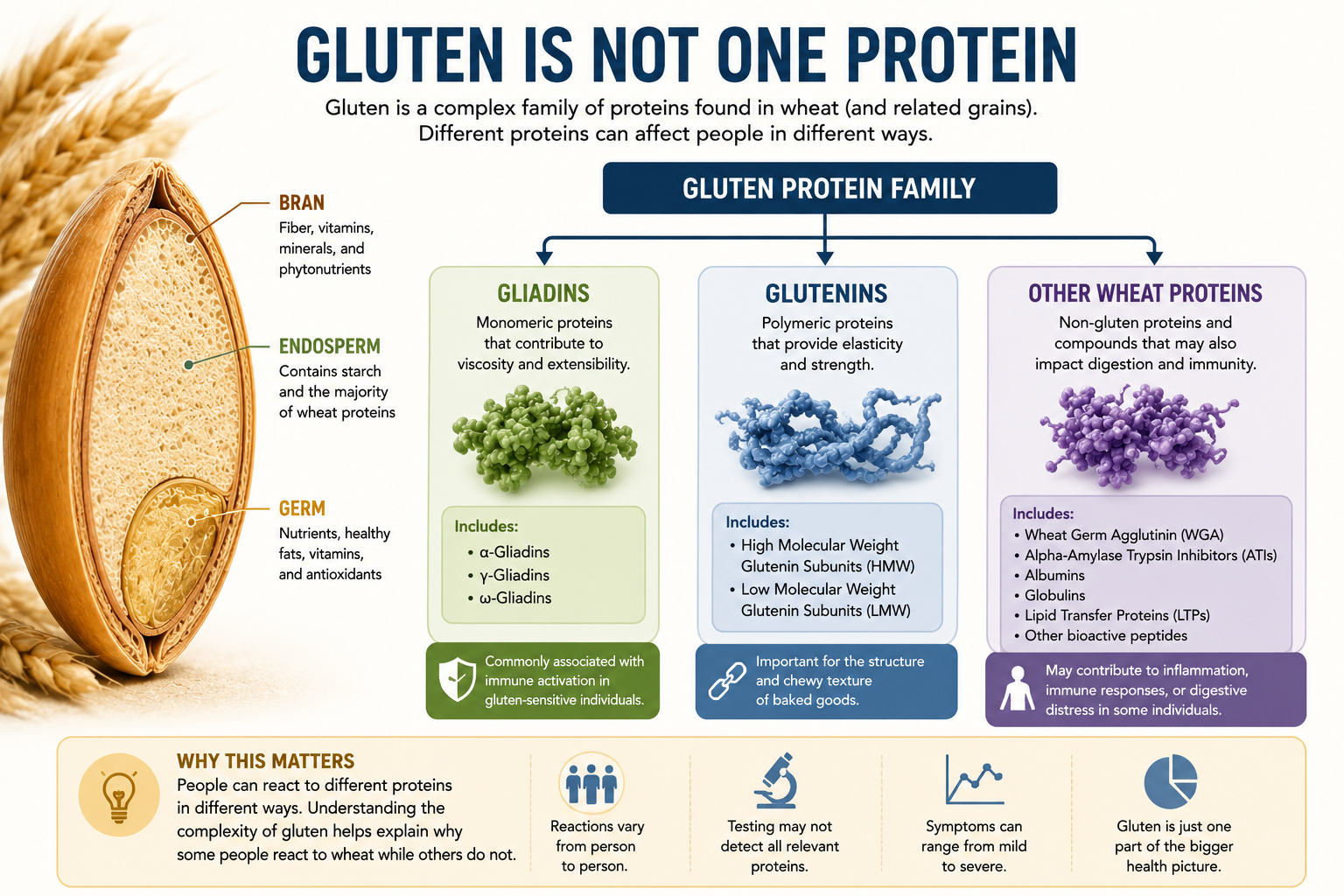
Most people think gluten is a single protein, but it is actually a complex family of proteins. Understanding these protein groups helps explain why reactions to wheat can vary from person to person.
When most people hear the word “gluten,” they imagine a single substance that causes digestive problems.
However, gluten is actually a complex group of proteins found in certain grains.
The two most well-known protein groups found in wheat are:
- Gliadins
- Glutenins
Together, these proteins help give bread its elasticity and chewy texture.
But gluten does not exist as a single molecule.
Instead, it consists of numerous protein fractions that can interact with the immune system in different ways.
This is one reason why gluten-related disorders can be difficult to identify and understand.
Why This Matters
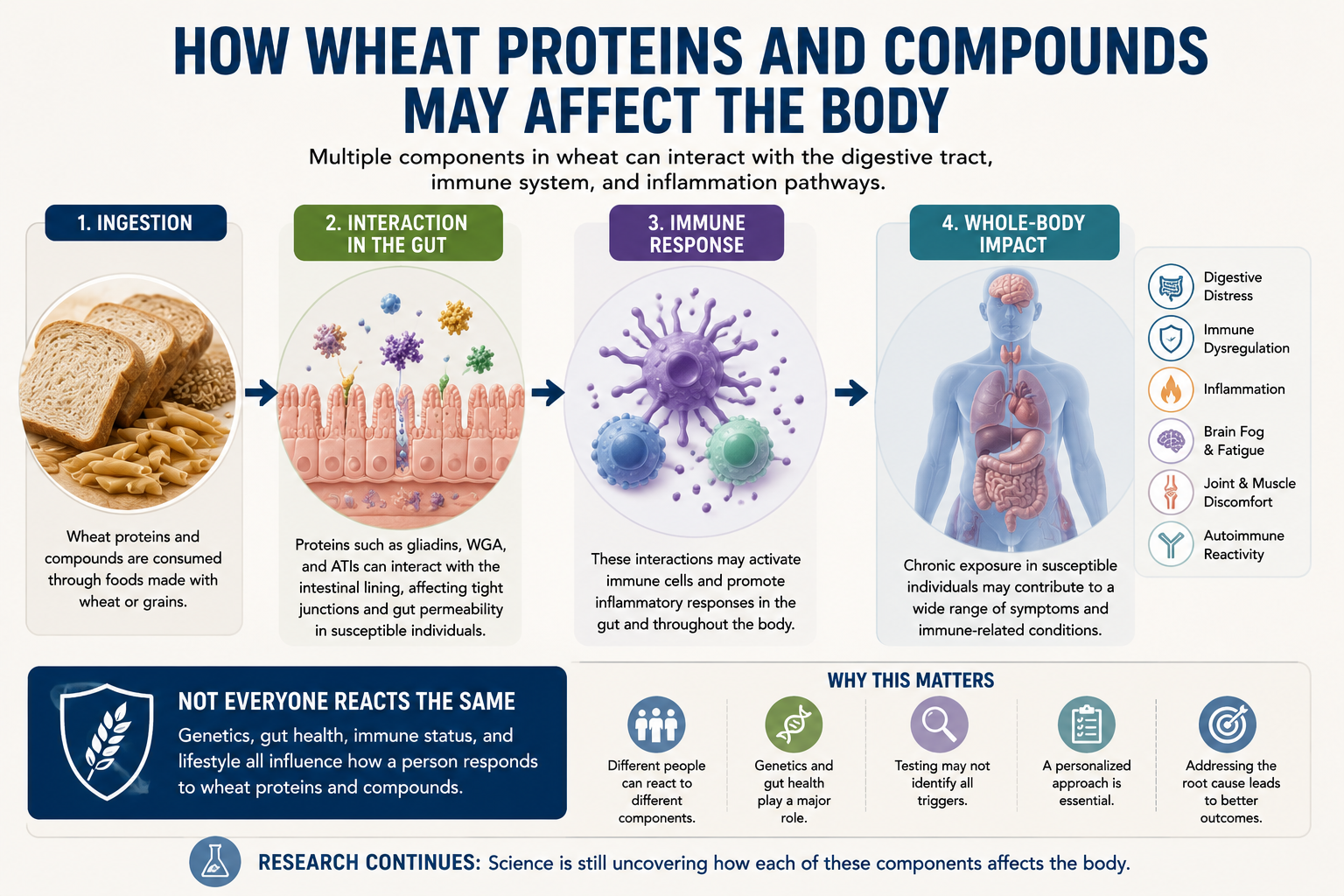
Wheat contains multiple proteins and compounds that may interact with digestion, immunity, and inflammation pathways. Individual responses can vary significantly based on genetics, gut health, and overall health status.
For years, most testing focused on only a small portion of gluten proteins.
Modern research suggests that individuals may react to different components of wheat and other grains.
In other words:
Two people may both react to wheat, yet the specific proteins involved may not be identical.
This may help explain why some individuals test negative for celiac disease but still experience symptoms when consuming wheat products.
Wheat Contains More Than Gluten
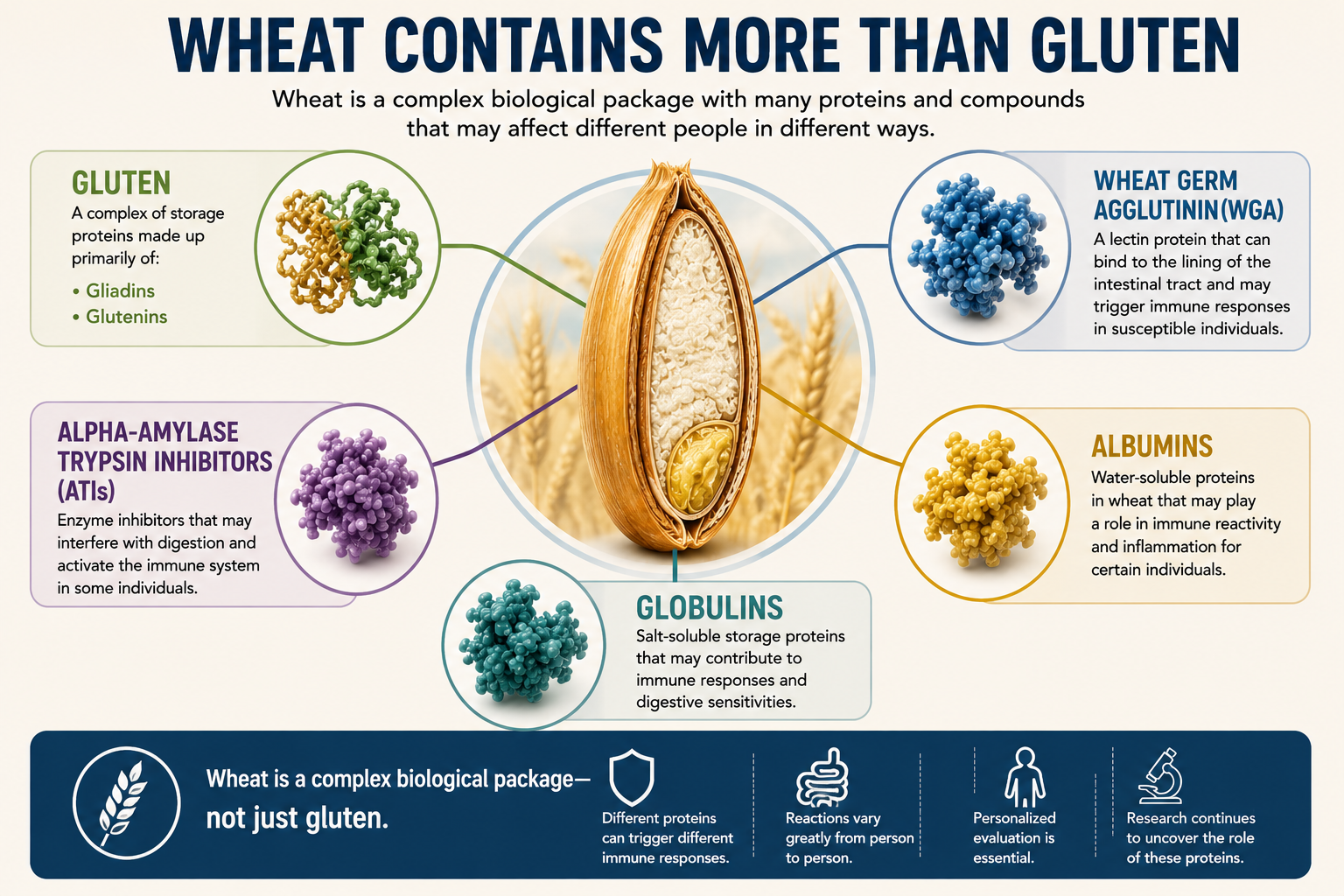
Wheat contains numerous proteins and compounds beyond traditional gluten. Researchers continue investigating how these components may influence digestion, immunity, and inflammation in susceptible individuals.
Another common misconception is that gluten is the only potentially problematic component of wheat.
Wheat contains many proteins beyond traditional gluten.
Examples include:
- Wheat germ agglutinin (WGA)
- Alpha-amylase trypsin inhibitors (ATIs)
- Various albumins
- Various globulins
Researchers continue to investigate the role these compounds may play in inflammation, immune activation, and digestive dysfunction.
This does not mean every person reacts to these proteins.
However, it does suggest that the conversation surrounding wheat is far more complex than many people realize.
The Conventional Gluten-Free Diet
Traditional recommendations focus primarily on eliminating:
- Wheat
- Barley
- Rye
For many people, this approach is helpful.
However, some individuals continue experiencing symptoms despite following these guidelines.
This raises an important question:
Could some people be reacting to additional proteins found in grains traditionally considered gluten-free?
We will explore this topic in future lessons.
Why Some Experts Disagree
One of the challenges in gluten research is that different experts define gluten differently.
Some define gluten very narrowly.
Others take a broader view and examine the many related proteins found throughout the grain family.
This difference in perspective often explains why conflicting recommendations exist.
Rather than choosing sides, Gluten University encourages patients to understand the science and evaluate their own experiences.
The Immune System Doesn’t Read Labels
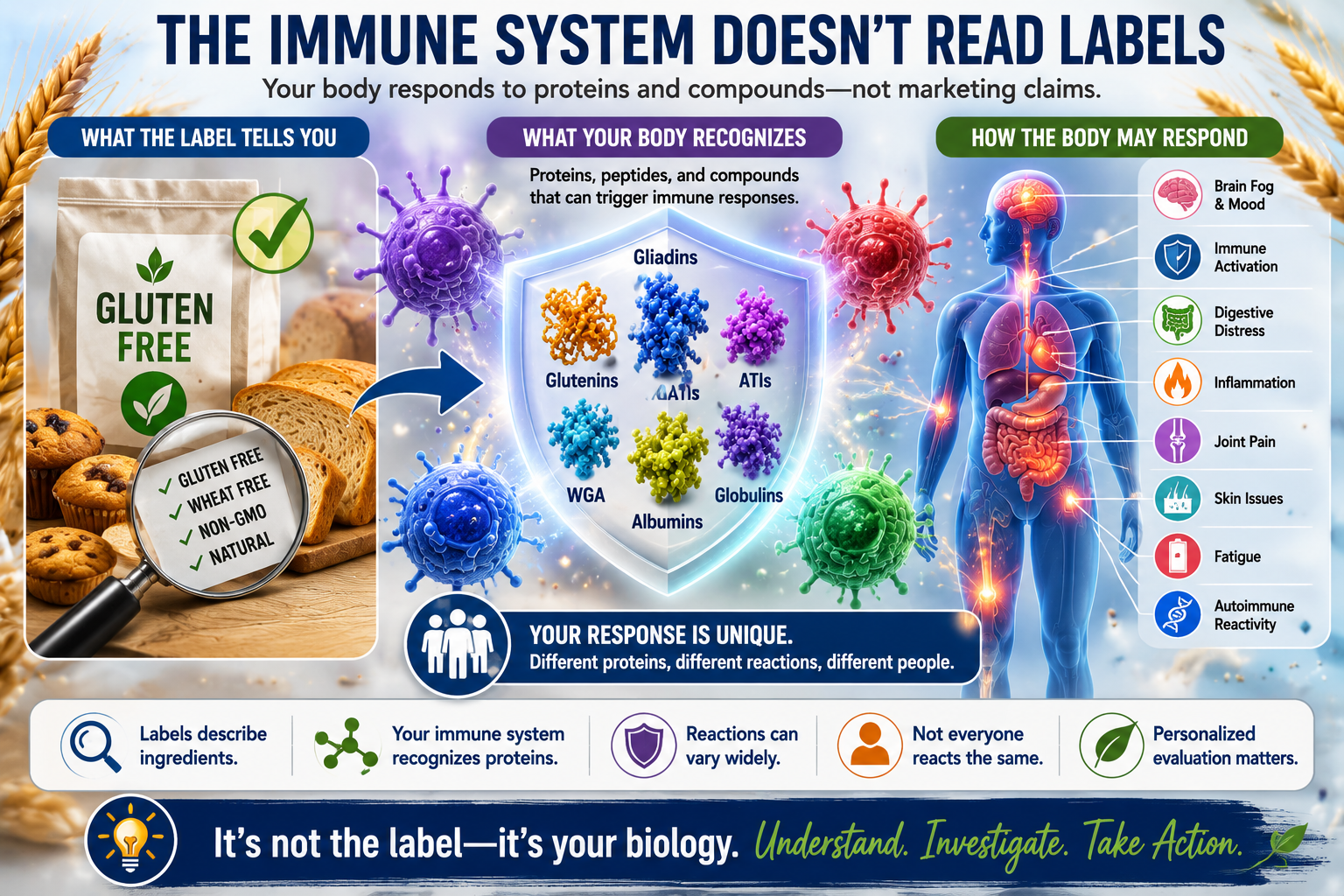
Food labels can provide useful information, but your immune system responds to the proteins and compounds entering your body—not the marketing claims printed on the package.
One of the most important concepts to understand is this:
Your immune system does not know whether a food is labeled:
“Gluten-Free”
It only recognizes the proteins and compounds entering your body.
This is why some people thrive on foods considered safe while others continue struggling.
Biology is often more complex than food marketing.
Looking Beyond Labels
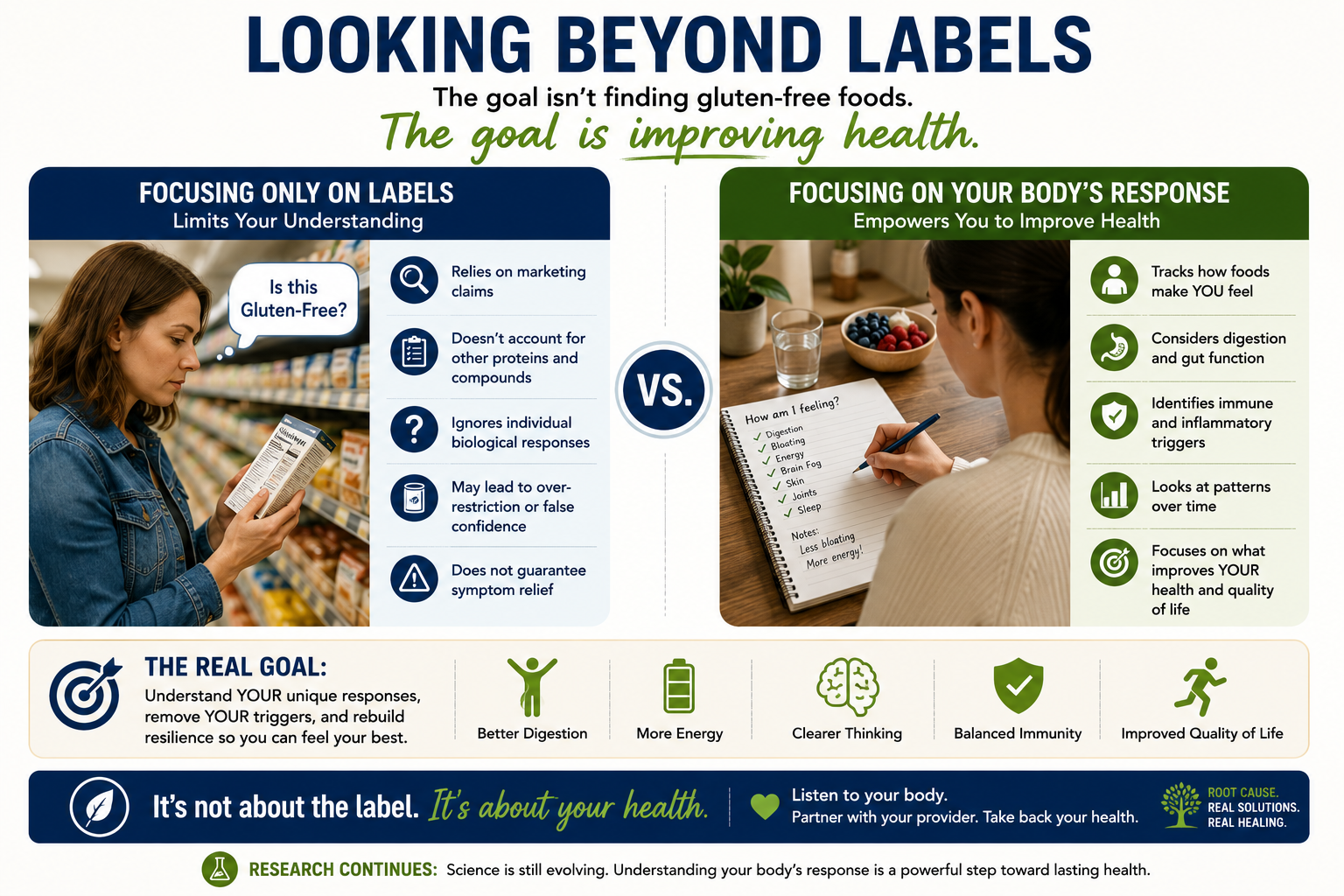
The goal is not simply finding gluten-free foods. The goal is identifying what helps your body heal, improve digestion, reduce inflammation, and support long-term health.
The purpose of this series is not to create fear around food.
The purpose is to encourage critical thinking.
Instead of asking:
“Is this gluten-free?”
A better question may be:
“How does my body respond to this food?”
This shift in thinking often helps people move beyond confusion and begin identifying the true factors affecting their health.
Dr. Scott’s Clinical Perspective
In practice, I frequently see patients who focus entirely on food labels while overlooking how they actually feel.
A gluten-free label may be useful, but it does not guarantee that a food supports healing.
The goal should never be simply finding gluten-free substitutes.
The goal should be improving health.
That requires paying attention to symptoms, digestion, energy levels, inflammation, and overall well-being.
The Bottom Line
Gluten is not a single protein.
Wheat contains numerous proteins and compounds that may affect different individuals in different ways.
Understanding this complexity is the first step toward understanding why some people recover quickly while others continue struggling despite following conventional advice.
In the next lesson, we’ll explore the many ways gluten sensitivity can appear throughout the body—even in people who have no digestive symptoms.
Next Lesson:
The Many Faces of Gluten Sensitivity
FAQ Section
Is gluten a single protein?
No. Gluten is actually a complex group of proteins found primarily in wheat, barley, and rye. The two most well-known protein groups in wheat are gliadins and glutenins.
What is the difference between gliadin and glutenin?
Gliadins and glutenins are the primary protein families that make up gluten in wheat. Together they contribute to the elasticity and texture of baked products.
Does wheat contain proteins other than gluten?
Yes. Wheat contains numerous proteins and compounds beyond traditional gluten, including wheat germ agglutinin (WGA), alpha-amylase trypsin inhibitors (ATIs), albumins, and globulins.
Why do some people react to wheat but test negative for celiac disease?
Some individuals may experience non-celiac gluten sensitivity or may react to other components of wheat. This is one reason why symptoms and testing results do not always align perfectly.
Why is understanding gluten important?
Understanding gluten helps explain why some people continue experiencing symptoms despite following a traditional gluten-free diet and why reactions can vary from person to person.
References
- Fasano A. Zonulin and intestinal permeability research.
- Vojdani A. Cross-reactivity and food protein immune responses.
- Sapone A, et al. Spectrum of gluten-related disorders.
- Catassi C, Fasano A. Celiac disease and gluten sensitivity research.
- Biesiekierski JR. Non-celiac gluten sensitivity review.
About Dr. Scott
Dr. Scott has been helping patients improve digestive health, thyroid function, autoimmune conditions, fatigue, and chronic inflammation through functional medicine since 1997. At Total Health Center in Virginia Beach, he focuses on identifying the underlying causes of illness through personalized nutrition, advanced testing, and targeted lifestyle interventions.