Why Going Gluten-Free Isn’t Always Enough
Part of the Gluten University Educational Series by Dr. Scott
Most people who decide to go gluten-free expect to feel dramatically better within a few weeks.
For some, that’s exactly what happens.
Digestive symptoms improve. Energy returns. Brain fog lifts. Joint pain decreases. Skin problems begin to clear.
But for many others, the results are far less impressive.
They eliminate bread, pasta, crackers, cereals, and obvious gluten-containing foods. They spend extra money on gluten-free products. They diligently read food labels and avoid wheat whenever possible.
Yet they still struggle with:
- Bloating
- IBS
- Fatigue
- Brain fog
- Migraines
- Joint pain
- Thyroid problems
- Autoimmune symptoms
- Chronic inflammation
If this sounds familiar, you’re not alone.
One of the most common frustrations I hear from patients is:
“I’ve been gluten-free for months, but I still don’t feel well.”
The truth is that going gluten-free is often an important step toward better health, but it is rarely the entire solution.
The Traditional Gluten-Free Diet

Many people switch to gluten-free foods expecting complete relief, only to discover that ongoing symptoms may involve factors beyond traditional gluten exposure.
Most people are taught that gluten comes from three grains:
- Wheat
- Barley
- Rye
The conventional approach is straightforward:
Remove those grains and replace them with foods labeled “gluten-free.”
This often leads to increased consumption of:
- Gluten-free breads
- Gluten-free cereals
- Gluten-free crackers
- Rice products
- Corn products
- Oat-based products
- Packaged gluten-free snacks
For some individuals, this works very well.
For others, symptoms persist.
Why?
Because gluten may be only one piece of a much larger puzzle.
Feeling Better Doesn’t Always Mean Fully Healed
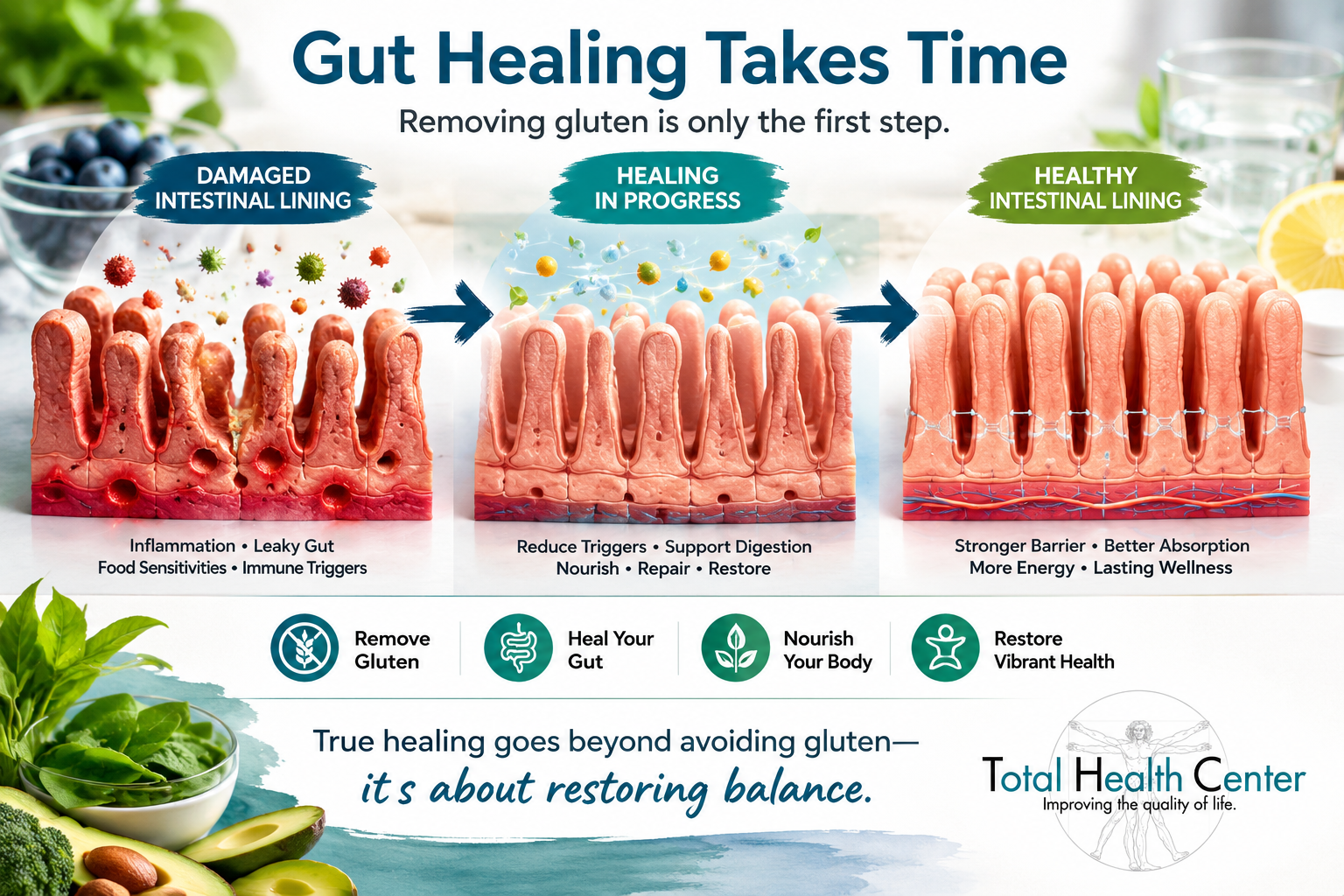
Removing gluten is often the first step, but true recovery may require repairing the gut lining, improving nutrient absorption, reducing inflammation, and restoring digestive function.
In future Gluten University lessons, we’ll explore gut healing, nutrient deficiencies, intestinal permeability (“leaky gut”), and the steps often required to support long-term recovery.
One of the biggest misconceptions about gluten sensitivity is that symptom improvement automatically means complete healing.
Many people experience partial improvement after removing gluten but continue to struggle with underlying issues that developed over years of exposure.
These may include:
- Intestinal inflammation
- Increased intestinal permeability (“leaky gut”)
- Altered gut bacteria
- Nutrient deficiencies
- Immune system dysregulation
- Food sensitivities
Removing gluten may stop additional damage, but it doesn’t necessarily reverse everything that has already occurred.
Healing takes time.
Gluten Is Often the First Problem Discovered
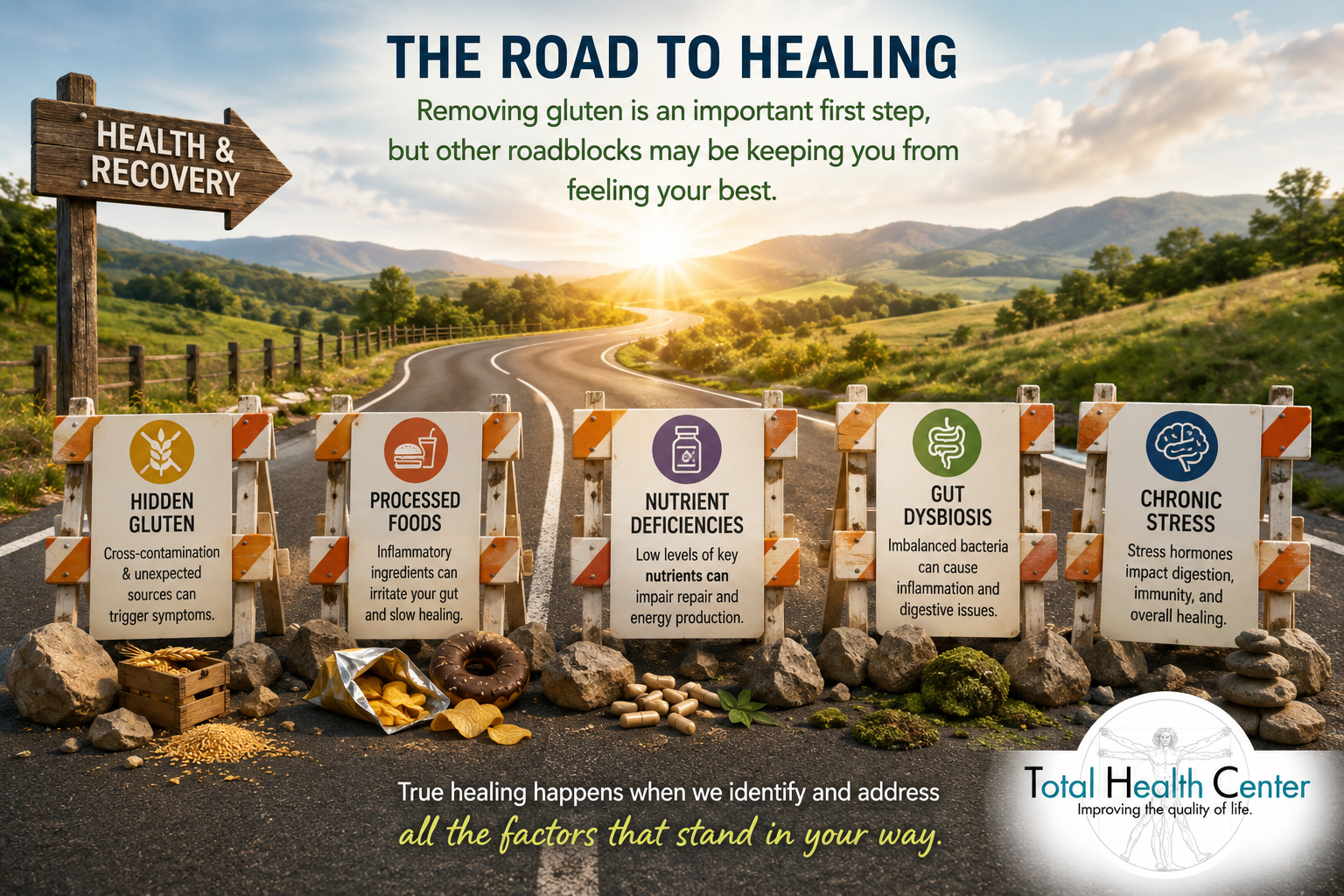
Removing gluten is often the first step, but factors such as hidden gluten exposure, processed foods, nutrient deficiencies, gut dysbiosis, and chronic stress may continue to interfere with recovery.
In functional medicine, we frequently find that chronic health problems rarely have a single cause.
For many patients, gluten is simply the first trigger identified.
Once digestive function becomes compromised, other issues often develop.
Examples may include:
- Reactions to additional foods
- Gut bacterial imbalance
- Yeast overgrowth
- Nutrient deficiencies
- Increased inflammation
- Autoimmune activation
This is one reason why two people can follow the exact same gluten-free diet and experience completely different results.
The Gluten-Free Food Trap
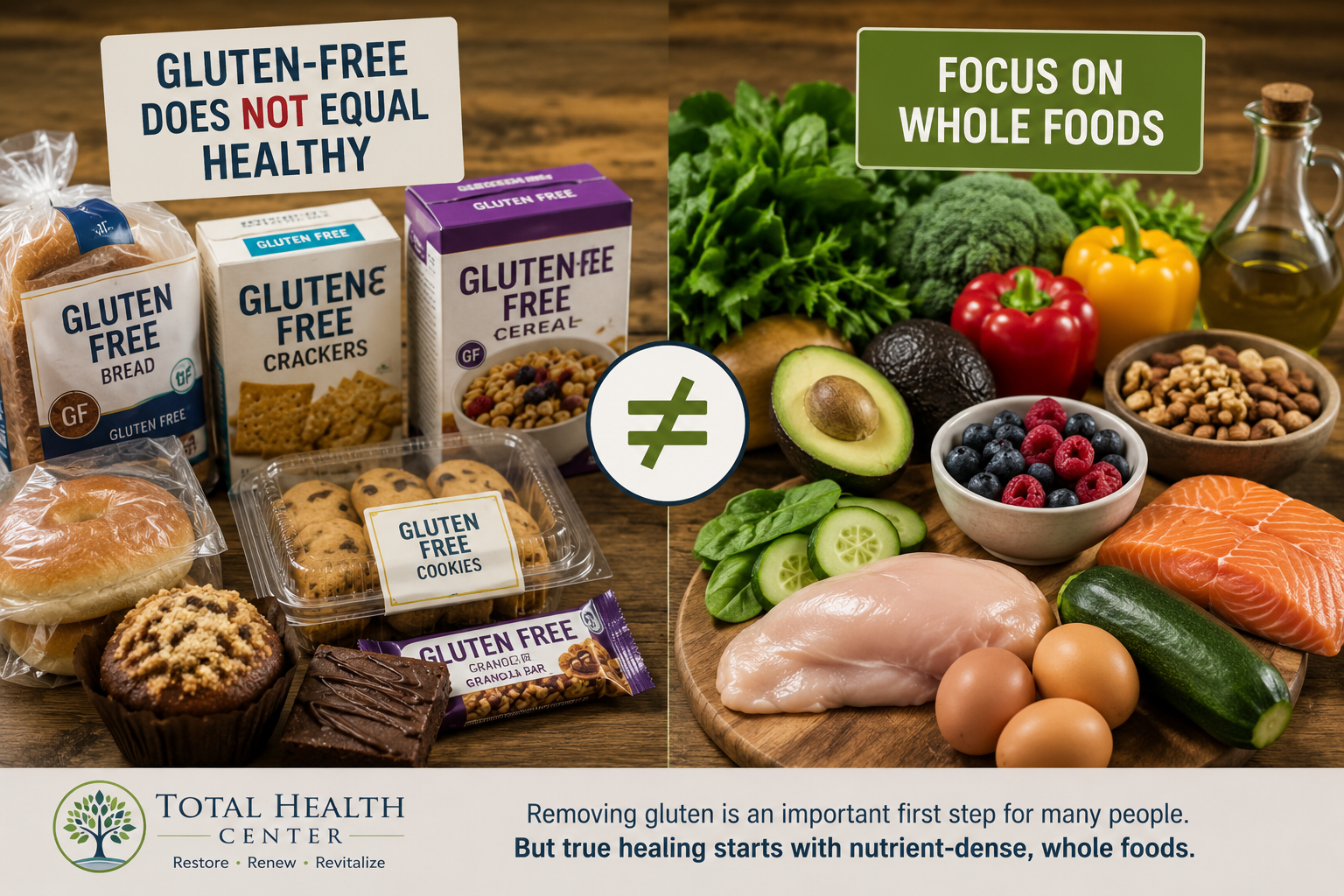
Many gluten-free products are highly processed. True healing often begins when the focus shifts from packaged gluten-free foods to nutrient-dense whole foods.
One of the biggest mistakes people make is assuming that gluten-free automatically means healthy.
Unfortunately, many gluten-free products are highly processed foods.
Many contain:
- Refined starches
- Added sugars
- Seed oils
- Artificial ingredients
- Food additives
- Preservatives
Replacing one processed food with another processed food often fails to support true healing.
At Total Health Center, we encourage patients to focus on whole foods rather than simply looking for gluten-free labels.
Could There Be More to the Story?
One of the questions we’ll explore throughout Gluten University is whether some people react to more than just traditional gluten.
Emerging research suggests that certain grain proteins and food components may contribute to ongoing symptoms in susceptible individuals.
Future lessons will explore:
- Oats
- Corn
- Rice
- Hidden grain ingredients
- Cross-reactive foods
- Non-gluten proteins found in grains
These topics remain controversial, but they deserve discussion because many patients continue to struggle despite following conventional recommendations.
Hidden Sources of Exposure
Another common reason people fail to improve is accidental exposure.
Potential sources include:
- Restaurant meals
- Shared cooking surfaces
- Sauces
- Flavorings
- Supplements
- Medications
- Processed foods
Many people are far more exposed than they realize.
In a future lesson, we’ll take a deep dive into hidden sources of gluten and grain-derived ingredients.
The Goal Isn’t Restriction
It’s important to understand that the purpose of Gluten University is not to create fear around food.
The goal is not to convince everyone to eliminate every grain forever.
The goal is education.
By understanding the many factors that can contribute to digestive dysfunction, inflammation, and autoimmune activation, you can make more informed decisions about your health.
Dr. Scott’s Clinical Perspective

For many people, gluten is only one piece of a larger health picture. Lasting recovery often requires addressing gut health, immune function, nutrition, stress, thyroid health, and other underlying factors.
After helping patients with digestive disorders, thyroid conditions, autoimmune disease, fatigue, and chronic inflammation for nearly three decades, I’ve noticed a consistent pattern:
Many people improve when they remove gluten.
But many do not fully recover until they identify additional barriers to healing.
For some, those barriers involve gut health.
For others, they involve food sensitivities, infections, nutritional deficiencies, or chronic inflammation.
This is why I encourage patients to view going gluten-free as the beginning of the conversation rather than the end of it.
The Bottom Line
Going gluten-free can be a powerful step toward better health.
But if you’ve already removed gluten and still struggle with symptoms, don’t assume you’ve reached a dead end.
The better question may not be:
“Is gluten really my problem?”
The better question may be:
“What else is preventing my body from healing?”
That is exactly what we’ll explore throughout Gluten University.
Next Lesson:
What Is Gluten Really? Understanding the Proteins Behind the Problem
About Dr. Scott
Dr. Scott of Total Health Center in Virginia Beach has been helping patients improve digestive health, thyroid function, autoimmune conditions, fatigue, and chronic inflammation through functional medicine since 1997. His approach focuses on identifying and addressing the underlying causes of illness through advanced testing, nutrition, lifestyle modification, and personalized care.
Frequently Asked Questions
Why do I still feel sick after going gluten-free?
Many people remove wheat but continue consuming processed gluten-free foods, hidden gluten sources, or other foods that may contribute to ongoing digestive, immune, and inflammatory issues. Additionally, years of gut damage may require more than simply removing gluten to heal.
Is gluten sensitivity the same as celiac disease?
No. Celiac disease is an autoimmune condition triggered by gluten. Non-celiac gluten sensitivity may involve different immune and inflammatory pathways and can occur even when celiac testing is negative.
Can gluten affect thyroid health?
Research has shown an association between gluten sensitivity and autoimmune thyroid conditions such as Hashimoto’s thyroiditis. Some individuals with thyroid dysfunction notice improvement when gluten is removed from the diet.
Are gluten-free foods always healthy?
No. Many gluten-free products contain refined starches, processed sugars, seed oils, and additives. A gluten-free label does not automatically mean a food supports healing or optimal health.
Why do some people improve only partially on a gluten-free diet?
Gluten may be only one piece of a larger health picture. Factors such as gut dysbiosis, nutritional deficiencies, food sensitivities, infections, stress, and chronic inflammation may also need to be addressed.
What will I learn in Gluten University?
Gluten University explores topics such as hidden gluten exposure, oats, corn, rice, autoimmune disease, thyroid health, gut healing, and the reasons many people continue struggling despite following a gluten-free diet.