

“My Blood Work Is Normal”… So Why Do I Feel So Terrible?
One of the saddest conversations I have with patients usually begins with the same sentence.
“Doctor… my blood work says everything is normal, so why do I feel so terrible?”
After nearly thirty years in practice, I’ve heard that question hundreds—probably thousands—of times. The faces change, the ages change, and the symptoms change, but the frustration is always the same. Someone tells me they’re exhausted even after a full night’s sleep. Another struggles with brain fog that makes it difficult to concentrate at work. Someone else has gained weight despite changing very little about their lifestyle. Others describe digestive problems, aching joints, headaches, anxiety, or simply a feeling that they just aren’t the person they used to be anymore.
Almost every one of those conversations follows the same path. Their doctor listened carefully, performed an examination, and ordered blood work. A few days later the results came back, and they were told, “Everything looks normal.” At first, that sounds reassuring because none of us wants to hear that something serious has been found. But the relief is usually short-lived, because the symptoms are still there. They still wake up tired. They still rely on coffee to get through the morning. They still struggle to think as clearly as they once did. The laboratory report may have changed nothing, because nothing in their daily life has actually changed.
Over time, that experience begins to affect people in ways they never expected. They start questioning themselves instead of questioning why they don’t feel well. Maybe this is just what getting older feels like. Maybe everyone is tired. Maybe I’m expecting too much. Maybe it’s all in my head. I’ve had many patients tell me that they stopped talking about their symptoms altogether because they felt like no one believed them anymore. In my opinion, that’s one of the most unfortunate parts of this entire process. People begin doubting their own experience simply because no one has yet been able to explain it.
One of the first things I tell those patients is that I believe them. If you don’t feel well, that matters. Your symptoms are real, even if we don’t yet understand what’s causing them. They may not immediately point us toward a diagnosis, but they do tell us something important. They tell us that your body is changing, and I believe those changes deserve to be understood rather than ignored.
That’s one of the reasons I became interested in functional medicine nearly thirty years ago. It wasn’t because I believed conventional medicine had failed. Quite the opposite. Modern medicine has transformed emergency care, surgery, trauma medicine, and the treatment of infectious disease. It saves lives every single day, and I’m grateful for that. What fascinated me wasn’t replacing conventional medicine. It was realizing that many of the people walking into my office weren’t really asking whether they had a diagnosable disease. They were asking a much more personal question.
“Why don’t I feel like myself anymore?”
The more I thought about that question, the more I realized it was completely different from asking whether someone had a disease. One question is trying to identify what’s wrong. The other is trying to understand why someone has gradually stopped feeling well. Those questions may sound similar, but they often lead us down very different paths.
That’s what this article is really about.
It’s not about convincing you that laboratory testing isn’t valuable, because it is. It’s not about criticizing conventional medicine, because it has accomplished extraordinary things. It’s about understanding why someone can genuinely feel unwell even when routine testing doesn’t provide an obvious explanation. It’s about learning how the body adapts long before disease develops, why symptoms often appear before a diagnosis, and why asking better questions frequently leads to better answers.
Most of all, I hope this article gives you something that many people lose after years of searching for answers.
Not another diagnosis.
Not another supplement.
Hope.
Because if your body has gradually moved away from health over time…
There’s often reason to believe it can begin moving back toward health as well.
Looking Beyond the Test Results
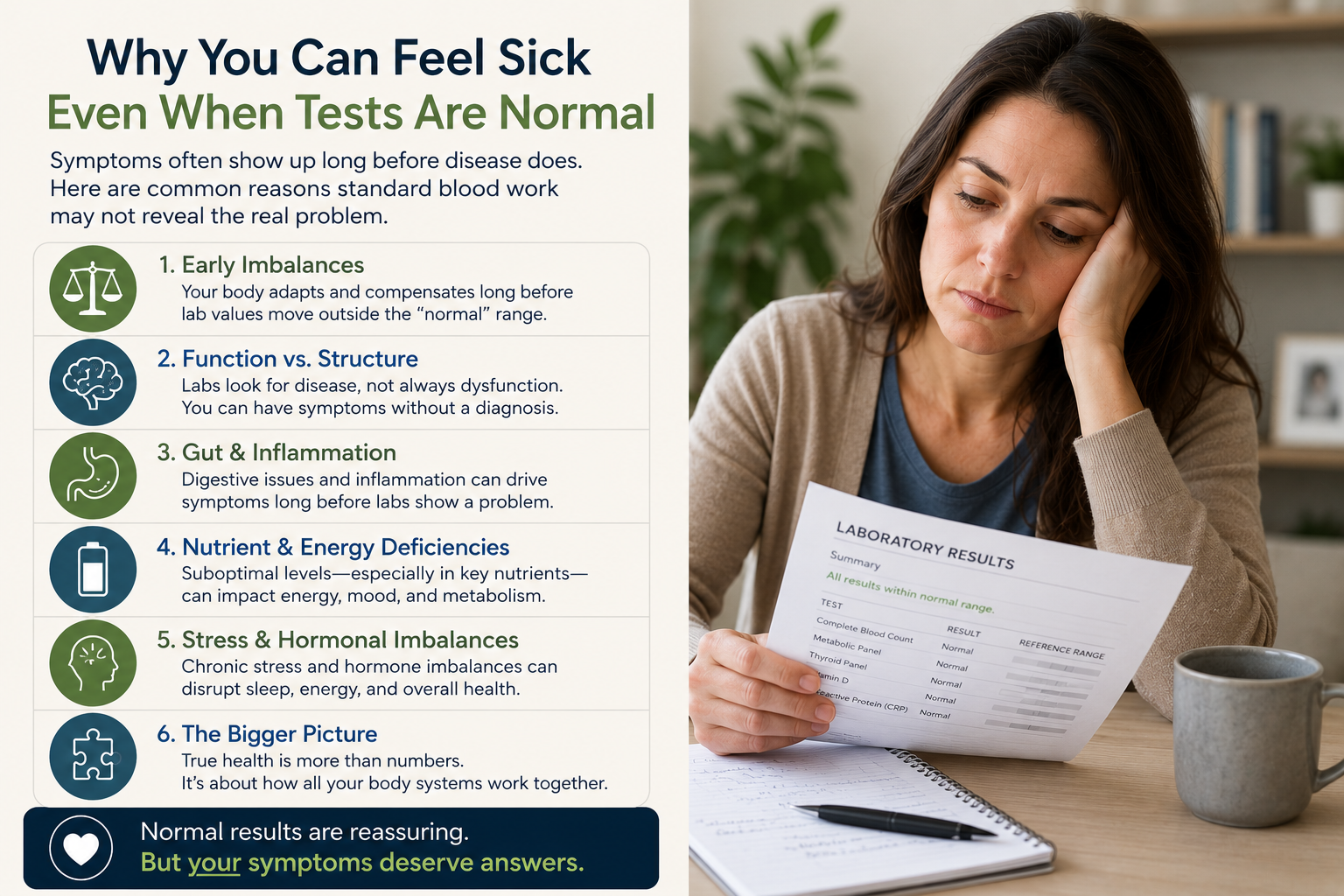
Why You Can Feel Sick Even When Your Blood Tests Are Normal
Routine laboratory tests are designed to detect disease, but they don’t always explain why you don’t feel well. Symptoms often develop long before laboratory values fall outside the normal range.
Imagine for a moment that you’re driving to work one morning and your car suddenly begins losing power every time you drive up a hill. It still starts without any trouble. It still gets you where you need to go. In fact, if someone watched you drive past, they would never suspect anything was wrong. But you’re the one behind the wheel, and you know something has changed. The car doesn’t feel the way it used to, even though it’s still functioning well enough to get through the day.
Like most people, you decide to have it checked.
The mechanic connects a diagnostic computer, runs several tests, and a few minutes later returns with a reassuring smile. “Good news,” he says. “Everything looks fine. There aren’t any error codes.”
Now put yourself in that situation.
Would you drive away convinced there was never a problem?
Probably not.
You’d most likely assume the computer simply wasn’t measuring whatever was causing the loss of power. That doesn’t mean the mechanic is wrong, and it doesn’t mean the diagnostic equipment is defective. It simply means the test was designed to identify certain types of problems. Like every tool, it has a specific purpose.
I think healthcare often works the same way.
Modern laboratory testing is one of the greatest advances in medicine, and I rely on it every day in my practice. Blood work allows us to detect infections, diabetes, anemia, kidney disease, liver disease, thyroid disorders, nutritional deficiencies, and many other conditions that would otherwise be difficult to recognize. Those tests save lives, and they provide information that no conversation alone could ever reveal.
At the same time, every laboratory test is designed to answer a particular question.
Most routine blood work is asking whether there is evidence of disease.
Many patients are asking something entirely different.
Why don’t I feel healthy anymore?
Those two questions sound similar, but they’re actually very different. One is trying to determine whether a diagnosable disease is present. The other is trying to understand why someone has gradually stopped feeling like themselves. When those two questions become confused, it’s easy to see why patients sometimes leave an appointment feeling frustrated even when they’re told everything looks normal.
I’ve often thought about that moment from both sides of the examination room.
The physician is relieved because the laboratory testing didn’t reveal a serious illness.
The patient is discouraged because they’re still living with the same fatigue, the same brain fog, the same digestive problems, or the same lack of energy that brought them to the office in the first place.
Neither person is wrong.
They’re simply looking at the same situation from two different perspectives.
That’s why I’ve never believed a laboratory report should be the entire conversation.
It’s an important part of the conversation, but it’s only one part.
The other part comes from listening carefully to the person sitting across from you. When did the symptoms begin? What changed around that time? How has life been different over the past few years? How are you sleeping? How are you handling stress? What has your body been trying to tell you that perhaps you’ve ignored because you were too busy trying to keep up with everyday life?
Those questions don’t replace laboratory testing.
They give the laboratory testing context.
I’ve found that some of the most important answers in healthcare don’t come from choosing between science and listening.
They come from combining both.
The laboratory report tells us what the body is measuring.
The patient tells us what the body is experiencing.
When we begin putting those two pieces together, we often discover that the story is much richer—and much more hopeful—than either one could tell by itself.
Disease Is Usually the Last Chapter—Not the First
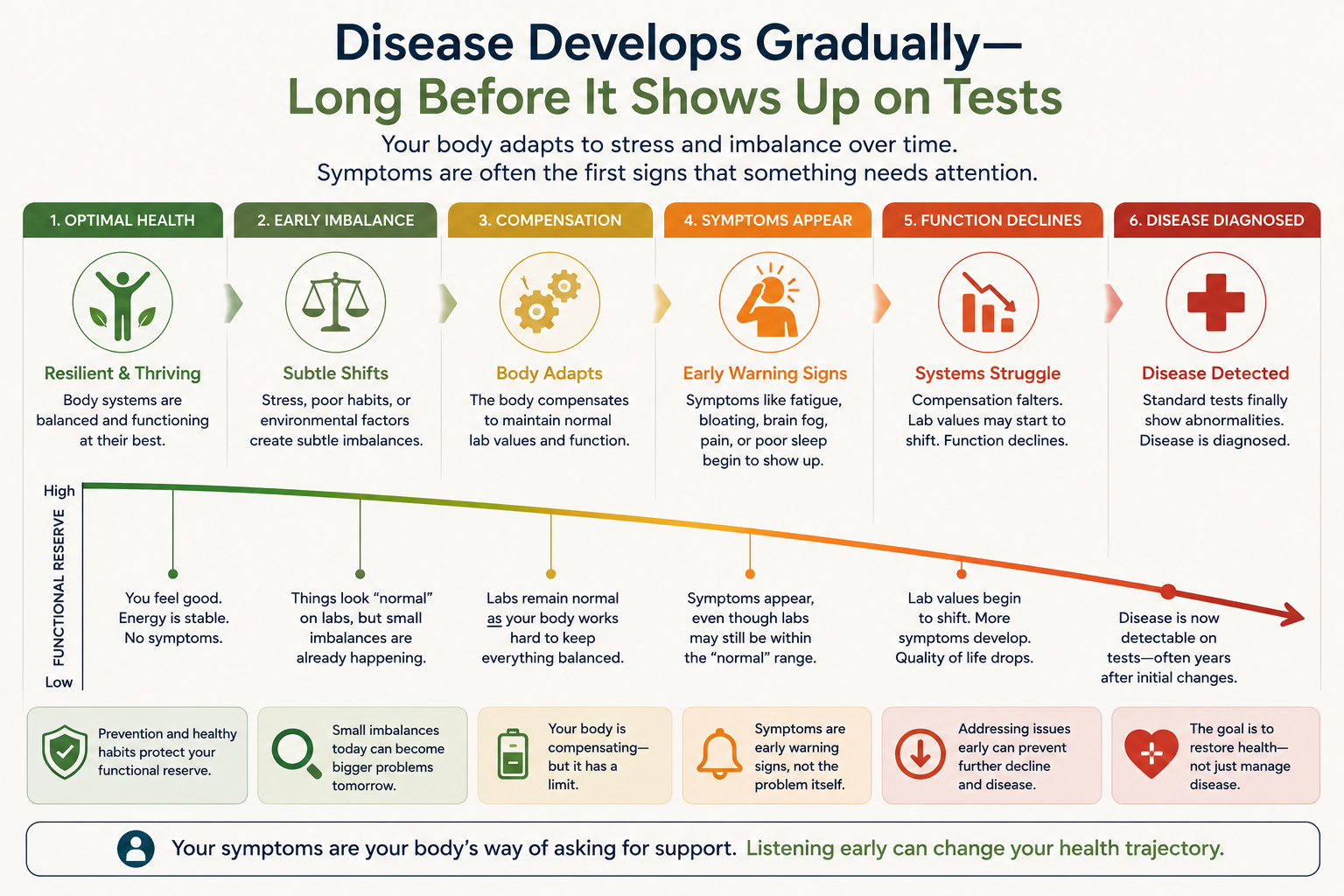
Disease Doesn’t Usually Begin with a Diagnosis
Many chronic health conditions develop slowly over months or years. The body often compensates long before laboratory values become abnormal, which is why symptoms may appear well before a diagnosis is made.
One of the biggest misconceptions I see is the belief that disease begins the day someone receives a diagnosis. In reality, that’s rarely how chronic illness develops. Most chronic conditions don’t appear overnight. They evolve slowly, often over many years, while the body quietly works behind the scenes to keep everything functioning as normally as possible.
I’ve often told patients that a diagnosis is usually not the beginning of the story.
It’s the last chapter.
By the time someone is finally told they have diabetes, hypothyroidism, autoimmune disease, or another chronic condition, their body has often been adapting for years. The diagnosis may feel sudden, but the changes that led to it have usually been taking place long before anyone recognized them. The body has been working incredibly hard to compensate, and those compensations are often so effective that we don’t notice them until they begin to fail.
That’s one of the most remarkable things about the human body.
Every second of every day, your body is making thousands of adjustments without you ever thinking about them. It regulates your temperature, balances your blood sugar, repairs damaged tissues, fights infection, produces hormones, and constantly adapts to the demands you place upon it. Most of the time, we take those processes completely for granted because they happen quietly and automatically.
The body was designed for survival.
That may sound obvious, but it’s an incredibly important concept because survival and optimal health are not always the same thing. If you’re under chronic stress, your body adapts. If you’re consistently sleeping too little, it adapts again. If your nutrition isn’t ideal or inflammation gradually increases over time, the body continues making adjustments so you can keep moving forward. Its first priority is to keep you alive, even if that means you don’t feel your best.
I sometimes compare it to running a business during difficult economic times.
When money becomes tight, most business owners don’t immediately close the doors. They reduce expenses, postpone projects, and make difficult decisions that allow the business to continue operating. From the outside, everything may look perfectly normal. Customers still walk through the front door. Employees still show up to work. But behind the scenes, the business is operating very differently than it was before.
The body often does something remarkably similar.
As the demands placed upon it increase, it begins making compromises that allow you to continue functioning. You may still be able to work, take care of your family, and keep up with your responsibilities, but perhaps you’re relying on several cups of coffee to get through the morning. Maybe you’re too exhausted to exercise like you once did. Perhaps your memory isn’t quite as sharp, or you find yourself needing the weekend just to recover from the week.
Those changes are easy to dismiss because they usually happen so gradually.
Many people simply assume that’s what getting older feels like.
Sometimes it is.
But many times it’s something else entirely.
Sometimes those subtle changes are the earliest signs that the body has been compensating for a long time and is beginning to reach the limits of its ability to adapt. The symptoms don’t appear because the body suddenly stopped working. They appear because the body has been working overtime for years and can no longer maintain the same balance it once could.
Eventually, those adaptations are no longer enough.
That’s often when symptoms become more noticeable. Months or years later, laboratory values may begin to change, imaging studies may reveal abnormalities, and a diagnosis is finally made. From the patient’s perspective, it feels as though the illness appeared out of nowhere. From the body’s perspective, it has been telling the same story for a very long time.
That’s why I believe it’s so important to pay attention to the quieter signals your body gives you long before a disease name ever appears in your medical record. Fatigue, poor sleep, brain fog, digestive problems, and unexplained changes in how you feel are not always random inconveniences. Sometimes they’re the first chapters of a story that your body has been trying to tell for years.
The encouraging news is that if those changes developed gradually, improvement often happens the same way.
Not overnight.
But one healthy choice at a time.
What Does “Normal” Really Mean?
By now, you may be wondering what doctors actually mean when they tell you your blood work is “normal.”
It’s an important question because I think the word normal is one of the most misunderstood words in healthcare. When most people hear that everything looks normal, they naturally assume it means every system in their body is functioning exactly the way it should. That’s a completely understandable conclusion, but it’s not really what a laboratory report is telling us.
Laboratory testing is designed to measure very specific things. It measures blood sugar, cholesterol, thyroid hormones, liver enzymes, kidney function, inflammatory markers, vitamins, minerals, and hundreds of other biological measurements that help physicians diagnose disease, monitor treatment, and identify when something falls outside an expected range. Without laboratory testing, modern medicine simply wouldn’t be where it is today.
What laboratory testing doesn’t measure is how you experience your health.
A blood test can’t tell us whether you wake up feeling refreshed or exhausted. It can’t measure whether your mind feels clear or foggy, whether your energy disappears every afternoon, or whether you’ve gradually lost the motivation and vitality you once had. Those experiences are every bit as real as the numbers printed on a laboratory report, but they have to come from listening to the person, not simply reading the test.
Think about an annual physical.
Your doctor measures your blood pressure, listens to your heart, reviews your laboratory work, and performs a physical examination. Each of those pieces provides valuable information, but none of them tells the entire story by itself. The conversation between doctor and patient is just as important because that’s where symptoms, lifestyle, medical history, stress, sleep, nutrition, and life experiences begin to add meaning to the numbers.
Over the years, I’ve had many patients whose laboratory results looked remarkably similar while their lives looked completely different. One person was sleeping well, exercising regularly, thinking clearly, and enjoying excellent health. Another struggled with fatigue, brain fog, digestive problems, unexplained weight gain, and poor sleep. On paper, they looked surprisingly alike. In reality, they were living two completely different experiences.
That’s one of the reasons I’ve learned to be careful about looking at laboratory values in isolation.
Numbers are important, but numbers never exist by themselves. Every laboratory result belongs to a real person with a unique history, unique genetics, unique habits, unique stressors, and unique life experiences. That’s why two people with nearly identical laboratory reports can feel completely different. The laboratory values are only one chapter of a much larger story.
I think one of the greatest strengths of good healthcare is recognizing that both perspectives matter.
The science matters.
The laboratory testing matters.
The physical examination matters.
The patient’s story matters too.
When we bring those pieces together, we stop treating laboratory reports as the final answer and begin using them the way they were intended—as valuable tools that help us better understand the person sitting in front of us. That’s a very different way of thinking about healthcare, and in my experience it’s one of the reasons patients finally begin to feel heard.
If you’ve ever been told that everything looks normal even though you still don’t feel well, I hope you’ll remember this.
A laboratory report measures biology.
Only you can describe what it feels like to live inside your body.
Both are important.
Neither should be ignored.
And when we learn to listen to both, we begin asking the kinds of questions that often lead to the most meaningful answers.
Asking Better Questions
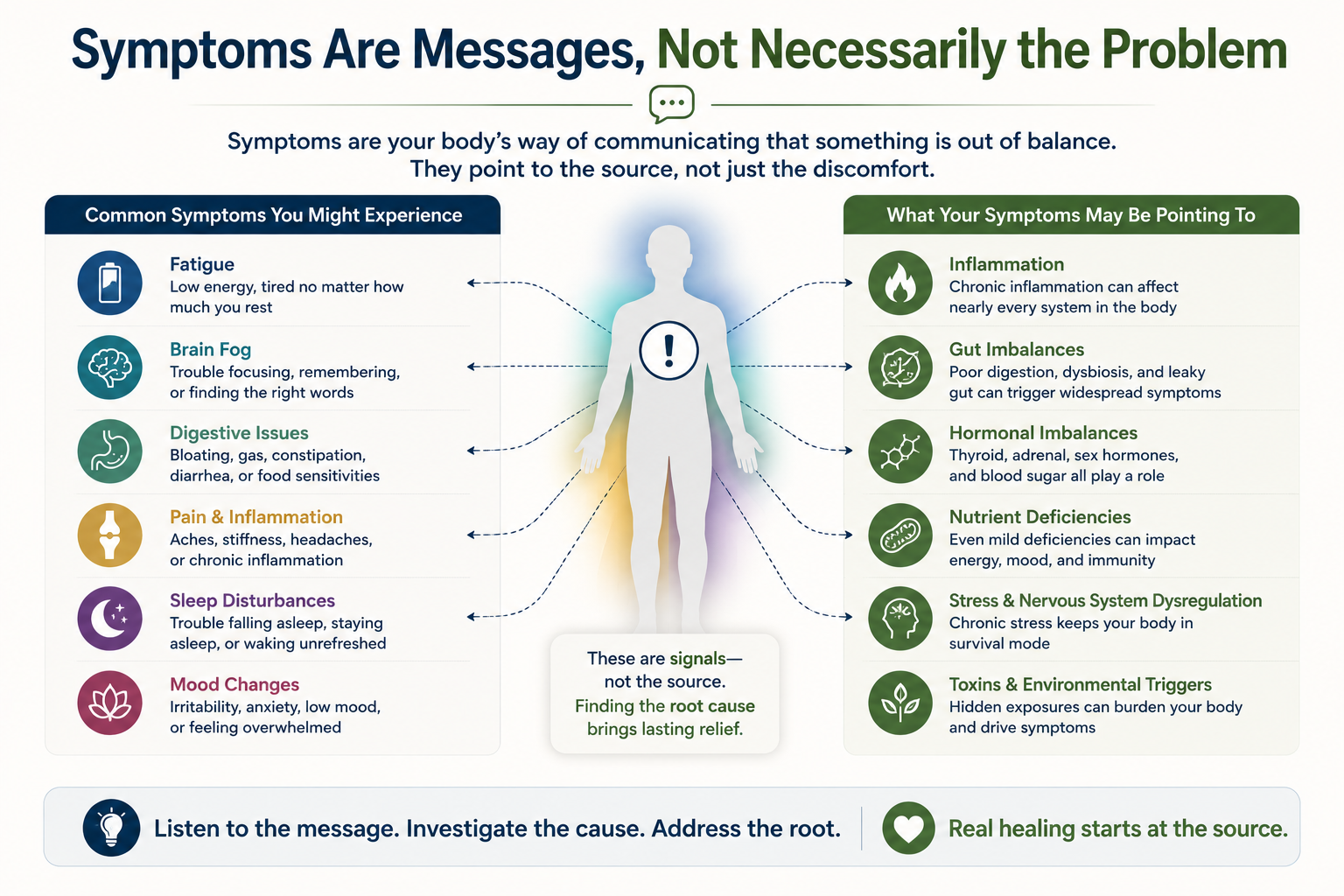
Symptoms Are Messages—Not the Root Cause
Symptoms are your body’s way of communicating that something is out of balance. Instead of asking, “How do I get rid of this symptom?” a functional medicine approach asks, “Why is my body sending this message?” Understanding the underlying cause often leads to more meaningful, long-term improvements in health.
At this point, you may be wondering where functional medicine fits into all of this.
That’s a fair question, and it’s one of the reasons I wanted to write this article. Over the years, functional medicine has become an increasingly popular term, but it has also become one of the most misunderstood. Many people assume it simply means replacing prescription medications with natural supplements. While natural therapies certainly have their place, that’s not what attracted me to functional medicine nearly thirty years ago.
What interested me wasn’t the treatment.
It was the questions.
The longer I practiced, the more I realized that healthcare often focuses on identifying a diagnosis and matching it with an appropriate treatment. There are many situations where that’s exactly what should happen. If someone has pneumonia, they need treatment for pneumonia. If someone breaks a bone, they need an orthopedic surgeon. If someone is having a heart attack, they need emergency medical care. Those situations are clear, and modern medicine does an extraordinary job managing them.
But many of the people walking into my office weren’t facing that kind of emergency. They were dealing with a slow decline in their health that had taken place over months or even years. They were tired all the time. Their digestion wasn’t the same. They had gained weight, weren’t sleeping well, and felt like they were slowly losing the energy and vitality they once had. Yet no one had been able to explain why.
That’s when I realized I needed to start asking different questions.
Instead of asking only, “What disease does this person have?” I also wanted to ask, “Why did this person lose their health in the first place?” That one question completely changed the way I looked at patient care because it shifted my attention from naming the problem to understanding how the problem developed.
Let me give you an example.
Imagine two people struggling with depression. One physician prescribes an antidepressant. Another practitioner recommends a natural supplement such as St. John’s wort. The treatments are different, but the thinking behind them may actually be very similar. Both approaches are trying to answer the same question: “What can I give this person to help them feel better?”
Functional medicine encourages us to take one more step.
Why did this person become depressed in the first place?
Have they been living with chronic stress for years? Are they sleeping poorly? Is their blood sugar constantly rising and falling throughout the day? Could chronic inflammation be affecting the brain? Is poor gut health influencing the production of neurotransmitters? Are nutritional deficiencies making it more difficult for the brain to function the way it was designed to?
Sometimes the answer is obvious.
More often, it isn’t.
In my experience, it’s usually several smaller problems working together rather than one single cause. The body doesn’t function as a collection of separate parts. Every system communicates with every other system. Sleep influences hormones. Hormones influence blood sugar. Blood sugar affects inflammation. Inflammation affects the brain. The brain influences digestion. When one system begins to struggle, it rarely struggles alone.
That’s why patients often arrive believing they have six different problems when they may actually be looking at six different clues pointing toward the same underlying imbalance.
I don’t spend the first part of an appointment trying to decide which symptom is the most important.
I spend it listening.
I want to know when the symptoms began. I want to understand what else was happening in that person’s life around the same time. I ask about sleep, nutrition, stress, exercise, medications, previous illnesses, relationships, and major life events because those conversations often reveal patterns that no laboratory report could ever show me.
That’s what I love about functional medicine.
It’s not about replacing medication with supplements.
It’s not about rejecting conventional medicine.
It’s about taking the time to understand the story behind the symptoms.
Once that story begins to make sense, the next steps often become much clearer. Instead of chasing one symptom after another, we begin looking for the patterns that connect them. We stop asking, “What can I take for this problem?” and begin asking, “Why did this problem develop in the first place?”
In my experience, that’s where the most meaningful improvements in health usually begin.
Your Body Isn’t Broken—It’s Trying to Protect You
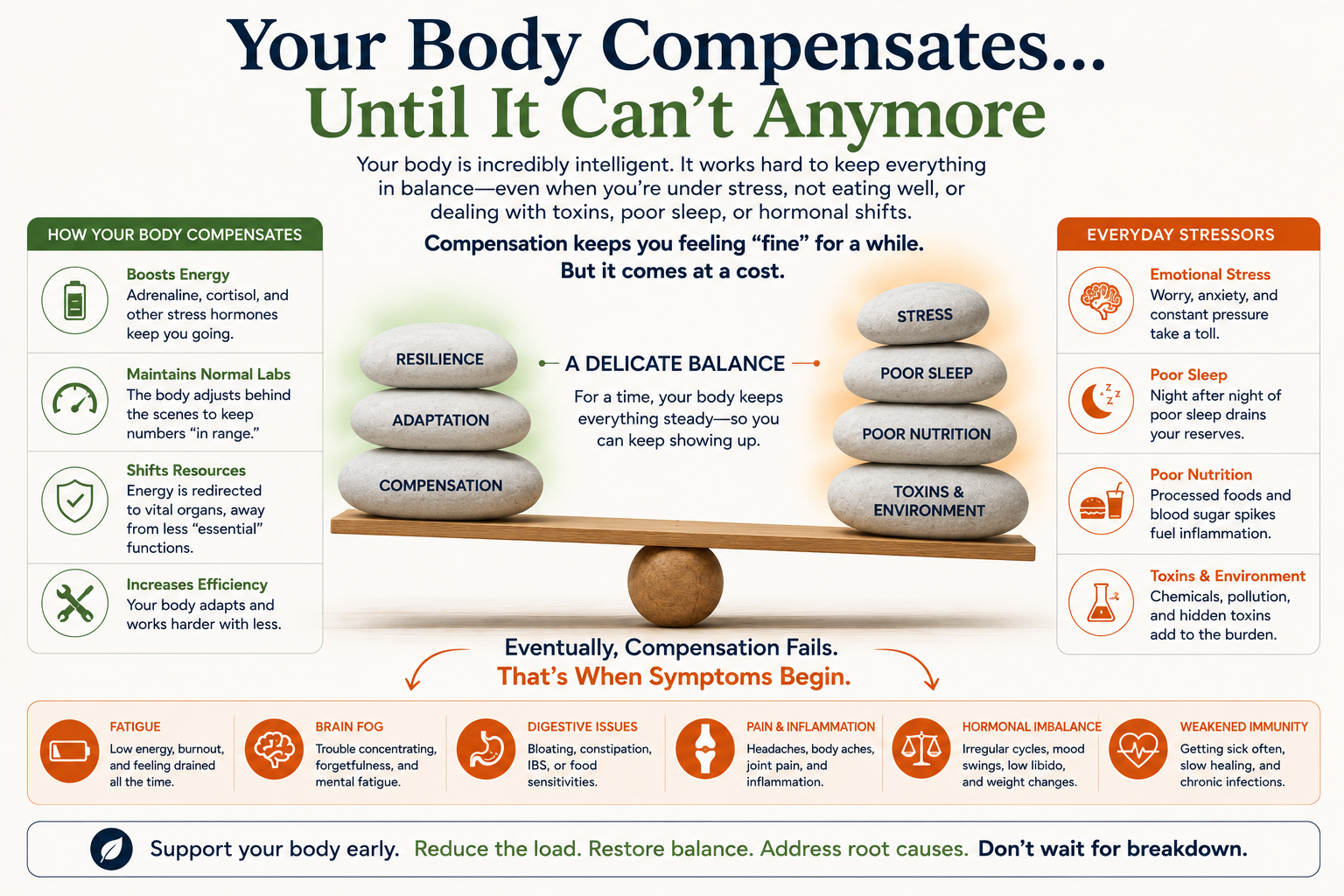
Your Body Can Compensate for Years—But Compensation Has Limits
The human body is remarkably adaptable. It can maintain normal function for years despite chronic stress, poor nutrition, inflammation, or inadequate sleep. When those compensatory mechanisms are exhausted, symptoms often begin to appear—even while laboratory tests may still look normal.
One of the greatest lessons I’ve learned after nearly thirty years of caring for patients is that the body is almost always trying to help us, even when it doesn’t feel that way. Most of us grow up thinking of symptoms as the enemy. We get a headache, so we want the headache to disappear. We feel exhausted, so we look for something to boost our energy. Our stomach hurts, so we take something to settle it down. There’s nothing wrong with wanting relief, but over the years I’ve come to believe that symptoms deserve more than simply being silenced. They deserve to be understood.
Think about the check engine light in your car. No one enjoys seeing that light come on, but the light itself isn’t the problem. It’s simply letting you know that something under the hood needs your attention. You could cover the light with a piece of tape, but that wouldn’t repair the engine. It would only hide the warning. In many ways, the human body communicates in exactly the same way. Fatigue, brain fog, digestive problems, headaches, joint pain, poor sleep, unexplained weight gain, and countless other symptoms are often the body’s way of saying, “Something has changed, and I need your attention.”
That’s why I encourage my patients to change the question they’re asking. Instead of asking only, “How do I get rid of this symptom?” I encourage them to ask, “Why is my body sending me this message?” That single shift in perspective changes the entire conversation. Instead of viewing the body as something that’s broken, we begin seeing it as something that’s working incredibly hard to adapt.
The human body is one of the most remarkable survival systems ever created. Every single day it adjusts to the choices we make, the stress we carry, the food we eat, the sleep we get, the infections we fight, and the environment we live in. It doesn’t wake up each morning trying to make you tired or give you headaches. It doesn’t decide to slow your metabolism or make your joints ache. Everything your body does is an attempt to maintain balance and keep you functioning despite the challenges it’s facing.
That doesn’t mean every symptom is harmless, and it certainly doesn’t mean symptoms should be ignored. Quite the opposite. Symptoms often become noticeable because the body has reached the limits of its ability to compensate. They’re not necessarily signs that your body has failed you. In many cases, they’re evidence that your body has been working overtime to protect you for a very long time.
I’ve found that people become much less discouraged when they begin looking at their symptoms through that lens. Instead of feeling betrayed by their body, they begin appreciating just how hard it has been working on their behalf. That doesn’t make the symptoms any less real, but it changes the relationship they have with them. Curiosity begins to replace frustration, and hope begins to replace fear.
When someone starts asking why their body is sending a particular message instead of simply trying to make the message disappear, the entire direction of care begins to change. We stop chasing symptoms one at a time and start looking for the underlying patterns that connect them. That’s often where the most meaningful breakthroughs occur, because we’re no longer fighting against the body. We’re finally beginning to work with it.
If there’s one thing I hope you remember from this chapter, it’s this: your body is not your enemy. It’s been working for you every minute of every day since the day you were born. Even when you don’t feel well, it’s constantly adapting, repairing, protecting, and doing everything it can to keep you alive. In my experience, one of the most powerful moments in a patient’s journey comes when they stop seeing their body as something that’s broken and start seeing it as something that’s asking for help.
That shift in perspective doesn’t solve every health problem overnight.
But it often marks the beginning of genuine healing.
There Is Hope

Healing Is a Journey
Lasting health rarely happens overnight. Small, consistent improvements in nutrition, sleep, stress management, movement, and lifestyle can add up to meaningful changes over time.
If you’ve read this far, there’s a good chance you’ve seen yourself somewhere in these pages.
Maybe you’ve been told your blood work is normal even though you still don’t feel well. Maybe you’ve spent months—or even years—trying to understand why your energy has disappeared, why your digestion has changed, why your mind doesn’t feel as sharp as it once did, or why your body simply doesn’t feel like home anymore. If that’s your story, I want you to know that you’re not alone. I’ve had this conversation with countless patients over the years, and it’s one of the reasons I remain so passionate about helping people understand how the body really works.
The encouraging news is that health is not a fixed destination. Just as the body can gradually move away from health over time, it can often begin moving back toward health when we give it the support it needs. That doesn’t happen overnight, and it rarely comes from one magic supplement, one special diet, or one perfect laboratory test. Real healing is usually much quieter than that. It happens one decision at a time, one habit at a time, and one day at a time.
I’ve watched people regain energy they thought they had lost forever. I’ve seen patients who believed they would always struggle with digestive problems begin enjoying food again. I’ve seen people who accepted poor sleep as a normal part of aging discover what it feels like to wake up refreshed. Those changes didn’t happen because someone found a miracle cure. They happened because we finally understood what the body had been asking for and began working with it instead of against it.
That’s one of the reasons I remain optimistic, even when someone has been struggling for a long time.
The human body has an incredible capacity to adapt.
After all, adaptation is what brought us to this point in the first place. Earlier in this article we talked about how the body compensates for years in an effort to keep us functioning. That same ability to adapt doesn’t suddenly disappear. When we improve sleep, reduce chronic stress, nourish the body properly, move regularly, and address the factors that have been pushing health in the wrong direction, the body often begins adapting in a healthier direction as well. It may not happen as quickly as we’d like, but meaningful progress is absolutely possible.
One of the most rewarding parts of my career has been watching people rediscover what feeling healthy actually feels like. Many of them had forgotten. They had become so accustomed to living with fatigue, brain fog, aches and pains, digestive problems, or poor sleep that those symptoms began to feel normal. They weren’t looking for extraordinary health anymore. They simply wanted to feel like themselves again.
That’s a goal I believe is worth pursuing.
Whether your journey is just beginning or you’ve been searching for answers for years, don’t lose hope simply because you haven’t found those answers yet. Continue asking questions. Continue learning about your body. Continue making choices that move you toward better health rather than accepting that the way you feel today is the way you’ll always feel.
I’ve learned something very important over the years.
People often underestimate what the human body is capable of when it’s given the opportunity to heal.
No healthcare provider can promise a specific outcome, and every person’s journey is different. But I can tell you this with confidence: I’ve seen too many people reclaim their health to believe that fatigue, poor digestion, brain fog, chronic inflammation, or declining energy should automatically be accepted as an unavoidable part of life.
Sometimes the greatest obstacle isn’t the illness itself.
It’s believing that nothing can change.
I hope this article has challenged that belief.
Because if your body has been working every day to protect you…
Then it’s worth giving your body every opportunity to recover.
And in my experience, that’s where hope becomes more than a feeling.
It becomes the beginning of a new direction.
The Conversation Your Body Has Been Trying to Have
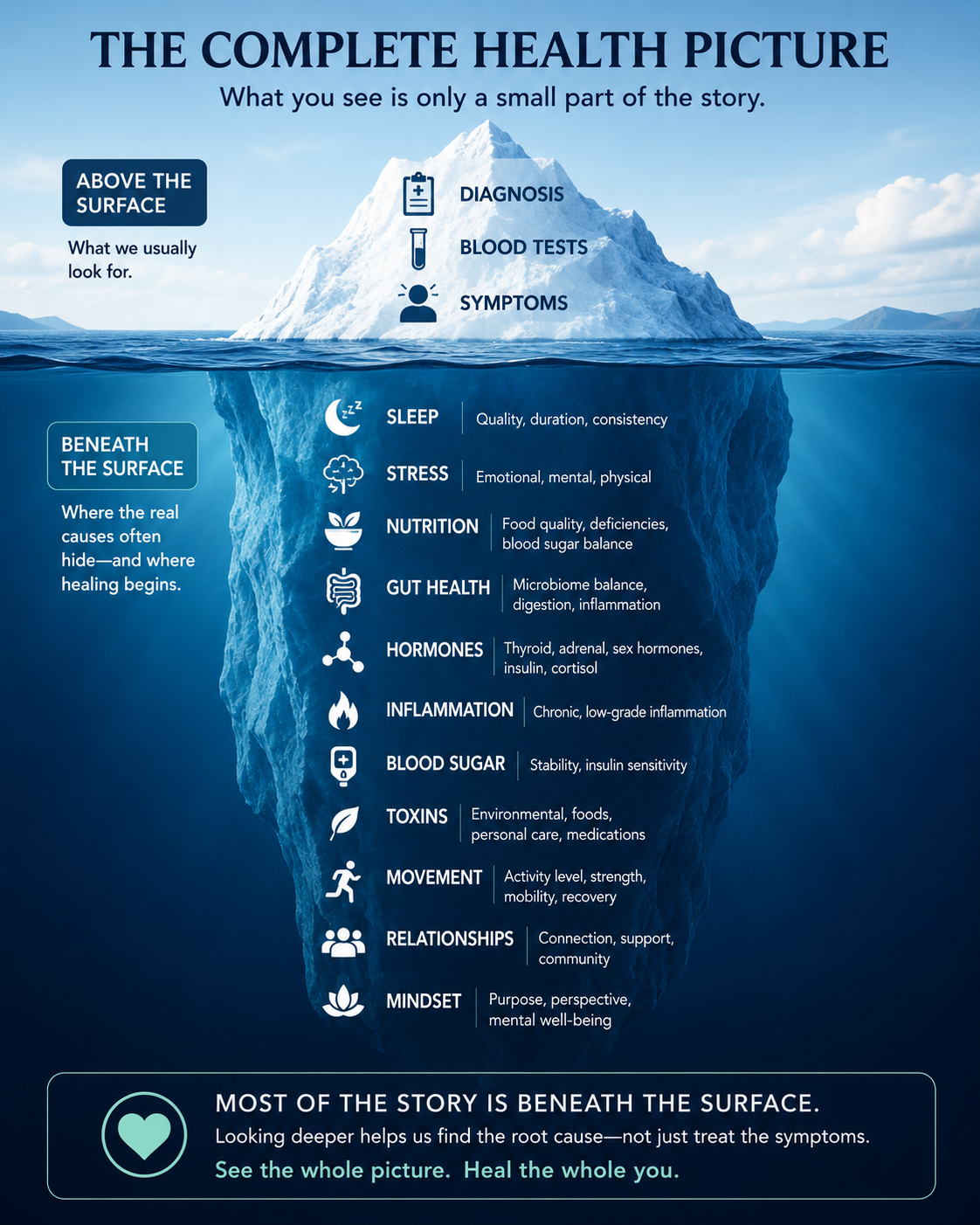
The Health Iceberg: Looking Below the Surface
Symptoms, diagnoses, and laboratory results are important, but they are often only the visible portion of a person’s health story. Lasting improvements frequently come from understanding the deeper factors that influence how the body functions, including sleep, nutrition, stress, gut health, hormones, inflammation, blood sugar, movement, and lifestyle.
If you’ve made it this far, I hope one thing has become clear.
This article was never really about blood work.
It was about understanding the remarkable relationship we have with our own bodies.
For many people, health becomes a series of numbers. Blood pressure, cholesterol, blood sugar, thyroid levels, vitamin levels, inflammatory markers, and countless other measurements become the focus of every conversation. Those numbers are important, and they provide valuable information that helps guide good medical care. But after nearly thirty years of working with patients, I’ve learned that no laboratory report can ever tell the entire story of a person’s health.
The rest of the story belongs to the individual sitting across from me.
It belongs to the mother who no longer has the energy to play with her children. It belongs to the businessman who finds himself struggling to concentrate during meetings. It belongs to the retiree who assumed feeling exhausted was simply part of getting older. It belongs to every person who has quietly wondered, “Why don’t I feel like myself anymore?” Long before a diagnosis is made, the body is often telling that story through subtle changes that are easy to dismiss but too important to ignore.
That’s why I’ve never believed healthcare begins with a laboratory report.
I believe it begins with listening.
Listening to when the symptoms started. Listening to how life has changed over the past few years. Listening to what the body has been trying to communicate through fatigue, poor sleep, digestive problems, brain fog, headaches, weight changes, or countless other symptoms that so often appear long before disease is diagnosed. Those conversations frequently reveal patterns that no single laboratory value could ever explain on its own.
Perhaps the greatest lesson I’ve learned throughout my career is that the human body is incredibly intelligent. It is constantly adapting, constantly protecting, and constantly working to keep us alive despite the challenges we place upon it. Even when you don’t feel well, your body isn’t waking up each morning trying to work against you. More often than not, it’s doing everything it can to compensate for an environment that has gradually become more difficult to manage.
That realization changes the conversation.
Instead of asking, “What’s wrong with me?” we begin asking, “What has my body been trying to tell me?” Instead of viewing symptoms as enemies to be silenced, we begin seeing them as messages to be understood. That doesn’t mean every symptom has a simple explanation, and it certainly doesn’t mean every condition can be reversed. It simply means we stop assuming that the absence of a diagnosis is the same thing as the presence of health.
If this article has accomplished anything, I hope it has encouraged you to become more curious about your own health. Continue asking questions. Continue learning. Continue paying attention to the signals your body gives you instead of assuming they’re simply part of getting older or something you have to live with forever. Your body has been communicating with you every day of your life, and I believe those messages deserve to be heard.
Most importantly, I hope you’ll leave with a renewed sense of hope.
I’ve seen too many people regain their health to believe that fatigue, brain fog, digestive problems, poor sleep, and declining energy should simply be accepted as the inevitable consequence of getting older. Every person’s journey is different, and no healthcare provider can promise a particular outcome, but I’ve learned that the body often has a far greater capacity to heal than most people realize when it’s given the opportunity.
So the next time someone tells you that your blood work is normal, don’t assume the conversation is over.
Instead, let that be the beginning of a deeper conversation.
A conversation that respects the science while also respecting your experience.
A conversation that looks beyond the laboratory report and seeks to understand the whole person.
And perhaps most importantly, a conversation that never forgets one simple truth.
Your body has been working for you every single day of your life.
When you begin seeing it that way, you stop fighting against your body and start working with it.
In my experience, that’s where some of the most meaningful healing journeys begin.
About Dr. Scott
Dr. Mark Scott has been helping patients improve their health for nearly three decades through an integrative approach that combines chiropractic care, functional medicine, nutrition, and lifestyle medicine. Throughout his career, he has developed a special interest in helping people who have been told that “everything looks normal” but continue to struggle with fatigue, digestive problems, thyroid disorders, autoimmune conditions, weight loss resistance, chronic pain, and other persistent health concerns.
Rather than focusing only on symptoms or diagnoses, Dr. Scott believes the most important question is often why someone lost their health in the first place. By understanding how different body systems work together—including the gut, hormones, immune system, metabolism, nutrition, and nervous system—he helps patients identify underlying patterns that may be contributing to chronic health problems.
If you’re looking for a functional medicine practitioner in Virginia Beach who takes the time to understand the whole person—not just the laboratory report—Dr. Scott and the team at Total Health Center are here to help.
To learn more about our approach or to schedule a consultation, visit Total Health Center or call our office to get started.
References
- Institute for Functional Medicine (IFM). What is Functional Medicine? https://www.ifm.org
- Centers for Disease Control and Prevention (CDC). About Chronic Diseases. https://www.cdc.gov/chronic-disease/index.html
- National Institutes of Health. National Library of Medicine. MedlinePlus Medical Tests. https://medlineplus.gov/lab-tests/
- McEwen BS, Wingfield JC. The concept of allostasis in biology and biomedicine. Hormones and Behavior. 2003;43(1):2-15.
- McEwen BS. Protective and Damaging Effects of Stress Mediators. New England Journal of Medicine. 1998;338(3):171-179.
- Engel GL. The Need for a New Medical Model: A Challenge for Biomedicine. Science. 1977;196(4286):129-136.
- National Academy of Medicine. Improving Diagnosis in Health Care. Washington, DC: National Academies Press; 2015.
- Selye H. The Stress of Life. Revised Edition. New York: McGraw-Hill; 1978.
- Drossman DA. Functional Gastrointestinal Disorders: History, Pathophysiology, Clinical Features, and Rome IV. Gastroenterology. 2016;150(6):1262-1279.
- Wiersinga WM. Paradigm Shifts in Thyroid Hormone Replacement Therapies for Hypothyroidism. Nature Reviews Endocrinology. 2014;10:164-174.
- Institute of Medicine. Clinical Practice Guidelines We Can Trust. Washington, DC: National Academies Press; 2011.
- Sackett DL, Rosenberg WM, Gray JA, Haynes RB, Richardson WS. Evidence Based Medicine: What It Is and What It Isn’t. BMJ. 1996;312:71-72.
Frequently Asked Questions
Why do I still feel sick if my blood work is normal?
Routine blood work is designed to detect many important diseases and abnormalities, but it doesn’t measure every aspect of health. Symptoms such as fatigue, brain fog, digestive problems, and poor sleep can develop long before laboratory values fall outside the normal range.
Can blood tests miss health problems?
Blood tests are extremely valuable and often lifesaving, but every test has limitations. They answer specific medical questions. A normal laboratory report doesn’t necessarily explain why someone may not feel healthy or why symptoms have gradually developed over time.
Does normal blood work mean I’m healthy?
Not necessarily. Normal laboratory results are reassuring, but they’re only one part of the overall picture. Your symptoms, medical history, lifestyle, sleep, nutrition, stress, and physical examination are all important pieces of understanding your health.
What is functional medicine?
Functional medicine is an approach to healthcare that looks beyond a diagnosis to understand why illness developed in the first place. Instead of focusing only on treating symptoms, it examines how different body systems interact and searches for underlying contributors to poor health.
Should I ignore my symptoms if my doctor says everything is normal?
No. Symptoms should never be ignored simply because routine laboratory testing appears normal. Persistent fatigue, brain fog, digestive issues, unexplained weight changes, or chronic pain deserve thoughtful evaluation and discussion with a qualified healthcare professional.
When should I consider seeing a functional medicine practitioner?
If you’ve been struggling with ongoing symptoms despite normal testing, or if you’re looking for a more comprehensive evaluation of your overall health, a functional medicine consultation may help identify patterns and lifestyle factors that deserve further attention.