
Gluten University Lesson #9
The Hidden Proteins in Wheat That Aren’t Gluten
Part of the Gluten University Educational Series
Gluten University Home:
https://totalhealthcentervb.com/gluten-university/
Previous Lesson:
https://totalhealthcentervb.com/gluten-free-grains-nobody-talks-about/
Most People Think Gluten Is the Entire Story
When people begin researching gluten sensitivity, celiac disease, or wheat intolerance, nearly all of the attention is placed on one thing:
Gluten.
And for good reason.
Gluten is the most studied protein in wheat and is clearly associated with celiac disease and many gluten-related disorders.
However, what many people don’t realize is that wheat contains hundreds of biologically active compounds, including numerous proteins that are completely separate from gluten.
This raises an important question:
Could some people be reacting to wheat itself rather than gluten alone?
The answer may be more complex than many realize.
Wheat Is More Than Gluten
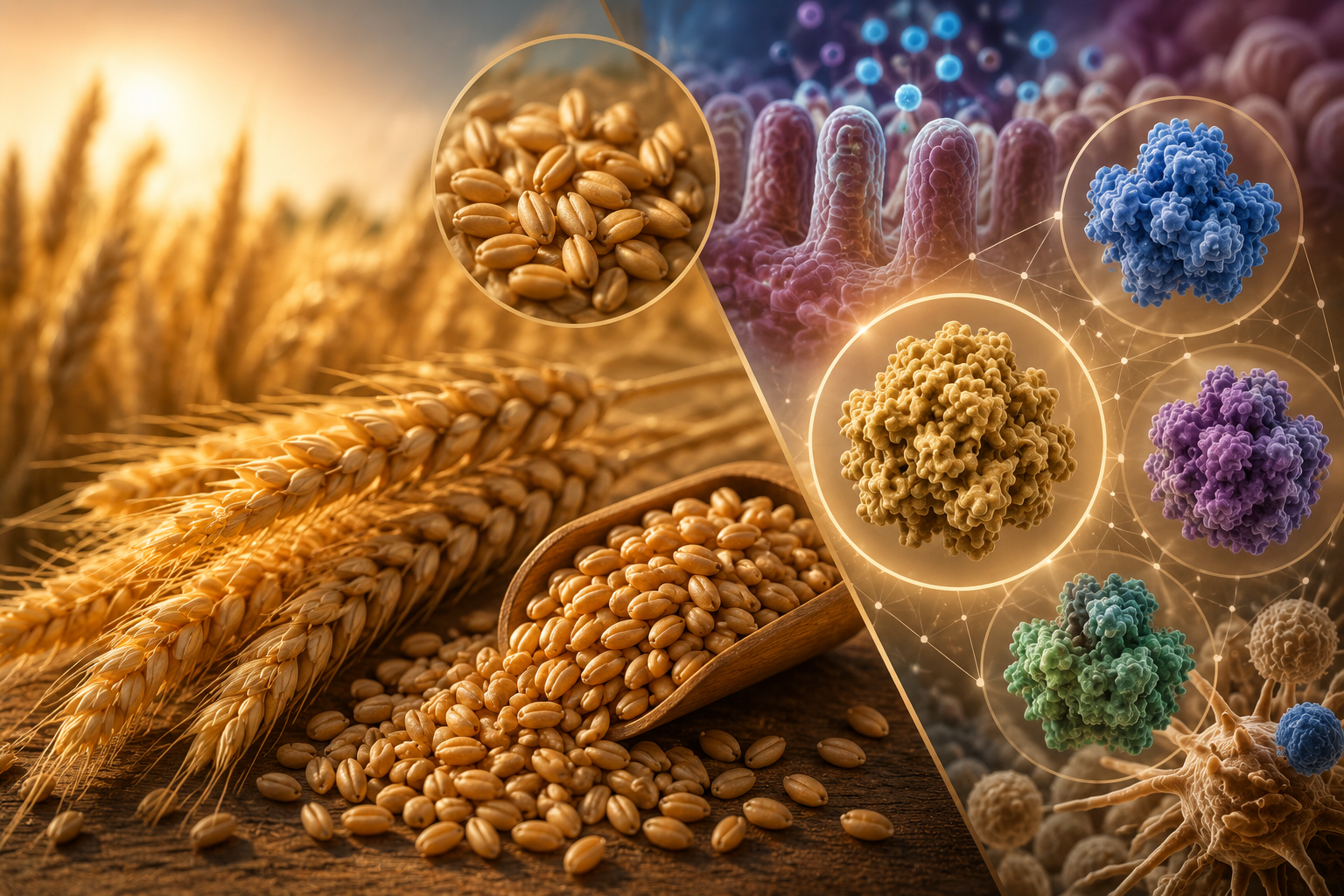
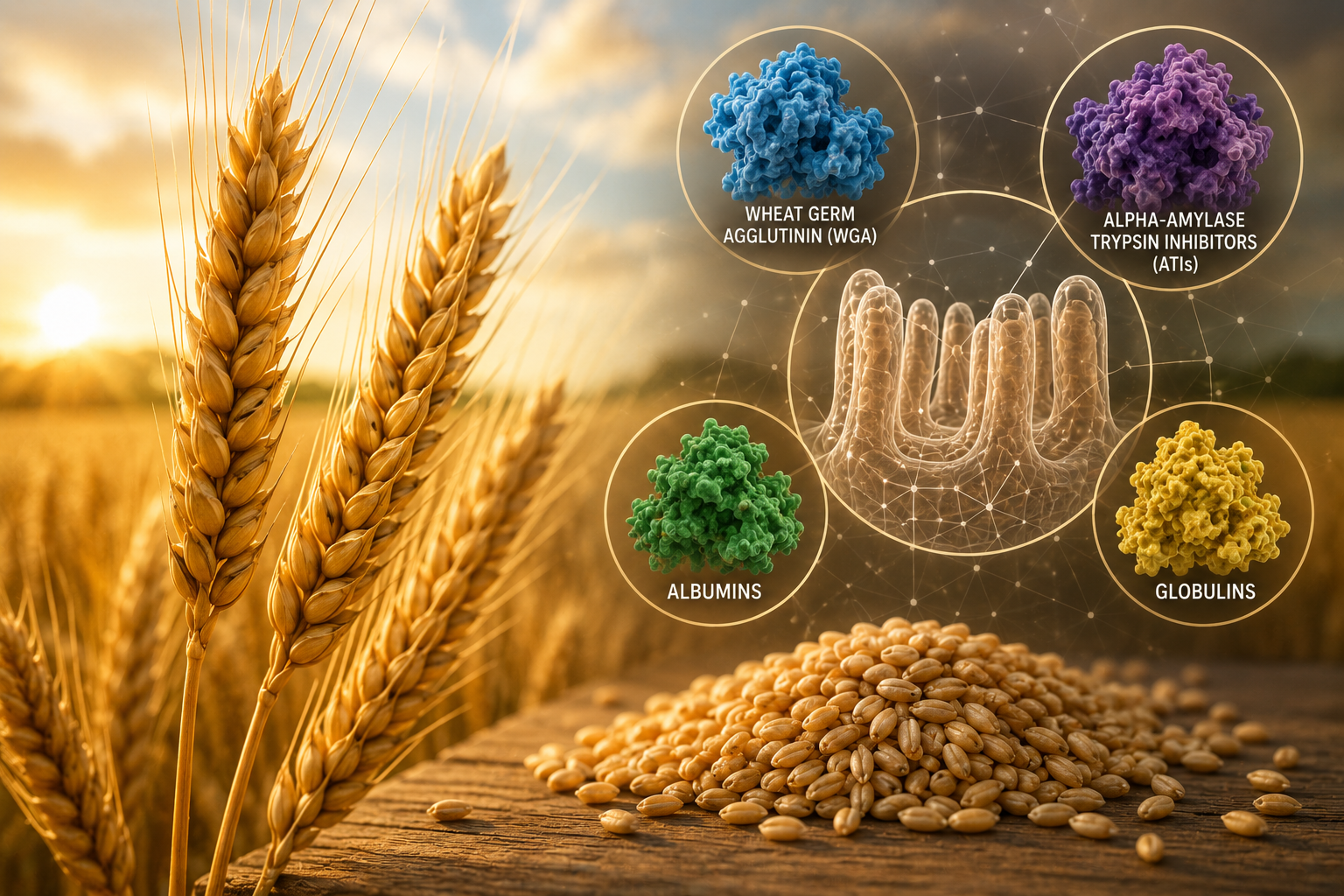
Most people think of wheat as simply a source of gluten, but wheat contains numerous biologically active proteins including Wheat Germ Agglutinin (WGA), Alpha-Amylase Trypsin Inhibitors (ATIs), albumins, and globulins. These compounds may help explain why some individuals react to wheat even when gluten is not the entire story.
Most people think of wheat as containing:
- Carbohydrates
- Fiber
- Gluten
But wheat is actually a highly complex plant containing:
- Gluten proteins
- Lectins
- Enzyme inhibitors
- Albumins
- Globulins
- Various plant defense compounds
These compounds exist naturally within the wheat plant and help protect it from insects, predators, fungi, and environmental stress.
From the plant’s perspective, these compounds are beneficial.
From a human perspective, the relationship may be more complicated.
Meet Wheat Germ Agglutinin (WGA)
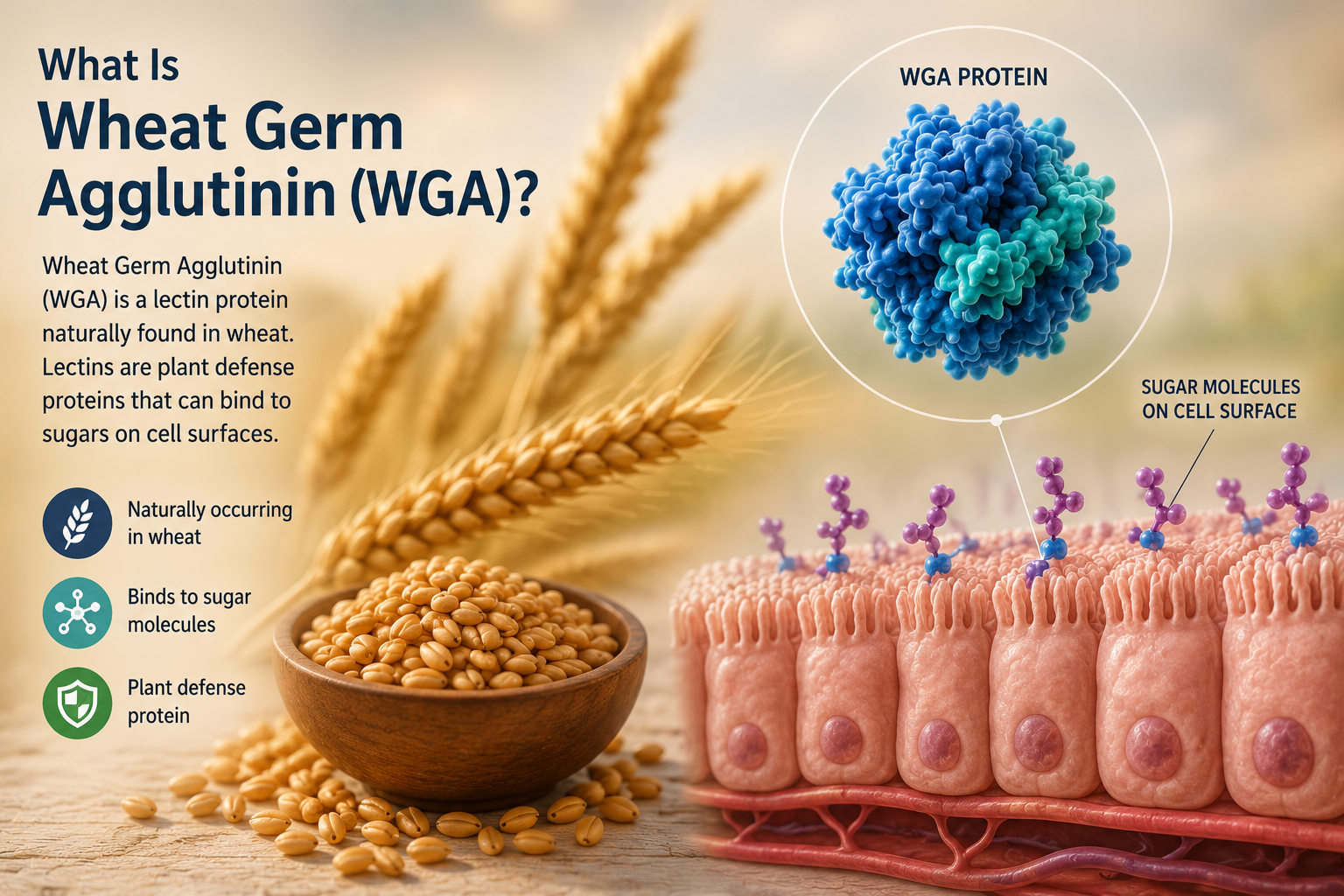
Wheat Germ Agglutinin (WGA) is a lectin naturally found in wheat. Researchers have studied WGA because of its ability to interact with cells lining the digestive tract and its potential role in immune system signaling.
One of the most researched non-gluten compounds found in wheat is:
Wheat Germ Agglutinin (WGA)
WGA belongs to a family of proteins called:
Lectins
Lectins are naturally occurring proteins found in many plants.
Their primary purpose is defense.
Plants cannot run away from predators, so they develop chemical defenses instead.
WGA is particularly interesting because research suggests it can interact with the intestinal lining and immune system.
Researchers have explored whether WGA may influence:
- Intestinal permeability
- Cellular signaling
- Immune responses
- Inflammatory pathways
While much of this research remains preliminary, it highlights an important concept:
Wheat contains biologically active compounds beyond gluten.
Intestinal permeability is often referred to as “leaky gut.” If you’re unfamiliar with this concept, you can learn more here:
Alpha-Amylase Trypsin Inhibitors (ATIs)
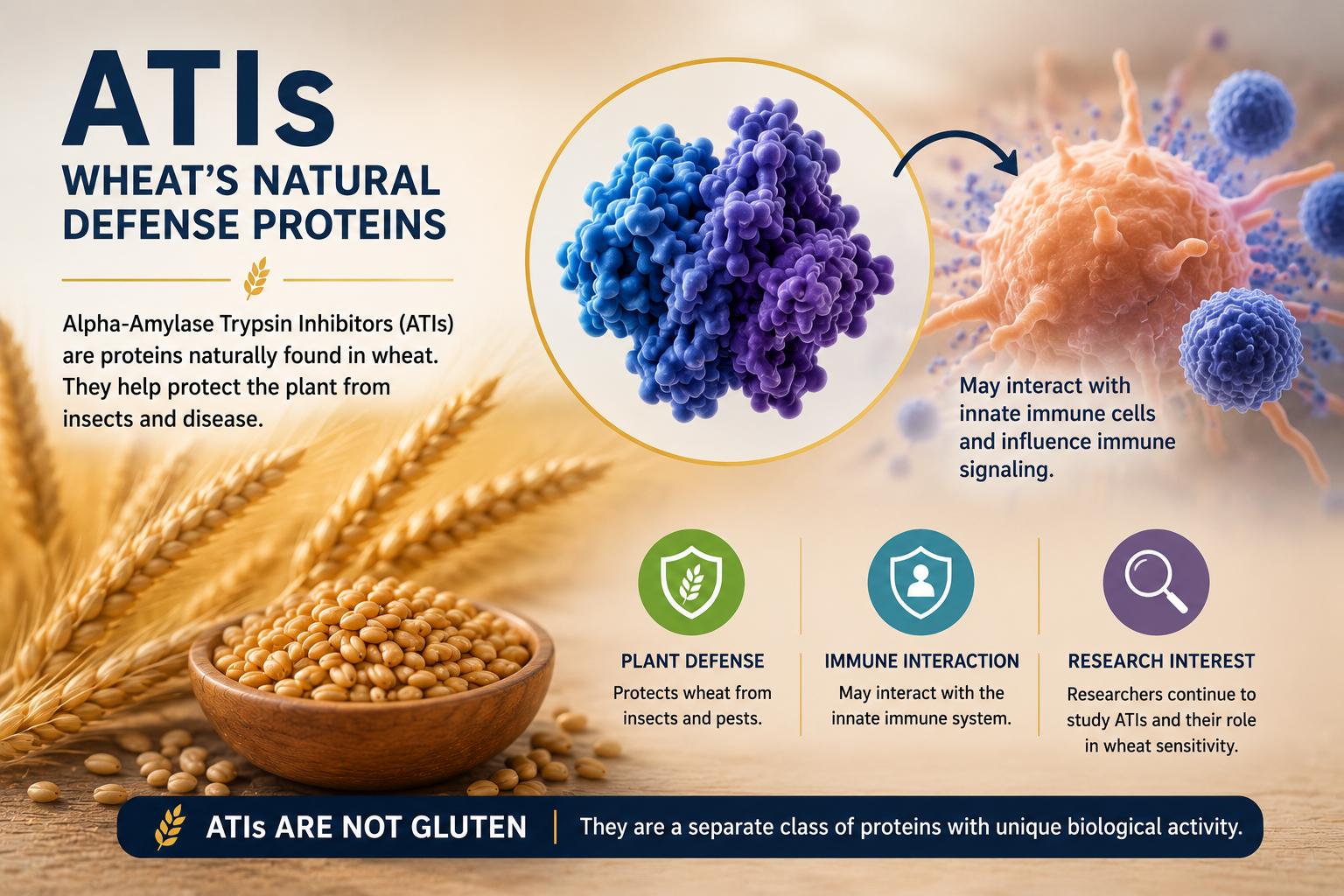
Alpha-Amylase Trypsin Inhibitors (ATIs) are natural defense proteins found in wheat. Researchers continue to investigate how these compounds may influence immune signaling and contribute to wheat sensitivity in some individuals.
Perhaps the most important non-gluten proteins in wheat are:
Alpha-Amylase Trypsin Inhibitors (ATIs)
ATIs are another natural defense mechanism used by wheat plants.
Their role is to protect the grain from insects and pests.
In recent years, researchers have become increasingly interested in ATIs because studies suggest they may interact with the innate immune system.
Some scientists believe ATIs may contribute to inflammatory responses independent of gluten itself.
This is one reason researchers continue exploring why some individuals report symptoms after eating wheat despite testing negative for celiac disease.
While the science continues to evolve, ATIs have become one of the most discussed non-gluten wheat proteins in modern research.
Albumins and Globulins
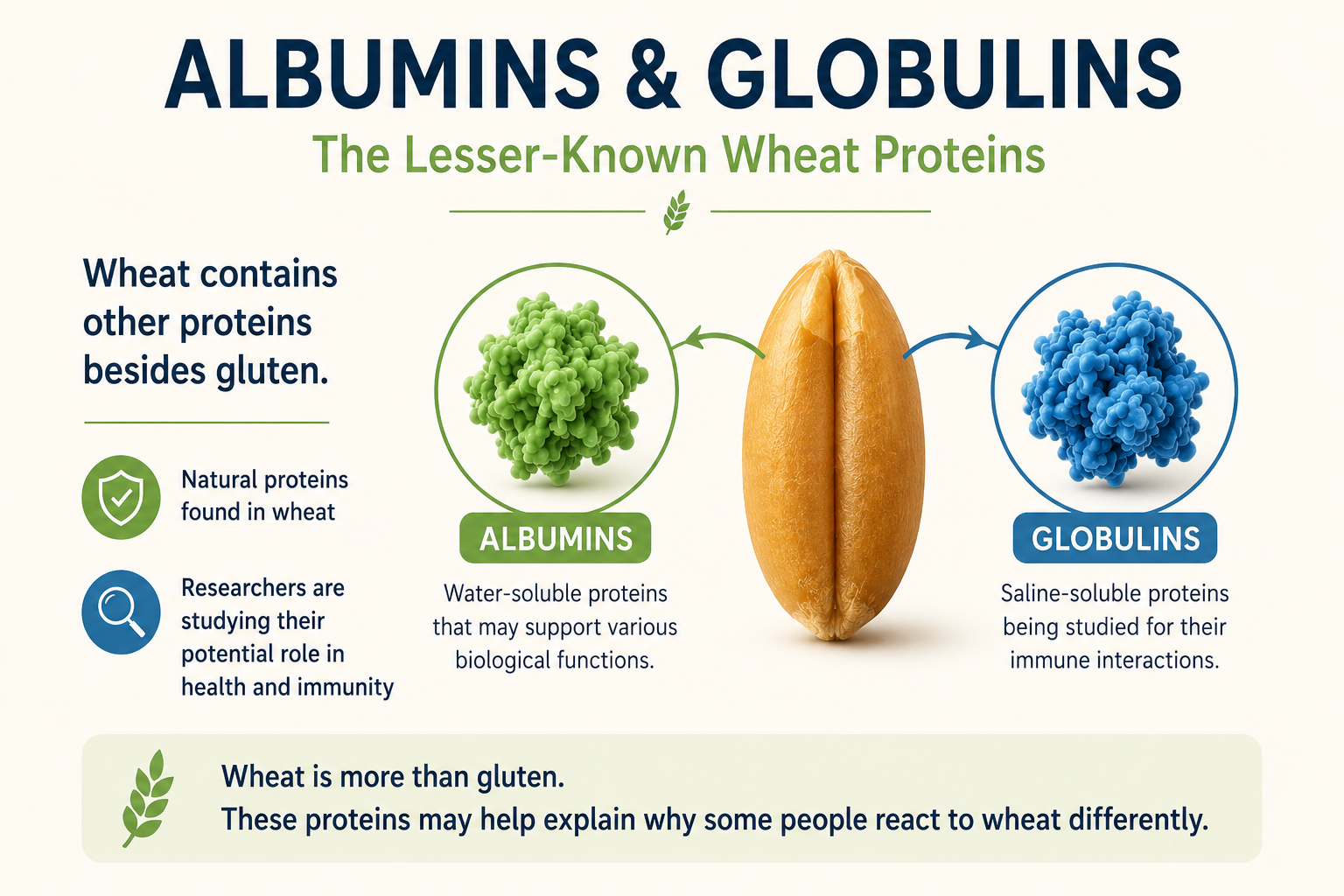
Gluten is not the only protein found in wheat. Albumins and globulins are additional wheat proteins that researchers continue to study for their potential role in digestion, immune responses, and individual food sensitivities.
Another group of proteins found in wheat includes:
- Albumins
- Globulins
These proteins receive far less attention than gluten.
However, some food sensitivity testing and immunology research suggests certain individuals may develop immune responses to these proteins.
Again, this does not mean everyone reacts to them.
It simply highlights the complexity of wheat as a food.
When people think:
“Gluten equals wheat”
they are often overlooking the fact that wheat contains many different proteins that may interact with the body in different ways.
Why Some People Feel Better Without Wheat

Not everyone responds to wheat the same way. Factors such as WGA, ATIs, albumins, globulins, genetics, gut health, immune function, and overall health status may all influence how an individual reacts to wheat.
One of the most common questions in functional medicine is:
“Why do I feel better when I avoid wheat if my celiac test was negative?”
There are many possible explanations.
For example:
- Reduced gluten exposure
- Changes in processed food intake
- Reduced inflammatory foods
- Improved blood sugar regulation
- Changes in gut bacteria
- Reactions to other wheat compounds
The important point is this:
A negative celiac test does not automatically mean wheat is an ideal food for every individual.
Likewise, feeling better without wheat does not automatically mean someone has celiac disease.
Health is often more nuanced than a single diagnosis.
The Functional Medicine Perspective
Functional medicine focuses less on labels and more on outcomes.
Instead of asking:
“Do you have celiac disease?”
we often ask:
“How does your body respond to this food?”
Some people consume wheat regularly with no noticeable issues.
Others experience:
- Bloating
- Fatigue
- Brain fog
- Joint discomfort
- Digestive symptoms
- Skin issues
The goal is not to fear wheat.
The goal is to understand how your body responds to it.
This is one reason elimination diets and personalized nutrition strategies are frequently used in functional medicine.
At Total Health Center, our functional medicine approach focuses on identifying the underlying causes of symptoms rather than simply managing them. Learn more about our approach here:
https://totalhealthcentervb.com/functional-medicine/
Why This Matters for Autoimmune Conditions
Many autoimmune conditions involve complex interactions between:
- Genetics
- Environment
- Diet
- Gut health
- Immune regulation
Researchers continue investigating whether certain food proteins may influence these interactions in susceptible individuals.
This does not mean wheat causes autoimmune disease.
However, it does help explain why healthcare practitioners frequently explore dietary interventions when working with autoimmune patients.
The relationship between food and immune health is often far more complicated than most people realize.
One of the most commonly discussed autoimmune conditions in relation to gluten is Hashimoto’s thyroiditis. Learn more about Hashimoto’s and thyroid health here:
https://totalhealthcentervb.com/hashimotos-thyroiditis/
The Bigger Picture
One of the biggest takeaways from this lesson is:
Wheat is not just gluten.
Wheat contains multiple proteins and plant compounds that may influence digestion, immune function, and overall health.
For some people, these compounds appear to cause no noticeable issues.
For others, they may be part of a much larger health puzzle.
The goal of Gluten University is not to convince everyone to avoid wheat.
The goal is to help you understand the science, ask better questions, and make informed decisions about your own health.
Dr. Scott’s Clinical Perspective
In practice, one of the most interesting observations is that many patients report improvements after removing wheat even when traditional testing fails to identify a clear problem.
This does not prove wheat is harmful for everyone.
It does suggest that food reactions are often more complex than simple yes-or-no diagnoses.
Rather than focusing exclusively on gluten, it may be more useful to view wheat as a collection of proteins and biologically active compounds that can affect individuals differently.
The ultimate goal is not dietary perfection.
The goal is discovering the foods that help you feel, function, and heal at your best.
Key Takeaways
✔ Wheat contains more than gluten
✔ WGA, ATIs, albumins, and globulins are important wheat proteins
✔ Some wheat compounds may interact with the immune system independent of gluten
✔ Individual responses to wheat vary significantly
✔ Negative celiac testing does not necessarily explain every reaction to wheat
✔ Personalized nutrition often provides more useful answers than one-size-fits-all recommendations
Next Lesson
Lesson #10
The Gluten-Autoimmune Connection
In the next lesson we’ll explore:
- Autoimmunity and molecular mimicry
- Why gluten is frequently discussed in autoimmune research
- Hashimoto’s thyroiditis
- Rheumatoid arthritis
- Inflammation and immune activation
- Why functional medicine practitioners often investigate gluten in autoimmune patients
About Dr. Scott
Dr. Scott of Total Health Center in Virginia Beach has been helping patients improve digestive health, thyroid disorders, autoimmune conditions, chronic fatigue, inflammation, and gastrointestinal dysfunction through functional medicine since 1997. His approach focuses on identifying and addressing underlying causes through advanced testing, nutrition, lifestyle modification, and personalized care.
Need Help Determining Whether Food Sensitivities Are Affecting Your Health?
Schedule a consultation with Total Health Center and discover a personalized approach to digestive health, immune function, and long-term wellness.
Frequently Asked Questions
Is gluten the only protein in wheat?
No. Wheat contains many proteins in addition to gluten, including Wheat Germ Agglutinin (WGA), Alpha-Amylase Trypsin Inhibitors (ATIs), albumins, and globulins. Researchers continue to investigate how these compounds may influence digestion, immune function, and overall health.
What is Wheat Germ Agglutinin (WGA)?
Wheat Germ Agglutinin, or WGA, is a lectin naturally found in wheat. Lectins are proteins that plants use as defense mechanisms. Researchers have studied WGA because of its potential interactions with the intestinal lining and immune system.
What are Alpha-Amylase Trypsin Inhibitors (ATIs)?
ATIs are natural proteins found in wheat that help protect the plant from insects and pests. Some research suggests ATIs may activate certain immune pathways independent of gluten, making them an area of interest in wheat sensitivity research.
Can I react to wheat if I don’t have celiac disease?
Yes. Some individuals experience symptoms after consuming wheat despite testing negative for celiac disease. Potential explanations include non-celiac gluten sensitivity, reactions to other wheat compounds, digestive issues, blood sugar effects, or individual food sensitivities.
Why do I feel better when I stop eating wheat?
There are many possible reasons, including reduced gluten intake, fewer processed foods, improved blood sugar control, changes in gut bacteria, or reduced exposure to other biologically active compounds found in wheat.
What are albumins and globulins?
Albumins and globulins are proteins naturally found in wheat. While they receive less attention than gluten, some research suggests they may play a role in immune responses in certain individuals.
Can wheat proteins affect the immune system?
Researchers continue to study how various wheat proteins interact with the immune system. While gluten is the most well-known, other compounds such as WGA and ATIs have also attracted scientific interest.
Does reacting to wheat mean I have celiac disease?
No. Celiac disease is a specific autoimmune condition involving an immune reaction to gluten. Some people experience symptoms from wheat without meeting the criteria for celiac disease.
Should everyone avoid wheat?
Not necessarily. Many people consume wheat without obvious problems. The goal is not to eliminate foods unnecessarily but to understand how your individual body responds to them.
How can I determine if wheat is affecting my health?
One of the most practical approaches is a structured elimination and reintroduction trial under the guidance of a qualified healthcare practitioner. Functional medicine practitioners may also use clinical history, laboratory testing, and symptom tracking to help identify potential food-related triggers.
References
1. Schuppan D, Zevallos V. Wheat Amylase Trypsin Inhibitors as Nutritional Activators of Innate Immunity. PubMed.
2. Lis H, Sharon N. Wheat Germ Agglutinin Research and Biological Activity. PubMed.
3. Fasano A. Zonulin, Intestinal Permeability, and Autoimmune Disease. PubMed.
4. Vojdani A. Food Protein Immune Reactivity and Cross-Reactivity. PubMed.
5. National Center for Biotechnology Information (NCBI)
https://www.ncbi.nlm.nih.gov/