
Gluten University – Lesson #7
Rice: The Gluten-Free Food Nobody Questions
Part of the Gluten University Educational Series
Gluten University Home Page:
https://totalhealthcentervb.com/gluten-university/
Lesson #6:
https://totalhealthcentervb.com/are-oats-really-gluten-free/
Lesson #5:
https://totalhealthcentervb.com/why-corn-may-be-the-most-overlooked-grain/
If there is one food almost everyone agrees is safe on a gluten-free diet, it’s rice.
Walk through any grocery store and you’ll find:
- Rice bread
- Rice pasta
- Rice crackers
- Rice cereal
- Rice milk
- Rice flour
- Rice snacks
For decades, rice has been one of the most commonly recommended substitutes for wheat.
But should rice automatically receive a free pass?
This lesson is not about claiming rice is harmful to everyone.
Instead, it asks a more important question:
Could rice be part of the reason some people continue struggling despite following a gluten-free diet?
Why Rice Became the Foundation of the Gluten-Free Diet
When individuals remove wheat, barley, and rye, they need alternative carbohydrate sources.
Rice quickly became the go-to replacement because:
- It does not contain wheat gluten
- It is widely available
- It is inexpensive
- It is easy to process into flour
- It works well in baked products
As a result, many people consume far more rice after going gluten-free than they ever did before.
The Rice Replacement Problem
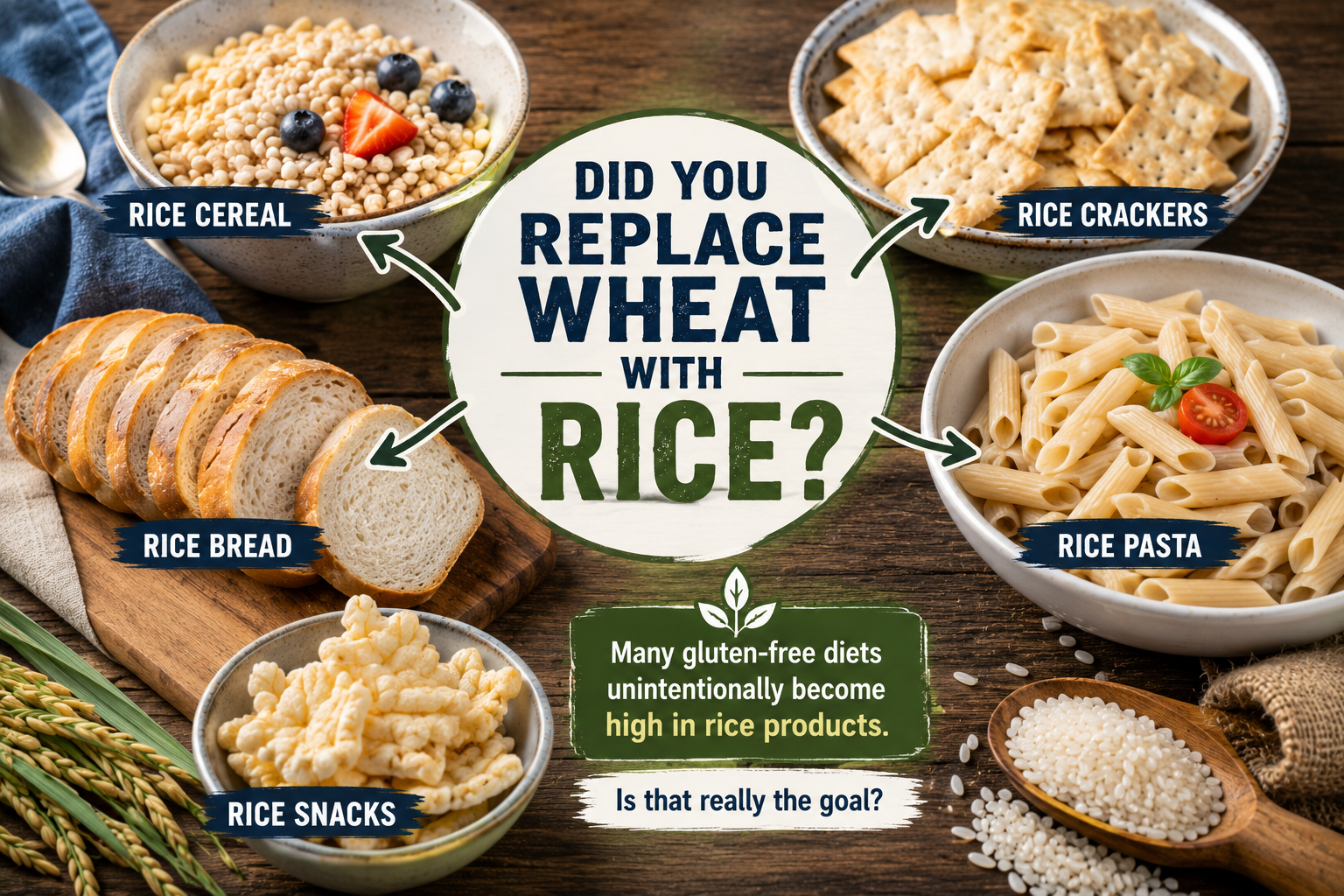
Many people remove wheat only to replace it with large amounts of rice-based products. The goal of a gluten-free diet should not simply be swapping one grain for another, but identifying the foods that help you feel and function your best.
One of the biggest mistakes people make is replacing one processed grain with another.
Consider a typical gluten-free diet:
Breakfast:
- Rice cereal
Lunch:
- Rice crackers
Dinner:
- Rice pasta
Snacks:
- Rice chips
Dessert:
- Rice flour baked goods
In some cases, rice becomes the dominant food in the diet.
The question becomes:
Is that really the goal?
Rice Contains More Than Starch
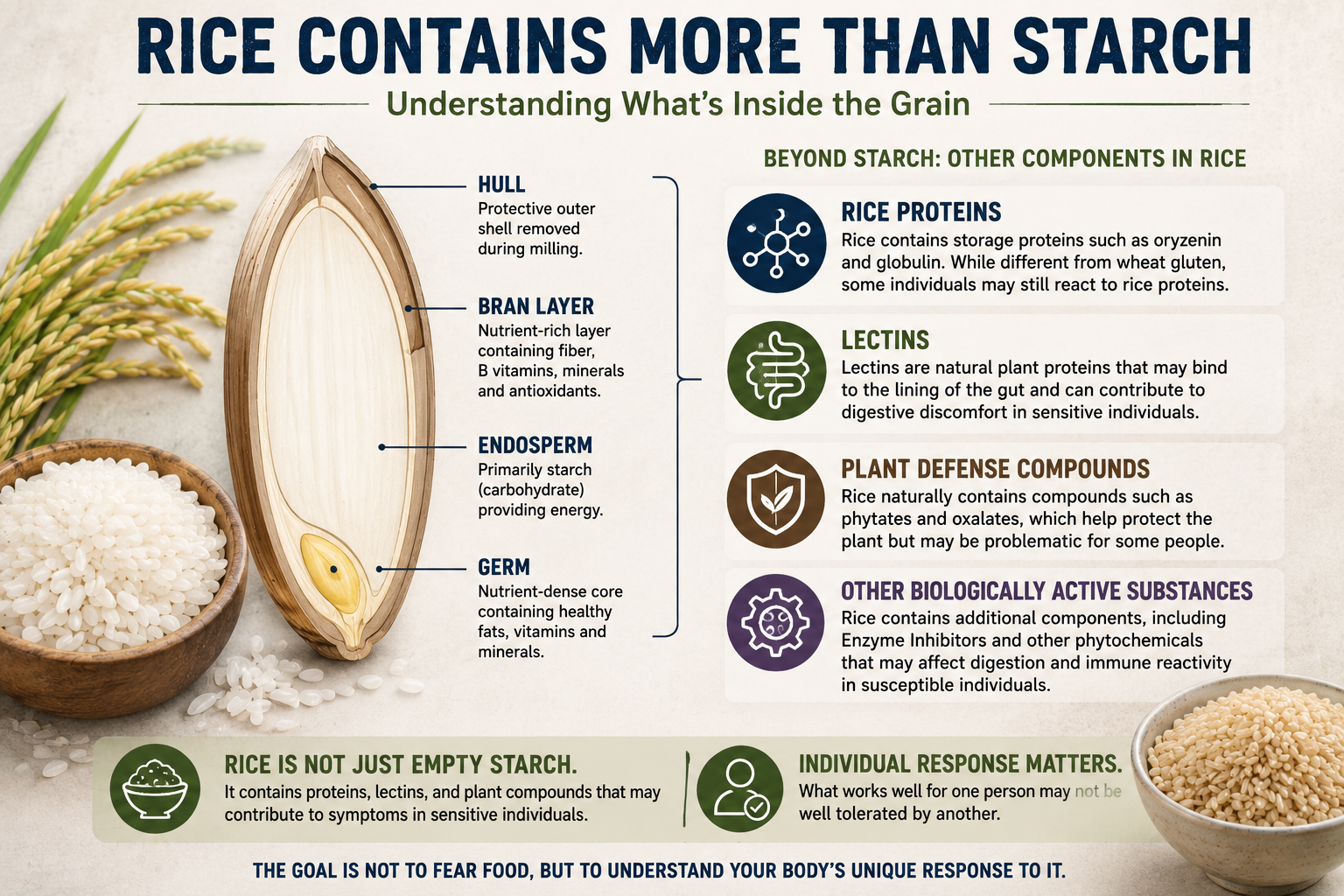
Most people think of rice as a simple carbohydrate, but rice also contains proteins, lectins, and other biologically active compounds that may influence digestion, immune responses, and individual tolerance.
Most people think of rice as a simple carbohydrate.
However, rice also contains:
- Storage proteins
- Lectins
- Plant defense compounds
- Other biologically active substances
While rice proteins are different from wheat proteins, some individuals may still react to them.
This is especially important for people who continue experiencing symptoms after removing traditional gluten-containing grains.
Why Some People Feel Better Without Rice
In functional medicine practice, some individuals report improvements in:
- Bloating
- Digestive discomfort
- Brain fog
- Fatigue
- Joint pain
- Blood sugar regulation
after reducing or eliminating rice.
This does not mean rice is harmful.
It simply demonstrates that individual responses matter.
Rice, Immune Reactivity, and Molecular Mimicry
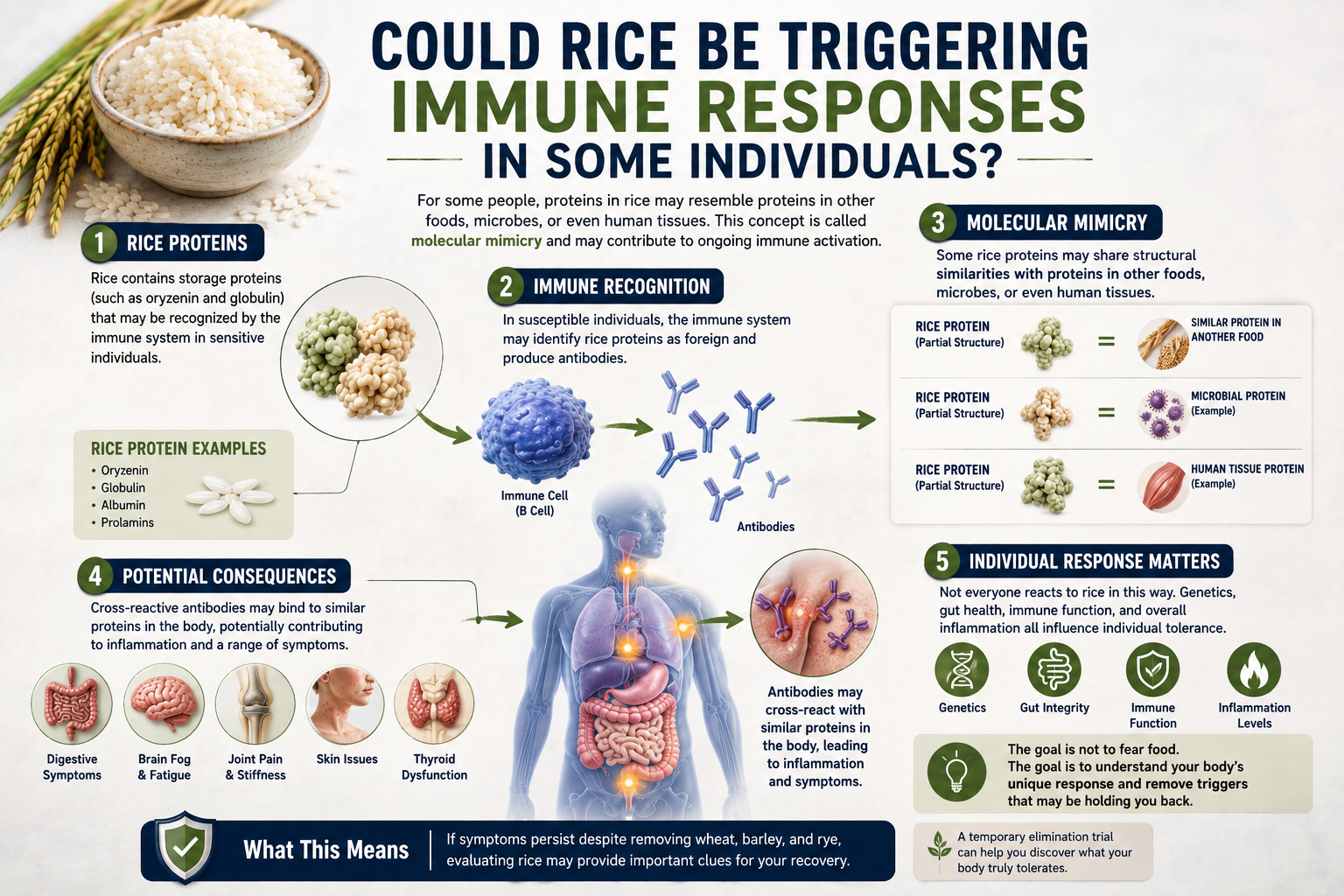
Some functional medicine practitioners explore whether certain food proteins may contribute to ongoing immune activation in susceptible individuals. While rice is considered gluten-free, individual responses can vary significantly.
One concept often discussed in functional medicine is molecular mimicry.
Molecular mimicry refers to the idea that certain proteins may share structural similarities with proteins found in other foods, microorganisms, or even human tissues.
When this occurs, the immune system may occasionally struggle to distinguish between the original trigger and similar-looking proteins.
Research on molecular mimicry has primarily focused on gluten and autoimmune disease, but some clinicians have questioned whether other grain proteins may also contribute to ongoing immune activation in susceptible individuals.
This does not mean rice causes autoimmune disease.
Nor does it mean everyone should avoid rice.
However, it may help explain why some people continue experiencing symptoms even after removing wheat, barley, and rye.
For individuals with persistent digestive symptoms, chronic inflammation, autoimmune conditions, or unexplained health challenges, a temporary elimination trial may provide valuable information about how their body responds to rice.
The goal is not to fear food.
The goal is to understand your body’s unique response to food.
Rice and Blood Sugar
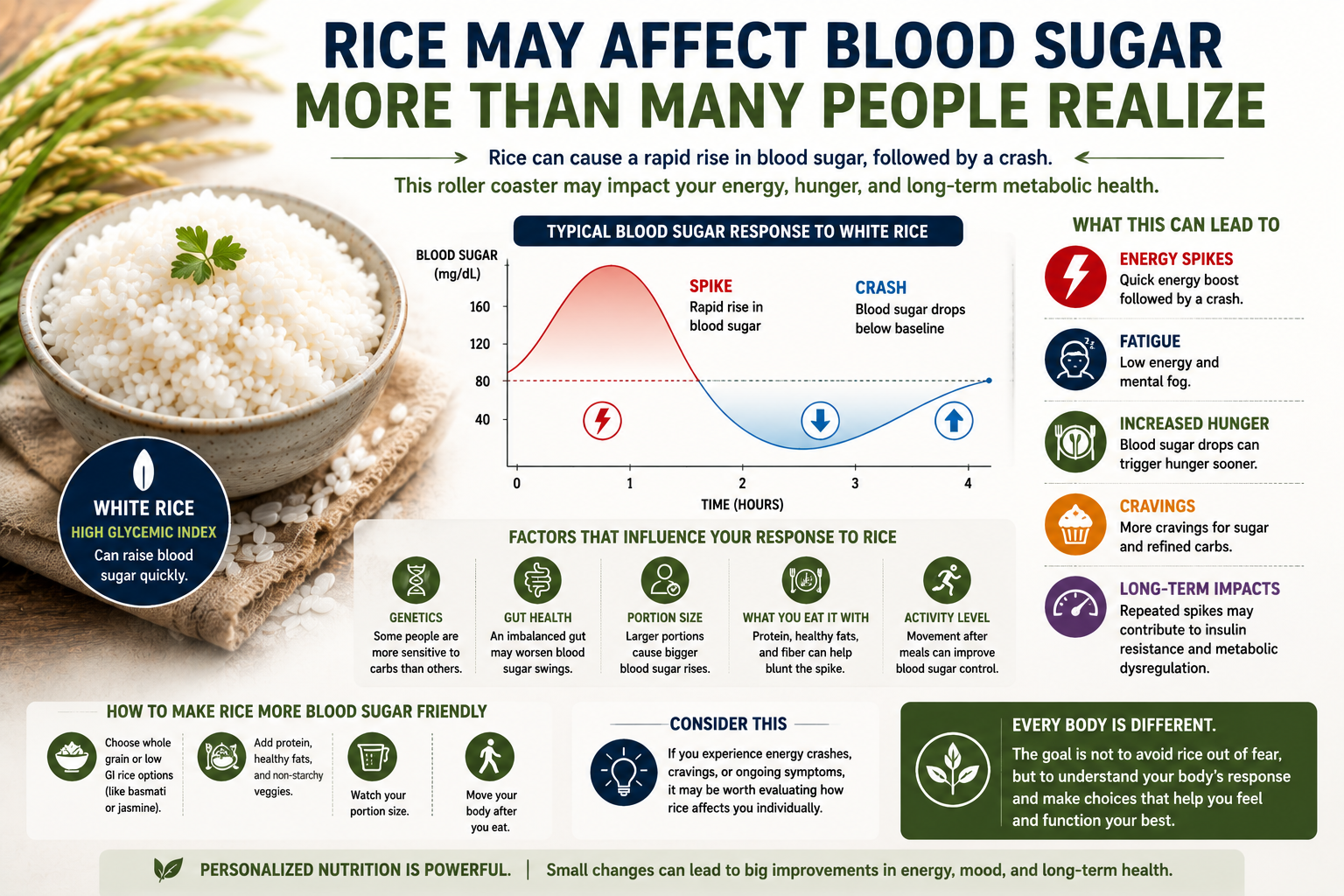
Many rice-based foods digest quickly and may contribute to blood sugar fluctuations, energy crashes, hunger, cravings, and metabolic challenges in susceptible individuals.
One topic often overlooked in gluten-free discussions is blood sugar regulation.
Many processed gluten-free foods are heavily rice-based.
These products may:
- Digest quickly
- Elevate blood sugar
- Increase hunger
- Promote energy fluctuations
For individuals struggling with:
- Fatigue
- Insulin resistance
- Weight loss resistance
- Metabolic dysfunction
large amounts of rice-based products may work against their goals.
The Arsenic Conversation
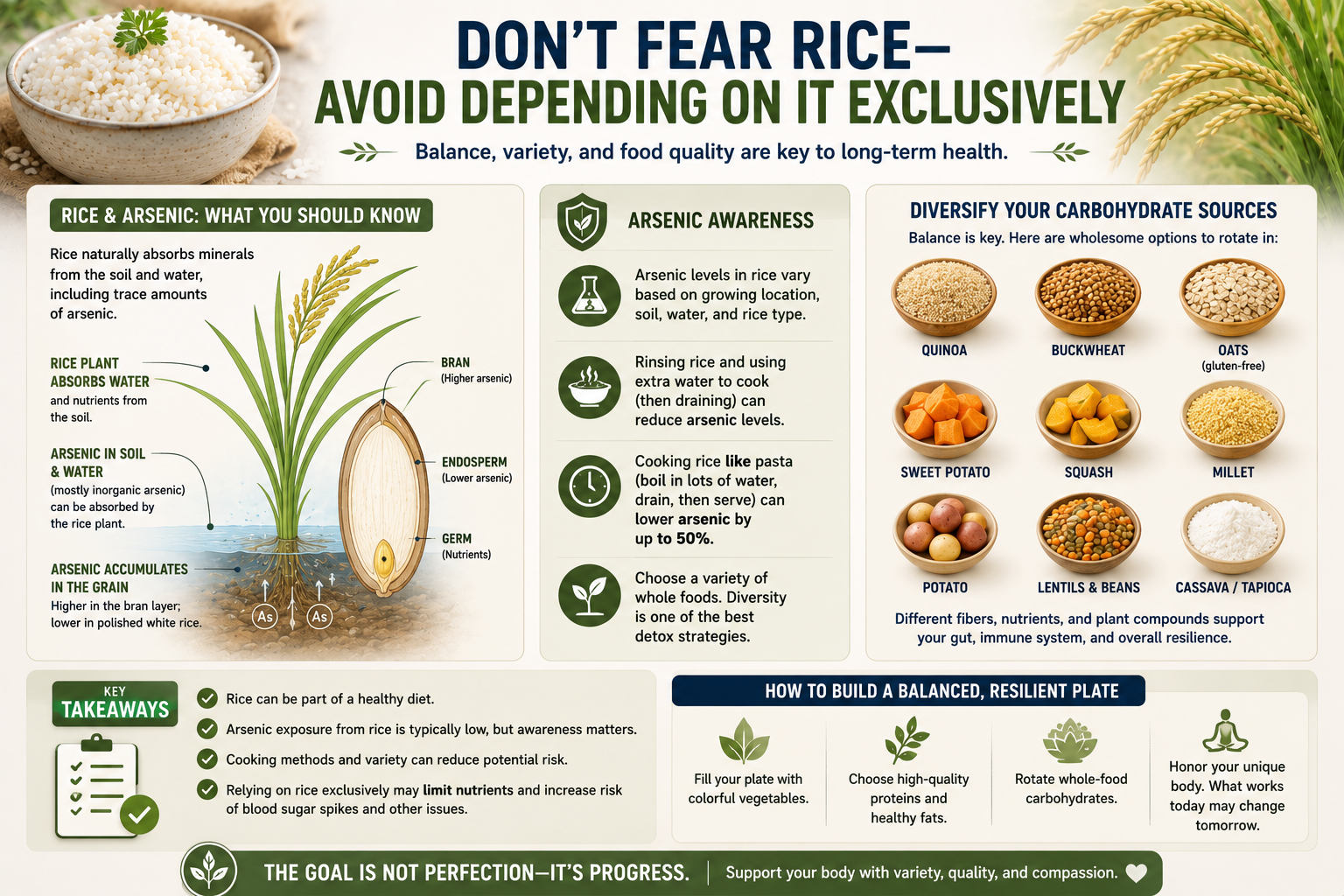
Rice can be part of a healthy diet, but relying too heavily on any single food may not be ideal. Dietary diversity helps provide a broader range of nutrients, fibers, and beneficial plant compounds while minimizing potential concerns associated with overconsumption.
Rice has another challenge that deserves discussion.
Rice plants can accumulate arsenic from soil and water more readily than many other crops.
The amount varies based on:
- Growing location
- Farming practices
- Rice variety
- Processing methods
This does not mean people should panic.
However, it does support the idea that dietary diversity may be preferable to relying heavily on any single grain.
The Gluten-Free Industry Loves Rice
The gluten-free food industry depends heavily on rice.
Rice flour is inexpensive and easy to use.
As a result, it appears in countless products marketed to people avoiding gluten.
Unfortunately, many of these foods are still:
- Highly processed
- Low in nutrients
- High in refined carbohydrates
Just because a product is gluten-free does not automatically make it healthy.
The TRUE Gluten-Free Perspective
The goal of a TRUE Gluten-Free approach is not simply replacing wheat with rice.
The goal is reducing dependence on processed grain products altogether.
Instead of asking:
“Which grain should replace wheat?”
A better question may be:
“What foods help my body function at its best?”
For many people, that answer includes:
- Vegetables
- Fruits
- Healthy fats
- Quality proteins
- Nuts and seeds
- Whole-food carbohydrate sources
rather than large amounts of processed grain substitutes.
Dr. Scott’s Clinical Perspective
I frequently see patients who have successfully removed wheat but unknowingly built an entire diet around rice products.
Many are surprised to learn they are consuming more grain than ever before.
Again, this does not mean rice is automatically problematic.
However, if you’ve removed wheat, eliminated oats, addressed hidden exposures, and still don’t feel your best, rice may deserve a closer look.
The goal is not dietary perfection.
The goal is identifying obstacles that may be preventing recovery.
The Bottom Line
Rice is one of the most widely accepted foods on a gluten-free diet.
For many people, it may not cause obvious problems.
However, rice should not be exempt from evaluation simply because it carries a healthy reputation.
If symptoms persist despite removing other grains, a temporary rice-free trial may provide valuable information.
Remember:
The goal is not to follow a label.
The goal is to find the foods that help you feel and function your best.
Next Lesson
The Gluten-Free Grains Nobody Talks About
We’ll explore:
- Millet
- Sorghum
- Teff
- Quinoa
- Buckwheat
- Amaranth
and why some practitioners question whether these foods belong in a TRUE Gluten-Free diet.
Continue your Gluten University journey:
https://totalhealthcentervb.com/gluten-university/
About Dr. Scott
Dr. Scott of Total Health Center in Virginia Beach has been helping patients improve digestive health, thyroid function, autoimmune conditions, fatigue, and chronic inflammation through functional medicine since 1997. His approach focuses on identifying and addressing the underlying causes of illness through advanced testing, nutrition, lifestyle modification, and personalized care.
References
- Fasano A. Intestinal permeability and food sensitivity research.
- Vojdani A. Food protein immune reactivity and cross-reactivity.
- Sapone A, et al. Spectrum of gluten-related disorders.
- FDA and consumer guidance on arsenic in rice.
- Research on glycemic response and rice consumption.