The Biology of Modern Life
Episode 1
The Missing Wavelength
How Modern Life Quietly Disconnected Us From One of Nature’s Most Powerful Healing Signals
Why Are We Getting Sicker?
During nearly thirty years of practice, one question has quietly followed me from patient to patient.
Every week I meet intelligent, motivated people who genuinely want to be healthy. They eat better than previous generations, exercise regularly, take supplements, read nutrition labels, listen to health podcasts, and spend countless hours searching for answers online. Many wear smart watches that track their sleep, heart rate, and daily activity. Never before have we had access to so much health information.
Yet, despite all of those advances, I continue to hear the same sentence.
“I just don’t feel like myself anymore.”
Sometimes it’s overwhelming fatigue. Sometimes it’s digestive problems, autoimmune disease, anxiety, stubborn weight gain, chronic pain, or simply the feeling that something inside the body isn’t working the way it once did. Although every patient is unique, their stories often share common themes. Poor sleep, chronic stress, digestive dysfunction, and hormone imbalance frequently overlap—not because they’re separate problems, but because they’re often different expressions of the same underlying imbalance. Understanding those connections is one of the foundations of functional medicine.
If medicine has advanced so dramatically…why do so many people still feel unwell?
Over the years, I’ve become convinced that the answer isn’t found in a single vitamin, a miracle supplement, or the newest medication. Instead, I believe we have to step back and ask a much bigger question.
What if the body isn’t missing another treatment…
What if it’s missing part of the environment it evolved to expect?
That single question changed the way I look at health.
The Fish and the Water
Imagine walking through one of the world’s largest aquariums.
As you stop in front of a beautiful coral reef exhibit, hundreds of brilliantly colored fish glide effortlessly through crystal-clear water. Everything appears perfectly balanced until one fish catches your attention. It moves more slowly than the others. Its colors seem dull. While the rest of the school swims with energy and purpose, this one appears to struggle.
Most of us would immediately focus on the fish.
Is it sick?
Is it injured?
Could something be wrong with its genetics?
They’re reasonable questions.
A marine biologist, however, would probably begin somewhere entirely different.
They would test the water.
Because they understand something profoundly important.
A fish can never be separated from the environment in which it lives. The water isn’t simply where the fish exists. Every breath it takes, every movement it makes, every cell in its body is influenced by the world surrounding it.
In many ways, the water becomes part of the fish.
That simple realization fundamentally changed the way I think about human health.
We often think of ourselves as separate from nature, as though our health depends only on our genes, our diet, or the medications we take. Those things certainly matter, but every second of every day your body is responding to something much larger—your environment.
The light entering your eyes influences your brain. The food entering your digestive system communicates with your metabolism. Sleep changes your hormones. Movement strengthens your bones and muscles. The trillions of bacteria living inside your gut constantly communicate with your immune system. Even the relationships you have can influence stress hormones, inflammation, and overall health.
The deeper I studied physiology, the more I realized something that completely changed the way I practiced.
The human body doesn’t simply run on chemistry.
It runs on information.
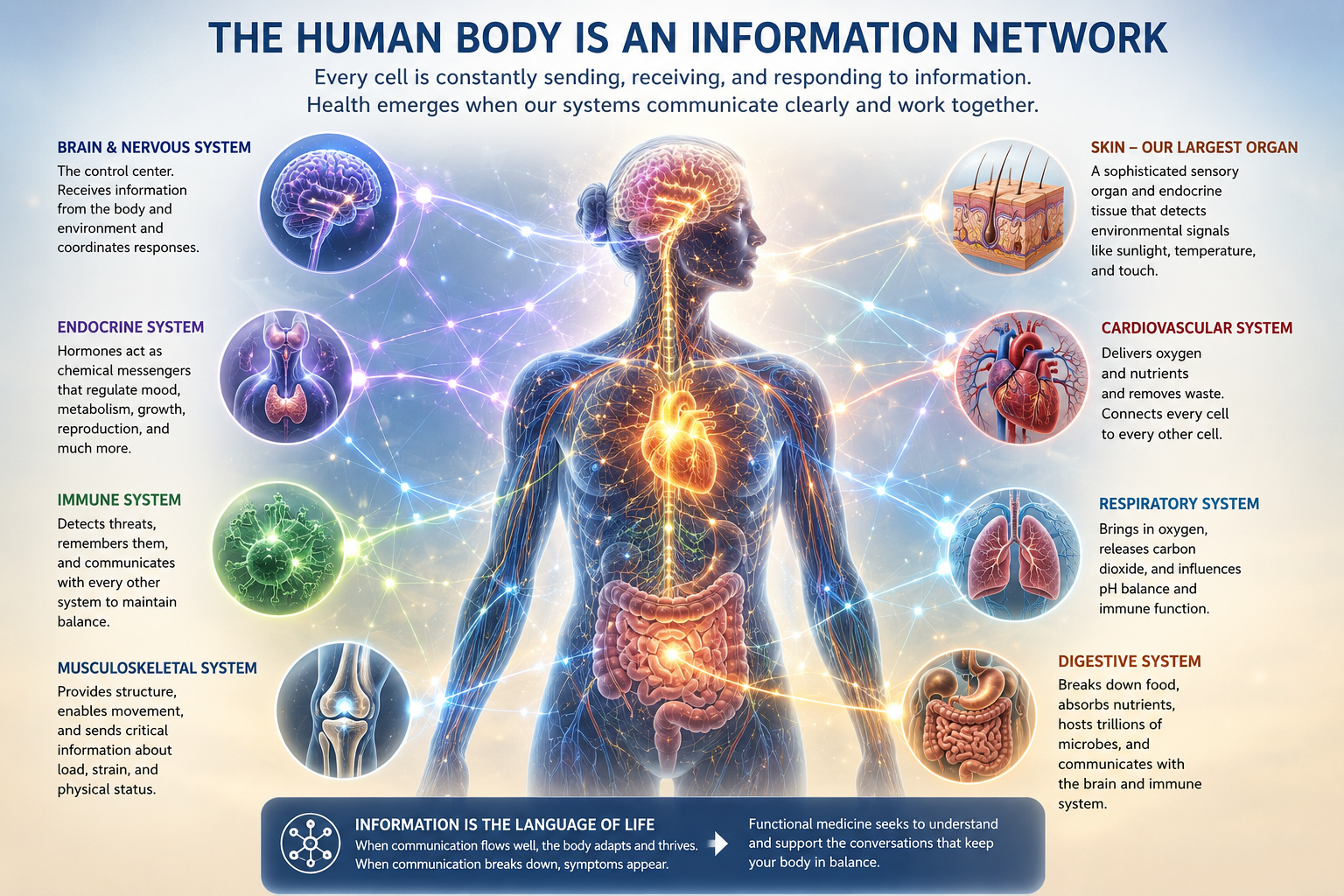
The human body is not a collection of isolated organs. It is an integrated communication network where every system influences every other system. Functional medicine seeks to understand and restore these biological conversations rather than treating symptoms in isolation.
Food is information. Movement is information. Sleep is information. Stress is information. Relationships are information. Even our modern dependence on coffee and caffeine becomes a biological signal that influences energy, hormones, and the stress response. Sunlight may be one of the most important environmental signals of all because it has shaped human biology since the beginning of our existence.
Food is information.
Movement is information.
Sleep is information.
Stress is information.
Relationships are information.
And sunlight…
may be one of the most important sources of biological information we have.
A Conversation Older Than Humanity
Long before there were physicians, hospitals, laboratories, or anyone who had ever heard the words hormone, immune system, or vitamin, there was the sun.
Every morning, for millions of years, sunlight rose over the Earth with astonishing consistency. Every evening darkness followed. Seasons changed with remarkable precision, quietly shaping life long before humans ever began recording history.
Every living thing evolved within those rhythms.
Birds didn’t need calendars to know when it was time to migrate. Trees didn’t need clocks to know when to shed their leaves. Flowers never wondered whether spring had arrived. Life simply responded to the signals nature provided.
Humans evolved inside those same rhythms.
For hundreds of thousands of years, our ancestors lived beneath open skies. They worked outdoors, hunted, gathered food, built shelter, and rested when darkness arrived. They didn’t schedule time in nature because nature wasn’t somewhere they visited.
It was simply where life happened.
Then, in evolutionary terms, something extraordinary occurred.
Within only a few generations—a blink of an eye compared to the history of human evolution—we moved indoors. We built homes, offices, schools, factories, shopping centers, and eventually entire cities that protected us from the elements. In countless ways, modern civilization has improved our lives. We live longer, survive diseases that once claimed millions of lives, and enjoy comforts our ancestors could never have imagined.
But while our environment changed with breathtaking speed…
our biology did not.
The DNA inside your cells still expects many of the same environmental signals that shaped human physiology for hundreds of thousands of years. One of those signals arrives every sunny day. It has always been there, quietly waiting, invisible to the human eye, yet capable of triggering one of the most elegant biological conversations in the human body.
That signal is carried by one tiny band of sunlight known as ultraviolet B (UVB). Most people know UVB because it helps the body produce vitamin D, although vitamin D functions much more like a hormone than a traditional vitamin and influences far more than bone health. As you’ll see throughout this article, however, vitamin D is only one chapter in a much larger biological story.
Most people think of UVB as something that causes sunburn.
I think it’s much more interesting than that.
I think it’s one of nature’s oldest conversations with the human body.
Your Skin Is More Than a Barrier
If I asked ten people what the skin does, I’d probably hear the same three answers.
“It protects us.”
“It keeps germs out.”
“It keeps us from drying out.”
Those answers are absolutely correct.
They’re just not the whole story.
One of the things I love most about biology is that the deeper we look, the more intelligent the human body becomes. Time after time, scientists discover that organs we once thought had a single purpose are actually performing dozens of different jobs at the same time. The body is full of surprises, and I don’t think any organ illustrates that better than the skin.
Take body fat, for example. For decades we thought of it as little more than stored energy. Today we know that fat tissue is an active endocrine organ, producing hormones and chemical messengers that influence appetite, inflammation, metabolism, fertility, and many other aspects of health.
Bone tells a similar story. Most of us grew up believing bones simply supported the body and protected our organs. We now know they’re living tissue that helps regulate minerals, produces blood cells, and even releases hormones that communicate with other organs throughout the body.
Again and again, science teaches us the same lesson.
The body isn’t built from separate parts.
It’s built from relationships.
Every organ is constantly communicating with every other organ.
The skin may be one of the most remarkable examples of all.
Your Body’s Window to the World
Imagine for a moment that you were designing the human body from scratch.
If survival depended on understanding the outside world—knowing whether it was hot or cold, wet or dry, safe or dangerous, day or night—where would you place the body’s sensors?
You certainly wouldn’t hide them deep inside the body.
You’d place them exactly where they could gather information.
On the outside.
That’s exactly what nature did.
Covering nearly twenty square feet in the average adult, your skin forms the living boundary between your internal biology and the world around you. Every second of every day it measures temperature, pressure, vibration, moisture, pain, and touch. Millions of specialized nerve endings constantly gather information and relay it to your brain, allowing your body to make thousands of tiny adjustments without you ever having to think about them.
Most of us think of the skin as a protective covering.
Nature designed something much more sophisticated.
Your skin is a communication organ.
It doesn’t simply separate you from your environment.
It interprets your environment.
Listening for One Particular Signal
Among all the information your skin gathers every day, one signal is especially remarkable.
Light.
Not simply brightness.
Not simply warmth.
Specific wavelengths of light.
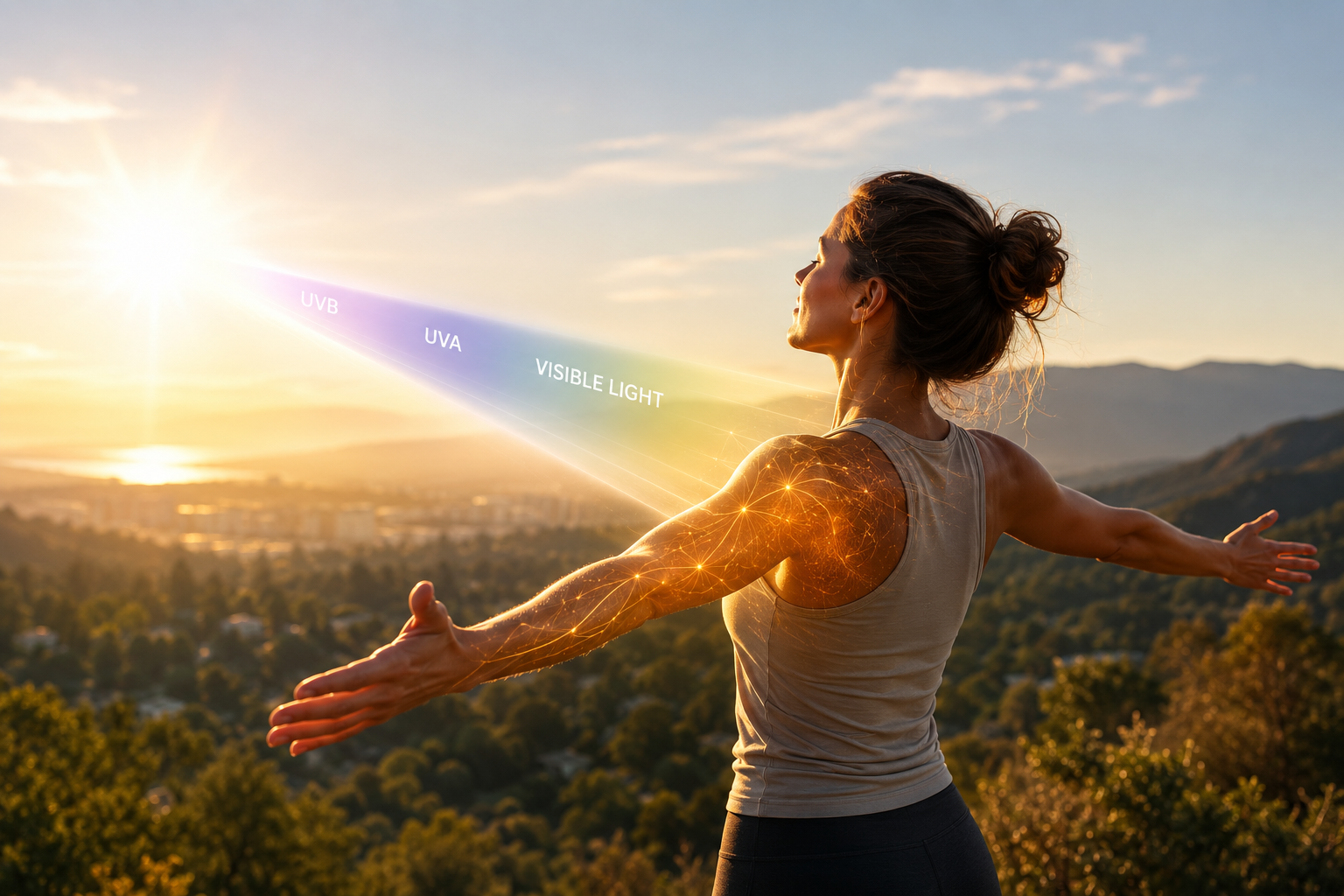
Sunlight isn’t one uniform beam of energy. It’s a spectrum made up of many different wavelengths, each carrying different amounts of energy and interacting with living tissue in different ways. Some wavelengths warm the skin. Others allow us to see the world in vivid color. Morning light helps synchronize the master clock inside the brain, influencing sleep, hormone production, metabolism, and energy.
Then there is one very small band of ultraviolet light.
UVB.
At first glance, it doesn’t seem particularly impressive. It’s invisible. It represents only a tiny fraction of the sunlight reaching Earth’s surface. Most people know it only because they’ve heard it can cause sunburn.
But your body knows something very different.
It has been waiting for that signal for hundreds of thousands of years.
Nature Built a Receiver
Just beneath the surface of your skin sits a cholesterol-derived molecule with a name you’ll probably never need to remember: 7-dehydrocholesterol.
The name isn’t important.
What it does is.
Think about the last time someone called your name in a crowded room. Dozens of conversations may have been happening around you, yet somehow your brain instantly recognized the one signal that mattered.
Your skin behaves in a remarkably similar way.
Visible light reaches the skin.
Nothing happens.
Warmth reaches the skin.
Still nothing.
Then UVB arrives.
Within fractions of a second, that waiting molecule changes shape, triggering one of the most elegant biochemical pathways in human physiology. The process continues through the liver and kidneys, eventually producing vitamin D—a substance that behaves much more like a hormone than a traditional vitamin, influencing hundreds of biological processes throughout the body.
Pause for just a moment and appreciate how extraordinary that really is.
Your body didn’t evolve this system because someone invented vitamin D supplements.
It evolved because sunlight was such a dependable part of the environment that human biology came to expect the signal every single day.
Nature built the receiver because nature expected the transmission.
The Story Doesn’t End With Vitamin D
For many years, nearly every conversation about sunlight revolved around vitamin D. That was an important discovery, and vitamin D remains one of the most significant nutrients in human health. But I don’t think it’s the whole story.
As researchers continue exploring the field of photobiology, they’re discovering that sunlight influences far more than a single biochemical pathway. Different wavelengths affect different systems. Morning light helps regulate your circadian rhythm, influencing sleep quality, hormone production, metabolism, and daytime energy. Those connections deserve an article of their own because they may be some of the most overlooked aspects of modern health.
The deeper we look, the more remarkable the picture becomes.
Vitamin D isn’t the entire conversation.
It’s one chapter in a much larger story.
And that naturally raises the next question.
If the human body evolved expecting this remarkable conversation with sunlight every single day…
how much of that conversation are most of us actually receiving?
The Great Disconnect: When Our Environment Changed Faster Than Our Biology
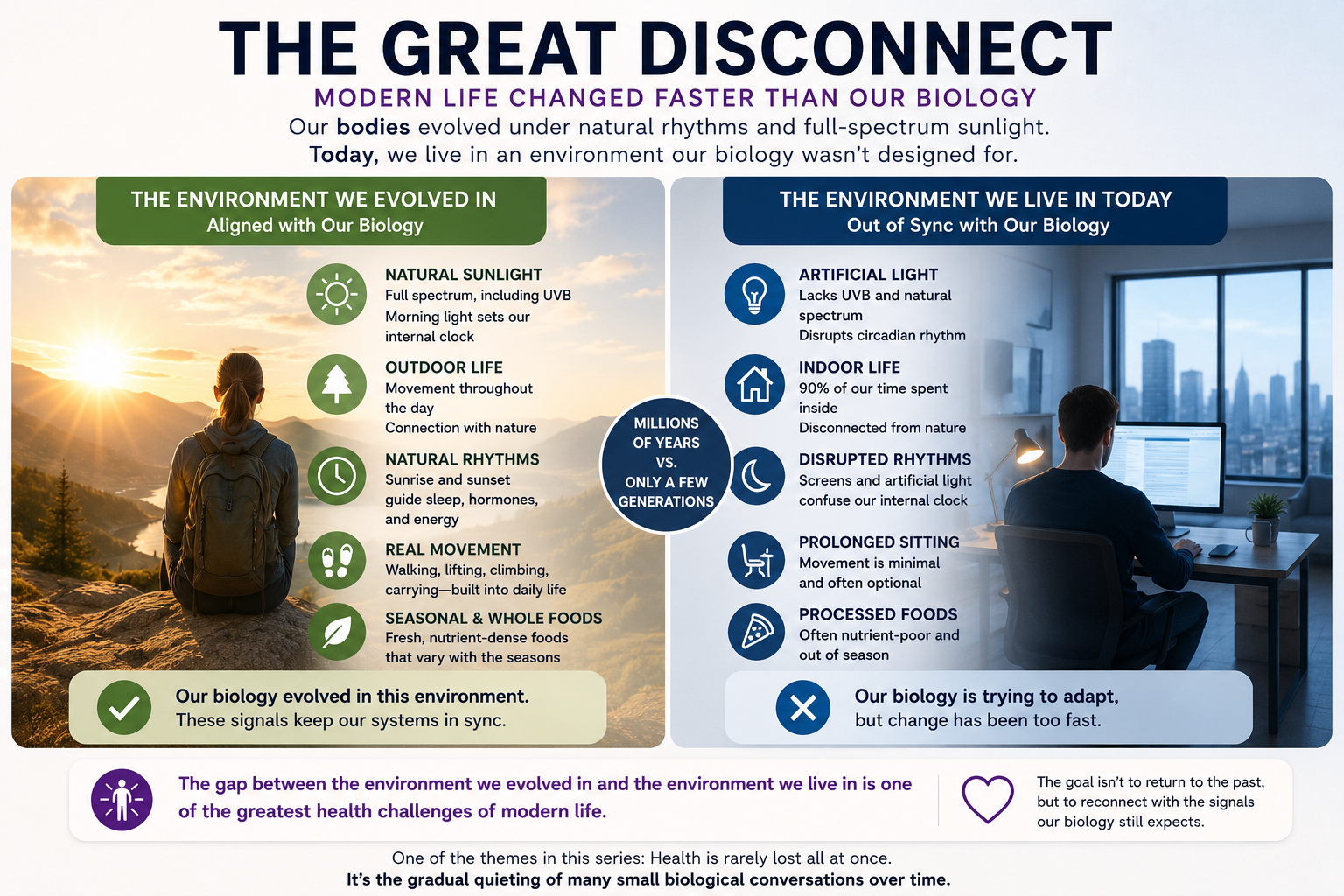
For nearly all of human history, human biology evolved alongside natural sunlight, daily movement, seasonal foods, and regular sleep-wake cycles. In just a few generations, modern life changed dramatically. Our genes have changed very little, but our environment has changed almost overnight.
For nearly all of human history, the environment and human biology evolved together. Every sunrise delivered the same dependable signal. Darkness followed every evening. The seasons changed gradually. Food availability shifted throughout the year. Daily life required movement, and sleep naturally followed the rhythm of the sun rather than the glow of a screen. None of these experiences were considered “healthy habits.” They were simply part of being human.
Then, in evolutionary terms, everything changed.
Within just a few generations, we moved indoors. We surrounded ourselves with artificial lighting, climate-controlled buildings, processed foods, automobiles, and technology that allowed us to spend most of the day sitting. Modern life has given us extraordinary gifts. We enjoy longer life expectancy, cleaner drinking water, safer workplaces, antibiotics, advanced surgery, and comforts our ancestors could never have imagined. This article isn’t suggesting we abandon those advances or romanticize the past.
But every advancement comes with tradeoffs.
The question isn’t whether modern life is good or bad.
The question is whether our biology has had enough time to adapt to it.
I don’t believe it has.
The Body Doesn’t Suddenly Break—It Gradually Adapts
One of the biggest misconceptions I encounter in healthcare is the belief that disease appears overnight. In reality, the body is remarkably resilient. Long before symptoms ever develop, it begins adapting to the environment around it. If those adaptations are no longer enough, it compensates. Only after months—or more often years—do symptoms finally begin to appear.
By the time someone says, “I just don’t feel like myself anymore,” their body has often been working tirelessly to maintain balance for a very long time.
That’s one of the central ideas behind functional medicine and one of the reasons I love practicing it. Rather than asking only, “What disease does this person have?” we also ask, “What changed in this person’s environment that may have slowly changed the way their biology functions?”
Sometimes the answer is nutrition.
Sometimes it’s chronic stress.
Sometimes it’s poor sleep.
Sometimes it’s a disrupted gut microbiome.
Sometimes it’s chronic inflammation.
And sometimes it’s something as simple—and as overlooked—as our relationship with natural light.
One of the themes you’ll notice throughout this Biology of Modern Life series is that health is rarely lost because of one catastrophic event. More often, it’s the gradual accumulation of dozens of small biological conversations becoming quieter over time. We’ll revisit this idea repeatedly as we explore sleep, stress, metabolism, gut health, and even why so many people now depend on coffee simply to feel awake each morning.
More Than Vitamin D: Why the Story Keeps Getting Bigger
For decades, conversations about sunlight were surprisingly simple.
Sunlight helps the body make vitamin D.
Vitamin D supports healthy bones.
End of story.
It wasn’t wrong.
It just wasn’t complete.
As researchers began looking more closely at the relationship between sunlight and human biology, something interesting happened. Instead of finding one isolated pathway, they discovered an increasingly complex network of communication. The more we studied sunlight, the more it seemed to influence systems throughout the body.
That shouldn’t surprise us.
Nature rarely builds something sophisticated to perform only a single task.
The Skin Doesn’t Keep the Conversation to Itself
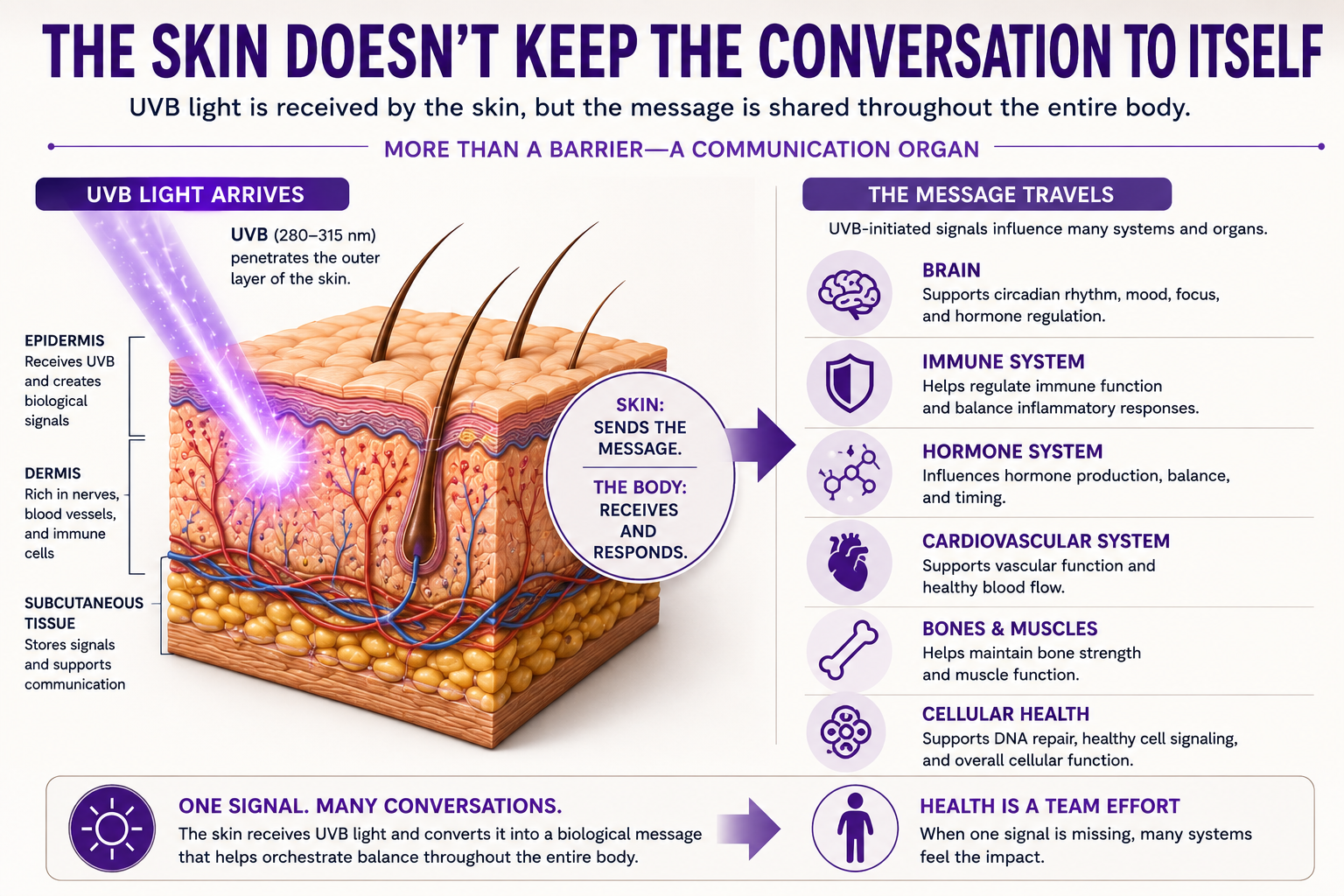 Think back to the spider web we talked about earlier.
Touch one strand and the vibration travels through the entire web.
The skin works in much the same way.
When UVB reaches the skin, the story doesn’t end there. The signal begins in one location, but the response spreads throughout the body. The skin starts the conversation, and other organs continue it. The liver participates. The kidneys participate. Hormones begin communicating with distant tissues. Cells throughout the body respond because many of them contain receptors designed to recognize those signals.
What started as a beam of sunlight striking your shoulder has now become a body-wide conversation.
To me, that’s one of the most elegant examples of systems biology.
Nothing works alone.
Everything participates.
One Signal…Many Conversations
Vitamin D may be the best-known result of UVB exposure, but it isn’t the only way sunlight influences human physiology.
Researchers have discovered that sunlight can stimulate the release of nitric oxide stored within the skin, helping blood vessels relax and supporting healthy circulation. Different wavelengths of natural light help synchronize your circadian rhythm through the eyes, influencing sleep, hormone production, metabolism, and daytime alertness. Other pathways appear to influence immune regulation, cellular repair, pigment production, mood, and many additional biological processes that scientists continue to investigate.
Notice something interesting.
Each new discovery doesn’t replace the old one.
It expands the picture.
That’s often how science works.
The deeper we look…
the more interconnected everything becomes.
Looking at the Body Through a Different Lens
One of the reasons I enjoy practicing functional medicine is that it encourages us to ask different questions.
Instead of asking,
“Which organ is causing the problem?”
we begin asking,
“How are these different systems influencing one another?”
That may sound like a subtle difference, but it completely changes the way we think about health.
If the gut influences the immune system, then improving gut health may affect far more than digestion. If sleep changes hormone production, then poor sleep may influence metabolism, inflammation, and energy. If chronic stress alters cortisol, it shouldn’t surprise us that it also affects blood sugar regulation, digestion, immune function, and even how we perceive pain.
The same principle applies to sunlight.
The skin isn’t working by itself.
It’s participating in a conversation with the rest of the body.
That’s one reason I don’t think of sunlight as simply “making vitamin D.”
I think of it as providing biological information that multiple systems have evolved to recognize.
Returning to the Conversation
One of the greatest privileges of practicing functional medicine is that it continually reminds me how extraordinary the human body really is. After nearly thirty years of caring for patients, I haven’t become less impressed with human physiology—I have become more impressed. Every year researchers uncover another layer of complexity, another signaling pathway, another conversation between organs that we didn’t know existed. The deeper we look, the more difficult it becomes to believe that the human body is simply a collection of independent parts performing isolated jobs.
Instead, it begins to look like an ecosystem.
That idea has profoundly influenced the way I think about health. Early in my career, I often looked at symptoms as individual problems to solve. Over time, I began to see something different. Fatigue wasn’t always just about energy. Digestive problems weren’t only about the digestive tract. Poor sleep wasn’t simply a nighttime issue. Again and again, seemingly unrelated symptoms pointed back to larger patterns of communication occurring throughout the body.
That’s one of the reasons functional medicine resonated so strongly with me. It encourages us to step back from the individual thread and look at the entire web. Rather than asking only, “Which organ is malfunctioning?” we begin asking a different question: “What conversations have become weaker, and why?” Sometimes the answer involves nutrition. Sometimes it’s chronic stress, poor sleep, a disrupted gut microbiome, or a lack of movement. Sometimes it’s the cumulative effect of many small changes that have quietly altered the information the body receives every day.
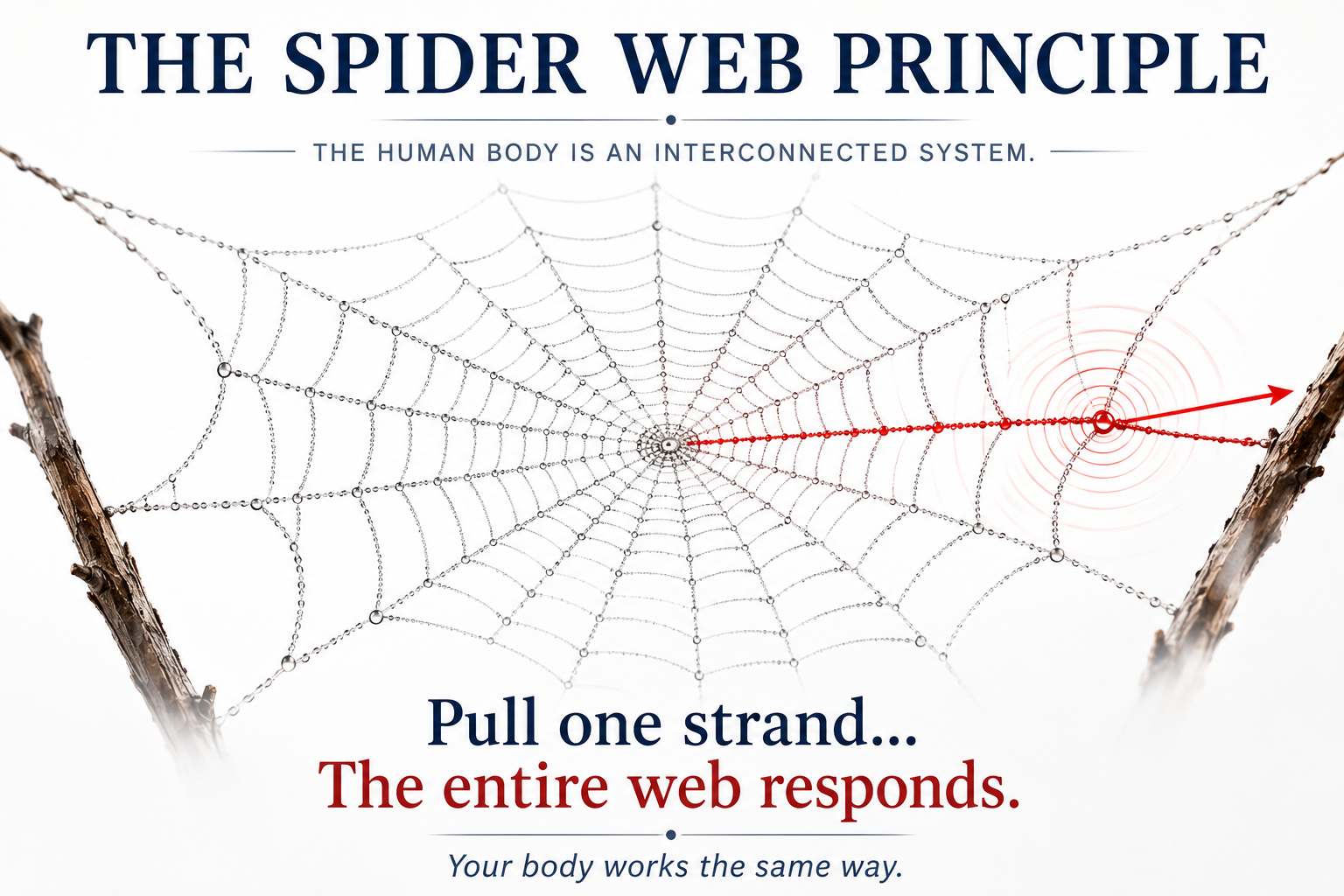
The human body functions much like a spider web. Every organ and system is connected. When one biological conversation changes—whether it’s sleep, stress, nutrition, sunlight, or gut health—the effects ripple throughout the entire body. Functional medicine seeks to understand and restore these interconnected relationships rather than treating isolated symptoms.
That’s exactly why I wanted to write this article.
Although we’ve spent much of our time discussing UVB and sunlight, this article has never really been about ultraviolet light. It’s about something much bigger. It’s about recognizing that human beings were designed to live in continuous relationship with their environment. Light, food, movement, sleep, relationships, temperature, microbes, and even the changing seasons all provide information that shapes the way our biology functions. None of those signals operate independently because the body itself doesn’t operate independently.
When we begin restoring those conversations, something remarkable often happens. The body starts doing what it has been trying to do all along. It adapts. It repairs. It recalibrates. Not because we’ve forced it to heal, but because we’ve removed some of the obstacles preventing it from expressing the intelligence it already possesses.
That may be the most hopeful lesson I have learned after nearly three decades in practice. I don’t see the human body as fragile. I don’t believe it is waiting for the smallest mistake to fall apart. I see a system that is remarkably resilient, constantly adapting, constantly listening, and constantly trying to maintain balance despite an ever-changing environment.
Perhaps that’s the greatest lesson sunlight has to teach us.
The body isn’t broken.
It’s listening.
And the better we understand that conversation, the better we understand what it truly means to be healthy.
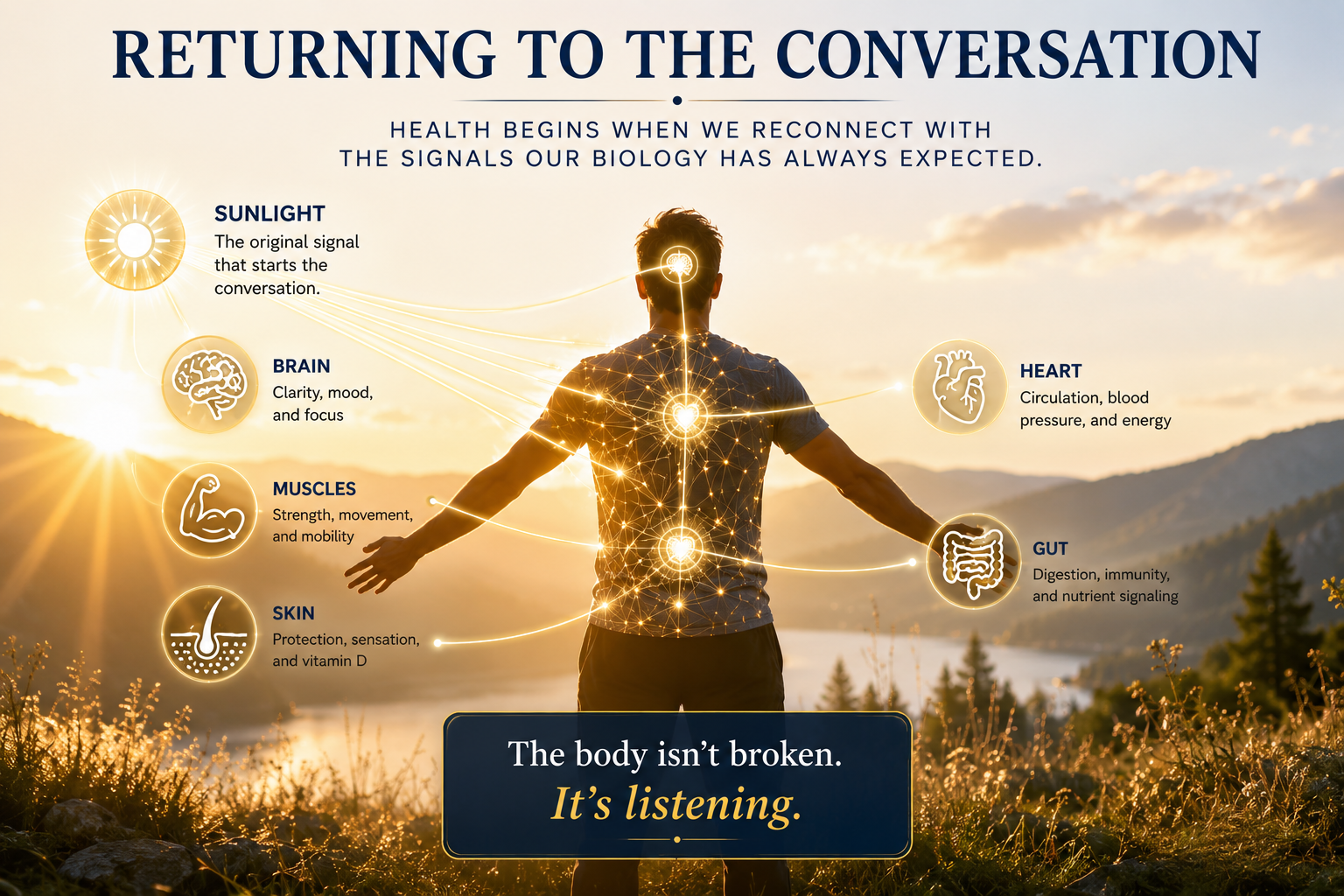
Health isn’t about forcing the body to heal—it’s about restoring the biological conversations it has always depended on. Sunlight, sleep, movement, nutrition, relationships, and nature provide signals that help the body’s interconnected systems maintain balance and resilience.
What I Hope You Remember
If you remember only a few things from this article, I hope they’re these.
The human body is far more than a collection of organs. It is an integrated communication network, constantly exchanging information within itself and with the world around it.
Your skin is not simply a protective barrier. It is one of the body’s largest sensory and endocrine organs, continuously interpreting environmental signals and helping coordinate responses throughout the body.
Sunlight is more than a source of vitamin D. It provides biological information that influences circadian rhythms, immune function, hormone balance, metabolism, vascular health, and many other systems that researchers are still working to understand.
Modern life has dramatically changed the environmental signals our biology evolved expecting. Reconnecting with healthy habits—including appropriate sunlight exposure, restorative sleep, regular movement, nutritious food, and meaningful relationships—helps restore the conversations that support long-term health.
Perhaps most importantly…
The body isn’t broken.
It’s listening.
About Dr. Scott
For nearly three decades, Dr. Scott has helped patients uncover the underlying causes of chronic health problems through an evidence-based approach that combines functional medicine, nutrition, lifestyle medicine, and chiropractic care.
Rather than asking only, “What disease does this person have?” Dr. Scott asks a different question:
“Why has the body lost its ability to maintain balance?”
That philosophy has guided thousands of patient consultations and forms the foundation of every article in the Total Health Center Signature Series.
Dr. Scott has extensive experience helping patients with digestive disorders, thyroid disease, autoimmune conditions, chronic fatigue, hormone imbalance, inflammation, metabolic dysfunction, and musculoskeletal pain by identifying and addressing the root causes of illness instead of simply managing symptoms.
If you’re looking for a personalized, science-based approach to improving your health, we invite you to schedule a consultation and discover how functional medicine can help you restore the body’s remarkable ability to heal.
Ready to take the next step? Contact Total Health Center to schedule your Functional Medicine consultation.
Frequently Asked Questions
Is sunlight healthier than taking a vitamin D supplement?
Sunlight and vitamin D supplements are not the same. Supplements can be extremely valuable when vitamin D levels are low or sun exposure is limited, but sunlight also provides additional biological signals that influence circadian rhythms, nitric oxide release, immune regulation, and other pathways that scientists continue to study.
How much sunlight should I get each day?
There is no single recommendation that applies to everyone. Healthy sunlight exposure depends on factors such as skin type, geographic location, season, time of day, age, and overall health. The goal is regular, appropriate exposure while avoiding sunburn.
Can I produce vitamin D through a window?
No. Standard window glass blocks most UVB wavelengths, preventing the skin from producing meaningful amounts of vitamin D even though visible light still enters the room.
Is vitamin D the only health benefit of sunlight?
No. Current research suggests sunlight influences numerous biological systems beyond vitamin D production, including circadian rhythm regulation, nitric oxide release, immune function, mood, and several other pathways that continue to be investigated.
Is this article suggesting people should avoid sunscreen?
No. Avoiding sunburn remains important. This article is intended to explain the biology of sunlight and encourage a balanced understanding of healthy sun exposure rather than excessive exposure.
Why does functional medicine focus so much on lifestyle?
Functional medicine recognizes that the body constantly responds to environmental information. Nutrition, sleep, stress, movement, relationships, and sunlight all influence how the body functions. Addressing these foundational factors often supports health more effectively than focusing only on symptoms.
Can restoring healthy sunlight exposure cure chronic disease?
No single lifestyle factor cures every condition. However, restoring healthy environmental signals—including appropriate sunlight exposure—may help support the body’s natural ability to regulate many physiological systems as part of a comprehensive health strategy.
Why do you describe the body as “listening”?
Because every organ is continuously receiving and responding to information from both inside and outside the body. Hormones, nerves, nutrients, microbes, movement, and environmental signals all communicate with your cells. Understanding those conversations is one of the central principles of functional medicine.
The following references represent a selection of the scientific literature supporting the concepts discussed in this article.
Scientific understanding continues to evolve. This article reflects the current body of evidence available at the time of publication and is intended for educational purposes. The references below represent selected landmark studies and review papers supporting many of the concepts discussed throughout this article.
References
- Holick MF. Vitamin D deficiency. N Engl J Med. 2007;357(3):266-281.
- Holick MF. Sunlight and vitamin D for bone health and prevention of autoimmune diseases, cancers, and cardiovascular disease. Am J Clin Nutr. 2004;80(6 Suppl):1678S-1688S.
- Wacker M, Holick MF. Sunlight and Vitamin D: A global perspective for health. Dermatoendocrinol. 2013;5(1):51-108.
- Lucas RM, Yazar S, Young AR, et al. Human health in relation to exposure to solar ultraviolet radiation under changing stratospheric ozone and climate. Photochem Photobiol Sci. 2019.
- Slominski AT, Zmijewski MA, Skobowiat C, et al. Sensing the environment: Regulation of local and global homeostasis by the skin’s neuroendocrine system. Adv Anat Embryol Cell Biol. 2012.
- Slominski AT, Zmijewski MA, Pawelek J. L-tyrosine and L-DOPA as hormone-like regulators of melanocyte functions. Pigment Cell Melanoma Res. 2012.
- Krutmann J, Bouloc A, Sore G, Bernard BA, Passeron T. The skin aging exposome. J Dermatol Sci. 2017;85(3):152-161.
- Opländer C, Volkmar CM, Paunel-Görgülü A, et al. Whole-body UVA irradiation lowers systemic blood pressure by releasing nitric oxide from the skin. Circ Res. 2009.
- Feelisch M, Kolb-Bachofen V, Liu D, et al. Is sunlight good for our heart? European position statement on sunlight exposure and cardiovascular health. Eur Heart J. 2021.
- Czeisler CA. Perspective: Casting light on sleep deficiency. Nature. 2013.
- Foster RG, Kreitzman L. The rhythms of life: What your body clock means to you. Exp Physiol. 2014.
- Panda S. Circadian physiology of metabolism. Science. 2016.
- Moore-Ede MC, Sulzman FM, Fuller CA. The Clocks That Time Us. Harvard University Press.
- Eyles DW, Burne THJ, McGrath JJ. Vitamin D, effects on brain development, adult brain function and the links between low levels of vitamin D and neuropsychiatric disease. Front Neuroendocrinol. 2013.
- Carlberg C. Vitamin D signaling in the context of innate immunity: Focus on human monocytes. Front Immunol. 2019.
- Charoensappakit A, et al. Vitamin D and immune regulation: Current perspectives. Nutrients. 2021.
- Nesse RM, Williams GC. Why We Get Sick: The New Science of Darwinian Medicine. Vintage Books.
- Gluckman PD, Hanson MA. Evolution, development and timing of puberty. Trends Endocrinol Metab. 2006.
- Frumkin H, Bratman GN, Breslow SJ, et al. Nature contact and human health: A research agenda. Environ Health Perspect. 2017.
- Hood L, Flores M. A personal view on systems medicine and the emergence of proactive P4 medicine. New Biotechnology. 2012.