Butter Is Back: Was Saturated Fat Ever the Real Problem?
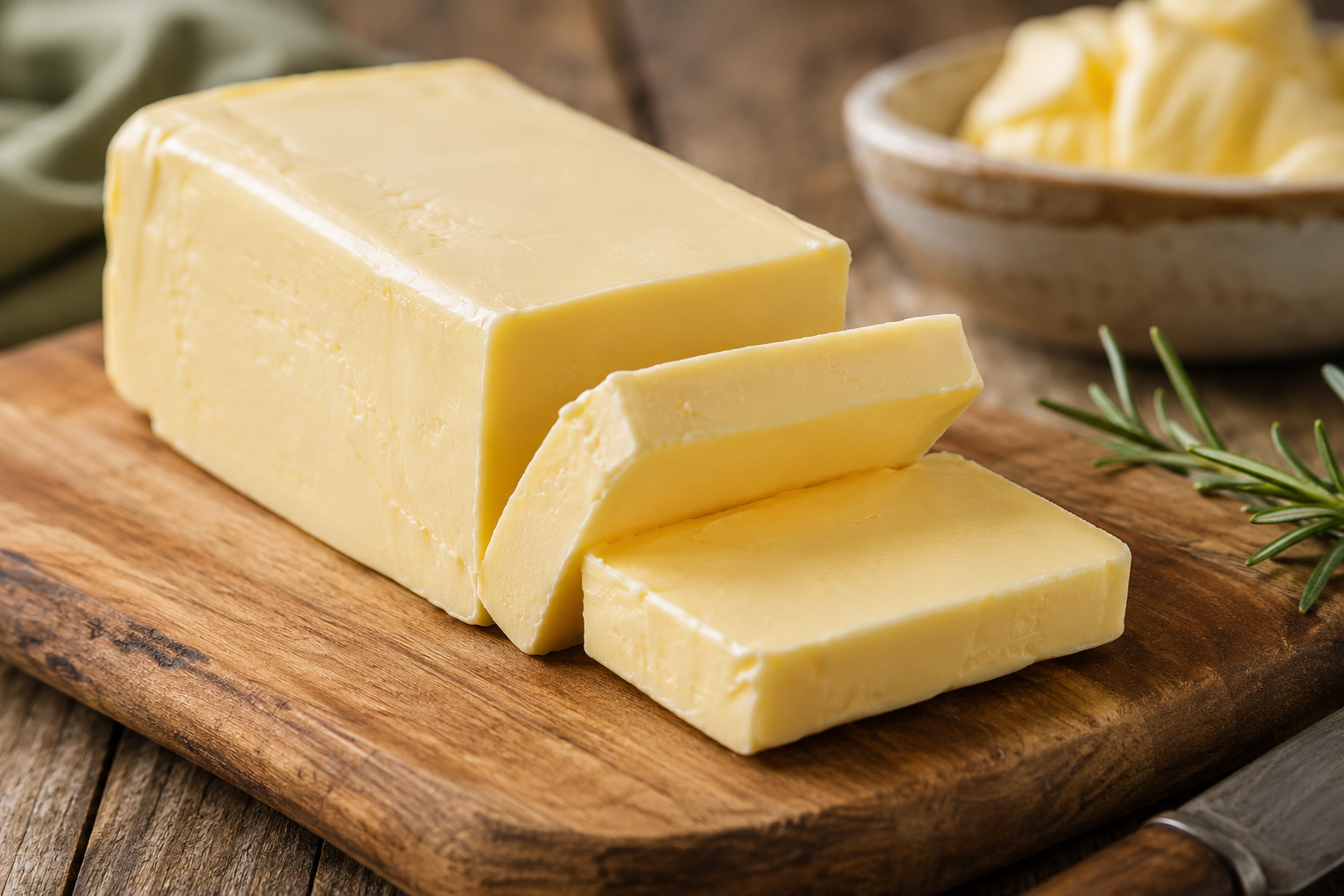
For years, butter sat on nutrition’s most wanted list.
Doctors warned against it. Dietitians told people to avoid it. Grocery stores filled their shelves with margarine, vegetable oil spreads, and “heart healthy” alternatives. If you cared about your health, you were told to skip the butter and reach for something made in a factory instead.
Millions of people followed that advice.
Yet something strange happened along the way.
As Americans ate less butter, they became heavier, sicker, and more dependent on medications than ever before. Obesity exploded. Type 2 diabetes became commonplace. Heart disease remained the leading cause of death. Metabolic dysfunction became the norm rather than the exception.
This raises an uncomfortable question:
What if butter was never the real problem?
The Story We Were Told
For decades, nutrition advice was built around a simple idea.
Saturated fat raises cholesterol.
High cholesterol causes heart disease.
Therefore, saturated fat causes heart disease.
The logic sounded reasonable, and it became the foundation for much of modern dietary advice.
The problem is that biology is rarely that simple.
As research evolved, scientists began discovering that heart disease involves far more than cholesterol alone. Inflammation, insulin resistance, blood sugar dysregulation, oxidative stress, metabolic dysfunction, and lifestyle factors all play important roles.
In other words, the story became much more complicated than “eat butter, get heart disease.”
Today, even many conventional researchers acknowledge that saturated fat is not the nutritional villain it was once made out to be.
“Heart health depends on far more than cholesterol alone. Nutrients such as magnesium play important roles in cardiovascular function.”
The Great Fat Swap
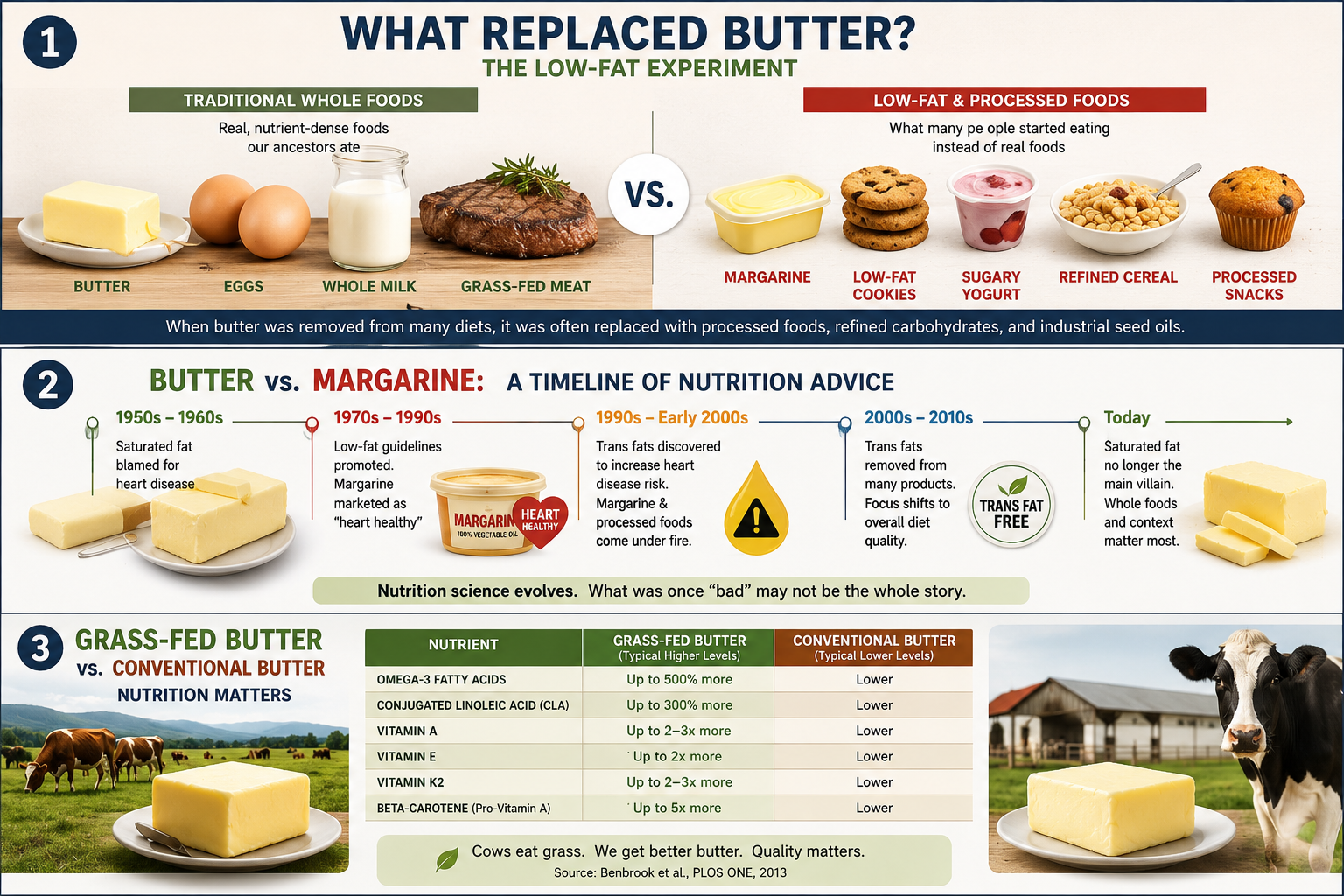
As butter consumption declined, many people replaced traditional whole foods with processed low-fat products, refined carbohydrates, and industrial seed oils.
When people stopped eating butter, they didn’t suddenly start eating more vegetables.
They started eating more processed foods.
Food manufacturers removed fat from products and replaced it with sugar, refined starches, artificial ingredients, and industrial seed oils in an attempt to preserve flavor.
A generation grew up believing SnackWell cookies, low-fat yogurt loaded with sugar, margarine, and highly processed breakfast cereals were healthy choices.
Meanwhile, rates of obesity and diabetes climbed year after year.
To be fair, butter was not the only thing that changed. Modern lifestyles became more sedentary. Processed foods became more common. Stress increased. Sleep declined.
But it is difficult to ignore the possibility that the war on saturated fat distracted us from much bigger problems.
Maybe We Were Looking at the Wrong Culprit
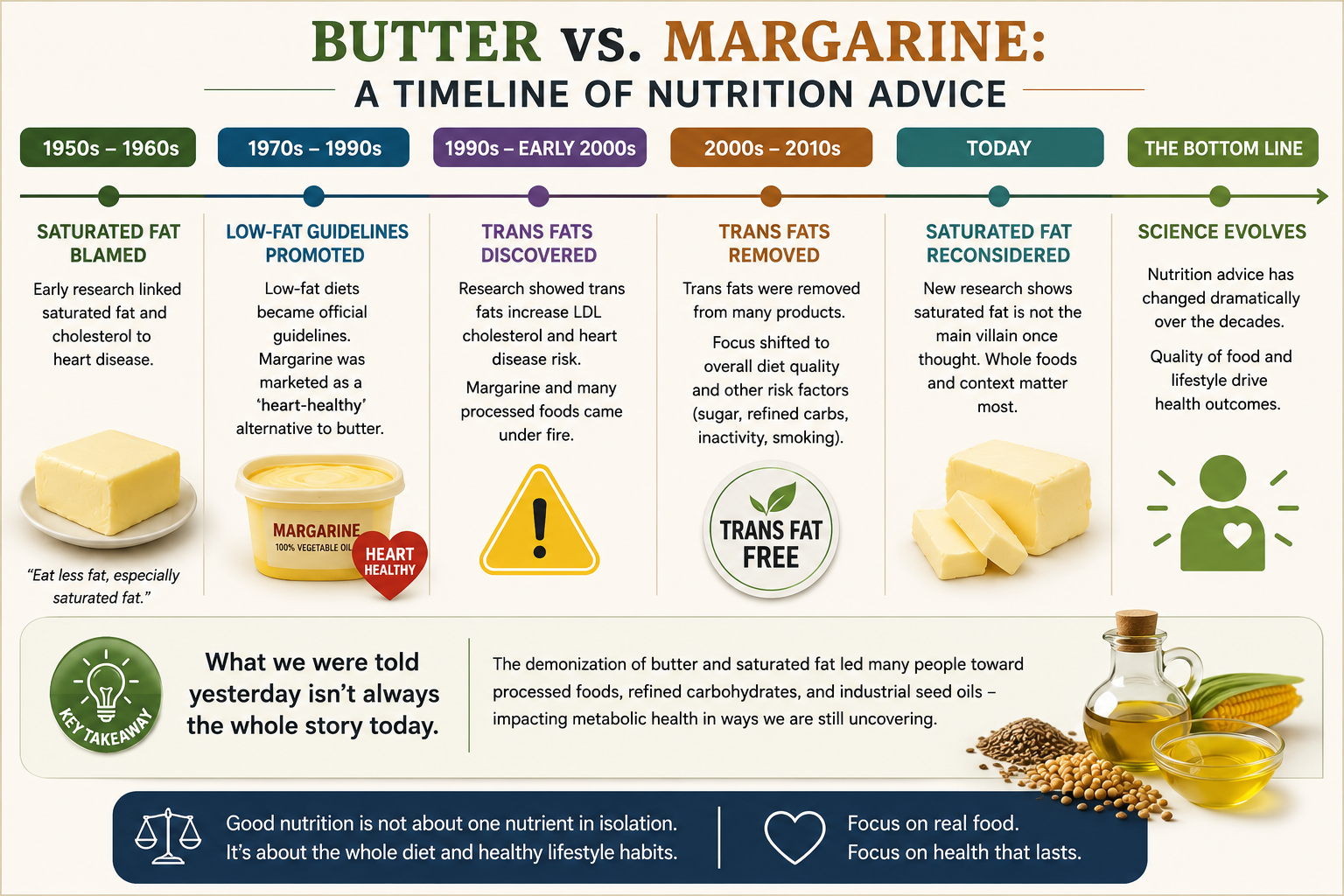
Nutrition science continues to evolve. The shift away from butter led many consumers toward processed alternatives, while newer research has challenged some long-standing assumptions about saturated fat.
One of the biggest lessons from modern nutrition science is that foods do not exist in isolation.
What matters is not simply what you remove from the diet.
What matters is what replaces it.
Replacing butter with ultra-processed foods is not an upgrade.
Replacing traditional fats with trans fats certainly was not an upgrade.
In fact, trans fats became one of the most thoroughly studied dietary disasters in modern history. Once promoted as heart healthy, they were eventually linked to increased cardiovascular risk and largely removed from the food supply.
Ironically, many of the products that replaced butter turned out to be far more concerning than butter itself.
Butter Is More Than Just Saturated Fat
One reason butter may have been unfairly judged is that people began viewing it as nothing more than a source of saturated fat.
But butter is a real food containing a variety of naturally occurring nutrients.
Quality butter contains:
- Vitamin A
- Vitamin D
- Vitamin E
- Vitamin K2
- Selenium
- Butyrate
- Conjugated Linoleic Acid (CLA)
Butter also contains naturally occurring fatty acids that have been studied for their role in metabolism, immune function, and gut health.
Does this make butter a superfood?
No.
But it certainly challenges the idea that butter is simply a block of artery-clogging fat.
Why Grass-Fed Butter Matters
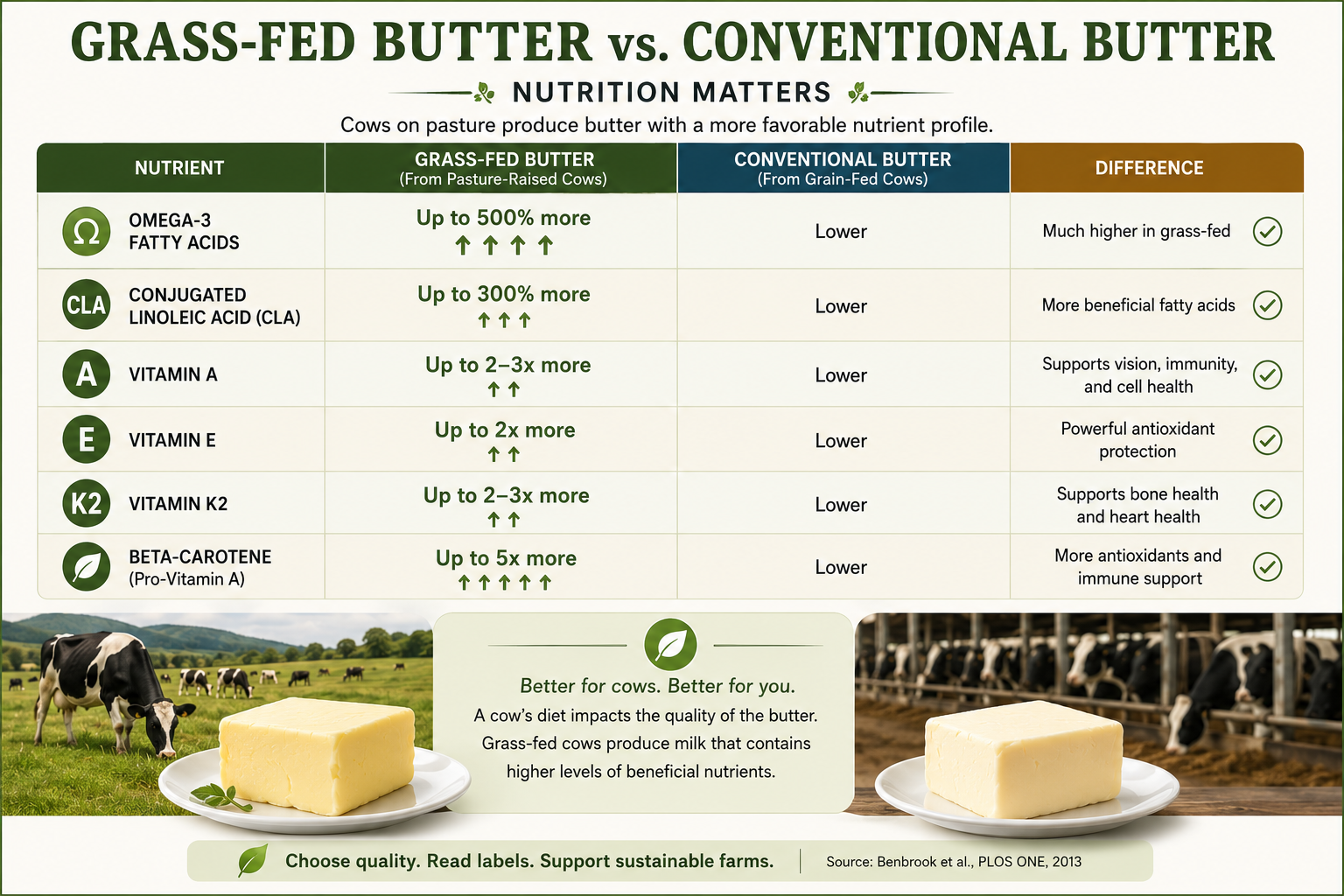
The diet of the cow influences the nutritional quality of the butter. Grass-fed butter generally contains higher levels of omega-3 fats, CLA, beta-carotene, and fat-soluble vitamins.
Not all butter is created equal.
The nutritional value of butter depends heavily on how the cows are raised and what they eat.
Grass-fed butter typically contains higher levels of omega-3 fatty acids, CLA, antioxidants, and fat-soluble vitamins than butter from conventionally raised cattle.
The rich yellow color often seen in grass-fed butter comes from naturally occurring carotenoids found in pasture grasses.
This is one reason traditional cultures often valued dairy products from pasture-raised animals. Long before nutrition labels existed, people recognized that animals raised naturally produced better food.
Dr. Scott’s Perspective
One of the biggest problems in nutrition is our tendency to oversimplify.
We want a hero.
We want a villain.
We want one thing to blame.
But human physiology doesn’t work that way.
When I look at patients struggling with inflammation, weight gain, fatigue, blood sugar problems, or cardiovascular risk factors, butter is rarely at the top of my concern list.
What concerns me far more is the modern diet built around processed foods, excess sugar, refined carbohydrates, poor sleep, chronic stress, and lack of movement.
The reality is that many people spent decades avoiding butter while consuming foods that were arguably far more damaging to their long-term health.
That doesn’t mean everyone should eat unlimited amounts of butter.
It means we may need to rethink the assumptions we’ve inherited.
The Bigger Question
Nutrition science is constantly evolving.
Unfortunately, public health recommendations often take years—or even decades—to catch up.
History has repeatedly shown that some of our most confidently delivered nutritional advice eventually requires revision.
Eggs were demonized.
Salt was demonized.
Dietary cholesterol was demonized.
Now saturated fat is undergoing the same re-evaluation.
Will future research answer every question about butter and saturated fat?
Probably not.
But one thing is becoming increasingly clear:
The simplistic message that “butter causes heart disease” no longer reflects the complexity of the science.
Practical Recommendations
If you enjoy butter, there is little reason to fear moderate amounts of quality butter as part of a healthy diet.
Focus on the fundamentals:
- Choose grass-fed butter when possible.
- Avoid trans fats and heavily processed spreads.
- Prioritize whole foods over packaged convenience foods.
- Reduce excess sugar and refined carbohydrates.
- Pay attention to your overall dietary pattern rather than obsessing over a single food.
The Bottom Line
Butter’s reputation was built during an era when nutrition science believed saturated fat was one of the primary drivers of heart disease.
Today, that certainty has largely disappeared.
The emerging picture is far more nuanced.
Butter is not a miracle food.
But it is probably not the dietary villain it was made out to be either.
Perhaps the most important lesson is this:
Health is rarely determined by one food.
And sometimes the foods we were told to fear deserve a second look.
References
- Astrup A, Magkos F, Bier DM, et al. Saturated Fats and Health: A Reassessment and Proposal for Food-Based Recommendations. Journal of the American College of Cardiology. 2020.
- de Souza RJ, Mente A, Maroleanu A, et al. Intake of saturated and trans unsaturated fatty acids and risk of all cause mortality, cardiovascular disease, and type 2 diabetes. BMJ. 2015.
- Mozaffarian D, Katan MB, Ascherio A, Stampfer MJ, Willett WC. Trans fatty acids and cardiovascular disease. New England Journal of Medicine. 2006.
- Benbrook CM, Butler G, Latif MA, Leifert C, Davis DR. Organic production enhances milk nutritional quality by shifting fatty acid composition. PLOS ONE. 2013.
- den Besten G, van Eunen K, Groen AK, Venema K, Reijngoud DJ, Bakker BM. The role of short-chain fatty acids in the interplay between diet, gut microbiota, and host energy metabolism. Journal of Lipid Research. 2013.
About Dr. Scott
Dr. Mark Scott is a functional medicine practitioner and chiropractor at Total Health Center in Virginia Beach, Virginia. Since 1997, Dr. Scott has helped patients better understand the underlying causes of chronic health problems by looking beyond symptoms and evaluating how digestion, blood sugar, inflammation, hormones, nutrition, stress, and lifestyle work together.
His approach combines functional medicine, chiropractic care, nutritional strategies, lab testing, and patient education to help people make practical changes that support long-term health.