
Why SIBO Treatments Fail: The Missing Piece Most Practitioners Overlook
Have you tried multiple SIBO treatments, only to find yourself right back where you started?
Maybe you’ve completed a round of herbal antimicrobials.
Maybe you’ve tried antibiotics.
Maybe you’ve followed a strict low-FODMAP diet.
Maybe you’ve spent months avoiding foods that once caused bloating and digestive discomfort.
Yet despite all your efforts, you’re still experiencing symptoms.
You still feel bloated after meals.
Your digestion remains unpredictable.
Your food sensitivities seem to be getting worse.
Your energy is lower than ever.
And perhaps most frustrating of all, every new treatment seems to help less than the one before.
If this sounds familiar, you’re not alone.
At Total Health Center in Virginia Beach, one of the most common questions we hear is, ‘Why does my SIBO keep coming back even after treatment? We frequently see patients who have already completed multiple SIBO protocols but continue to struggle with digestive symptoms. In many of these cases, the problem is not that the treatment was wrong.
The problem is that the treatment was applied before the body was ready.
The Biggest Mistake in SIBO Treatment
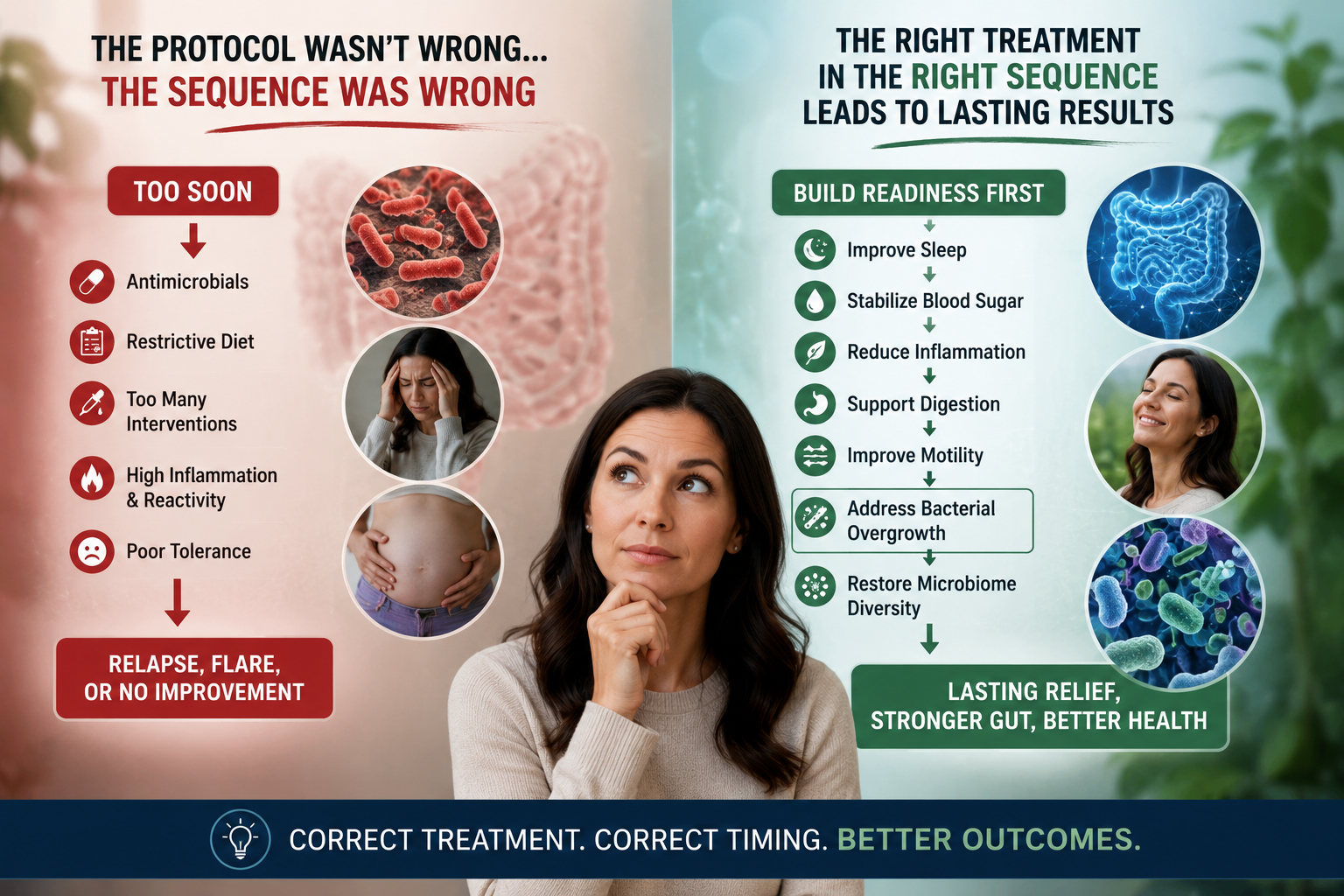
Many SIBO treatment plans fail not because the protocol was incorrect, but because the body was not adequately prepared for treatment. Proper sequencing can improve tolerance, reduce relapses, and support lasting results.
Most SIBO treatment plans focus on one primary goal:
Kill the bacteria.
While reducing bacterial overgrowth can certainly be important, this approach often overlooks a critical question:
Why did the bacterial overgrowth occur in the first place?
This is where many treatment plans fail.
SIBO is often viewed as the problem itself.
In reality, SIBO is frequently a symptom of deeper dysfunction within the digestive system.
Unless those underlying issues are addressed, bacterial overgrowth can return repeatedly.
This is one reason many patients experience chronic bloating, digestive distress, and repeated relapses despite multiple treatment attempts.
If you’re new to SIBO, you may want to start with our article:
SIBO and Bloating: The Hidden Cause Most People Miss
https://totalhealthcentervb.com/sibo-and-bloating-the-hidden-cause-most-people-miss/
SIBO Is Often a Secondary Condition
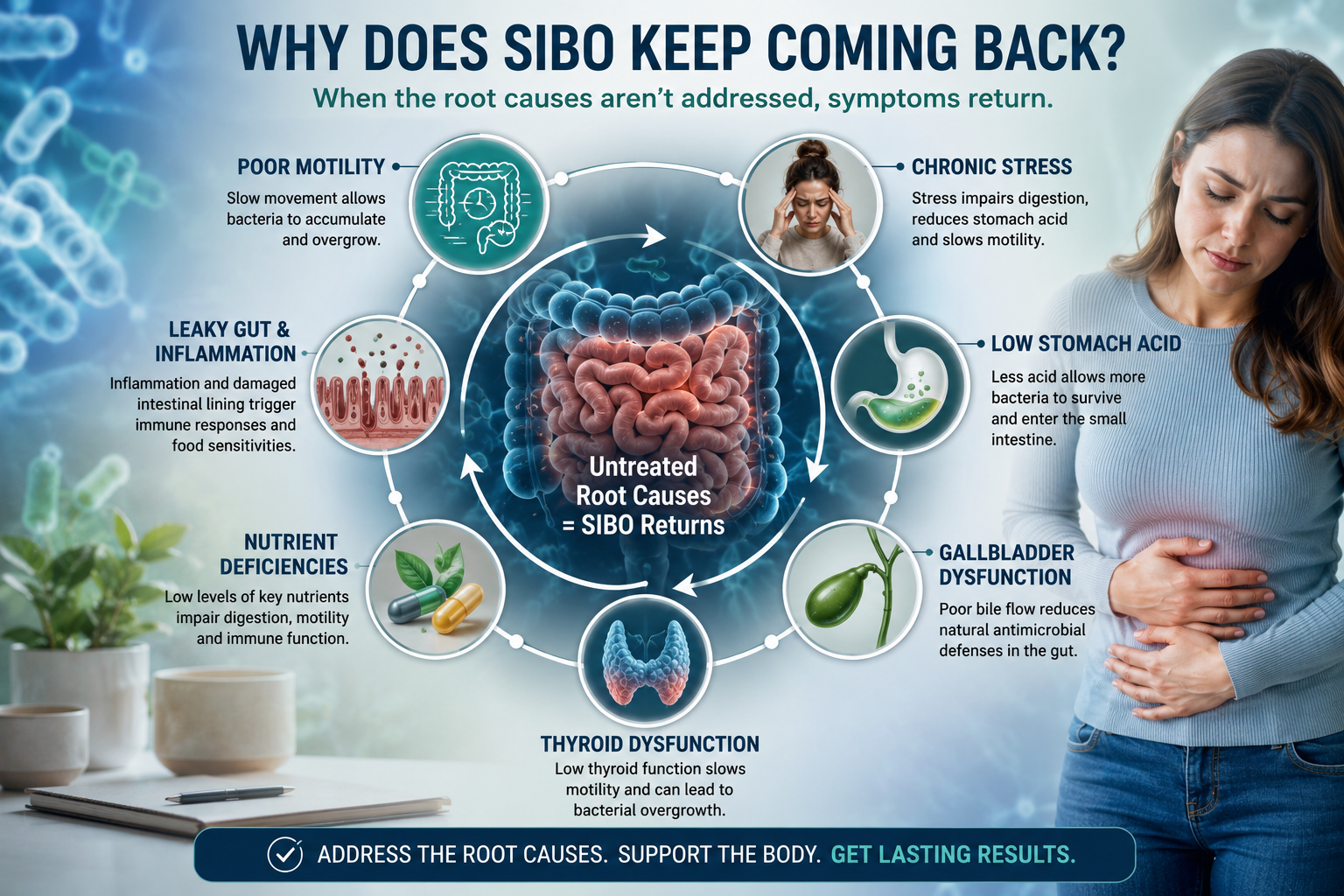
Many cases of recurring SIBO are driven by underlying issues such as poor motility, chronic stress, thyroid dysfunction, low stomach acid, gallbladder problems, and intestinal inflammation. Unless these root causes are addressed, symptoms often return.
Think of SIBO as weeds growing in a garden.
You can remove the weeds.
But if the soil conditions remain unchanged, the weeds eventually return.
The same principle often applies to bacterial overgrowth.
The bacteria may not be the primary issue.
The bacterial overgrowth may simply be a consequence of deeper physiologic dysfunction.
This is why some patients improve temporarily with treatment only to experience a relapse months later.
Why Good SIBO Protocols Fail
1. Poor Gut Motility
One of the most common causes of recurrent SIBO is impaired intestinal motility.
The small intestine has a natural cleansing mechanism known as the Migrating Motor Complex (MMC).
This process acts like an internal housekeeping system, sweeping bacteria and food debris through the digestive tract between meals.
When this process slows down, bacteria can begin accumulating in the small intestine.
Common causes of poor motility include:
- Chronic stress
- Thyroid dysfunction
- Previous food poisoning
- Nervous system dysregulation
- Vagus nerve dysfunction
Without correcting motility problems, even the most aggressive antimicrobial protocol may provide only temporary results.
2. Chronic Stress and Nervous System Dysfunction

Chronic stress can reduce stomach acid, slow gut motility, increase inflammation, and impair digestion, creating an environment that may contribute to bacterial overgrowth and recurring digestive symptoms.
Why Coffee Feels Necessary: How Daily Caffeine May Rewire Your Energy, Stress, and Brain Chemistry
One of the most overlooked causes of digestive dysfunction is chronic activation of the body’s stress response.
When the nervous system becomes stuck in a fight-or-flight state:
- Digestive secretions decrease
- Blood flow to the digestive tract decreases
- Motility slows
- Inflammation increases
- Healing capacity declines
Many patients focus exclusively on supplements while overlooking the profound impact stress has on digestion.
This is why addressing nervous system balance is often a critical part of long-term recovery.
You may also enjoy reading:
3. Low Stomach Acid
Stomach acid serves as one of the body’s first lines of defense against bacterial overgrowth.
When stomach acid levels are low, bacteria that would normally be destroyed can survive and migrate into the small intestine.
Factors that may contribute to low stomach acid include:
- Chronic stress
- Aging
- Nutrient deficiencies
- Long-term use of acid-blocking medications
Without adequate stomach acid, bacterial overgrowth becomes much easier.
4. Gallbladder Dysfunction
Many people don’t realize that bile does far more than digest fats.
Bile also has antimicrobial properties that help regulate the balance of microorganisms throughout the digestive tract.
Poor bile production or sluggish bile flow can create an environment that favors bacterial overgrowth.
This is one reason we frequently evaluate gallbladder function in patients struggling with chronic bloating and recurrent digestive symptoms.
Learn more here:
Gallbladder Dysfunction: The Missing Link in Gut Health
5. Thyroid Dysfunction
Thyroid health and gut health are closely connected.
Thyroid hormones help regulate digestive motility throughout the gastrointestinal tract.
When thyroid function declines, intestinal transit time slows.
The slower food moves through the digestive tract, the greater the opportunity for bacterial overgrowth.
Many patients diagnosed with SIBO also have underlying thyroid dysfunction that has never been fully addressed.
Read more:
What Causes Hashimoto’s Thyroiditis?
6. Leaky Gut and Chronic Inflammation
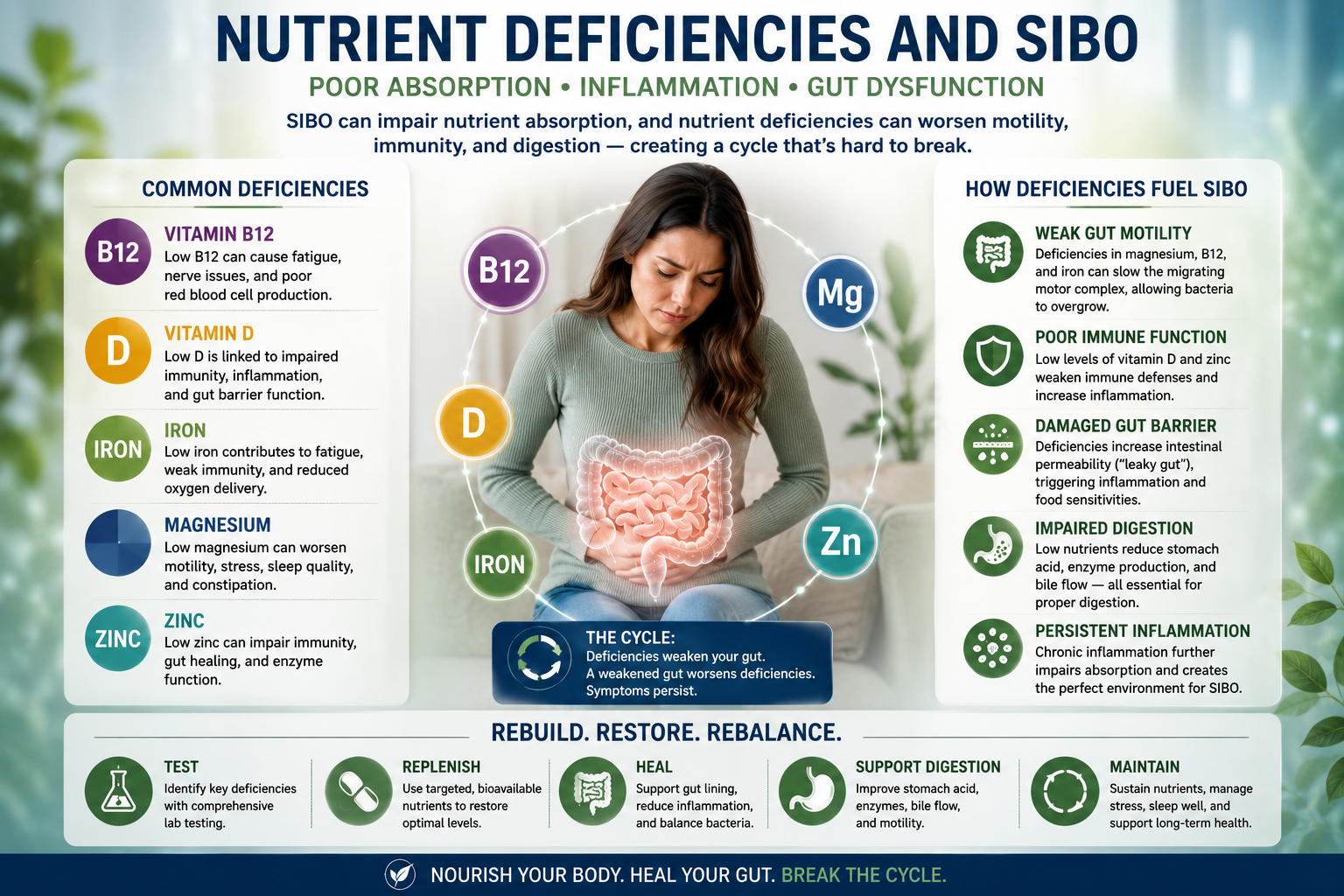
SIBO can contribute to nutrient deficiencies, while nutrient deficiencies can impair digestion, immune function, and gut motility—creating a cycle that may be difficult to break without addressing both issues.
The Importance of Magnesium: Why This Mineral Matters More Than You Think
Vitamin D Deficiency: Symptoms, Causes, and Natural Solutions
Many patients suffering from SIBO also have significant intestinal inflammation and increased intestinal permeability, commonly referred to as leaky gut.
When inflammation becomes severe, patients often develop:
- Food sensitivities
- Histamine intolerance
- Fatigue
- Brain fog
- Joint pain
- Skin issues
In these situations, aggressively attacking bacterial overgrowth may actually worsen symptoms.
The body often requires stabilization before intensive treatment can be tolerated.
Learn more about intestinal permeability here:
The Missing Piece: Treatment Sequence
This may be the most important concept in successful SIBO treatment.
The question should not simply be:
“How do we kill the bacteria?”
The better question is:
“What does this patient’s body need first?”
In many cases, the ideal sequence looks something like this:
- Improve sleep quality
- Stabilize blood sugar
- Reduce inflammation
- Support digestion
- Improve motility
- Address bacterial overgrowth
- Restore a healthy microbiome
When the body is properly prepared, treatment tends to be more effective and significantly better tolerated.
A Functional Medicine Approach to SIBO
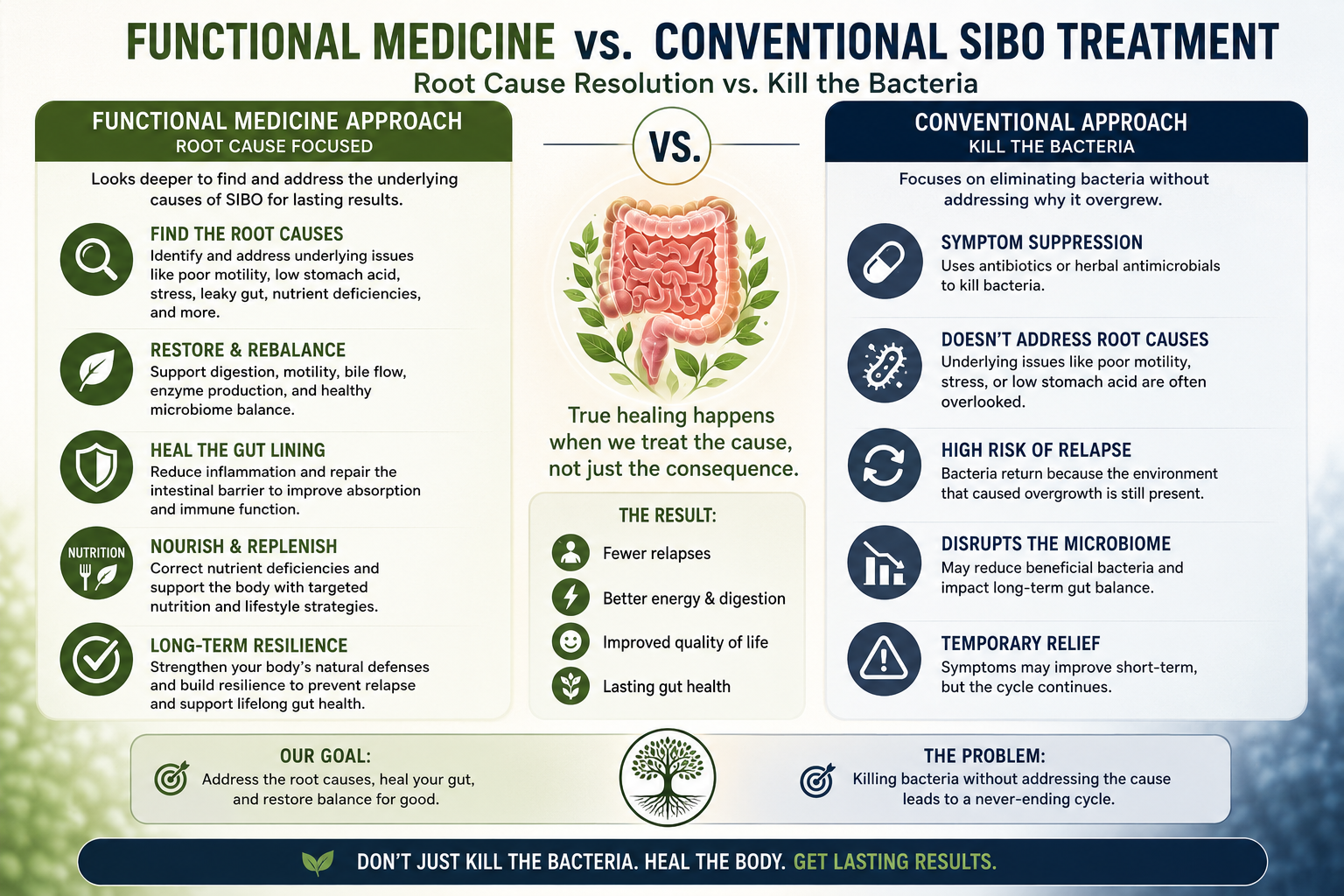
While reducing bacterial overgrowth may be important, long-term success often depends on addressing the underlying factors that allowed SIBO to develop in the first place, including motility issues, stress, thyroid dysfunction, digestive insufficiency, and inflammation.
What Makes Functional Medicine Different?
At Total Health Center, we take a broader view of digestive health.
Rather than focusing exclusively on bacterial overgrowth, we investigate the factors that may have allowed the overgrowth to develop in the first place.
This often includes evaluating:
- Digestive function
- Gallbladder health
- Thyroid function
- Stress physiology
- Food sensitivities
- Nutritional deficiencies
- Gut motility
- Inflammation
- Hormonal balance
This root-cause approach is one of the key differences between conventional symptom management and functional medicine care.
Learn more:
What Makes Functional Medicine Different?
https://totalhealthcentervb.com/what-makes-functional-medicine-different/
Final Thoughts
If you’ve tried multiple SIBO treatments without lasting results, don’t assume you’re a difficult case.
The issue may not be the treatment itself.
The issue may be that the deeper causes have not yet been addressed.
When we identify and correct the factors driving bacterial overgrowth, long-term healing becomes much more achievable.
If you’re struggling with bloating, food sensitivities, digestive symptoms, or recurrent SIBO, our team at Total Health Center in Virginia Beach would be happy to help.
Schedule a consultation and let’s work together to uncover the root causes behind your symptoms.
For A Free Consultation Call (757)363-8571 or Click the Buton
 ____________________________________________________________________________________________________________________________________
Frequently Asked Questions About SIBO
Why does SIBO keep coming back after treatment?
SIBO often returns because the underlying causes of bacterial overgrowth have not been fully addressed. Common contributors include poor gut motility, thyroid dysfunction, chronic stress, low stomach acid, gallbladder dysfunction, and ongoing inflammation.
Can stress cause SIBO?
Stress may contribute to SIBO by slowing digestive function, reducing stomach acid production, impairing gut motility, and increasing inflammation. Chronic activation of the body’s stress response can significantly impact digestive health.
What are the symptoms of SIBO?
Common symptoms include bloating, abdominal discomfort, excessive gas, constipation, diarrhea, food sensitivities, brain fog, fatigue, and nutrient deficiencies.
Is SIBO a root cause or a symptom?
In many cases, SIBO is a symptom of deeper dysfunction rather than the primary problem. Factors such as impaired motility, thyroid dysfunction, digestive insufficiency, and nervous system dysregulation often contribute to bacterial overgrowth.
What is the best treatment for SIBO?
The most effective treatment approach depends on the individual. Successful treatment often requires addressing both the bacterial overgrowth and the underlying factors that allowed it to develop.
Can thyroid problems contribute to SIBO?
Yes. Low thyroid function can slow digestive motility, increasing the likelihood that bacteria accumulate in the small intestine.
Does leaky gut occur with SIBO?
Many individuals with SIBO also experience increased intestinal permeability, commonly called leaky gut. This can contribute to food sensitivities, inflammation, fatigue, and immune system activation.
How can functional medicine help SIBO?
Functional medicine focuses on identifying and correcting the root causes that contribute to bacterial overgrowth, including digestive dysfunction, thyroid issues, nutritional deficiencies, stress physiology, and inflammation.
____________________________________________________________________________________________________________________________________
About Dr. Scott
Dr. Mark Scott is a Functional Medicine Practitioner and Chiropractor with more than 25 years of clinical experience helping patients identify and address the root causes of chronic health conditions. Since 1997, he has worked with thousands of patients struggling with digestive disorders, thyroid dysfunction, autoimmune conditions, fatigue, metabolic health concerns, and chronic pain.
At Total Health Center in Virginia Beach, Dr. Scott combines functional medicine testing, nutritional therapies, lifestyle interventions, and personalized treatment plans to help patients move beyond symptom management and achieve lasting improvements in their health.
A special area of interest for Dr. Scott is digestive health, including conditions such as Small Intestinal Bacterial Overgrowth (SIBO), bloating, IBS, leaky gut, food sensitivities, and microbiome imbalances. His approach focuses on identifying why dysfunction developed in the first place rather than simply suppressing symptoms.
Dr. Scott believes that true healing occurs when the underlying causes of illness are identified and addressed, allowing the body to restore balance and function naturally.
To learn more about functional medicine services or schedule a consultation, visit:
https://totalhealthcentervb.com/
Or call Total Health Center at (757) 363-8571
References
Pimentel M, Saad RJ, Rao SSC, et al. ACG Clinical Guideline: Small Intestinal Bacterial Overgrowth. American Journal of Gastroenterology. 2020.
Rezaie A, Buresi M, Lembo A, et al. Hydrogen and Methane-Based Breath Testing in Gastrointestinal Disorders. American Journal of Gastroenterology. 2017.
Muller PA, Matheis F, Schneeberger M, et al. Microbiota-modulated CART+ enteric neurons autonomously regulate blood glucose. Science. 2020.
Furnari M, Savarino E, Bruzzone L, et al. Reassessment of the Role of SIBO in Functional Gastrointestinal Disorders. United European Gastroenterology Journal. 2020.
Camilleri M. Gastrointestinal Motility Disorders in Neurologic Disease. Journal of Clinical Investigation. 2021.
Mayer EA. The Gut-Brain Axis and Stress-Related Gastrointestinal Disorders. New England Journal of Medicine. 2011.