
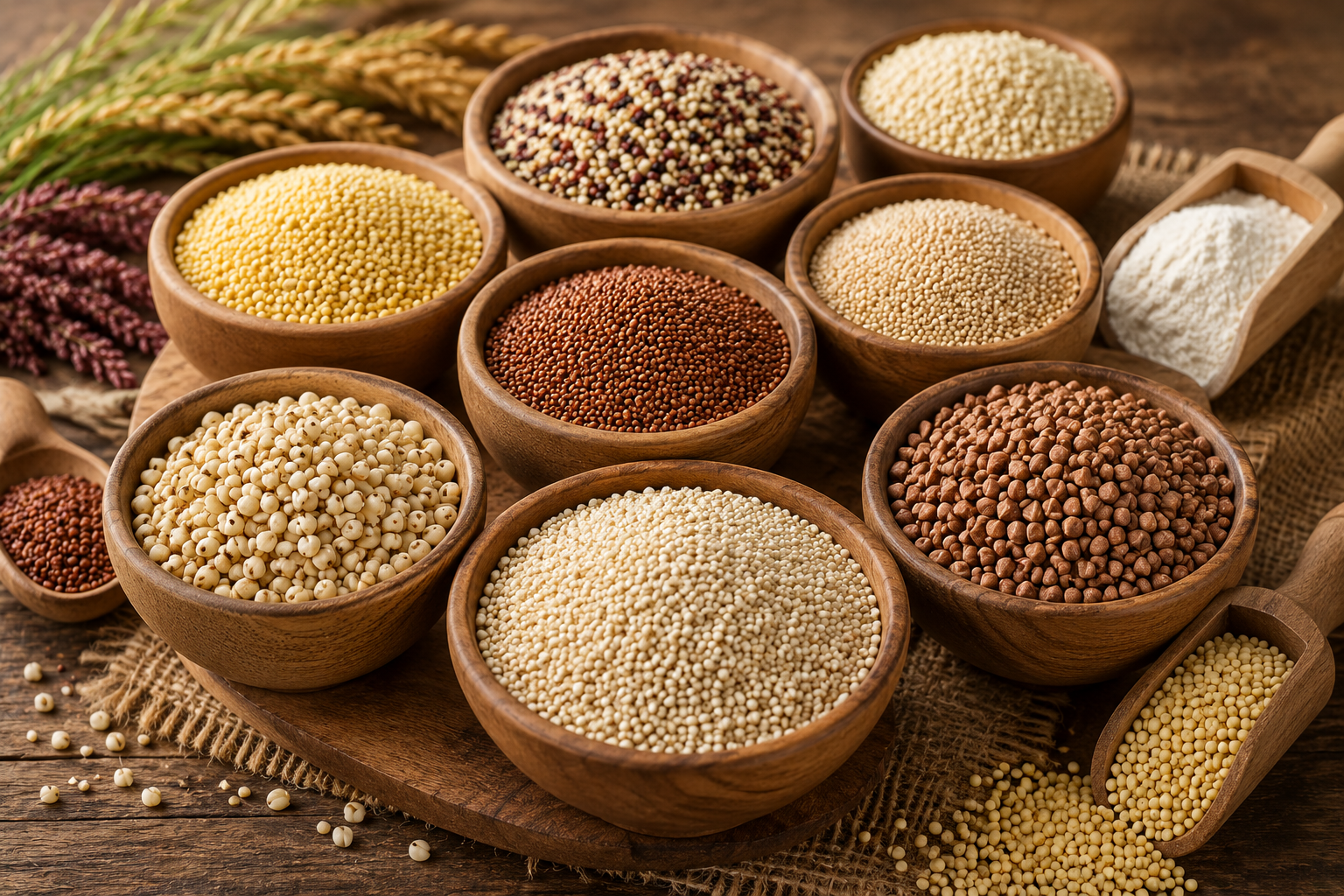
Gluten University – Lesson #8
The Gluten-Free Grains Nobody Talks About
Part of the Gluten University Educational Series
Gluten University Home Page:
https://totalhealthcentervb.com/gluten-university/
Lesson #7:
https://totalhealthcentervb.com/rice-the-gluten-free-food-nobody-questions/
Lesson #6:
https://totalhealthcentervb.com/are-oats-really-gluten-free/
Lesson #5:
https://totalhealthcentervb.com/why-corn-may-be-the-most-overlooked-grain/
By now you’ve probably noticed a pattern in Gluten University.
First we questioned wheat.
Then corn.
Then oats.
Then rice.
At this point many readers ask:
“What about all the other gluten-free grains?”
That’s a great question.
Many people assume that if a grain is labeled gluten-free, it must automatically be healthy and well-tolerated.
But is that really true?
Today we’re going to examine some of the most common gluten-free grain alternatives and discuss why some individuals continue experiencing symptoms despite replacing wheat with these foods.
The goal is not to create fear.
The goal is to understand your options and learn how your body responds.
Meet the New Gluten-Free Superstars
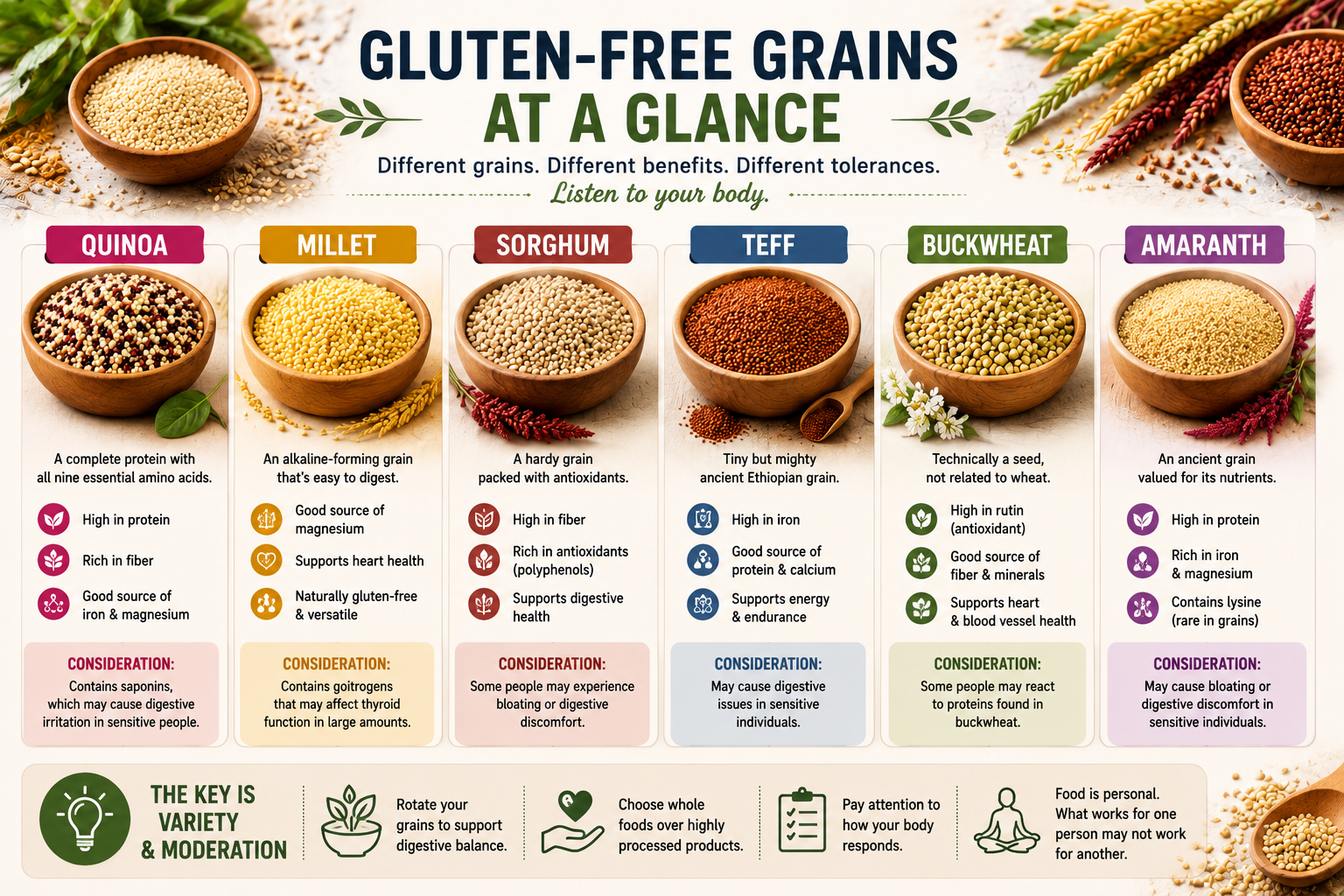
Each gluten-free grain offers unique nutritional benefits and potential considerations. Individual tolerance varies, making it important to focus on dietary diversity rather than relying heavily on any single grain.
Over the past decade, food manufacturers have introduced dozens of alternatives to traditional wheat products.
Some of the most popular include:
- Quinoa
- Millet
- Sorghum
- Teff
- Buckwheat
- Amaranth
- Cassava
- Tapioca
Many of these foods are marketed as healthier alternatives to wheat.
Some may be.
However, healthier does not necessarily mean optimal for everyone.
Quinoa: Health Food or Hidden Problem?
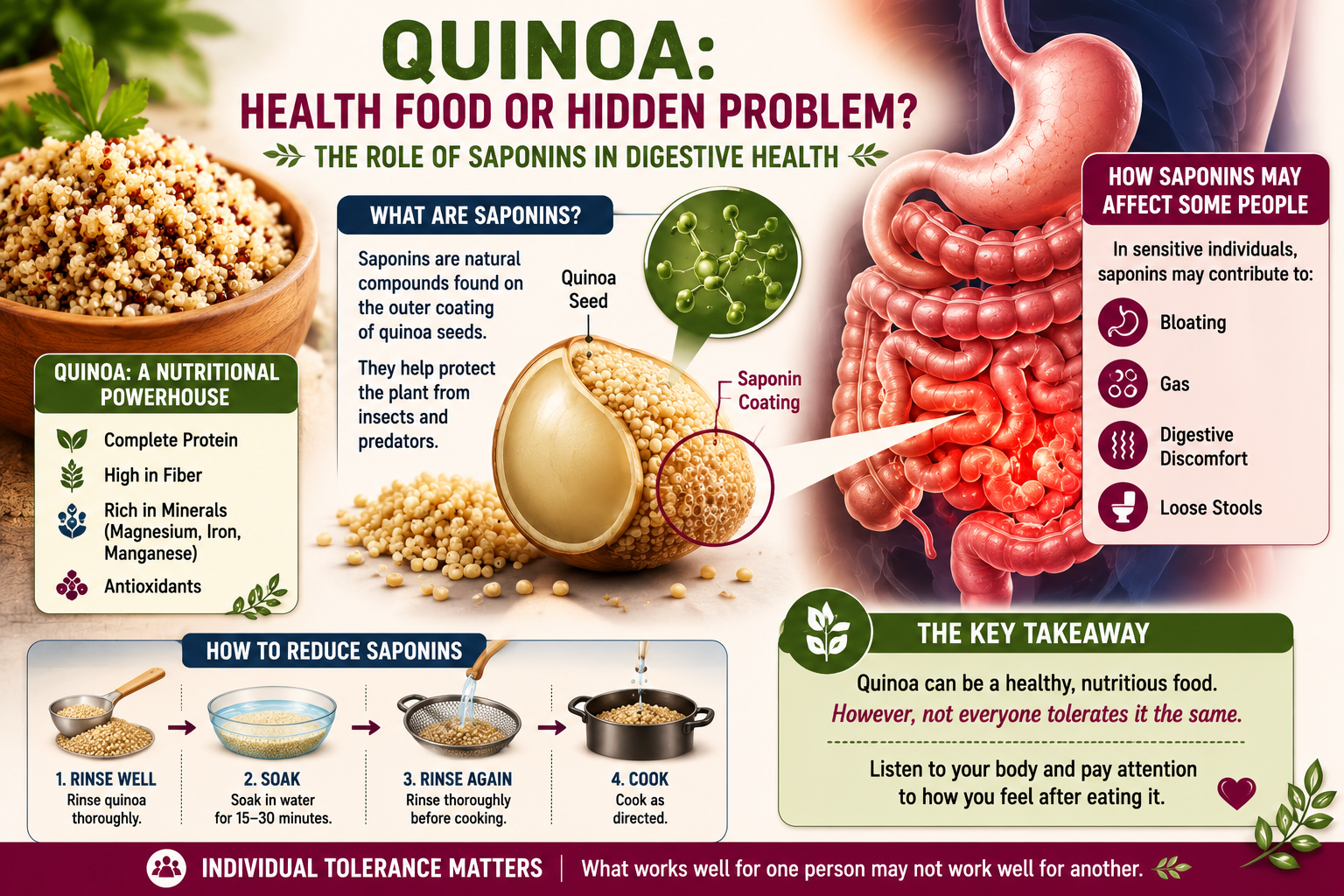
Quinoa is a nutrient-dense food rich in protein, fiber, minerals, and antioxidants. However, its natural saponin coating may contribute to digestive irritation in sensitive individuals. Proper rinsing and preparation can improve tolerance.
Quinoa has become one of the most celebrated foods in modern nutrition.
It contains:
- Fiber
- Minerals
- Protein
- Antioxidants
However, quinoa also contains compounds known as:
Saponins
Saponins help protect the plant from insects and predators.
In sensitive individuals, they may contribute to digestive irritation.
This doesn’t mean quinoa is harmful.
It simply means some people tolerate it better than others.
Millet: The Forgotten Grain
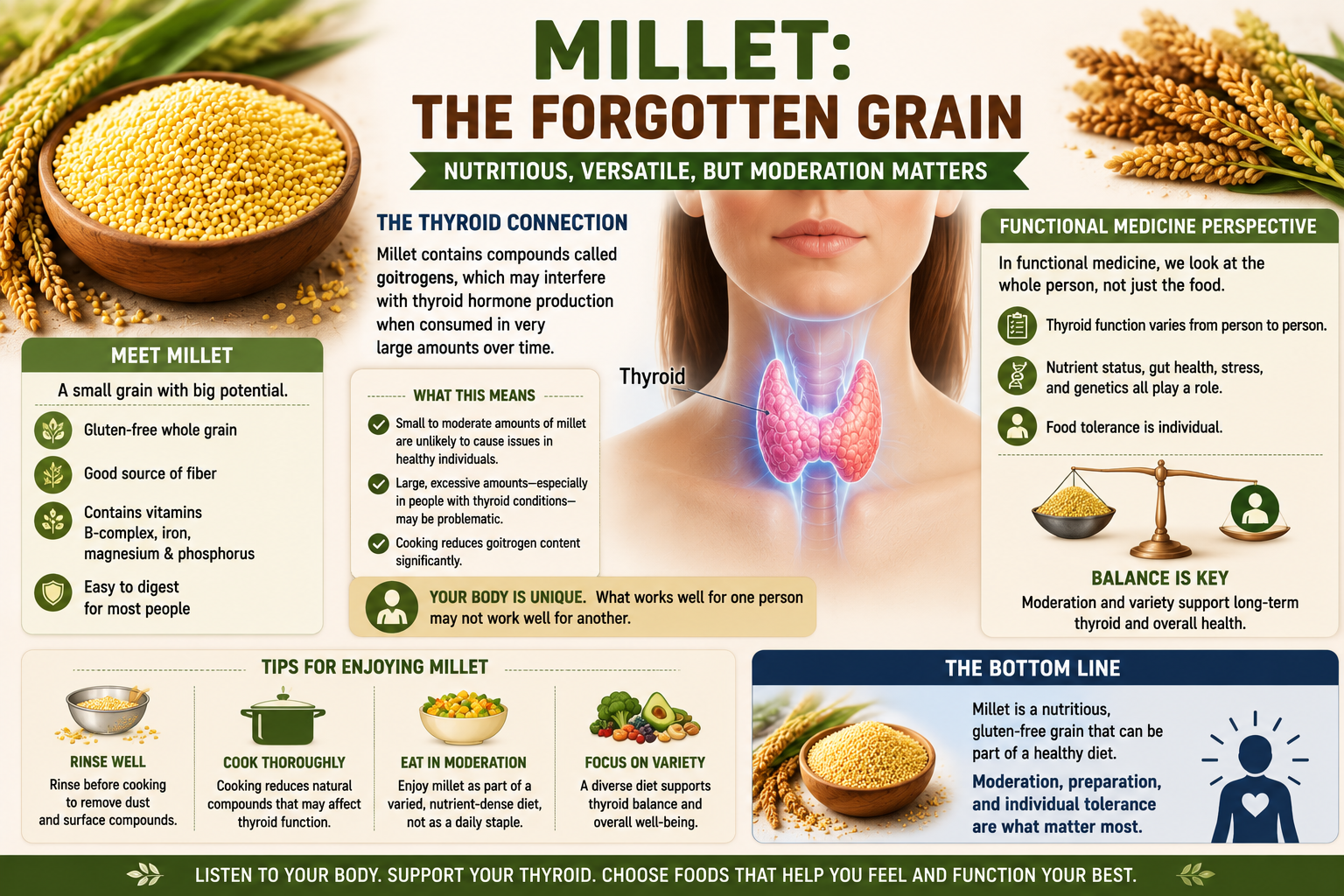
Millet is a nutritious gluten-free grain that provides fiber, minerals, and B vitamins. Some practitioners recommend moderation in individuals with thyroid concerns, emphasizing bio-individuality and overall dietary balance.
Millet rarely receives much attention.
Yet it appears in many gluten-free products.
Millet is generally considered nutritious and easy to digest.
However, some practitioners have expressed concern about excessive millet consumption, particularly in individuals with thyroid disorders.
As with most foods, moderation and individual response matter.
Sorghum: The Rising Star
Sorghum has become increasingly popular in gluten-free baking.
It contains:
- Fiber
- Polyphenols
- Antioxidants
Many people tolerate sorghum well.
However, as with every grain we’ve discussed, individual responses vary.
The question is never:
“Is this food good or bad?”
The better question is:
“How does my body respond to it?”
Teff: Ancient Grain, Modern Popularity
Teff is a staple grain in parts of Africa and has gained popularity among health-conscious consumers.
It contains:
- Iron
- Fiber
- Protein
- Minerals
Many people enjoy teff without issue.
Others may notice digestive symptoms similar to those experienced with other grains.
Buckwheat: Not Wheat, But Still a Seed
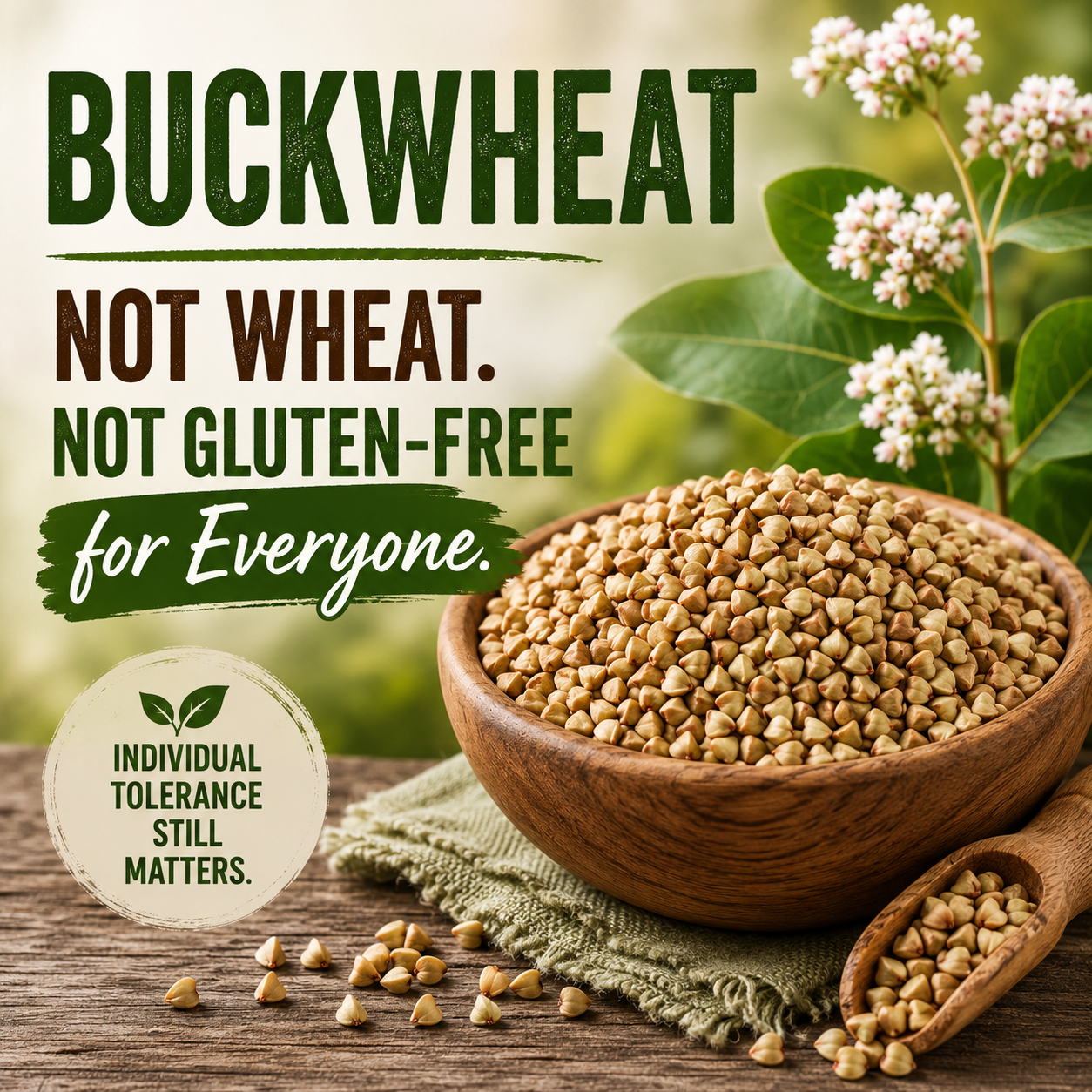
Despite its name, buckwheat is not actually wheat and does not contain gluten. However, like all foods, individual responses vary, and some people may tolerate buckwheat better than others.
Despite its name, buckwheat is not actually wheat.
It is technically a seed.
Many gluten-free diets rely heavily on buckwheat flour.
Some individuals tolerate it exceptionally well.
Others may react to proteins found within the seed.
Again, the theme remains the same:
Individual responses matter.
Amaranth: Ancient but Not Necessarily Perfect
Amaranth has been consumed for thousands of years.
It provides:
- Protein
- Fiber
- Minerals
Yet like all grains and grain-like foods, it contains proteins and plant compounds that may not be tolerated equally by everyone.
Cassava and Tapioca
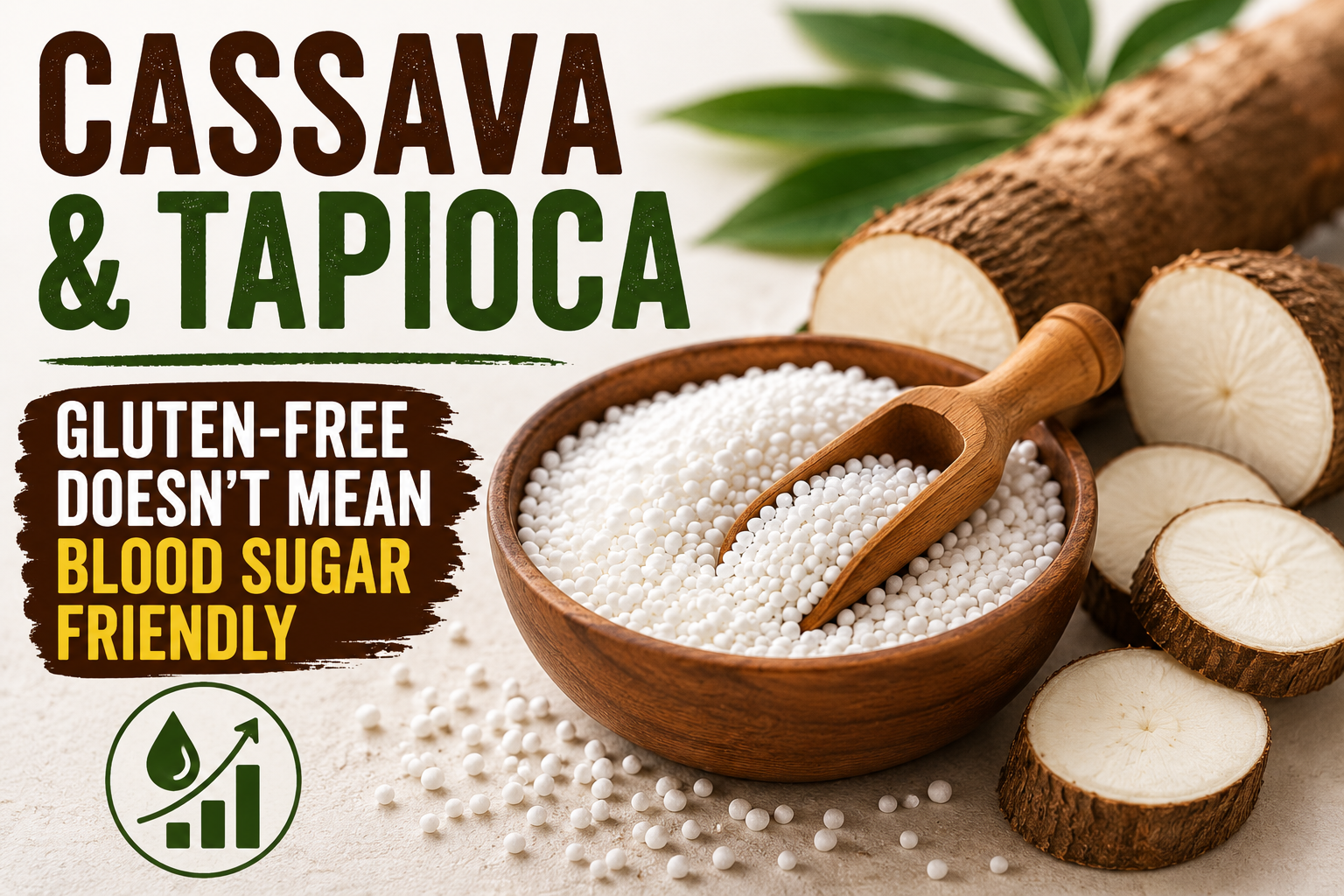
Cassava and tapioca are common ingredients in gluten-free products. While they can be useful alternatives to wheat, they are often highly refined starches that may impact blood sugar levels more significantly than many people realize.
Many gluten-free products rely heavily on cassava flour and tapioca starch.
These ingredients help improve texture and baking performance.
However, they are often:
- Highly processed
- Low in protein
- Low in fiber
- Rapidly absorbed
This can create blood sugar challenges similar to those seen with refined grain products.
The Common Thread
Notice something?
Every grain we’ve discussed has:
- Benefits
- Limitations
- Unique proteins
- Unique plant compounds
This is why blanket statements about food often fail.
No food works perfectly for everyone.
No food is automatically problematic for everyone.
The real question is:
What happens when YOU eat it?
The TRUE Gluten-Free Perspective
Many people spend years searching for the perfect replacement for wheat.
They move from:
- Wheat
- To corn
- To oats
- To rice
- To quinoa
- To millet
- To sorghum
all while continuing to build their diet around processed grain products.
Perhaps the better question isn’t:
“Which grain should replace wheat?”
Perhaps the better question is:
“Do I need a replacement grain at all?”
A TRUE Gluten-Free approach focuses less on finding substitute grains and more on building a diet around:
- Vegetables
- Fruits
- Healthy fats
- Quality proteins
- Nuts
- Seeds
- Whole-food carbohydrate sources
This approach often provides more nutrients while reducing dependence on processed foods.
Dr. Scott’s Clinical Perspective
One of the biggest breakthroughs many patients experience is realizing they don’t need to find the perfect grain.
They need to find the foods that help them feel and function their best.
Some patients thrive with moderate amounts of gluten-free grains.
Others notice significant improvements when they reduce them.
The key is experimentation, observation, and personalization.
The Bottom Line
Gluten-free grains are not necessarily bad.
They are simply foods.
Each has unique strengths and unique challenges.
Rather than assuming a food is healthy because it carries a gluten-free label, learn how your body responds.
The goal is not dietary perfection.
The goal is progress.
And sometimes progress comes from asking questions that nobody else is asking.
Next Lesson
The Hidden Proteins in Wheat That Aren’t Gluten
We’ll explore:
- Wheat Germ Agglutinin (WGA)
- Alpha-Amylase Trypsin Inhibitors (ATIs)
- Albumins
- Globulins
- Other wheat compounds
and why gluten may not be the only reason some people react to wheat.
Continue your Gluten University journey:
https://totalhealthcentervb.com/gluten-university/
About Dr. Scott
Dr. Scott of Total Health Center in Virginia Beach has been helping patients improve digestive health, thyroid function, autoimmune conditions, fatigue, and chronic inflammation through functional medicine since 1997. His approach focuses on identifying and addressing the underlying causes of illness through advanced testing, nutrition, lifestyle modification, and personalized care.
Frequently Asked Questions
Are gluten-free grains automatically healthy?
Not necessarily. A gluten-free label simply means a product does not contain specific gluten proteins from wheat, barley, or rye. It does not automatically mean the food is nutrient-dense, minimally processed, or ideal for every individual.
What are the most common gluten-free grains?
Some of the most popular gluten-free grains and grain substitutes include:
- Quinoa
- Millet
- Sorghum
- Teff
- Buckwheat
- Amaranth
- Rice
- Cassava
- Tapioca
Each has unique nutritional properties and potential benefits.
Can people react to gluten-free grains?
Yes. Some individuals report digestive symptoms, fatigue, bloating, inflammation, or other symptoms after consuming certain gluten-free grains. Individual responses vary and may depend on digestive health, immune function, and overall health status.
Is quinoa healthy?
Quinoa can be an excellent source of fiber, minerals, antioxidants, and plant-based protein. However, some individuals may be sensitive to naturally occurring compounds called saponins, which can contribute to digestive irritation in susceptible people.
Is millet safe for people with thyroid problems?
Millet has been discussed in the scientific literature because it contains compounds that may affect thyroid function when consumed in very large amounts. Most people do not consume millet in quantities that would be expected to cause problems, but moderation is generally recommended.
Is buckwheat actually wheat?
No. Despite its name, buckwheat is not related to wheat and does not contain wheat gluten. It is technically a seed and is commonly used in gluten-free foods.
Are cassava and tapioca healthy substitutes for wheat?
Cassava and tapioca can be useful alternatives in gluten-free cooking and baking. However, many cassava and tapioca-based products are highly processed and may have a significant impact on blood sugar levels.
Should I eliminate all gluten-free grains?
Not necessarily. The goal is not to remove foods unnecessarily. The goal is to identify which foods support your health and which foods may be contributing to symptoms. Some people tolerate gluten-free grains very well, while others may benefit from reducing or eliminating specific grains temporarily.
What is the TRUE Gluten-Free approach?
The TRUE Gluten-Free approach focuses less on finding replacement grains and more on building a diet around nutrient-dense whole foods such as vegetables, fruits, healthy fats, quality proteins, nuts, seeds, and minimally processed carbohydrate sources.