

Prefer watching instead of reading? Watch Dr. Scott’s video explanation at the end of this article.
Your Body Runs on Sunlight: How Morning Light Can Support Your Energy, Hormones, and Metabolism
What if one of the simplest ways to support your energy, sleep, and overall health was waiting right outside your front door every morning?
Most of us know that sunlight helps our bodies produce vitamin D. We recognize that spending time outdoors can improve our mood and help us sleep better at night. But research is revealing something even more fascinating: sunlight is one of the most important environmental signals helping our bodies coordinate the biological processes that keep us healthy.
Deep inside your brain is a tiny biological clock that helps organize your body’s daily activities. Every morning, light entering your eyes sends signals that help synchronize this clock with the beginning of a new day. These signals influence when you feel alert, when your body prepares for sleep, and how numerous physiological processes are timed throughout the day.
What makes this remarkable is that your brain isn’t the only part of your body with a biological clock. Researchers have identified timing mechanisms throughout our organs and tissues, helping regulate everything from digestion and blood sugar to hormone activity and cellular energy production.
Sunlight doesn’t simply tell your body when to wake up. It helps your body know when to carry out many of the functions that keep you healthy.
And when we spend most of our lives indoors, separated from the natural changes in daylight, we may be missing an important part of the environmental signals our bodies evolved to receive.
Your Body Has an Internal Clock in Almost Every Organ
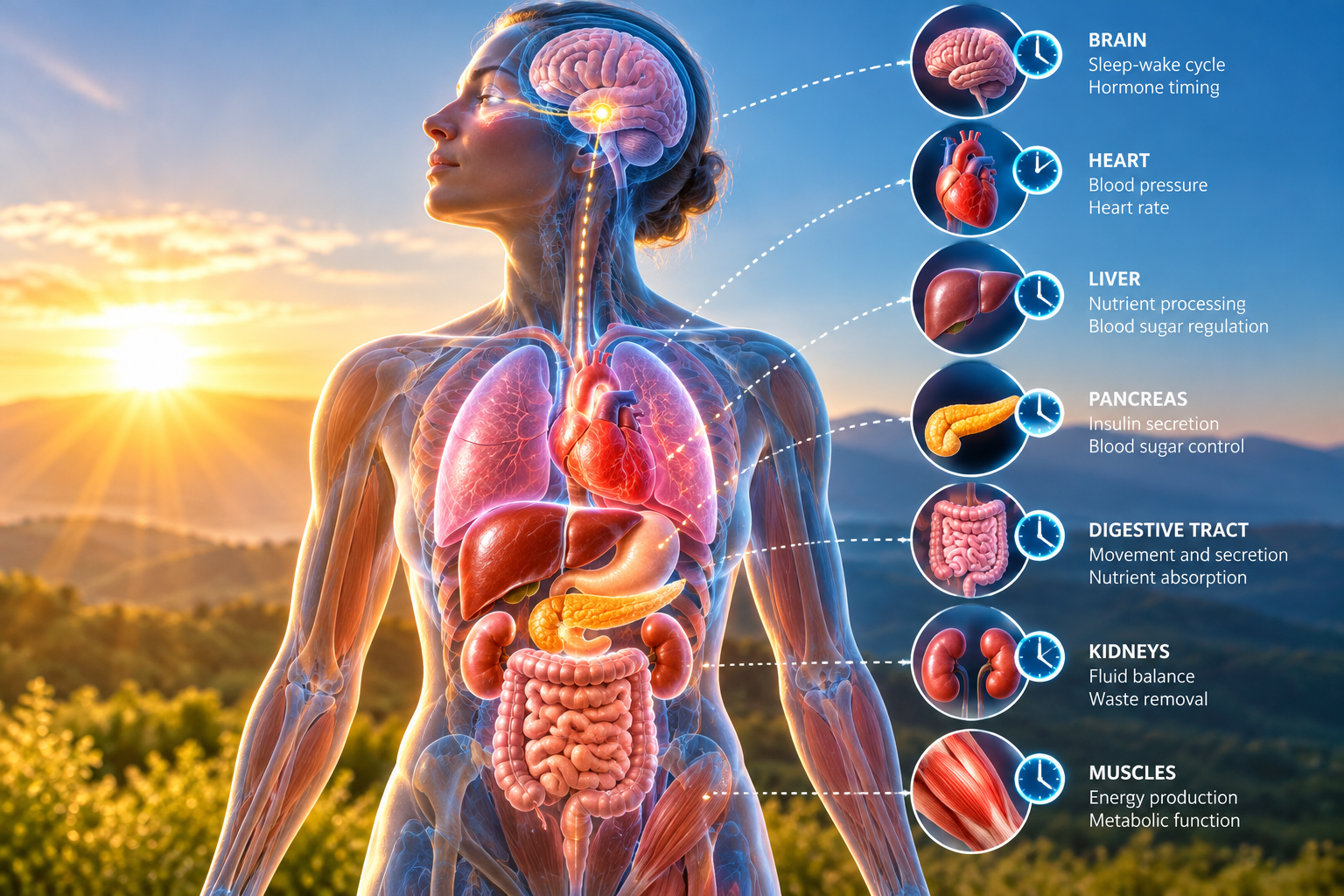
Your body’s organs follow coordinated biological rhythms that help regulate hormones, metabolism, digestion, and cellular function.
Most people associate circadian rhythms with sleep. We naturally become more alert during the day and feel sleepy at night, following a biological cycle that repeats approximately every 24 hours.
But this internal timing system extends far beyond sleeping and waking. Your pancreas contains clock machinery involved in regulating insulin secretion. Your liver follows daily rhythms that influence nutrient processing and blood sugar regulation. Your kidneys change their activity throughout the day, while your digestive tract follows patterns of movement, secretion, and nutrient absorption.
Even your muscles and the mitochondria responsible for producing much of your cellular energy are influenced by biological timing.
A remarkable study published in 2014 examined gene activity in 12 different organs of mice. Researchers discovered that approximately 43% of protein-coding genes showed daily rhythms in at least one of the organs studied. Research examining human tissues has also identified widespread patterns of rhythmic gene activity.
Think about what that means. Your body’s organs aren’t performing every function at the same level around the clock. Instead, different activities rise and fall according to biological time, helping coordinate the body’s changing needs.
It’s similar to an orchestra in which every instrument has its own part to play. The music sounds best when those instruments work together, following the same overall timing.
Your body operates in much the same way. And natural light is one of the most important signals helping keep that orchestra synchronized.
Morning Sunlight Helps Set the Rhythm for Your Day
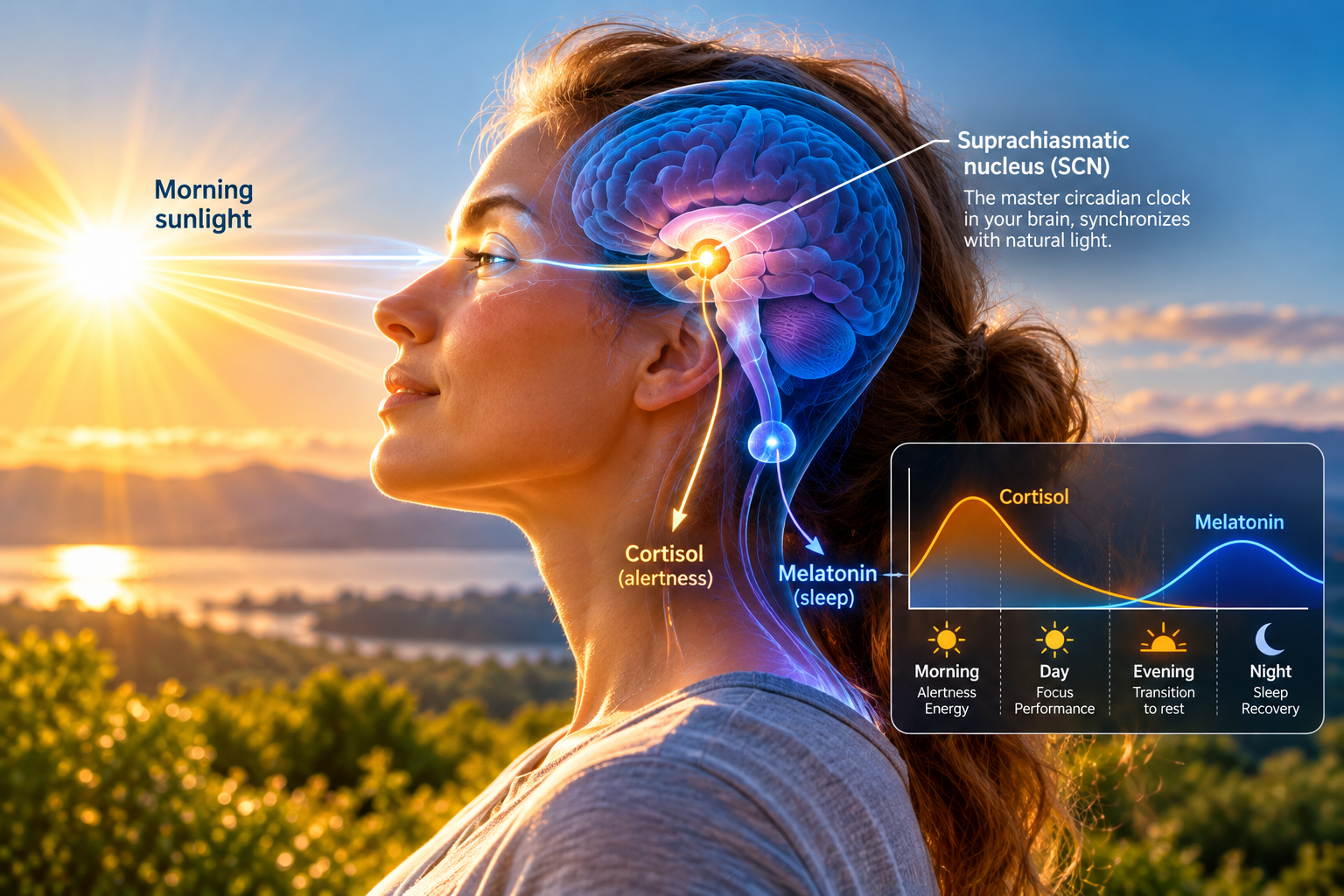
Morning light helps synchronize the brain’s master biological clock, influencing alertness during the day and the timing of sleep at night.
When morning sunlight enters your eyes, specialized light-sensitive cells communicate with a small region of your brain called the suprachiasmatic nucleus. This region serves as the master circadian clock, helping coordinate biological rhythms throughout the body.
Morning light tells your brain that daytime has begun. This helps organize your sleep-wake cycle and influences the timing of hormones such as cortisol and melatonin.
Cortisol normally follows a daily rhythm that helps prepare your body for daytime activity, while melatonin rises during the biological night to support sleep. These hormones are regulated by several interacting systems, but exposure to light and darkness plays an important role in keeping their timing aligned.
Researchers have demonstrated the influence of natural daylight in some fascinating experiments. In one study, participants spent a week camping outdoors, away from their usual artificial lighting. Their internal biological clocks shifted approximately two hours earlier, becoming more closely aligned with the natural light-dark cycle.
Additional research found that even a weekend of natural light exposure could produce measurable changes in circadian timing.
This doesn’t mean we need to abandon modern life and start sleeping in tents. But it does suggest that spending our mornings inside dimly lit homes and offices may not provide the same biological signals as natural daylight.
Morning light is only part of the equation. Your evening environment, activity patterns, and bedtime habits also influence how well you sleep. For additional practical strategies, read my article on How to Get a Good Night’s Sleep.
The Surprising Connection Between Sunlight and Cellular Energy
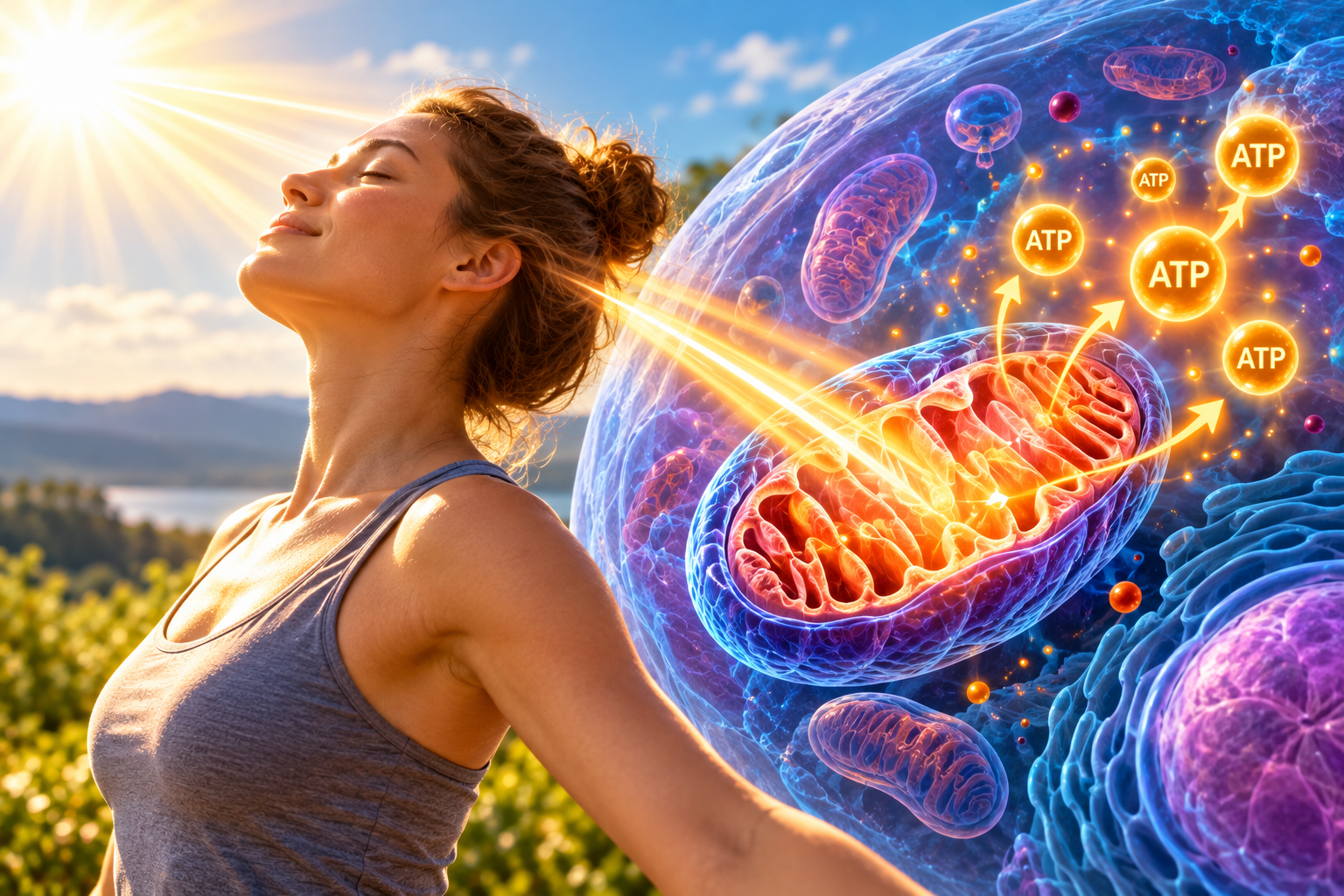
Researchers are investigating how specific wavelengths of light influence mitochondrial signaling and energy-related processes.
One of the most interesting areas of research involves the relationship between circadian rhythms and mitochondria.
Mitochondria are tiny structures found inside most of our cells. They generate ATP, the energy-carrying molecule that helps power almost everything we do, from thinking and moving to maintaining healthy tissues and supporting cellular repair.
We usually think of energy production in terms of food. We eat carbohydrates, fats, and proteins, and our bodies use those nutrients to generate ATP.
But researchers have discovered that mitochondrial activity also follows biological rhythms. Experimental studies have shown that processes involved in mitochondrial respiration, structure, and energy production change according to circadian timing.
This means cellular energy production depends on more than having the right nutrients available. The timing systems that regulate mitochondrial function also matter.
Scientists are investigating another intriguing connection between light and mitochondria. Certain wavelengths of red and near-infrared light can influence mitochondrial signaling and energy-related processes, a field known as photobiomodulation.
In a small human study published in 2024, researchers exposed participants to 670-nanometer red light for 15 minutes before a glucose challenge. They observed reductions in certain measures of the subsequent blood glucose response.
These findings are interesting, but the study used a specific wavelength and controlled exposure conditions. It does not establish that ordinary morning sunlight produces the same metabolic effect or treats diabetes.
Nevertheless, the research opens an important scientific question: Could light influence our health through both the biological clock and additional pathways involving cellular metabolism?
Scientists are continuing to investigate that possibility.
For a broader exploration of sunlight’s biological effects beyond vitamin D, read The Missing Wavelength: How Modern Life Disconnected Us From Sunlight.
Even the Pigment in Your Skin Has Surprising Properties
Another fascinating area of research involves melanin, the natural pigment responsible for much of our skin and hair color.
Melanin is best known for helping protect the skin against ultraviolet radiation. But researchers have discovered that it also possesses unusual chemical and electrical properties. It can absorb a broad range of radiation and participate in certain electron-transfer reactions.
Experiments involving melanin-containing fungi have shown that radiation exposure can alter melanin’s electronic properties and, under particular experimental conditions, influence fungal growth.
These discoveries raise intriguing questions about whether melanin participates in biological processes beyond pigmentation and protection.
However, there is an important distinction between these laboratory findings and human physiology. We do not currently have evidence that melanin in human skin converts sunlight into a meaningful source of usable energy for the body. Human ATP production still depends primarily on metabolic processes fueled by nutrients.
That doesn’t make the research uninteresting. Quite the opposite. It reminds us how much remains to be discovered about the interactions between light and living tissue.
The established benefits of natural light are already significant, even without assuming that humans can produce energy from sunlight in the same way plants do.
What Happens When Your Biological Clocks Become Disrupted?
Consider a typical modern day. You wake up and immediately check your phone, spend much of the morning indoors under artificial lighting, eat meals at inconsistent times, and remain surrounded by bright lights and electronic screens well into the evening.
Meanwhile, your internal biological clocks are trying to coordinate your body’s activities with the natural cycle of daytime and nighttime.
Occasional late nights or changes in routine aren’t necessarily harmful. But persistent disruptions in sleep schedules, light exposure, and daily habits can create a mismatch between your behavior and your body’s internal timing.
Researchers call this circadian misalignment.
Controlled human experiments have shown that circadian misalignment can adversely affect glucose regulation, insulin responses, blood pressure, and certain hormonal rhythms. Other research has connected circadian disruption with changes in metabolism, inflammation, and immune function.
Your digestive system is also influenced by circadian timing. Gut movement, digestive secretions, nutrient processing, and aspects of the microbiome exhibit daily rhythms.
These connections help explain why consistent daily habits may matter for much more than getting a good night’s sleep.
Interestingly, daytime rest also interacts with our biological rhythms. A short afternoon nap may improve alertness and certain aspects of memory without necessarily disrupting nighttime sleep. In my article on the benefits of napping for brain health, I explore research on brain aging, memory, creativity, and the ideal nap duration.
The larger lesson is that our bodies function best when periods of activity, nourishment, and rest are reasonably coordinated with our internal timing systems.
How to Support Your Biological Clock Naturally
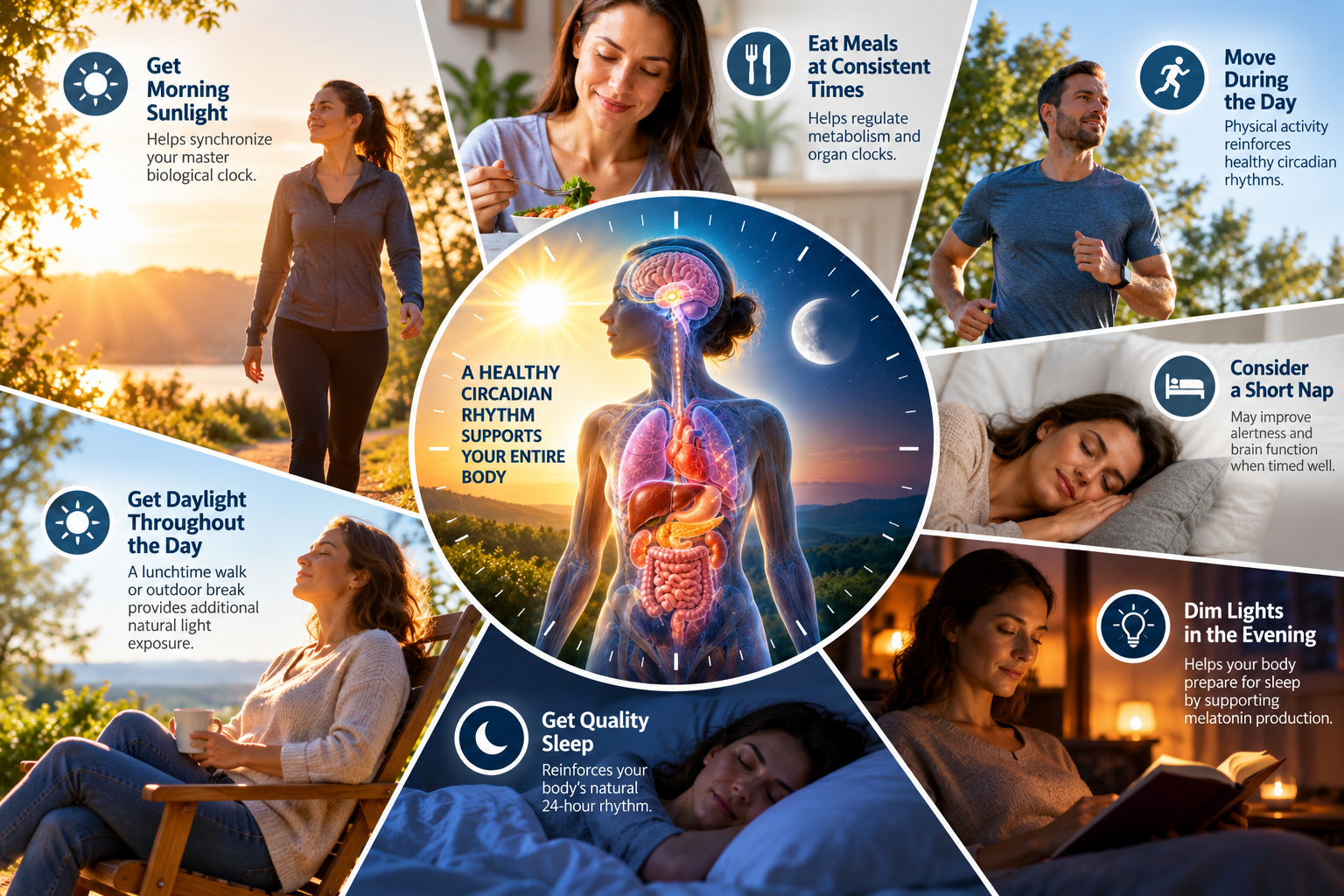
Morning sunlight, regular meals, physical activity, and consistent sleep habits help keep your body’s internal biological clocks synchronized.
The encouraging part of this research is that supporting your circadian rhythm doesn’t require expensive equipment or a complicated health program. Many useful habits involve bringing your daily routine into better alignment with the natural light-dark cycle.
One of the easiest places to begin is with morning daylight. Try spending 15–30 minutes outdoors during the first part of your day, whether that means enjoying your morning coffee on the porch, taking a walk, or simply sitting outside before work. The amount of light needed varies with the season, weather, location, and individual circumstances, so consider this a practical starting point rather than a universal prescription.
You don’t need to stare directly at the sun, and you shouldn’t. Simply spending time outdoors in natural daylight allows your eyes to receive environmental signals that help synchronize your central biological clock.
Spending time outside periodically throughout the day can also be beneficial. A lunchtime walk or afternoon break provides additional natural light exposure, which is often substantially brighter than ordinary indoor lighting.
Equally important is allowing your environment to become darker in the evening. As bedtime approaches, dim unnecessary overhead lighting and reduce exposure to bright screens when practical. Your body responds not only to morning light but also to the contrast between bright days and dark nights.
Consistent sleep and waking times reinforce these signals. Regular meal timing and daytime physical activity provide additional cues to the body’s peripheral clocks, supporting coordination between metabolism and other physiological processes.
You don’t have to follow a perfect schedule. The goal is simply to give your body a more consistent pattern of light, activity, food, and rest.
Sometimes Better Health Begins With Better Timing
In functional medicine, we spend considerable time examining the nutritional, hormonal, metabolic, and environmental factors that influence health. We evaluate whether the body has the resources it needs to produce energy, regulate blood sugar, maintain healthy digestion, and support normal cellular function.
All these considerations are important, but circadian biology adds another dimension.
Your body doesn’t simply need the right nutrients and hormones. It also relies on timing systems that help coordinate when nutrients are processed, when hormones are released, and when different cellular activities become more or less active.
Sunlight is one of the most important environmental signals involved in that coordination.
It isn’t a substitute for proper nutrition, exercise, adequate sleep, or appropriate medical care. And it certainly isn’t a cure for every case of fatigue or metabolic dysfunction.
But reconnecting with natural daylight may be one of the simplest ways to support a biological system that influences nearly every major organ in your body.
Perhaps the most remarkable part is that this powerful environmental signal is available every morning, free of charge.
Dr. Scott’s Health Tip: Start Your Day With Natural Light
One of the easiest changes I encourage patients to consider is making morning daylight part of their daily routine. Before becoming absorbed in emails, phone calls, or the demands of the day, take a little time to step outside.
Enjoy your morning coffee outdoors, take a relaxing walk, or spend a few minutes sitting on the porch. There’s no need to stare into the sun or expose your skin to excessive ultraviolet radiation. The goal is to allow natural daylight to reach your eyes and provide your brain with a clear signal that the day has begun.
I also encourage patients to think about their entire daily rhythm. Getting outside during the day, maintaining consistent sleep hours, eating meals at reasonably regular times, and reducing excessive lighting before bedtime are practical habits that work together to support the body’s internal timing systems.
These changes may seem small, but they address an important part of human physiology that is frequently overlooked.
Sometimes supporting your health doesn’t begin with another supplement or a complicated treatment protocol. Sometimes it begins by reconnecting with one of nature’s most fundamental daily rhythms.
Tomorrow morning, step outside and give your body the signal that a new day has begun.
When Fatigue May Be Telling You Something More
Healthy daily rhythms are an important foundation for good health, but persistent fatigue, poor sleep, or unexplained changes in energy can involve more than insufficient sunlight.
Thyroid dysfunction, blood sugar instability, inadequate sleep, nutritional deficiencies, medication effects, and other physiological factors may contribute to ongoing symptoms. Identifying the relevant factors often requires looking beyond any single habit or laboratory measurement.
At Total Health Center, we use a personalized functional-medicine approach to investigate the factors influencing a patient’s health and develop strategies to support better function.
If you’re struggling with persistent fatigue, poor sleep, or metabolic concerns, we invite you to explore our functional medicine approach or request a Free Consultation.
We work with patients in Virginia Beach and offer virtual consultations nationwide.
Key Takeaways
- Your body contains biological clocks that help regulate cellular and organ function throughout the day.
- Morning daylight is an important signal for synchronizing your central circadian clock.
- Mitochondrial energy production is connected to cellular timing mechanisms.
- Research suggests that specific wavelengths of light can influence mitochondrial signaling, although clinical applications are still being investigated.
- Regular daylight exposure, consistent sleep and meal timing, daytime activity, and darker evenings can help support healthy circadian rhythms.
Watch: How Morning Sunlight Affects Your Energy, Sleep & Metabolism
Continue Learning
Explore these related Total Health Center articles:
- How to Get a Good Night’s Sleep — Practical strategies for improving sleep quality and nighttime recovery.
- The Power of Napping: How Daytime Sleep Can Protect Your Brain — What research reveals about daytime naps, memory, and brain health.
- The Missing Wavelength: How Modern Life Disconnected Us From Sunlight — A deeper exploration of sunlight’s effects on human biology.
About Dr. Mark Scott
Dr. Mark Scott is a functional medicine practitioner and chiropractor at Total Health Center in Virginia Beach, Virginia. He has practiced functional medicine since 1997, helping patients investigate the nutritional, metabolic, hormonal, and lifestyle factors contributing to chronic health concerns.
His approach combines clinical experience, individualized evaluation, patient education, and evidence-informed natural health strategies to support better function and long-term well-being.
Total Health Center serves patients locally in Virginia Beach and through secure virtual consultations nationwide.
Frequently Asked Questions About Morning Sunlight
How soon after waking should I get morning sunlight?
Getting outdoors during the first part of your day is a practical way to provide your biological clock with a strong daytime signal. The ideal timing depends on your schedule, natural sunrise, and individual circadian rhythm.
How much morning sunlight do I need?
Try starting with 15–30 minutes outdoors. The amount of light needed varies with weather, season, location, and individual circumstances. You do not need to stare at the sun or deliberately expose your skin to ultraviolet radiation.
Can morning sunlight help me sleep better?
Morning light helps synchronize your biological clock, which influences when your body becomes alert and when it prepares for sleep. Consistent morning daylight combined with darker evenings may help support healthier sleep timing.
Does sunlight improve mitochondrial function?
Circadian rhythms influence mitochondrial activity, and controlled experiments suggest certain wavelengths of light can affect mitochondrial processes. However, research has not established that ordinary morning sunlight directly increases ATP production in humans.
Can morning sunlight help with fatigue?
Regular morning daylight may support alertness and healthy sleep-wake timing. Persistent fatigue, however, can have many causes, including sleep disorders, thyroid dysfunction, nutritional deficiencies, and metabolic problems that may require further evaluation.
References
- Zhang R, Lahens NF, Ballance HI, Hughes ME, Hogenesch JB. (2014). A circadian gene expression atlas in mammals: implications for biology and medicine. Proceedings of the National Academy of Sciences, 111(45), 16219–16224. Read study.
- Talamanca L, Gobet C, Naef F. (2023). Sex-dimorphic and age-dependent organization of 24-hour gene expression rhythms in humans. Science, 379(6631), 478–483. Read study.
- Wright KP Jr, McHill AW, Birks BR, et al. (2013). Entrainment of the human circadian clock to the natural light-dark cycle. Current Biology, 23(16), 1554–1558. Read study.
- Stothard ER, McHill AW, Depner CM, et al. (2017). Circadian entrainment to the natural light-dark cycle across seasons and the weekend. Current Biology, 27(4), 508–513. Read study.
- Schmitt K, Grimm A, Dallmann R, et al. (2018). Circadian control of DRP1 activity regulates mitochondrial dynamics and bioenergetics. Cell Metabolism, 27(3), 657–666.e5. Read study.
- Powner MB, Jeffery G. (2024). Light stimulation of mitochondria reduces blood glucose levels. Journal of Biophotonics, 17(5), e202300521. Read study.
- Dadachova E, Bryan RA, Huang X, et al. (2007). Ionizing radiation changes the electronic properties of melanin and enhances the growth of melanized fungi. PLOS ONE, 2(5), e457. Read study.
- Scheer FAJL, Hilton MF, Mantzoros CS, Shea SA. (2009). Adverse metabolic and cardiovascular consequences of circadian misalignment. Proceedings of the National Academy of Sciences, 106(11), 4453–4458. Read study.
- Brown TM, Brainard GC, Cajochen C, et al. (2022). Recommendations for daytime, evening, and nighttime indoor light exposure to best support physiology, sleep, and wakefulness in healthy adults. PLOS Biology, 20(3), e3001571. Read study.
- Rao F, Xue T. (2024). Circadian-independent light regulation of mammalian metabolism. Nature Metabolism. Read review.