
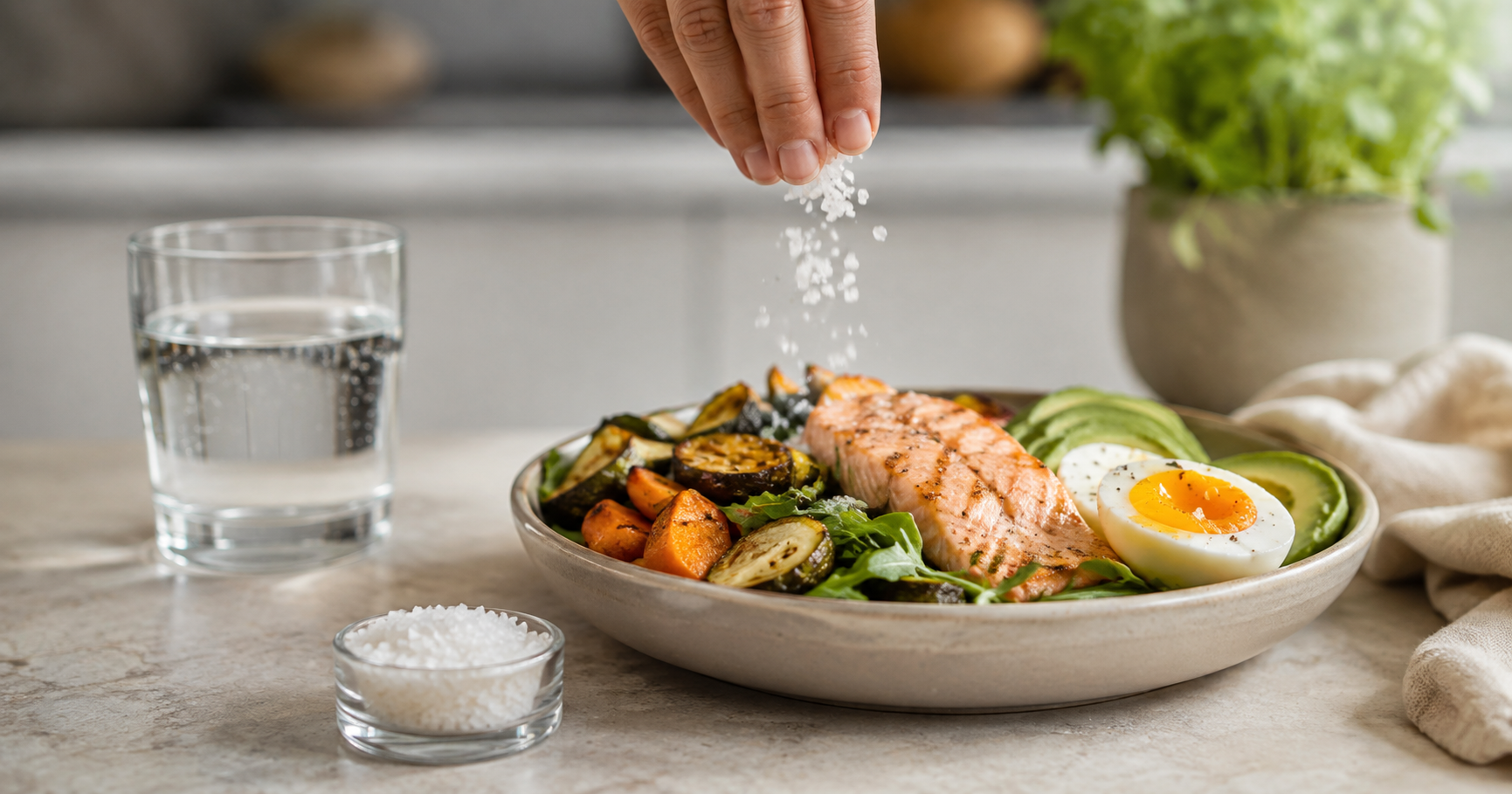
“Salt causes high blood pressure.”
That statement has been repeated so often that most people accept it
as a universal truth. It is not.
Salt can raise blood pressure in people who are salt-sensitive. But
people do not all respond to sodium in the same way. Some experience a
meaningful change, many experience only a small change, and others
experience little change at all.
Hypertension has many potential drivers—including insulin
resistance and metabolic dysfunction, poor kidney regulation,
chronic stress, inflammation, excess body fat, sleep apnea, low
potassium intake and vascular dysfunction. Blaming salt alone ignores
the physiology that determines how an individual actually handles
sodium.
Salt is not a poison. It is an essential nutrient.
Your Body Is Designed to
Regulate Salt
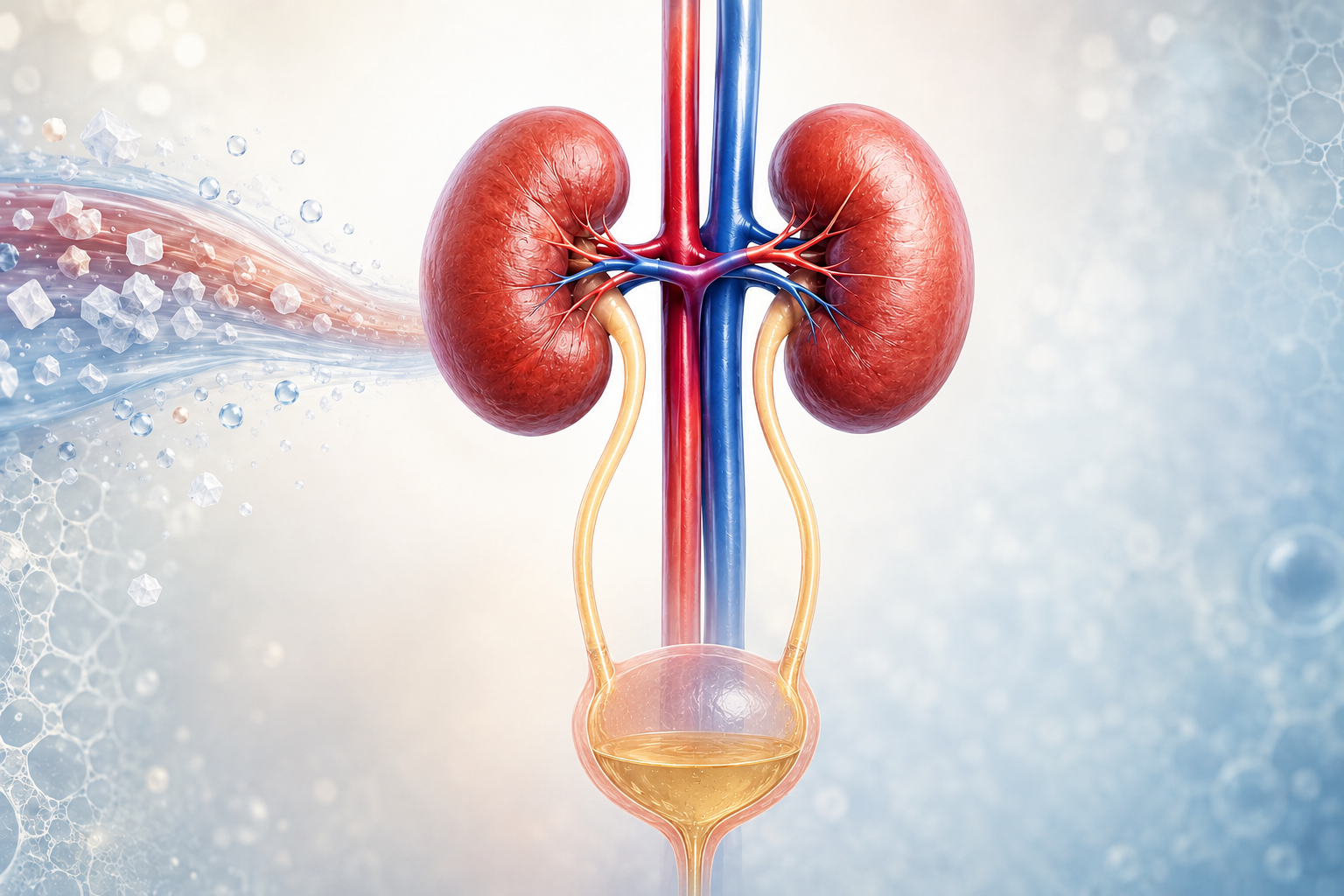
Healthy kidneys continually conserve or release sodium and water to help maintain circulation and fluid balance.
The sodium and chloride in salt help maintain fluid balance, blood
volume, nerve signaling, muscle contraction and normal cellular
function.
The kidneys continuously filter an enormous amount of sodium—roughly
the equivalent of more than three pounds of salt every day—and then
reclaim nearly all of it. This is recycled sodium already circulating in
the body, not three pounds of salt from the diet.
Why would the body devote so much energy to retaining sodium if
sodium were simply harmful?
Because losing too much can quickly threaten circulation and normal
function.
The kidneys can also increase sodium excretion when intake rises. A
healthy body is equipped to conserve salt when it is scarce and release
more when it is plentiful. This does not mean unlimited salt is
appropriate, especially when kidney or heart function is impaired. It
means that normal sodium regulation is dynamic—not a one-way march
toward salt accumulation.
Too Little Salt Is
Not Metabolically Neutral
When sodium intake or circulating blood volume drops, the body
responds by activating the renin-angiotensin-aldosterone system and the
sympathetic nervous system. These systems help the kidneys retain sodium
and support circulation, but they also increase stress hormones and can
raise heart rate.
Research on substantial sodium restriction has found increases in
renin, aldosterone, adrenaline and noradrenaline. Short-term studies
have also reported increases in cholesterol, triglycerides and insulin
resistance under very-low-sodium conditions.
That does not prove every low-sodium diet is harmful. It does
demonstrate something important: lowering salt has physiological
tradeoffs. It is not automatically beneficial simply because a
blood-pressure reading falls by a few points.
The right goal is not to drive sodium as low as possible. The goal is
to support healthy blood pressure, circulation and metabolic function
together.
Other Signals Worth
Investigating
Early research suggests that sodium balance may influence more than
blood pressure. Animal studies have linked very-low-salt diets with
changes in reproductive development, sexual behavior, fertility markers
and sperm production. Other experimental work suggests possible effects
on adiponectin, insulin signaling and brown-fat thermogenesis—the
process through which brown fat burns fuel to produce heat.
These findings are not strong enough to claim that salt restriction
causes infertility or weight gain in people. Human research remains
limited, and some findings conflict. But the signals are biologically
interesting and deserve further study rather than dismissal. They
reinforce the functional
medicine principle that changing one dietary input can affect
multiple regulatory systems throughout the body—not merely one number on
a blood-pressure cuff.
When Salt Can Be a Useful
Tool
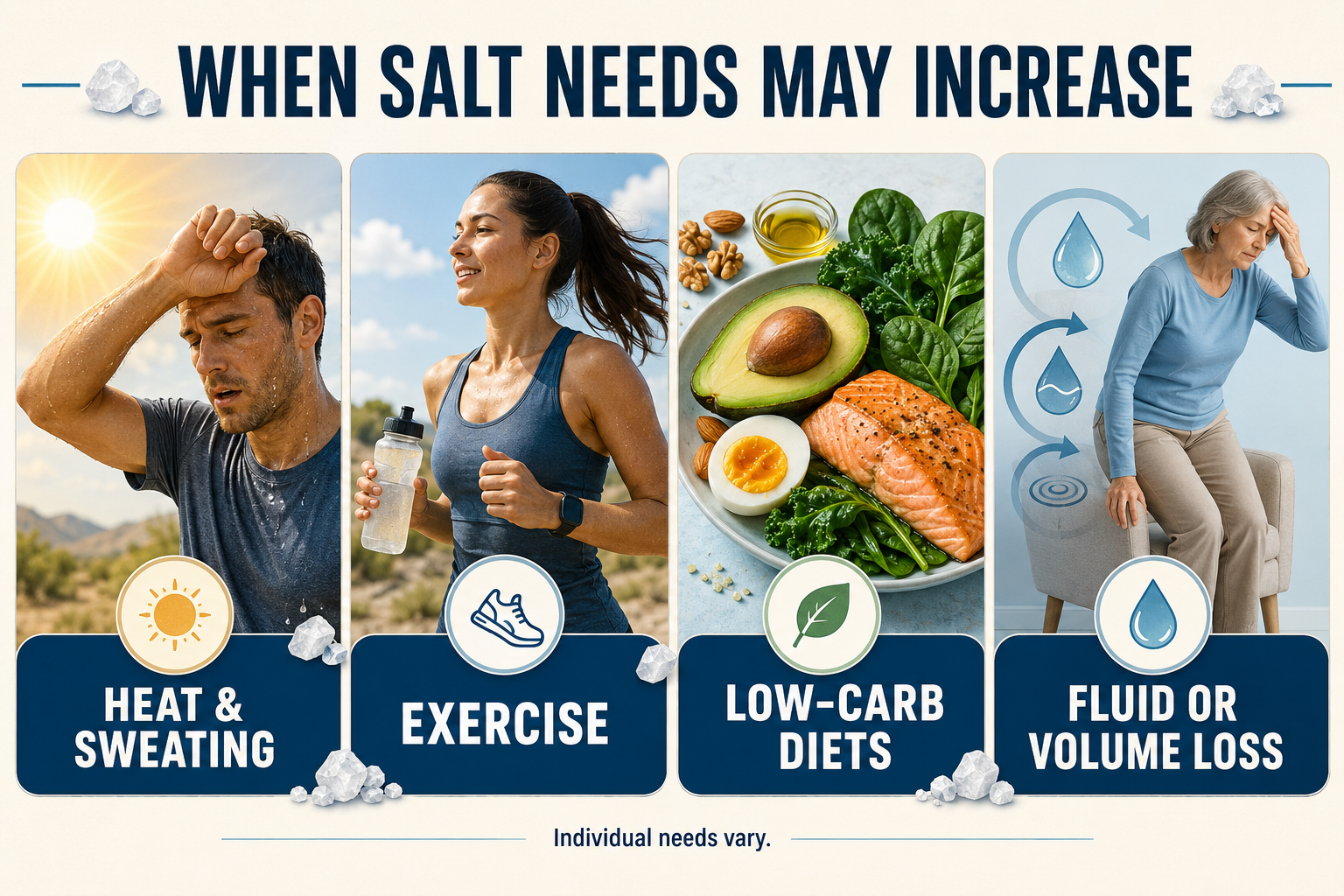
Sodium needs can change with activity, climate, diet and fluid loss. Individual needs vary.
Salt needs are not fixed. They can increase with:
- Heavy sweating, exercise or prolonged heat exposure
- Vomiting, diarrhea or other causes of fluid loss
- Low-carbohydrate or ketogenic diets, which can increase sodium and
water loss - Low blood pressure or reduced circulating blood volume
- Certain forms of orthostatic intolerance, including POTS
In these situations, drinking more plain water while continuing to
avoid salt may not correct the underlying fluid-and-electrolyte
imbalance. It may leave someone feeling tired, weak, lightheaded,
headachy or mentally foggy.
For the right person, salt is not the cause of the problem. It may be
part of the solution.
The Quality of Salt Matters
Refined table salt and traditional mineral salts are not identical foods.
Ordinary table salt is processed until it consists almost entirely of sodium chloride. Most of its naturally occurring minerals are removed, and anticaking agents may be added. Mineral salts such as Redmond Real Salt, Himalayan salt and Celtic sea salt retain a broader spectrum of naturally occurring minerals.
Critics often dismiss mineral salts because the amounts of magnesium, potassium, calcium and trace minerals are relatively small. But that misses an important nutritional principle: mineral status is built from the combined contribution of everything we consume.
No single food needs to supply all the minerals the body requires. Small contributions from mineral-rich foods, water and salt add up. Conversely, when naturally complex foods are repeatedly replaced with refined, mineral-depleted versions, the diet becomes progressively less capable of replenishing the minerals used every day.
The body also does not regulate sodium in isolation. Healthy fluid balance, nerve signaling, muscle function and cellular energy depend upon relationships among sodium, potassium, magnesium, calcium, water, kidney function and hormonal regulation. Mineral salt does not replace a mineral-rich diet, but it provides sodium in a more biologically complete context than highly refined sodium chloride.
For everyday use, I generally prefer a minimally processed salt from a reputable source:
- Redmond Real Salt comes from an ancient sea deposit in Utah and retains a broad natural mineral profile.
- Himalayan salt is another mineral-containing rock salt, although quality and contaminant levels can vary among suppliers.
- Celtic sea salt retains naturally occurring minerals and moisture, including somewhat more magnesium than many dry salts.
Whichever salt you choose, sourcing and purity matter. Natural products can contain undesirable elements as well as beneficial minerals, so transparent testing for heavy metals and other contaminants is valuable.
There is one important advantage of conventional iodized salt: iodine. Most natural mineral and sea salts contain little iodine unless the label specifically says they are iodized. If mineral salt is your primary salt, iodine should be obtained intentionally through seafood, sea vegetables, dairy, eggs or appropriate supplementation.
The practical message is simple: choose salt as you would choose any other food. Favor a minimally processed, mineral-containing source while building the rest of your diet around whole foods rich in potassium, magnesium and trace minerals.
Dr. Scott’s Take: Which Salt Do I Recommend?
My first choice for everyday use is Redmond Real Salt. No natural salt is perfect, but Redmond offers the best overall combination of mineral content, source consistency, availability and practicality.
1. Redmond Real Salt—My First Choice
Redmond Real Salt comes from an ancient sea deposit in Utah. Because it is mined from an inland deposit rather than collected from today’s oceans, it avoids much of the concern surrounding modern marine pollution and microplastics.
It is minimally processed, retains a broad spectrum of naturally occurring minerals and is readily available. It also comes in convenient sizes, making it easier to use mineral salt consistently at home and away.
Natural deposits can still contain trace amounts of undesirable elements, so no salt should be assumed completely contaminant-free. Nevertheless, Redmond Real Salt is my preferred everyday option.
2. Celtic Sea Salt—A Good Alternative
Celtic sea salt is minimally processed and retains its natural moisture and mineral profile. It generally contains more magnesium than many dry salts and can be an excellent alternative.
My primary concern is that sea salt comes from modern oceans. Depending on where and how it is harvested, it may contain microplastics or environmental contaminants. Choosing a reputable company that discloses its sourcing and testing is important.
3. Himalayan Salt—Better Than Refined Salt, but More Variable
Authentic Himalayan salt retains naturally occurring minerals and is still preferable to highly refined, noniodized table salt.
However, “Himalayan salt” is a broad marketing category rather than a guarantee of consistent quality. Sourcing, mineral composition and contaminant levels can vary considerably among products. Concerns about overmined deposits, inconsistent standards and undesirable trace elements place it below Redmond and Celtic salt in my ranking.
My Practical Recommendation
For most people, my order of preference is:
- Redmond Real Salt
- Celtic sea salt from a reputable, tested source
- Authentic Himalayan salt from a reputable, tested source
- Refined noniodized table salt
Iodized salt remains a useful tool when dietary iodine is inadequate. If you primarily use mineral salt, make sure iodine is being supplied intentionally through food or appropriate supplementation.
The goal is not perfection. It is to replace an isolated, highly refined ingredient with a more natural mineral-containing salt whenever practical.
Added Salt Is Not
the Same as Processed Food
Most dietary sodium does not come from salting an egg, vegetables or
a piece of meat. It comes from breads, sauces, deli meats, packaged
meals, restaurant food and other highly processed products.
There is a major difference between eating a processed diet that
happens to be high in sodium and deliberately using salt with
nutrient-dense whole foods.
A practical approach is to build the diet around real food, eat
plenty of potassium-rich vegetables and use a good-quality salt
according to individual needs.
Mineral and sea salts can be reasonable choices, although their trace
minerals are generally too small to replace a nutrient-dense diet. Many
specialty salts are also not iodized. If iodized salt is removed,
adequate iodine must come from another source—especially when thyroid
health is a concern.
Salt Is Food—and Food Can
Be Medicine
The belief that everyone should restrict salt to be healthy is not
individualized medicine. It takes one possible effect in one group of
people and turns it into a universal dietary rule.
Salt can be overused. It can also be underused.
The appropriate amount depends on blood pressure response, kidney
function, medications, activity level, climate, diet, fluid losses and
the person’s underlying physiology.
The goal is not maximum salt or minimum salt.
The goal is the right amount of salt for the person in front
of us.
If fatigue, lightheadedness, blood-pressure changes or metabolic
symptoms persist, thoughtful
functional medicine testing can help determine whether fluid
balance, metabolic function, thyroid health or another underlying factor
deserves closer attention.
A brief clinical note: People with heart failure,
significant kidney disease, edema, uncontrolled high blood pressure, or
medications that affect fluid and electrolyte balance should
individualize sodium intake with a qualified clinician. A low
blood-sodium test can have several causes—often involving water
balance—and should not be self-treated simply by eating more salt.
References
- National Library of Medicine. Sodium.
- Graudal NA, et al. Effects of low-sodium
versus high-sodium diets on blood pressure and compensatory
hormones. - Gupta DK, et al. Effect of dietary
sodium on blood pressure: a crossover trial. - Garg R, et al. Low-salt diet increases
insulin resistance in healthy subjects. - Moinier BM, Drüeke TB. Aphrodite, sex and
salt—from butterfly to man. - Oloyo AK, et al. Reproductive parameters
in male rats fed low- and high-salt diets. - Does salt
restriction change brown adipose tissue thermogenesis?. - Garland EM, et al. High dietary sodium
intake in patients with postural tachycardia syndrome. - American College of Sports Medicine. Exercise and fluid
replacement. - U.S. Food and Drug Administration. Sodium
in your diet.