Are You Really Gluten-Free? Hidden Sources of Gluten Exposure
Part of the Gluten University Educational Series
Gluten University Home Page:
https://totalhealthcentervb.com/gluten-university/
Lesson #1:
https://totalhealthcentervb.com/why-going-gluten-free-isnt-always-enough/
Lesson #2:
https://totalhealthcentervb.com/what-is-gluten-really/
Lesson #3:
https://totalhealthcentervb.com/many-faces-of-gluten-sensitivity/
One of the most common frustrations I hear from patients is:
“I’ve been gluten-free for months and I still don’t feel better.”
In some cases, gluten may not be the primary issue.
But in many cases, people are unknowingly being exposed to gluten from sources they never considered.
Unfortunately, gluten can hide in places most people would never suspect.
This means that even individuals who are trying very hard to avoid gluten may still be exposed on a daily basis.
The Problem With Labels
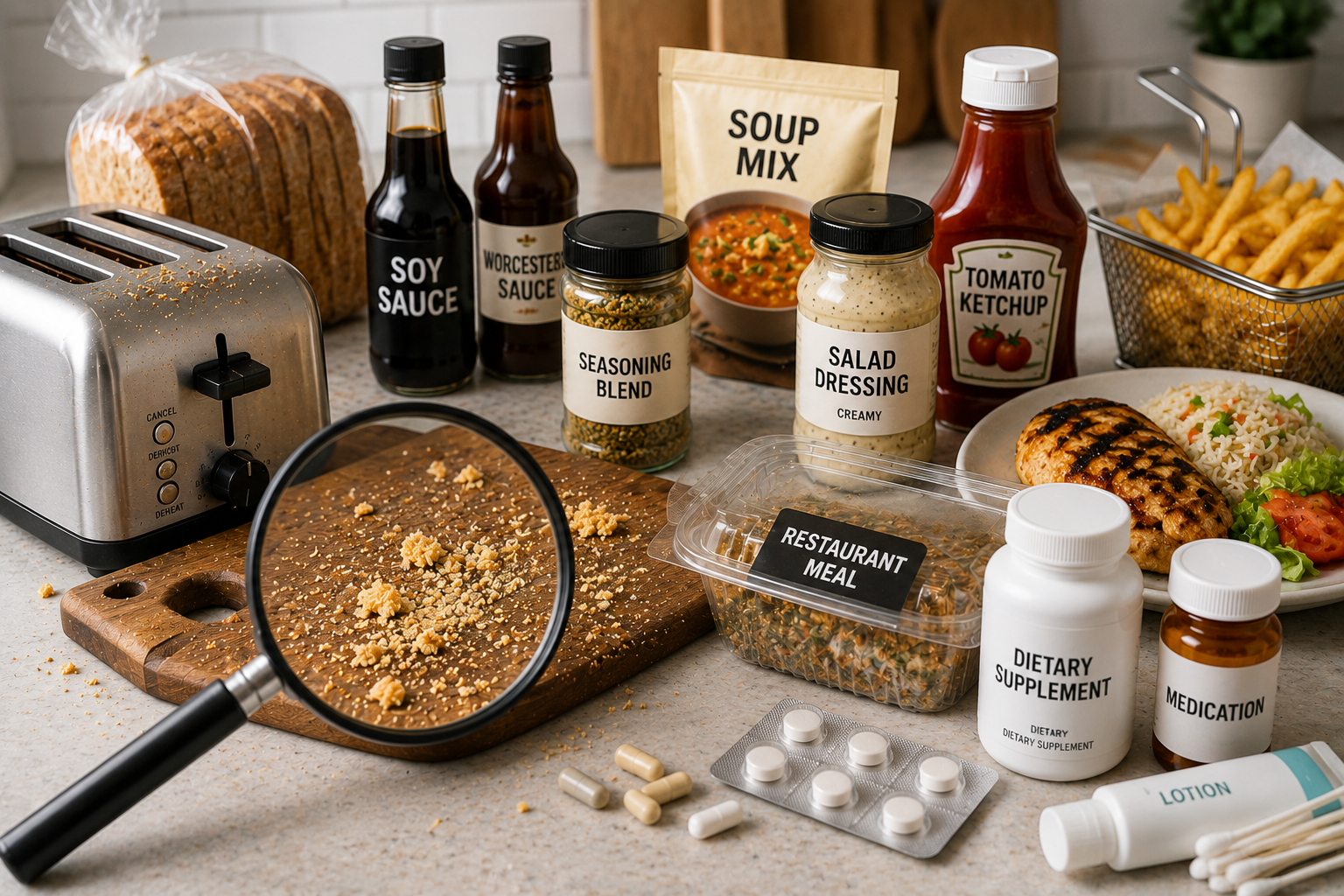
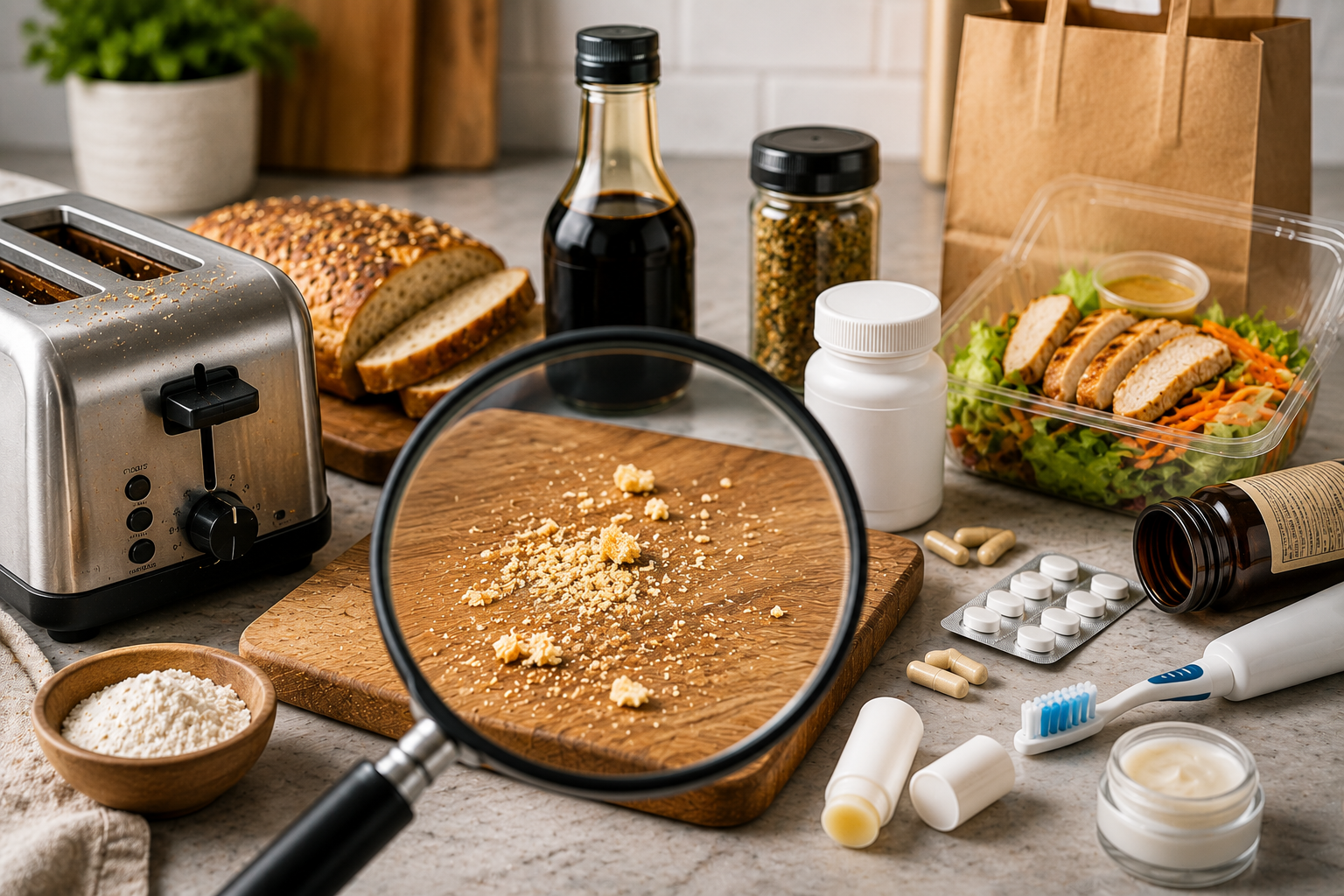
Hidden gluten exposure can come from many unexpected places including condiments, restaurant meals, supplements, medications, personal care products, and cross-contamination in the kitchen.
Many people assume that if a product says “gluten-free,” it must be completely safe.
The reality is often more complicated.
Food labeling laws are designed around regulations and thresholds—not necessarily individual sensitivity.
Some people can tolerate small exposures.
Others may react to much smaller amounts.
This is one reason why simply reading labels may not always be enough.
Cross-Contamination
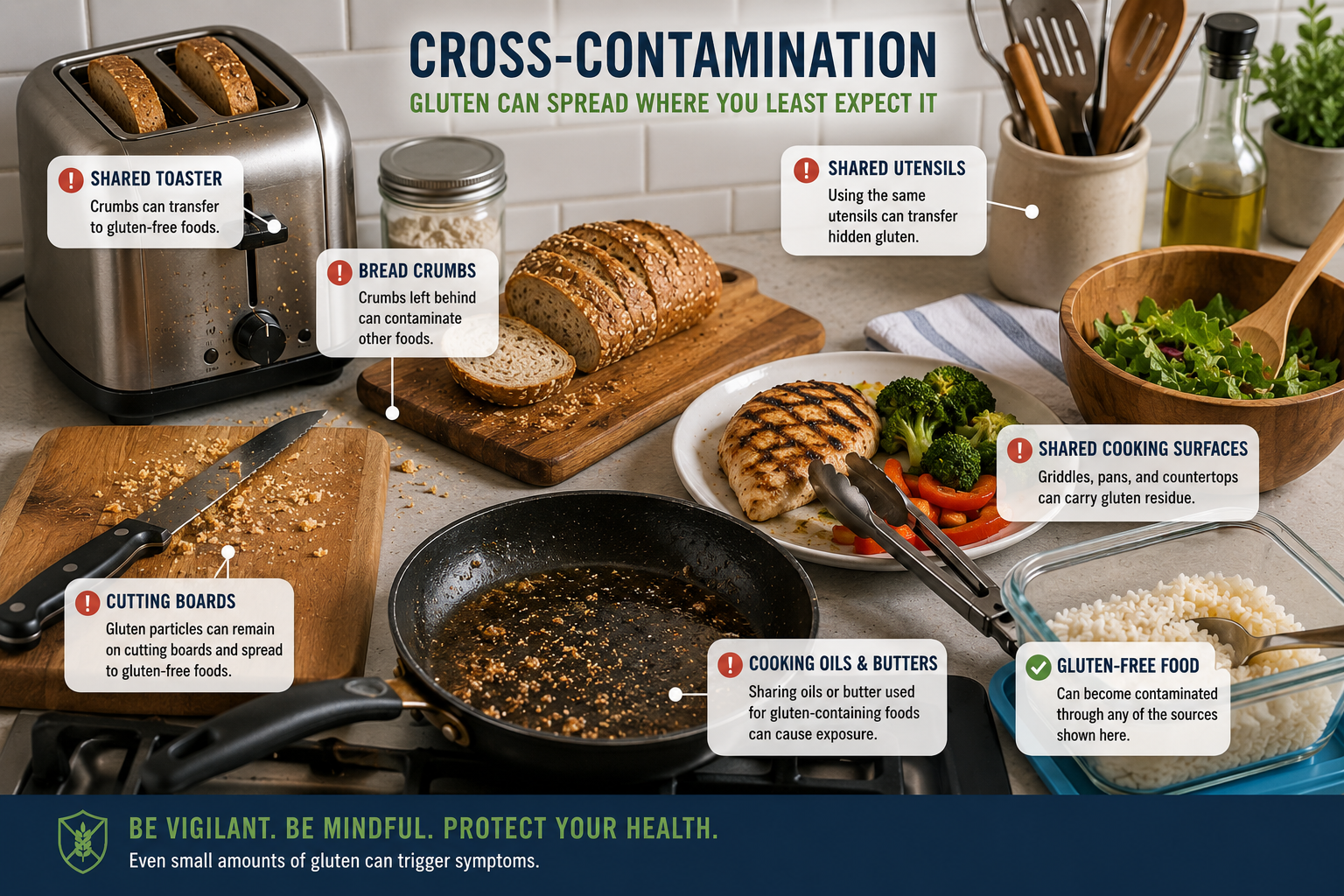
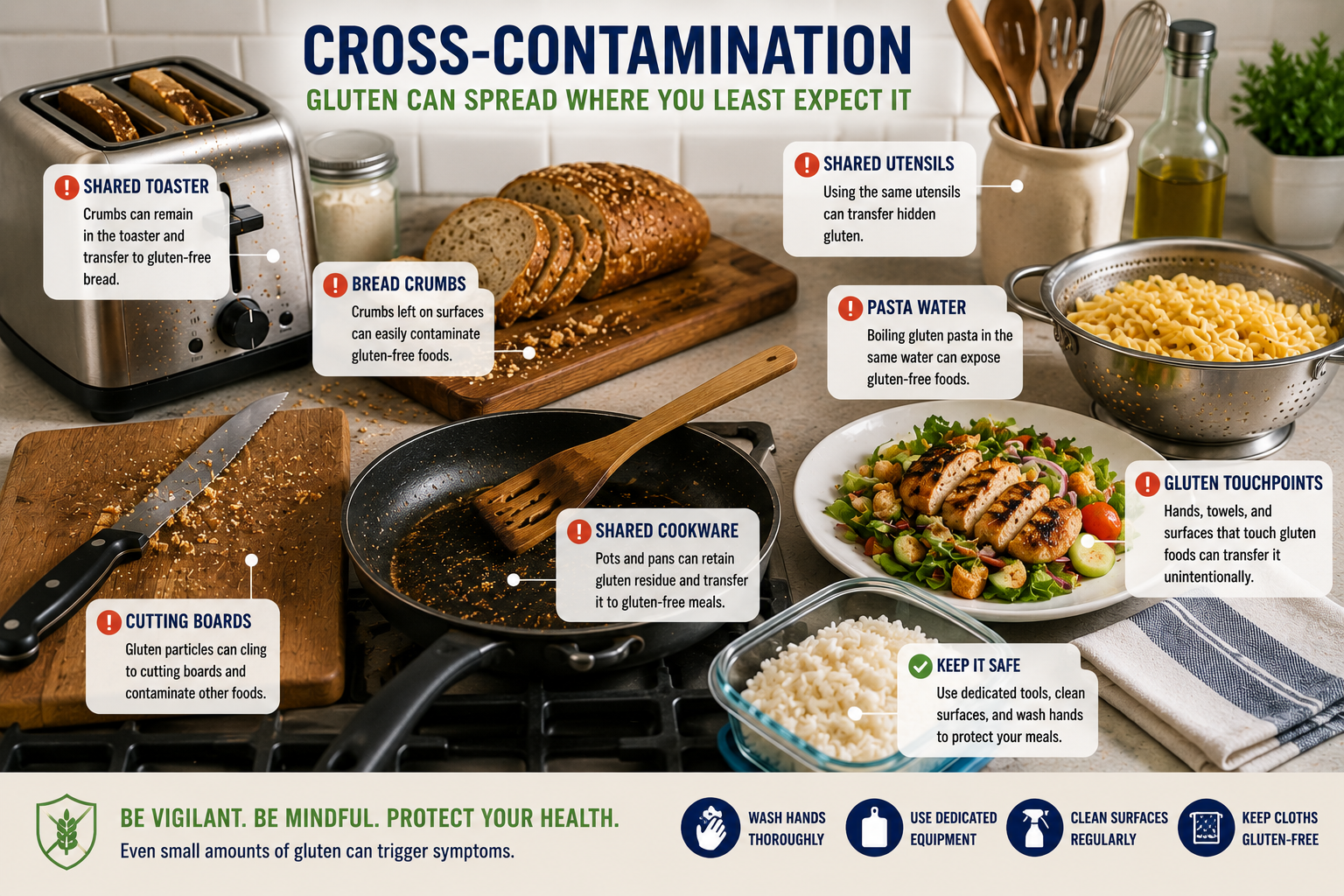
Even small amounts of gluten can be transferred through shared toasters, cutting boards, cookware, utensils, and food preparation surfaces, making cross-contamination one of the most common hidden sources of gluten exposure.
Cross-contamination is one of the most common hidden sources of gluten exposure.
Examples include:
- Shared toasters
- Shared cutting boards
- Shared baking surfaces
- Shared fryers
- Shared food preparation equipment
A gluten-free meal prepared on a contaminated surface may still contain enough protein to create problems for highly sensitive individuals.
Restaurant Challenges
Restaurant meals may expose sensitive individuals to gluten through shared preparation surfaces, cookware, utensils, fryers, and accidental cross-contamination.
Eating out can be difficult.
Even when restaurants offer gluten-free menu options, there is often potential for:
- Shared cooking surfaces
- Shared oils
- Shared utensils
- Hidden ingredients
- Accidental contamination
This doesn’t mean you can never eat out.
It simply means awareness is important.
Hidden Gluten in Processed Foods

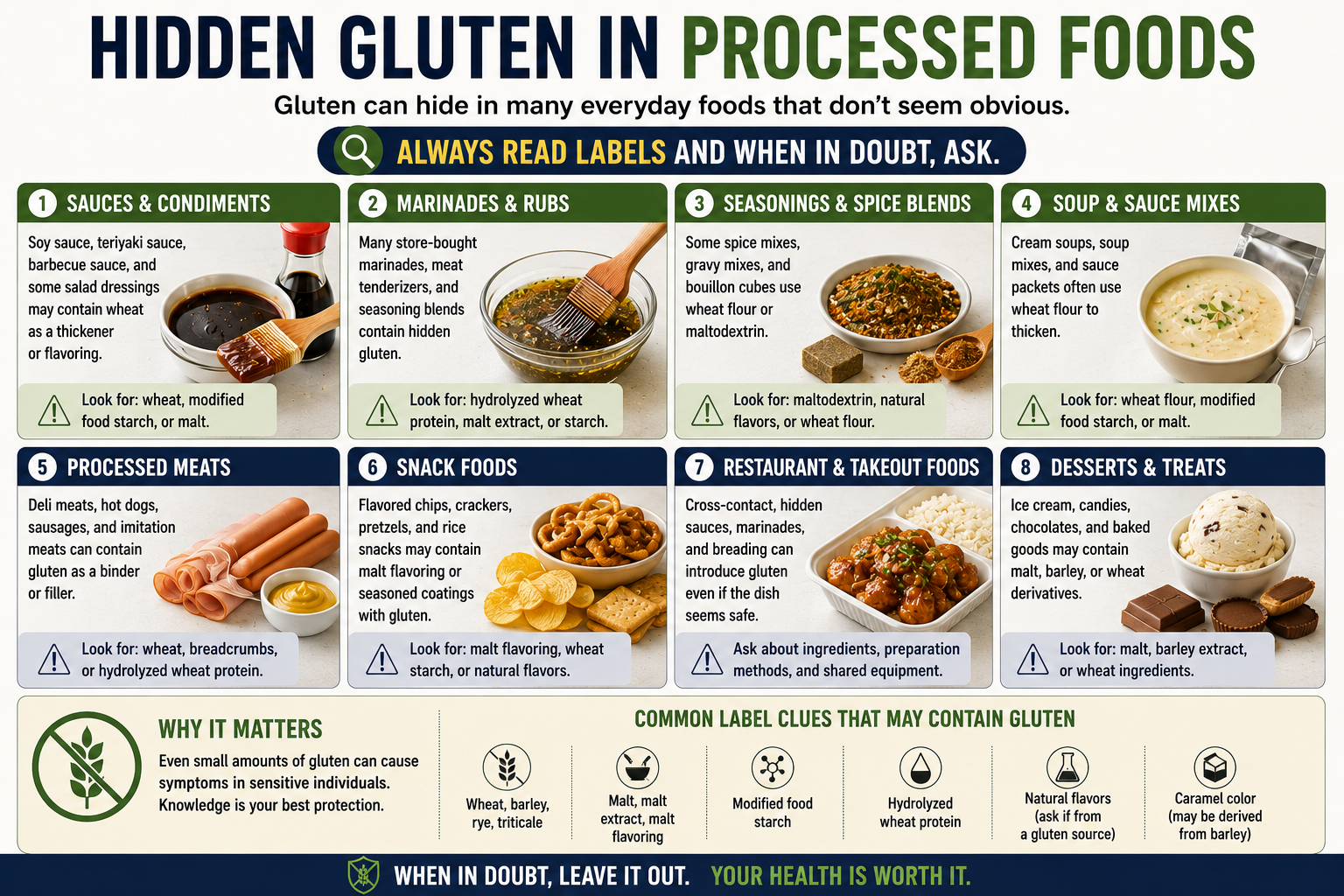
Gluten can be hidden in many processed foods including sauces, gravies, marinades, seasonings, soup mixes, and restaurant meals. Understanding where gluten hides can help reduce accidental exposure.
Gluten may be present in unexpected products including:
- Sauces
- Gravies
- Seasonings
- Soup mixes
- Broths
- Marinades
- Processed meats
- Salad dressings
This is one reason many people find that focusing on whole foods makes the process much easier.
Supplements and Medications
Many people carefully inspect food labels while overlooking supplements and medications. Hidden gluten may be present in fillers, binders, flavorings, coatings, and inactive ingredients.
Many people carefully examine food labels while completely overlooking supplements and medications.
Potential sources of concern include:
- Fillers
- Binders
- Flavoring agents
- Coating materials
Not every supplement contains gluten, but it is worth verifying ingredients whenever possible.
Personal Care Products
Some individuals choose to investigate:
- Toothpaste
- Mouthwash
- Lip balm
- Lipstick
because products used around the mouth may create opportunities for accidental ingestion.
The degree to which these exposures matter may vary from person to person.
The Gluten-Free Foods Trap
One of the biggest mistakes I see is replacing gluten-containing junk food with gluten-free junk food.
A gluten-free cookie is still a cookie.
A gluten-free donut is still a donut.
A gluten-free cake is still a cake.
Many highly processed gluten-free foods contain:
- Refined starches
- Sugar
- Seed oils
- Additives
The goal should not simply be replacing one processed food with another.
The goal should be building a diet based primarily on whole foods.
What About Corn, Rice, and Oats?
Many gluten-free products rely heavily on:
- Corn
- Rice
- Oats
These foods are often considered staples of the gluten-free diet.
However, some individuals continue to experience symptoms despite removing wheat, barley, and rye.
Future lessons will explore why certain people may react to grains that are traditionally considered gluten-free.
Dr. Scott’s Clinical Perspective
In my experience, some of the most successful patients simplify their diets dramatically during the healing process.
Instead of searching for gluten-free substitutes, they focus on:
- Meat
- Fish
- Poultry
- Vegetables
- Fruit
- Healthy fats
This approach often reduces confusion and minimizes opportunities for accidental exposure.
The Bottom Line
Going gluten-free and becoming truly gluten-free are not always the same thing.
Cross-contamination, hidden ingredients, processed foods, supplements, restaurants, and personal care products can all contribute to ongoing exposure.
For individuals struggling to improve, identifying hidden sources may be an important step toward better health.
Next Lesson
Why Corn May Be the Most Overlooked Grain
FAQ Section
Can I still be exposed to gluten even if I avoid bread and pasta?
Yes. Gluten can be found in sauces, seasonings, processed foods, supplements, medications, and through cross-contamination during food preparation.
What is cross-contamination?
Cross-contamination occurs when gluten-free foods come into contact with surfaces, utensils, cooking equipment, or foods that contain gluten.
Can restaurants accidentally expose me to gluten?
Yes. Shared fryers, grills, cutting boards, cooking surfaces, and preparation areas can all contribute to accidental gluten exposure.
Can supplements contain gluten?
Some supplements may contain fillers, binders, flavorings, or coating materials derived from grains. It is important to verify ingredients whenever possible.
Are gluten-free processed foods always healthy?
Not necessarily. Many gluten-free products contain refined starches, sugar, seed oils, and additives. Gluten-free does not automatically mean healthy.
Why do some people continue having symptoms after going gluten-free?
Possible reasons include hidden gluten exposure, cross-contamination, additional food sensitivities, gut damage that requires time to heal, or reactions to foods traditionally considered gluten-free.
Should I avoid eating out if I am gluten-sensitive?
Not necessarily. However, asking questions about food preparation methods and understanding cross-contamination risks can help reduce accidental exposure.
What is the best way to avoid hidden gluten?
Many people find that focusing on whole foods such as meat, fish, poultry, vegetables, fruit, and healthy fats simplifies the process and reduces opportunities for accidental exposure.
References
- Fasano A. Celiac disease and gluten-related disorders.
- Catassi C. Gluten exposure thresholds.
- Gluten contamination and food labeling studies.
- National Celiac Association guidance.
- Research on cross-contamination in food preparation environments.
About Dr. Scott
Dr. Scott has been helping patients improve digestive health, thyroid function, autoimmune conditions, fatigue, and chronic inflammation through functional medicine since 1997. At Total Health Center in Virginia Beach, he focuses on identifying root causes and creating individualized strategies for long-term health improvement.