
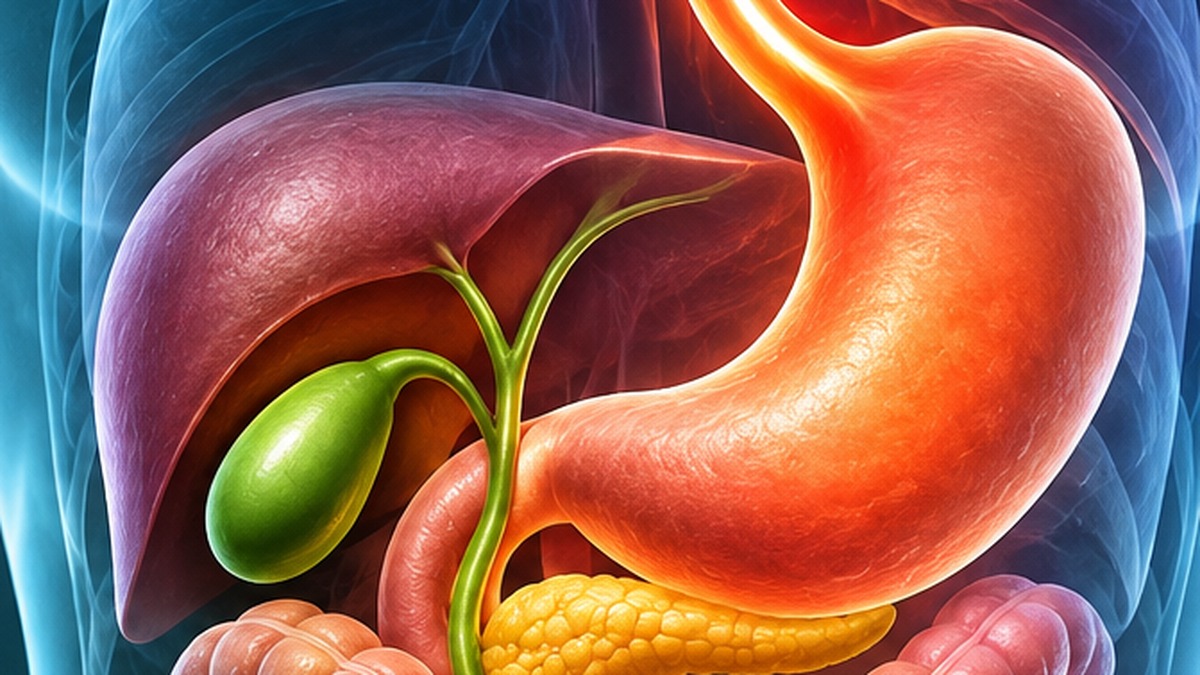
Acid Reflux: Why Reducing Stomach Acid May Not Fix the Problem
What if your acid reflux isn’t caused by too much stomach acid, but by a digestive system that isn’t functioning properly?
If you experience heartburn, acid reflux, or GERD, you’ve probably been told that stomach acid is the problem. The usual solution is a medication that reduces acid production, such as Prilosec, Nexium, or another acid blocker.
These medications often relieve the burning sensation. But here’s an important question: If stomach acid is essential for healthy digestion, why are we so focused on suppressing it?
At Total Health Center, we approach digestive problems differently. Rather than focusing exclusively on suppressing symptoms, we want to understand why the digestive system isn’t functioning properly in the first place.
And that begins with understanding what stomach acid actually does.
🎥 Prefer to watch instead of read? Watch Dr. Scott explain why reducing stomach acid may not address the underlying causes of acid reflux.
Click here to watch the video on YouTube.
Acid Reflux Doesn’t Necessarily Mean Too Much Stomach Acid
Your stomach is designed to contain a highly acidic environment. That acidity is essential for breaking down food, activating digestive enzymes, and helping protect against harmful microorganisms.
Your esophagus, however, isn’t designed to tolerate repeated exposure to stomach contents.
Between the stomach and esophagus is a muscular valve called the lower esophageal sphincter (LES). Its job is to allow food into the stomach while helping prevent stomach contents from flowing backward.
When this protective barrier doesn’t function properly, stomach contents can enter the esophagus, producing heartburn, regurgitation, and irritation.
The important distinction is that acid reflux is often a problem of stomach contents being in the wrong place, not necessarily an excessive amount of acid being produced.
Reducing stomach acidity may relieve the burning, but it doesn’t necessarily correct why reflux developed in the first place.
Why Stomach Acid Is Essential for Healthy Digestion
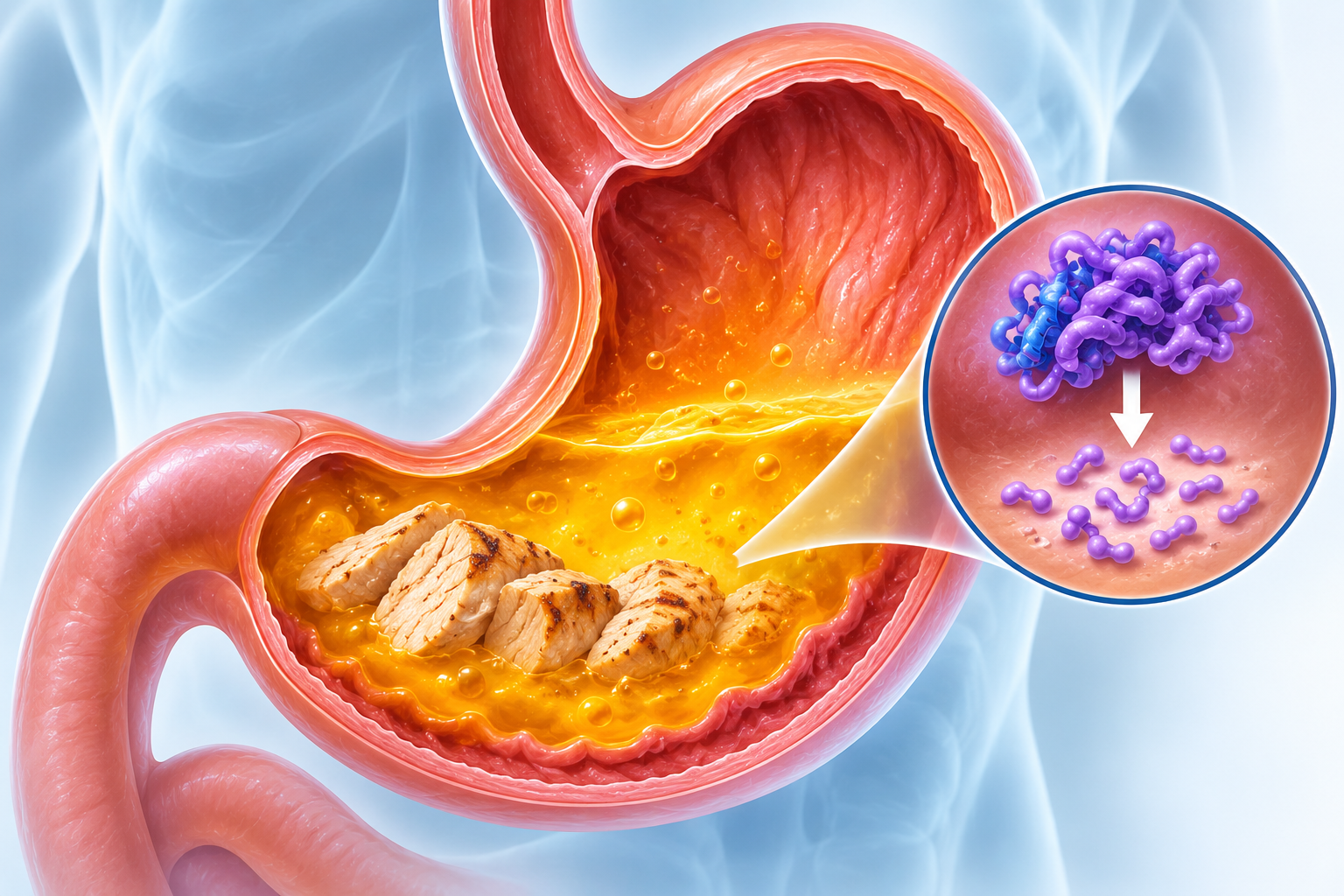
Stomach acid activates pepsin, an enzyme that begins breaking dietary proteins into smaller fragments.
Stomach acid isn’t something your body produces by accident. It performs several essential functions that influence digestion and overall health.
Hydrochloric acid activates pepsin, an enzyme responsible for beginning protein digestion. It also helps release certain nutrients from food, particularly vitamin B12 and iron, making them available for absorption.
Stomach acid provides another important benefit: protection. The stomach’s highly acidic environment helps destroy many unwanted microorganisms before they can move farther into the digestive tract.
But one of its most overlooked functions is digestive signaling.
What happens in the stomach influences what happens next in the small intestine, pancreas, liver, and gallbladder. Digestion is a coordinated physiological process, not a collection of organs working independently.
When stomach acidity is significantly reduced, some of these normal digestive functions may be affected.
Healthy digestion isn’t simply about what you eat. It’s about your body’s ability to break down, process, and absorb nutrients.
Could Low Stomach Acid Be an Overlooked Factor?
Most people associate reflux with excessive stomach acid. But insufficient stomach acid, called hypochlorhydria, is also a recognized condition.
Reduced stomach acid production can occur with chronic gastritis, autoimmune conditions affecting the stomach, certain H. pylori infections, and prolonged use of acid-suppressing medications.
When stomach acidity is inadequate, protein digestion and the release of certain nutrients from food may become less efficient.
From a functional medicine perspective, this raises an important question: Could impaired stomach function be contributing to a person’s digestive symptoms rather than simply being an unrelated issue?
Low stomach acid and reflux can occur together, although having reflux doesn’t automatically establish that acid production is insufficient.
Rather than assuming everyone needs less stomach acid—or more stomach acid—we believe it’s important to investigate how the digestive system is functioning.
The LES, Poor Digestion, and Delayed Stomach Emptying
The lower esophageal sphincter is often blamed for acid reflux because it allows stomach contents to move backward. But describing what happens during reflux doesn’t necessarily explain why it happens.
The LES is influenced by the surrounding digestive environment, including stomach distension, abdominal pressure, diaphragm function, and gastrointestinal motility.
When food remains in the stomach longer than expected, it may contribute to fullness, bloating, increased pressure, and reflux symptoms.
Normally, stomach acid and digestive enzymes begin breaking down food while coordinated muscular contractions move stomach contents gradually into the small intestine.
If this process is disrupted, symptoms may develop. Delayed emptying can have several contributing factors, including changes in muscular or nerve function and the feedback signals that regulate digestion.
From a functional medicine perspective, the LES should not be evaluated in isolation from the digestive processes that may be contributing to reflux.
If someone experiences recurring heartburn along with bloating, early fullness, or difficulty tolerating meals, investigating digestive function may reveal problems that acid suppression alone cannot address.
Hiatal Hernia: A Mechanical Cause of Reflux
A hiatal hernia occurs when part of the stomach moves upward through the diaphragm, potentially interfering with the normal barrier that prevents reflux.
This is a structural problem rather than simply an issue of acid production.
At Total Health Center, Dr. Scott is trained in manual techniques involving the stomach and diaphragm. These may be considered for selected patients as part of an individualized approach to mechanical and digestive discomfort.
While manual techniques are not established as reliably correcting an anatomical hiatal hernia, evaluating mechanical factors can be an important part of understanding persistent symptoms.
The important point is that reducing stomach acid doesn’t reposition the stomach or correct the anatomical relationship responsible for a hiatal hernia.
The Overlooked Connection Between Stomach Acid, Bile, and the Gallbladder
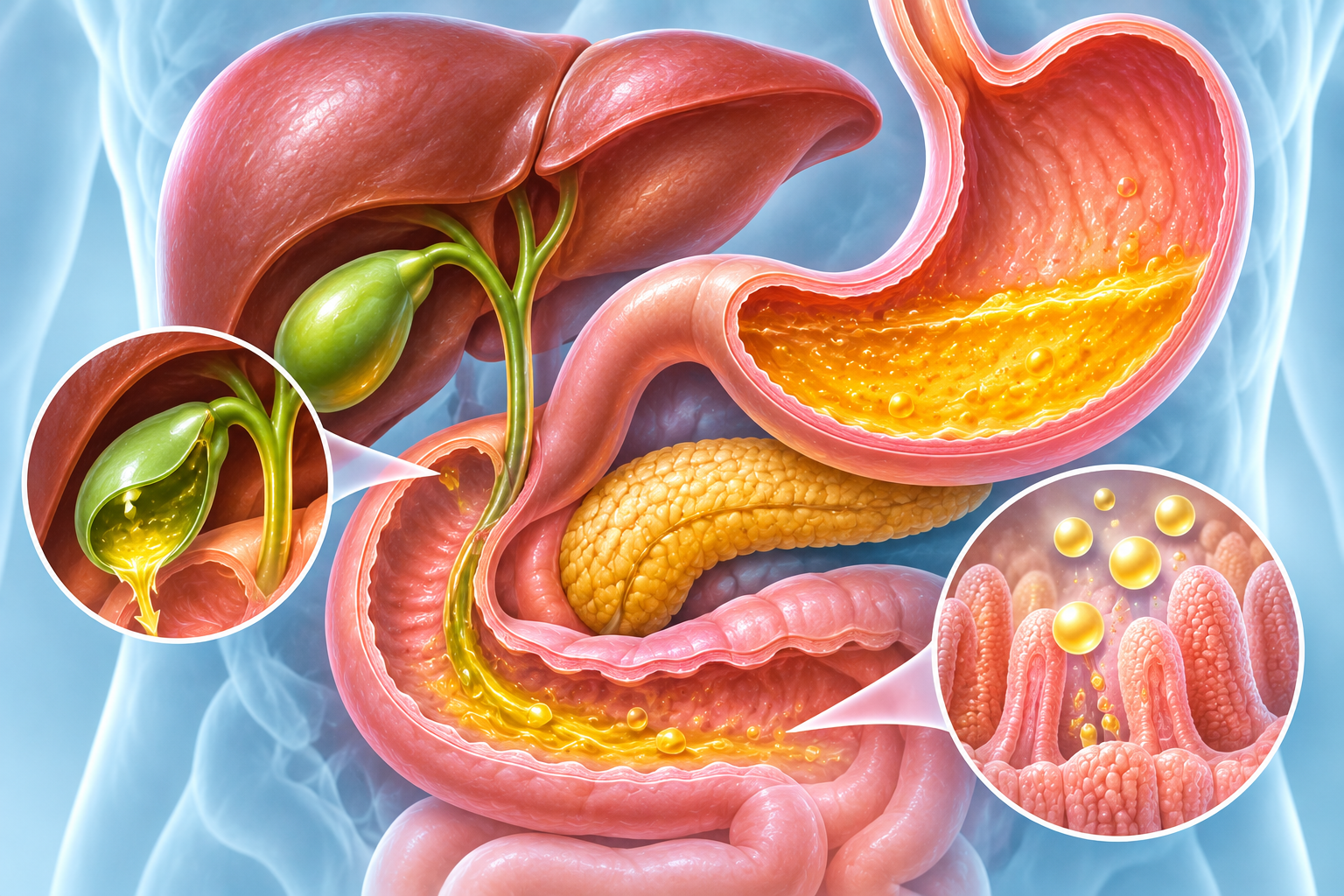
Stomach acid contributes to digestive signaling, while bile supports fat digestion and absorption of fat-soluble vitamins.
One of the most fascinating aspects of digestion is how the stomach communicates with other digestive organs.
Stomach acid does more than break down food. When acidic stomach contents enter the small intestine, they stimulate the release of a hormone called secretin.
Secretin helps stimulate bicarbonate-rich secretions from the pancreas and bile ducts, creating the proper environment for digestion to continue.
Another hormone, cholecystokinin (CCK), is released primarily in response to fats and protein digestion products entering the intestine. CCK signals the gallbladder to contract and release stored bile.
The liver produces bile, while the gallbladder stores and concentrates it until needed.
Why Bile Is So Important
Bile is essential for digesting fats and absorbing fat-soluble vitamins, including vitamins A, D, E, and K.
It also helps the body eliminate bilirubin, excess cholesterol, and certain substances processed by the liver. Bile acids additionally influence intestinal signaling and the microbial environment of the digestive tract.
This relationship helps explain why digestion must be considered as an interconnected process.
From a functional medicine perspective, impaired stomach digestion raises important questions about how effectively the rest of the digestive system is functioning.
When someone experiences reflux, bloating, difficulty digesting fatty foods, or gallbladder-related symptoms, we believe it makes sense to evaluate these relationships rather than treat each symptom as an isolated problem.
Conventional medicine has become highly effective at diagnosing individual digestive diseases. Functional medicine asks an additional question: What physiological dysfunction may be contributing to these problems before or alongside the development of a recognized disease?
For a deeper discussion, read our article on Gallbladder Dysfunction: The Missing Link in Gut Health.
Why Long-Term Acid Blockers May Not Be the Best Solution
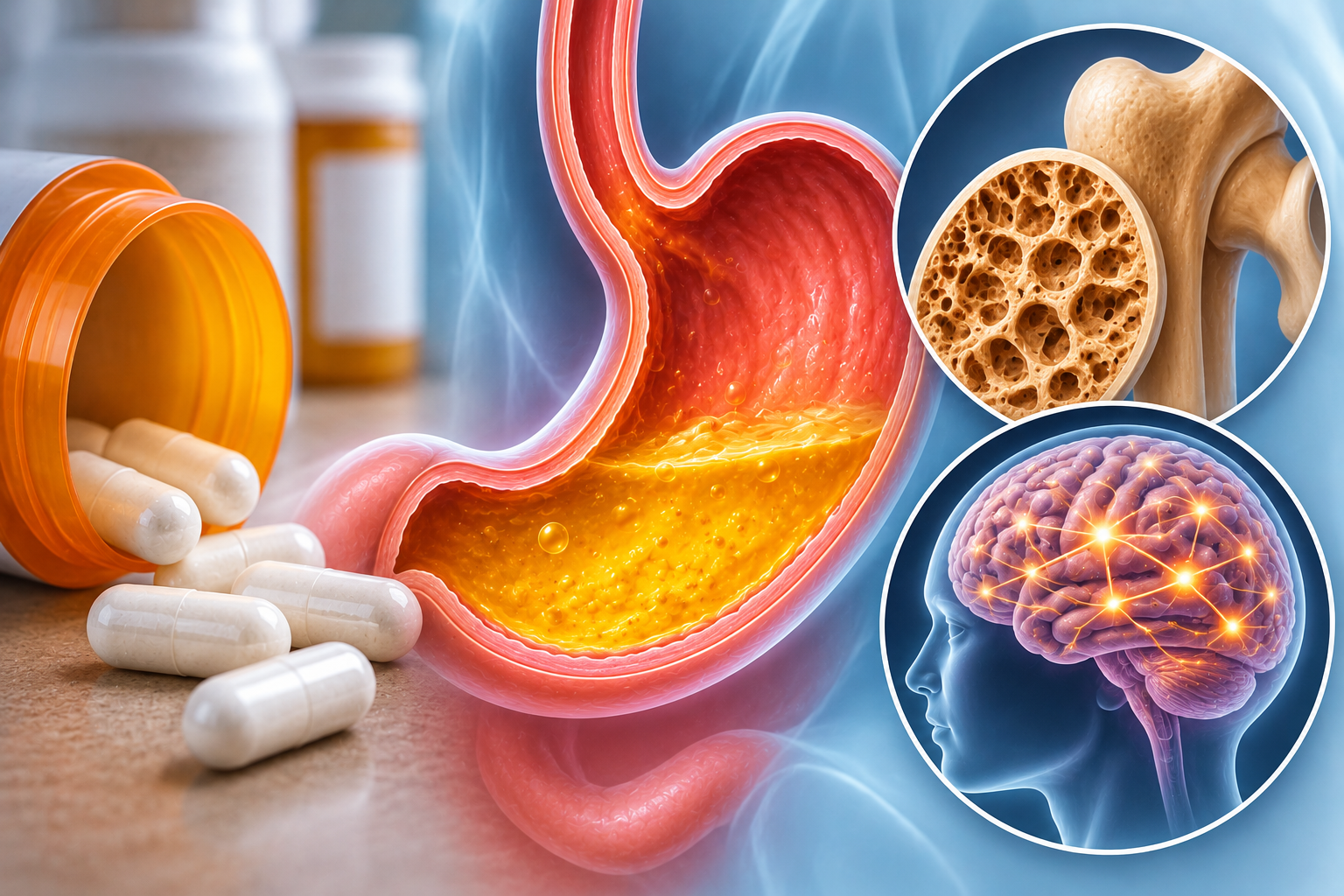
Long-term PPI use has been associated with increased fracture risk and, in some studies, cognitive decline, although these associations do not establish causation.
Proton pump inhibitors (PPIs), including Prilosec, Nexium, and Protonix, can be effective at reducing heartburn and allowing damaged esophageal tissue to heal.
But reducing stomach acid and restoring healthy digestive function are two different objectives.
For someone with a hiatal hernia, delayed stomach emptying, or other digestive dysfunction, acid suppression may relieve symptoms while the underlying problem remains.
There is another important concern: What are the long-term consequences of suppressing a substance your body needs for normal digestion?
Research has associated prolonged PPI use with several potential health problems, including osteoporosis-related fractures, cognitive decline and dementia, vitamin B12 deficiency, low magnesium levels, kidney disease, and certain gastrointestinal infections.
Bone Health and Osteoporosis
Stomach acidity contributes to nutrient availability, and changes in mineral absorption may influence bone health.
Multiple studies have reported an association between PPI use and an increased risk of fractures, particularly among older adults.
A 2025 systematic review and meta-analysis found that older adults taking PPIs had approximately 41% higher relative odds of fractures than nonusers.
Although an association doesn’t prove that the medications caused the fractures, these findings are important when considering years of acid suppression, especially in someone already at risk for osteoporosis.
Cognitive Decline and Dementia
Cognitive health has also become an area of concern.
Several observational studies have reported associations between long-term PPI use and dementia, while others have found no meaningful increase in risk.
Researchers continue to investigate possible mechanisms, including changes in vitamin B12 status and other biological pathways. A direct causal relationship between PPIs and dementia has not been established.
Nevertheless, these findings raise questions about the broader physiological consequences of long-term medication use.
Other concerns include magnesium depletion, certain intestinal infections, and possible kidney-related effects.
The point isn’t that everyone taking a PPI will develop these problems. It’s that long-term suppression of stomach acid should have a clear medical purpose and be periodically reassessed.
Some patients genuinely need ongoing acid suppression, particularly those with severe esophageal damage or other specific medical conditions.
But when medication becomes a permanent solution without investigating the contributing factors behind reflux, an opportunity to improve digestive health may be missed.
Stopping PPIs can also cause temporary rebound acid production, making symptoms return or worsen. Anyone considering changing a prescribed medication should first discuss it with their prescribing clinician.
The Functional Medicine Approach: Look Beyond the Symptoms
At Total Health Center, we believe chronic digestive symptoms deserve a more complete evaluation.
Rather than focusing exclusively on reducing stomach acid, we consider the factors that may be interfering with normal digestive function.
That includes eating habits, stomach function, digestive motility, abdominal pressure, hiatal hernia, gallbladder-related symptoms, medication use, and nutritional status.
We also look at how these factors may be connected.
Simple changes such as eating smaller meals, avoiding food close to bedtime, and identifying individual dietary triggers may help. Other individuals may benefit from further evaluation to identify structural, nutritional, or physiological contributors.
Our approach is individualized because no two patients have exactly the same digestive problem.
We also recognize that persistent reflux can damage the esophagus. Difficulty swallowing, unexplained weight loss, bleeding, persistent vomiting, or painful swallowing requires medical evaluation. New or unexplained chest pain requires urgent assessment.
Our goal is not simply to make heartburn disappear. It is to understand why reflux is occurring and identify opportunities to support healthier digestive function.
The Bottom Line: Stomach Acid Isn’t the Enemy
Your body produces stomach acid for a reason.
It helps digest food, supports nutrient availability, protects the digestive tract, and participates in the signals that coordinate digestion throughout the gastrointestinal system.
Acid reflux doesn’t automatically mean you produce too much stomach acid.
And while acid blockers can provide relief, they don’t necessarily address why reflux began.
The better question isn’t simply, “How do we reduce stomach acid?” It’s “Why isn’t the digestive system functioning the way it should?”
That is the difference between treating a symptom and investigating the contributing factors behind it.
At Total Health Center, we believe patients deserve both relief from their symptoms and a better understanding of their digestive health.
Ready to Look Beyond Your Acid Reflux Symptoms?
If you’ve struggled with recurring heartburn, reflux, bloating, indigestion, or long-term reliance on acid-blocking medication, it may be time to take a closer look at your digestive health.
At Total Health Center, Dr. Mark Scott helps patients investigate factors contributing to chronic digestive symptoms and develop individualized strategies to support healthier function.
Schedule your free consultation to learn how our functional medicine approach may help you better understand your digestive problems.
Learn More About Functional Medicine at Total Health Center
Call Total Health Center: (757) 363-8571
We welcome patients in Virginia Beach and provide secure virtual functional medicine consultations nationwide.
Continue Learning
Gallbladder Dysfunction: The Missing Link in Gut Health — Learn why bile flow, gallbladder function, and fat digestion are important parts of digestive health.
Why SIBO Treatments Fail: The Missing Root Causes — Discover why recurring digestive problems may involve stomach acidity, intestinal motility, and bile.
Understanding Functional Medicine Testing — Explore how individualized evaluations may help uncover factors contributing to chronic health symptoms.
About Dr. Mark Scott
Dr. Mark Scott is the founder and clinic director of Total Health Center in Virginia Beach, Virginia. He has practiced functional medicine since 1997 and holds a Certified in Functional Medicine designation from Functional Medicine University.
His approach emphasizes anatomy, physiology, nutrition, lifestyle, and identifying factors that interfere with normal body function rather than focusing exclusively on symptom management.
Dr. Scott works with patients experiencing chronic digestive problems, thyroid disorders, autoimmune conditions, metabolic dysfunction, and other complex health concerns.
Total Health Center provides in-person care in Virginia Beach and secure virtual functional medicine consultations nationwide.
Frequently Asked Questions
1. Is acid reflux caused by too much stomach acid?
Not necessarily. Acid reflux occurs when stomach contents move backward into the esophagus. The problem is often related to the protective barrier between the stomach and esophagus, abdominal pressure, or other digestive factors rather than excessive acid production.
2. Can low stomach acid contribute to acid reflux?
Low stomach acid and reflux can occur together. Reduced acidity may affect protein digestion and nutrient availability, although reflux symptoms alone cannot establish that insufficient stomach acid is the cause.
3. Can poor digestion affect the lower esophageal sphincter?
Digestive factors such as stomach distension, abdominal pressure, and gastrointestinal motility can contribute to reflux. Evaluating these factors may help explain why reflux occurs rather than focusing exclusively on the LES.
4. Does stomach acid affect gallbladder function?
Yes. Stomach acid contributes to intestinal signaling through secretin, while fats and protein digestion products stimulate CCK, which signals the gallbladder to release bile. These are important parts of coordinated digestive function.
5. Can a hiatal hernia cause acid reflux?
Yes. A hiatal hernia can interfere with the normal relationship between the stomach, diaphragm, and lower esophageal sphincter, increasing the likelihood of reflux. Structural contributors may need to be evaluated alongside digestive function.
6. Can long-term PPI use contribute to osteoporosis?
Research has associated prolonged PPI use with increased fracture risk, especially among older adults. Possible effects on mineral absorption have been investigated, although the studies do not establish that PPIs directly cause osteoporosis in every patient. Bone health is an important consideration when reviewing long-term medication use.
7. Can acid blockers contribute to cognitive decline or dementia?
Some studies have reported an association between prolonged PPI use and dementia, while others have found no increased risk. A direct causal relationship has not been established. The findings support periodically reviewing whether long-term acid suppression remains necessary.
8. Is it safe to take PPIs for years?
Long-term PPI treatment can be appropriate for certain conditions. However, continued use should be periodically reviewed to determine whether the medication remains necessary and whether the lowest effective dose is being used.
9. Can functional medicine help with chronic acid reflux?
Functional medicine examines nutrition, stomach function, eating patterns, digestive motility, medications, gallbladder-related symptoms, and other possible contributors to reflux. This broader approach can help identify opportunities to improve digestive health while ensuring appropriate care for conditions requiring medical treatment.
References
- Katz PO, et al. ACG Clinical Guideline for the Diagnosis and Management of Gastroesophageal Reflux Disease. American Journal of Gastroenterology. 2022. PubMed
- Targownik LE, et al. AGA Clinical Practice Update on De-Prescribing of Proton Pump Inhibitors: Expert Review. Gastroenterology. 2022. PubMed
- Proton Pump Inhibitors and Risk of Fracture in Older Adults: A Systematic Review and Meta-Analysis. Geriatric Nursing. 2025. PubMed
- Pourhadi N, et al. Proton Pump Inhibitors and Dementia: A Nationwide Population-Based Study. Alzheimer’s & Dementia. 2024. PubMed
- Proton Pump Inhibitor Use and Risk of Dementia: An Umbrella Review of Systematic Reviews and Meta-Analyses. 2025. PubMed
- National Library of Medicine. Physiology, Biliary. StatPearls. NCBI Bookshelf
- National Institute of Diabetes and Digestive and Kidney Diseases. Acid Reflux (GER & GERD) in Adults. NIDDK